
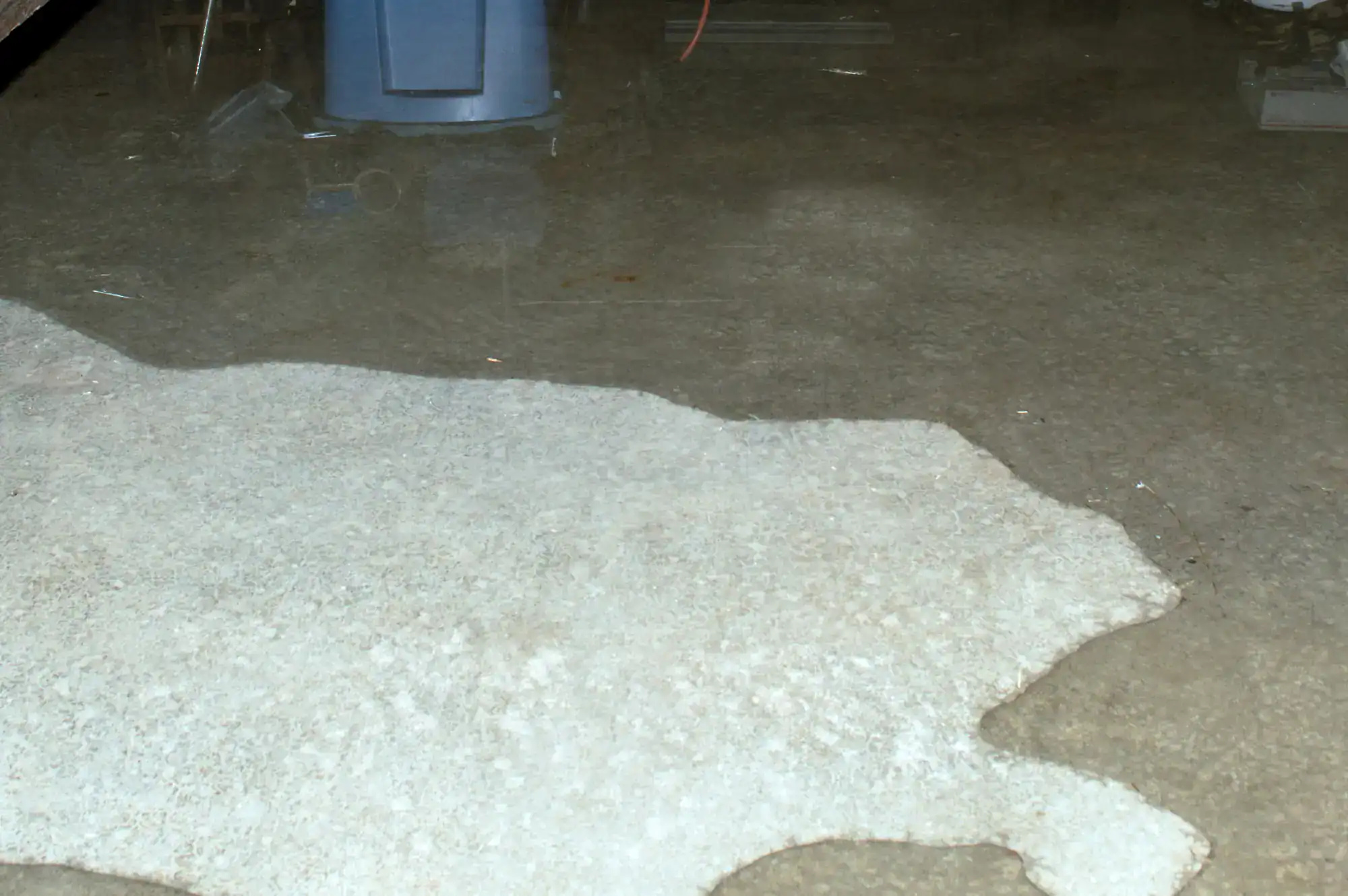
Your apparatus bay isn’t a garage. It’s where a 2020 Pierce Velocity tower ladder parks overnight, where Spartan Gladiator engines roll in and out with 2,000-gallon tanks, and where every winter storm on Nassau County’s roads ends up tracked across your floor. When the slab underneath that equipment starts cracking, spalling, or peeling, it’s not just an eyesore it’s a safety issue and a budget problem that compounds every season you wait.
Nassau County’s south shore gets hit with 30 to 40 freeze-thaw cycles every winter. That’s not one or two hard freezes that’s dozens of thermal stress events pushing water deeper into any concrete that isn’t properly sealed. Add the road salt coming off Newbridge Road and the Southern State Parkway approaches near North Bellmore, tracked in on tires and undercarriages after every winter response, and you’ve got chloride ions working against your slab year-round. A seamless, non-porous floor coating stops that at the surface. Salt, diesel, hydraulic fluid it all sits on top and wipes clean instead of soaking in.
The other thing worth knowing: most floors fail because of what happens before the coating goes down, not because of the coating itself. Moisture vapor coming up through a south shore Long Island slab is one of the most common reasons a floor bubbles and peels within a few years. The prep work specifically diamond grinding and moisture testing before anything is applied is what separates a floor that lasts 20 years from one that fails before the next budget cycle.
We’ve been doing commercial and industrial resinous flooring for over 30 years, out of Bohemia, NY on Long Island, where freeze-thaw cycles, coastal humidity, and road salt are part of every project spec, not afterthoughts. Our CEO Danny Harmer has over 40 years of hands-on installation experience, and the field supervisors who run every job bring a combined 40-plus years of their own. Most of our crew has been with us for more than a decade.
The credentials behind our work are real and specific. We hold Sherwin-Williams High Performance Flooring certification one of the most rigorous manufacturer-approved applicator credentials in commercial flooring along with Res Tech certification and OSHA 40 certified installers on every job site. That last one matters when your station is still operational during the project and volunteers are moving through the building.
We don’t treat a firehouse like a big garage floor. The system gets specified for the actual load class, the actual climate, and the actual operational constraints of your department including the fact that both your North Bellmore stations sit on Newbridge Road and your fleet can’t go dark for a week.
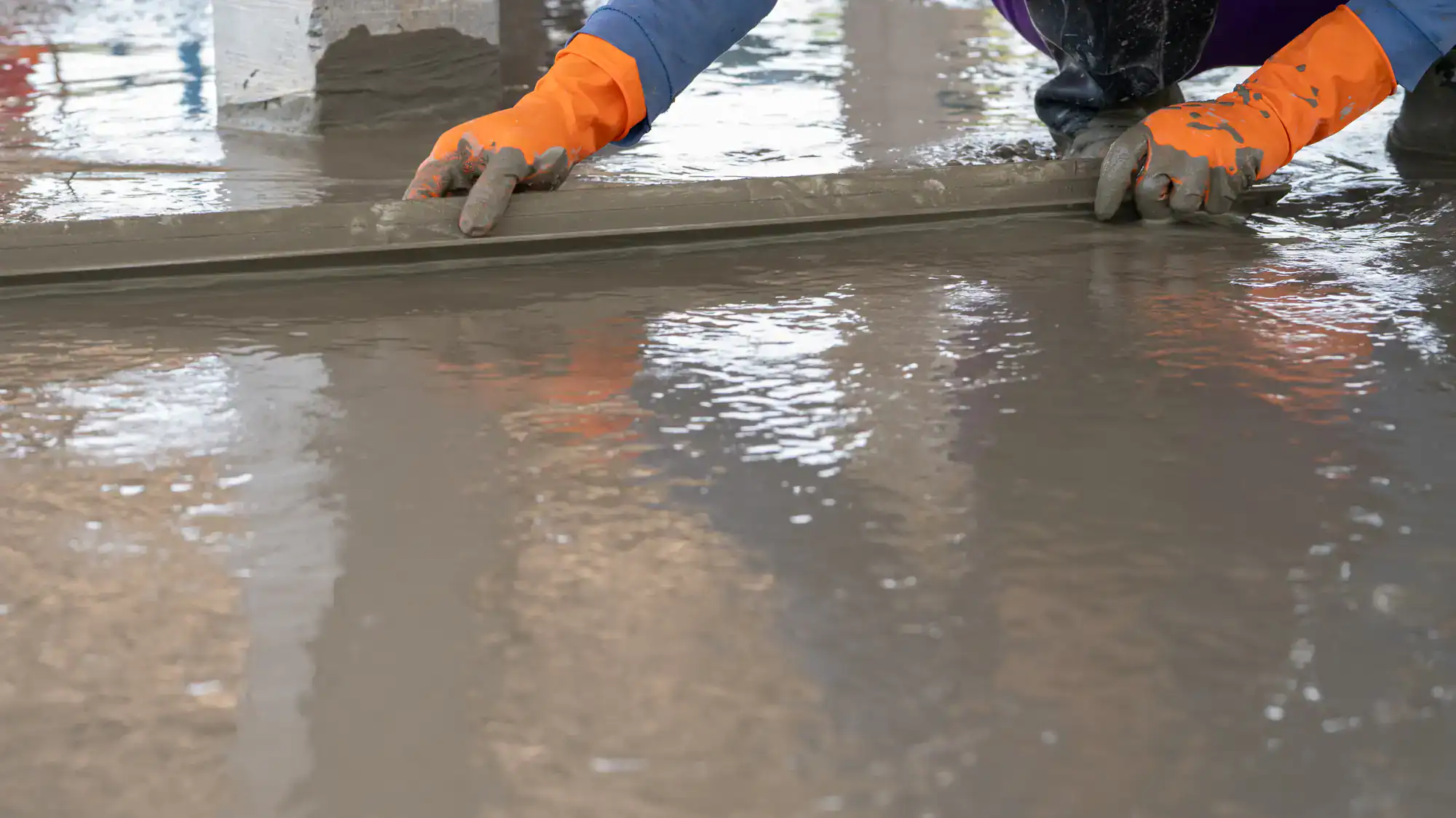
The first thing that happens on a firehouse floor project isn’t coating it’s assessment. The concrete slab gets evaluated for existing damage, surface profile, and moisture vapor transmission. That last one is critical in North Bellmore. South shore Long Island slabs, many of which were poured in the late 1950s when most of the community was built out, carry real moisture pressure from the ground up. If that isn’t measured and addressed before coating, the floor will fail not if, when.
Surface preparation comes next, and this is where most contractors cut corners. Acid etching opens the pores of the concrete but introduces moisture and leaves a chemically compromised surface. Diamond grinding removes the top layer mechanically, creating a clean, profiled substrate that the coating bonds to at the capillary level. It’s not faster or cheaper it’s just the only method that produces a floor built to last under apparatus-class loads and Nassau County winters.
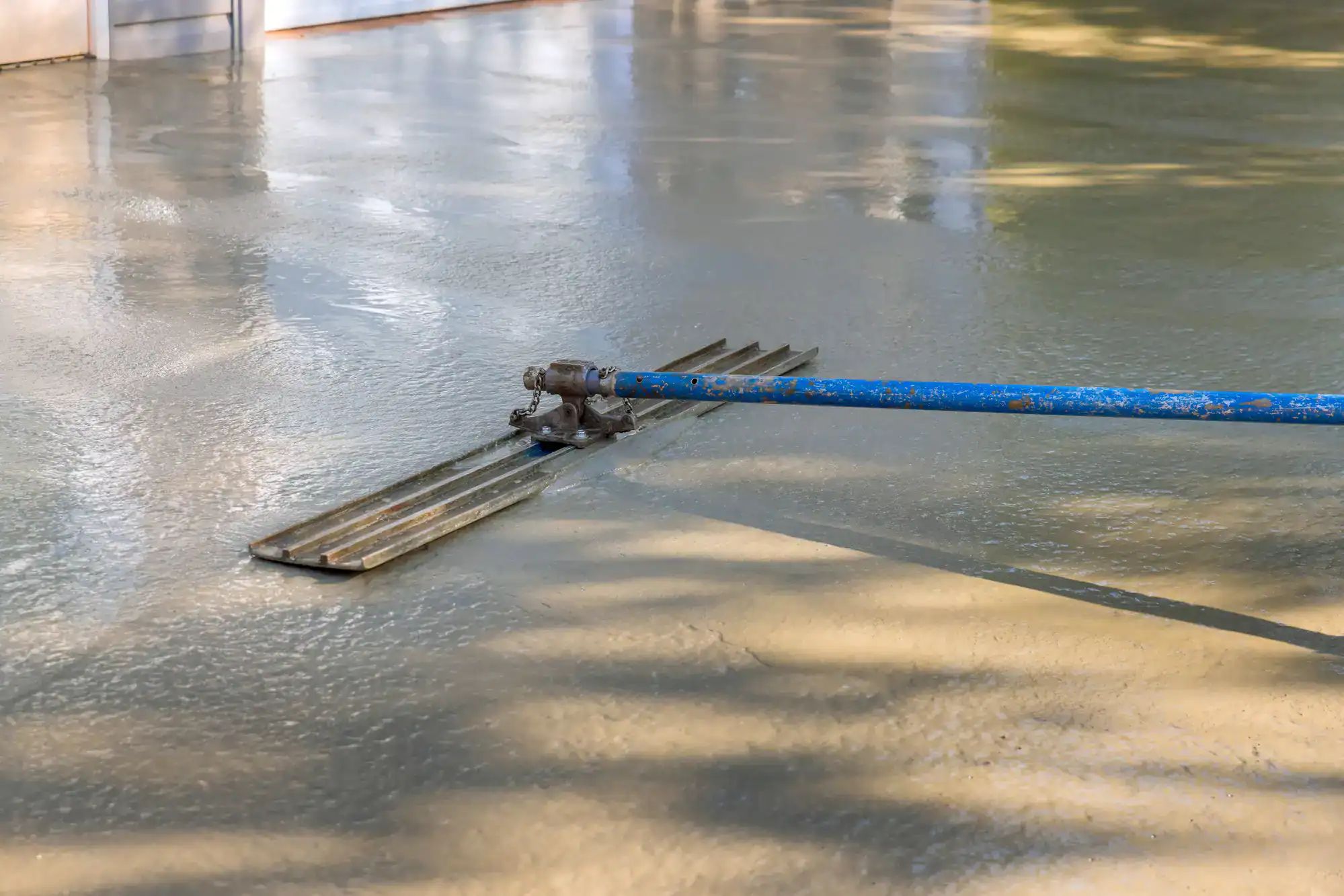
Once the slab is prepped and tested, we apply the system in layers: primer, base coat with aggregate broadcast for slip resistance, and a polyaspartic topcoat at 15 mils. That cure window is 24 hours. Your apparatus is back in the bay the next morning. For a department running sequential coating across two stations one north of the Southern State, one south that 24-hour return means you maintain continuous coverage throughout the entire project without staging your fleet anywhere.
Ready to get started?
The apparatus bay is the most demanding zone, but it’s not the only one that matters. We install floor systems across the full station apparatus bay, decontamination zone, living quarters, and commercial kitchen using systems matched to what each area actually requires. That matters for NFPA compliance, specifically NFPA 1500 and NFPA 1581, which create contamination control requirements that directly affect how your floors are specified and maintained. A seamless, non-porous surface in the decon zone isn’t just a preference it’s what makes proper decontamination of carcinogenic combustion byproducts actually achievable.
For the apparatus bay itself, the system is a multi-layer polyaspartic build: diamond-ground substrate, moisture-tested slab, broadcast aggregate for slip resistance and texture, and a polyaspartic topcoat engineered for the compressive load of heavy apparatus. This is not a residential product applied to a commercial problem. The mil thickness, flexibility rating, and abrasion resistance are all specified for the weight class and thermal cycling your bay actually sees.
Working with us across both North Bellmore firehouses and across every zone in each building means consistent system compatibility, a single point of accountability for the fire district, and no gaps between zones where different products meet and create weak points. For a publicly funded department governed by elected commissioners accountable to North Bellmore taxpayers, that accountability structure matters.
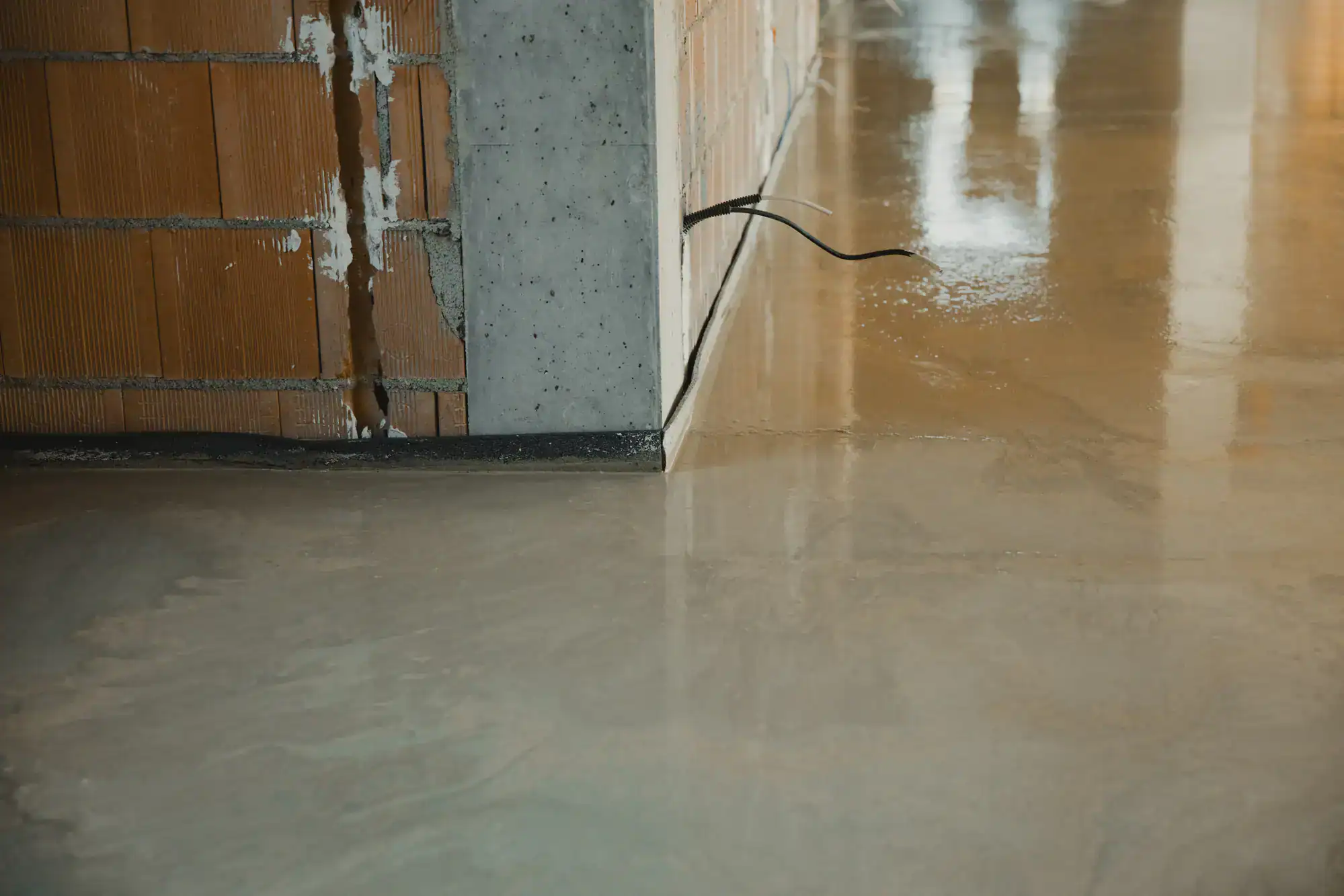
A properly installed polyaspartic system in an apparatus bay typically lasts 20 or more years. The key word there is “properly” and in North Bellmore specifically, that means the system was spec’d for the south shore Long Island environment. Coastal humidity, 30 to 40 freeze-thaw cycles per winter, and the road salt tracked in off Newbridge Road and the Southern State Parkway approaches are all variables that affect how long a coating holds. A system installed over a moisture-tested, diamond-ground slab with a polyaspartic topcoat handles all of those. A consumer-grade epoxy applied over an acid-etched surface typically fails in three to five years under the same conditions and when it fails, you’re paying to grind it off, dispose of it, and start over.
Yes with a polyaspartic system, the cure window is 24 hours. That means apparatus is back in the bay the next morning, not three to seven days later. For the North Bellmore Fire Department, which runs over 1,000 calls per year out of two active stations, that’s not a minor convenience it’s what makes the project operationally feasible. Standard epoxy systems require significantly longer cure times, which is one of the reasons departments end up deferring floor work indefinitely. The 24-hour return is built into the polyaspartic system chemistry, not a rushed workaround.
Diamond grinding removes the top layer of the concrete mechanically, creating a clean, profiled surface that the coating bonds to at a structural level. Acid etching uses a chemical reaction to open the pores of the concrete but it also introduces moisture into the slab and leaves behind chemical residue that can interfere with adhesion. In a south shore Long Island environment like North Bellmore, where moisture vapor transmission through older concrete slabs is a real and constant variable, acid etching is particularly problematic. You’re preparing a surface for coating by adding the exact thing moisture that causes coatings to delaminate and bubble. Diamond grinding eliminates that variable. It’s the only preparation method we use, and it’s the foundation of why the floor holds up.
Professional apparatus bay floor installation in the New York metro market typically runs between $5 and $15 per square foot, depending on the size of the bay, the condition of the existing concrete, and the system complexity required. For a fire district governed by elected commissioners and accountable to North Bellmore taxpayers, the more useful number to bring to a budget meeting is the total cost of ownership comparison. A 20-year polyaspartic system costs more upfront than a standard epoxy or a kit-based install. But when a standard system fails in three to five years and it will, under the thermal and chemical stress of an active Nassau County apparatus bay you’re paying full cost again: grinding, disposal, materials, and labor. The 20-year system is the fiscally responsible choice when the full picture is on the table.
NFPA 1500 and NFPA 1581 both have implications for fire station floor surfaces, particularly around contamination control. NFPA 1581 addresses facility requirements for PPE storage and decontamination, and a seamless, non-porous floor surface in the apparatus bay and decon zone is directly relevant to meeting those standards. Carcinogenic combustion byproducts polycyclic aromatic hydrocarbons, benzene, formaldehyde get tracked into the bay on gear and equipment after every structural fire response. A porous or cracked floor harbors those contaminants in ways that are difficult to fully decontaminate. A sealed, seamless polyaspartic surface eliminates harborage points and supports the power-washing and decon protocols those standards are designed to enforce. New York State fire code and OSHA regulations also apply to active fire station facilities, and having OSHA 40 certified installers on site during the project keeps the department’s own compliance posture clean.
The most common reason firehouse epoxy peels is hot tire pickup the phenomenon where heated apparatus tires bond to the coating surface as they cool, then pull sections of the coating off when the vehicle backs out. It happens almost exclusively with standard epoxy systems that lack the flexibility and adhesion strength to handle the thermal cycling of an active bay. Polyaspartic topcoats are four times more flexible than standard epoxy and bond at a significantly deeper level to a properly prepared substrate, which is why hot tire pickup isn’t a failure mode you see with a correctly installed polyaspartic system. The second most common cause is moisture specifically, coating applied over a slab that wasn’t moisture-tested, which is a particular risk in older Long Island construction. Most of North Bellmore’s housing and civic infrastructure was built in the late 1950s, and fire station slabs of that era have had decades to develop the kind of moisture vapor pressure that causes delamination bubbles. Testing before coating is non-negotiable it’s the step that determines whether the floor you’re installing lasts 20 years or fails before the next winter.
Other Services we provide in North Bellmore