
When your hangar floor is done right, you stop thinking about it. No peeling at the edges where moisture crept under. No staining where hydraulic fluid sat overnight. No dark patches where a spill turned into a slip hazard. You just walk in, the floor looks sharp, and you get to work.
That matters more in Massapequa than people give it credit for. You’re on the South Shore sitting close to the bays, dealing with salt-laden air year-round, and running through real winters where temperatures regularly dip below freezing. Those conditions push moisture through concrete slabs constantly, and if the floor coating underneath wasn’t installed with that in mind, it’s only a matter of time before it starts to fail.
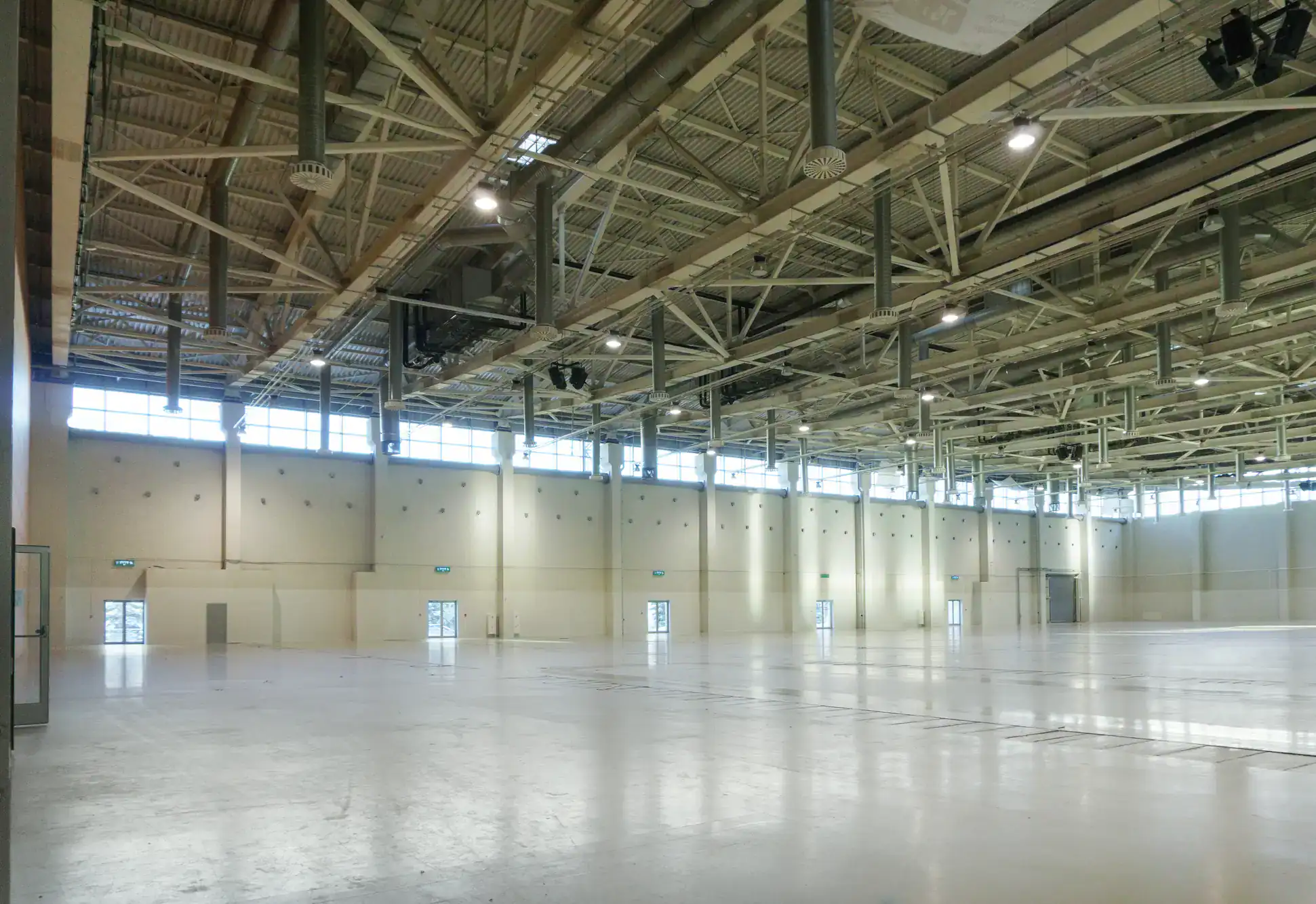
The other thing that changes when the floor is right: visibility. A high-gloss, light-reflective finish turns your entire hangar into a safer workspace. Dropped tools show up. Fluid spills are obvious before someone steps in them. For anyone working near active aircraft whether that’s a private owner at Republic Airport or a maintenance crew running daily ops that kind of visibility isn’t cosmetic. It’s functional.
We’re based in Bohemia, NY about 25 miles east of Massapequa on the same South Shore corridor. That proximity isn’t just geographic. It means we understand what Long Island concrete actually behaves like, what coastal humidity does to a large slab over time, and what aviation clients in Nassau County expect from a floor that has to perform in a real working environment.
Danny Harmer, our president, has been installing resinous flooring systems personally for over 40 years. That’s not a corporate bio line it means the person running this company has done the actual work longer than most competitors have existed. Our field supervisors Javier, Eduardo, and Fredith bring over 40 combined years of installation experience, and most of our team has been with us for more than a decade.
For aircraft owners and facility managers in the Massapequa area including those with hangar space at Republic Airport in nearby Farmingdale that kind of consistency is hard to find and easy to notice in the finished floor.
Before anything gets applied, we test the concrete. Moisture assessment is mandatory on every job not optional, not skipped to save time. On Long Island’s South Shore, where the water table runs relatively high and ambient humidity stays elevated for much of the year, vapor transmission through large concrete slabs is one of the most common reasons epoxy floors fail prematurely. Catching that before installation is the difference between a floor that lasts and one that starts delaminating within a few seasons.
Once the slab passes assessment, we mechanically diamond-grind the surface to create the adhesion profile the coating needs to bond properly. This step gets skipped more often than it should by general contractors who don’t specialize in this work. Skipping it is the single biggest reason hangar floors peel. After grinding, we apply the system in layers primer, base coat, topcoat with each layer given the full cure time it needs before the next one is applied. There’s no rushing through it.
The topcoat is NFSI-certified for non-slip performance, which matters in any environment where jet fuel or hydraulic fluid might hit the floor. If your timeline is tight, we offer polyaspartic systems that can return your hangar to full operation within 24 hours. For commercial hangar facilities in Nassau County, the installation is also designed to meet NFPA 409 requirements for non-combustible floor surfaces a code standard that applies to aircraft storage and servicing areas and one that general flooring contractors frequently aren’t aware of.
Ready to get started?
The chemical environment inside an aircraft hangar is different from anything a standard commercial epoxy system is designed for. Skydrol hydraulic fluid used in aircraft braking and flight control systems is aggressive enough to attack conventional epoxy formulations, cause discoloration, and accelerate delamination. Jet fuel, lubricants, and industrial cleaning solvents add to that exposure. The systems we install are specifically formulated to resist these chemicals, not adapted from residential or light commercial product lines.
For private aircraft owners storing a piston single or turboprop near Massapequa, the priority is usually a clean, durable finish that holds up to fuel and oil without staining or peeling and a light color that reflects well and makes the space easier to work in. For FBO operators and maintenance facilities at Republic Airport, the requirements go further: NFPA 409 compliance, Skydrol resistance, OSHA-safe non-slip surfaces, and a floor that can handle the load and traffic of daily commercial operations.
Both of those use cases get the same core standard: proper surface prep, a multi-layer system, and a topcoat that’s been independently tested for slip resistance. The Town of Oyster Bay governs building permits for hangar renovation in Massapequa, and Nassau County fire codes apply alongside NFPA 409 for commercial aviation facilities. If you have questions about what’s required for your specific project, that’s part of the conversation before any work starts.
Yes and it’s one of the most important things to account for before installation begins. Massapequa sits on Long Island’s South Shore, where salt-laden air, proximity to the bays, and consistently elevated humidity create conditions that push moisture vapor through concrete slabs from below. On large hangar floors, that vapor pressure is significant. If a coating system is applied without first testing the slab for moisture transmission, the coating can appear to bond correctly at first and then begin to blister or delaminate within a year or two as vapor works its way to the surface.
This is why we make moisture assessment a mandatory first step on every job we take on in this region not a precaution reserved for problem slabs. The South Shore’s climate makes it a baseline requirement. Getting that step right before the first coat goes down is what separates a floor that performs for 15 to 20 years from one that needs to be torn up and redone in three.
Skydrol is a phosphate ester-based hydraulic fluid, and it’s significantly more chemically aggressive than the oils and solvents that standard commercial epoxy systems are formulated to handle. It attacks conventional epoxy binders, causes softening and discoloration, and accelerates delamination at the edges and seams where it tends to pool. Jet fuel adds to that exposure, and the combination of both in an active maintenance environment puts real stress on a floor that wasn’t designed for it.
Aviation-grade systems use resin chemistries typically high-build epoxy base coats with chemically resistant topcoats that are specifically tested against these compounds. The difference isn’t just in the label; it’s in the formulation and the system thickness. A thin, single-coat application of even a quality product won’t hold up the same way a properly layered, full-build system will. For aircraft owners and maintenance operators near Republic Airport in Farmingdale, specifying the right system from the start is far less expensive than recoating a floor that failed under chemical exposure.
If you’re operating a commercial aircraft hangar meaning aircraft are stored, serviced, or maintained there as part of a business operation then yes, NFPA 409 applies. The standard requires that floor surfaces in aircraft storage and servicing areas be non-combustible, which eliminates a wide range of standard residential and light commercial epoxy products that general contractors commonly use. Many contractors working in Nassau County aren’t aware this standard exists, which is how code-noncompliant floors end up in commercial hangars.
For private hangars on residential or agricultural properties in the Town of Oyster Bay, the requirements differ, but Nassau County fire codes and local building permit requirements from the Town still apply to renovation work. The safest approach is to clarify the use classification of your facility before selecting a coating system. We install systems formulated to meet NFPA 409’s non-combustibility requirement, and that conversation about code compliance is part of the project assessment before any work begins.
Timeline depends on the size of the hangar, the condition of the existing concrete, and the system being installed. For a standard private hangar, a traditional multi-layer epoxy system typically takes two to three days for installation, followed by a full cure period before the floor can handle aircraft loads and chemical exposure. If minimizing downtime is a priority which it usually is for aircraft owners who need to return their plane to storage or for FBO operators who can’t take a bay offline for a week polyaspartic systems are a strong option. Polyaspartic topcoats cure significantly faster and can return a hangar to full operation in as little as 24 hours.
Seasonally, spring and fall are the most straightforward installation windows on Long Island. Summer installations are manageable but require careful moisture monitoring given the elevated ambient humidity. Winter work is possible but requires the concrete surface to be above 50°F for proper cure something that needs to be planned for given Massapequa’s January averages in the low 30s.
Epoxy and polyaspartic are both resinous coating systems, but they behave differently and suit different priorities. Epoxy systems are high-build, chemically resistant, and extremely durable under heavy loads and repeated chemical exposure which is why they’ve been the standard in aviation environments for decades. They take longer to cure, which means more downtime between coats and before the floor can return to service, but the resulting system is thick, hard, and long-lasting.
Polyaspartic systems cure much faster sometimes fully within 24 hours and offer excellent UV stability, which matters in hangars with large door openings that let in significant sunlight. They can also be applied in a wider temperature range, which gives more scheduling flexibility during Long Island’s shoulder seasons. For many hangar applications, the best outcome is actually a hybrid approach: an epoxy base coat for build and chemical resistance, topped with a polyaspartic finish coat for speed, UV stability, and non-slip performance. We offer that combination and can discuss which approach makes sense based on your specific facility and timeline.
Technically, any licensed contractor can apply a coating to a concrete floor. The question is whether the result will hold up in an aviation environment and that’s where the gap shows up quickly. General flooring contractors typically work with residential and light commercial systems that aren’t formulated for Skydrol, jet fuel, or the load demands of aircraft operations. They also frequently skip or underperform on surface preparation, which is the step that determines whether a coating bonds correctly or starts peeling within a few years.
Republic Airport in Farmingdale is an active, expanding general aviation hub Modern Aviation recently broke ground on new hangar development there and the FBO operators and private aircraft owners using that facility are working with real operational requirements. NFPA 409 compliance, chemical resistance specifications, and OSHA non-slip standards aren’t optional considerations for commercial facilities. A contractor who hasn’t worked in aviation environments before is unlikely to know those requirements exist, let alone how to meet them. The cost of finding that out after the floor fails regrinding, reprepping, and recoating is significantly higher than getting the right system installed the first time.