


You’re not running a warehouse to babysit a floor. When your concrete starts spalling at the joints or crumbling under forklift wheels, your operators slow down, routes get longer, and productivity drops.
A proper industrial warehouse floor epoxy in Massapequa eliminates that. The surface becomes seamless, dense, and capable of handling point-load impacts that would destroy standard concrete. No more routing around problem areas or scheduling emergency repairs during your busiest seasons.
The floor also stops generating dust. That matters when you’re trying to keep inventory clean and machinery running without constant filter changes. You get a surface that sweeps clean in minutes and doesn’t break down when you hit it with degreasers or spill hydraulic fluid.
What changes is simple: your floor stops being a liability. Forklifts move faster. Operators don’t complain about vibration or uneven surfaces. You’re not calling contractors every six months because another section gave out.
We’ve been installing large scale warehouse flooring in Massapequa and across Long Island since before epoxy became the standard. That’s over three decades of watching what fails, what holds up, and what actually works when you’re running heavy equipment twelve hours a day.
Our crew isn’t learning on your job. Most of our installers have been with us for over ten years. Our supervisors bring forty-plus years of combined experience. Everyone is OSHA 40 certified, and we don’t cut corners on prep work because we know that’s where most floors fail.
Massapequa’s industrial facilities face specific challenges. The proximity to saltwater means moisture issues. The mix of older buildings and newer distribution centers means we’re constantly adapting systems to different substrates. We’ve handled everything from 100,000-square-foot distribution centers to smaller manufacturing spaces where downtime costs thousands per hour.

First, we test your concrete for moisture. Most warehouse floors in Massapequa sit on slabs that weren’t designed with moisture barriers, and if we don’t address that first, the coating fails within months. We use calcium chloride testing, not guesswork.
Next comes diamond grinding for warehouses in Massapequa. This isn’t optional. We’re opening the concrete pores so the epoxy can penetrate and bond at a molecular level. We’re also removing any existing sealers, oils, or contaminants that would prevent adhesion. The surface needs to feel like 80-grit sandpaper when we’re done.
Joint work happens before we coat anything. Those control joints and cracks are where your floor will fail first under forklift traffic resistant coating systems in Massapequa if we don’t fill them properly. We use flexible polyurea or epoxy joint fillers rated for the traffic you’re running.
Then we apply the system. Depending on your load requirements, that might be a high-build epoxy, a urethane topcoat, or a combination. We’re looking at cure times that get you back to operations fast. Many systems allow light traffic in 24 hours and full traffic in 72.
The final step is optional but smart: line striping. We can mark traffic lanes, safety zones, and staging areas with epoxy paint that won’t wear off in six months like regular paint does.

Ready to get started?
You’re getting a high-traffic concrete sealer in Massapequa rated for the specific loads you’re running. We calculate PSI requirements based on your heaviest equipment and traffic patterns. Most warehouse systems we install are rated at 4,000+ PSI compressive strength.
The coating is chemical resistant. That means hydraulic fluid, battery acid, cleaning chemicals, de-icing salts—none of it breaks down the surface. You can spill it, clean it up, and move on.
You’re also getting a system designed for your timeline. We know you can’t shut down for two weeks. Most forklift traffic resistant coating installations in Massapequa are done in phases or scheduled around your slower periods. Fast-cure options exist when you need to be back up immediately.
Massapequa warehouses deal with temperature swings, especially in facilities without climate control. The systems we install flex with thermal expansion instead of cracking. That matters during summer heat and winter cold snaps when concrete moves.
The surface stays non-slip even when wet. We add aggregate to the topcoat if you need extra traction in areas where you’re washing down regularly or where condensation is an issue.
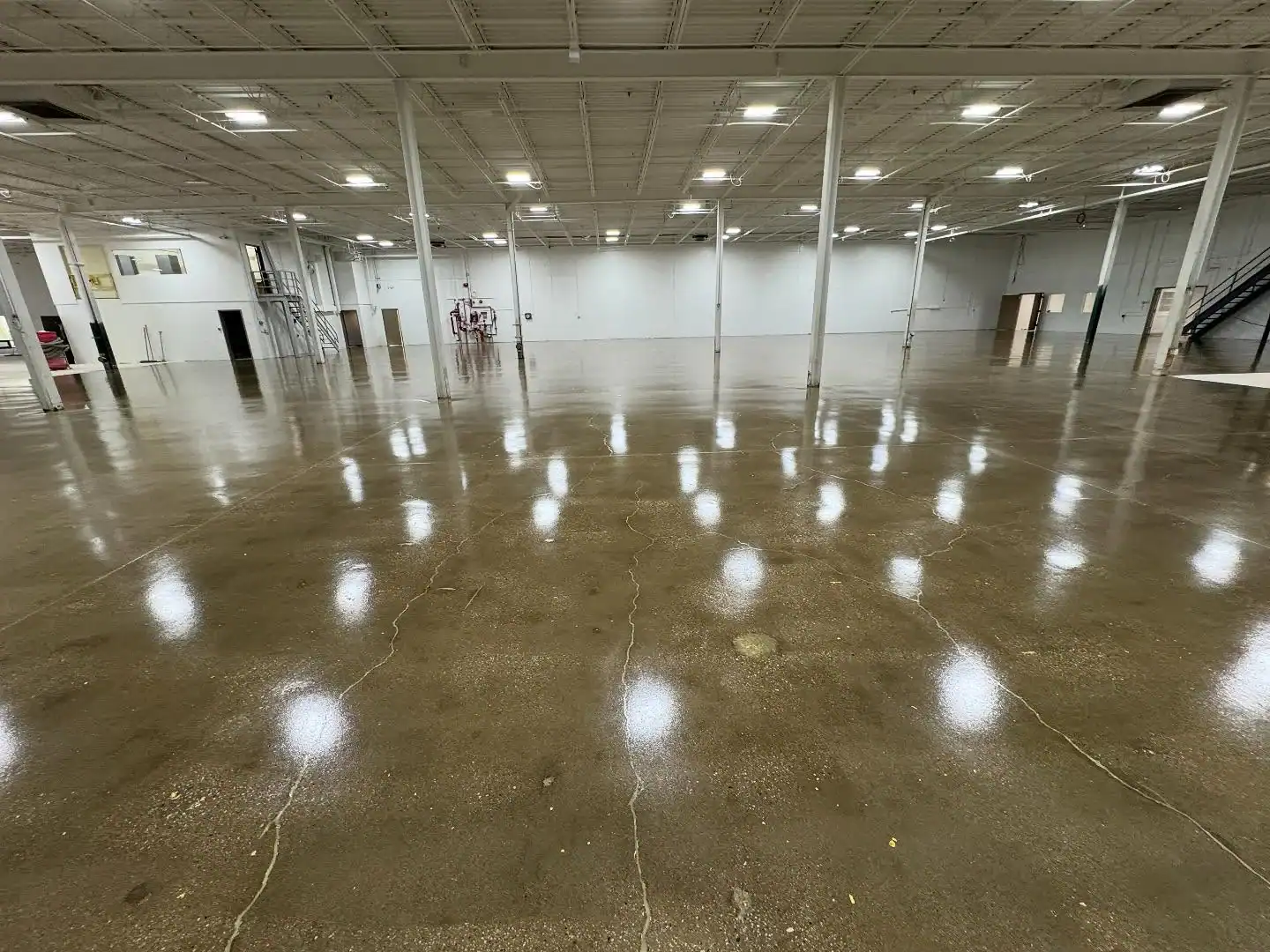
You’re looking at fifteen to twenty years in most warehouse environments if the floor is installed correctly. That assumes constant forklift traffic, regular cleaning, and normal wear from operations.
The lifespan depends entirely on prep work and system selection. A thin coating over poorly prepped concrete might last two years. A properly installed high-build system with joint protection and the right topcoat will outlast most equipment you’re running on it.
What kills floors early is moisture issues that weren’t addressed before installation, inadequate joint filling, or using a system that wasn’t rated for your actual traffic loads. We see a lot of failures from contractors who underbid jobs and then cut corners on material thickness or cure times.
Yes. We phase the work so you can keep operating in sections of the building. Most warehouses can’t afford to go completely dark for a week, and we plan around that.
The typical approach is to section off areas, complete the install, let it cure, and then move to the next zone. Fast-cure systems allow you to return to full traffic in 72 hours or less. Some urethane systems can handle light traffic in 12 hours if you’re in a bind.
We schedule around your busy seasons too. If you’re a distribution center that goes crazy in Q4, we’re not showing up in November. We’ll plan the work for January or February when traffic is lighter and you can afford to have sections offline.
Sealers sit on top of concrete. Epoxy bonds into it. When a forklift wheel hits a sealed surface repeatedly, the sealer eventually delaminates because it’s just a topical coating. Epoxy becomes part of the concrete substrate.
You’re also getting thickness. A sealer might be a few mils thick. Our warehouse systems are 20 to 125 mils depending on the application. That thickness absorbs impact and distributes loads instead of transferring all that force directly to the brittle concrete underneath.
Epoxy systems also fill the surface porosity completely. Concrete is full of tiny holes that trap dirt, absorb spills, and generate dust. Once you coat it with a high-build epoxy system, that surface becomes impermeable. Nothing soaks in, nothing breaks down the concrete from within, and you stop dealing with dusting that settles on everything in the building.
We don’t coat over problems and hope they disappear. Every crack gets evaluated. Hairline cracks get routed out slightly and filled with flexible epoxy or polyurea. Larger cracks or spalled areas get saw-cut, cleaned, and filled with repair mortar before we grind the entire surface.
Joint filling is critical. Control joints in warehouse floors are designed to let the concrete move, but they become the weakest point when forklifts cross them thousands of times. We fill them with semi-rigid or flexible fillers that move with the concrete but don’t allow the edges to chip away.
If the damage is extensive—like areas where the concrete has completely deteriorated or you’ve got major settlement issues—we’ll tell you the floor needs structural repair before we coat anything. Epoxy fixes surface problems and adds protection, but it doesn’t replace concrete that’s failed at the structural level.
Epoxy is harder and more chemical resistant. Urethane is more flexible and UV stable. For most warehouse floors in Massapequa, you want both: an epoxy base for strength and chemical resistance, with a urethane topcoat for abrasion resistance and flexibility.
Straight epoxy can yellow over time if you have skylights or large door openings where UV light hits the floor. It’s also more brittle, which means it can crack under extreme impact if the concrete underneath moves. Urethane stays clear, flexes better, and handles thermal cycling without becoming brittle.
The trade-off is cost and cure time. Urethane topcoats add to both. But in a warehouse where you’re running heavy equipment and need the floor to last twenty years, the extra investment pays off. You’re not recoating in five years because the surface abraded away or cracked at every joint.
Not necessarily. We work around racking and equipment that’s bolted down or too heavy to relocate easily. The floor area needs to be clear where we’re actively working, but we don’t require you to empty the entire warehouse.
Most jobs get phased. You clear one section, we prep and coat it, it cures, and then you can move inventory back while we start the next section. Racking systems usually stay in place. We cut in around the posts and work in the aisles.
If you’ve got equipment that can’t be moved and can’t be shut down, we plan around it. We’ve installed floors in active facilities where production couldn’t stop. It takes more coordination and might extend the timeline slightly, but it’s absolutely doable when shutting down isn’t an option.