
At six feet above sea level, with a water table that sits just beneath the surface in most of Lindenhurst, concrete does things that inland slabs don’t. Moisture pushes up through the slab year-round not just in spring, not just after a storm. If a floor coating contractor doesn’t test for moisture vapor transmission before they apply anything, that floor is already failing before it cures. We start every Lindenhurst project with calcium chloride or relative humidity probe testing. The right system, installed correctly, stops that cycle. You get a surface that holds, seals, and stays bonded even in the conditions that have made other coatings peel.
Then there’s what happened in October 2012. If your property sat south of Montauk Highway when Sandy came through, you know what six feet of water does to a concrete slab. Chloride penetration, micro-cracking, long-term moisture infiltration these aren’t abstract concerns. They’re the actual condition of a lot of floors in this community right now. A properly specified aircraft hangar floor coating in Lindenhurst starts with honest concrete assessment, crack remediation, and moisture mitigation not a roller and a bucket of whatever’s on the truck. When those steps are done right, you end up with a floor that’s fuel-resistant, Skydrol-resistant, safe to walk on when it’s wet, and built to last 15 to 20 years in a coastal environment that tests everything.
We’re based in Bohemia central Suffolk County, about 20 miles from Lindenhurst and directly in the corridor between your community and Republic Airport in Farmingdale. This isn’t a national brand routing a subcontractor to your job. Danny Harmer, who founded Advanced Epoxy Flooring, has been installing resinous floor systems personally for over 40 years. He understands every failure mode because he’s seen them firsthand and fixed them in Lindenhurst and across the South Shore.
We hold dual elite certifications from Sherwin-Williams High Performance Flooring and Res Tech, two of the most rigorous credentials in the resinous flooring industry. Every installer carries OSHA 40 certification, which matters when you’re working in an active aviation facility. Most of our crew has been with us for over a decade. Field supervisors Javier, Eduardo, and Fredith bring more than 40 years of combined field experience between them. When you call Advanced Epoxy Flooring, you’re reaching people who have been doing this work in Suffolk County, in coastal conditions, in aviation environments for a long time.
The first thing that happens on a Lindenhurst job isn’t coating it’s assessment. Given the village’s elevation, its proximity to Great South Bay, and the concrete damage history that Sandy left behind in properties south of Montauk Highway, moisture testing is non-negotiable. We perform calcium chloride testing or relative humidity probe testing to determine exactly what the slab is doing before any product touches it. If moisture vapor transmission is present and in Lindenhurst, it often is we apply a moisture mitigation primer first. Skipping this step is the single most common reason hangar floor coatings fail.
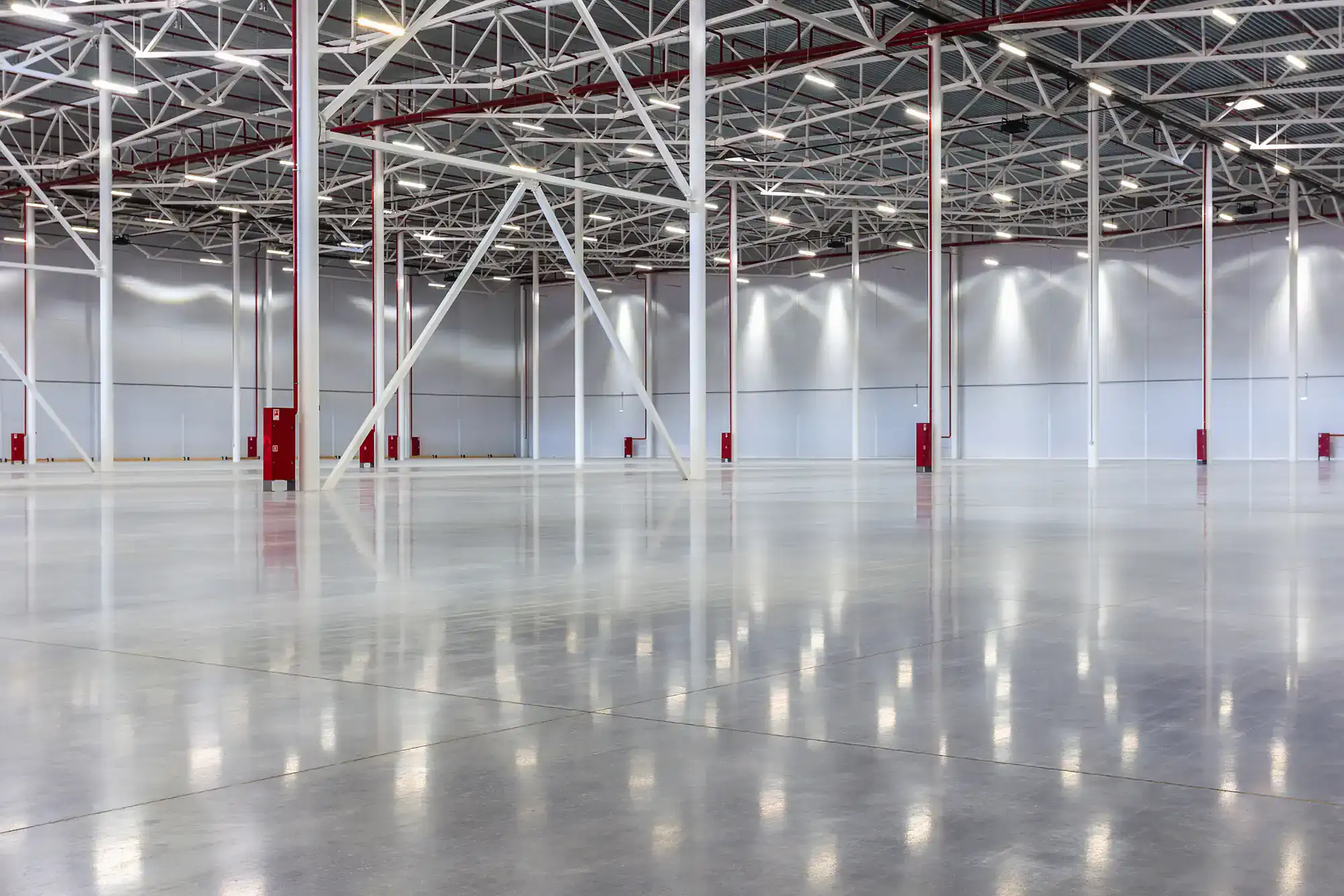
Once the slab is assessed and prepared, we grind the surface to open the concrete profile so the coating system bonds mechanically, not just chemically. Cracks and spalls get filled. Then the system goes down in the specified sequence base coat, build coats, and topcoat with the non-slip finish applied last. The topcoat meets NFSI slip-resistance standards, which matters in a working hangar where fuel and hydraulic fluid hit the floor regularly.
For active hangars where downtime is a real cost particularly for tenants at Republic Airport, where operations run daily we often recommend polyaspartic systems. They cure fast enough to return aircraft to the hangar within approximately 24 hours of final coat application, compared to the multi-day window that standard epoxy systems require. The system we specify for your facility depends on your actual chemical exposure, traffic load, and operational schedule not a one-size answer.
Ready to get started?
Aircraft hangar floor coatings in Lindenhurst have to meet a standard that most general flooring contractors in Suffolk County have never read: NFPA 409, the National Fire Protection Association’s Standard on Aircraft Hangars. It mandates that floor surfaces in aircraft storage and servicing areas be noncombustible. That requirement eliminates most standard residential and light commercial epoxy products outright. We install systems that comply and we can provide the specification documentation a facility manager needs for compliance records or insurance review.
Beyond code compliance, the systems we install are engineered for the actual chemical environment of a working hangar. Skydrol hydraulic fluid, jet fuel, lubricants, and industrial cleaning solvents all hit hangar floors regularly, and they chemically destroy coatings that weren’t formulated for aviation exposure. The high-build systems we use for aircraft maintenance bay flooring are applied at a minimum of 45 mils of thickness significantly more than what a standard garage or warehouse coating delivers because impact resistance and chemical resistance both depend on proper film build.
Whether you’re a private aircraft owner with a hangar lease at Republic Airport in Farmingdale, a commercial FBO operator, or managing a maintenance facility in the western Suffolk County corridor, we match the system specified for your floor to your actual use case. The Sherwin-Williams High Performance Flooring certification we hold isn’t a marketing credential it means the systems we install have documented chemical resistance and performance data behind them, not just a sales sheet.
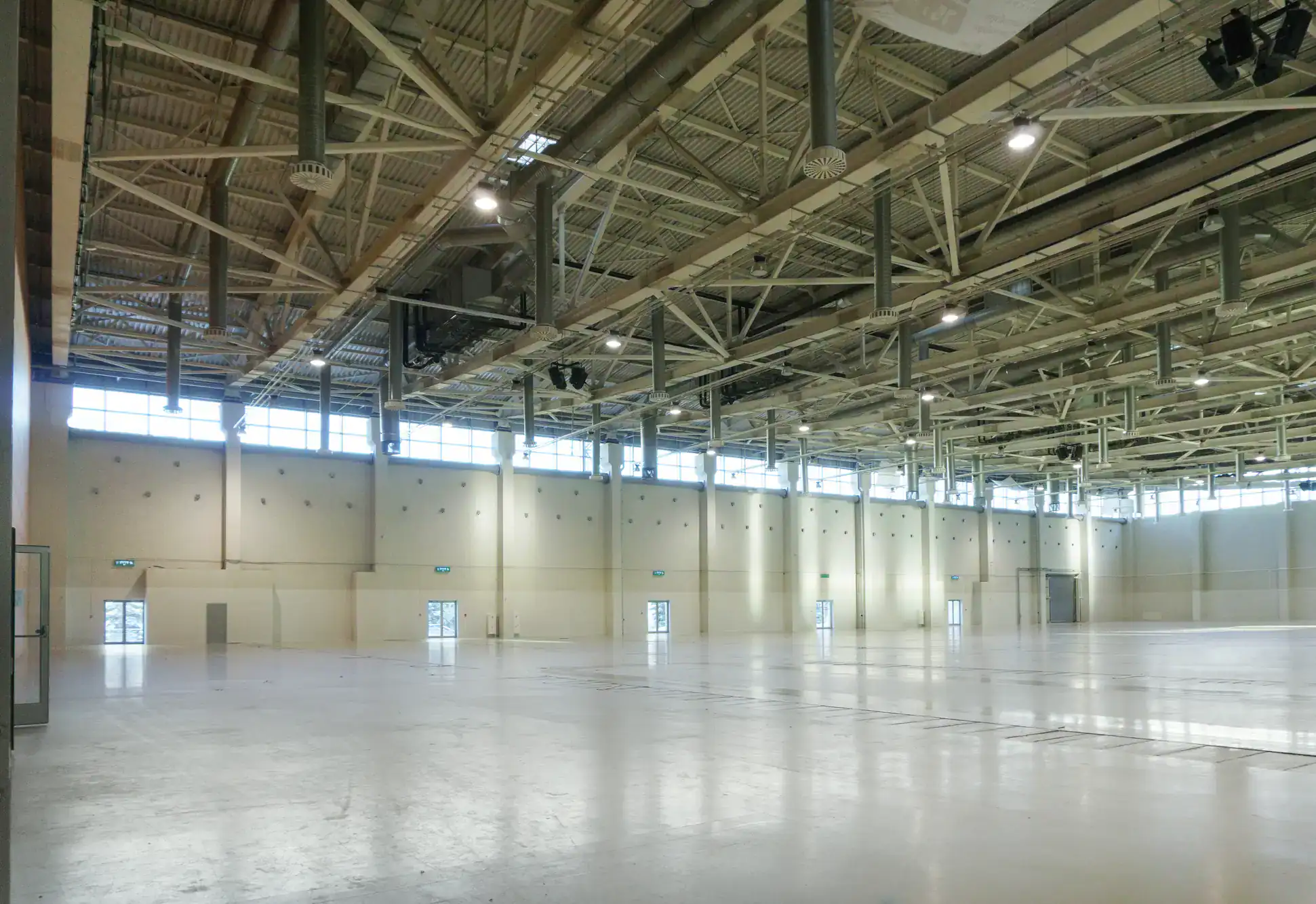
If your facility is used for aircraft storage, fueling, or maintenance, yes NFPA 409 applies. It’s a code requirement, not a recommendation, and it mandates that floor surfaces in those areas be noncombustible. Many standard epoxy and floor paint products don’t meet this standard, which means a facility that installs the wrong system isn’t just getting a floor that might fail it’s creating a code violation and a potential liability exposure.
This matters especially in the western Suffolk County market, where commercial hangars at Republic Airport in Farmingdale are subject to the same federal and state aviation facility standards as any other general aviation airport in New York. If you’re managing a hangar lease in Lindenhurst or operating an FBO and you’re not sure whether your current or planned floor coating is compliant, that’s worth finding out before installation not after an inspection. We can walk you through the specification requirements and provide documentation to support your compliance records.
It’s one of the most important variables on any project in this area. Lindenhurst sits at roughly six feet above sea level, and the canal network running from Great South Bay up through the residential neighborhoods keeps the water table extremely shallow in many parts of the village. Moisture vapor moves upward through concrete slabs constantly not just after rain, not just in spring. When a coating system is applied over a slab with unaddressed moisture vapor transmission, the pressure of that vapor eventually breaks the bond between the coating and the concrete. The floor delaminates. It bubbles. It peels. And it usually happens within the first year or two.
The fix isn’t complicated, but it has to happen before the coating goes down. Moisture testing either calcium chloride or relative humidity probe testing tells you exactly what the slab is doing. If vapor transmission is detected, we apply a moisture mitigation primer first to create a barrier. That step adds time and cost, but it’s the difference between a floor that lasts 15 to 20 years and one that needs to be stripped and redone in 18 months. Any contractor who skips moisture testing in Lindenhurst is cutting a corner that will cost you later.
Both are resinous coating systems that bond to concrete and provide chemical resistance, but they behave differently in ways that matter for an active hangar. Standard epoxy systems are durable and cost-effective, but they require multi-day cure windows between coats and can take several days total before the floor is ready for aircraft traffic. In a working hangar especially one where aircraft move daily or where tenants pay by the month that downtime has a real dollar cost.
Polyaspartic systems cure significantly faster. A properly applied polyaspartic floor can be ready for aircraft return within approximately 24 hours of final coat application. They also perform well in temperature extremes, which matters during Long Island’s winters when hangar doors open and close repeatedly and floor temperatures fluctuate. The tradeoff is that polyaspartic systems typically cost more upfront. But when you factor in reduced downtime and a service life that can reach 20 years with proper maintenance compared to 5 to 7 years for a standard epoxy in a high-traffic environment the total cost of ownership usually favors the faster-curing system for active aviation facilities.
In most cases, it can be coated but the prep work has to be done correctly first. When Hurricane Sandy flooded properties south of Montauk Highway in October 2012, the water didn’t just sit on top of the concrete. It penetrated the slab, introduced chloride ions into the concrete matrix, and in many cases caused spalling, cracking, and long-term moisture infiltration that has continued to compound over the years since. A slab in that condition isn’t a good candidate for a direct coating application without remediation.
The process starts with a thorough concrete assessment to identify spalls, cracks, delaminated areas, and active moisture issues. Damaged sections get filled and repaired. Cracks are addressed with the appropriate filler or routing-and-sealing method depending on whether they’re structural or surface-level. Then moisture testing determines whether a mitigation primer is needed before the coating system goes down. This is more involved than a standard prep job, but it’s what makes the coating system actually work on a slab that’s been through what many Lindenhurst properties have been through. Skipping any of these steps on a flood-affected slab is how floors fail quickly and expensively.
Yes and if a contractor doesn’t know what Skydrol is, that tells you something important. Skydrol is a phosphate ester hydraulic fluid used in the vast majority of commercial aircraft and many private aircraft. It’s chemically aggressive in a way that most people outside of aviation don’t fully appreciate. Standard epoxy coatings the kind used in garages, warehouses, and commercial kitchens are not formulated to resist it. Skydrol causes discoloration, softening, and eventually full delamination of non-resistant coatings. It also poses a health hazard if it’s absorbed into a porous or damaged floor surface.
Aviation-grade floor coating systems are specifically formulated with Skydrol resistance as a design requirement, not an afterthought. The systems we install for aircraft hangar floor coatings in Lindenhurst are engineered for this chemical environment. Before any installation, we factor the chemical exposure profile of your specific facility into the system specification what fluids hit the floor, how frequently, and in what volumes. For private aircraft owners using hangars at Republic Airport in Farmingdale, or for commercial maintenance operations in the western Suffolk County area, this is a non-negotiable part of getting the floor specification right.
The honest answer is that it depends heavily on the system specified and how well the prep work was done but a properly installed aviation-grade system in a coastal environment like Lindenhurst should realistically last 15 to 20 years with normal maintenance. The variables that shorten that lifespan are almost always rooted in installation, not the product itself: inadequate moisture assessment, insufficient surface preparation, wrong system for the chemical exposure, or film build that’s too thin to handle the traffic load.
Lindenhurst’s coastal environment does add stress that inland locations don’t face. Salt air from Great South Bay accelerates surface degradation on poorly applied or improperly formulated systems. The freeze-thaw cycle temperatures here range from the mid-20s in winter to the low 80s in summer creates repeated expansion and contraction stress on both the concrete and the coating. A system that performs fine in a climate-controlled inland facility may show its weaknesses faster here. The answer isn’t to avoid coating your hangar floor it’s to use a system that was formulated for these conditions and installed by a contractor who understands them. That’s the difference between a floor you’re maintaining and a floor you’re replacing.