
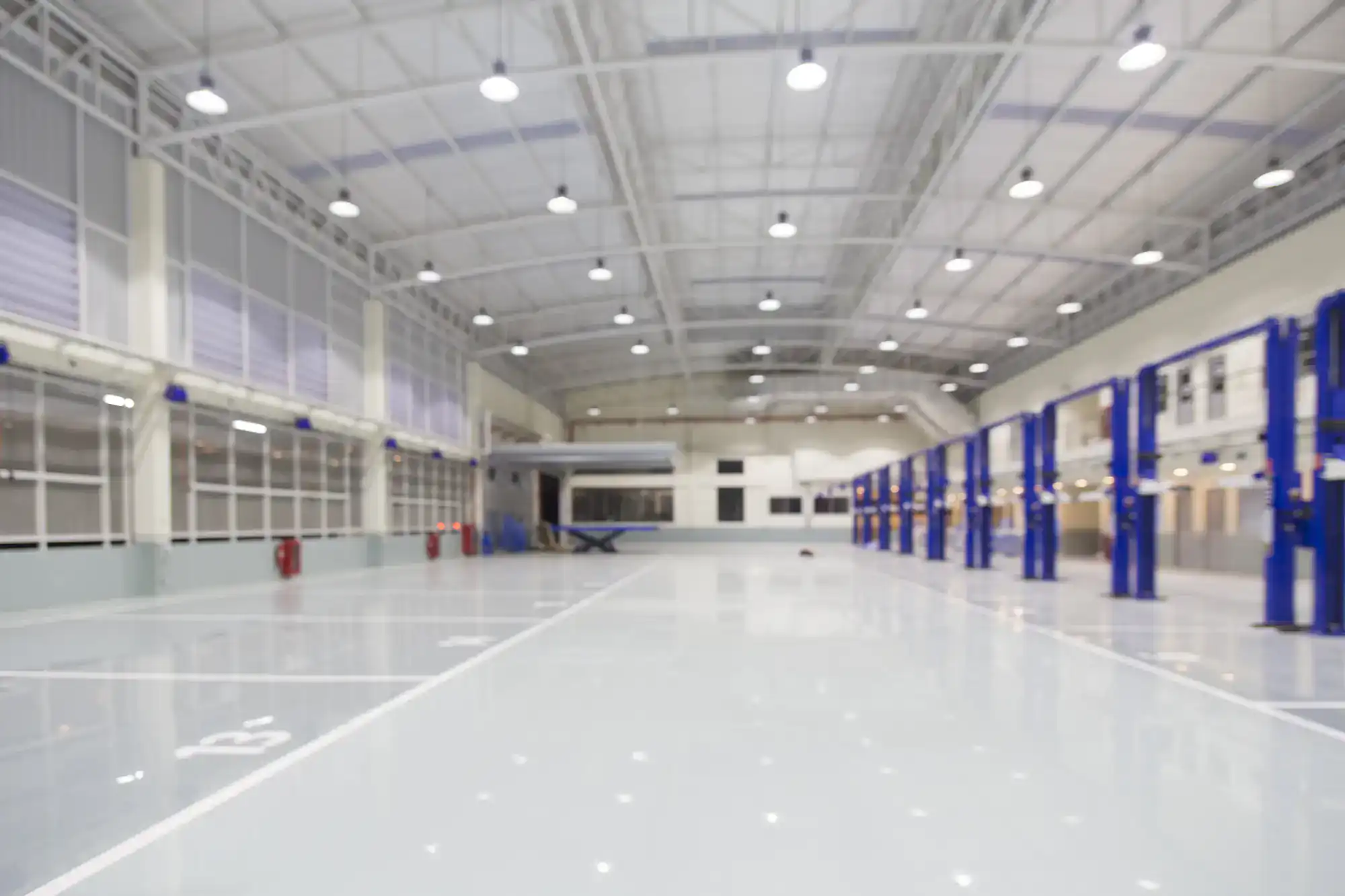
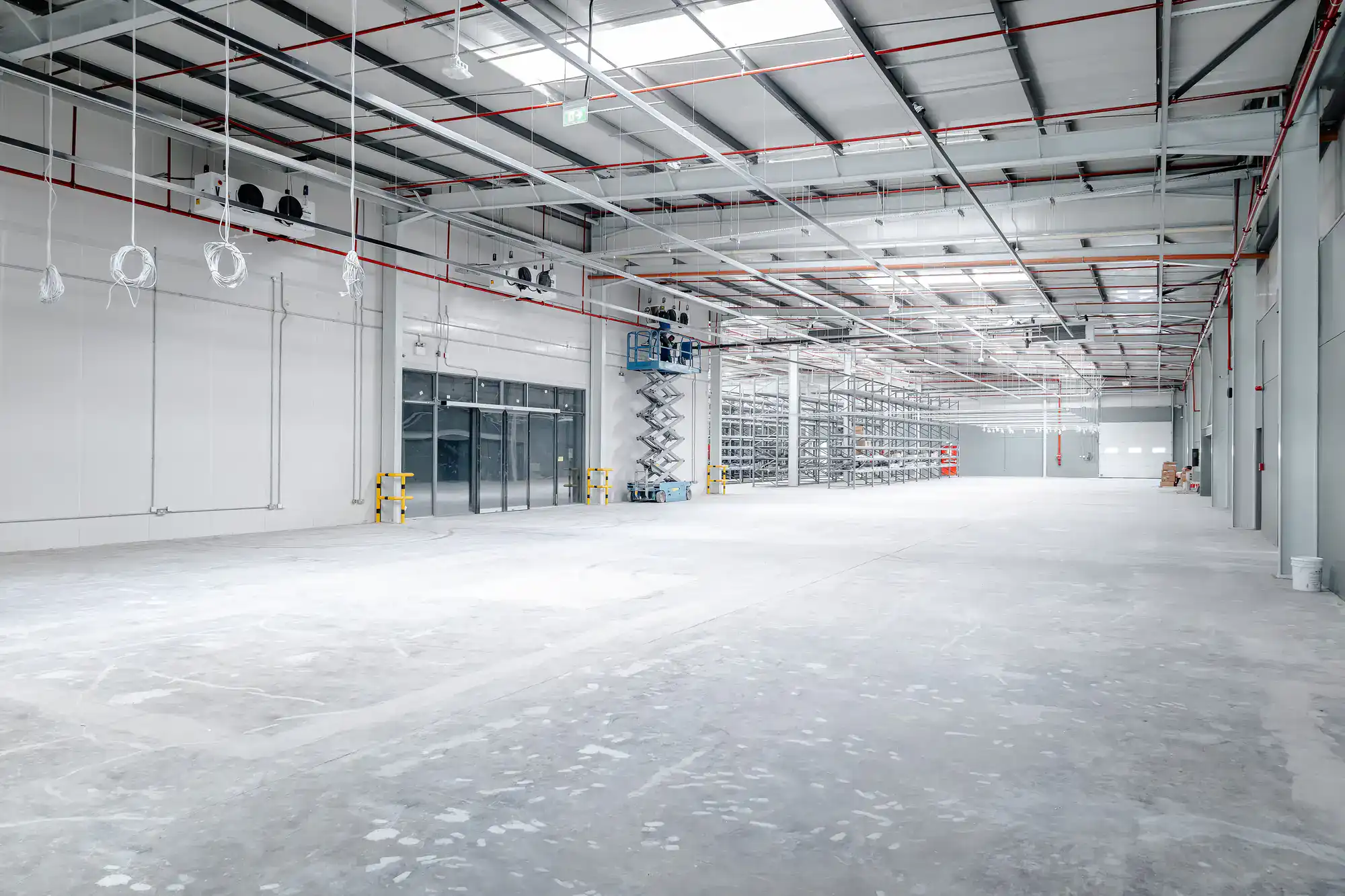
If your aircraft is based at Republic Airport or stored in a private facility off Route 110 in Huntington Station, your hangar floor is dealing with things a standard coating was never designed for. Skydrol hydraulic fluid, jet fuel, oil, and cleaning solvents will eat through a garage-grade epoxy system in a matter of months. What you’re left with is a peeling, stained slab that’s harder to clean and more dangerous to work on than bare concrete.
Long Island’s North Shore climate adds another layer to this. Huntington Station regularly sees humidity in the 80–95% range, and large concrete slabs especially in older commercial buildings, many of which date back to the 1960s hold moisture in ways that most contractors never account for. When a coating is applied over a slab with active moisture vapor moving through it, the floor doesn’t just look bad eventually. It fails. Blisters, delamination, peeling edges and then you’re starting over.
The right aviation-grade floor coating changes the daily reality of your hangar. Spills wipe up in seconds. FOD is visible the moment it hits the floor. The surface stays non-slip even when it’s wet. And because the system is built correctly from the substrate up, it lasts not five years, but closer to twenty.
We’re based in Bohemia, NY Suffolk County, same as Huntington Station. This isn’t a national brand with a local sales rep and a subcontractor crew. Danny Harmer, our president, has been installing floors personally for over 40 years. Our field supervisors Javier, Eduardo, and Fredith have a combined 40-plus years between them, and most of our crew has been with us for over a decade. That kind of consistency doesn’t happen at companies that rotate labor job to job.
Our portfolio backs it up. We’ve installed floors across the country, in the Bahamas, in Moscow, and in the White House kitchen in 1996. We hold dual factory-level certification through Sherwin-Williams High Performance Flooring and Res Tech, and every installer carries OSHA 40 certification relevant in any environment where fuel and hydraulic fluids are present. For Huntington Station clients who want a contractor that’s close enough to be accountable and experienced enough to get it right the first time, that combination matters.
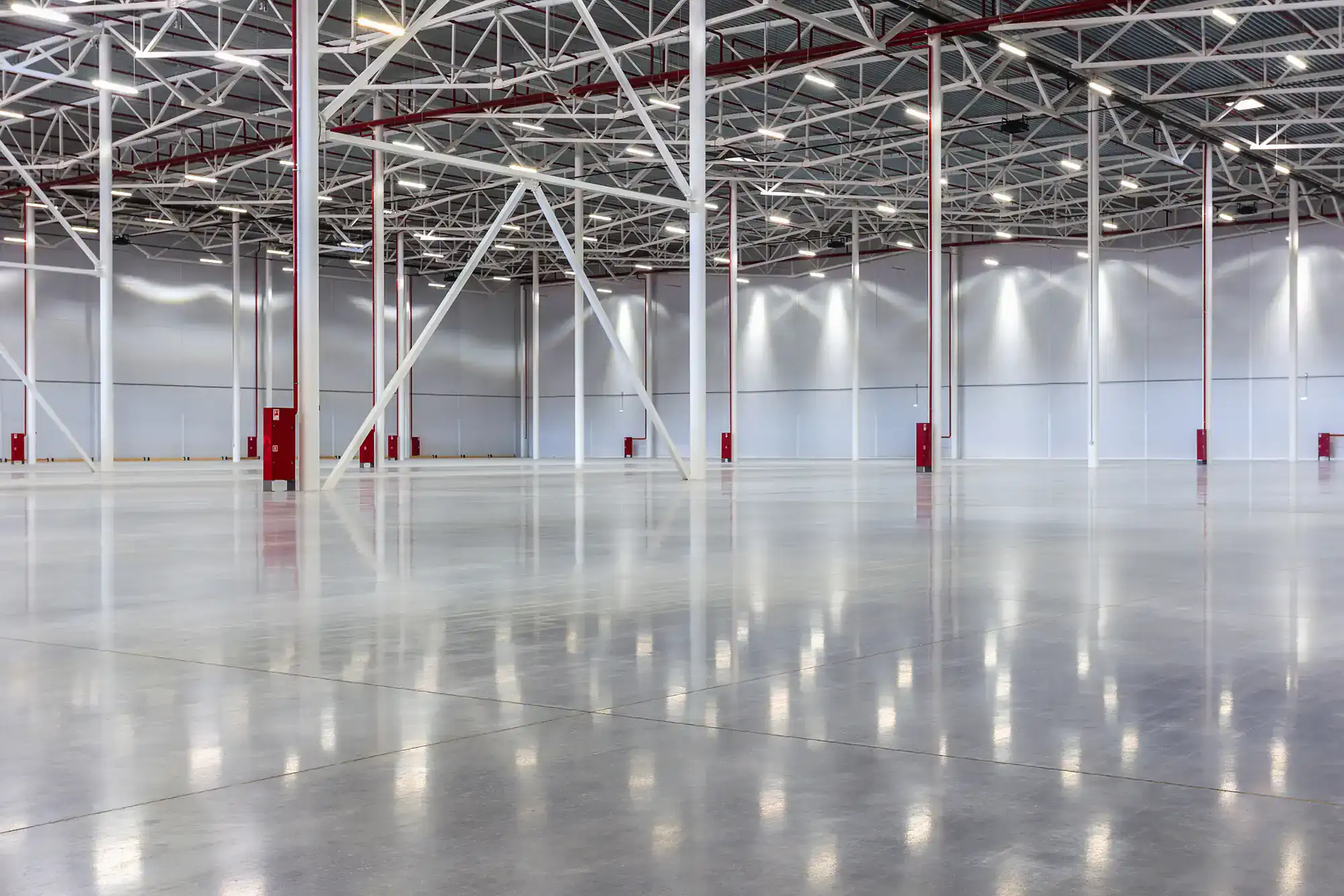
The first thing that happens on any hangar floor job in Huntington Station isn’t coating it’s assessment. The slab gets evaluated for moisture vapor transmission, existing cracks, previous coating failures, and surface contamination. On Long Island, this step isn’t optional. With ambient humidity regularly sitting above 80% and concrete slabs in many local commercial facilities dating back to the early 1960s, skipping moisture testing is the fastest way to guarantee a floor that fails within a year.
Once the slab is assessed, surface preparation begins. That means diamond grinding to the correct concrete surface profile not acid washing, not a light scuff. Grinding opens the concrete so the primer bonds mechanically, not just chemically. Any cracks or spalled areas get repaired before anything else goes on. If there’s a moisture mitigation issue, that’s addressed at this stage, not after the fact.
From there, the system goes down in layers: primer, base coat, topcoat with full cure time between each one. The polyaspartic topcoat is NFSI-certified for slip resistance, which matters in a working hangar where wet floors are a constant. Most active hangars are back in service within 24 hours of the final coat. The process is straightforward, but it only works when every step is done in the right order, with the right materials, by people who’ve done it hundreds of times before.
Ready to get started?
The system we install for hangar floors in Huntington Station, NY is specifically formulated for aviation environments. That starts with Skydrol resistance. Skydrol is the phosphate ester hydraulic fluid used in most commercial and business aircraft, and it’s one of the most chemically aggressive substances a floor will ever see. Standard epoxy can’t handle it. We select and apply coatings specifically because they hold up to Skydrol, jet fuel, hydraulic fluid, de-icing agents, and the industrial cleaning solvents that come with regular aircraft maintenance.
Our system also meets NFPA 409 the national standard that governs aircraft hangar floor surfaces and requires noncombustible materials in aircraft storage and servicing areas. If you’re operating a commercial hangar, managing an FBO facility, or leasing space at Republic Airport, that’s not a detail you can afford to overlook. It affects your insurance, your fire code compliance, and your liability exposure.
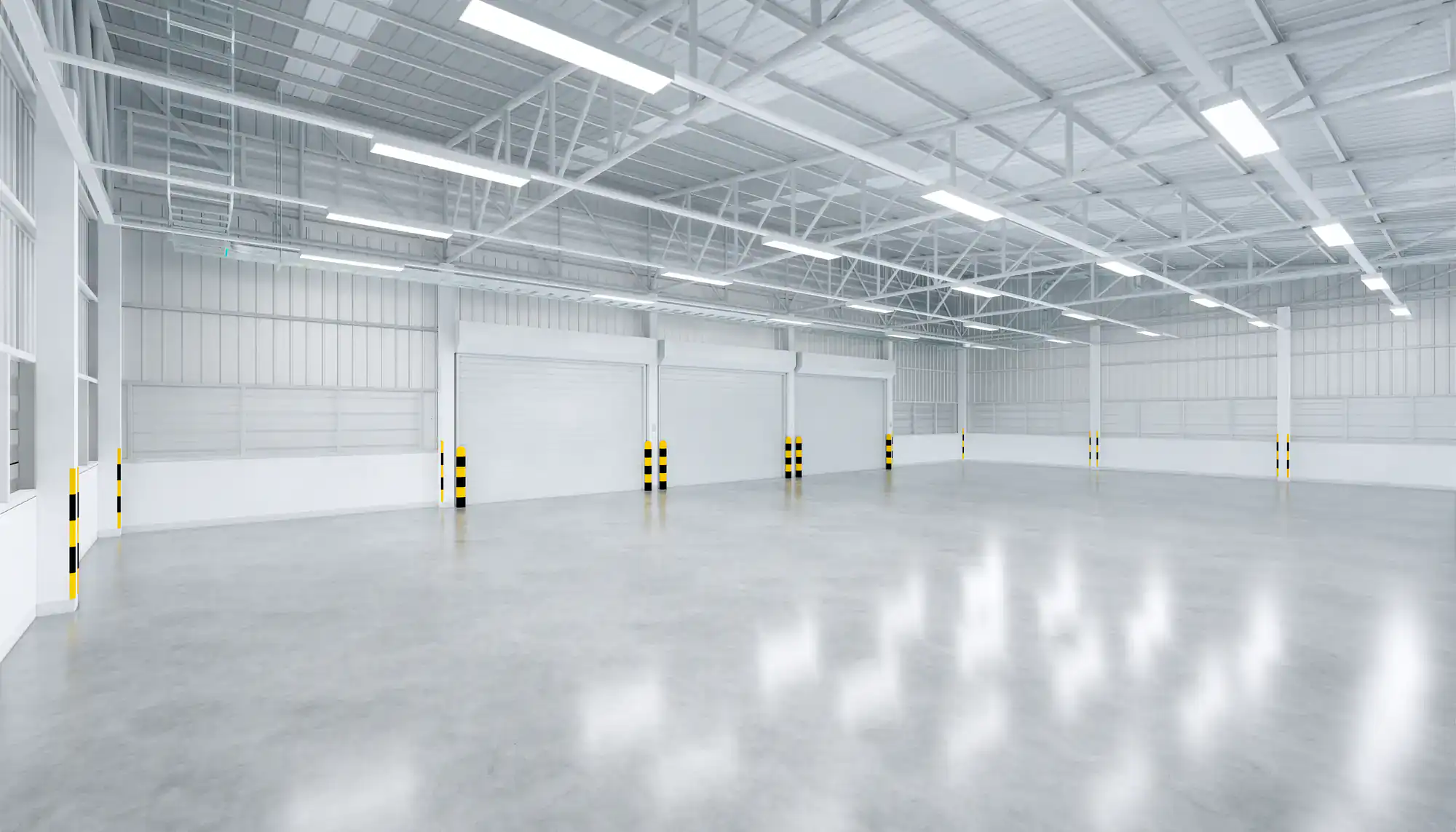
On the finish side, the high-gloss, light-reflective surface isn’t just aesthetic. In a working hangar, a bright floor makes dropped tools visible, spills identifiable immediately, and foreign object debris easy to spot before it reaches a running engine. The NFSI-certified non-slip topcoat means that same glossy surface stays safe underfoot when it’s wet tested and certified, not just claimed. For facilities along the Route 110 corridor or at Republic Airport, this is the floor that actually performs the way a working aviation space demands.
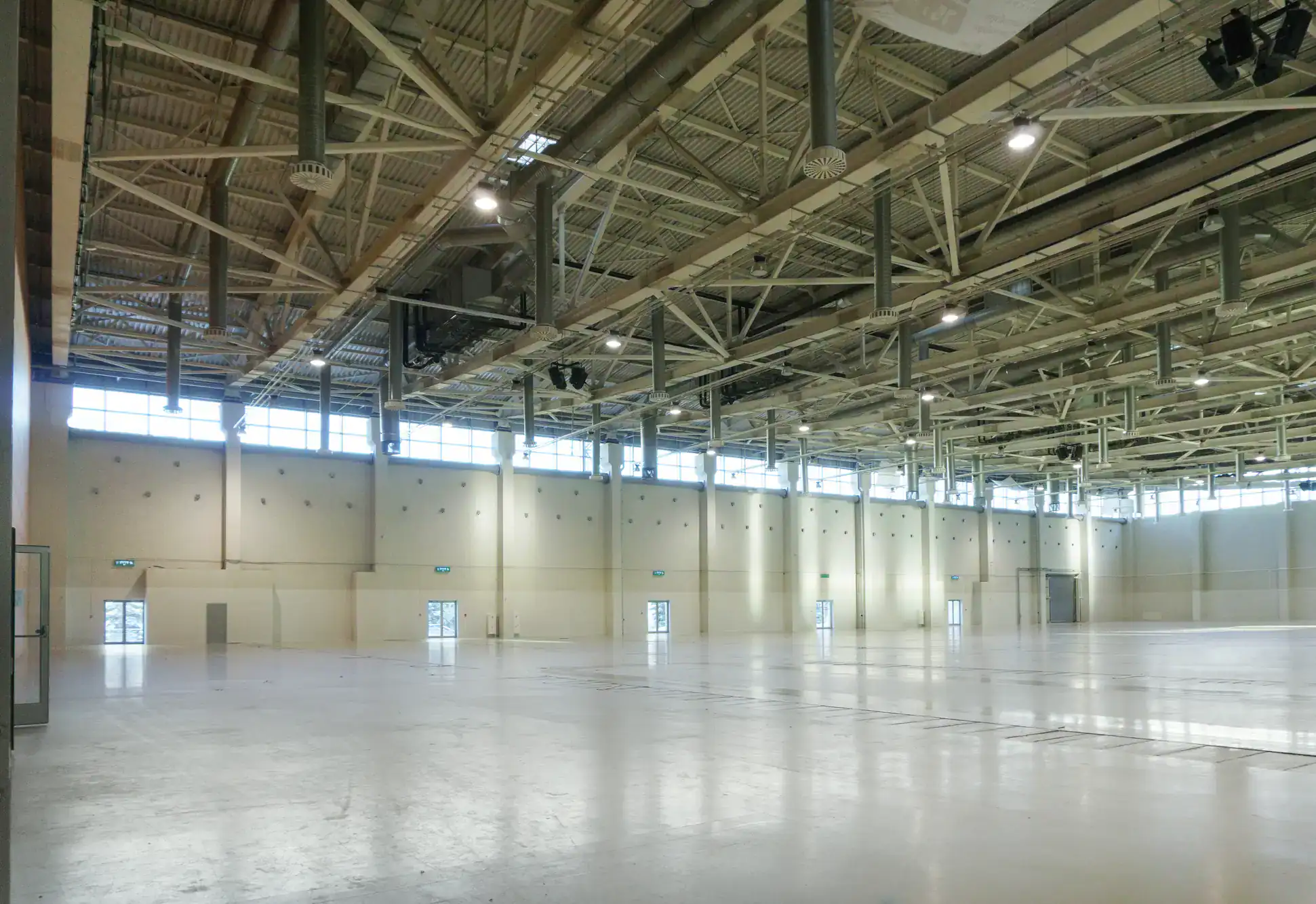
NFPA 409 is the National Fire Protection Association’s standard on aircraft hangars, and yes it applies to most commercial hangar facilities in Huntington Station and throughout Suffolk County. The standard requires that floor surfaces in aircraft storage and servicing areas be noncombustible. That requirement is adopted into New York State’s fire code, which means it’s enforceable at the local level through the Town of Huntington’s building and fire departments.
For private T-hangar tenants, the compliance obligation typically falls on the airport or FBO operator rather than the individual tenant but if you’re managing or operating a facility, you need to know your floor coating meets this standard. Most garage-grade epoxy products don’t qualify. The systems we install are specifically selected to meet NFPA 409’s noncombustibility requirement, which protects you from code violations, insurance complications, and liability exposure. If you’re unsure whether your current floor or a proposed coating qualifies, that’s exactly the kind of question to bring up during an assessment.
Huntington Station sits on Long Island’s North Shore, and the coastal climate here produces some of the most challenging conditions for concrete floor coatings. Ambient humidity regularly reaches 80–95%, and large concrete slabs the kind found in hangars and commercial maintenance facilities absorb and release moisture constantly. When that moisture vapor is moving upward through the slab during or after coating application, it creates pressure that pushes the coating off the concrete from below. The result is blistering, bubbling, and delamination that no amount of re-coating will fix without addressing the root cause.
This is why moisture testing is a mandatory first step on every job in this area. It’s not a precaution it’s the difference between a floor that lasts and one that fails in under a year. If the slab shows elevated moisture vapor emission rates, the installation plan changes before anything else happens. We use moisture mitigation primers and barrier systems when needed, but they only work if the problem is identified first. Any contractor who skips this step on a Long Island hangar floor is setting you up for a call-back they probably won’t honor.
The honest answer depends on two things: the system that was installed and how the prep work was done. A properly installed polyaspartic system applied over a correctly ground, moisture-tested, and repaired slab will realistically last 15 to 20 years in an active hangar environment. Standard epoxy, even when installed correctly, typically runs 5 to 7 years under the chemical and mechanical stress of regular aircraft maintenance activity before it starts showing wear.
The variables that shorten that lifespan on Long Island are the same ones that show up everywhere: moisture vapor that wasn’t addressed before installation, surface prep that stopped at a light scuff instead of a full diamond grind, and coating systems that weren’t formulated for aviation-specific chemicals like Skydrol and jet fuel. If your current floor is peeling, staining unevenly, or showing soft spots, those are signs the original installation cut corners somewhere in the process. Getting it right the second time means starting with an honest assessment of why the first floor failed not just grinding it off and starting over with the same approach.
Both are resinous coating systems applied over concrete, but they perform differently in the conditions a working hangar creates. Standard epoxy is slower to cure, more sensitive to temperature and humidity during application, and typically has a shorter service life under heavy chemical exposure. In a Long Island climate where humidity can be high even in cooler months, epoxy’s cure window is a real operational constraint and its long-term performance in an aviation environment is limited compared to more advanced systems.
Polyaspartic coatings cure significantly faster most hangar floors are back in service within 24 hours and they hold up better under Skydrol, jet fuel, and the UV exposure that comes through open hangar doors. They’re also more flexible than standard epoxy, which matters on older Long Island slabs that experience seasonal movement from freeze-thaw cycling. The tradeoff is that polyaspartic systems require more precise application technique and proper surface prep to perform correctly. Applied by an experienced crew with the right equipment, a polyaspartic system is the better long-term investment for an active aircraft hangar near Huntington Station.
Winter installation is possible on Long Island, but it comes with real constraints that have to be managed. Standard epoxy chemistry slows significantly below 50°F both ambient air temperature and slab temperature matter, and a cold concrete slab in an unheated or partially heated hangar can easily be 10 to 15 degrees colder than the air around it. Applying coating over a cold slab leads to poor adhesion, extended cure times, and a finish that doesn’t perform the way it should.
Polyaspartic systems handle lower temperatures better than standard epoxy, which is one reason they’re a stronger choice for year-round work in Suffolk County. That said, the hangar needs to be at a workable temperature throughout the installation and cure window not just at the time of application. If you’re planning a winter installation, the honest advice is to make sure the facility can maintain consistent temperature during and after the job, and to have the slab temperature checked before any coating decisions are made. Spring and early summer are the most reliable windows for Huntington Station hangar floor work, but a well-managed winter installation with the right system is achievable.
The condition of what’s already on the slab determines whether you can coat over it or need to remove it entirely. If the existing coating is peeling, bubbling, or delaminating in sections, coating over it will fail the new system will only be as strong as what it’s bonded to, and if the layer below is already failing, you’re just delaying the same outcome. In those cases, full removal down to bare concrete is the right call, regardless of the extra time and cost involved.
If the existing floor is structurally intact no peeling, no soft spots, no widespread adhesion failure a thorough diamond grind and surface assessment may be enough to prepare it for a new system. But that determination can only be made after a real evaluation of the slab, not from a photo or a quick visual walk-through. Many of the commercial and industrial facilities along the Route 110 corridor in Huntington Station have slabs with previous coating attempts, and some of those earlier applications used products that weren’t compatible with what’s being applied now. An honest assessment at the start of the job is the only way to know what you’re actually working with and to avoid paying for a new floor that fails for the same reason the old one did.
Other Services we provide in Huntington Station