
Most hangar floor failures on Long Island come down to one thing: the wrong product applied to unprepared concrete. A standard epoxy coating the kind sold at hardware stores or offered by residential flooring contractors breaks down fast when it meets Skydrol hydraulic fluid or jet fuel. You’re left with a peeling, chemically degraded surface that’s a safety issue, not just an eyesore. Aviation-grade aircraft hangar floor coatings in Centereach, NY are a different category entirely.
Central Suffolk County has its own set of concrete challenges. The coastal humidity that comes with living on Long Island creates real moisture vapor pressure inside older slabs and Centereach has a lot of older concrete. Much of the building stock here dates back to the post-WWII development era, and any hangar slab that’s been sitting for decades has absorbed years of freeze-thaw cycling, prior coatings, and moisture migration. A coating applied over that without proper prep will fail at the bond line, not the surface. That’s the problem we solve with a properly installed system.
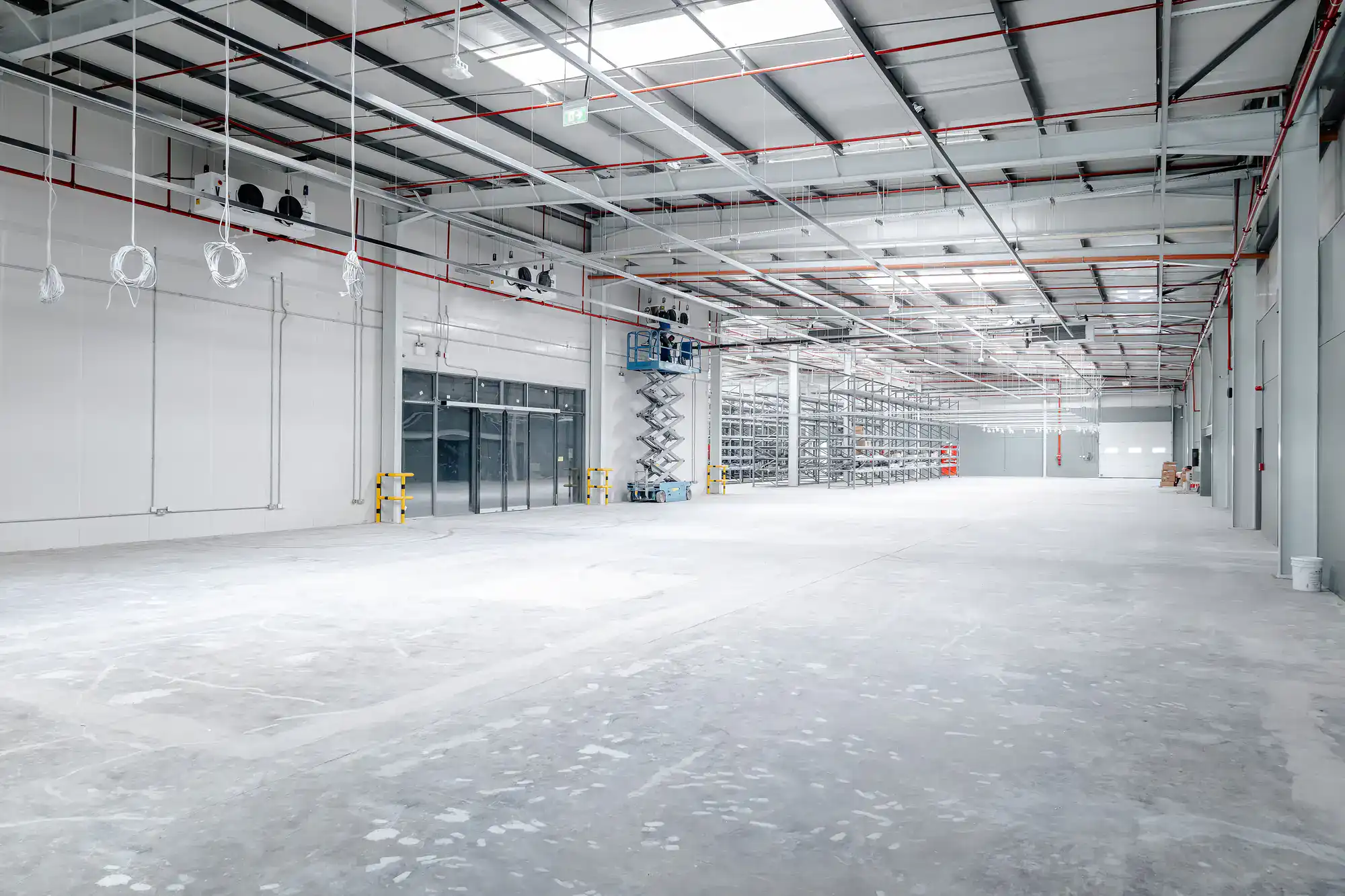
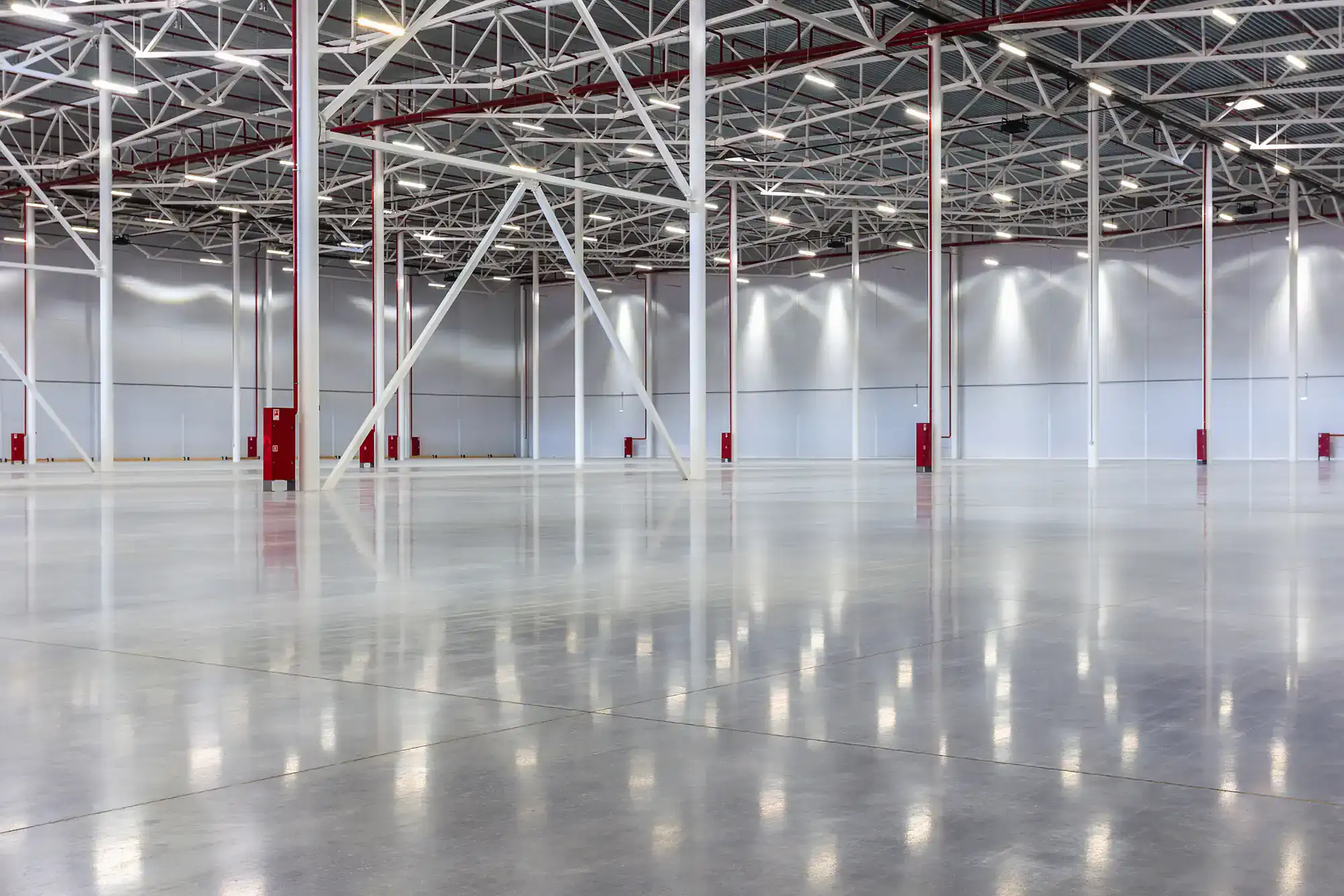
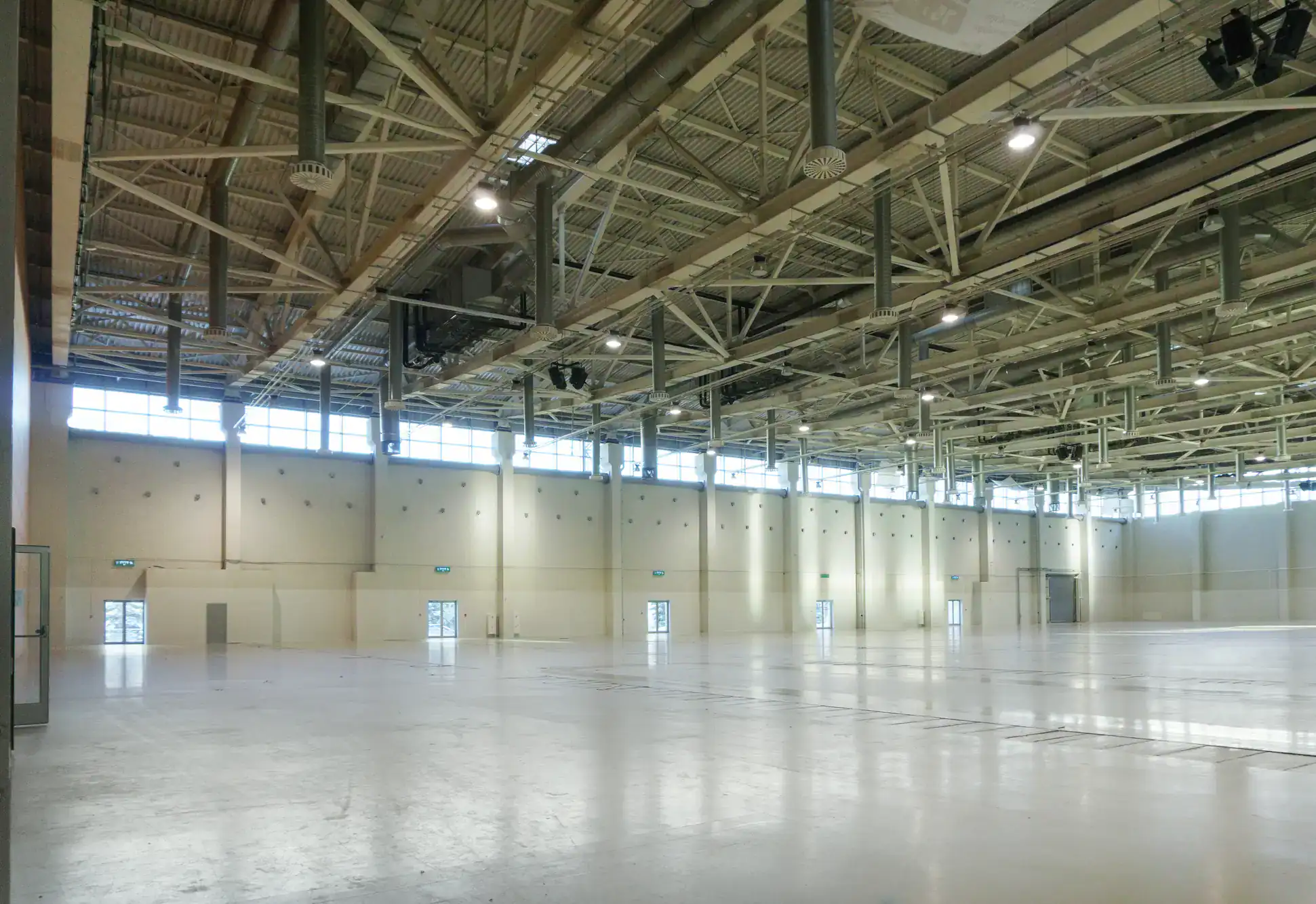
When the floor is done right, you get a surface that reflects light across the full hangar making dropped tools, fluid spills, and foreign object debris immediately visible. You get a non-slip topcoat that stays safe when there’s fuel on the floor. And you get a system that doesn’t need to be replaced in three years because someone skipped the moisture test or rushed the grind.
We’re based in Bohemia a short drive down Middle Country Road from Centereach and have been installing high-performance resinous floors for over 30 years. Danny Harmer, our president, has personally done this work for more than four decades. That’s not a biography detail it means the person responsible for your floor has seen every type of concrete condition Long Island throws at a slab, including the moisture and spalling issues common to central Suffolk County hangars.
The crew that shows up to your facility has been with us for over a decade on average. No rotating subcontractors, no day laborers learning on your floor. Every installer carries OSHA 40 certification, and we hold dual elite certifications from Sherwin-Williams High Performance Flooring and Res Tech two of the most rigorous credentials in industrial flooring. These aren’t decorative credentials. They reflect the kind of system knowledge that aviation facility work actually requires.
The first thing that happens on any hangar floor project in the Centereach area isn’t coating it’s concrete assessment. The slab gets evaluated for moisture vapor transmission, existing coatings, cracks, spalling, and surface profile. In central Suffolk County, moisture testing isn’t optional. The humidity here is persistent, and large hangar slabs are particularly vulnerable to vapor pressure building up from below. Skip that step and you’re setting up a delamination failure, sometimes within the first year.
Once the assessment is complete, the surface gets diamond ground to the correct adhesion profile. This is the step that determines whether the coating bonds permanently or peels in two seasons. Any cracks or spalled areas are repaired before coating begins. We don’t coat over problems the prep work is the whole foundation of how long the floor lasts.
From there, the system goes down in a properly sequenced multi-coat application. If your timeline is tight and most hangar operators can’t afford a week of downtime a polyaspartic system can get aircraft back on the floor within 24 hours of the final coat. Spring and fall are the best installation windows in this region, when concrete temperatures and humidity levels are most cooperative, but properly managed summer installations are feasible with the right system selection. The process ends with a non-slip topcoat that meets NFSI certification standards tested slip resistance, not just a textured finish.
Ready to get started?
Aircraft hangars in New York State fall under NFPA 409, the Standard on Aircraft Hangars, which requires that floor surfaces in aircraft storage and servicing areas be noncombustible. That eliminates most standard epoxy products from consideration including the same coatings used for residential garages and light commercial spaces. If a contractor quotes your hangar floor and doesn’t bring up NFPA 409, that’s worth paying attention to.
The systems we install are specifically formulated for aviation environments. That means Skydrol resistance, jet fuel resistance, and the mechanical durability to handle ground support equipment, aircraft tow loads, and daily maintenance traffic. For private aircraft owners with hangar space at MacArthur Airport in Ronkonkoma or at Brookhaven Airport in Shirley both within easy reach of Centereach these aren’t theoretical requirements. They’re the daily reality of operating a working hangar.
For Centereach-area hangar operators dealing with older concrete slabs, our service includes crack and spall repair, moisture vapor assessment, and full diamond grinding before any coating is applied. What you receive at the end isn’t just a coated floor it’s a surface with documented prep, certified slip resistance, OSHA-compliant installation, and a system that was selected for your specific slab condition, not pulled off a price sheet.
Yes if you’re storing or servicing aircraft, NFPA 409 applies. This standard, incorporated into the New York State Building Code, requires that the grade floor surface in aircraft storage and servicing areas be noncombustible. That’s a specific material requirement, not a general guideline, and it eliminates a wide range of standard epoxy and paint products from consideration.
For hangar operators at MacArthur Airport in Ronkonkoma or Brookhaven Airport in Shirley, this isn’t an obscure regulation it’s something your facility manager or FBO operator should already be aware of. The practical implication is that your floor system needs to be selected based on tested, documented performance, not just price per square foot. When you’re working with us, this conversation happens before the quote, not after the floor is already down.
The chemistry is different, and the performance requirements are in a completely different category. Standard commercial epoxy the kind used in warehouses, retail spaces, or residential garages isn’t formulated to resist Skydrol hydraulic fluid, jet fuel, or the industrial solvents used in aircraft maintenance. When those fluids contact a standard epoxy surface, the coating breaks down at the chemical level. You’ll see discoloration first, then softening, then delamination.
Aviation-grade systems are specifically engineered for these exposures. They’re also applied over properly prepared concrete diamond ground, moisture tested, and crack repaired because the bond between the coating and the slab is what determines how long the system holds up. A high-performance product applied over inadequately prepared concrete will still fail. The combination of the right system and the right prep is what separates a floor that lasts 15 to 20 years from one that needs to be replaced in three.
It’s one of the most important factors in the entire project, and it’s specific to this region. Long Island sits at the convergence of humid continental and humid subtropical climate patterns, and central Suffolk County where Centereach is located experiences persistent coastal humidity year-round. That moisture doesn’t stay in the air. It migrates through concrete slabs, and large hangar floors are particularly vulnerable because of their surface area and the thermal cycling they experience with the seasons.
If a coating is applied over a slab with elevated moisture vapor transmission and no proper assessment has been done, the moisture pushes up against the underside of the coating from below. Over time sometimes within the first year that pressure causes bubbling and delamination. The fix is a moisture assessment before installation begins, which is a standard part of our process here. It’s not an upsell. It’s the step that determines whether the floor lasts or fails, and it’s especially non-negotiable in a climate like Long Island’s.
It depends on the system selected and the size of the hangar, but with a polyaspartic coating system, most hangars can have aircraft returned to the floor within 24 hours of the final coat. Polyaspartic chemistry cures significantly faster than traditional epoxy, which is one of the primary reasons it’s become the preferred system for working aviation facilities where downtime is a real operational cost.
For larger hangars or projects that require significant concrete repair work before coating, the timeline extends based on how much prep is needed not on the coating cure time itself. Crack repair and spall patching need to cure before the coating system goes over them. The honest answer is that the prep work drives the schedule more than the coating does, which is why a proper site assessment before the project starts gives you a realistic timeline rather than a best-case estimate. Most Centereach-area hangar projects can be scheduled to minimize disruption to your flying schedule.
Both can be appropriate depending on the project, but polyaspartic has meaningful advantages for most hangar applications in Suffolk County. The faster cure time is the most obvious one 24-hour aircraft return versus several days with traditional epoxy. But polyaspartic also performs better in the temperature and humidity ranges common to Long Island, where summer installations can push the limits of standard epoxy cure windows. Polyaspartic systems have a wider application temperature range and are less sensitive to humidity during cure.
That said, the system selection should be based on your specific slab condition, your operational timeline, and the chemical exposures your floor will see. A hangar that primarily stores aircraft and sees light maintenance traffic has different requirements than a full-service maintenance bay with daily Skydrol and solvent exposure. The right answer comes out of a proper site assessment, not a blanket recommendation. What matters most is that whatever system goes down is matched to your actual conditions not just what’s easiest to install.
The condition of the existing coating and the concrete beneath it determines the answer. If the current coating is intact, well-bonded, and free of delamination, a recoat over a properly prepared surface is often feasible. If there’s peeling, bubbling, or areas where the existing coating has lifted which is common in older Suffolk County hangars that were coated with products not suited to Long Island’s moisture environment the failed coating needs to come off before anything new goes down.
Applying a new coating over a failing one is one of the most common and costly mistakes in hangar floor work. The new system will bond to the old coating, not to the concrete, and when the old coating continues to fail, it takes the new one with it. The assessment process includes evaluating adhesion of the existing coating, testing for moisture in the slab, and identifying any areas of spalling or contamination that need to be addressed. For hangars near Brookhaven Airport that have been in service for decades, this evaluation step frequently reveals moisture issues that weren’t visible on the surface which is exactly why it happens before the project scope is finalized, not after.