
Baldwin Harbor, Milburn Creek, Parsonage Creek the water is never far. That means the moisture vapor pushing up through your concrete slab isn’t a seasonal problem. It’s a year-round one. And it’s the reason most hangar floors in this area fail before their time not because the product was bad, but because nobody tested the slab before they coated it.
When aircraft hangar floor coatings are installed correctly in Baldwin, the difference is immediate and lasting. Fluids that would eat through a standard floor jet fuel, hydraulic fluid, Skydrol, cleaning solvents sit on the surface instead of breaking it down. The finish stays intact. The floor stays safe. And you’re not pulling aircraft out of the hangar two years from now to fix a coating that’s peeling off the slab.
For Baldwin-area facilities, that also means a floor that can handle what comes with being on Long Island’s South Shore: the humidity that doesn’t let up in summer, the freeze-thaw cycles that stress concrete all winter, and the salt air that accelerates degradation in ways you won’t see until it’s already a problem. Getting it right the first time isn’t a luxury here it’s the only approach that makes financial sense.
Advanced Epoxy Flooring is based in Bohemia, NY on Long Island, not across the country. For over 30 years, we’ve been installing resinous flooring systems across the region, including aviation facilities, commercial operations, and large-footprint industrial spaces throughout Nassau County and beyond. We know Baldwin’s conditions because we’ve worked in Baldwin and the surrounding South Shore communities long enough to understand what the coastal environment does to concrete.
Danny Harmer, our president and CEO, has more than 40 years of personal installation experience. He has installed hangar floors. That’s not a marketing line it means when your facility comes up, the person running the company understands exactly what the job requires, what the substrate is likely doing in a coastal environment like Baldwin’s, and what system belongs on it.
Every installer on our crew carries OSHA 40 certification. We hold dual elite certifications through Sherwin-Williams High Performance Flooring and Res Tech. These aren’t credentials collected for a website they’re the standard we’ve operated to for decades, on projects ranging from South Shore Nassau County to the White House kitchen in 1996.
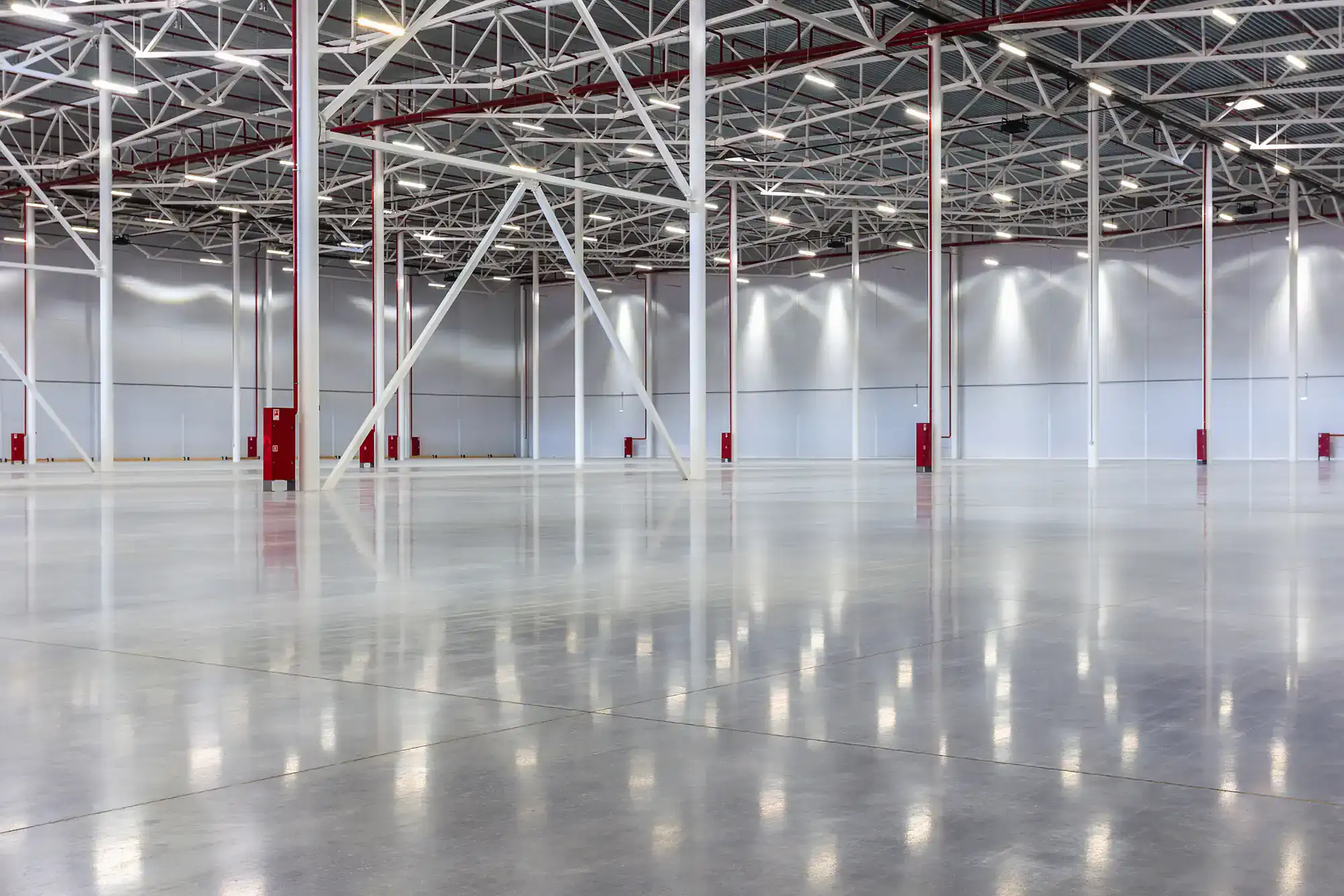
The first thing that happens on a Baldwin hangar floor job isn’t coating it’s assessment. Given the South Shore’s high water table and the moisture vapor transmission common in sandy coastal soil, we test the slab before anything else. This step determines which system belongs on your floor and whether moisture mitigation primer is needed before the base coat. Skipping it is how floors fail. We don’t skip it.
Once the substrate is assessed, we grind the surface to create the adhesion profile the coating needs to bond correctly. Any cracks or spalled areas get repaired at this stage not covered over. Then the system goes down in layers: primer, base coat, topcoat. Each layer gets the cure time it needs. Nothing gets rushed to hit a schedule.
The topcoat is where the safety and compliance elements come together. The non-slip finish meets National Flooring Safety Institute requirements tested and certified, not just described that way. If your facility falls under NFPA 409, the system is non-combustible and compliant. For Nassau County hangar operators who need to document that compliance, the credentials are real and verifiable. When the job is done, your floor is ready for aircraft, for foot traffic, and for the conditions Baldwin delivers year-round.
Ready to get started?
The floor systems we install in Baldwin-area hangars are selected for the specific demands of aviation environments in a coastal Nassau County setting. That means chemical resistance formulated for Skydrol hydraulic fluid, jet fuel, lubricants, and the cleaning solvents used in active maintenance bays not just the standard residential or light commercial exposure list most contractors work from.
For facilities operating under NFPA 409 the standard that governs aircraft hangars and requires non-combustible floor surfaces our systems are compliant. This matters whether you’re managing a facility near JFK, leasing hangar space at Republic Airport in Farmingdale, or running a private maintenance operation anywhere in the Baldwin area. Most general flooring contractors don’t know NFPA 409 exists. The ones who do often can’t document compliance. That gap is where problems start.
On the finish side, we offer high-gloss, light-reflective options that make dropped hardware, fluid spills, and foreign object debris visible immediately a real operational benefit in a working hangar, not just an aesthetic one. Polyaspartic systems are available for facilities that need to return to service fast, with cure times that get aircraft back in the hangar within 24 hours instead of waiting through a multi-day epoxy window. For active operations, that difference has a dollar value attached to it.
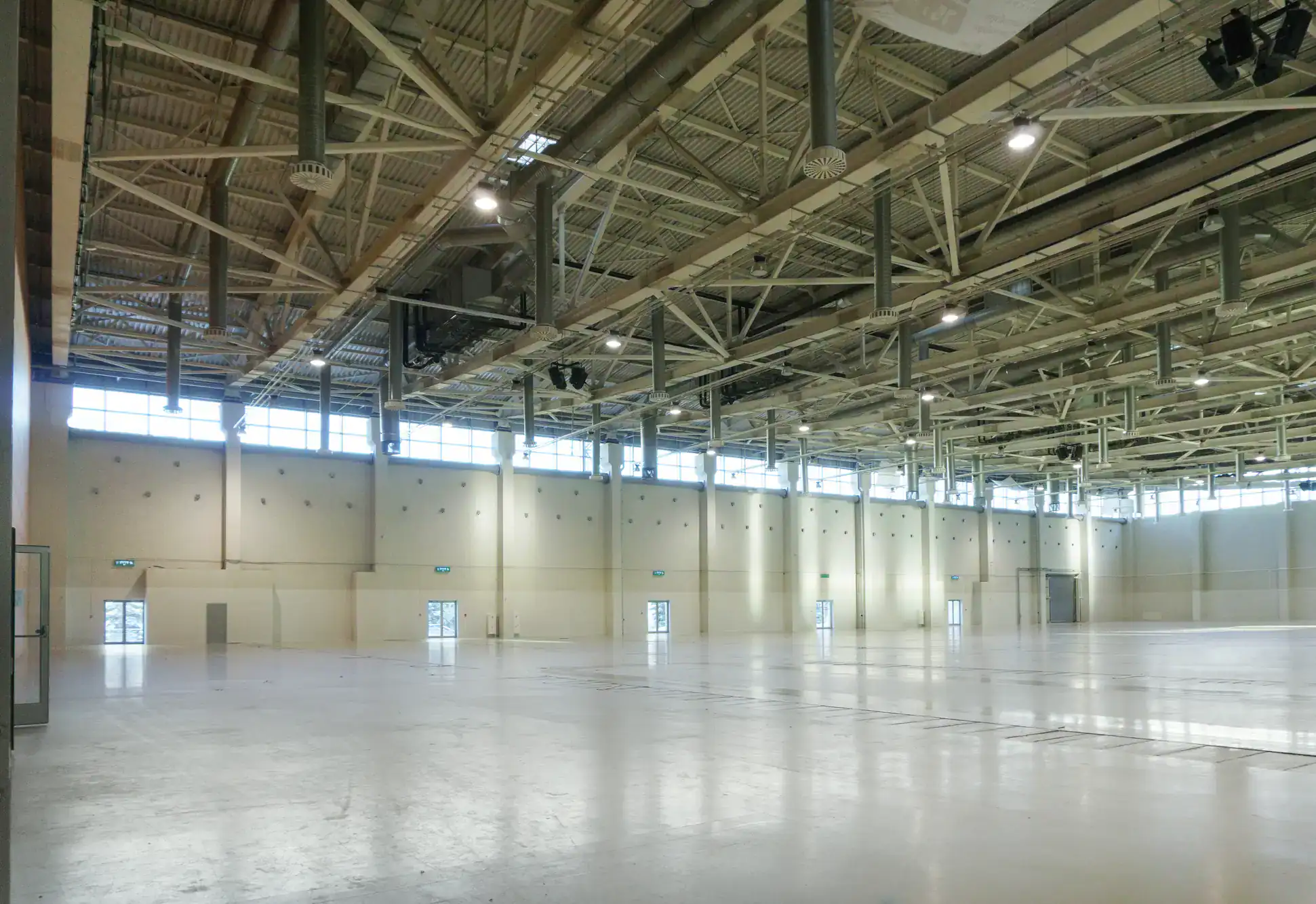
It’s one of the most important factors to account for on Long Island’s South Shore, and it affects the floor in two ways. First, atmospheric humidity during installation impacts how the coating cures and bonds. Second and more damaging long-term is moisture vapor transmission from below. Baldwin sits on sandy, porous soil with a naturally high water table. Groundwater pushes moisture vapor upward through concrete slabs from underneath, and if the slab isn’t assessed and treated before the coating goes down, that vapor pressure will eventually break the bond between the coating and the concrete.
This is the leading cause of epoxy delamination in coastal Nassau County, and it happens regardless of how good the product is. The fix isn’t a better coating it’s a proper moisture assessment before installation and a moisture mitigation primer when the readings call for it. Every job we take on in Baldwin starts with that assessment. It’s not optional here.
NFPA 409 is the National Fire Protection Association’s standard for aircraft hangars. Among its requirements is that hangar floor surfaces be non-combustible. This applies to commercial hangar operations, FBO facilities, and maintenance bays and it’s a condition of operation, not just a recommendation. If your facility is inspected and the floor doesn’t meet the standard, you have a compliance problem.
The practical issue is that most standard epoxy products used in residential and light commercial applications don’t meet this requirement. Many general flooring contractors either don’t know the standard exists or can’t confirm their system is compliant. For Nassau County hangar operators whether you’re near JFK, leasing at Republic Airport in Farmingdale, or running a private maintenance facility in Baldwin this is a real exposure. The systems we install for aviation facilities are non-combustible and NFPA 409 compliant. If you need documentation for your facility records or a compliance audit, that documentation exists.
Both are viable systems for aviation environments, but they perform differently in ways that matter depending on how your facility operates. Epoxy systems are extremely durable and chemically resistant, but they require multi-day cure windows before the floor can handle traffic or aircraft weight. In a working hangar, that means several days of downtime which has a real cost if the facility is active.
Polyaspartic systems cure significantly faster. In most cases, aircraft can return to the hangar within 24 hours. They also perform well across a wider temperature range, which matters during Long Island winters when hangar interiors can get cold and standard epoxy cure times stretch out further. For Baldwin-area facilities that can’t afford extended downtime or for installations scheduled during fall or winter polyaspartic is often the right call. The trade-off is that polyaspartic requires a more precise application window, which is exactly why installer experience matters. This isn’t a system you want applied by someone learning on your floor.
Salt air is a corrosive environment for concrete and for the adhesion chemistry between a coating and its substrate. In Baldwin, where the harbor sits at the southern edge of the community and the coastal air carries salt year-round, this isn’t an abstract concern it’s an active degradation factor that affects any structure with a concrete slab and an exterior exposure.
For hangar floors specifically, the risk shows up in two places: at the perimeter of the slab where moisture and salt air enter from outside, and in any area where the coating system wasn’t properly sealed or where the surface prep left micro-voids in the bond. Aviation-grade systems formulated for coastal environments use chemistry that accounts for this. Standard residential or light commercial coatings don’t. The difference in longevity between a properly specified coastal system and a generic one can be measured in years and in whether you’re re-coating every four or five years or getting 15 to 20 years out of a properly installed floor.
For most hangar floor installations, the work itself takes one to two days depending on square footage, the condition of the existing slab, and which system is being installed. If significant crack repair or moisture mitigation work is needed which is common in older Baldwin-area buildings given the community’s age and coastal conditions that can add time to the prep phase. The floor needs to be clear of aircraft, equipment, and stored materials before work begins.
Timing matters on Long Island. Spring is the most popular window temperatures are moderate, humidity is lower than summer, and most hangar operators want the floor done before the heavy flying season. Fall is the second peak, particularly for facilities running on a year-end capital budget. Summer installations are absolutely doable, but Baldwin’s South Shore humidity is at its highest in July and August, which makes the moisture assessment step even more critical during that window. Winter work is viable for interior hangar spaces, especially with polyaspartic systems that handle lower temperatures better than standard epoxy.
Hangar floor coating costs vary based on square footage, the condition of the concrete, the system selected, and what prep work the slab requires. For aviation-grade epoxy or polyaspartic systems installed in Nassau County, you’re generally looking at a range that reflects both the chemistry of the product and the labor intensity of doing it correctly surface grinding, crack repair, moisture mitigation primer where needed, and a multi-layer system applied with proper cure time between coats.
What’s worth understanding is the total-cost-of-ownership math. A lower-cost floor installed without proper moisture assessment or with a system that isn’t formulated for aviation chemical exposure will typically need to be re-coated within three to five years sometimes sooner in a coastal environment like Baldwin’s. A properly engineered system installed once, on a correctly prepared substrate, routinely lasts 15 to 20 years with standard maintenance. Over that same period, the re-coat cycle on a cheaper floor costs significantly more. For Baldwin-area hangar operators making a capital investment in their facility, the question isn’t just what it costs today it’s what it costs over the life of the floor.