
Every winter response along Sunrise Highway or Montauk Highway sends your apparatus through heavy brine before it rolls back into the West Islip station. Bare concrete absorbs that salt. Thin coatings trap it underneath and start failing from the inside out. A properly installed polyaspartic system seals the slab completely road salt, diesel, and hydraulic fluid rinse right off instead of soaking in.
West Islip sits on the Great South Bay, and that coastal humidity keeps moisture levels in your concrete elevated year-round. That’s the exact condition that causes bubbling and delamination when a contractor skips moisture testing and proper prep. When the floor is done right, you stop replacing it every few years and start thinking in decades instead.
The other thing that changes is cleanliness. A seamless, non-porous surface doesn’t harbor the carcinogens that get tracked in from structure fire responses. NFPA contamination control standards are pushing departments across Suffolk County toward this type of floor not just for performance, but to protect the 143 volunteers who work out of your station every day.
We’ve been installing commercial and industrial floors for over 30 years, based out of Bohemia, NY about 20 miles east of West Islip along the South Shore corridor. Our CEO Danny Harmer has over 40 years of hands-on installation experience, and most of our field team has been with us for more than a decade. We’re not a residential garage crew that expanded into commercial work.
We hold the Sherwin-Williams High Performance Flooring certification one of the most rigorous manufacturer-approved applicator credentials in the industry along with Res Tech certification and OSHA 40 certification for every field installer. That last one matters when our crew is still working in the building during installation.
Our portfolio includes the White House kitchen in 1996, projects in Moscow and the Bahamas, and firehouse floors across Long Island and the five boroughs. Departments in Suffolk County have options when it comes to contractors. Not many of them can say all of that.
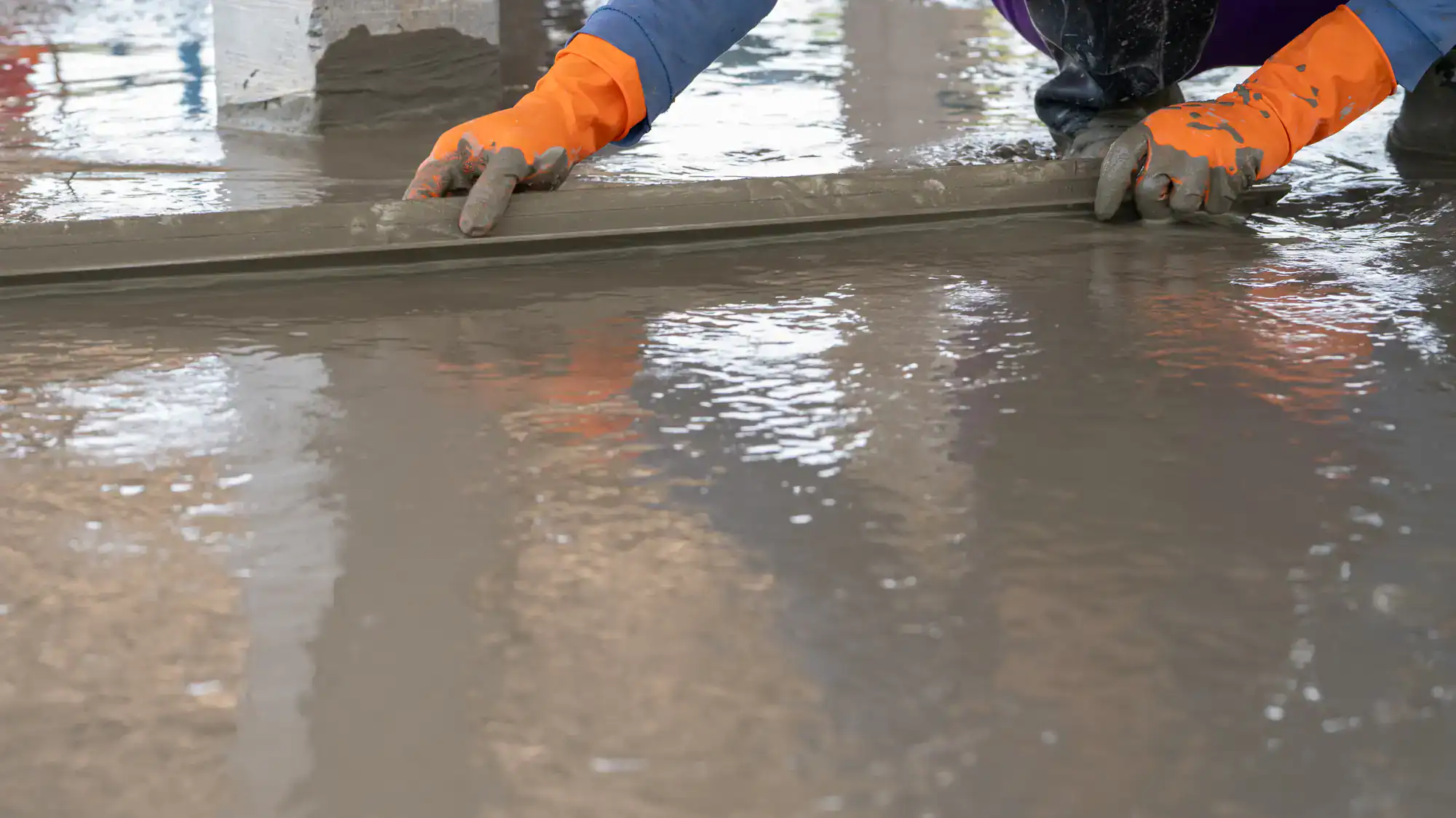
It starts with concrete assessment not a visual once-over, but actual diamond grinding and moisture testing before anything gets applied. In a South Shore environment like West Islip, where bay-influenced humidity keeps slab moisture elevated through most of the year, this step is what separates a floor that lasts 20 years from one that bubbles and peels in three. Contractors who skip it and use acid etching as their only prep method are cutting a corner that will cost you later.
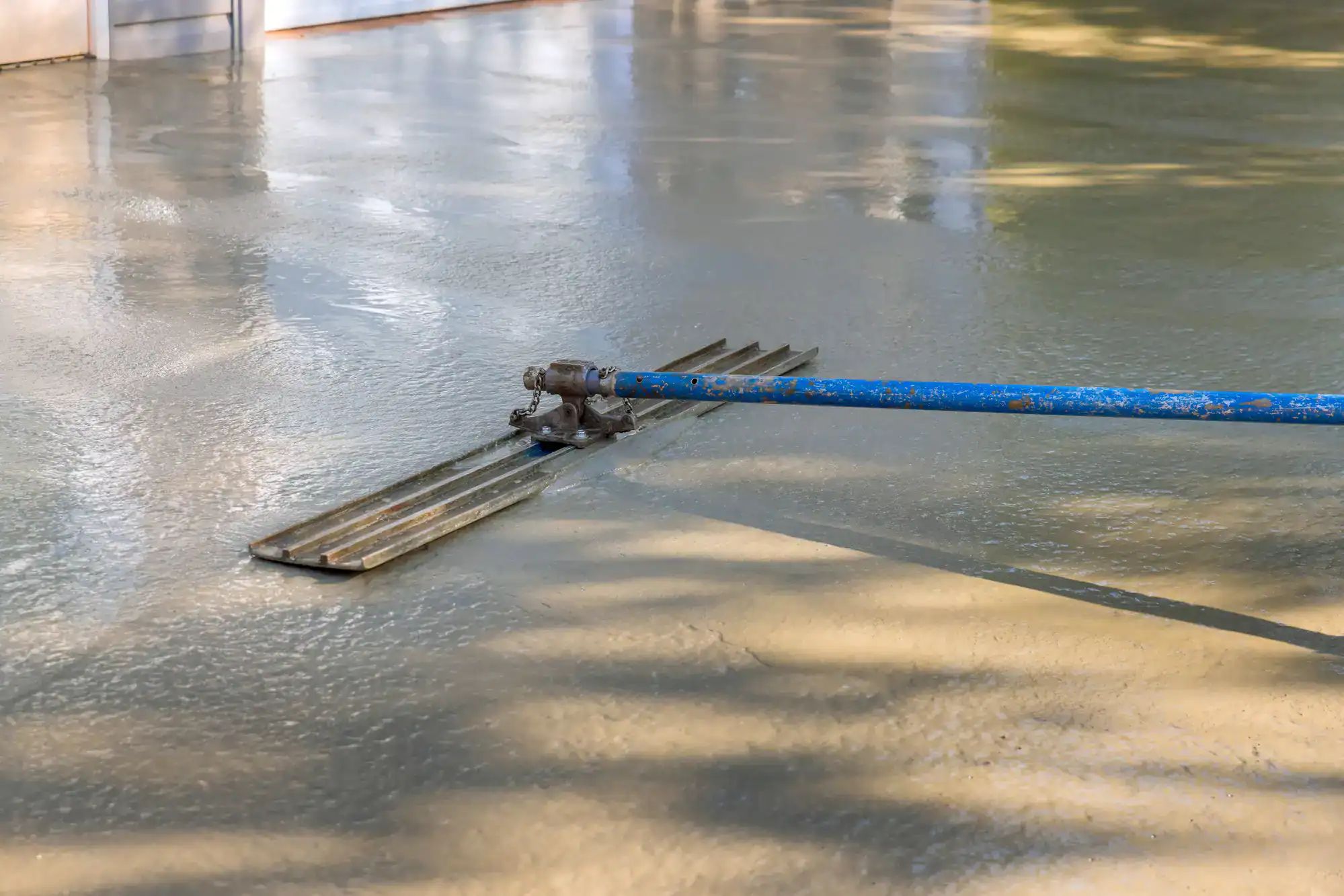
Once the concrete is properly prepped, the system goes down in layers: a penetrating primer to lock the slab, a high-build epoxy base with aggregate broadcast for slip resistance and texture, and a polyaspartic topcoat that cures hard in 24 hours. The whole system comes in at 15 mils thick significantly more than the 4 to 8 mils you get from standard commercial epoxy. That thickness is what gives it the load-bearing capacity and abrasion resistance your apparatus bay actually needs.
By the next morning, your trucks are back in the station. For a single-station department serving all of West Islip, that timeline isn’t just convenient it’s the only timeline that works. Spring and early fall are the best installation windows here, after the worst of road-salt season has passed and before summer call volume peaks with South Shore beach traffic at Captree and Robert Moses.
Ready to get started?
The apparatus bay gets the most attention, but it’s not the only floor in your station that takes a hit. The decontamination zone needs a seamless, chemical-resistant surface that can be power-washed clean after a structure fire response one that doesn’t harbor contaminants in grout lines or surface cracks. The living quarters and kitchen need something durable enough for daily high-traffic use but easy to maintain. We handle all of it with the same multi-layer resinous system, so you’re not coordinating three different contractors with three different warranties.
For the apparatus bay specifically, the system includes diamond grinding, moisture testing, a penetrating primer, a high-build epoxy base with broadcast aggregate for traction, and a UV-stable polyaspartic topcoat. That topcoat is thermally resistant which means it won’t bond to heated tires and peel off when the apparatus leaves the bay. Hot-tire pickup is the most common failure mode in apparatus bays on Long Island, and it’s entirely preventable with the right product.
The finished floor is rated for 40,000-pound apparatus loads, resistant to diesel, hydraulic fluid, road salt, and cleaning chemicals, and designed to last 20-plus years under real working conditions. For a West Islip fire district board that needs to justify capital spending to taxpayers, that 20-year lifespan is the math that makes this investment straightforward.
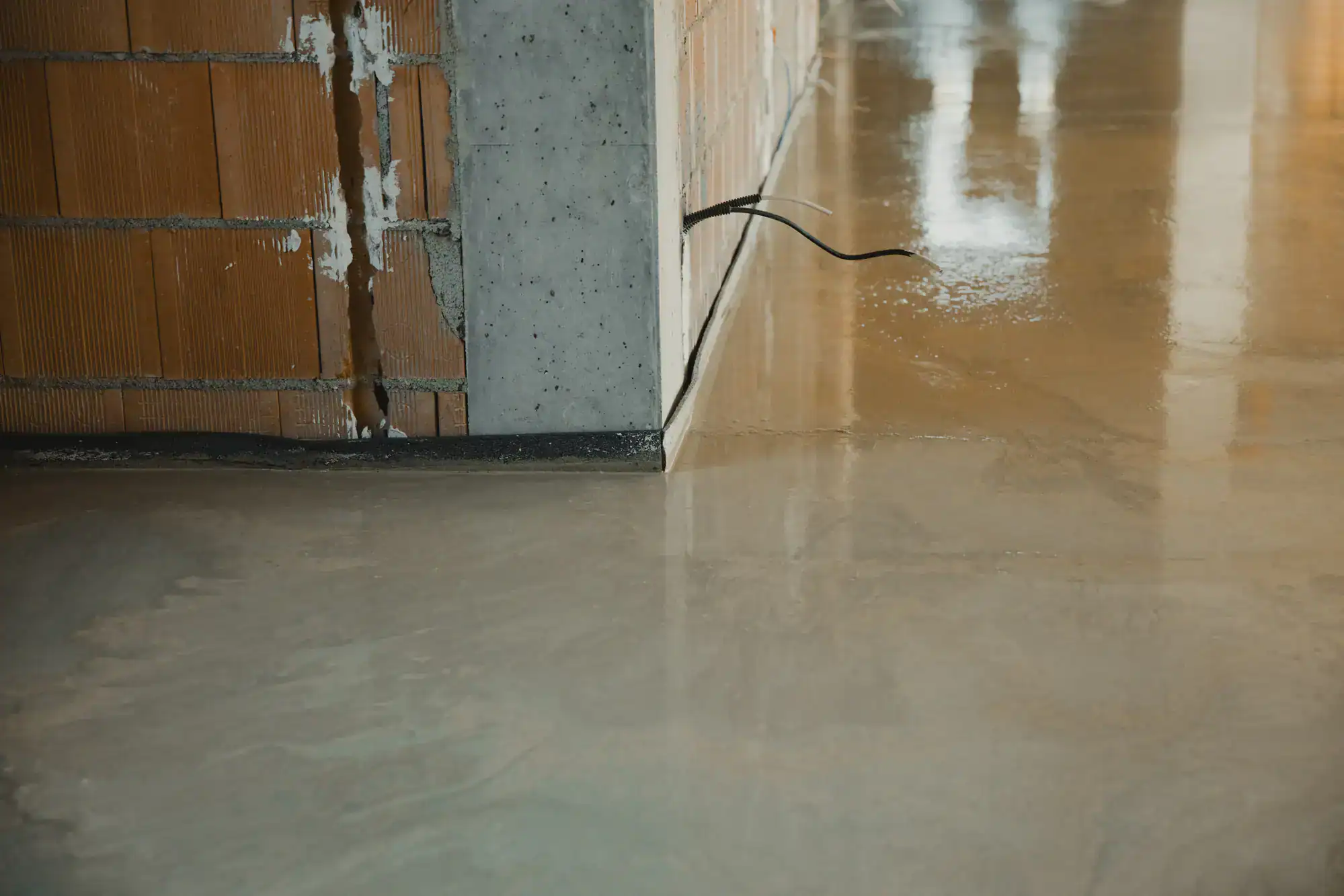
With a polyaspartic system, cure time is 24 hours. Your apparatus can be back in the bay the next morning not three to seven days later like you’d get with a standard epoxy installation. For the West Islip Fire Department operating out of a single station on Union Boulevard, that distinction is everything. There’s no second bay to park trucks in while a floor cures, and there’s no realistic way to leave the community uncovered for a week.
Standard epoxy takes significantly longer to reach full hardness, and some contractors will tell you to wait even longer before putting heavy loads back on it. Polyaspartic chemistry cures faster and harder, which is why it’s become the standard for active apparatus bays. You get a tougher floor and a faster return to service those two things don’t usually come together, but here they do.
The most common cause is inadequate surface preparation specifically, contractors who skip diamond grinding and moisture testing and rely on acid etching alone. In a coastal environment like West Islip, where the proximity to the Great South Bay keeps concrete moisture levels elevated year-round, moisture vapor drives upward through the slab and breaks the bond between the coating and the concrete from underneath. The result is bubbling, delamination, and peeling usually within two to three years of installation.
The second most common cause is using the wrong product for the environment. Standard epoxy doesn’t handle thermal cycling well. When heated tires from a returning apparatus cool on a thin or standard epoxy surface, the coating bonds to the rubber and peels off when the truck leaves. This is called hot-tire pickup, and it’s extremely common in apparatus bays that were coated by residential garage floor contractors using consumer-grade or light commercial products. The fix is a polyaspartic topcoat with proper thickness and thermal resistance installed over a correctly prepped slab.
For a coating-only installation no structural changes, no drainage modification permit requirements through the Town of Islip’s building department are typically minimal. A floor coating that stays within the existing slab footprint and doesn’t involve any mechanical or structural work generally doesn’t trigger a full building permit in most Long Island municipalities, including those within the Town of Islip’s jurisdiction.
That said, any work in a public facility should be confirmed with the Town of Islip building department before the project starts, particularly if the scope includes any floor penetrations, drain modifications, or adjacent construction. Our OSHA 40 certification for all field installers is relevant here it’s a documented safety credential that matters when work is being performed in an active municipal fire station, and it supports the department’s compliance posture regardless of permit requirements. When in doubt, a quick call to the building department before scheduling is always worth the five minutes.
Professional installation for a commercial apparatus bay floor system typically runs between $5 and $15 per square foot, depending on the condition of the existing concrete, the system specified, and the total square footage of the project. For a single-station fire department with a standard apparatus bay, the total investment generally falls somewhere in the range of $15,000 to $50,000 a wide range because bay sizes and concrete conditions vary significantly from station to station.
The more useful number for a fire district board is the cost over time. A properly installed polyaspartic system lasts 20-plus years. A standard commercial epoxy lasts 5 to 10 years. A consumer-grade or improperly installed system fails in 3 to 5 years and when it fails, you’re paying to grind off the failed coating, repair the concrete underneath it, and start over. That cycle costs more than doing it correctly the first time. West Islip’s fire district tax base is strong relative to many Suffolk County communities, and the 20-year math makes a quality installation the more defensible budget decision, not the more expensive one.
The system that holds up in a working apparatus bay especially on the South Shore where road salt is heavy from December through March is a multi-layer polyaspartic system installed over properly diamond-ground and moisture-tested concrete. The polyaspartic topcoat is chemically resistant to road salt, diesel, hydraulic fluid, and the cleaning chemicals used for decontamination. It’s non-porous, so none of those substances absorb into the surface they sit on top and rinse off.
Standard epoxy has decent chemical resistance, but it’s more brittle and less thermally stable than polyaspartic. It also typically goes down at 4 to 8 mils thick, compared to 15 mils for a properly specified polyaspartic system. That thickness difference matters when you have 40,000-pound apparatus rolling over the floor daily and tires coming in hot from a winter response along Sunrise Highway. The thicker, more flexible polyaspartic system absorbs that punishment without cracking, lifting, or bonding to the tires.
NFPA 1500 and 1585 don’t prescribe a specific flooring product by name, but they do require fire departments to implement contamination control protocols that prevent carcinogens tracked in from structure fire responses from migrating into living quarters. A cracked, porous concrete floor works directly against that requirement it harbors contaminants in every surface crack and pore, and it can’t be effectively decontaminated with a power wash.
A seamless, non-porous resinous floor eliminates those harborage points entirely. It’s a surface that can actually be cleaned to a contamination control standard, which is exactly what NFPA 1500 and 1585 are pushing departments toward. Suffolk County’s volunteer fire service community has been increasingly focused on this issue as awareness of occupational cancer risk among firefighters has grown and departments like the one serving West Islip, with 143 dedicated volunteers, have every reason to make the infrastructure investments that support their long-term health. A proper floor isn’t a luxury upgrade in that context. It’s part of how you take care of the people who take care of the community.