
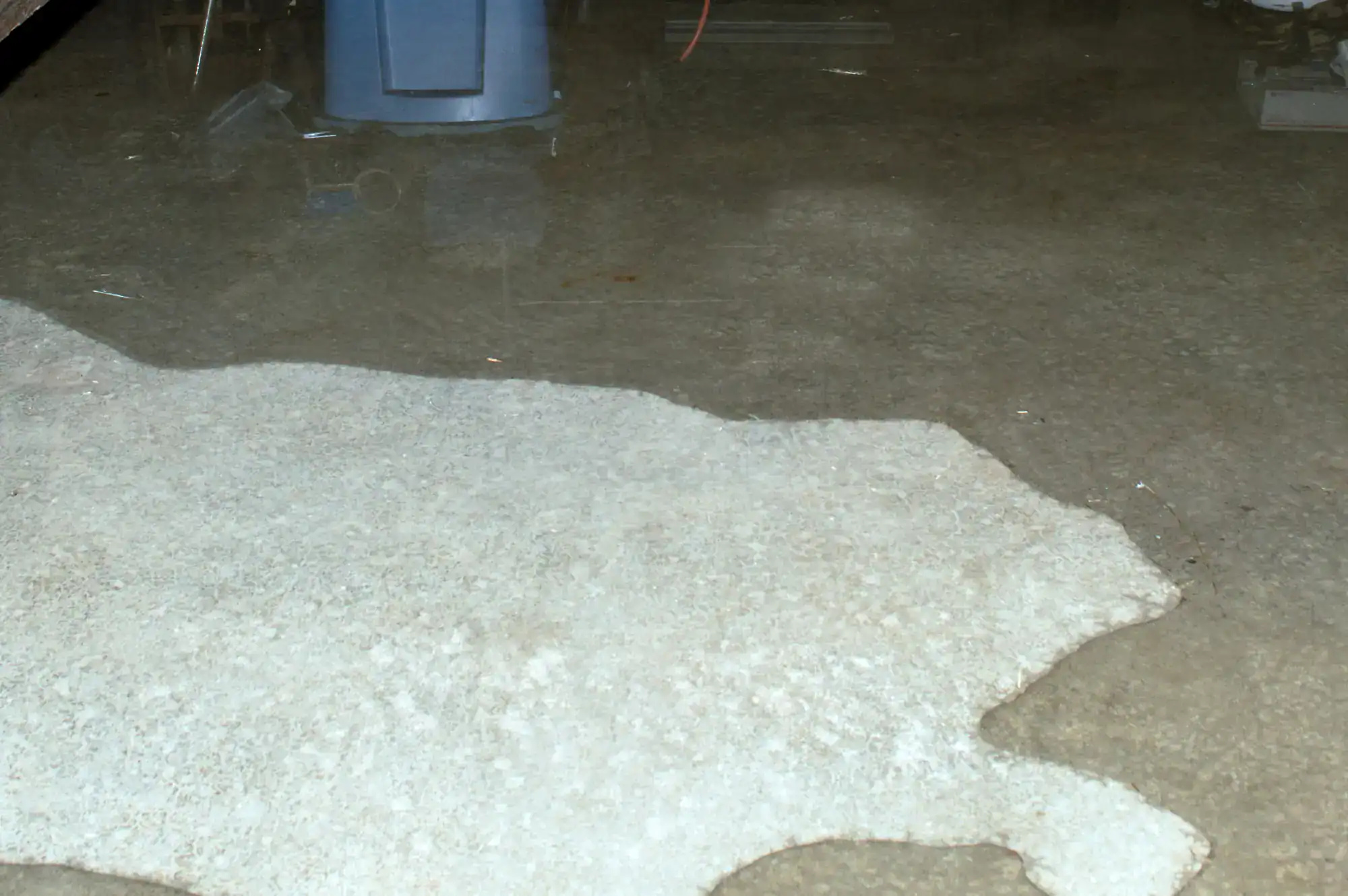
When a fire truck rolls back into the bay after a winter run on Old Country Road, it’s carrying road salt, brine, and deicing chemicals on every tire. That contamination lands directly on your apparatus bay floor and if that floor has any cracks, pores, or a coating that wasn’t built for it, you’re looking at staining, deterioration, and eventual failure. We keep that contamination on the surface where it can be cleaned off, not absorbed into the slab where it quietly does damage over time.
Plainview’s winters add another layer to this. Temperatures here regularly drop below freezing overnight and climb back above it during the day. That freeze-thaw cycling puts real stress on concrete and on any coating that isn’t flexible enough to move with it. Standard epoxy is brittle in the cold. It cracks. Once it cracks, moisture gets underneath, and delamination follows. Our polyaspartic system is four times more flexible than standard epoxy, which means it handles Plainview’s climate without the cracking and peeling that ends the life of cheaper coatings.
Beyond durability, there’s the contamination control side of this. NFPA standards increasingly require fire stations to have surfaces that can be properly decontaminated after calls. Our seamless, non-porous floor doesn’t harbor the carcinogens that get tracked in from fire scenes. For a department whose volunteers go home to Plainview and Old Bethpage families after every call, that’s not a minor detail it’s a meaningful health consideration built right into the floor.
We’re based in Bohemia, NY on Long Island, in the same market as Plainview. We’ve been installing commercial and industrial resinous flooring systems for over 30 years, and firehouse floors are one of our core specializations. This isn’t a residential garage floor company that occasionally takes on commercial work. Every system we install in an apparatus bay is engineered from the ground up for the specific load, chemical exposure, and thermal stress of an active fire station.
Our CEO Danny Harmer has over 40 years of hands-on installation experience. We hold the Sherwin-Williams High Performance Flooring certification and Res Tech certification both manufacturer-specific credentials that require formal technical training, not just a general contractor license. All our installers are OSHA 40 certified, which matters when the work is happening inside an active station where volunteers and apparatus are present.
Our field team led by supervisors Javier, Eduardo, and Fredith brings a combined 40-plus years of installation experience, and most of our crew has been with us for over a decade. When you’re trusting a contractor to work inside all three of your Plainview stations, that kind of continuity and accountability is exactly what you want.
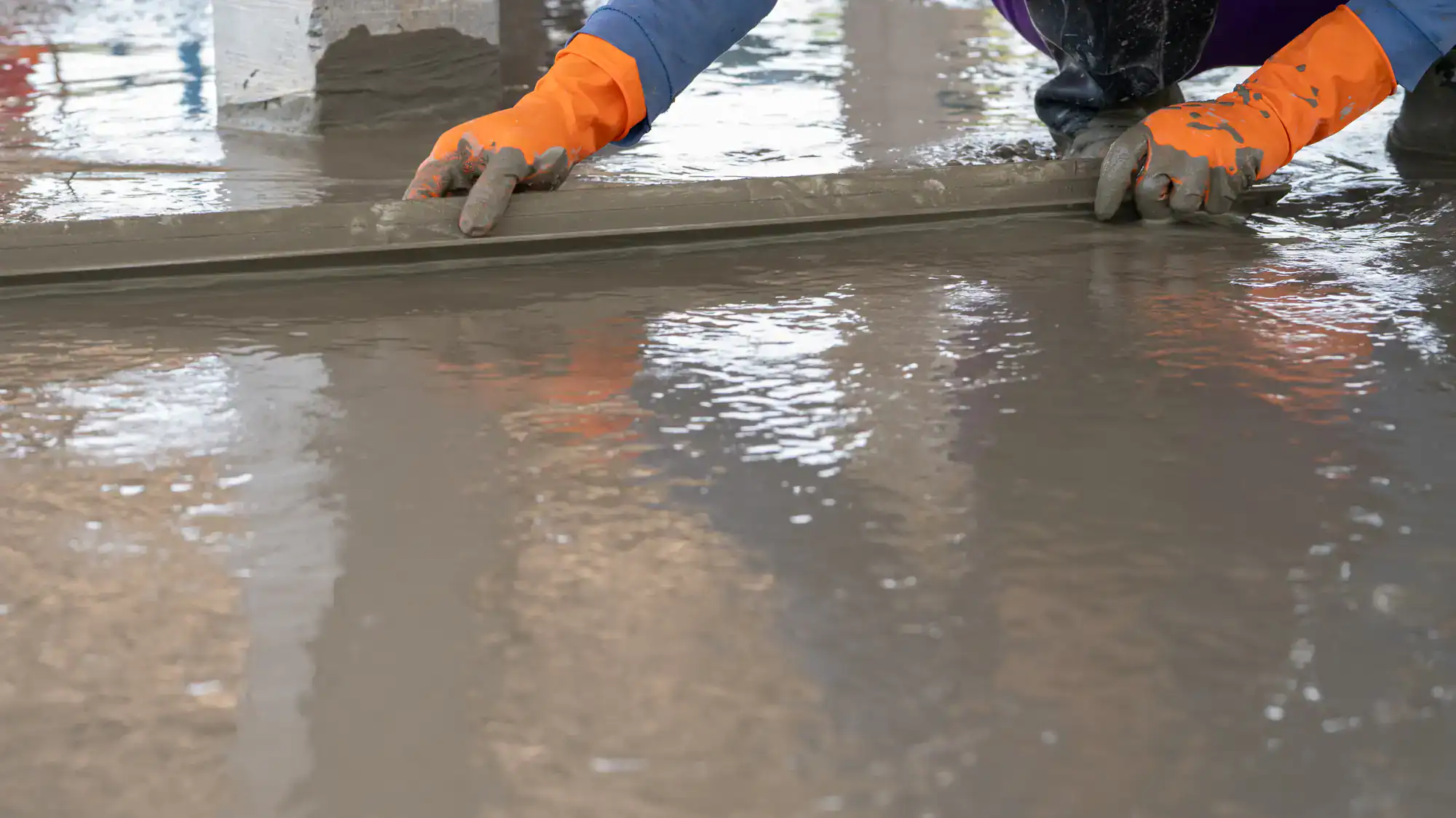
The most common reason apparatus bay floors fail isn’t the coating itself it’s what didn’t happen before the coating was applied. Surface preparation is where the job is won or lost, and it’s where most failed floors trace back to. Every installation we do starts with diamond grinding the concrete slab. Not acid etching diamond grinding. It opens the concrete’s capillary structure and creates a true mechanical bond for everything that goes on top. Before any coating is applied, we moisture test the slab. In older station buildings like those found across Nassau County, moisture vapor transmission through the slab is one of the leading causes of delamination. If that’s not measured and addressed at the start, the floor will fail regardless of how good the coating is.
From there, we repair any cracks or surface damage, apply a penetrating primer, and lay down a high-build epoxy base coat with aggregate broadcast for compressive strength and slip resistance. The final layer is a polyaspartic topcoat UV-stable, thermally resistant, chemically resistant, and approximately 15 mils thick. That topcoat is what handles the road salt coming off Old Country Road and Round Swamp Road, the thermal shock from apparatus returning from winter calls, and the diesel and hydraulic fluid spills that happen in any active bay.
The reason this system matters for Plainview specifically is the cure time. Polyaspartic topcoats reach full service hardness within 24 hours. Your apparatus isn’t displaced for a week. For an all-volunteer department covering 9.4 square miles and three industrial parks, getting trucks back in the bay within a day isn’t a convenience it’s the only option that makes operational sense.
Ready to get started?
The system we install in a Plainview apparatus bay is a multi-layer, 1/4-inch mortar trowel-down resinous floor with color quartz or solid color finish. It’s engineered to handle the compressive load of 40,000-plus-pound fire apparatus the kind of weight that will crack and delaminate a coating that wasn’t built for it. The aggregate broadcast in the base coat adds compressive strength and creates the slip resistance your crew needs when working around apparatus on a floor that sees water, ice melt, and chemical runoff from winter responses.
For a three-station department like Plainview’s with headquarters on Old Country Road, Station 2 on Southern Parkway, and Station 3 on Round Swamp Road the ability to coordinate installations across multiple locations with consistent system quality and a single point of accountability matters. Each station gets the same specification, the same installation process, and the same warranty. There’s no variation in quality between locations because the same experienced crew handles all three.
The polyaspartic topcoat is four times more flexible than standard epoxy and twice as abrasion-resistant, with a service life of 20-plus years when properly maintained. For a fire district board accountable to Plainview and Old Bethpage taxpayers, that long-term performance profile is the right way to think about this investment not as a floor coating expense, but as a 20-year capital asset that eliminates the cost and disruption of grinding off a failed coating and starting over.
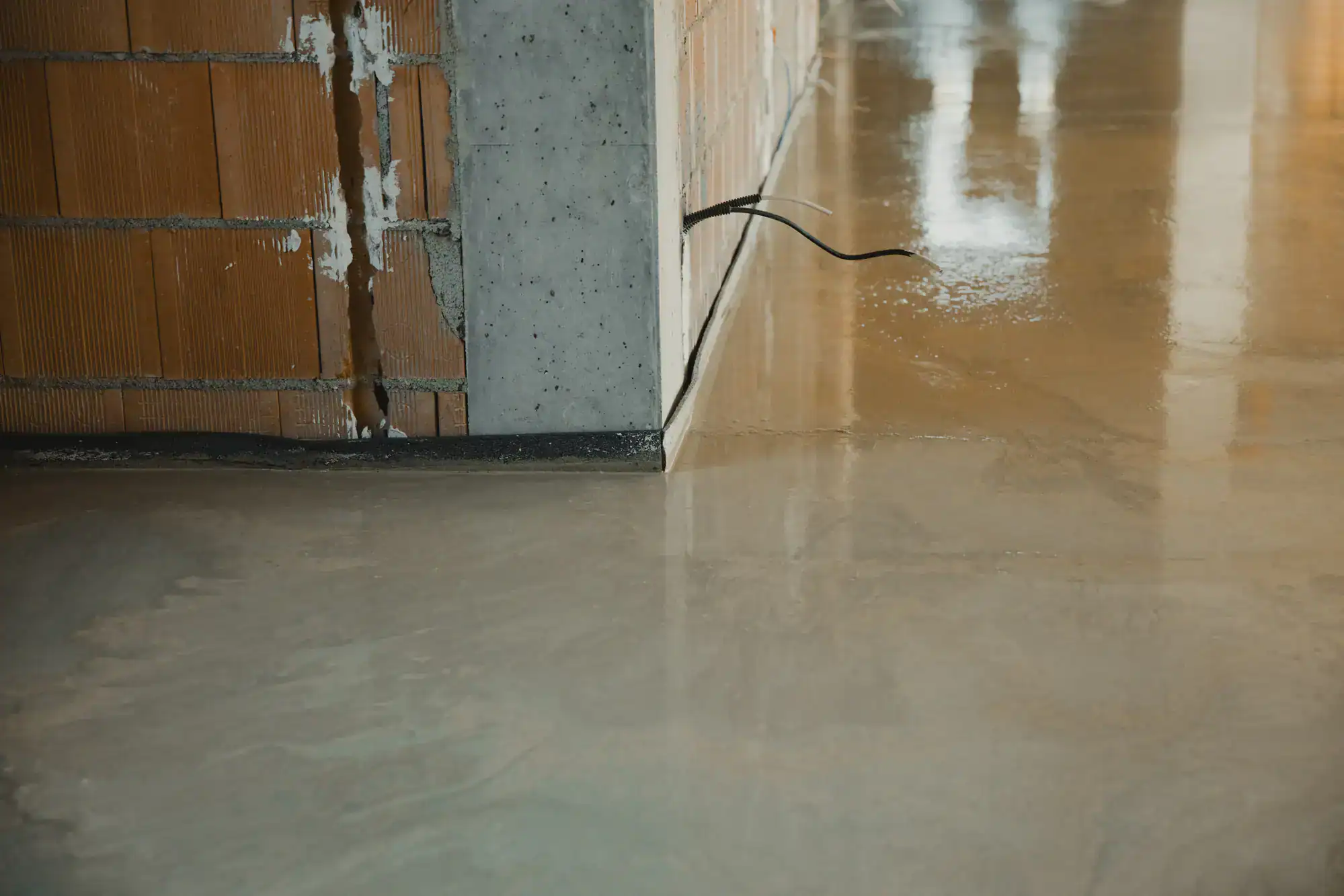
This is usually the first question a fire chief or fire commissioner asks, and it’s the right one. For an all-volunteer department like Plainview’s that handles over 2,200 incidents a year across three stations and a 9.4-square-mile service area, apparatus can’t sit outside for days at a time. Our polyaspartic topcoat system reaches full service hardness within 24 hours of application. That means trucks can return to the bay the following day not three to seven days later, which is the typical cure window for traditional epoxy systems.
The full installation process, including surface preparation, moisture testing, crack repair, primer, base coat, and topcoat, typically takes one to two days depending on the size of the bay. We can also coordinate scheduling around your department’s call volume and seasonal patterns many Nassau County departments plan floor upgrades in the spring, after the heaviest winter apparatus season has ended, to minimize any operational impact.
Peeling and delamination almost always come down to one of two things: inadequate surface preparation or moisture. If the concrete wasn’t properly ground and profiled before the coating went down, there’s no real mechanical bond the coating is essentially sitting on top of the slab rather than bonded to it, and it will eventually lift. Moisture vapor transmission through the slab is the other major cause. Concrete breathes, and if moisture pressure from below isn’t measured and addressed before installation, it will push the coating up from underneath over time.
The fix isn’t just a better coating it’s a better process. We use diamond grinding (not acid etching) to open the concrete’s capillary structure for a true mechanical bond. Moisture testing before any product is applied identifies vapor transmission issues before they become a problem. A penetrating primer seals the slab at the capillary level. When those steps are done correctly, the coating doesn’t peel. It’s that straightforward and it’s why the preparation phase is just as important as the materials themselves.
A few things set apparatus bay flooring apart from standard commercial epoxy work. The load is the most obvious one a fully equipped fire engine can weigh 40,000 pounds or more, which is a compressive load that most commercial floor coatings aren’t designed for. The thermal shock is the other major factor. When apparatus returns from a winter call in Plainview tires heated from friction, engine heat radiating from the undercarriage and rolls into a cold bay, the temperature differential at the floor surface is extreme. Standard epoxy can’t handle that stress repeatedly without cracking.
Add in the road salt that gets tracked in from Old Country Road and Round Swamp Road every winter, the diesel and hydraulic fluid spills, and the requirement for a surface that supports proper decontamination after fire scene responses, and you’re describing a performance specification that’s meaningfully different from a warehouse floor or a commercial kitchen. The system needs to be engineered for all of those conditions simultaneously not just one of them.
Apparatus bay floor coating work in Nassau County typically doesn’t require a separate flooring permit, but there are contractor qualification requirements that apply to work on public facilities, including fire district properties. Nassau County requires contractors working in public buildings to carry appropriate commercial contractor insurance and licensing. The Plainview Volunteer Fire Department operates as an independent fire district governed by an elected board of fire commissioners, which controls the capital budget and procurement process for improvements like floor upgrades.
What this means practically is that the contractor you hire needs to be properly licensed, insured, and credentialed for commercial work in Nassau County not just a residential contractor who occasionally takes on larger jobs. OSHA 40 certification for all installers is also relevant here, since work is happening in an active public safety facility. Verifying those credentials before signing a contract is a reasonable step for any fire district board doing its due diligence on behalf of Plainview and Old Bethpage taxpayers.
Plainview averages 23 inches of snow per year and sees temperatures that regularly cycle below freezing at night and above freezing during the day throughout winter. That freeze-thaw cycling is one of the most damaging forces on apparatus bay floors. Concrete expands and contracts with each temperature change and a coating that isn’t flexible enough to move with it will crack. Once a crack forms, moisture infiltrates, and the next freeze cycle forces that moisture to expand inside the crack, widening it further. Standard epoxy is rigid and brittle in cold temperatures, which is why it fails in this pattern so frequently on Long Island.
Road salt compounds the problem. Nassau County’s winter road treatment program means Old Country Road where Station 1 headquarters sits is heavily treated from November through March. Every response means salt brine and deicing chemicals being tracked into the bay. Our non-porous, chemically resistant polyaspartic topcoat prevents chloride infiltration and makes the floor easy to clean after winter responses. Without that protection, road salt works its way into the slab and accelerates concrete deterioration from the inside out.
A properly installed polyaspartic system meaning full diamond grind preparation, moisture testing, penetrating primer, high-build epoxy base coat with aggregate, and a polyaspartic topcoat should realistically last 20-plus years in an active apparatus bay. That’s not a best-case number; it’s what the system is engineered to deliver when the installation process is done correctly from the start.
The key variable is what “properly installed” actually means. A thin epoxy coating applied over an un-ground slab with no moisture testing might look fine for a year or two, but it’s already failing you just can’t see it yet. The delamination, cracking, and hot tire pickup that fire departments typically experience with failed floors almost always trace back to a preparation shortcut or an undersized system, not a materials failure. For Plainview’s three stations, where the fire district board is accountable to taxpayers for every capital expenditure, the right question isn’t what the cheapest floor costs today it’s what the total cost looks like over 20 years when you factor in the expense and disruption of grinding off a failed coating and starting over.