
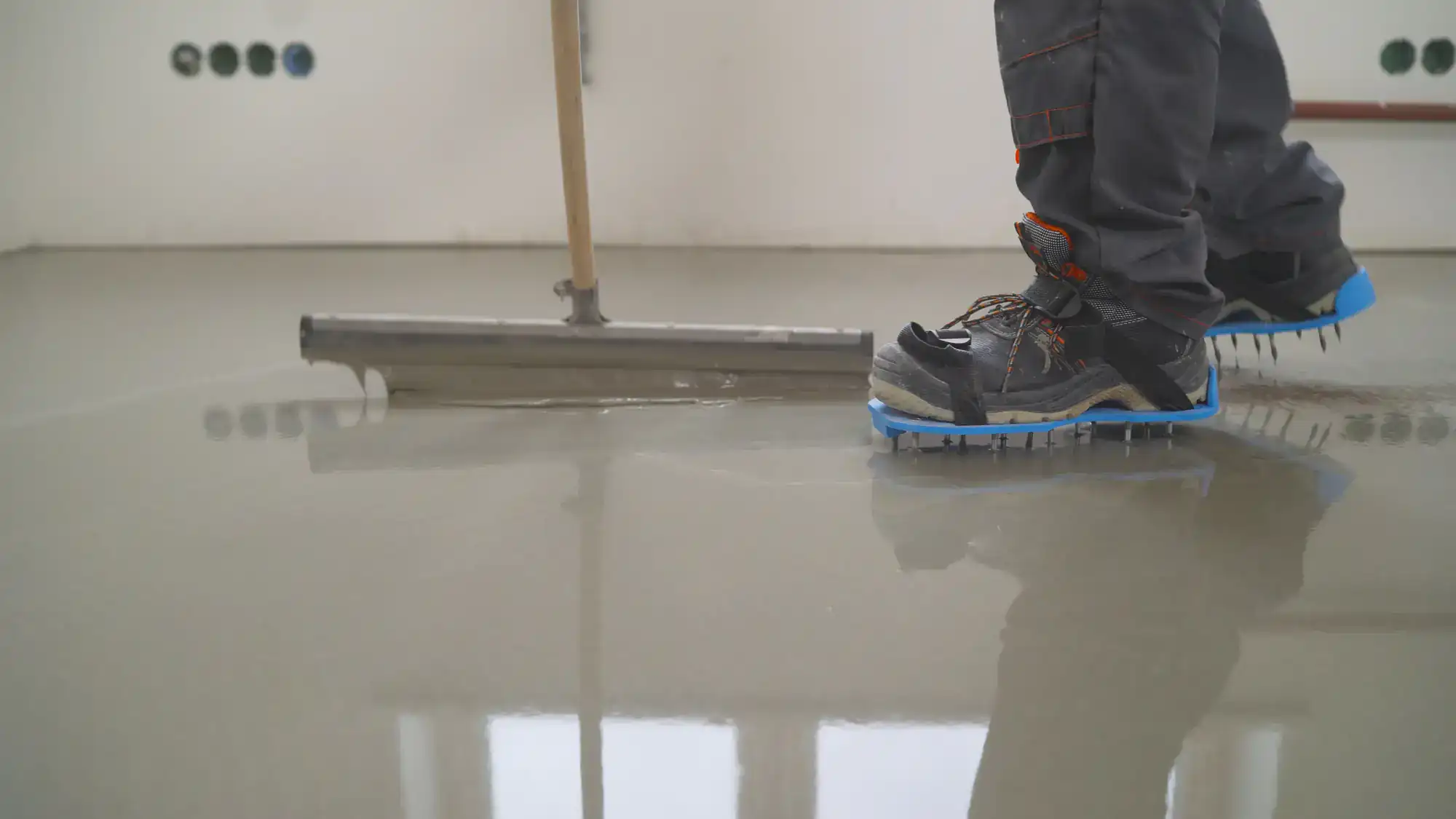
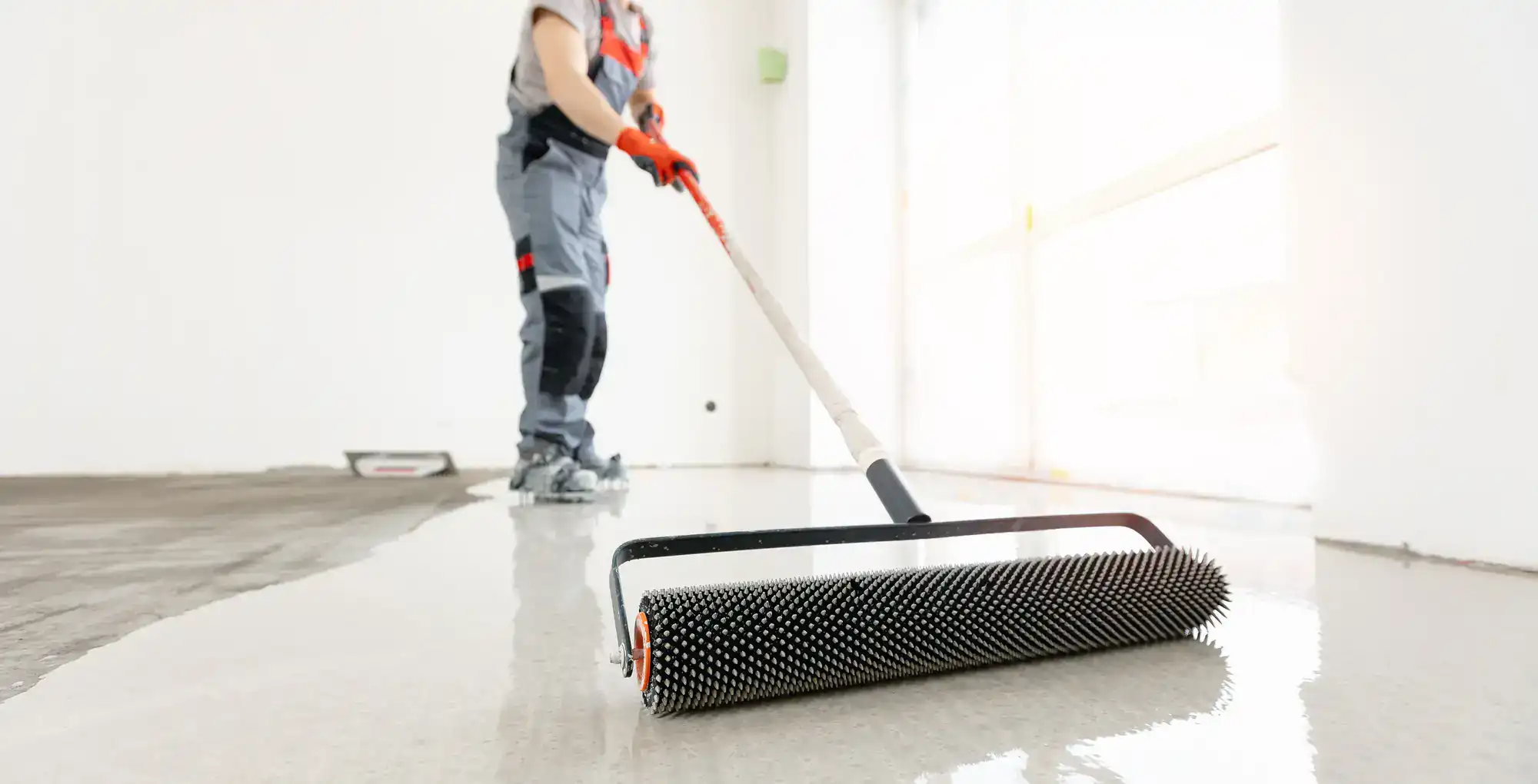
When self leveling is done right, you stop noticing your floor. No more tile edges catching your foot, no more visible dips under new luxury vinyl, no more wondering why the last contractor’s work started cracking within a year. The result is a surface that’s genuinely flat, structurally sound, and ready for whatever finish goes on top.
In Plainview, that matters more than most people realize going in. The housing stock here is predominantly post-WWII construction slabs poured in the 1950s and 60s without modern vapor barriers or polymer admixtures. After six or seven decades of Nassau County winters, those slabs have been through hundreds of freeze-thaw cycles. The concrete expands, contracts, shifts slightly, and the surface becomes uneven in ways that aren’t always visible until you’re laying a new floor and suddenly nothing sits flat.
On top of that, Long Island’s proximity to water on three sides means ground moisture levels are consistently elevated. That moisture travels upward through old concrete, and if it’s not tested and addressed before the pour, it will eventually push your new underlayment right off the slab. Getting the floor level is only half the job. Getting it to stay that way is what actually matters.
We’ve been in business for over 30 years, and our president has been installing floors for more than 40. That’s not a marketing number it’s the difference between a crew that knows what Plainview and Nassau County concrete actually looks like and one that’s still figuring it out on your job.
We’re based in Bohemia, NY, which puts us squarely on Long Island and well within reach of Plainview via the Long Island Expressway. We’ve worked on residential homes throughout the Plainview area, commercial properties, healthcare facilities, and institutional buildings including a floor installation in the White House kitchen in 1996. That kind of track record doesn’t happen by accident.
Most of our crew has been with us for over a decade, which means the same experienced hands that have been working Plainview and Nassau County floors for years will be the ones showing up to your project. We hold OSHA 40 certification, carry an A+ BBB rating, and are factory-trained in advanced resinous and cementitious systems. If something goes wrong which is rare there’s a real company with a real track record standing behind the work.
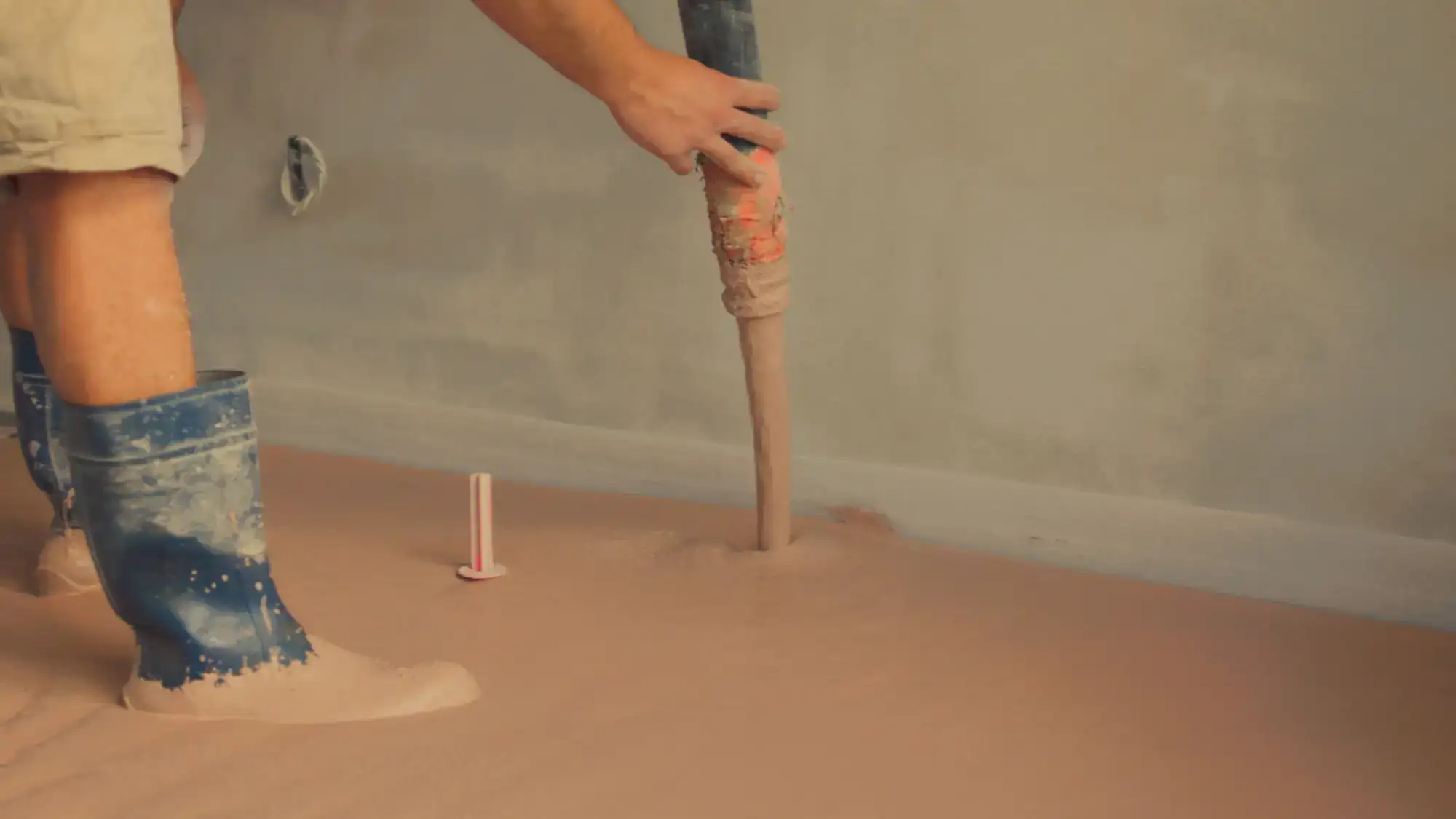
The pour itself is the easy part. What happens before it is where we either earn our money or cut corners. The first thing that happens on any job in Plainview is a real assessment of the slab not a quick visual scan, but actual moisture testing using ASTM F2170 relative humidity testing and MVER standards. Given the age of most concrete in this area and Nassau County’s consistently elevated ground moisture, skipping this step is the single fastest way to guarantee a failed installation.
Once moisture is confirmed within acceptable limits or addressed if it isn’t the surface gets ground down to remove old adhesive residue, paint, or any contamination that would prevent the underlayment from bonding. Concrete repairs are made where needed. Then the slab is primed, which is a step that gets skipped constantly and is one of the top reasons self leveling delaminates. Priming isn’t optional. It’s what creates the bond between old concrete and new material.
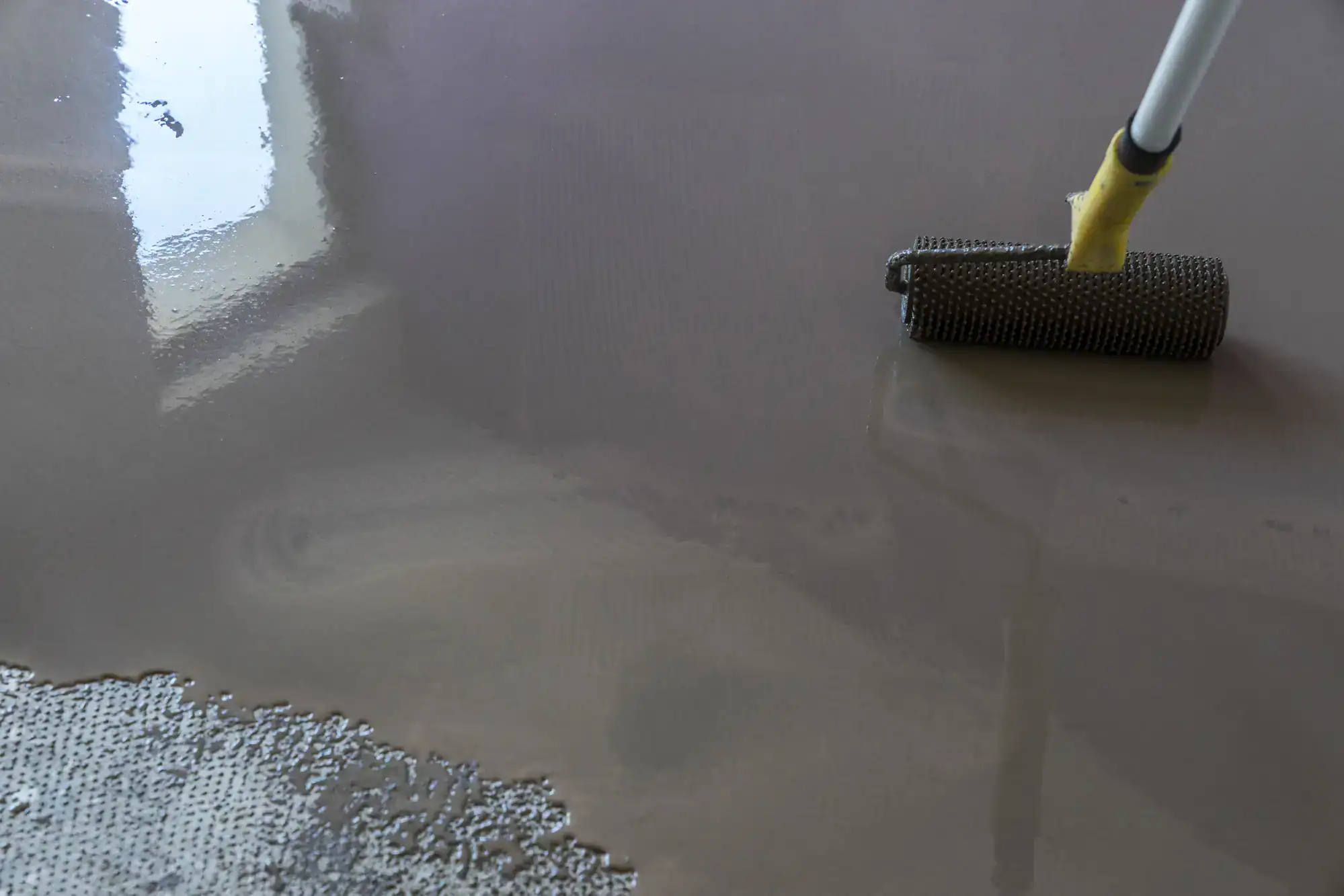
The self leveling compound we use is a high-strength, polymer-modified cementitious material that can be installed from a quarter inch up to over two inches neat and up to five inches with aggregate added. That range matters in older Plainview homes where the unevenness isn’t uniform. After the pour, foot traffic is typically possible within four to six hours. For commercial spaces along Old Country Road or near the Seaford-Oyster Bay Expressway, heavy traffic is usually ready within 24 to 48 hours minimal disruption to the business.
Ready to get started?
One of the most common ways a leveling project goes sideways in a Plainview renovation is the handoff. One contractor pours the underlayment, another installs the finished floor, and when something fails, both point at the other. We handle the entire process moisture testing, surface preparation, concrete repair, self leveling underlayment installation, and the final floor coating under one contract. That means one point of accountability from start to finish.
This matters especially in Plainview, where home values are approaching or exceeding $900,000 and a failed flooring installation isn’t just frustrating it’s a real financial setback. Whether you’re renovating a 1960s ranch in Plainview West, preparing a commercial space near NYU Langone Hospital – Plainview for new tenants, or finishing a basement that’s going to double as a home office, the substrate work has to be right before anything else goes on top.
We also work across the commercial floor leveling solutions spectrum from light industrial spaces and medical offices to retail environments and multi-use buildings. Our fast-curing concrete leveler approach means commercial clients near the Seaford-Oyster Bay Expressway corridor can get back to business quickly, without extended downtime. If you’re installing large-format tile, luxury vinyl plank, or any finish that demands a flat surface, this is the step that determines whether the whole project holds together.
The most common reason is skipped prep work and it almost always comes down to two things: moisture and priming. Plainview sits on Long Island, surrounded by water, and the ground moisture levels here are consistently elevated. Old slabs from the 1950s and 60s which make up the majority of the housing stock in Plainview were poured without vapor barriers. Moisture vapor travels upward through the concrete continuously, and if it’s not tested and brought within acceptable limits before the pour, it will eventually push the underlayment off the slab.
The second issue is priming. Many contractors skip it to save time. Without a proper primer coat, the self leveling compound has nothing to bond to on an old, porous concrete surface. It may look fine for months and then start cracking or lifting. Both of these failures are entirely preventable with the right process moisture testing first, surface prep second, priming third, then the pour. That sequence isn’t optional. It’s the job.
It depends on the actual condition of the slab, which is why a real assessment matters more than a standard answer. In most post-WWII homes in Plainview, the unevenness isn’t uniform one section of the basement or main floor might need only a quarter-inch skim coat, while another area has settled enough to require an inch or more of correction. The self leveling system we use can handle anywhere from a quarter inch up to over two inches in a single pour without aggregate, and up to five inches when aggregate is added.
That range is important in older Plainview homes where decades of freeze-thaw cycling and soil movement have created uneven conditions that vary across the same slab. Trying to force a single-thickness pour across an uneven surface is a shortcut that leads to thin spots, weak areas, and eventual failure. The right answer is to measure the actual low points, match the product to the depth needed, and pour accordingly.
For most residential self leveling projects in Plainview, no permit is required. Self leveling underlayment is classified as finish or subfloor preparation work not a structural modification and falls below the permit threshold under New York State building guidelines. Plainview is an unincorporated hamlet within the Town of Oyster Bay, so the applicable authority is the Town of Oyster Bay Building Department, which follows the New York State Uniform Fire Prevention and Building Code.
For commercial properties, the answer can be different depending on the scope of the overall renovation. If the self leveling work is part of a larger tenant improvement or interior alteration project, other trades involved may trigger a permit requirement but the leveling itself typically does not. If you’re unsure about your specific project, it’s worth a quick call to the Town of Oyster Bay Building Department before work begins. An experienced contractor who knows Nassau County’s requirements will also be able to give you a straight answer during the initial assessment.
It can but only if the moisture issue is identified and addressed before the pour, not after. This is one of the most important questions to ask any contractor working on a basement slab in Plainview, because the answer tells you immediately whether they know what they’re doing. Plainview’s older homes sit on slabs that were poured without modern vapor barriers, and Long Island’s water table and soil moisture levels mean there’s almost always some degree of moisture vapor transmission happening beneath the surface.
The process starts with ASTM F2170 relative humidity testing and MVER moisture vapor emission testing. If the readings come back within acceptable limits, the project moves forward with normal prep and priming. If they don’t, the moisture source needs to be identified and mitigated whether that’s a drainage issue, a crack in the foundation, or vapor transmission through the slab itself before any underlayment goes down. Pouring over a moisture problem doesn’t fix it. It just hides it temporarily and creates a bigger, more expensive problem down the road.
With the high-strength, fast-curing concrete leveler systems we use, light foot traffic is typically possible within four to six hours of the pour. That’s a meaningful advantage if you’re working in a Plainview home where someone is working remotely Plainview has one of the highest work-from-home rates in Nassau County, and a flooring project that sidelines a room for days creates real disruption to the workday, not just the household.
For commercial applications medical offices near NYU Langone Hospital – Plainview, retail spaces along Old Country Road, or light industrial facilities near the Seaford-Oyster Bay Expressway heavy commercial traffic is generally ready within 24 to 48 hours. The exact timeline depends on the pour thickness, ambient temperature, and humidity conditions at the time of installation. Thicker pours take longer to cure fully, and cooler temperatures slow the process. We’ll give you a specific timeline based on the actual conditions of your project, not a generic number.
For most flooring installations in Plainview homes, yes especially if the slab is more than a few decades old. Large-format porcelain tile, which has become increasingly popular in renovated Plainview homes, requires a substrate that meets strict flatness tolerances. The industry standard is no more than 3/16 of an inch variation over a 10-foot span for tile installations. Luxury vinyl plank has similar requirements, and because it’s a thinner, more flexible material, it will telegraph every low spot and ridge in the substrate underneath it.
In a home built in the 1950s or 60s which describes the majority of Plainview’s housing stock the existing concrete slab almost certainly doesn’t meet those tolerances without correction. The freeze-thaw cycles Nassau County winters produce, combined with decades of normal loading and minor settlement, create surface variation that’s invisible when you’re walking across a bare slab but becomes obvious the moment you lay a new floor over it. Self leveling underlayment is the most effective way to bring an old Plainview slab into spec before a new floor goes down, and it’s significantly less invasive and expensive than slab replacement.