
Every apparatus that rolls out onto Route 110 in winter comes back carrying road salt, brine, and de-icing chemicals on its tires. That’s not a theory it’s a daily reality for any fire station serving Huntington Station’s corridor. Thin-mil epoxy absorbs that exposure. A properly installed polyaspartic system doesn’t. The chemicals sit on top, you wash them off, and the floor underneath stays intact.
The other issue specific to Huntington Station’s North Shore location is moisture. Long Island’s maritime climate humid summers, freeze-thaw winters, damp air year-round drives moisture vapor up through concrete slabs. If a contractor skips moisture testing before coating, that moisture has nowhere to go but up, and you get bubbling and delamination within a few years. That’s not a product failure. That’s a preparation failure, and it’s the most common reason apparatus bay floors fail in this area.
When the floor is done right diamond ground, moisture tested, properly primed, and finished with a 15-mil polyaspartic topcoat what you get is a surface that handles 40,000-pound trucks, dropped equipment, thermal cycling, and chemical exposure without peeling, cracking, or becoming a slip hazard. That’s what your department needs, and that’s what our system delivers.
We’re based in Bohemia, NY Suffolk County which means we understand Huntington Station’s conditions from the inside. The road salt on Route 110, the humidity off the North Shore, the mid-20th-century concrete slabs in older fire stations that have absorbed decades of oil, fuel, and contamination. This isn’t a national chain applying a kit. We’ve been doing this work for over 30 years as a local commercial flooring operation.
Our CEO Danny Harmer brings more than 40 years of hands-on installation experience. Our field supervisors Javier, Eduardo, and Fredith bring a combined 40-plus years between them, and most of our crew has been with us for over a decade. That kind of stability matters when you’re trusting someone with a public facility that your fire district board approved and your community funds.
We hold the Sherwin-Williams High Performance Flooring certification, Res Tech certification, and employ OSHA 40 certified installers on every project. Our portfolio includes commercial and industrial installations across Long Island, the broader United States, and the White House kitchen in 1996. The standard hasn’t changed.
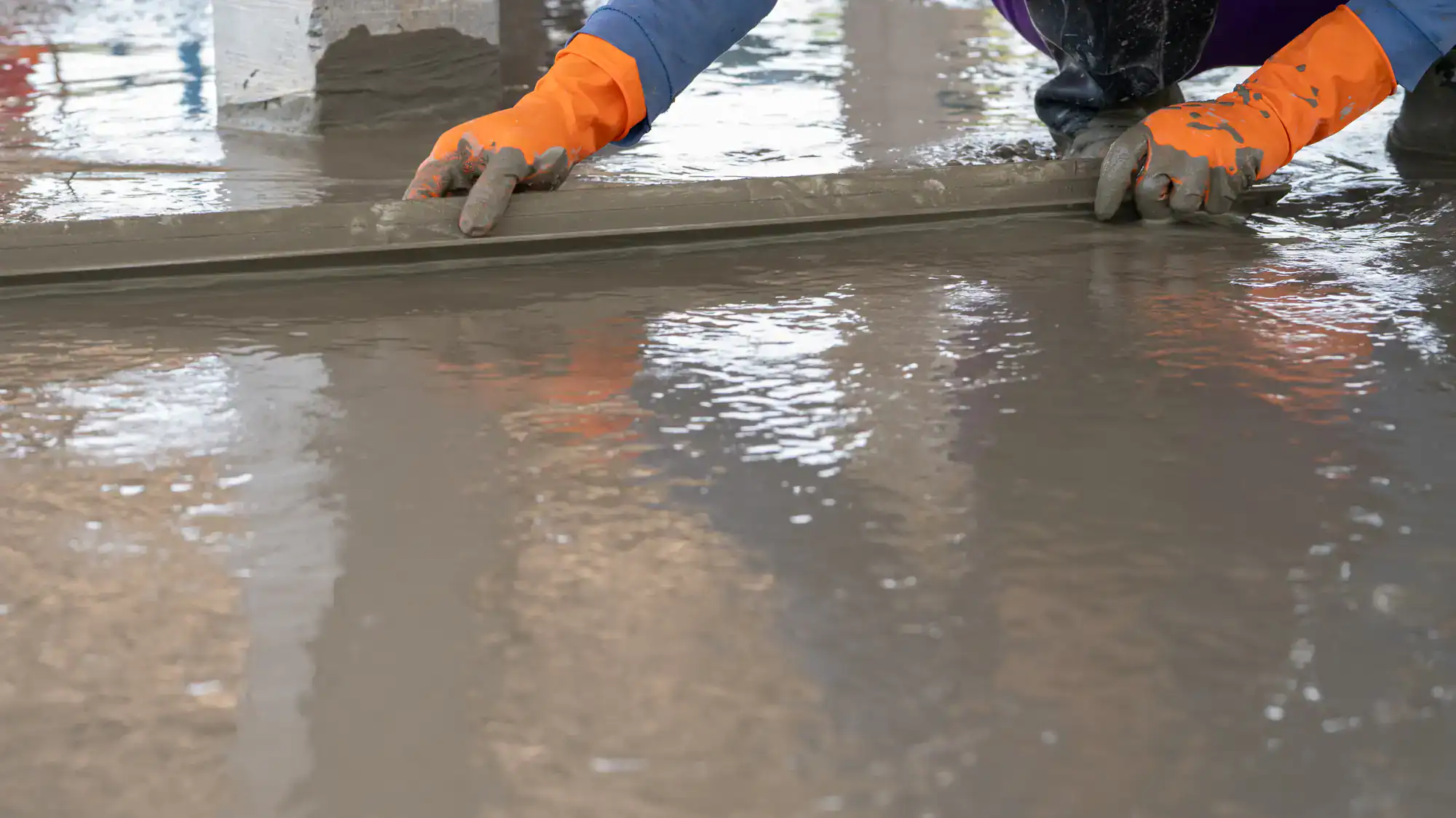
The first thing that happens on any apparatus bay project is concrete assessment. Before anything is applied, the slab gets evaluated for cracks, contamination, and critically moisture vapor emission. In Huntington Station’s North Shore climate, moisture testing isn’t optional. It’s the step that separates a floor that lasts from one that bubbles and peels in three years.
Once the slab is assessed, the surface gets diamond ground. This opens the concrete’s capillaries so the primer and coating system can bond mechanically not just sit on top. Any cracks or damaged sections are repaired before the system goes down. From there, we apply a penetrating primer, followed by a high-build epoxy base coat with aggregate broadcast for compressive strength and slip resistance. The final layer is a polyaspartic topcoat at 15 mils UV-stable, chemical-resistant, and flexible enough to handle the thermal cycling that comes with a working apparatus bay.
The full system cures in 24 hours. For a volunteer department serving a high-call-volume corridor like Route 110, that means apparatus is back in the bay the next day not parked outside for a week. If the project falls within the Town of Huntington’s permit requirements or requires fire district board documentation, we can navigate that process before installation begins. The goal is zero surprises for the department and zero disruption to operations.
Ready to get started?
The apparatus bay is the most demanding environment, but it’s not the only floor in a fire station that needs to perform. We install systems across every functional zone the decontamination area, the gear storage room, the kitchen, the locker room, and the living quarters each with the right specification for that space. One contractor, one installation process, one accountable relationship.
In the apparatus bay specifically, the system is engineered for the conditions that Huntington Station fire stations face: road salt contamination from Route 110, heavy apparatus loads, frequent overhead door cycling that drives cold air across a hot slab, and the NFPA contamination control requirements that apply when apparatus returns from a structural fire. NFPA 1500 and NFPA 1581 both point toward seamless, non-porous floor surfaces that can be effectively decontaminated and that’s exactly what a properly installed resinous system provides. For the volunteer firefighters of Huntington Station, that’s not just a compliance box. It’s a health protection measure.
For fire district commissioners who need to justify the capital expenditure, the math is straightforward. A system that lasts 20-plus years costs less over its lifecycle than a cheap install that fails in three to five years and requires grinding, disposal, and full reinstallation plus all the downtime and liability that comes with a failing floor in between.
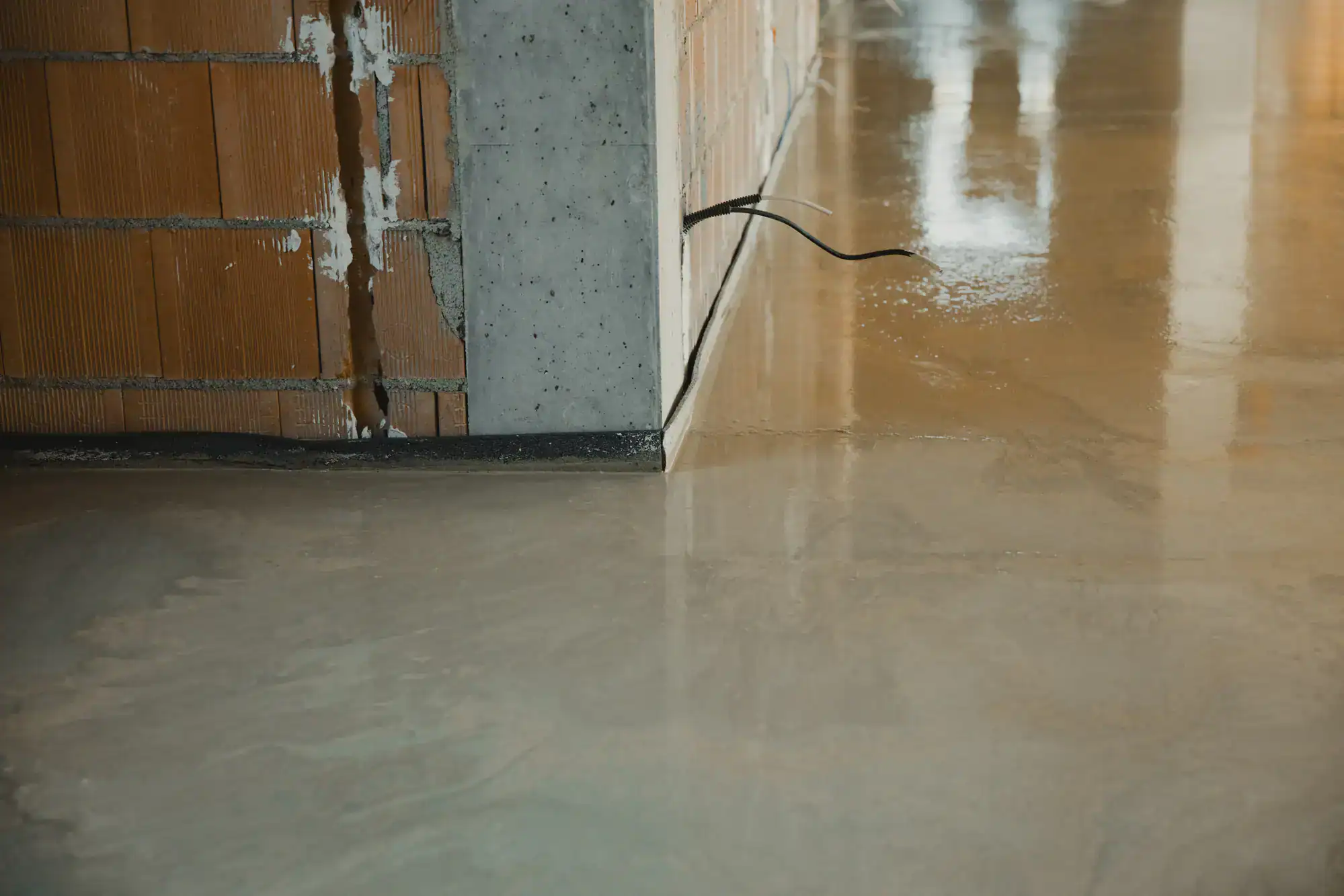
For most apparatus bay projects in Huntington Station, the installation itself takes one to two days depending on the square footage, the number of zones being coated, and the condition of the existing slab. The concrete preparation phase diamond grinding, crack repair, and moisture mitigation is the most time-intensive part of the process, and it’s also the most important. Skipping or rushing it is the primary reason apparatus bay floors fail prematurely.
The polyaspartic topcoat cures in 24 hours, which means apparatus can return to the bay the following day. For a volunteer department serving a high-call-volume corridor like Route 110, that turnaround is the difference between a manageable project and an operational disruption. If the project requires a building permit through the Town of Huntington or a board resolution from the fire district commissioners, that paperwork should be initiated before the installation date is scheduled to avoid any delays.
The most common cause is moisture vapor emission from the concrete slab and it’s a problem that’s especially prevalent in Huntington Station’s North Shore climate. When warm, humid air from our summer months drives moisture up through a concrete slab, and a coating has been applied without proper moisture testing, that vapor has nowhere to go. It pushes the coating up from below, creating bubbles that eventually crack and peel.
The second most common cause is hot tire pickup. When a fire apparatus returns from a response with heated tires and parks on a thin-mil epoxy coating, the heat softens the coating and the tire bonds to it. When the truck pulls out, it takes the coating with it. This is one of the most documented failure modes in apparatus bay flooring, and it happens consistently with consumer-grade or improperly specified systems. A 15-mil polyaspartic topcoat with proper surface preparation eliminates both failure modes. The system is thick enough to resist hot tire pickup and installed over a properly tested slab, so moisture has no path to delaminate it.
NFPA 1500 and NFPA 1581 don’t prescribe a specific product, but they establish contamination control standards that effectively require a seamless, non-porous, easily decontaminated floor surface in areas where apparatus returns from structural fires. When tires and undercarriages carry carcinogens including polycyclic aromatic hydrocarbons from fire scenes into the apparatus bay, the floor surface determines whether those contaminants can be effectively removed or whether they absorb into cracks and porous concrete and accumulate over time.
A properly installed resinous floor system with no seams, no grout lines, and a non-porous topcoat is the surface type that meets the intent of these standards. Bare concrete, painted surfaces, and improperly sealed floors all harbor contaminants in ways that can’t be fully eliminated with standard cleaning. For fire departments in Huntington Station, where volunteer firefighters are entering and exiting the bay regularly, this isn’t a regulatory technicality. It’s a meaningful health consideration that a floor upgrade directly addresses.
Fire district boards in New York including the Huntington Station Fire District’s elected Board of Fire Commissioners are accountable to property taxpayers and need a defensible rationale for capital expenditures. The most effective case for a floor coating project combines three arguments: operational continuity, total cost of ownership, and compliance risk.
On operational continuity, a 24-hour cure time means the department isn’t out of service for days. On total cost of ownership, a 20-plus-year polyaspartic system costs less over its lifecycle than a cheap install that fails in three to five years and requires full reinstallation plus the downtime, slip liability, and contamination control exposure in the interim. On compliance, NFPA 1500 and NFPA 1581 contamination control standards create documented risk for departments operating on porous, failing, or unsealed apparatus bay floors. A properly installed resinous system addresses all three. We can provide written specifications, product data sheets, and contractor credentials including the Sherwin-Williams High Performance Flooring certification and OSHA 40 documentation that give your board the documentation package it needs to approve the project with confidence.
It depends entirely on the coating. Road salt and brine are highly corrosive to unprotected concrete and to thin, improperly specified coatings. Every apparatus that responds to a call along Route 110 or the surrounding Huntington Station street grid in winter comes back to the bay with road salt, brine, and de-icing chemicals on its tires and undercarriage. On bare concrete or a deteriorating coating, those chemicals soak in, accelerate surface breakdown, and create a contamination layer that makes future coating adhesion even harder.
On a properly installed polyaspartic system, those chemicals sit on the surface they don’t penetrate. A washdown removes them completely. The floor underneath is unaffected. This is one of the specific reasons a chemical-resistant, seamless resinous system is the right specification for a Huntington Station apparatus bay, and why the same product that might be fine in a lower-salt environment needs to be installed correctly here. The North Shore’s combination of road salt exposure, freeze-thaw cycling, and maritime humidity creates a more aggressive environment than most inland fire stations face.
In most cases, older slabs can be coated they just require more thorough preparation than a newer pour. Huntington Station’s building stock skews older, with a median construction year around 1961, and many of the fire stations serving this community were built in the same era. Slabs that have been in service for 50-plus years often have accumulated contamination oil, fuel, road salt, hydraulic fluid that has penetrated the surface concrete over decades. They may also have developed cracks, surface scaling, or areas of delamination that need to be addressed before a coating system goes down.
The solution isn’t replacement it’s proper preparation. Diamond grinding removes the contaminated surface layer and opens the concrete’s capillaries for mechanical bonding. Cracks are filled and stabilized. Moisture is tested and, if necessary, mitigated with a vapor barrier primer. What’s left is a sound substrate that a high-performance resinous system can bond to and protect for 20-plus years. The age of the slab is rarely the limiting factor. The quality of the preparation process is what determines whether the coating succeeds or fails and that’s where the difference between a certified commercial installer and a garage floor company becomes most visible.
Other Services we provide in Huntington Station