
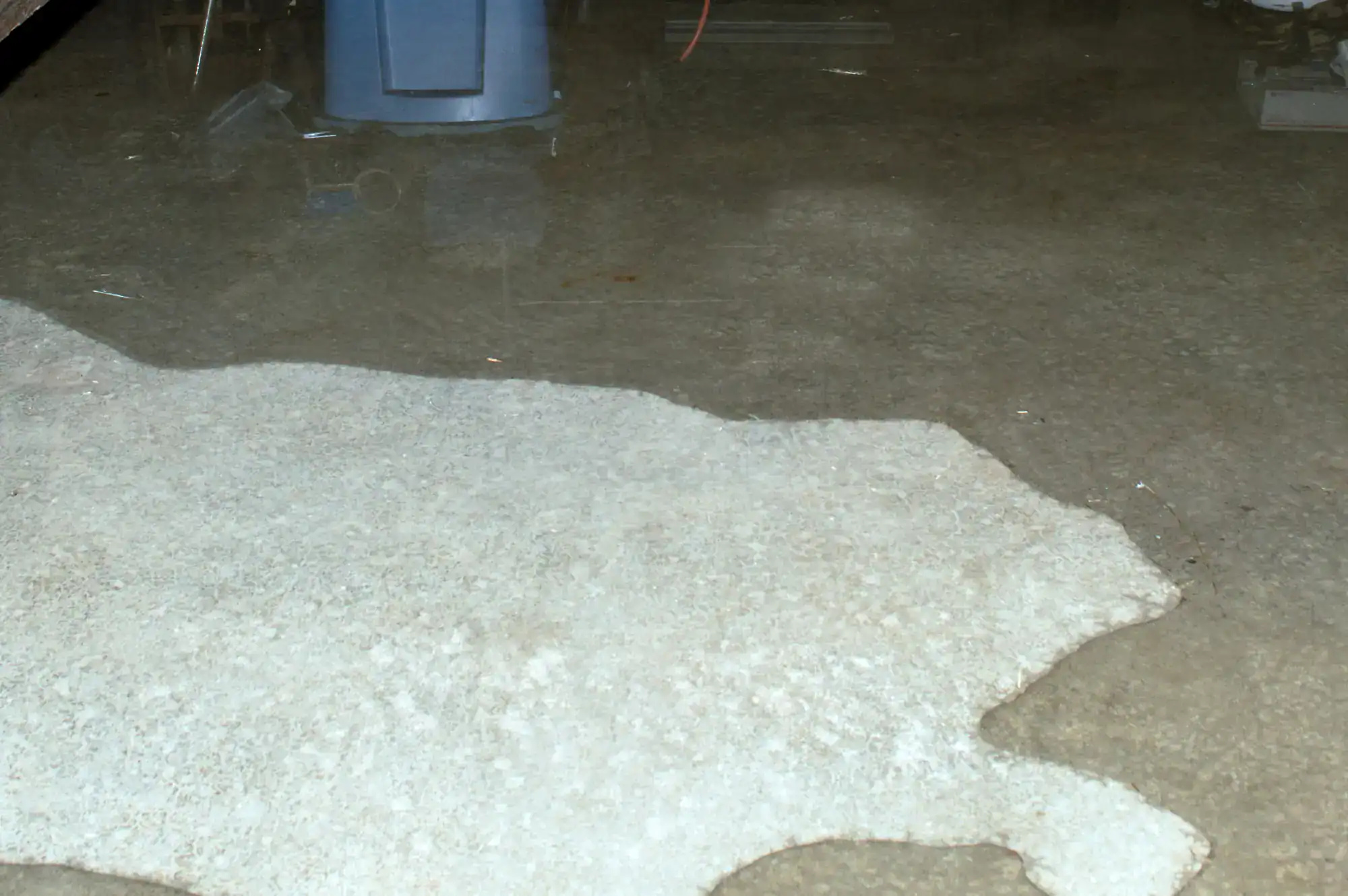
Every time your apparatus rolls back into the bay off Middle Country Road or Nicolls Road in January, it’s carrying road salt, ice melt, and slush directly onto the concrete. Bare concrete absorbs all of it. Over time, that salt works into the substrate, accelerates cracking, and turns what should be a 20-year floor into a 5-year replacement cycle. A properly specified resinous system stops that at the surface where it wipes up in seconds instead of soaking in permanently.
Long Island’s humid summers create a separate problem that most contractors don’t address: moisture vapor pushing up through the slab from below. That’s the leading cause of those bubbling, peeling failures you’ve probably seen at other stations. We test for moisture before anything goes down not out of caution, but because it’s a real condition in Centereach that ends floors early when it’s ignored.
When the coating is right and the prep is right, you get a seamless, chemically resistant surface that handles diesel, hydraulic fluid, contaminated runoff, and the full weight of your apparatus. It’s also fully decontaminable which matters for NFPA 1500 contamination control compliance and for the long-term health of every member working in your station.
We’re based in Bohemia about 10 miles from Centereach down the Nicolls Road corridor. That proximity isn’t just convenient. It means we know what Suffolk County winters do to a concrete slab, we know how Long Island’s humidity behaves during a summer installation, and we’re accountable to the same community you serve.
We’ve been operating for over 30 years. Our CEO Danny Harmer has been installing commercial and industrial floors personally for over 40 years. Every installer on our crew is OSHA 40 certified, and most have been with us for more than a decade. We hold the Sherwin-Williams High Performance Flooring certification a manufacturer-level credential that requires documented technical training, not just general contractor experience.
Our project history includes the White House kitchen in 1996, international installations, and decades of commercial and municipal work across Long Island. Centereach’s apparatus bays are a familiar application for a team that has worked under that level of scrutiny.
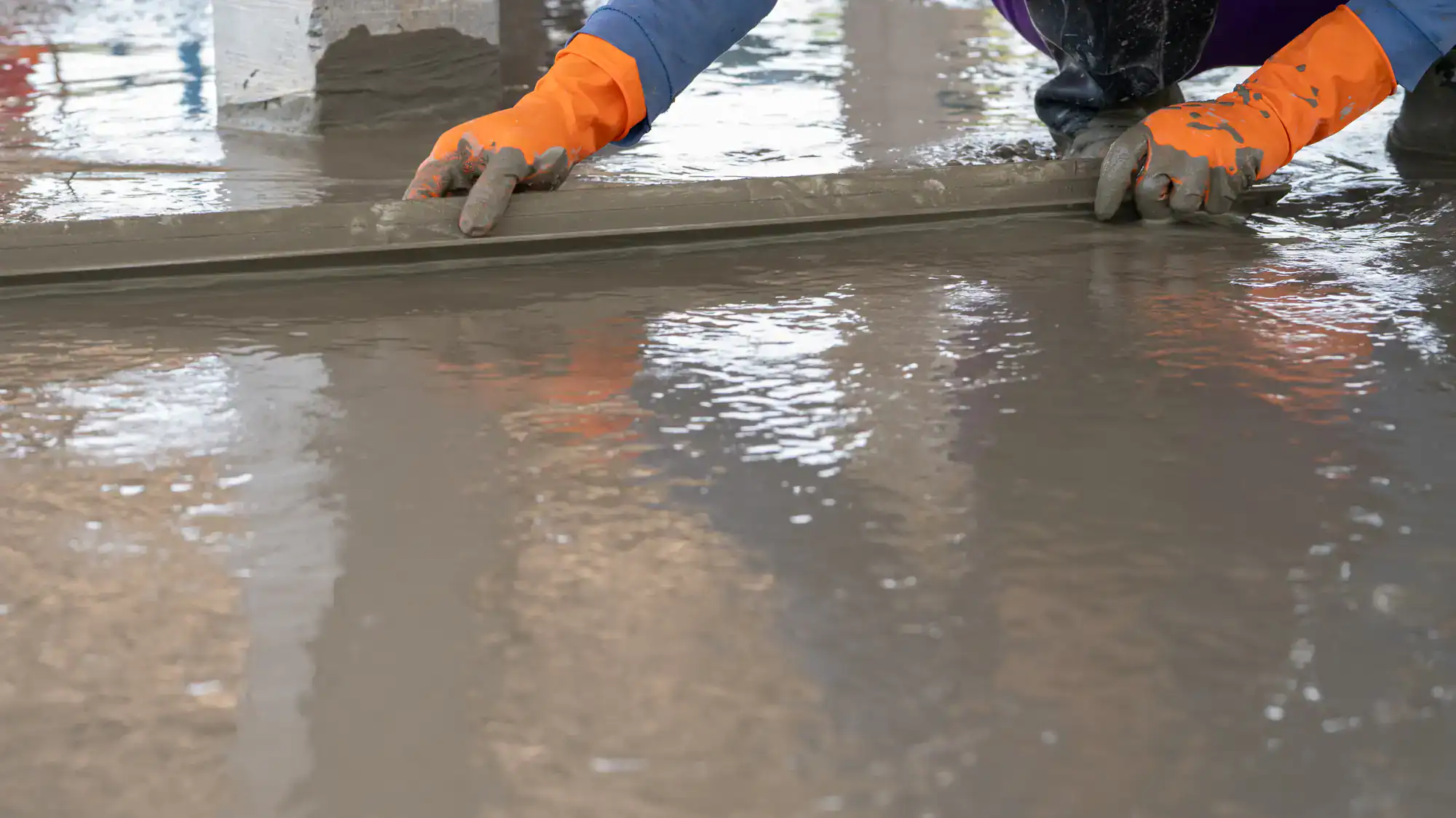
It starts with a site assessment not a sales visit. We look at the concrete substrate, test for moisture vapor transmission, check for existing coatings or contamination, and assess the condition of any cracks or spalling. In Suffolk County, that moisture test isn’t optional. Long Island’s water table and seasonal humidity mean that slab conditions vary significantly from station to station, and what works at one location may fail at another without proper testing upfront.
Surface preparation is where most floor failures actually begin. We use diamond grinding not acid etching to open the concrete profile and give the coating a mechanical bond. This step determines whether the floor lasts 20 years or starts peeling in the first wet season. Once the surface is prepared, we apply the primer, the base coat, and the topcoat in the correct sequence and at the correct mil thickness for the application. For apparatus bays, that means a polyaspartic system rated for 40,000-plus pound loads, with a UV-stable topcoat that won’t yellow when the bay doors are open all summer.
Cure time is 24 hours. Your apparatus is back in the bay the next day. For a combination department running calls around the clock across three stations, that’s not a selling point it’s the baseline requirement. We schedule around your operational needs, not the other way around.
Ready to get started?
The apparatus bay is the primary application, but it’s rarely the only floor in a fire station that needs attention. Decontamination zones need seamless, chemically resistant surfaces that can be thoroughly cleaned after every call a cracked or porous floor in that zone is a direct liability under NFPA contamination control standards. Living quarters, locker rooms, and commercial kitchen areas each have their own requirements: slip resistance, thermal shock resistance, moisture resistance. We work across all of those zones with compatible systems, so Centereach Fire Department isn’t managing multiple vendors with potentially incompatible products.
For the apparatus bay specifically, we install multi-layer polyaspartic systems that outperform standard epoxy on every metric that matters in this environment. Polyaspartic is four times more flexible than standard epoxy, which means it handles the thermal cycling that comes with Long Island’s freeze-thaw winters without cracking. It cures in 24 hours instead of three to seven days. And it’s UV-stable, so the topcoat holds up when the bay doors are open through a Suffolk County summer without yellowing or degrading.
Centereach Fire Department has been serving this community since 1933, operating three stations and five companies across Centereach, Lake Grove, and Selden. A department with that kind of institutional history and a 200-plus member roster deserves a floor system and a contractor that’s built to match it.
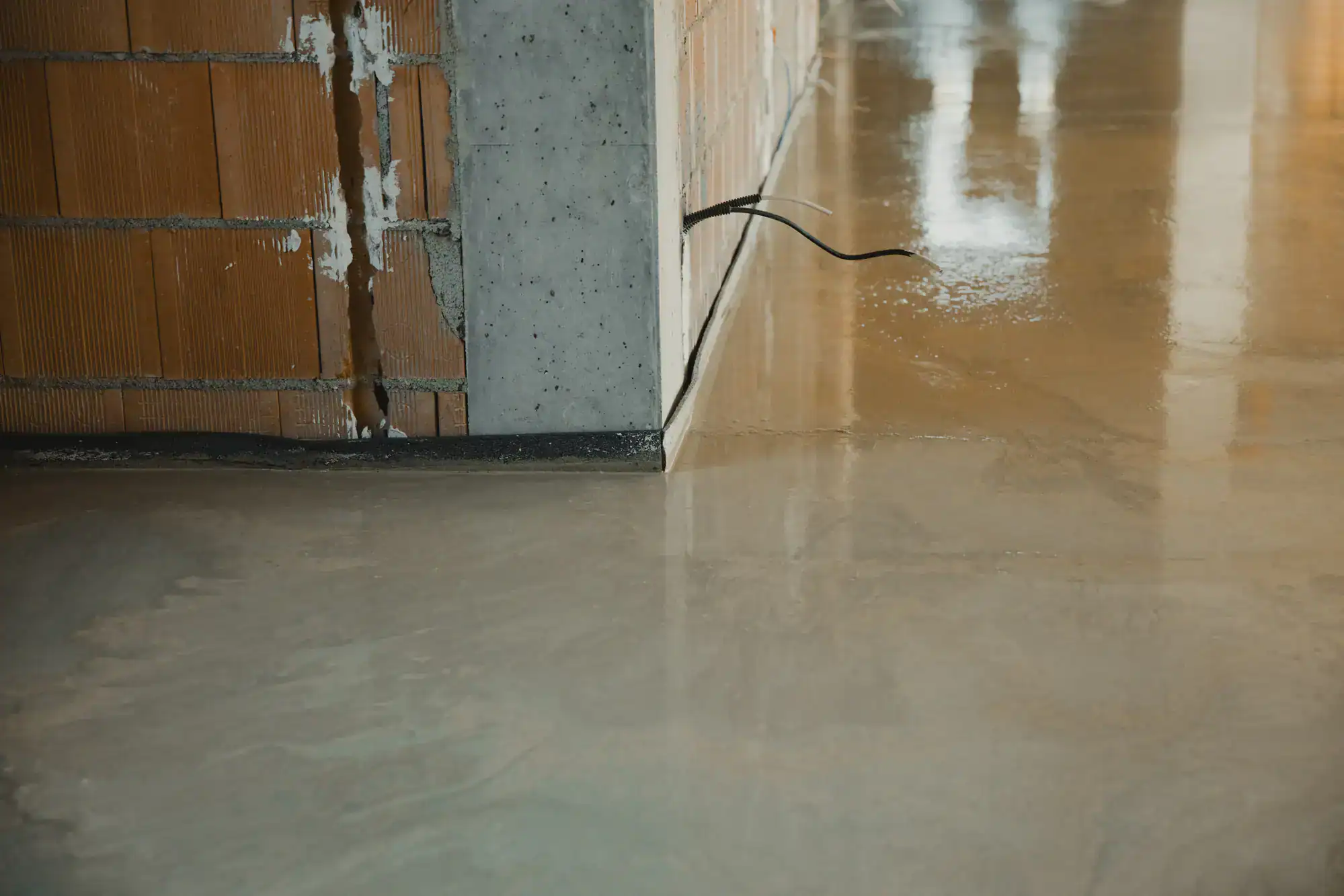
A properly specified and installed polyaspartic system in an apparatus bay should last 15 to 20 years under normal operational conditions. The key variables are surface preparation quality, the correct system specification for the load and chemical exposure, and the Centereach-specific factors that affect long-term performance primarily freeze-thaw cycling and moisture vapor transmission through the slab.
Where floors fail early, it’s almost always a preparation or specification problem, not a product problem. Acid-etched surfaces, undersized mil thickness, or systems not rated for heavy apparatus loads will degrade faster regardless of the brand. In Centereach’s climate, with road salt coming in off Route 25 and Nicolls Road every winter and humid summers creating moisture pressure from below, the margin for error on preparation is essentially zero. Do it right upfront and the floor holds. Cut corners and you’re replacing it in five years.
Standard epoxy is a solid system for many commercial applications, but apparatus bays push it past its limits in a few specific ways. Epoxy is rigid it doesn’t flex well under thermal cycling, which means Long Island’s freeze-thaw winters can cause it to crack over time as the slab expands and contracts. It’s also not UV-stable, so it yellows and chalks when exposed to sunlight through open bay doors. And it takes three to seven days to fully cure, which means apparatus displacement for a week or more.
Polyaspartic addresses all three of those limitations directly. It’s four times more flexible than standard epoxy, handles UV exposure without degrading, and cures in 24 hours. For a combination department like Centereach’s where career members are in the station around the clock and apparatus needs to be operational that cure time difference alone makes polyaspartic the practical choice. The performance gap in a Suffolk County environment makes it the technical choice as well.
Yes the apparatus needs to be out of the bay during surface preparation and coating application. The diamond grinding process generates concrete dust, and the coating itself requires a clear, unobstructed surface to apply correctly. Depending on the size of the bay and the number of stations involved, we work with your department to stage the project in a way that minimizes operational disruption.
For a three-station department like Centereach’s, that typically means working one station at a time so the other two remain fully operational throughout the project. The 24-hour polyaspartic cure time means each station is back online quickly usually within a day of the final coat going down. We’ve done this kind of phased scheduling with combination departments across Suffolk County, and the process is straightforward once the logistics are mapped out before the project starts.
Surface preparation is the most critical step in the entire process more important than the coating itself. If the concrete surface isn’t properly profiled, the coating won’t bond, and it will eventually peel regardless of the product’s quality. The correct method for apparatus bay concrete is diamond grinding, which mechanically opens the surface and creates the profile the coating needs to adhere to. Acid etching is a cheaper alternative that some contractors use, but it doesn’t produce a consistent enough profile for heavy-duty applications and it introduces moisture into the slab right before coating a problem in Long Island’s already-humid environment.
Before grinding starts, we also test for moisture vapor transmission. In Suffolk County, where the water table is relatively high and seasonal humidity is significant, moisture pushing up through the slab is a real and common issue. If that moisture pressure isn’t identified and addressed before the coating goes down, it will cause delamination usually within the first year. That test adds time upfront and saves a complete redo down the road.
Yes, with the right scheduling approach. The 24-hour cure time of a polyaspartic system is specifically what makes this feasible for an active department. Traditional epoxy systems require three to seven days of cure time, which means apparatus displacement for nearly a week operationally impractical for most departments and genuinely problematic for a combination department like Centereach’s that runs calls continuously.
With polyaspartic, the bay is typically ready for apparatus the following day. For multi-station departments, we phase the work station by station so coverage is maintained throughout the project. We also coordinate installation timing around your operational calendar spring and fall are generally the best windows in Suffolk County, when temperatures are stable and humidity is moderate, but we work around your department’s schedule first. The goal is a floor that’s done right and a station that stays operational, and those two things aren’t in conflict when the project is planned correctly.
Fire districts in Suffolk County operate with independent boards of fire commissioners who control capital expenditures. That means a floor upgrade isn’t just a facilities decision it typically goes through a budget approval process where the fire chief or facilities officer needs to make a documented case to the board. The most effective way to frame that case is total cost of ownership, not upfront cost alone.
A polyaspartic system installed correctly runs higher upfront than a basic epoxy coating, but when you spread that cost over a 15-to-20-year service life versus a 5-year failure cycle, the math changes significantly. There’s also the NFPA compliance angle a seamless, non-porous apparatus bay floor directly supports the contamination control requirements under NFPA 1500, which is increasingly relevant for departments across Suffolk County navigating occupational health obligations. We can help you put together the documentation and cost-per-year breakdown that makes that argument clearly to your commissioners, because a floor that protects your members and your budget for two decades is a straightforward case to make.