
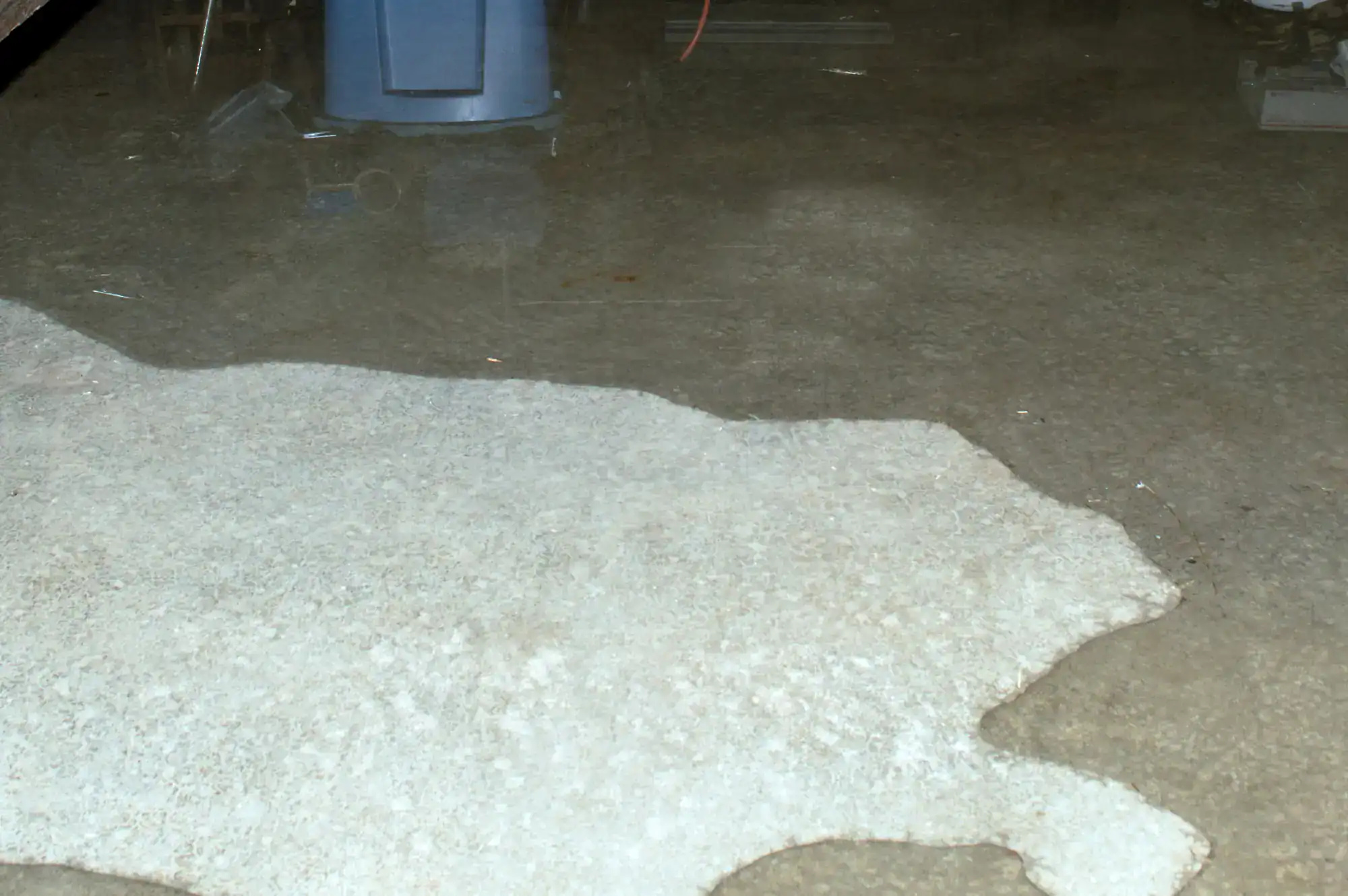
When a firehouse floor fails in Bay Shore, it doesn’t fail quietly. It peels at the edges first, usually near the bay doors where cold air off the Great South Bay meets the warm interior and the freeze-thaw cycle starts doing its work. Then the road salt your apparatus tracks in off Sunrise Highway gets into those cracks, and within a season or two, you’re looking at a floor that’s more liability than surface.
The right apparatus bay flooring stops that entire chain of events before it starts. A properly installed polyaspartic system applied over a diamond-ground, moisture-tested substrate creates a seamless, non-porous surface that salt air, brine, diesel, and hydraulic fluid sit on top of rather than soak into. That means no delamination, no spalling, and no concrete deterioration working its way up through the coating from below.
What you end up with is a floor your crew can power-wash clean after a structure fire, that your Rosenbauer Commanders and your 109-foot ladder can roll across every single day, and that won’t need to be torn out and redone in five years. That’s not a minor upgrade that’s a capital improvement that holds up for 20-plus years in one of Long Island’s most demanding coastal environments.
We’re based in Bohemia, NY about 15 miles east of Bay Shore along Sunrise Highway and have been doing commercial and industrial resinous flooring for over 30 years. Our CEO Danny Harmer has more than 40 years of hands-on installation experience. Our field supervisors bring another 40-plus years combined, and most of our crew has been with us for over a decade. That kind of continuity is rare in this trade.
We hold the Sherwin-Williams High Performance Flooring certification and the Res Tech certification two of the most rigorous manufacturer-approved credentials available in the industry. Every installer is OSHA 40 certified, which matters when our crew is working inside an active fire station with 140 volunteers and their equipment around them.
This isn’t a residential floor company that added “commercial” to its website. Our project history includes the White House kitchen, international installations, and decades of heavy-use commercial and industrial floors across Suffolk County. Bay Shore Fire District’s apparatus bays are exactly the kind of work we were built for.
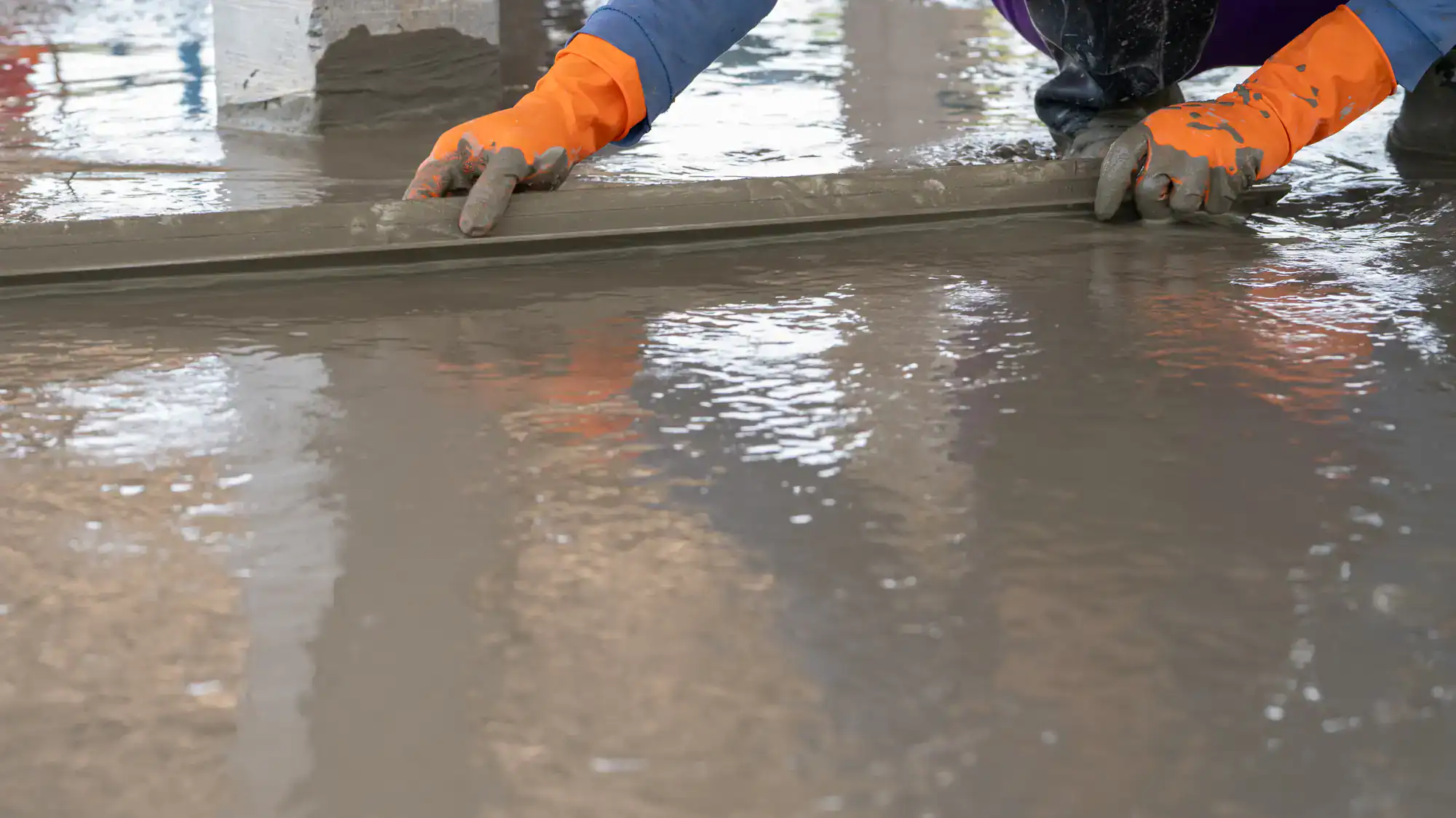
The first thing that happens is a site assessment of your apparatus bay floor. We evaluate concrete condition, existing coatings, moisture levels, and any active cracking before making a product recommendation. In Bay Shore, moisture testing is non-negotiable the proximity to the Great South Bay means concrete in south shore stations can carry elevated moisture content that will cause a coating to delaminate if it isn’t accounted for before installation begins.
Once we’ve assessed the substrate, we diamond-grind the floor to open the concrete capillaries and create a true mechanical bonding profile. This is not acid etching acid etching introduces moisture into the surface right before you seal it, which is a direct path to bubbling and delamination. Diamond grinding is the preparation method that makes a 20-year floor possible. A penetrating primer goes down next, bonding at the capillary level rather than just the surface.
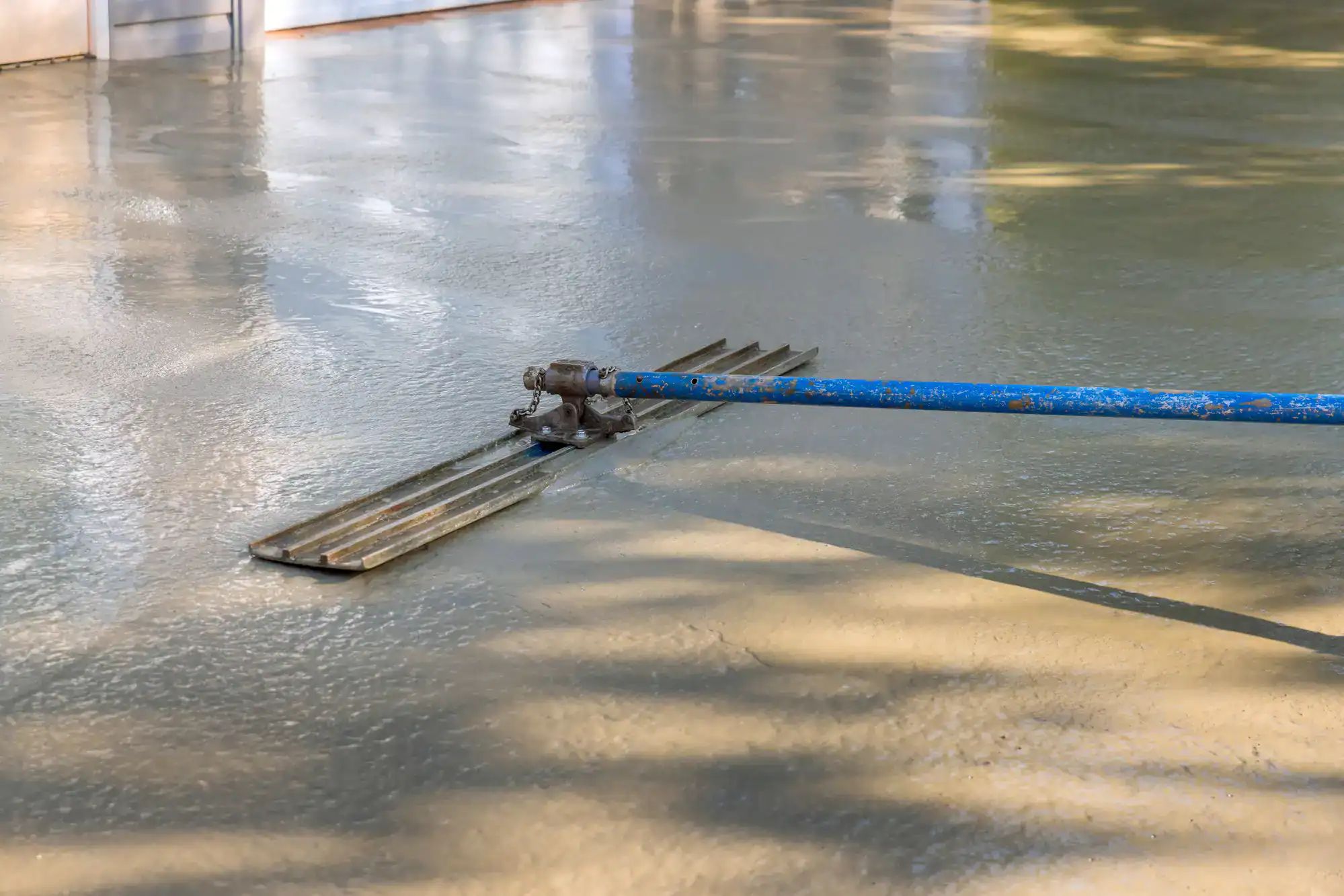
From there, the high-build epoxy base coat goes down with an aggregate broadcast for compressive strength, followed by the polyaspartic topcoat at 15 mils. The full system cures in 24 hours. Bay Shore Fire Department apparatus is back in the bay the next morning not parked outside on the apron for a week while a traditional epoxy cure runs its course. For a three-station district covering a coastal community with ferry terminal access to Fire Island, that turnaround isn’t just convenient. It’s operationally necessary.
Ready to get started?
The apparatus bay is the most demanding surface in any fire station, but it’s not the only floor that matters. We install emergency services floor coatings throughout the full station apparatus bay, decontamination zone, turnout gear storage, kitchen, and living quarters using systems matched to what each area actually needs.
In the apparatus bay, the polyaspartic system handles the compressive load of Bay Shore’s Rosenbauer fleet, the chemical exposure from road brine and diesel, and the thermal shock of bay doors opening onto cold Great South Bay air in January. The decon zone gets a seamless, chemical-resistant surface that can be fully washed down directly supporting the contamination control requirements under NFPA 1500 and 1585, which apply to every fire department in New York State. For a 100% volunteer department where firefighters go home to Penataquit Point, Brightwaters, and neighborhoods throughout the district after every call, that decon surface isn’t a compliance checkbox. It’s a real health protection measure.
Kitchen and living quarter floors are installed with systems appropriate for food-safe cleanability and daily foot traffic. Using one certified contractor for every floor in the station means consistent quality, compatible systems, and a single point of accountability for everything underfoot no handoff between vendors, no mismatched products, no gaps in coverage.
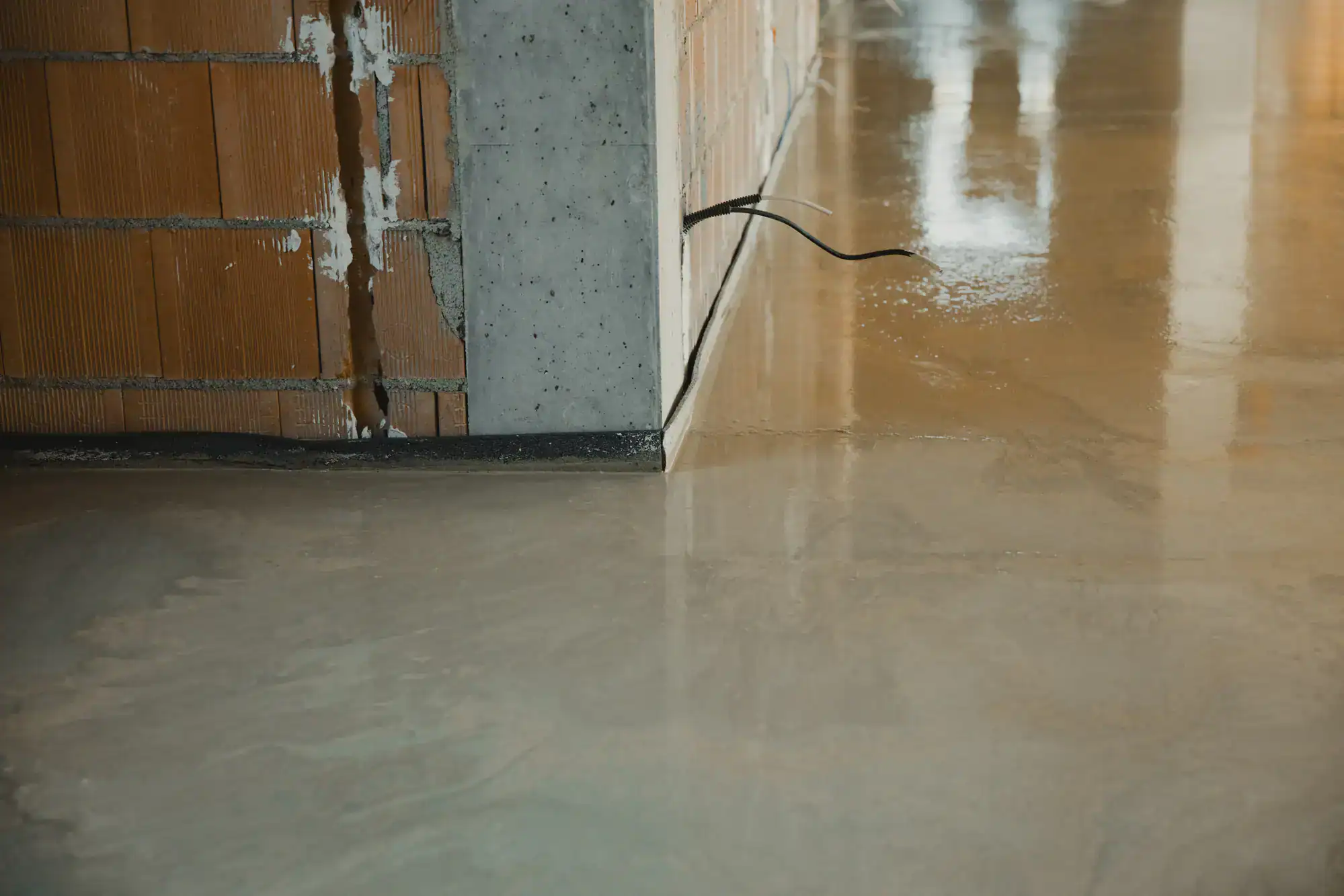
Bay Shore’s location on the north shore of the Great South Bay creates a combination of conditions that most inland Long Island communities don’t deal with at the same intensity. Salt-laden air off the bay infiltrates porous or improperly sealed concrete surfaces continuously, especially in apparatus bays where large doors face the prevailing south winds. That salt moisture accelerates surface deterioration and attacks the bond between a coating and the substrate.
Add the road salt and deicing brine that apparatus tracks in off Sunrise Highway during every winter response, and you have a chemical environment that thin-mil or improperly bonded coatings simply aren’t built to survive. The freeze-thaw cycling that Bay Shore experiences from December through February does the rest water infiltrates micro-cracks, freezes, expands, and widens those cracks with each cycle. The floors that fail fastest are the ones installed without proper moisture testing, without diamond grinding, and without a coating system rated for chemical and thermal exposure at this level.
A properly installed polyaspartic system in a Bay Shore apparatus bay should last 20-plus years under normal operational use. The key word is “properly” surface preparation is what determines longevity more than the product itself. A 15-mil polyaspartic topcoat installed over a diamond-ground, moisture-tested, properly primed substrate will outlast a thicker coating applied over an inadequately prepared surface every time.
For context, standard epoxy systems last roughly 5 to 10 years in demanding environments. Polyaspartic systems are 4 times more flexible and 2 times more abrasion-resistant than standard epoxy, which matters when you’re talking about a floor that gets driven on by 40,000-plus-pound apparatus daily, exposed to coastal humidity year-round, and cleaned repeatedly with commercial degreasers. In Bay Shore’s environment specifically, the non-porous seamless surface also means salt air and moisture have no pathway into the concrete substrate which is the primary driver of premature failure in south shore fire stations.
The polyaspartic system we install cures in 24 hours, which means apparatus is back in the bay the following morning. That’s the single most operationally important specification for a department like Bay Shore Fire District, which covers a coastal community including ferry terminal access to Fire Island and waterfront neighborhoods on the Great South Bay. Parking apparatus outside overnight is workable. Parking it outside for three to seven days which is the cure window for traditional epoxy is not a realistic option for an active district.
Scheduling is typically coordinated around the fire district’s operational calendar. Most departments in Suffolk County find it practical to stage the work bay by bay, keeping at least one apparatus space active at all times. The 24-hour cure timeline makes that rotation manageable. If the district has a planned apparatus relocation or training exercise coming up, that window can also be used to complete the full bay in a single installation sequence.
Yes, and it’s worth understanding what those requirements actually mean for your floor choice. NFPA 1500 covers occupational safety and health for fire departments broadly, and NFPA 1581 and 1585 address facility requirements for PPE storage, cleaning areas, and contamination control specifically. The contamination control provisions create a direct requirement for seamless, non-porous, easily decontaminable surfaces in apparatus bays and decon zones surfaces that can be fully washed down and that don’t harbor carcinogenic particulates in cracks, grout lines, or porous concrete.
Suffolk County’s fire marshal office oversees compliance for departments throughout the county, including Bay Shore Fire District. A properly installed seamless epoxy or polyaspartic system satisfies the surface requirements under these standards in a way that bare concrete, painted concrete, or tile with grout joints simply cannot. If your current floor has visible cracking, porous areas, or surface deterioration, it is not meeting the contamination control intent of these standards and that’s a risk that falls on the department and its leadership.
Professional installation of a commercial-grade polyaspartic apparatus bay floor typically runs between $5 and $15 per square foot, depending on the size of the bay, the condition of the existing concrete, and the system complexity required. For a three-station district like Bay Shore Fire District, the total investment across all apparatus bays is meaningful but it’s a capital improvement with a 20-year service life, not a maintenance expense that repeats every five years.
The more useful comparison is total cost of ownership. A standard epoxy floor that fails in five to seven years requires grinding, disposal, and full reinstallation at a cost that, over 20 years, will exceed the upfront investment in a polyaspartic system. Bay Shore Fire District has demonstrated willingness to invest in long-term capital improvements, including the bond-funded Rosenbauer fleet replacement. A 20-year apparatus bay floor is the same category of decision a one-time investment that eliminates a recurring cost and a recurring problem. FEMA’s Assistance to Firefighters Grant program also provides funding windows that Bay Shore Fire District, as a volunteer department, is eligible to apply for.
Yes, and using one contractor for every floor in the station is genuinely the better approach. The decon zone, kitchen, and living quarters each require different coating systems the decon zone needs a seamless, chemical-resistant surface rated for repeated washdown; the kitchen needs a food-safe, thermally stable system; the living quarters need something durable and comfortable underfoot for daily use. A contractor who only does apparatus bays will hand you off to someone else for those areas, which means different installation crews, potentially incompatible products, and no single point of accountability if something fails at the transition zones.
We install all of these systems and have done so across commercial and industrial facilities throughout Suffolk County for over 30 years. For Bay Shore Fire Department specifically a 100% volunteer department where the station is also a community gathering point and a home base for 140 active members having every floor done correctly and consistently matters beyond just the apparatus bay. One certified crew, one installation standard, one contractor who stands behind all of it.