


You’re running a warehouse, not babysitting a floor. Every crack means downtime. Every repair means rerouting traffic. Every failure costs you money and creates safety risks your team shouldn’t have to navigate.
High-traffic concrete sealer in Bay Shore protects against the reality of warehouse operations. Forklifts rolling the same paths thousands of times. Pallet jacks dragging debris like sandpaper. Spills, impacts, and the constant weight of inventory moving in and out.
The right industrial warehouse floor epoxy in Bay Shore eliminates those headaches. You get a seamless surface that resists chemicals, handles heavy loads, and cleans up fast. No grout lines trapping dirt. No constant patching. Just a floor that does its job so you can focus on yours.
We’ve installed warehouse floors across Long Island for over three decades. Our installers are OSHA 40 certified, and most have been with us for over 10 years. Our supervisors bring more than 40 years of combined experience to every project.
Bay Shore’s industrial facilities need floors that can handle the humidity, temperature swings, and heavy use that come with operating near the water. We’ve worked in distribution centers, manufacturing plants, and logistics facilities throughout Nassau and Suffolk Counties. We know what holds up and what doesn’t.
Every installation includes moisture testing, proper concrete preparation, and the right system for your specific traffic patterns. No shortcuts. No guessing.

First, we test your concrete for moisture. Warehouses in Bay Shore deal with humidity, and moisture vapor can destroy a floor system from underneath if you don’t address it upfront. We use calcium chloride testing to get accurate readings before we touch anything.
Next comes surface preparation. This usually means diamond grinding for warehouses in Bay Shore to create the profile epoxy needs to bond properly. We remove any existing coatings, repair cracks and spalling, and make sure the substrate is sound. This step determines how long your floor lasts.
Then we apply the system. For forklift traffic resistant coating in Bay Shore, that typically means a high-build epoxy base coat, a broadcast layer for added thickness and texture, and a polyurethane or polyaspartic topcoat that handles impacts and abrasion. The topcoat also resists yellowing and provides the chemical resistance you need for spills.
Cure times vary based on the system, but most large scale warehouse flooring in Bay Shore can handle light traffic within 24 hours and full traffic within 48 to 72 hours. We schedule installations to minimize disruption to your operations.

Ready to get started?
You get a floor system engineered for the loads you’re running. That means proper thickness, the right resin chemistry, and a topcoat that won’t wear through in high-traffic lanes. Most warehouse floors in Bay Shore need 20-40 mils of total thickness to handle daily forklift use without breaking down.
The surface is seamless, which matters more than most people realize. No grout lines means no place for dirt, bacteria, or spilled materials to hide. You can sweep and mop without worrying about buildup in cracks or joints. The high-gloss finish also reflects light, which can reduce your lighting costs and improve visibility.
Bay Shore’s industrial facilities often deal with temperature fluctuations and occasional moisture issues, especially in older buildings near the waterfront. We account for that in system selection. If your slab shows signs of moisture vapor transmission, we use moisture-mitigating primers. If you have expansion joints or areas with movement, we detail those properly so the coating doesn’t fail at stress points.
You also get safety markings, anti-slip additives in specific zones if needed, and a floor that meets your operational requirements. We’re not selling you the same system we put in a showroom. This is forklift traffic resistant coating in Bay Shore designed for what actually happens in your space.
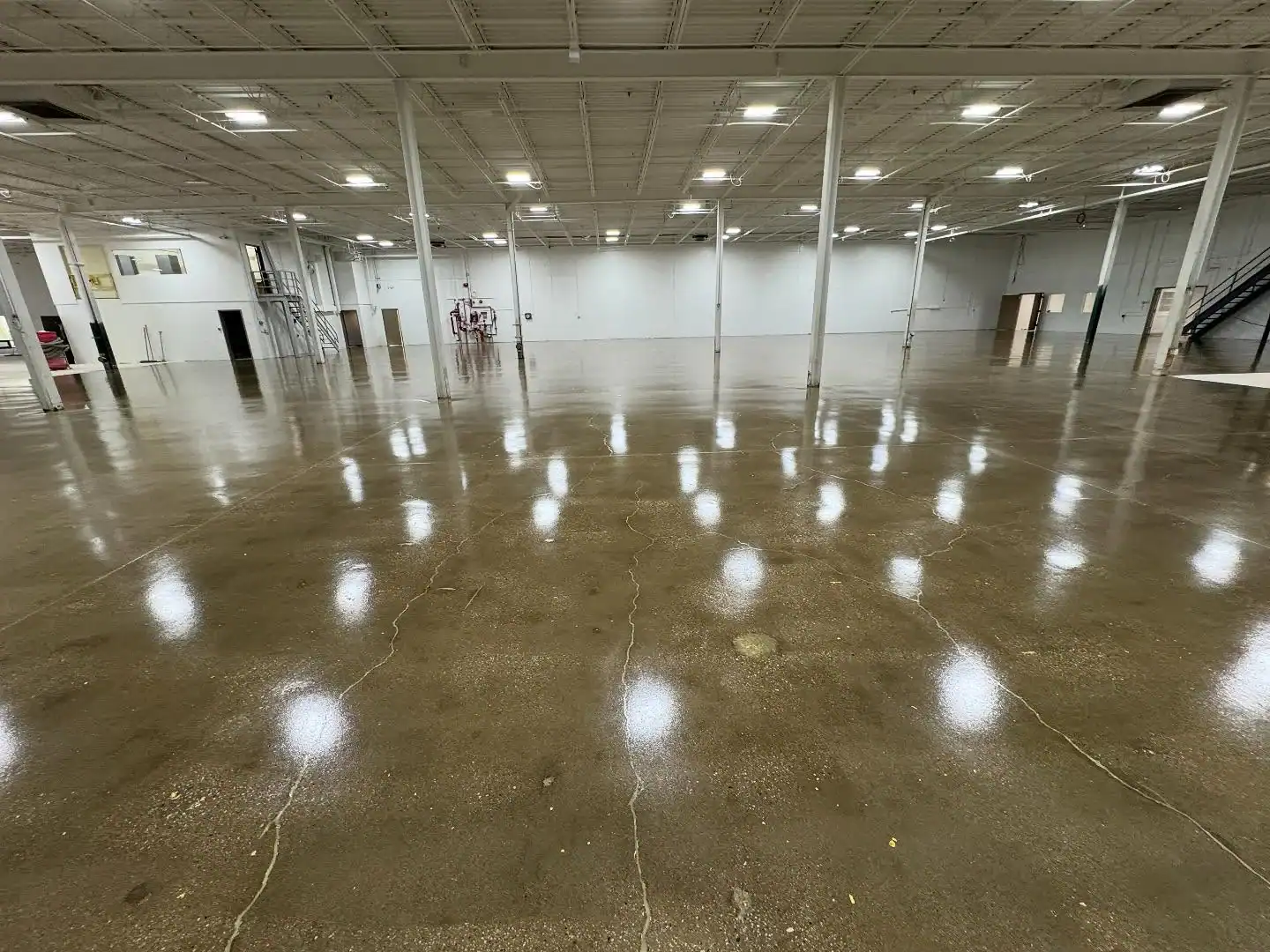
It depends entirely on your traffic and how the floor was installed. A properly installed high-build epoxy system with the right topcoat can last 10 to 15 years in heavy forklift traffic. Thin systems or DIY coatings might last two years before they need redoing.
The key factors are surface prep and system thickness. If the concrete wasn’t profiled correctly or moisture wasn’t addressed, the coating can delaminate within months. If the system is too thin for your traffic, forklift tires will wear through it faster than you’d expect.
We see a lot of warehouse floors in Bay Shore that were installed cheap and failed early. The cost of doing it twice always exceeds the cost of doing it right the first time. Proper concrete preparation, moisture testing, and a system with enough thickness to handle your loads will give you a decade or more of service.
Yes, but it requires planning. Most large scale warehouse flooring in Bay Shore gets installed in phases so you can keep operating in other areas. We map out a schedule that works around your busiest times and highest-traffic zones.
Cure times are the main constraint. You need to stay off the floor while it cures, which is typically 24 to 48 hours depending on the system and temperature. Fast-cure polyaspartic systems can be back in service faster, but they cost more and aren’t always the best choice for heavy forklift traffic.
We’ve done plenty of installations where we work nights or weekends to avoid disrupting day shifts. The more flexible you can be with access, the faster we can complete the project. For a 20,000-square-foot warehouse, you’re usually looking at a week to 10 days if we’re doing the whole floor in sections.
Epoxy provides the thickness and impact resistance you need for heavy loads. It builds up in layers, so you can create a system that’s 20, 30, or 40 mils thick. That thickness is what protects the concrete from forklift traffic and dropped pallets.
Polyurethane and polyaspartic coatings are typically used as topcoats over epoxy because they resist abrasion and chemicals better than epoxy alone. They also don’t yellow under UV light. But they don’t build thickness like epoxy does, so you need the epoxy base for structural performance.
Some contractors in Bay Shore will try to sell you a thin single-coat system. That might work in a light-duty space, but it won’t hold up to forklifts. For industrial warehouse floor epoxy in Bay Shore, you want a multi-layer system with a proper base coat, optional broadcast layer for added durability, and a high-performance topcoat. That’s what actually lasts.
We repair them properly, not just fill them and hope. Cracks happen in warehouse floors from settling, heavy loads, or poor subgrade preparation when the slab was poured. If you just coat over them, they’ll telegraph through and eventually fail.
For hairline cracks, we route them out slightly, clean them, and fill them with a flexible epoxy crack filler. For larger cracks or spalled areas, we use a structural repair mortar that bonds to the existing concrete. If there’s significant damage or slab movement, we’ll tell you upfront because coating over a bad substrate is a waste of your money.
Diamond grinding for warehouses in Bay Shore also removes any weak surface concrete and creates the profile we need for proper adhesion. This step is non-negotiable. We’ve seen too many coatings fail because someone skipped prep work to save time. Surface preparation is 80% of the job.
Yes, if you use the right topcoat. Standard epoxy resists most oils, coolants, and mild chemicals, but it can be affected by strong acids or prolonged exposure to certain solvents. That’s why we use polyurethane or polyaspartic topcoats for high-traffic concrete sealer in Bay Shore.
These topcoats provide excellent chemical resistance across a wide range of substances. If you’re dealing with battery acid from forklifts, hydraulic fluid, or cleaning chemicals, the topcoat protects the epoxy base and the concrete underneath. The seamless surface also means spills don’t seep into cracks or joints where they can cause hidden damage.
Cleanup is straightforward. Most spills wipe up easily, and the non-porous surface doesn’t absorb stains. For warehouses in Bay Shore handling food products, pharmaceuticals, or other regulated materials, this also helps with sanitation and inspection compliance. You’re not fighting a floor that traps contaminants.
For a proper industrial system, you’re typically looking at $5 to $10 per square foot depending on the condition of your concrete, the system thickness you need, and the size of the space. Larger projects cost less per square foot because of economies of scale.
That price includes moisture testing, surface preparation with diamond grinding, crack repair, a high-build epoxy base, and a durable topcoat. If your concrete needs significant repair work or you have moisture issues that require special primers, costs go up. If you want custom colors, safety striping, or anti-slip additives in certain areas, that adds to the total.
The cheapest bid is rarely the best value for forklift traffic resistant coating in Bay Shore. Thin systems or shortcuts on prep work will fail early, and you’ll pay to redo the floor in a few years. We price our work based on what it takes to deliver a floor that lasts 10-plus years. That’s the lowest cost per year of service, even if it’s not the lowest upfront number.