
Most commercial floors in Bay Shore are working against you. Vinyl composite tile needs to be stripped and waxed on a cycle that never ends. Epoxy coatings peel when moisture vapor pushes up through the slab and in a waterfront community sitting on the Great South Bay, that’s not a rare problem. It’s a predictable one. Polished and densified concrete doesn’t rely on a topical coating to perform. The densifier penetrates the slab and chemically hardens it from the inside out, which means the surface isn’t sitting on top of your concrete it is your concrete. That’s a meaningful difference when Bay Shore’s coastal humidity and freeze-thaw winters are part of the equation.
For the industrial facilities running along the North Bay Shore corridor, a dusty, untreated slab is more than an eyesore. Concrete dust contaminates product, clogs equipment, and creates a maintenance burden that compounds over time. A properly polished floor eliminates that. For the restaurants and retail spaces revitalizing downtown Bay Shore, the result is a clean, reflective surface that holds up against commercial cleaning chemicals, dropped equipment, and the kind of foot traffic that comes with a busy Main Street season. Either way, you’re not refinishing it every few years. You install it right once, and it works.
We built Advanced Epoxy Flooring on a straightforward premise: most flooring contractors apply systems they don’t fully understand. Danny Harmer started this company because he understood the chemistry and that knowledge changes the quality of the outcome at every step. With over 40 years of hands-on experience, a Sherwin-Williams High Performance Flooring certification, and a Res Tech certification, the technical foundation here is real and verifiable.
When you hire us for your Bay Shore commercial space, Danny is on the job. Not a subcontracted crew, not a rotating team the person with four decades of experience is the person doing the work. That matters in a market like Bay Shore and the broader Town of Islip, where older commercial building stock means slab conditions vary widely and there’s no room for guesswork. The flooring work we completed at the White House kitchen in 1996 still stands as a benchmark. No local competitor serving Suffolk County can point to anything close to it.
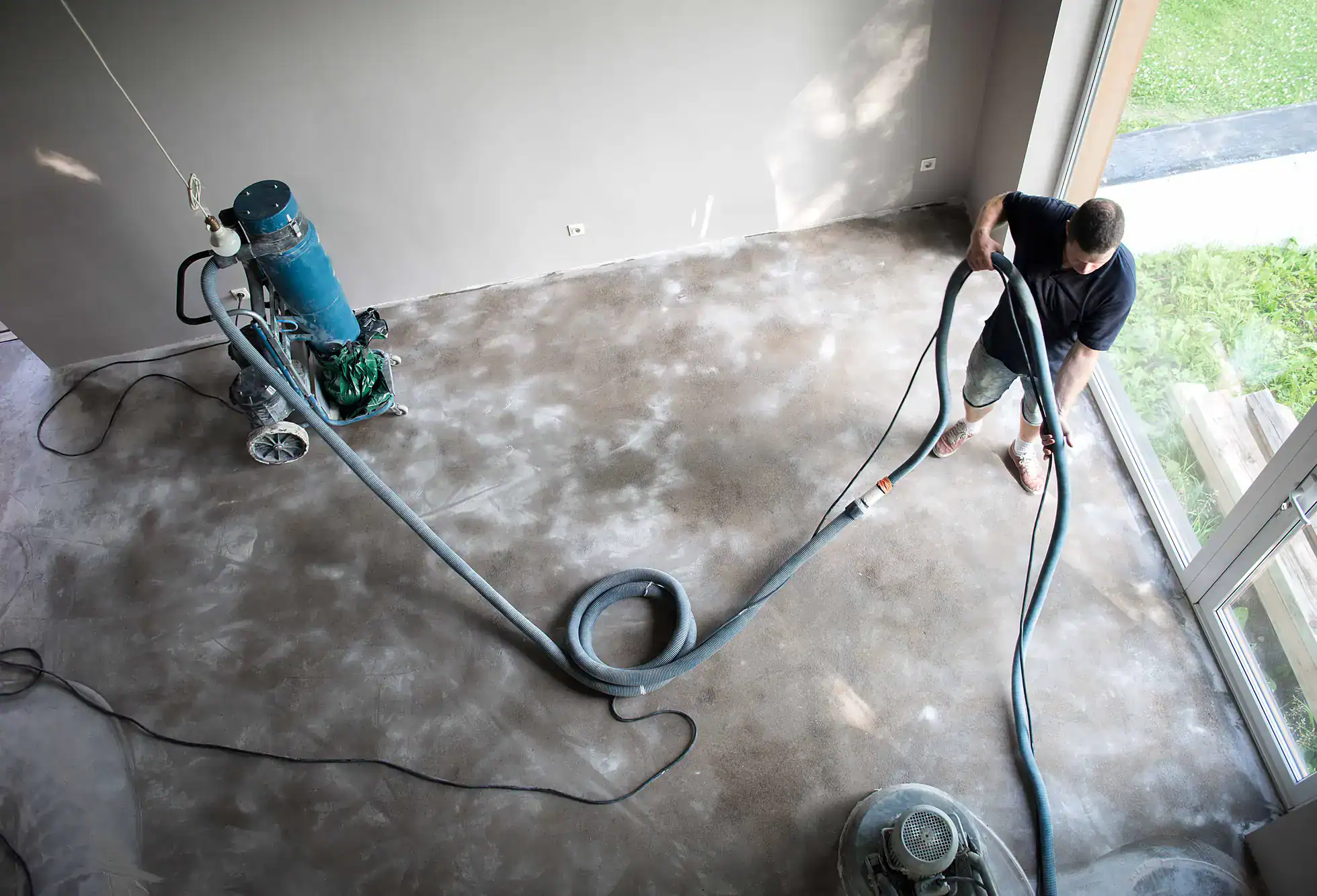
It starts with an honest assessment of your slab. Bay Shore’s commercial building stock spans decades some slabs along the Main Street corridor are mid-century pours with existing coatings, previous repairs, and surface contamination built up over years of use. Before any polishing begins, we evaluate the slab for hardness, existing coatings, cracks, and moisture conditions. That assessment drives every decision that follows.
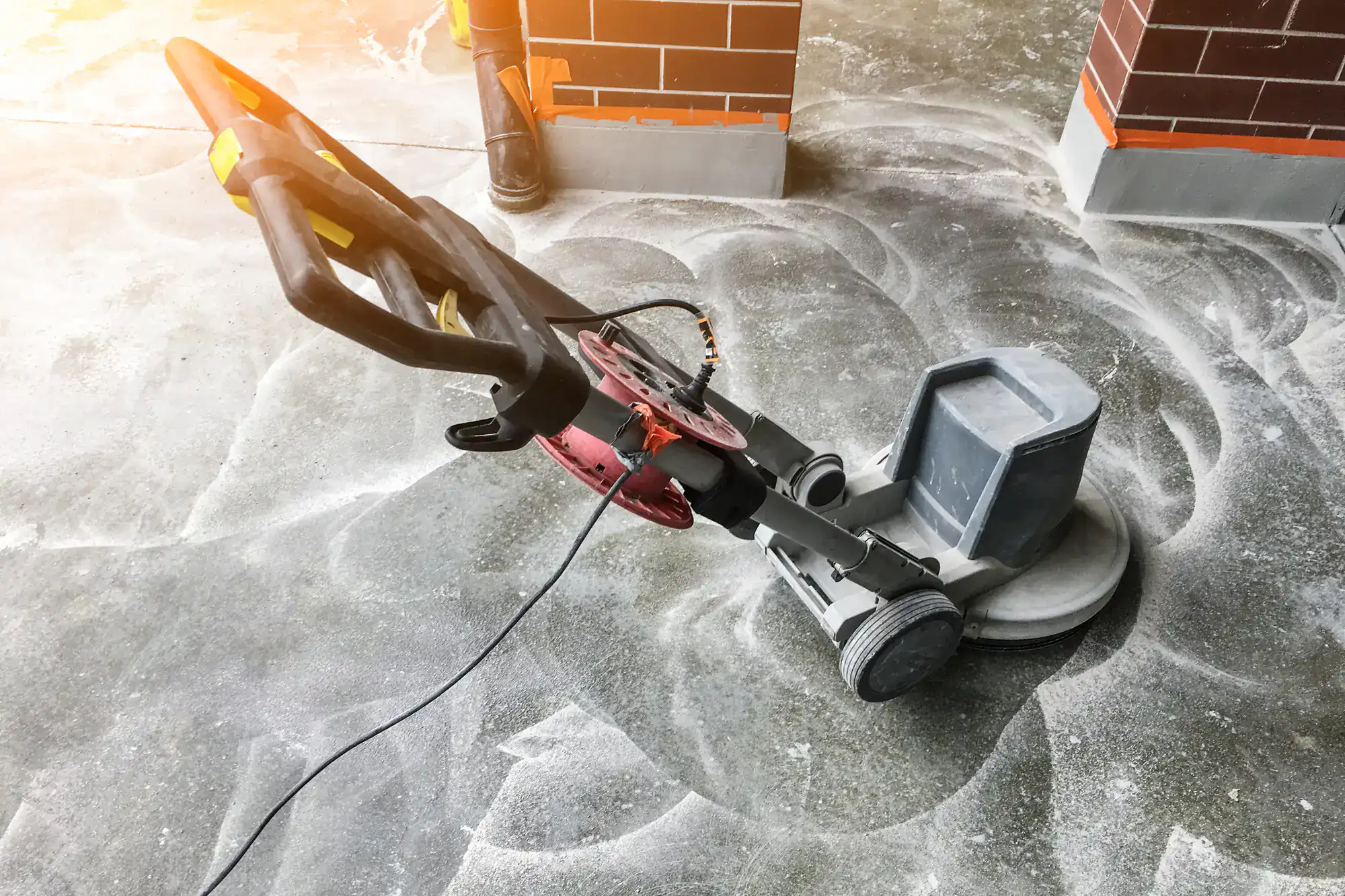
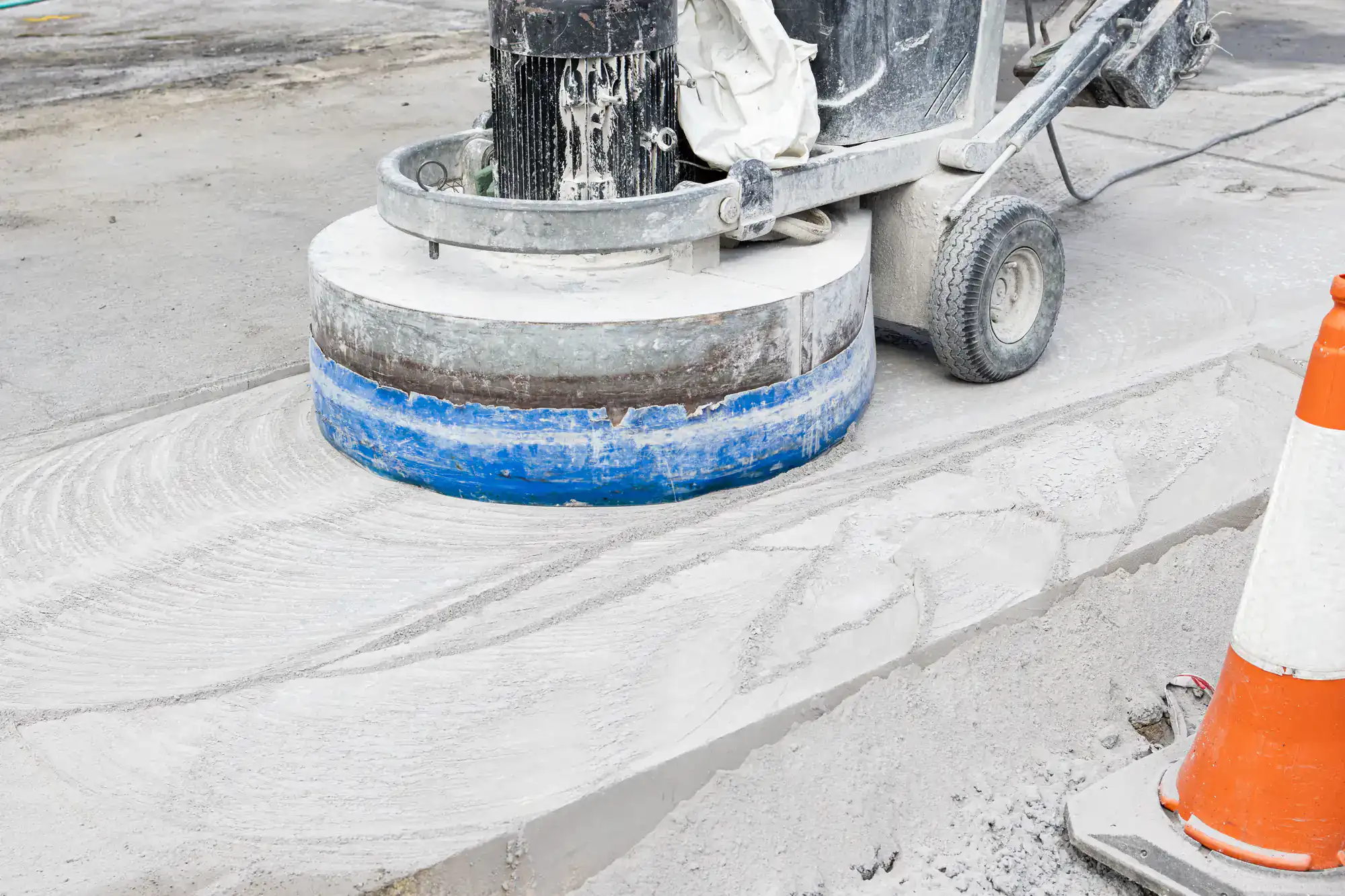
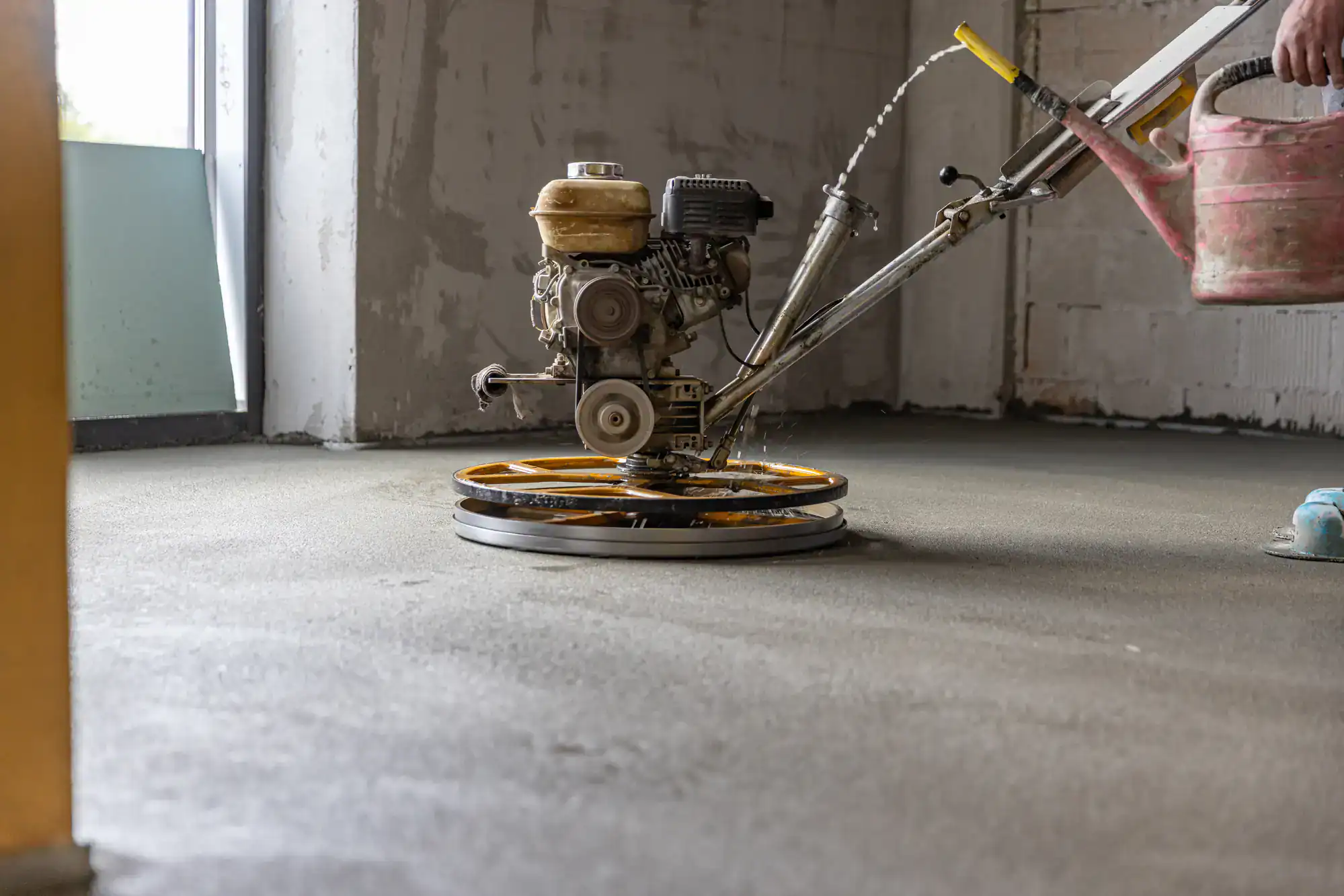
From there, the surface preparation phase begins. Grinding removes existing coatings, levels high spots, and opens the concrete’s pore structure so the densifier can penetrate properly. This isn’t a step that gets rushed. The quality of the grind determines the quality of everything that comes after it. Once the slab is prepared, we apply the densifier a lithium silicate chemistry that reacts with the concrete and hardens it from within. After the slab has cured, progressive diamond tooling brings the surface to the target finish level, from a Class 1 matte through a Class 4 high-gloss, depending on what your space actually needs.
For Bay Shore businesses scheduling around the summer season particularly restaurants and retail near the Fire Island Ferry terminal we typically plan projects during the October through March window when operational downtime is more manageable. The work can be sequenced in sections to keep part of your space running if a full closure isn’t realistic.
Ready to get started?
Not every space needs a mirror finish, and not every slab can support one. The finish class that’s right for your Bay Shore commercial space depends on what the floor actually has to do. Industrial facilities in North Bay Shore warehouses, manufacturing operations, distribution spaces typically benefit most from a Class 2 satin or Class 3 semi-polished finish. It’s durable enough for forklift traffic, resistant to chemical spills, and eliminates the concrete dust problem that plagues untreated slabs. Retail showrooms and restaurant spaces along the Sunrise Highway corridor or downtown Main Street are often better suited for a Class 3 or Class 4 high-gloss finish, where the reflective surface contributes to lighting efficiency and creates the kind of clean, modern aesthetic that today’s commercial tenants and customers expect.
Every project we complete includes a full slab assessment, surface preparation, densification, and progressive diamond polishing to the agreed finish class. We apply stain guard where appropriate, and anti-slip additives can be incorporated into the final coat without affecting the gloss level a common consideration for Bay Shore food service operations that deal with wet floors during service. Crack repairs and surface patching are handled before polishing begins, using color-matched materials that minimize visual disruption in the finished floor. What you get is a floor that was spec’d for your specific space, not a generic system applied the same way regardless of conditions.
In most cases, yes and this is one of the most common misconceptions we run into. Bay Shore has a lot of commercial building stock that’s been around for decades, particularly along the Main Street corridor and in the North Bay Shore industrial area. Those slabs have often never been properly finished, and they may have old coatings, surface staining, or previous patch repairs that make owners assume polishing isn’t an option.
The reality is that surface preparation can address most of those conditions. Existing coatings get ground off. Cracks and spalled areas get filled with color-matched cementitious or epoxy materials before polishing begins. The slab assessment at the start of every project is specifically designed to identify what’s there and what it will take to bring the floor to a polishable condition. The honest answer is that most slabs even older, neglected ones are workable. The assessment tells you exactly what you’re dealing with before any commitment is made.
It’s a fair concern, and it’s one of the reasons the densification step matters so much in Bay Shore specifically. Our community sits on the Great South Bay, and the relative humidity here runs between 55% and 68% year-round. That persistent moisture environment accelerates the degradation of topical coatings epoxy systems that sit on top of the slab rather than bonding with it are vulnerable to moisture vapor transmission from below, which causes delamination over time.
Polished and densified concrete handles this differently. The lithium silicate densifier reacts chemically with the concrete matrix and closes the pore structure from within. That means the surface isn’t relying on an adhesive bond to stay intact it’s part of the slab itself. Combined with a penetrating stain guard applied after polishing, the finished floor is significantly more resistant to moisture-related failure than any coating-dependent system. For Bay Shore commercial spaces where humidity is a constant, that’s not a minor detail it’s the reason the floor holds up for 15 to 20 years instead of three to five.
This is probably the most common concern we hear from restaurant owners, and it’s based on a misunderstanding of how gloss and friction actually work. Gloss level and slip resistance are independent properties. A highly polished floor can be reflective and still meet or exceed OSHA’s minimum coefficient of friction requirement of 0.5 for level commercial surfaces.
For Bay Shore food service operations particularly those dealing with wet floors during busy service periods near the waterfront we can incorporate anti-slip additives directly into the stain guard application. This doesn’t affect the finish appearance or reduce the gloss level in any visible way. It simply increases the surface texture at a microscopic level, which is where friction is actually created. The result is a floor that looks clean and professional, passes a safety inspection, and doesn’t become a liability issue during a Saturday night rush. If slip resistance is a priority for your space, it gets addressed as part of the specification process, not as an afterthought.
Project timelines depend on square footage, slab condition, and the finish class you’re working toward. For a typical commercial space in the 2,000 to 5,000 square foot range which covers most of the restaurant and retail spaces in downtown Bay Shore the work generally runs two to four days from surface prep through final polish. Larger industrial spaces in the North Bay Shore corridor can take longer depending on the scope of prep work required.
Whether you need to close entirely depends on the layout of your space. In many cases, we can sequence the work in sections so part of the floor remains accessible while another section is being processed. For Bay Shore businesses that run seasonally restaurants and shops near the Fire Island Ferry terminal that peak from Memorial Day through Labor Day the practical approach is to schedule the project during the fall or winter when a temporary closure has the least impact on revenue. That timing also works in your favor from a humidity standpoint, since cooler, drier conditions support better densifier penetration and curing.
Both are legitimate commercial flooring options, but they perform differently and fail differently and that distinction matters a lot for warehouse and industrial environments. Epoxy is a topical coating. It sits on top of the concrete and relies on surface adhesion to stay in place. In a warehouse setting with forklift traffic, heavy point loads, and frequent temperature fluctuations like the industrial facilities along the North Bay Shore corridor that deal with loading dock doors cycling open in winter that adhesive bond is under constant stress. When it fails, it peels, chips, and creates a maintenance problem that’s expensive to fix.
Polished concrete doesn’t have a coating to peel. The densification process hardens the slab itself, and the polished surface is the concrete not something applied over it. That makes it significantly more durable under the mechanical stress of warehouse operations. It also eliminates the concrete dust problem that untreated slabs generate, which is a real operational issue in any facility storing product or running sensitive equipment. For most North Bay Shore warehouse and industrial applications, polished concrete is the lower-maintenance, longer-lasting choice over a 10-year horizon.
Pricing for commercial polished concrete in Bay Shore and the greater Suffolk County market typically runs between $3 and $12 per square foot, depending on three main factors: the condition of the existing slab, the finish class you’re targeting, and the total square footage of the project. Larger footprints like the warehouse and industrial spaces in North Bay Shore bring the per-foot cost down. Smaller retail or restaurant spaces targeting a high-gloss Class 4 finish sit at the higher end of that range.
The slab condition piece is the variable that surprises people most. A slab that needs significant prep work coating removal, crack repairs, surface grinding to correct unevenness costs more than a clean, well-poured slab that’s ready to polish. That’s why the assessment at the start of every project matters. You get a clear picture of what the floor actually needs before any numbers are committed to. What’s worth keeping in mind is the lifecycle math: a properly installed polished concrete floor in a Bay Shore commercial space lasts 15 to 20 years with minimal maintenance. Compared to the recurring cost of waxing, stripping, and replacing VCT or recoating epoxy systems every few years, the total cost over time is almost always lower.