


Your warehouse floor takes a beating. Forklifts running the same routes, pallets dropping, spills happening. Most concrete wasn’t designed for that kind of punishment, and it shows—cracks spreading through high-traffic lanes, joints crumbling where wheels hit hardest, dust clouding up every time equipment rolls through.
Industrial warehouse floor epoxy in Plainview, NY changes that. You get a surface that absorbs impact instead of chipping away. Forklift traffic resistant coating in Plainview, NY means your lanes stay intact even under constant use. Chemical spills wipe clean instead of soaking into concrete and creating permanent stains or structural damage.
The difference shows up in your daily operations. Less downtime for repairs. Cleaner air because the floor isn’t breaking down into dust. Better visibility because the high-gloss finish reflects your existing lighting. Your team moves faster when they’re not navigating around damaged sections or worrying about unstable surfaces.
You’re not just covering concrete. You’re extending the life of your facility’s foundation while making it safer and easier to maintain. That’s what a proper high-traffic concrete sealer in Plainview, NY delivers when it’s installed right.
We’ve been installing commercial and industrial floors for over three decades. Our president has more than 40 years of hands-on experience with epoxy systems. Most of our installation team has been with us for over ten years, and our field supervisors bring a combined 40+ years to every job.
We’ve worked on large scale warehouse flooring in Plainview and across Long Island, handling facilities from 10,000 to 50,000 square feet. Plainview’s industrial corridor along the Long Island Expressway and Northern State Parkway puts warehouses close to major distribution routes, which means high volume and constant traffic. Your floors need to keep up with that pace.
All our installers are OSHA 40 certified and current on training standards. We handle moisture testing, concrete prep, repairs, and the full coating system. You’re working with people who’ve seen what fails and what holds up under real-world conditions.

Everything starts with the concrete itself. We test for moisture because coatings fail when water vapor pushes up from below. If your slab has issues, we address them before any coating goes down—crack repair, joint work, whatever’s needed to create a stable base.
Surface prep is where most contractors cut corners. We use diamond grinding for warehouses in Plainview, NY to open up the concrete pores and remove any contamination, laitance, or old coatings. This mechanical process creates the profile your new floor needs to bond properly. Shortcuts here mean delamination later, so we don’t take them.
Once the surface is prepped and clean, we apply the epoxy system matched to your traffic patterns and load requirements. Forklift lanes get extra attention. High-impact zones get reinforced. If you need anti-slip additives in certain areas, we build that into the system.
Cure time depends on the specific products and your facility’s temperature and humidity, but we work with your schedule to minimize downtime. You’ll know exactly when you can get back to full operations, and the floor will be ready to handle your heaviest equipment from day one.

Ready to get started?
You get a complete system, not just a coating slapped over concrete. That means moisture testing to verify your slab is ready, full surface preparation using diamond grinding equipment, repair work on any cracks or damaged joints, and the epoxy system engineered for your specific operations.
Plainview’s warehouse facilities typically run 10,000 to 47,000 square feet with ceiling heights between 18 and 30 feet and multiple loading docks. Those spaces see constant forklift movement, heavy pallet storage, and the kind of daily wear that destroys standard concrete. Our forklift traffic resistant coating in Plainview, NY is built for exactly that environment.
We customize based on what you’re actually doing in the space. If you’re handling chemicals or oils, we spec a system with superior chemical resistance. If you’re running heavy machinery in tight patterns, we reinforce those traffic lanes. If lighting is a concern, we use high-gloss finishes that improve reflectivity and reduce your energy costs.
The goal is a floor that makes your job easier—less maintenance, fewer safety incidents, better appearance, and a surface that holds up for years under the conditions you’re actually working in. That’s what you should expect from a properly installed industrial floor coating in Plainview, NY.
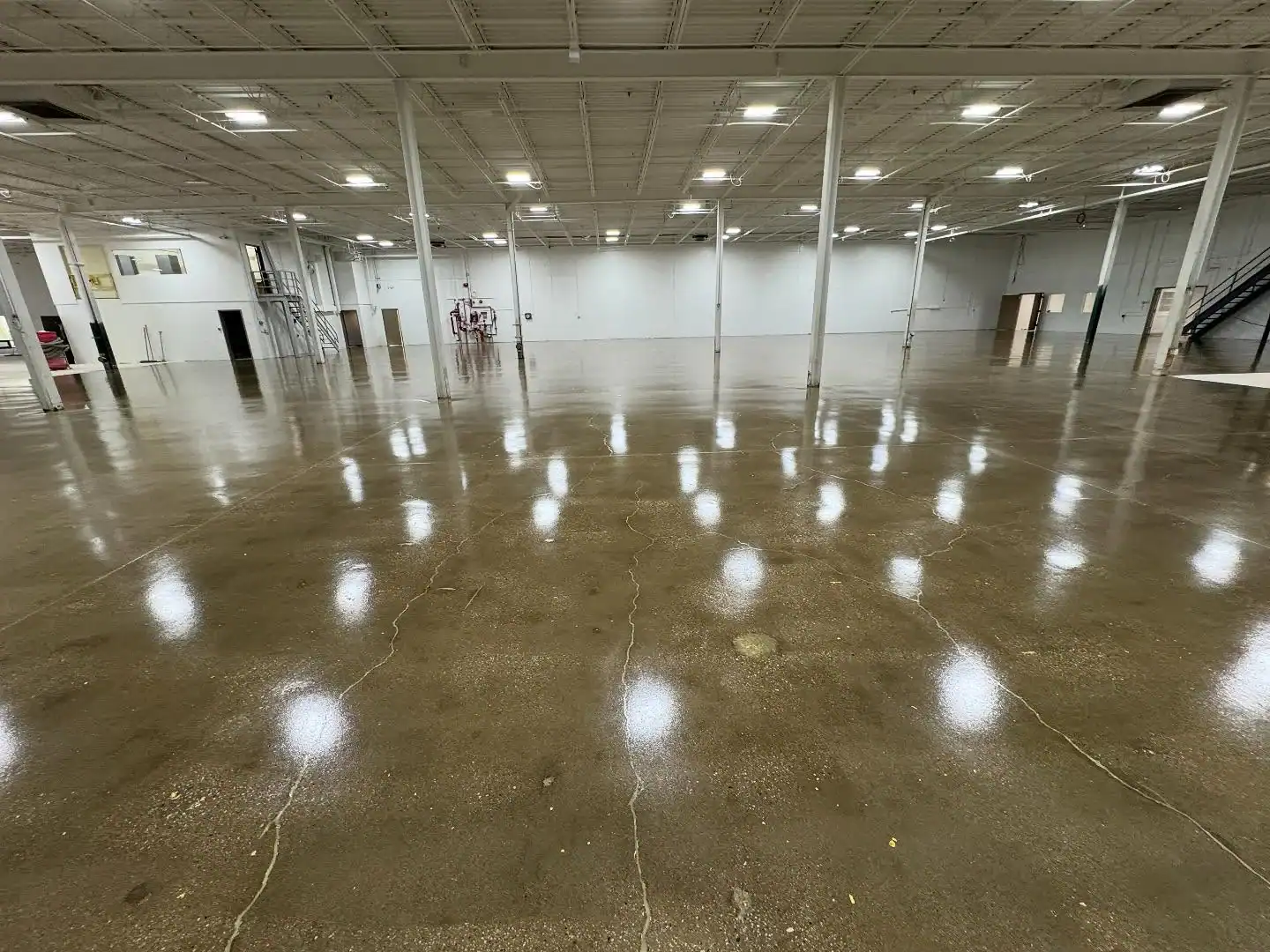
A properly installed epoxy system in a warehouse setting typically lasts 10 to 20 years, depending on your traffic volume and maintenance practices. The key word there is “properly installed”—surface prep and moisture control make or break longevity.
Warehouses in Plainview running multiple shifts with constant forklift traffic will see wear concentrated in specific lanes and turn areas. That’s normal. A quality system accounts for this during installation by using thicker applications or more durable topcoats in those zones.
What kills epoxy floors early is poor bonding due to inadequate prep, moisture issues that weren’t addressed before installation, or using a coating system that wasn’t designed for your specific load requirements. When those factors are handled correctly from the start, your floor will outlast cheaper alternatives by years and require far less maintenance along the way.
Yes, but only if you’re using an industrial-grade system designed for that purpose. Not all epoxy coatings are created equal. Residential garage floor kits won’t survive in a commercial warehouse, and even some commercial products aren’t rated for heavy forklift traffic.
Industrial epoxy systems are formulated with higher solids content and impact-resistant properties specifically to handle point loads from forklifts, dropped pallets, and heavy machinery. The coating creates a protective layer over your concrete that distributes impact forces and resists the abrasion from steel wheels and constant movement.
The thickness of the system matters too. Thicker applications provide more protection. We typically recommend systems between 20 and 60 mils for warehouse applications, with additional thickness in high-impact zones. Your concrete substrate also needs to be sound—if the concrete itself is failing, no coating will fix that. We address structural issues before installation so the entire floor system works together.
Preparation is 70% of the job and determines whether your floor lasts two years or twenty. It starts with moisture testing because trapped water vapor will push coatings right off the concrete. If moisture levels are too high, we need to address that before moving forward.
Next comes surface preparation, usually through diamond grinding. This mechanical process removes the top layer of concrete, opens the pores for better adhesion, and creates the profile the epoxy needs to bond. We’re removing any existing coatings, oils, dirt, or weak surface material. Acid etching doesn’t cut it for industrial applications—you need mechanical abrasion.
Crack repair and joint work happen after grinding. We fill cracks with appropriate repair materials and address any spalling or damage around control joints, which are the weakest points in your floor. Once everything is repaired and the surface is clean and dry, we can start the coating process. Skipping or rushing any of these steps is how you end up with a floor that fails early.
We work in phases when possible, coating sections of your warehouse so you can keep operating in other areas. For facilities that can’t shut down completely, we’ll schedule installation during slower periods or work overnight and weekend shifts to match your operational needs.
The actual installation timeline depends on your square footage and the system we’re using. Fast-cure epoxy systems can be ready for light traffic in 24 hours and full traffic in 72 hours. Standard systems need a bit longer. We give you exact timelines upfront so you can plan around them.
Surface prep is usually the longest part of the process—grinding, repairs, and cleaning take time to do right. But once that’s complete, coating application moves quickly. A 20,000 square foot warehouse typically takes three to five days total from start to finish, including cure time. We coordinate with you throughout the process so you know exactly when each area will be ready for equipment and inventory.
Daily maintenance is straightforward—sweep or dust mop to remove debris, and spot clean spills when they happen. The seamless, non-porous surface means dirt and liquids sit on top instead of soaking in, so cleanup is quick.
For deeper cleaning, damp mopping with a neutral pH cleaner works well. Avoid harsh chemicals or abrasive scrubbing that can dull the finish over time. Most warehouses find that regular sweeping and occasional mopping keeps the floor looking good and performing well.
Over the years, high-traffic areas may show wear in the topcoat. That’s normal. The good news is you can recoat just those sections without redoing the entire floor. A fresh topcoat every five to seven years in heavy-use zones extends the life of the whole system. Compared to concrete that’s constantly dusting, cracking, and requiring patching, epoxy maintenance is minimal. You’re spending less time and money keeping your floor functional.
Cost depends on your square footage, the condition of your existing concrete, and the system you need based on your operations. For warehouse applications in Plainview, you’re typically looking at $3 to $12 per square foot installed, with most projects landing in the $5 to $8 range.
That price includes surface prep, repairs, moisture mitigation if needed, and the full coating system. Larger facilities get better per-square-foot pricing. More complex jobs—heavily damaged concrete, extensive repairs, or specialized chemical-resistant systems—cost more upfront but save you money by solving problems permanently instead of temporarily.
The real cost comparison isn’t epoxy versus bare concrete. It’s epoxy versus the ongoing expense of concrete repairs, dust control, safety incidents from damaged floors, and early replacement. A quality epoxy system pays for itself through reduced maintenance, longer lifespan, and fewer operational disruptions. You’re making a capital investment in your facility’s infrastructure, not just buying a coating.