


Uneven floors don’t just look bad. They cost you in ways that add up fast—damaged forklift tires, equipment breakdowns, products falling off pallets, and safety incidents that could’ve been avoided.
When your warehouse floors in Baldwin, NY can’t handle the load, your forklifts take the hit. Tires wear unevenly. Internal components get rattled. Loads shift and tip. You’re replacing tires across the fleet, dealing with downtime, and hoping nobody gets hurt in the process.
A forklift traffic resistant coating in Baldwin, NY eliminates that cycle. The floor stays level, your equipment lasts longer, and your crew can move product without second-guessing every turn. You’re not patching problems anymore—you’re preventing them.
We work throughout Baldwin, Long Island, and the surrounding New York region installing high-traffic concrete sealer in Baldwin, NY for warehouses, distribution centers, and manufacturing facilities that can’t afford to shut down.
Baldwin’s industrial properties—over 450,000 square feet of warehouse space—need flooring that keeps up with the pace. We’ve seen what happens when floors fail under pressure, and we’ve built our systems to handle the constant forklift movement, heavy loads, and chemical exposure that come with the territory.
We’re not the cheapest option, and that’s intentional. You’re getting floors rated for at least 4,000 PSI, systems that cure fast so you’re not offline for days, and coatings that don’t need constant maintenance or replacement in a few years.

We start with diamond grinding for warehouses in Baldwin, NY—this isn’t just surface prep, it’s creating the precise flatness your equipment needs. Modern forklifts and automated systems require tight tolerances, and grinding gives us that level of control while opening up the concrete for proper adhesion.
Next, we apply the epoxy system matched to your operation. If you’re running forklifts daily, we’re using solid-based epoxy designed for that kind of punishment. If you’re dealing with chemicals or oils, we’re adding seamless, chemical-resistant layers that won’t break down. The system gets customized based on what your floor actually faces, not a one-size-fits-all approach.
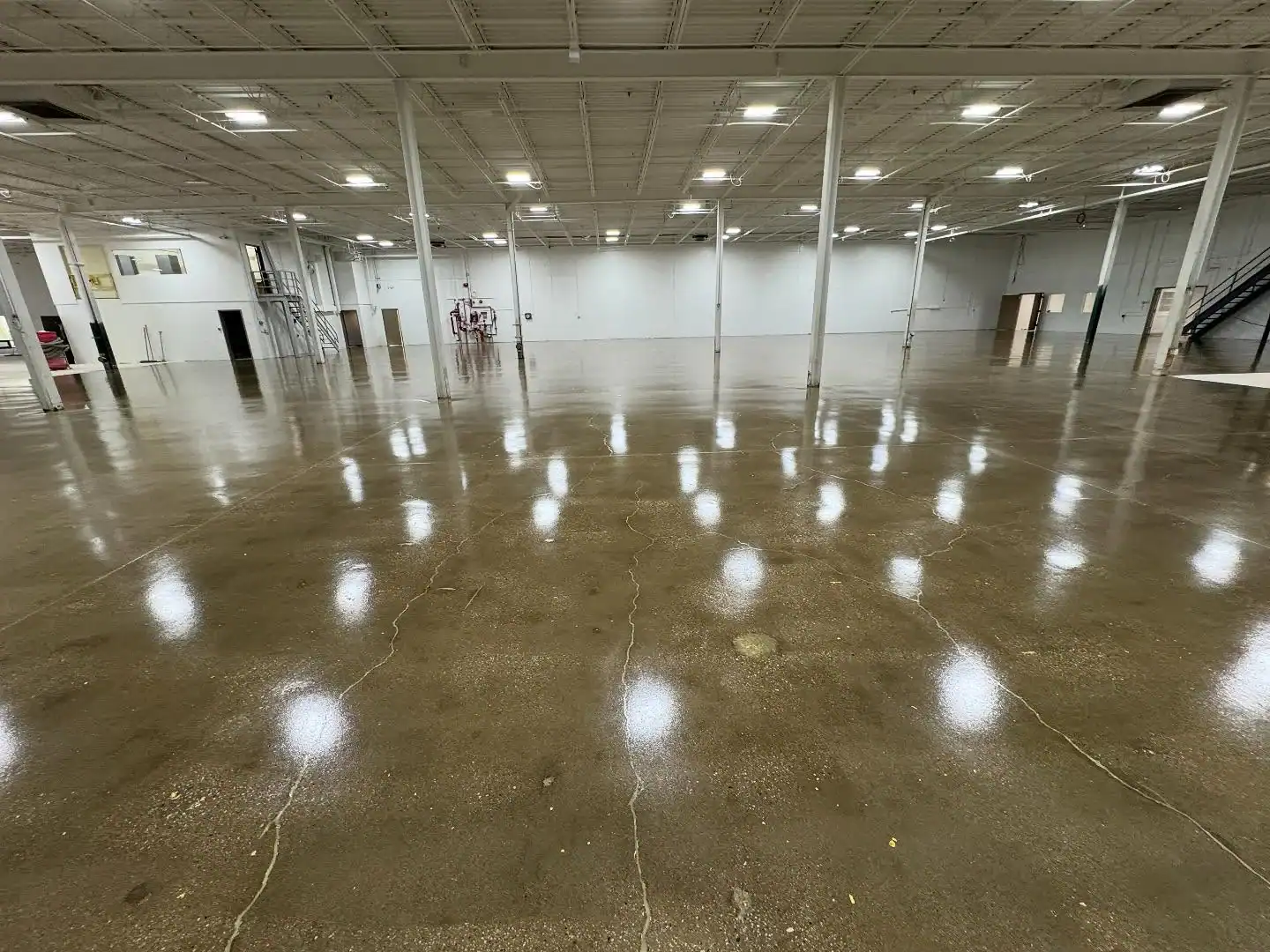
Curing happens fast—polyurethane topcoats reach 90% cure in about 15 minutes. You’re not waiting days to get back to work. Once it’s down, you’ve got a seamless surface that’s easy to clean, reflects light better than bare concrete, and holds up to the kind of traffic that would destroy a standard floor. Most professional installations last 10 to 20 years, and that’s with heavy use.

Ready to get started?
You’re getting a floor system engineered for Baldwin’s industrial environment—facilities that run distribution, light manufacturing, and logistics operations where downtime isn’t an option. The epoxy floor coating market hit $2.43 billion in 2024 and it’s growing because warehouses need floors that can keep up with modern demands.
Our systems include load-bearing strength rated for constant heavy traffic, seamless surfaces with no joints where dirt and chemicals collect, and slip-resistant topcoats that meet National Flooring Safety Institute standards. You’re also getting a floor that’s easier to maintain—sweeping and mopping with a neutral cleaner, no waxing, no constant upkeep that pulls your crew off other tasks.
Baldwin’s proximity to major East Coast markets means your warehouse is moving product constantly. Our large scale warehouse flooring in Baldwin, NY is built for that pace—floors that handle the pressure without cracking, coatings that resist the oils and chemicals your equipment brings in, and finishes that improve lighting and visibility across your space. The investment typically runs $6 to $10 per square foot for commercial projects, and you’re looking at decades of performance if it’s installed right.
It depends on the size of your space and the system you need, but most warehouse installations take a few days from start to finish. The actual application moves quickly—it’s the prep work and cure time that determine your timeline.
Diamond grinding and surface prep usually take a day or two depending on the square footage and the condition of your existing concrete. Application of the epoxy layers happens next, and this is where the system type matters. Polyurethane topcoats cure to 90% in about 15 minutes, which means you’re not offline for a week waiting for the floor to harden.
For a typical warehouse, you’re looking at 3 to 5 days total before you’re back to full operation. We schedule around your workflow when possible—if you can clear sections at a time, we can work in phases so you’re not completely shut down. The key is planning it right so the downtime doesn’t cost you more than the floor itself.
Yes, but only if it’s the right system installed correctly. Not all epoxy is built for forklifts, and that’s where a lot of warehouse floors fail.
Solid-based epoxy designed for industrial use can handle the constant turning, stopping, and weight that forklifts put on a floor. We’re talking about coatings rated for at least 4,000 PSI—strong enough to resist the impacts and abrasion that come with heavy machinery running all day. The floor stays level, which protects your equipment from the kind of damage that happens when tires hit uneven surfaces or cracks.
Forklift traffic resistant coating in Baldwin, NY also prevents the vibration and jolting that causes products to shift or fall. When the floor is smooth and seamless, your operators can move faster and safer. Most professional installations last 10 to 20 years even with daily forklift use, as long as the prep work and application are done right. Cheap coatings or DIY jobs won’t hold up—you’ll be repairing or replacing them within a few years.
Epoxy offers a combination of durability, chemical resistance, and load-bearing strength that other coatings can’t match for warehouse environments. It’s not just a surface treatment—it bonds to the concrete and creates a thick, protective layer.
Compared to concrete sealers, epoxy is significantly tougher. Sealers might protect against moisture and light wear, but they won’t stand up to forklifts, heavy impacts, or chemical spills the way epoxy does. Compared to paint, there’s no contest—paint chips and wears off quickly under industrial conditions.
The seamless finish is another advantage. There are no joints or edges where dirt, oils, and chemicals can seep in and cause damage over time. Epoxy also reflects light better than bare concrete, which improves visibility and can reduce your lighting costs. You’re getting a floor that’s easier to clean, safer to work on, and strong enough to handle the kind of abuse that shuts down other surfaces. For warehouses in Baldwin, NY dealing with constant traffic and heavy equipment, epoxy is the standard because it works.
Most commercial warehouse projects in Baldwin, NY run between $6 and $10 per square foot, but the final cost depends on the size of your space, the condition of your existing concrete, and the system you need.
A 3,000-square-foot warehouse typically costs between $18,000 and $36,000 for a complete installation. If your concrete needs significant repair or leveling before we can apply the epoxy, that adds to the cost. If you need specialized coatings for chemical resistance or faster cure times, that affects pricing too.
Here’s the thing—cheaper options exist, but they don’t last. You’ll be repairing or replacing them in a few years, which costs you more in downtime and repeat work than investing in a proper system upfront. Our installations are built to last 10 to 20 years with heavy use, which means you’re spreading that cost over decades of performance. When you factor in reduced maintenance, fewer equipment repairs from floor damage, and avoiding the cost of shutting down for constant fixes, the ROI makes sense.
No. That’s one of the biggest advantages—you’re getting a floor that’s easy to maintain without constant upkeep pulling your crew off other tasks.
Regular maintenance is just sweeping and mopping with a neutral cleaner. No waxing, no polishing, no special treatments. The seamless surface means there’s nowhere for dirt and debris to hide, so cleaning is faster and more effective than it would be on bare concrete or tile.
If you’re dealing with oils, chemicals, or other spills, epoxy’s chemical resistance means you can clean them up without worrying about the floor breaking down or staining. The coating is designed to handle that kind of exposure without degrading. Over time, high-traffic areas might show some wear, but a properly installed system lasts 10 to 20 years before you’re looking at any major work. Compare that to floors that need constant patching, sealing, or refinishing, and the time savings add up fast.
Yes, if you add the right topcoat. Epoxy itself creates a smoother, more level surface that reduces tripping hazards and makes it easier for forklifts to operate safely, but slip resistance comes from the finish you choose.
We can add slip-resistant coatings that meet National Flooring Safety Institute standards, which is important in areas where spills happen or where foot traffic is constant. The texture provides traction without making the floor harder to clean or creating spots where debris collects.
The improved lighting is another safety factor. Epoxy’s high-gloss finish reflects light better than bare concrete, which means better visibility across your warehouse. Your crew can see obstacles, read labels, and navigate aisles more easily, which reduces accidents. When the floor is level and consistent, forklifts don’t tip loads or cause products to fall, which protects both your inventory and your workers. You’re not just getting a stronger floor—you’re getting a safer work environment.