
Healthcare-associated infections cost facilities between $28 and $45 billion every year. About 1 in 31 hospital patients will contract an HAI during their stay, and roughly 90,000 of those infections prove fatal. Your floors play a bigger role in that than most people realize.
Cracks, seams, and porous surfaces trap moisture, bacteria, and contaminants that standard cleaning can’t reach. That’s where cross-contamination starts. Seamless medical-grade epoxy in North Bellmore, NY eliminates those hiding spots entirely—no grout lines, no gaps, no places for pathogens to settle in and multiply.
You get a surface that’s actually hygienic, not just clean-looking. One that stands up to high-pressure washdowns, repeated disinfection, and the kind of daily abuse that wears out tile and vinyl in a year or two. And when inspectors show up, you’re not scrambling to explain away stains or crumbling edges.
This is flooring designed around what hospitals, clinics, and surgical centers actually deal with every day. It’s built to protect patients, simplify maintenance, and meet the standards that matter—USDA, FDA, and local health departments included.
We’ve been installing healthcare flooring in North Bellmore, NY and across Long Island for over 30 years. We’ve worked in hospitals, outpatient centers, surgical suites, and medical labs—places where flooring isn’t decorative, it’s functional and regulated.
Our team is OSHA 40 certified. Most of our installers have been with us for over a decade. Our CEO has more than 40 years in the epoxy flooring industry and has completed projects everywhere from the White House kitchen to medical facilities in Moscow. That’s not name-dropping—it’s proof that we’ve handled high-stakes environments where failure isn’t an option.
North Bellmore sits near some of the busiest healthcare corridors on Long Island, with facilities like Nassau University Medical Center, NYU Langone Hospital–Long Island, and Mount Sinai South Nassau all within a few miles. We understand the local demand for fast turnarounds, minimal downtime, and flooring that actually holds up under the kind of traffic and cleaning protocols those environments require.
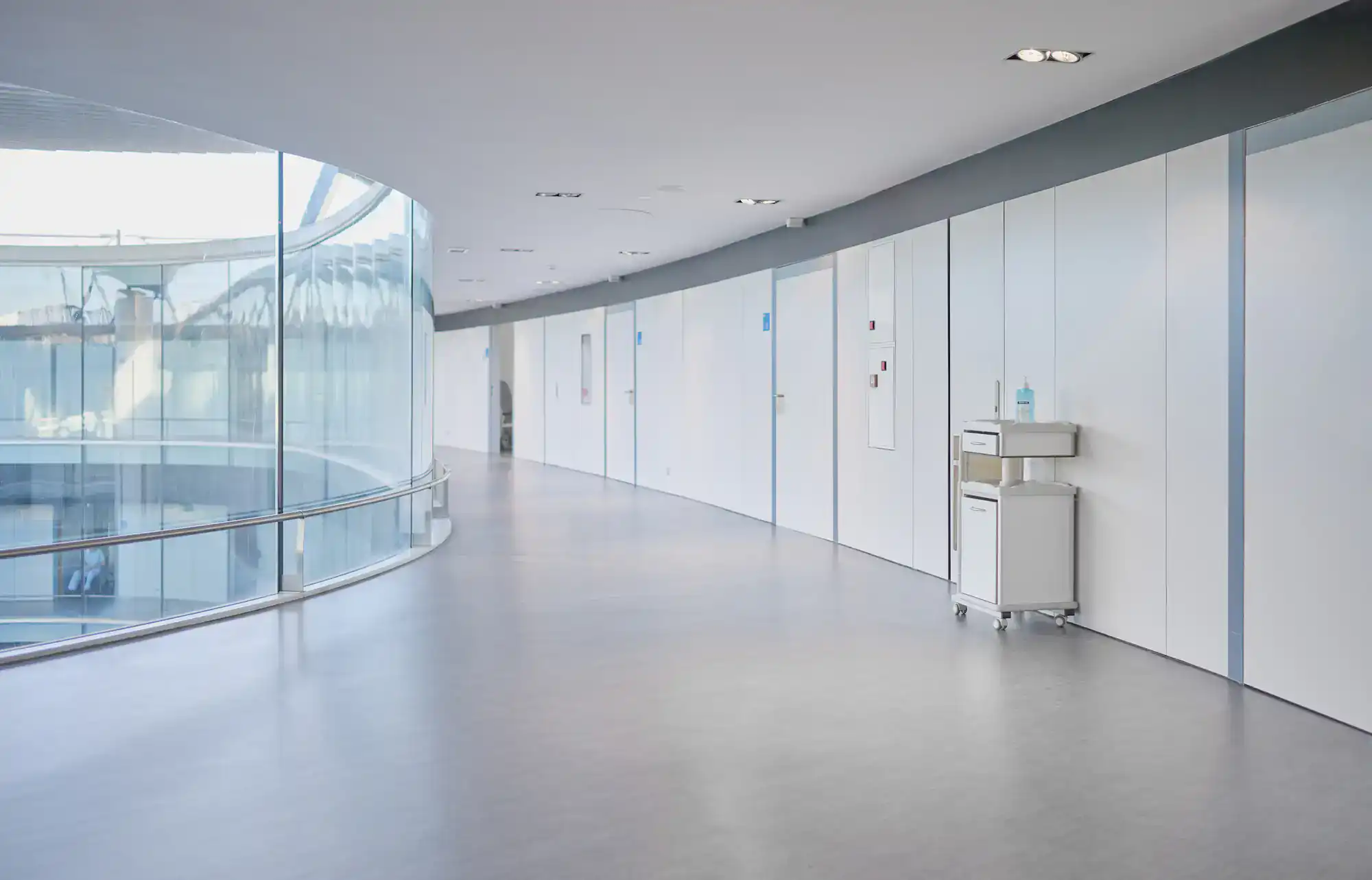
We start with a site assessment. That means looking at your current flooring, understanding your facility’s schedule, and identifying any areas that need extra prep—existing damage, moisture issues, or high-traffic zones that take the most abuse. We’re not selling you a one-size-fits-all system. We’re recommending what actually works for your space.
Once we agree on scope and timeline, we prep the substrate. That’s where most flooring jobs go wrong. If the surface isn’t properly cleaned, profiled, and leveled, nothing bonds right. We use diamond grinding and shot blasting to create the mechanical profile epoxy needs to lock in for the long haul.
Then we apply the system—typically a multi-layer build that includes a primer, a body coat, and a topcoat with antimicrobial properties. For sterile room floor coatings in North Bellmore, NY, we use low-VOC formulations that cure without off-gassing harmful chemicals into your air handling system. The result is a seamless, impervious surface that meets USDA and FDA standards and can handle anything from blood and saline to industrial-grade disinfectants.
Cure times vary depending on the system, but we work with your facility to minimize downtime. In most cases, you’re back to full operation within 24 to 48 hours.

Ready to get started?
You’re getting a floor system engineered for infection control. That means antimicrobial additives, seamless installation, and a surface that doesn’t absorb liquids or harbor bacteria. It’s designed to be cleaned with hospital-grade disinfectants and high-pressure hoses without breaking down or losing its finish.
You’re also getting compliance. Our low-VOC healthcare coatings in North Bellmore, NY meet LEED, GreenGuard, and WELL Building Standard requirements. They’re formulated to minimize indoor air quality issues, which is critical in high-occupancy medical environments where patients are already vulnerable. VOC emissions contribute to respiratory irritation, headaches, and long-term health concerns—things you can’t afford in a healthcare setting.
And you’re getting durability that outlasts tile, vinyl, and polished concrete. We’re talking about floors that handle gurneys, crash carts, IV poles, and the constant foot traffic of a 24/7 operation. They resist thermal shock, impact, abrasion, and the kind of chemical exposure that eats through conventional flooring in months.
North Bellmore’s healthcare facilities are under the same pressures as the rest of Long Island—rising patient volumes, tighter budgets, and stricter regulations. The flooring you choose either supports that reality or becomes another maintenance headache. We install the kind that supports it.
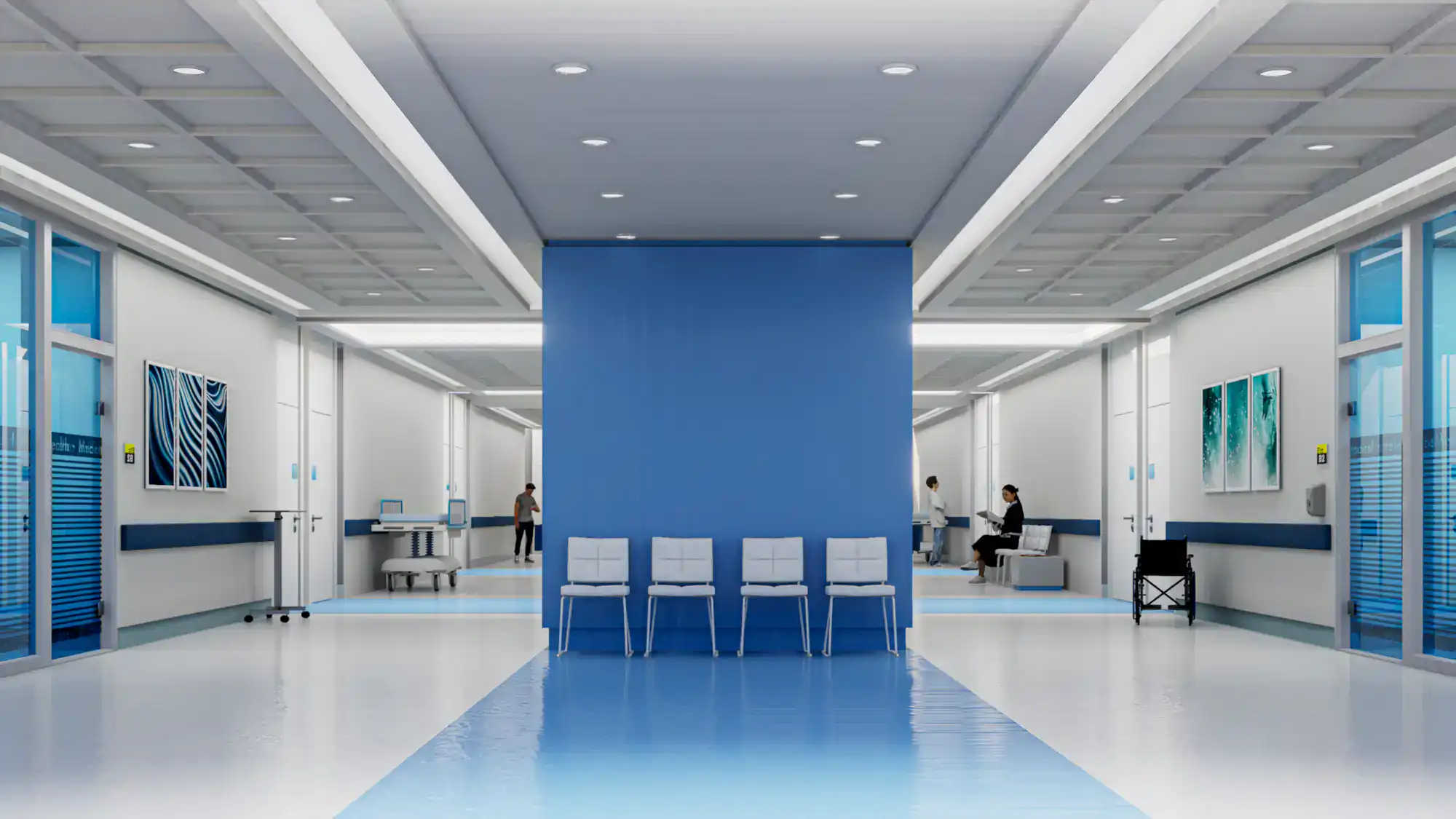
Antimicrobial flooring works by incorporating additives into the coating that actively inhibit bacterial growth on the surface. These aren’t just topical treatments that wear off—they’re built into the material itself, so the protection lasts as long as the floor does.
The bigger factor is the seamless installation. Standard tile or vinyl flooring has grout lines, seams, and edges where moisture, blood, and other contaminants collect. Even with rigorous cleaning, bacteria can colonize in those spaces and spread through contact or aerosolization during cleaning. A seamless medical-grade epoxy system eliminates those areas entirely, leaving nowhere for pathogens to hide.
When combined with proper cleaning protocols using EPA-registered disinfectants, antimicrobial hospital flooring in North Bellmore, NY becomes a critical layer of defense in your infection control strategy. It’s not a replacement for hand hygiene or sterilization procedures, but it removes one of the most overlooked vectors for healthcare-associated infections.
USDA and FDA compliance requires floors to be impervious, seamless, and easy to clean and sanitize. That means no cracks, no porous materials, and no areas where contaminants can accumulate. The surface has to withstand repeated exposure to cleaning chemicals, high-pressure washdowns, and thermal shock without degrading or losing its integrity.
Our USDA/FDA compliant flooring in North Bellmore, NY is installed as a monolithic system—meaning it’s applied in continuous layers with no joints or seams. The material itself is non-absorbent and chemically resistant, so it won’t harbor bacteria, absorb spills, or break down under aggressive cleaning protocols. It also has to be durable enough to handle the mechanical wear of daily operations without cracking or delaminating.
Inspectors look for visible damage, staining, and any signs that the floor could contribute to contamination. A properly installed epoxy or urethane system passes those inspections because it’s designed specifically to meet those standards. It’s not an afterthought—it’s the reason the system exists.
Most healthcare flooring projects take between two and five days depending on square footage, the condition of the existing substrate, and the complexity of the space. That includes surface prep, application of multiple coats, and full cure time. We work with your facility to schedule installation during lower-traffic periods or in phases so you’re not shutting down entire wings at once.
Cure times for low-VOC healthcare coatings in North Bellmore, NY are faster than traditional epoxy systems. In many cases, you can resume light foot traffic within 12 to 24 hours and full operational use within 48 hours. That’s critical in healthcare environments where downtime isn’t just inconvenient—it’s costly and potentially dangerous.
We also coordinate with your environmental services and facilities teams to manage ventilation, isolate work areas, and ensure the installation doesn’t interfere with patient care. The goal is to get you a fully compliant, long-lasting floor with as little disruption as possible. We’ve done this in active hospitals and surgical centers—we know how to work around your schedule, not against it.
Yes, but only if it’s the right system. Not all epoxy is created equal. Standard garage-grade epoxy will break down quickly under repeated exposure to quaternary ammonium compounds, bleach, hydrogen peroxide, and other hospital-grade disinfectants. Healthcare-specific systems are formulated with chemical-resistant resins and topcoats designed to handle that kind of abuse.
Our sterile room floor coatings in North Bellmore, NY are tested against the full range of cleaning agents used in medical facilities. That includes phenolics, alcohols, chlorine-based disinfectants, and enzymatic cleaners. The surface doesn’t discolor, soften, or lose adhesion even after years of daily disinfection and high-pressure washing.
Chemical resistance also matters during spills. Blood, urine, saline, contrast agents, and other bodily fluids won’t stain or penetrate the surface. You can clean them up completely without leaving behind residue that becomes a contamination risk. That’s the difference between flooring that’s chemical-resistant on paper and flooring that’s actually built for healthcare use.
Tile and vinyl are the most common alternatives, and both have serious drawbacks in healthcare settings. Tile has grout lines that trap bacteria and require constant maintenance. Even epoxy grout breaks down over time, especially under the kind of cleaning protocols hospitals use. Vinyl has seams, and those seams eventually curl, crack, or separate—creating the exact contamination risks you’re trying to avoid.
Polished concrete is another option, but it’s porous unless it’s sealed, and even then, the sealer wears off in high-traffic areas. It also doesn’t offer the same level of slip resistance or antimicrobial protection that a purpose-built healthcare floor does.
Seamless medical-grade epoxy in North Bellmore, NY gives you a monolithic surface with no weak points. It’s more durable than vinyl, easier to maintain than tile, and more hygienic than polished concrete. It also installs faster and lasts longer, which makes it the most cost-effective option over the life of the floor. You’re not replacing it every five years or dealing with ongoing grout repairs. You’re installing it once and moving on.
Start by looking for visible damage—cracks, chips, stains, or areas where the surface is worn down to the substrate. If you can see damage, bacteria can colonize there. Next, check the seams and edges. If grout is discolored, crumbling, or missing, that’s a contamination risk. Same goes for vinyl seams that are lifting or separating.
Another red flag is persistent odors or staining that won’t come out even with aggressive cleaning. That usually means the flooring is absorbing contaminants instead of repelling them. Porous or damaged flooring can’t be sanitized properly, no matter how good your cleaning protocols are.
If your facility has failed a health inspection or received citations related to flooring, that’s an obvious sign. But even if you haven’t, it’s worth having your floors assessed before they become a problem. Healthcare flooring in North Bellmore, NY is a long-term investment in patient safety and regulatory compliance. Waiting until you fail an inspection or deal with an outbreak is the expensive way to learn that lesson.
Other Services we provide in North Bellmore