
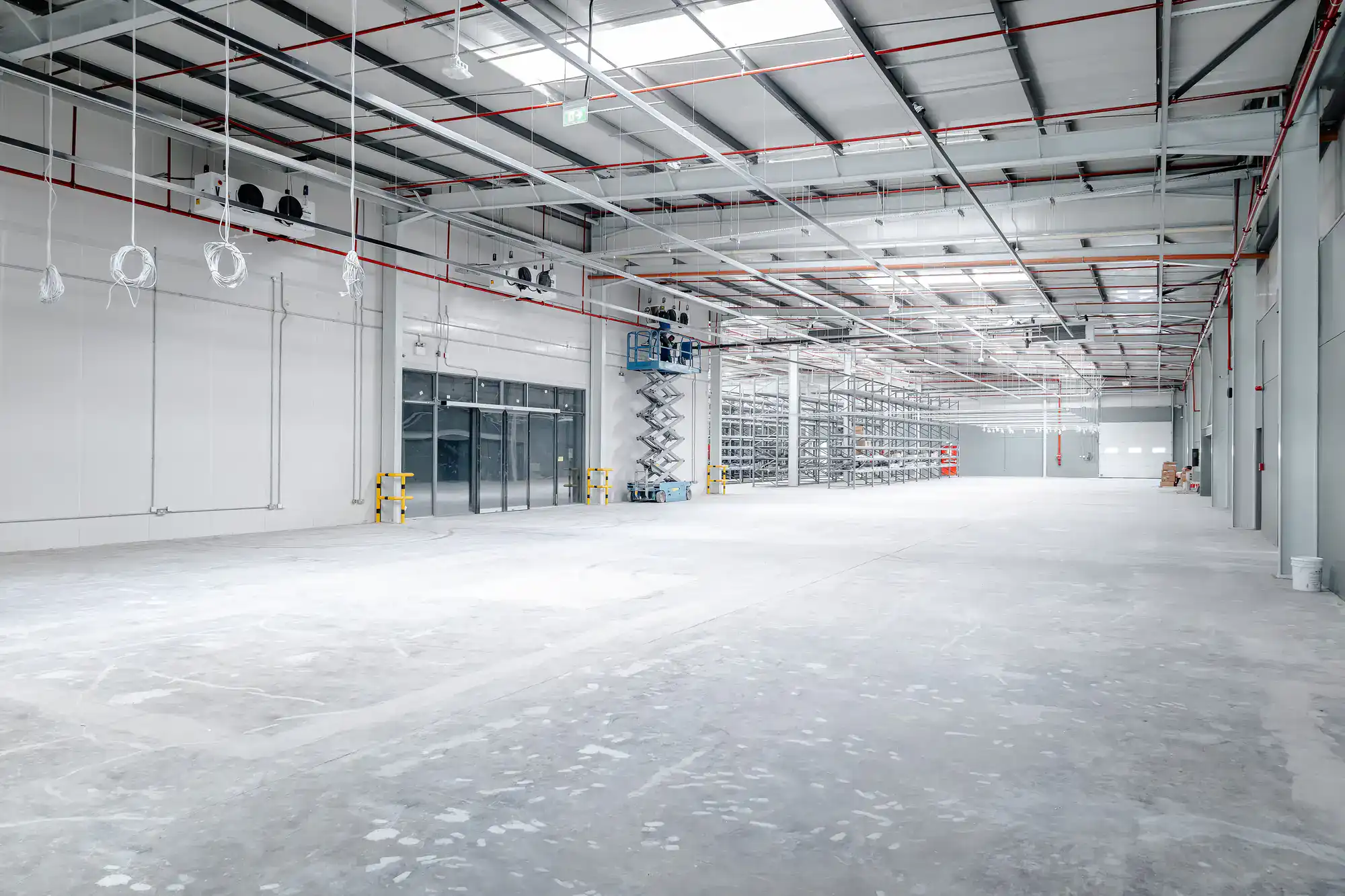
Most hangar floors in Brookhaven don’t fail because of heavy aircraft they fail because of what’s underneath the coating. Moisture vapor pushing up through the slab is the number one reason epoxy peels, and in Brookhaven, where the town is literally bordered by the Sound to the north and the Atlantic to the south, that’s not a seasonal problem. It’s a year-round one. Brookhaven National Laboratory’s own weather records confirm that maritime humidity influences this site continuously not just in August. If a contractor skips moisture testing, you’ll be grinding up a failed floor within a couple of years.
Then there’s the chemistry. Skydrol hydraulic fluid which any working maintenance bay at KHWV deals with regularly eats through standard commercial epoxy. The same goes for jet fuel, lubricants, and the cleaning solvents used after. An aviation-grade system with the right formulation holds up to all of it. A repurposed garage product does not, regardless of what the label says.
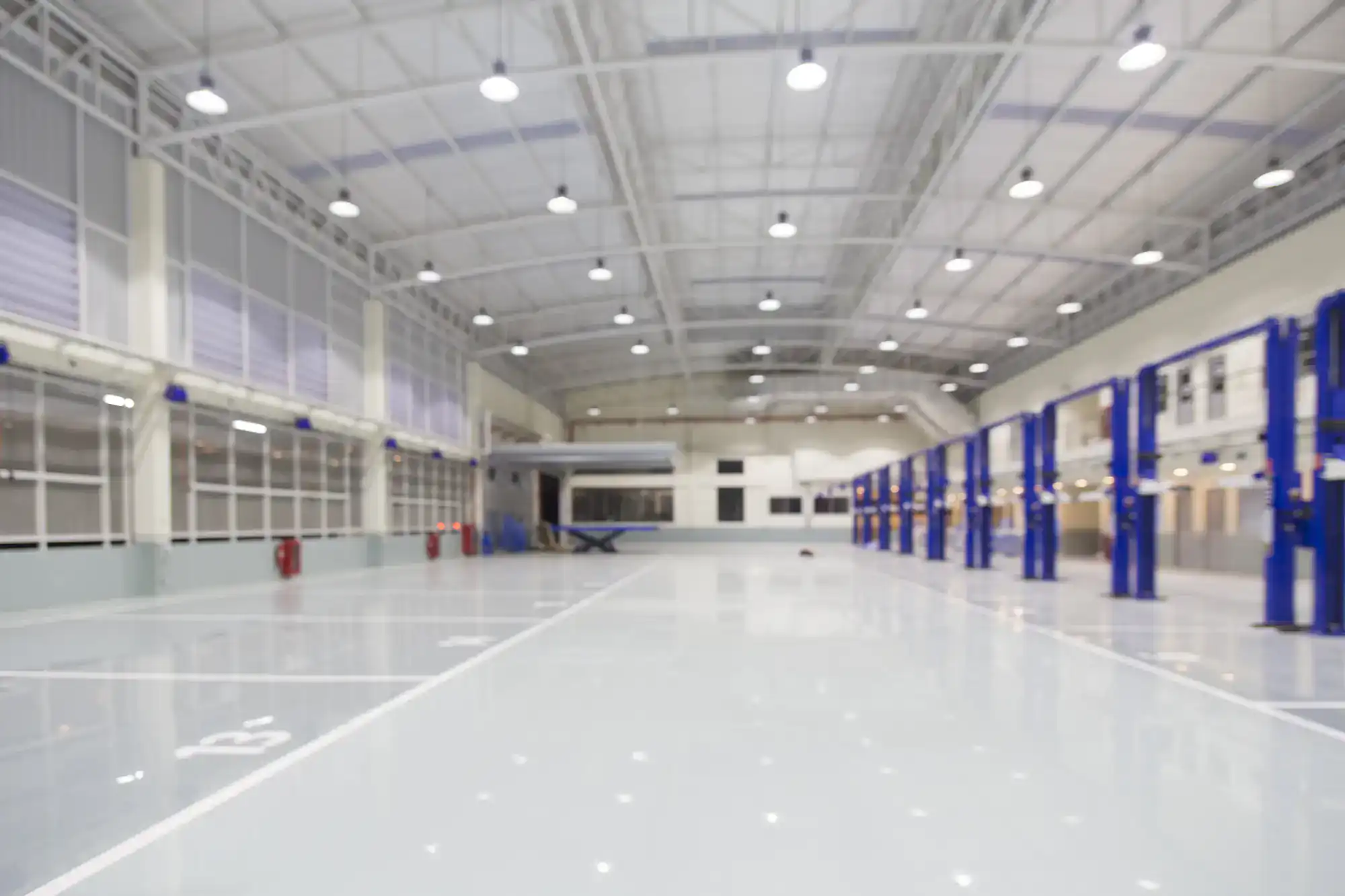
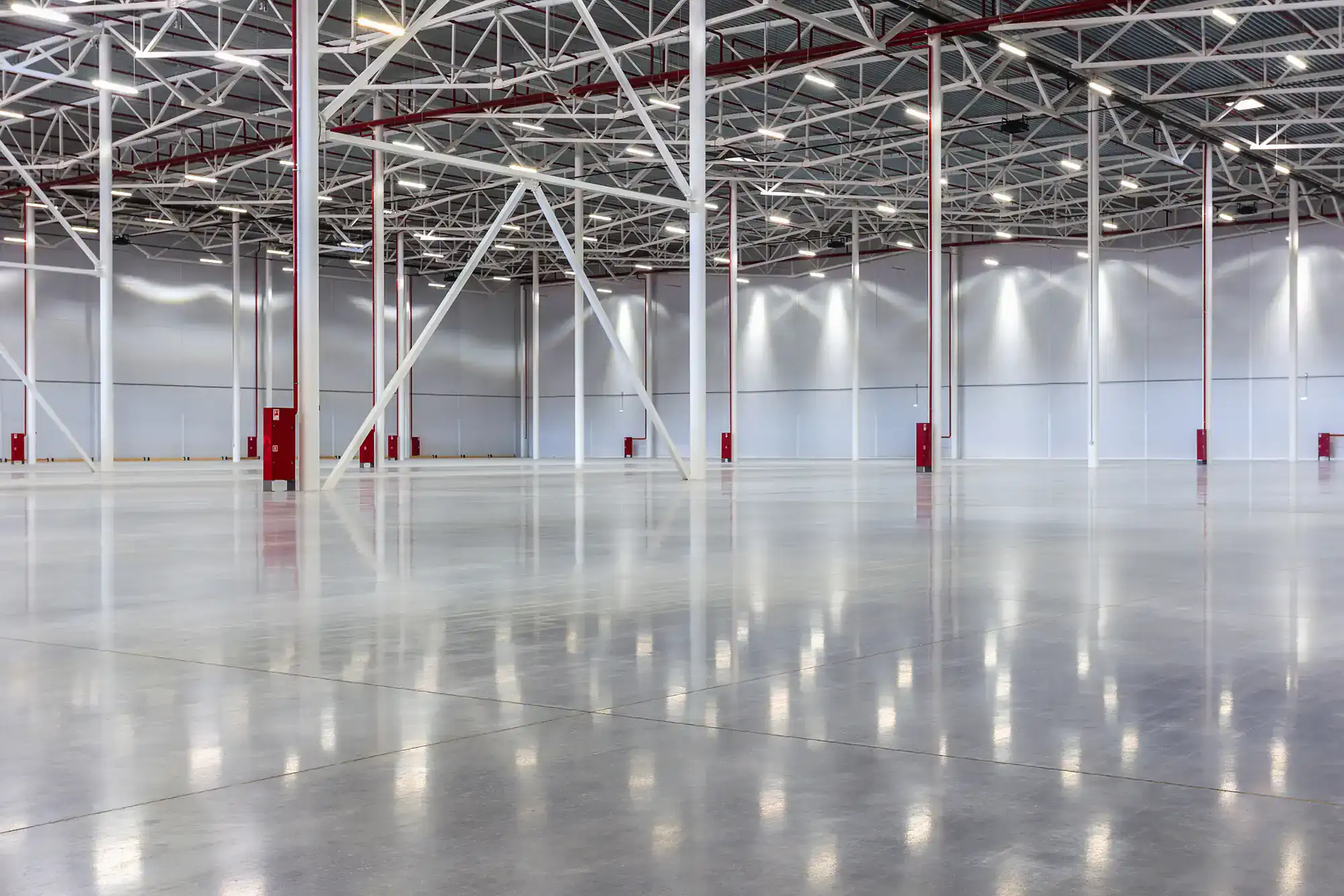
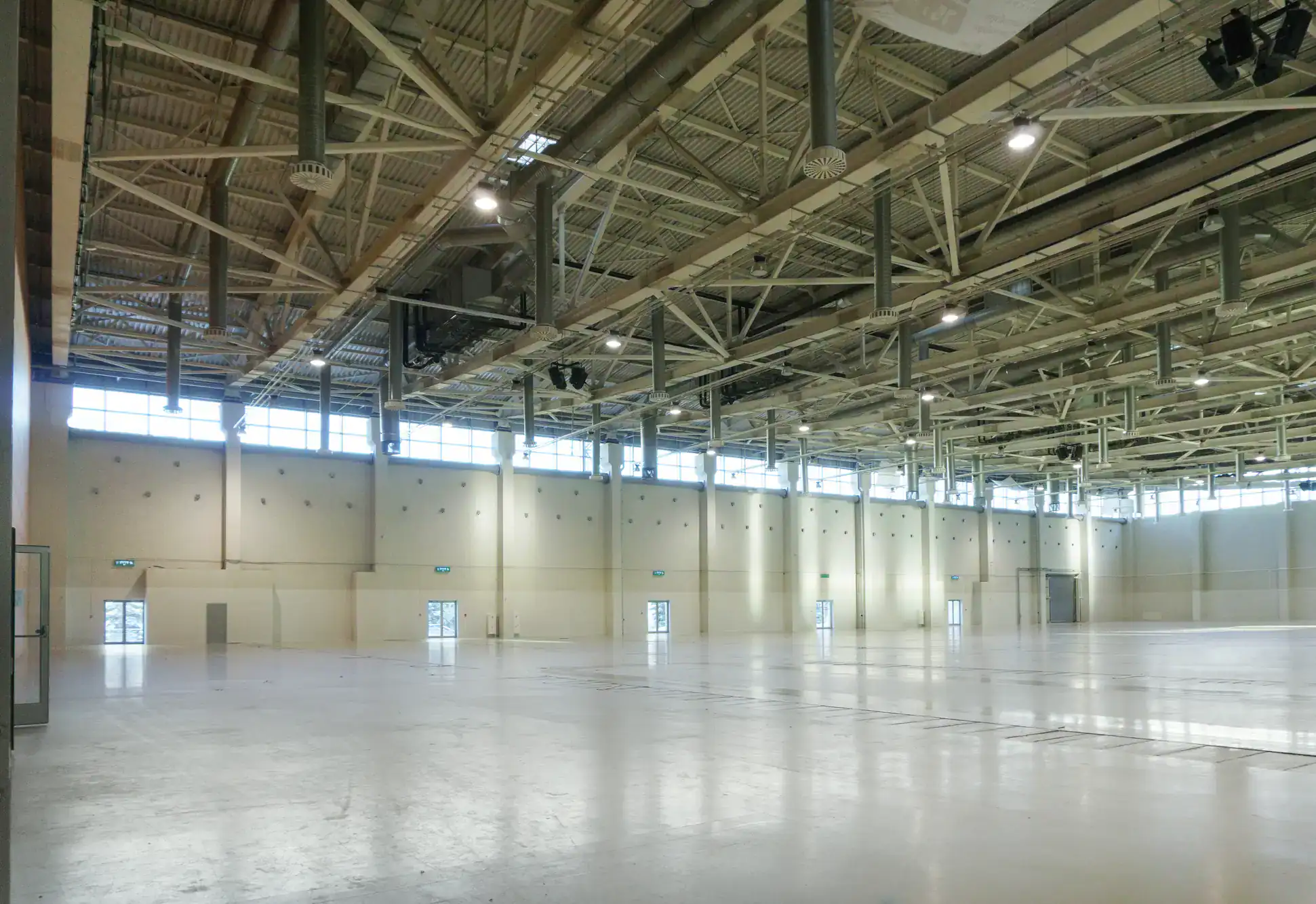
Beyond durability, a properly coated hangar floor actually changes how the space works. Light-colored, high-gloss surfaces reflect overhead lighting, making dropped hardware and foreign object debris immediately visible a real safety factor in any active hangar environment. When the floor performs the way it’s supposed to, everything else in the operation gets a little easier.
We’re based in Bohemia right next door in the Town of Islip, sharing a border with Brookhaven. This isn’t a national brand routing calls through a regional office. Danny Harmer, our president and CEO, has over 40 years of hands-on installation experience built entirely in this market, in these coastal conditions, on these Long Island slabs. When something comes up after the job is done, we’re minutes away not states away.
Our crew has been together for over a decade. That matters because consistency in installation is what separates a floor that lasts 20 years from one that starts showing problems in two. We hold dual elite certifications through Sherwin-Williams High Performance Flooring and Res Tech, every installer carries OSHA 40 certification, and our non-slip topcoat meets NFSI requirements all verifiable, none of it marketing language. Our portfolio includes the White House kitchen, international projects, and commercial installations across the country. The Brookhaven work gets the same standard.
The first thing that happens before any material goes down is a moisture assessment. In Brookhaven especially in a coastal town with sandy glacial soil this step isn’t optional. Sandy soil drains well but allows moisture to migrate upward through large concrete slabs, and a hangar floor covering thousands of square feet is particularly exposed. If vapor transmission isn’t measured and addressed before installation, the coating will eventually fail at the slab interface. That’s just chemistry.
Once moisture levels are confirmed acceptable, the concrete gets prepared mechanically, not chemically. That means grinding, not acid washing. Any cracks, spalls, or surface damage from Brookhaven’s freeze-thaw cycling get repaired before anything else happens. Long Island winters create real micro-cracking in concrete over time, and coating over that damage without addressing it first is a shortcut that shows up later. After prep and repair, a primer goes down, followed by the base coat, then the topcoat system whether that’s a high-build epoxy, a polyaspartic, or a combination depending on the specific demands of the facility.
Polyaspartic systems are worth understanding if downtime is a concern. With over 50,000 annual operations at KHWV, closing a hangar bay for multiple days isn’t a neutral decision. Polyaspartic topcoats cure fast enough to return aircraft to the space within 24 hours a real operational advantage for FBO operators and maintenance shops running active schedules.
Ready to get started?
NFPA 409 the standard that governs aircraft hangar construction and safety requires that hangar floor surfaces be noncombustible. That requirement applies whether you’re operating inside Brookhaven Calabro Airport or maintaining a private hangar structure on a rural parcel out in Manorville or Yaphank. It eliminates a wide range of standard commercial coatings that get marketed as industrial-grade but weren’t formulated with aviation environments in mind. The systems we install satisfy this requirement, which matters both for code compliance and for the liability exposure that comes with running an active aviation facility in Suffolk County.
The coating systems used in hangar environments need to resist more than just foot traffic. Skydrol hydraulic fluid, jet fuel, engine oil, and the solvents used to clean up after all of them these are the real-world conditions the floor faces every week. The chemistry of the system has to be matched to that exposure profile. Beyond chemical resistance, the non-slip topcoat meets NFSI certification requirements, which is a tested standard not a texture description.
For FBO operators at KHWV managing large hangar facilities, for aircraft owners with T-hangar leases, and for private hangar owners throughout Brookhaven’s 50-plus hamlets, the floor system gets specified based on the actual use case: traffic volume, fluid exposure, lighting conditions, and how quickly the space needs to be back in service. Every installation starts with a site assessment, not a catalog page.
Yes NFPA 409 is the national standard for aircraft hangar construction, and it requires that hangar floor surfaces be noncombustible. This applies to facilities on airport property at KHWV, including FBO hangars, T-hangars, and conventional hangar bays. The Town of Brookhaven operates its own Division of General Aviation that manages the airport, and facility operators there are responsible for maintaining code-compliant surfaces.
What this means practically is that not every coating product marketed as “commercial epoxy” or even “industrial-grade” qualifies. Many standard products used in warehouses, garages, or light industrial facilities don’t meet the noncombustibility requirement under NFPA 409. Before any installation at an aviation facility in Brookhaven, the system needs to be verified against this standard not assumed to comply because it’s labeled for heavy use. This is one of the first questions worth asking any contractor you’re evaluating.
It’s one of the most important factors to account for, and it’s more persistent here than most people expect. Brookhaven is the only town on Long Island that touches both Long Island Sound and the Atlantic Ocean, and Brookhaven National Laboratory’s own meteorological records confirm that maritime humidity influences the area year-round not just during summer months. That means moisture vapor transmission through concrete slabs is an ongoing concern, not a seasonal one.
When ambient humidity is high and the slab hasn’t been properly tested, moisture pushing up through the concrete can compromise the bond between the coating and the substrate. The result is delamination bubbling, peeling, or lifting that typically shows up within the first year or two. The fix is proper moisture assessment before installation, addressing any vapor transmission issues at the substrate level, and using a primer system designed for the conditions. Skipping that step is the most common reason hangar floors fail prematurely in Brookhaven.
Both can work well in hangar environments, but they have different strengths depending on what matters most for your facility. High-build epoxy systems offer excellent chemical resistance and durability, and they’re well-suited for maintenance bays with heavy fluid exposure. They do require longer cure times, which means more downtime before aircraft can return to the space typically 24 to 72 hours depending on the system and conditions.
Polyaspartic systems cure significantly faster often within a single day which is a meaningful advantage for active operations at Brookhaven Calabro Airport where closing a hangar bay has a real cost. Polyaspartics also tend to perform better in temperature extremes, which matters during Long Island winters when hangar temperatures can drop close to freezing and affect standard epoxy cure chemistry. In many cases, the best approach is a combination: a high-build epoxy base coat for chemical resistance and build thickness, finished with a polyaspartic topcoat for fast return-to-service and UV stability. The right choice depends on your specific facility, traffic, and schedule.
Yes, and it’s one of the more commonly underestimated risks in hangar floor selection. Skydrol is a phosphate ester-based hydraulic fluid used in most commercial and general aviation aircraft, and it’s chemically aggressive toward many standard coating formulations. It can break down the binder chemistry in conventional epoxy products, causing softening, discoloration, and eventually surface failure particularly in areas where spills sit for any period of time before cleanup.
For maintenance shops and FBO operations at KHWV that deal with Skydrol on a regular basis, this isn’t a theoretical concern. It’s a weekly reality. The coating system needs to be specifically formulated to resist phosphate ester chemistry not just marketed as “chemical resistant” in general terms. When evaluating a contractor or a coating product, ask directly whether the system has been tested against Skydrol exposure. If they’re not sure what Skydrol is, that’s your answer.
The timeline depends on the size of the space, the condition of the existing concrete, and the coating system being installed. For a standard T-hangar or single-bay conventional hangar, the installation itself typically takes one to two days. Larger FBO hangar facilities with multiple bays will take longer. If there’s significant concrete repair needed which is common in older hangar slabs at KHWV, some of which trace back to the airport’s original World War II-era construction that adds time before the coating work begins.
For timing, fall tends to be the most practical window for hangar owners in Brookhaven. Aviation activity at KHWV slows after the summer peak, which creates scheduling flexibility without disrupting the busiest flying months. Spring installations are also common as owners prepare for increased activity, though slab moisture levels are often highest after winter and require more attention during assessment. Winter installations are possible with polyaspartic systems, which cure reliably in cold temperatures where standard epoxy would struggle.
The NFPA 409 noncombustibility requirement applies to aircraft hangars regardless of whether they’re on public airport property or a private parcel so yes, private hangars in communities like Manorville, Yaphank, or elsewhere in Brookhaven’s eastern hamlets are subject to the same standard if they’re used to store or maintain aircraft. The town’s large geographic footprint and significant rural land in the east make private, off-airport hangar structures more common here than in most other Long Island towns.
Beyond code compliance, the practical demands are the same. If you’re storing an aircraft in a private hangar, you’re dealing with the same fluid exposure, the same Long Island freeze-thaw cycling, and the same coastal humidity that affects every slab in Brookhaven. A floor that’s properly coated with an aviation-grade system protects the concrete, makes the space safer to work in, and holds up to the conditions without needing to be redone every few years. The starting point is a site assessment the coating system gets specified from there based on what the space actually needs.