
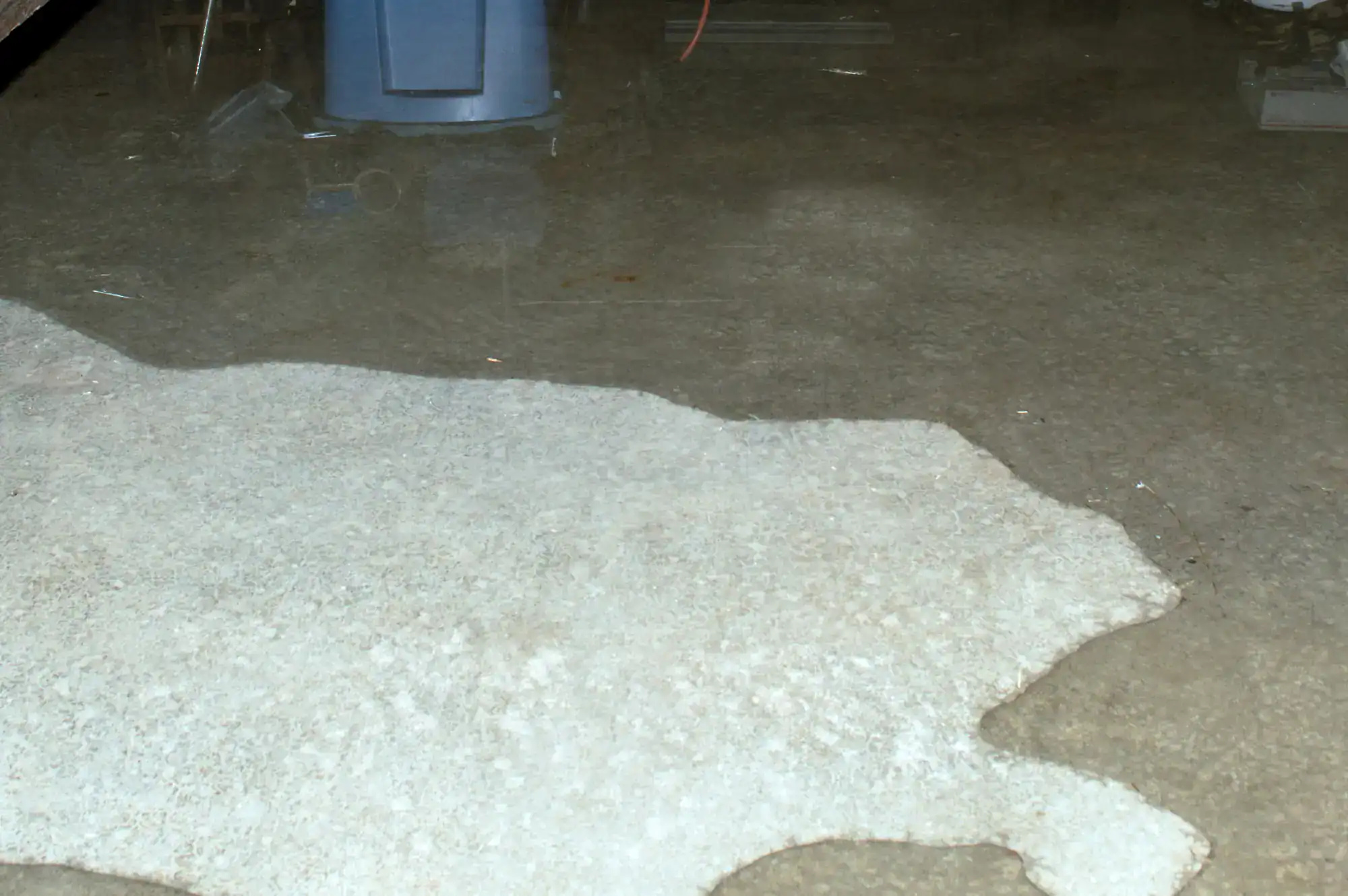
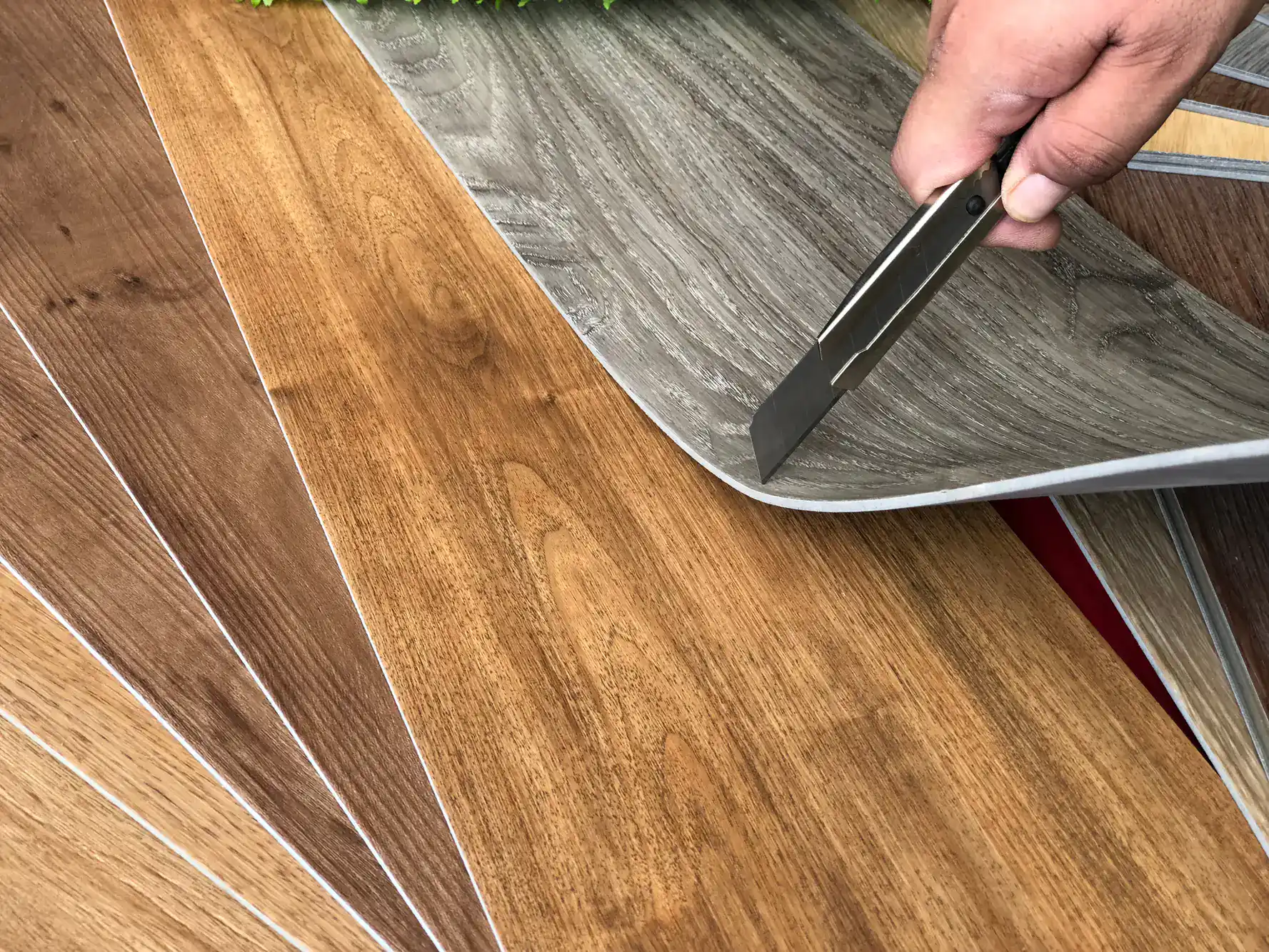
When you’re running an all-volunteer department on the Mastic Peninsula surrounded on three sides by Great South Bay your apparatus bay takes a beating that inland stations never deal with. Salt-laden air off the water, humidity that doesn’t quit, and road salt tracked in from every winter call combine to destroy standard epoxy coatings faster than most contractors will ever admit. The floor bubbles. It peels. It soaks up diesel and hydraulic fluid until it can’t be cleaned. And then you’re back to square one.
The right fire station garage epoxy system changes that equation entirely. A properly engineered, properly prepared floor doesn’t just look better it stops absorbing contaminants, supports your decontamination protocols under NFPA 1500 and 1581, and handles the thermal load of hot apparatus tires without peeling off the slab. That last point matters more than most people realize. Hot tire pickup where heated tires bond to the coating on cooling and strip it off when the truck backs out is the single most common reason apparatus bay floors fail on Long Island. We engineer our systems specifically to prevent it.
For Shirley departments like the Mastic Beach Fire Department, with its marine rescue and scuba operations on Great South Bay, a seamless, non-porous floor also means saltwater, sand, and marine equipment can be power-washed clean without the floor absorbing what’s left behind. That’s not a cosmetic upgrade. That’s a facility that actually supports the mission.
We’re based in Bohemia, about 20 miles west of Shirley on Sunrise Highway. That’s not a distant national chain flying in a crew. We’re a Suffolk County contractor who has been working in Shirley and across the Mastic Peninsula’s coastal commercial and industrial environment for over 30 years, with the same experienced field team doing the work year after year.
Our CEO Danny Harmer has more than 40 years of hands-on installation experience. Field supervisors Javier, Eduardo, and Fredith bring another 40-plus years between them, and most of our crew has been with us for over a decade. When you call Advanced Epoxy, the people who show up are the same people who have been doing this work since before most of our competitors were in business.
We hold the Sherwin-Williams High Performance Flooring certification one of the most rigorous manufacturer-approved applicator credentials in the industry alongside Res Tech certification and OSHA 40 certification for every field installer. Those aren’t badges on a website. They’re the reason a floor we install lasts 20-plus years instead of three.
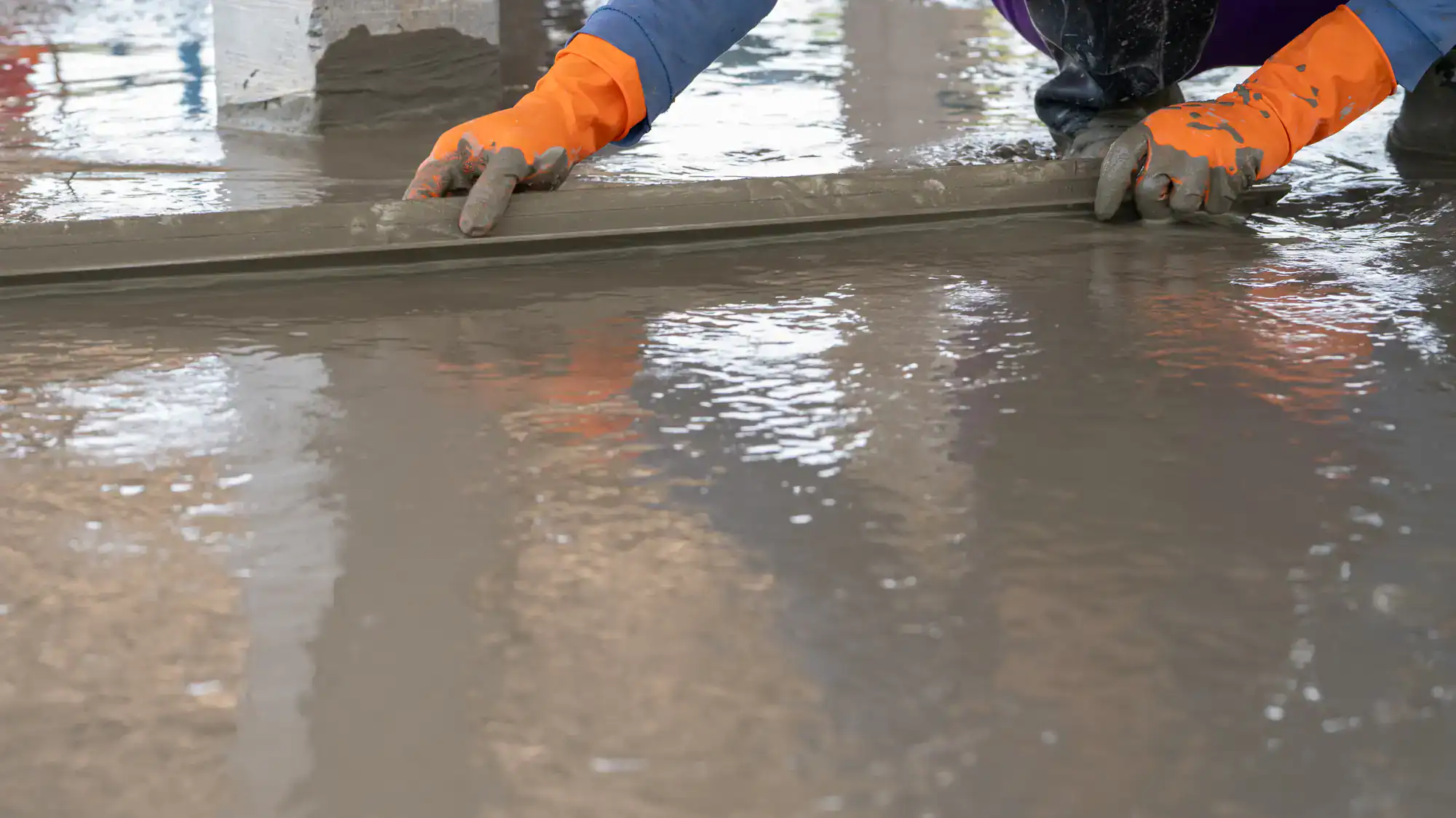
The most important part of any firehouse floor installation happens before the coating is ever mixed. In Shirley’s coastal environment where concrete slabs in older fire station buildings have spent decades absorbing salt air, moisture, and petroleum products surface preparation is everything. We start every job with diamond grinding, not acid etching. Diamond grinding opens the concrete capillaries and creates a true mechanical bond at the surface level. Acid etching introduces moisture before the coating goes down, which is essentially guaranteeing delamination in a salt-air environment like Shirley’s.
After grinding, we perform moisture testing on the slab before anything else happens. If moisture levels aren’t within spec, the coating doesn’t go down. That’s a step a lot of contractors skip, and it’s why a lot of floors fail. Any cracks or surface damage are repaired at this stage as well, so the finished system is going over a properly prepared substrate not a patched-over problem.
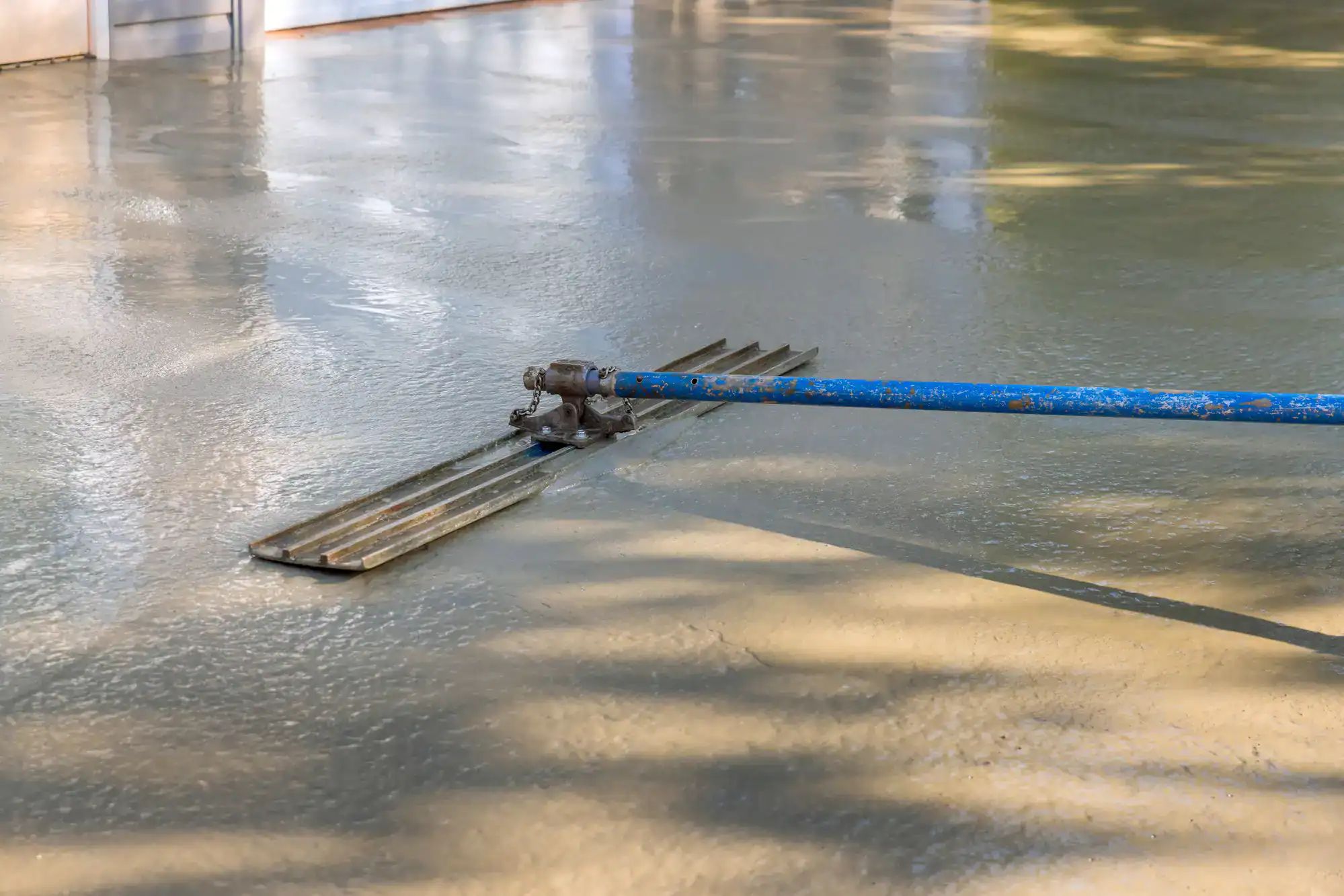
Once the slab is ready, we apply a multi-layer polyaspartic system at 15 mils thickness. That’s more than double the thickness of standard epoxy systems and four times more flexible, which matters when you’re dealing with the freeze-thaw cycling that Shirley’s concrete goes through every winter. The topcoat is UV-stable, chemically resistant, and thermally resistant to hot tire contact. When the installation is complete, apparatus can return to the bay within 24 hours. For an all-volunteer department that can’t park trucks outside for a week, that turnaround isn’t a selling point it’s the whole reason the job is possible.
Ready to get started?
The apparatus bay is the obvious starting point, but fire stations in Shirley have multiple distinct floor zones that each carry their own requirements. The decon zone needs a seamless, chemical-resistant surface that supports the contamination control protocols your department is obligated to maintain under NFPA 1581. The kitchen needs thermal-shock resistance and a surface that meets food-service cleanability standards. Living quarters and locker rooms need something durable enough to handle daily traffic without becoming a maintenance issue. We handle all of it under one roof, which means no seam failures between zones, no finger-pointing between contractors, and one point of accountability for your fire district’s investment.
For the apparatus bay specifically, our polyaspartic system is engineered to handle the combined stress profile that Shirley’s departments deal with: the compressive load of heavy apparatus, the chemical attack of road salt and hydraulic fluid, the thermal load of hot tires, and the persistent coastal moisture that accelerates concrete degradation on the Mastic Peninsula. This isn’t a system designed for a suburban garage. It’s a commercial-grade, multi-layer installation built for the operational demands of an active fire station.
Fire district commissioners in Shirley are spending public money, and they answer to the community for how it’s spent. A professionally installed polyaspartic system, amortized over 20-plus years, costs a fraction of the repeated grinding, disposal, and reinstallation cycles that come with under-specified floors. The math isn’t close and it’s the kind of argument that holds up at a fire district board meeting.
This is the question that stops most Shirley departments from moving forward, and it’s a fair one. All-volunteer departments serving the Mastic Peninsula don’t have the option of parking apparatus outside for a week while a traditional epoxy floor cures. There’s no practical staging area on a peninsula surrounded by Great South Bay, and the public safety risk of taking apparatus out of service for that long is real.
We use rapid-cure polyaspartic systems specifically because of this constraint. The chemistry cures differently than standard epoxy faster and more completely which is why apparatus can return to the bay within 24 hours of installation completion. The installation is typically staged so that your station remains operationally functional throughout the process. If your department has been putting off a floor upgrade because you couldn’t figure out the downtime problem, that’s the answer.
Standard epoxy fails in coastal environments for a few compounding reasons. Salt air penetrates porous or improperly sealed concrete and drives moisture up from beneath the coating a process called osmotic blistering that causes the floor to bubble and delaminate from the inside out. If the concrete wasn’t properly diamond-ground and moisture-tested before installation, this process starts almost immediately and accelerates with every freeze-thaw cycle that Shirley experiences.
On top of that, road salt tracked in by apparatus returning from winter calls attacks the bond between the coating and the concrete chemically. And then there’s hot tire pickup heated tires bonding to the coating surface and stripping it off when the truck moves. Standard epoxy isn’t thermally resistant enough to handle that repeated stress. In Shirley’s environment, you’re dealing with all three failure modes simultaneously, which is why under-specified floors typically don’t last more than three to five years before they need to be replaced.
NFPA 1500 and NFPA 1581 require fire stations to maintain contamination control protocols that protect firefighters from carcinogen exposure diesel exhaust particulates, combustion byproducts, and chemical contaminants from fire scenes that land on the apparatus bay floor every time a truck returns. To support those protocols, the floor surface needs to be seamless, non-porous, and power-washable down to the concrete substrate. Grout lines, cracks, and porous surfaces harbor contaminants and can’t be effectively decontaminated.
A properly installed polyaspartic resinous floor system meets that standard. It eliminates crevices, creates a surface that can be cleaned with standard decontamination protocols, and doesn’t absorb what’s left behind after a wash-down. For departments in Shirley that are formalizing their contamination control programs something that’s increasingly required as New York State and national standards tighten this is the floor system that supports compliance rather than working against it.
Professional installation for a commercial apparatus bay floor system typically runs between $5 and $15 per square foot, depending on the size of the bay, the condition of the existing concrete, and the complexity of the system required. For a typical two- or three-bay apparatus bay roughly 3,000 to 6,000 square feet that puts the investment somewhere between $15,000 and $90,000 as a capital line item for the fire district.
That range sounds wide, but the biggest variable is concrete condition. Older fire station slabs in Shirley many of which date to the mid-20th century when the community was first developed often require more aggressive surface preparation and crack repair before coating can begin. Getting a specific number requires an on-site assessment of the actual slab. What’s worth knowing is that FEMA’s Assistance to Firefighters Grant program has historically funded facility improvement projects, which is worth exploring if your district is budget-constrained. The cost of a proper installation, amortized over 20-plus years, is consistently less than the cost of repeated failed installations over the same period.
A properly installed polyaspartic system diamond-ground surface, moisture-tested slab, multi-layer application at 15 mils is engineered to last 20-plus years in a commercial apparatus bay environment. That’s not a marketing number. It’s the result of a system that’s four times more flexible than standard epoxy, twice as abrasion-resistant, thermally resistant to hot tire contact, and chemically resistant to the petroleum products and road salt that apparatus bay floors deal with daily.
The caveat is that the 20-year lifespan assumes the floor was properly prepared and properly installed. A polyaspartic coating applied over a concrete slab that wasn’t diamond-ground, moisture-tested, and crack-repaired will fail on the same timeline as any other under-prepared floor regardless of how good the coating chemistry is. In Shirley’s coastal environment, where concrete is perpetually exposed to salt air and humidity, the preparation process is what determines whether the floor lasts two years or twenty.
Fire station flooring projects in Shirley fall under the jurisdiction of the Town of Brookhaven’s building and fire code enforcement, which administers the New York State Uniform Fire Prevention and Building Code. Whether a specific floor coating project requires a building permit depends on the scope of work surface preparation and coating application are generally treated differently than structural modifications, but the Town of Brookhaven’s Building Division is the authoritative source on current permit thresholds for your specific project.
What’s worth knowing is that our field installers are OSHA 40 certified and current with OSHA Training Standards, which is a meaningful credential for work performed in active municipal facilities under Brookhaven’s jurisdiction. If your department or fire district is working through the approval process with the Brookhaven Town Fire Marshal’s office which has active oversight of fire station facilities in the Shirley area our OSHA certification and Sherwin-Williams High Performance Flooring credentials are the kind of documentation that supports a smooth review. When in doubt, check with the Town of Brookhaven Building Division before work begins.