
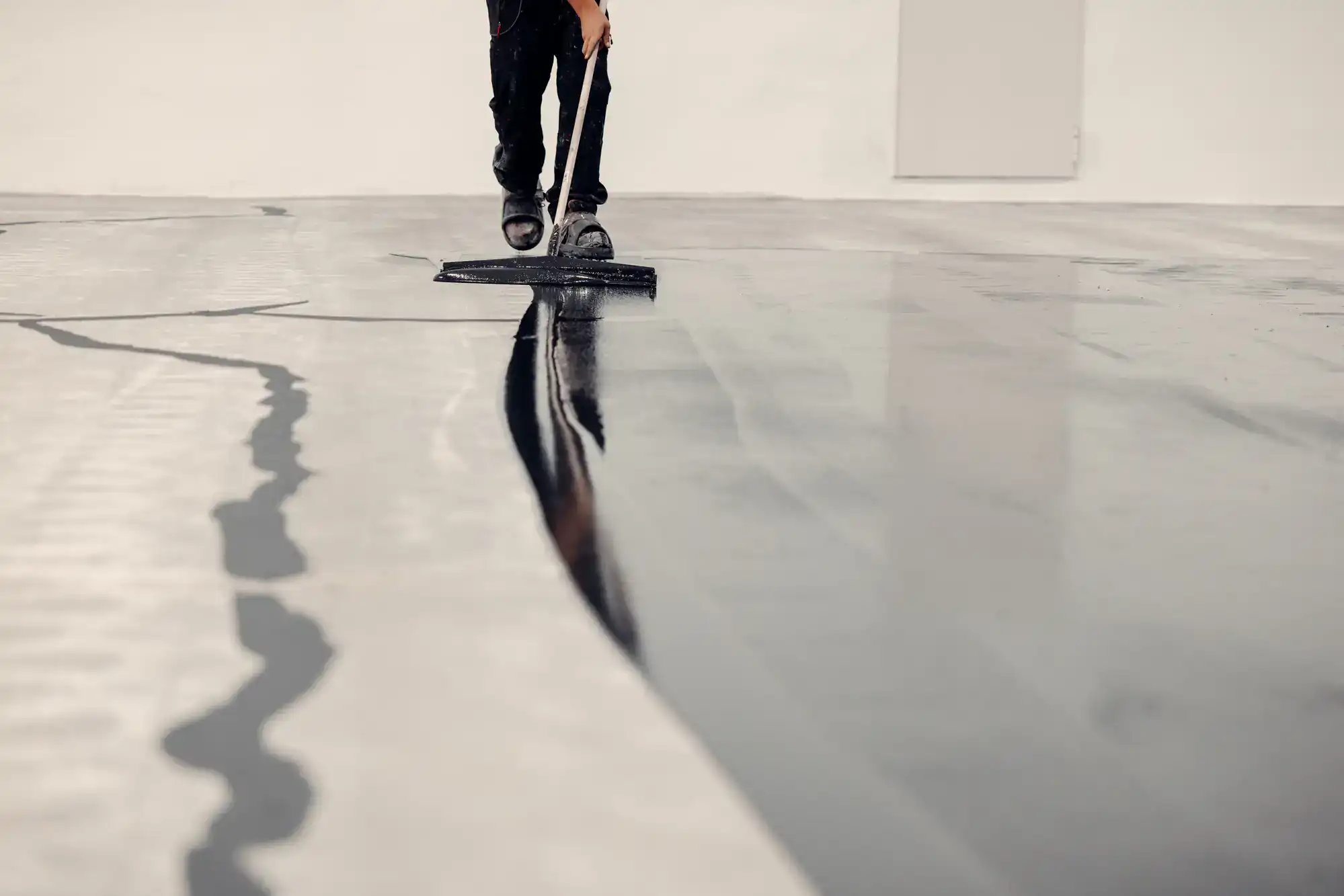
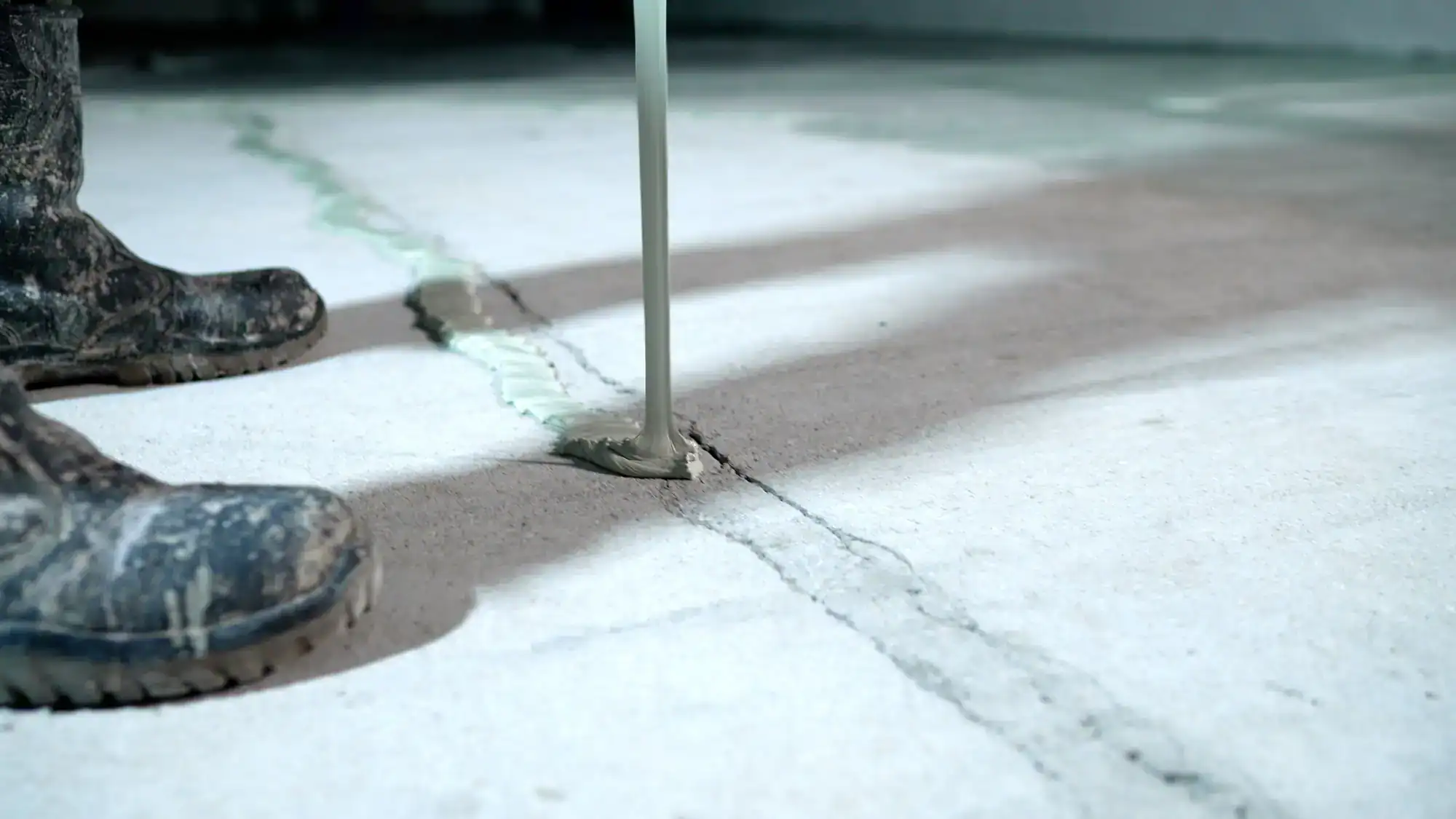
Plainview’s housing stock is mostly post-war construction homes and commercial buildings with concrete slabs poured in the 1950s and 1960s. That’s 60 to 70 years of freeze-thaw cycling, ground moisture, and wear. By the time most property owners in Plainview are ready to coat their floor, that slab has a story. If the contractor doesn’t read it before they start, you’ll be dealing with bubbling, peeling, and delamination within a year or two.
Long Island’s water table runs high, and Plainview’s inland position doesn’t protect you from it. Moisture vapor rises through the slab from below silently, without warning and it breaks the bond between the concrete and the coating. It’s the most common reason epoxy floors fail in Nassau County, and it’s entirely preventable when the right testing happens before installation.
When the floor is done right, the difference is immediate and lasting. Warehouse operations off Round Swamp Road get a surface that handles forklift traffic without cracking. Commercial kitchens along South Oyster Bay Road get a seamless, grease-resistant floor that survives daily hot-water cleaning. Healthcare facilities get a medical-grade surface with no seams for bacteria to hide in. And homeowners with a 1960s garage in Plainview get a floor that looks sharp, resists oil stains, and actually lasts.
We’ve been serving Nassau and Suffolk Counties since the early 1990s. That’s not a marketing number it’s a track record built one floor at a time, across warehouses, commercial kitchens, healthcare facilities, and residential garages all over Long Island. Most of our installation crew has been with us for over a decade. There are no rotating subcontractors, no franchise playbook, and no guesswork.
Danny Harmer, our founder and CEO, has been installing epoxy floors for over 40 years. In 1996, our team installed the epoxy floor in the White House kitchen a project that had to meet the most demanding hygiene and durability standards imaginable, completed on schedule without disrupting operations. That same discipline is what every Plainview client gets, whether it’s a flex building off the LIE at Exit 46 or a garage in the Manetto Hills area.
We hold factory-trained certifications from Sherwin-Williams High Performance Flooring and Res Tech, and every installer on a commercial job site is OSHA 40 certified. Our BBB Accreditation is A+, with no complaints on record across three-plus decades of operation.
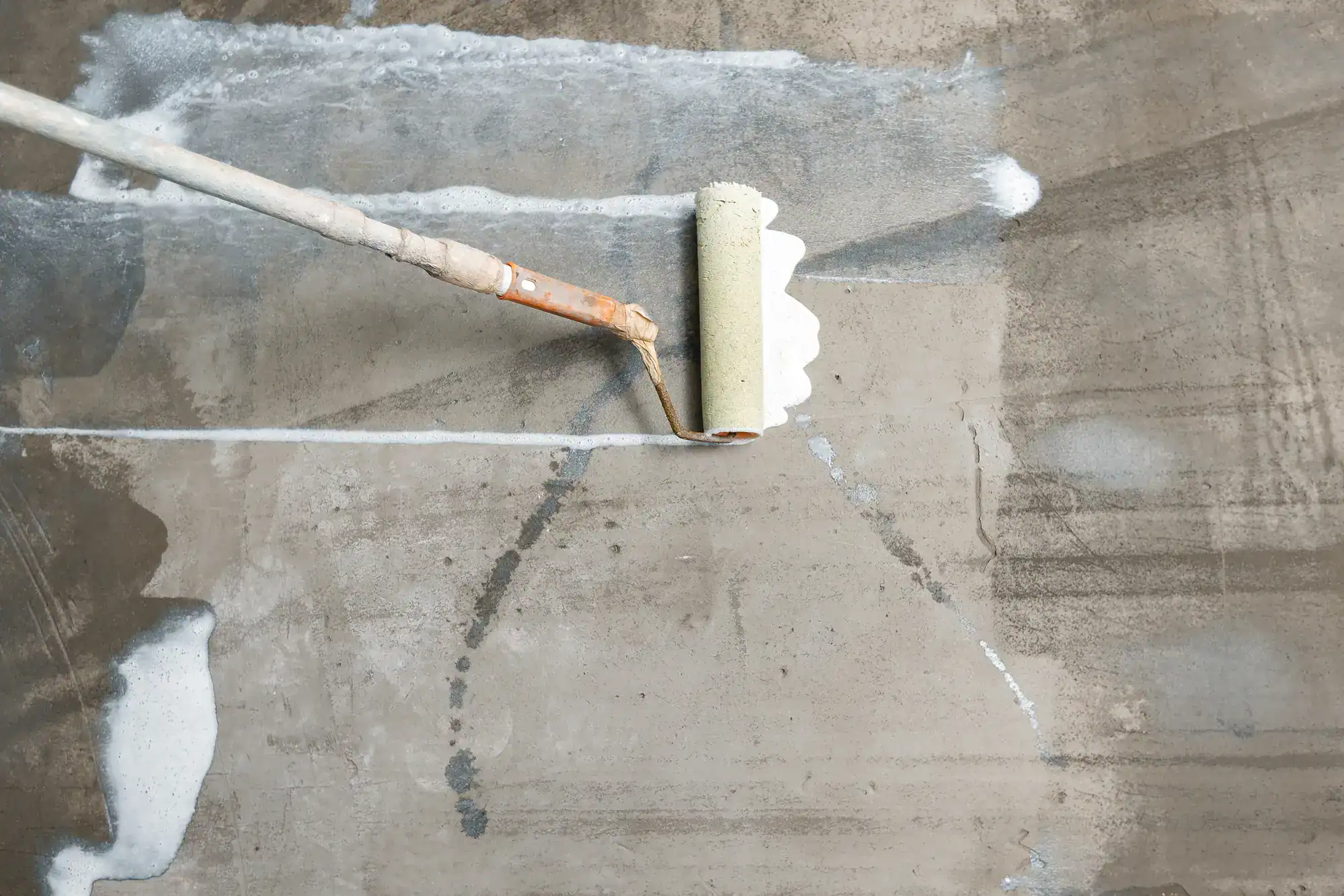
It starts with the slab, not the coating. Before any product is specified, the concrete gets assessed moisture testing, crack inspection, surface profile evaluation. In Plainview, this step matters more than most people realize. The combination of older slabs and Long Island’s elevated water table means moisture vapor transmission is a real factor, not a theoretical one. If it’s present, the system gets engineered around it. That might mean a moisture mitigation primer, a vapor barrier, or a cementitious urethane system that bonds mechanically rather than relying on adhesion alone.
Once the slab is ready, surface preparation begins. For commercial and industrial work, that means diamond grinding not acid etching. Grinding creates the mechanical profile the coating needs to bond at depth. It also removes surface contaminants, old coatings, and anything else that would compromise adhesion. This step accounts for the majority of what determines whether a floor lasts two years or twenty.
The coating system itself is specified for the actual environment not a one-size approach. A warehouse near the LIE gets a different system than a commercial kitchen or a healthcare corridor. For most commercial and industrial applications, that means a 100% solids industrial epoxy at 14 to 30 mils of dry film thickness. We schedule around your operations overnight windows, weekend installs, and phased approaches are all on the table so your business doesn’t have to stop.
Ready to get started?
The range of environments in Plainview is wider than most people expect from a Nassau County suburb. You’ve got light industrial and distribution operations in flex buildings directly off LIE Exit 46. You’ve got commercial kitchens and food service operations in the Plainview Shopping Centre corridor on South Oyster Bay Road. You’ve got healthcare facilities including North Shore University Hospital’s Plainview Health Center and Central Island Nursing Home. And you’ve got thousands of residential homeowners sitting on 60-year-old garage slabs they’ve never professionally treated.
Each environment gets a system matched to it. Industrial and warehouse floors get heavy-duty industrial epoxy rated for forklift axle loads, chemical spills, and battery acid from charging stations. Commercial kitchens get USDA-compliant, thermal-shock-resistant systems with slip-resistant surface profiles and integral cove base that closes the gap between floor and wall the spot where bacteria accumulate in standard installations. Healthcare floors get medical-grade seamless epoxy with antimicrobial additives that meet ADA, OSHA, and FGI guidelines.
Residential garage and basement floors get the same professional-grade surface preparation and coating systems not a consumer-grade water-based product, but a properly specified, properly installed floor that handles oil, moisture, and daily use without peeling. For Plainview homeowners who work from home or have converted a garage into a workspace or gym, this is a real upgrade that holds up.
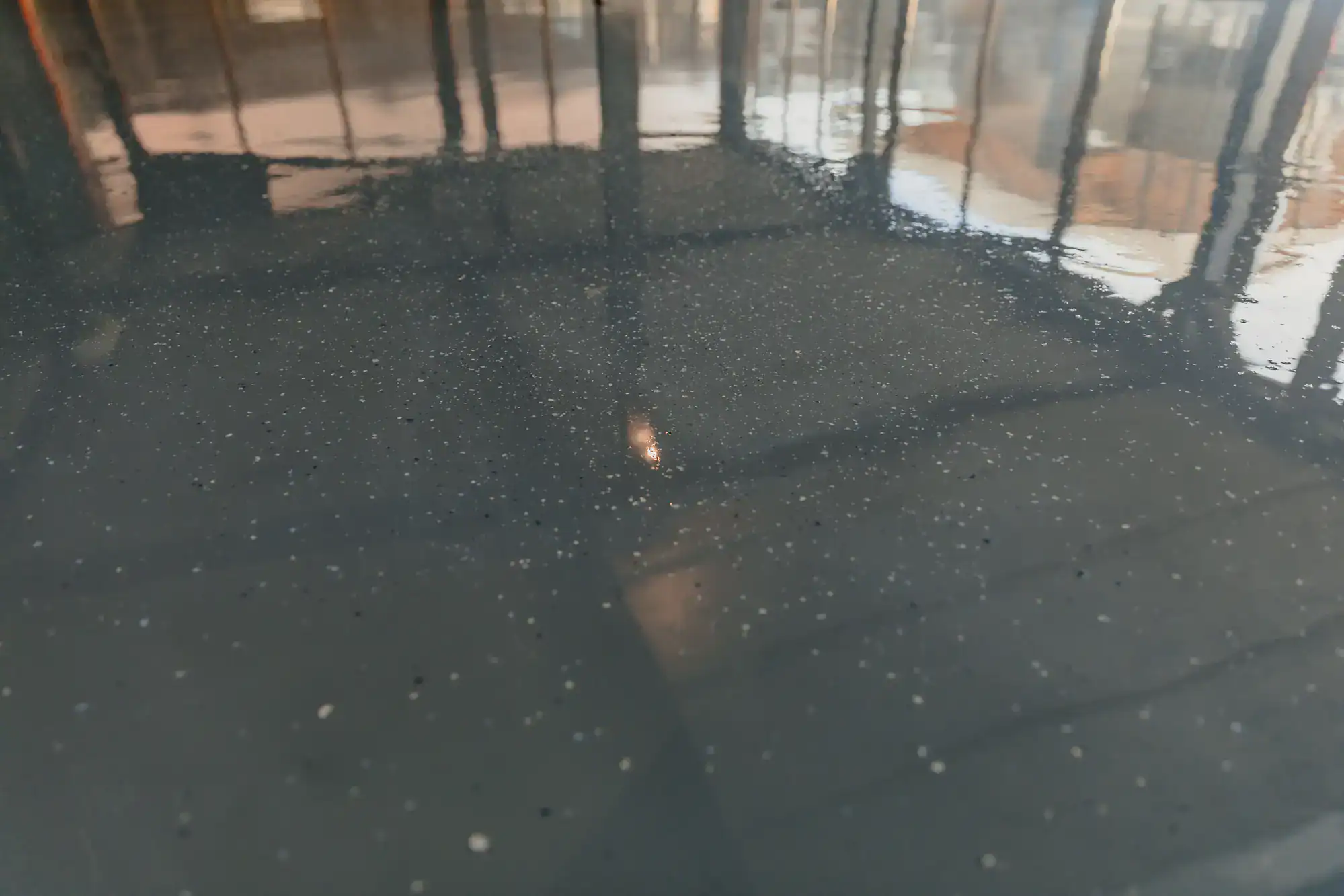
The most common reason is moisture specifically, moisture vapor coming up through the slab from below. Plainview sits over Long Island’s groundwater table, which has been documented at near-record highs in parts of Nassau County. That moisture migrates upward through older concrete slabs, and if the contractor didn’t test for it before installation, the coating loses its bond from underneath. You’ll see bubbling, blistering, and peeling usually within the first 12 to 24 months.
The second most common reason is inadequate surface preparation. Diamond grinding is the professional standard for commercial and industrial work, and it’s what separates a floor that lasts from one that doesn’t. If a contractor didn’t mention surface prep during their estimate conversation, that’s worth asking about before you sign anything.
A properly installed industrial-grade epoxy floor 100% solids system, correct surface preparation, moisture-tested slab typically lasts 15 to 20 years in a commercial or industrial environment. Residential garage floors, with lighter traffic and less chemical exposure, often last even longer when maintained correctly.
The key phrase is “properly installed.” Consumer-grade water-based systems, which many lower-cost contractors use, cure to only 3 to 8 mils of dry film thickness. Industrial systems are specified at 14 to 30 mils. That difference in thickness directly affects how the floor handles impact, abrasion, and chemical exposure over time. On Long Island, where humidity and ground moisture are ongoing factors, the quality of the initial installation determines everything about how long the floor holds up.
A consumer-grade epoxy installation might run $3 per square foot. A professionally installed industrial system typically runs $7 to $12 per square foot depending on the environment and system specification. On the surface, that looks like a significant gap. But when you run the math over time, the picture changes.
A $3 per square foot system that fails in 36 months requiring full removal, slab remediation, and reinstallation costs more per year of service than the professional system that runs two decades without intervention. For a 10,000 square foot Plainview warehouse, the cheap system costs $30,000 every three years. The professional system costs $70,000 to $120,000 once. Over 20 years, the math isn’t close. And that’s before accounting for the operational disruption of a floor failure mid-lease in a commercial space.
Yes, and it’s not a minor consideration. Epoxy should not be applied when ambient humidity exceeds 85%, and Long Island’s summer months particularly July and August regularly push humidity levels toward that threshold. Applying epoxy in conditions that are too humid can trap moisture in the coating, causing cloudiness, reduced adhesion, and early failure.
For Plainview installations, this means summer scheduling requires humidity monitoring on the day of installation, not just a calendar assumption. Morning installs are often preferred during summer months to avoid peak afternoon humidity. Fall and spring are the most reliable application windows in Nassau County temperatures are moderate, humidity is manageable, and conditions are consistent. For commercial clients who need summer installation due to operational schedules, the work gets planned around the forecast, not around what’s convenient.
In most cases, yes. Commercial kitchen epoxy installations are typically completed overnight the kitchen closes at the end of service, we come in, and the floor is ready before the next opening. The system we use for commercial kitchen environments is USDA-compliant, thermal-shock-resistant epoxy specified for exactly this kind of use: grease resistance, hot-water cleaning cycles, slip-resistant surface profile, and integral cove base installation along the wall perimeter.
The cove base detail matters more than most restaurant owners realize. Standard flooring leaves a gap or a transition point between the floor and the wall that gap is where grease, moisture, and bacteria accumulate between cleanings. A seamless cove base eliminates it entirely, which matters both for hygiene and for Nassau County Department of Health inspections. For food service operations along South Oyster Bay Road or in Plainview’s commercial corridors, getting this detail right is part of staying compliant.
The most important thing is that your garage slab needs to be assessed before any coating goes down not just cleaned and coated. Plainview’s residential garages were mostly built in the 1950s and 1960s, and those slabs have had 60-plus years to develop cracks, absorb oil, and accumulate moisture from below. If those conditions aren’t addressed in the preparation phase, the coating won’t bond properly regardless of how good the product is.
Moisture testing is the step most residential contractors skip. Long Island’s water table is real, and it affects residential slabs the same way it affects commercial ones. A slab that tests positive for moisture vapor transmission needs a moisture mitigation primer before the topcoat goes down otherwise you’re looking at peeling within a year or two. The good news is that when preparation is done correctly, a residential garage epoxy floor in Plainview holds up well, resists oil and road salt tracked in from winter driving, and is significantly easier to maintain than bare concrete.