

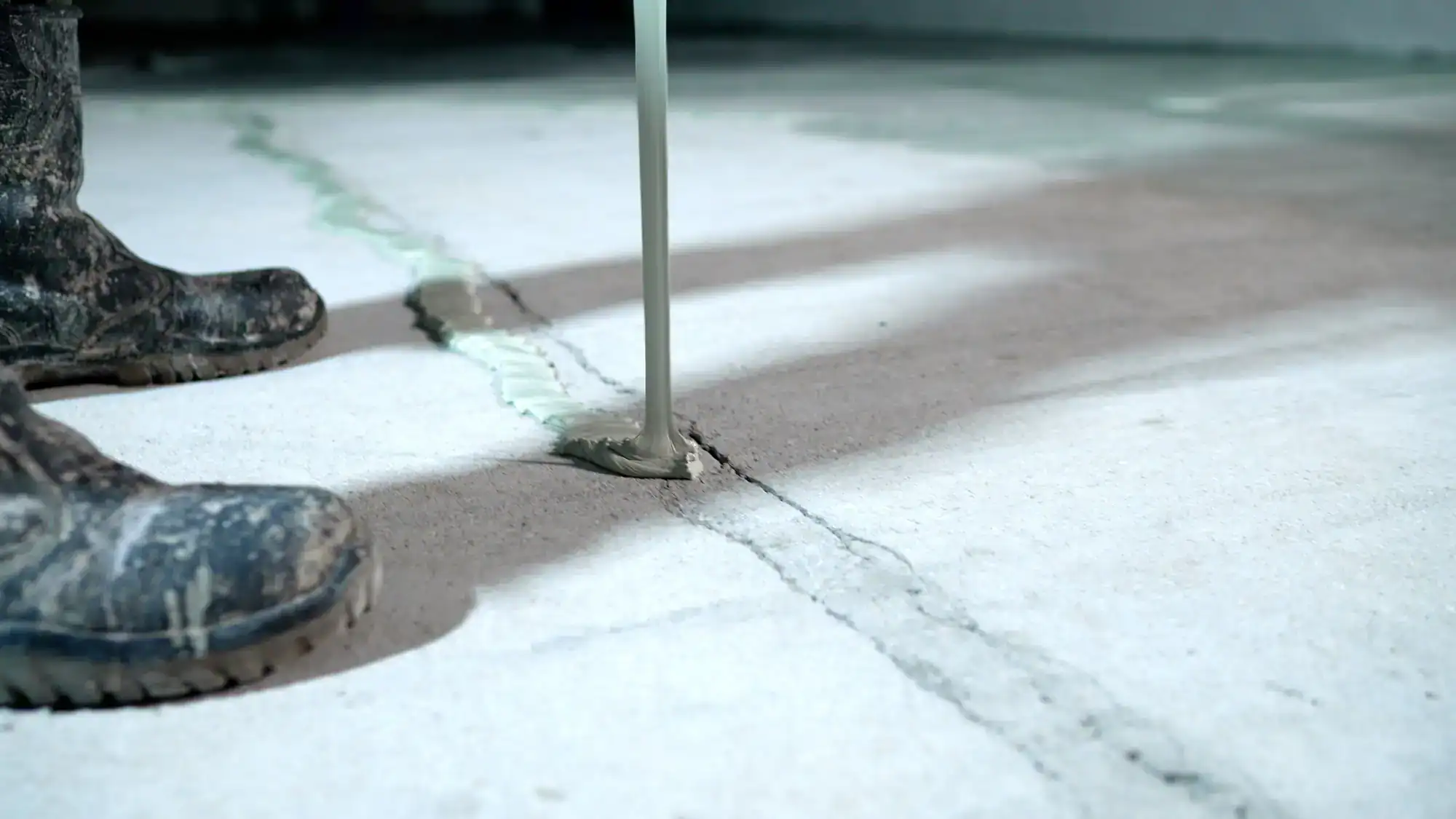
Most homes along Newbridge Road and the surrounding neighborhoods in North Bellmore were built in the 1950s. That means the concrete underneath your garage or basement has had sixty-plus years to crack, absorb oil, and pull moisture up from the ground especially this close to the Great South Bay. A floor coating applied over that without proper testing and prep isn’t going to last a Long Island summer. It’s going to bubble, peel, and cost you twice as much to fix.
When the installation is done right, you get a seamless, hard surface that handles daily use without staining, cracking, or showing wear. No grout lines collecting grime. No seams trapping moisture. Just a floor that looks correct and stays that way whether it’s a garage, a commercial kitchen on the Hempstead Turnpike corridor, or a utility space that takes a beating every day.
The South Shore’s humidity and seasonal moisture cycling are real factors here. North Bellmore sits roughly five miles from the Great South Bay, and the ground stays wet longer than most people realize. That affects how coatings cure, how slabs breathe, and whether your floor is still performing in ten years. Getting that right from the start is the whole job.
We’ve been installing commercial and industrial epoxy floor systems across Nassau and Suffolk Counties since the early 1990s. That’s not a marketing number it means the crew working on your North Bellmore property has seen every slab condition Long Island produces, from post-war garage floors in Bellmore to commercial kitchens and warehouse facilities throughout Nassau County.
Danny Harmer, our founder and CEO, has over 40 years of hands-on installation experience. Our team holds factory-trained certifications from Sherwin-Williams High Performance Flooring and Res Tech, and every installer on the crew carries OSHA 40 certification. The BBB has had our file since 1991 A+ rated, zero complaints.
One project that tends to stop people mid-conversation: the White House kitchen floor, installed in 1996. If the standard for that job was good enough for a USDA-compliant, overnight commercial kitchen installation under that kind of scrutiny, your North Bellmore floor is well within reach.
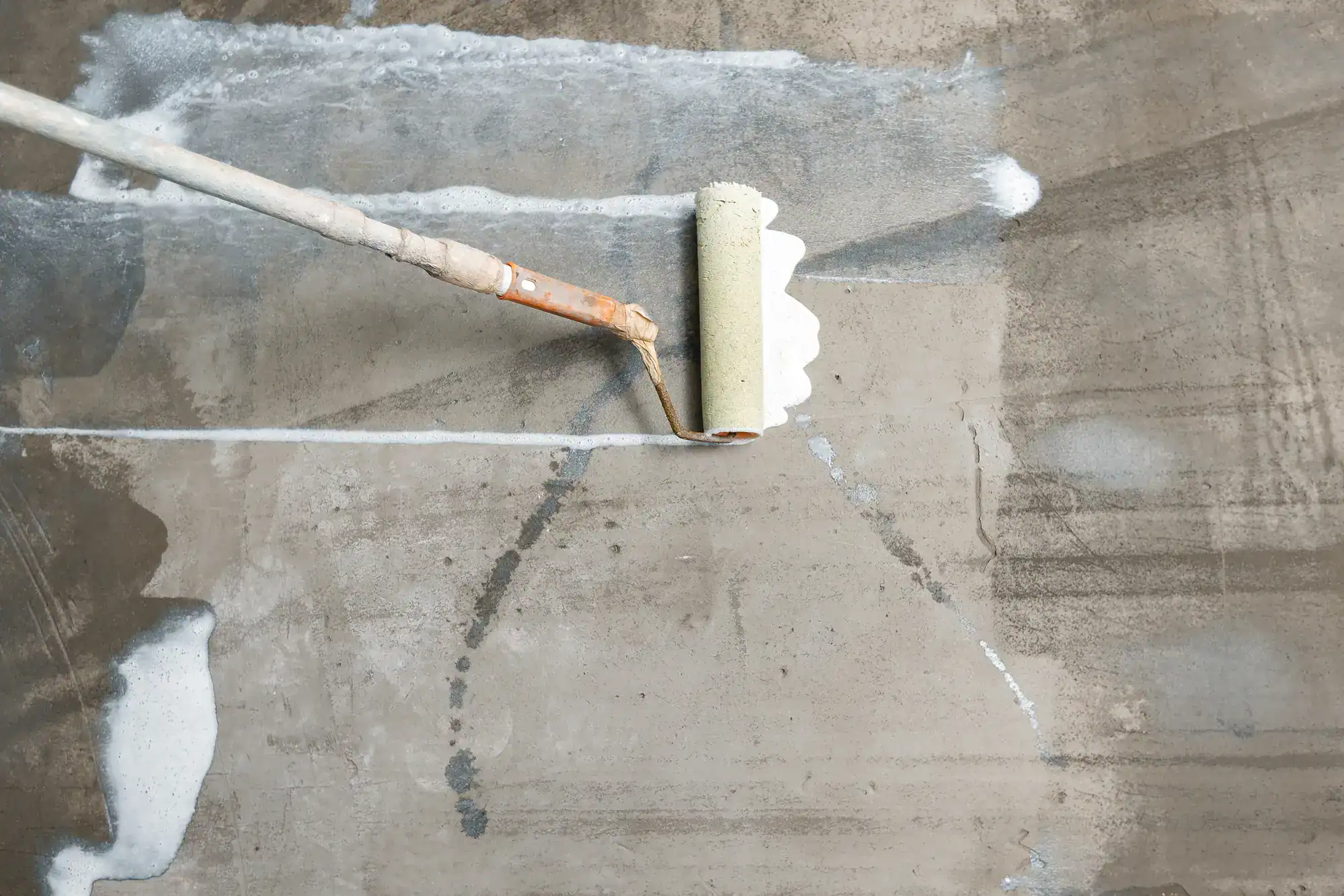
The process starts with the slab not the product. Before anything gets mixed or applied, we assess the concrete for moisture vapor transmission, surface contamination, and structural condition. In North Bellmore, where most residential slabs date back to the 1950s and the water table stays elevated through much of the year, this step isn’t optional. It’s what separates a floor that lasts from one that fails before the next spring thaw.
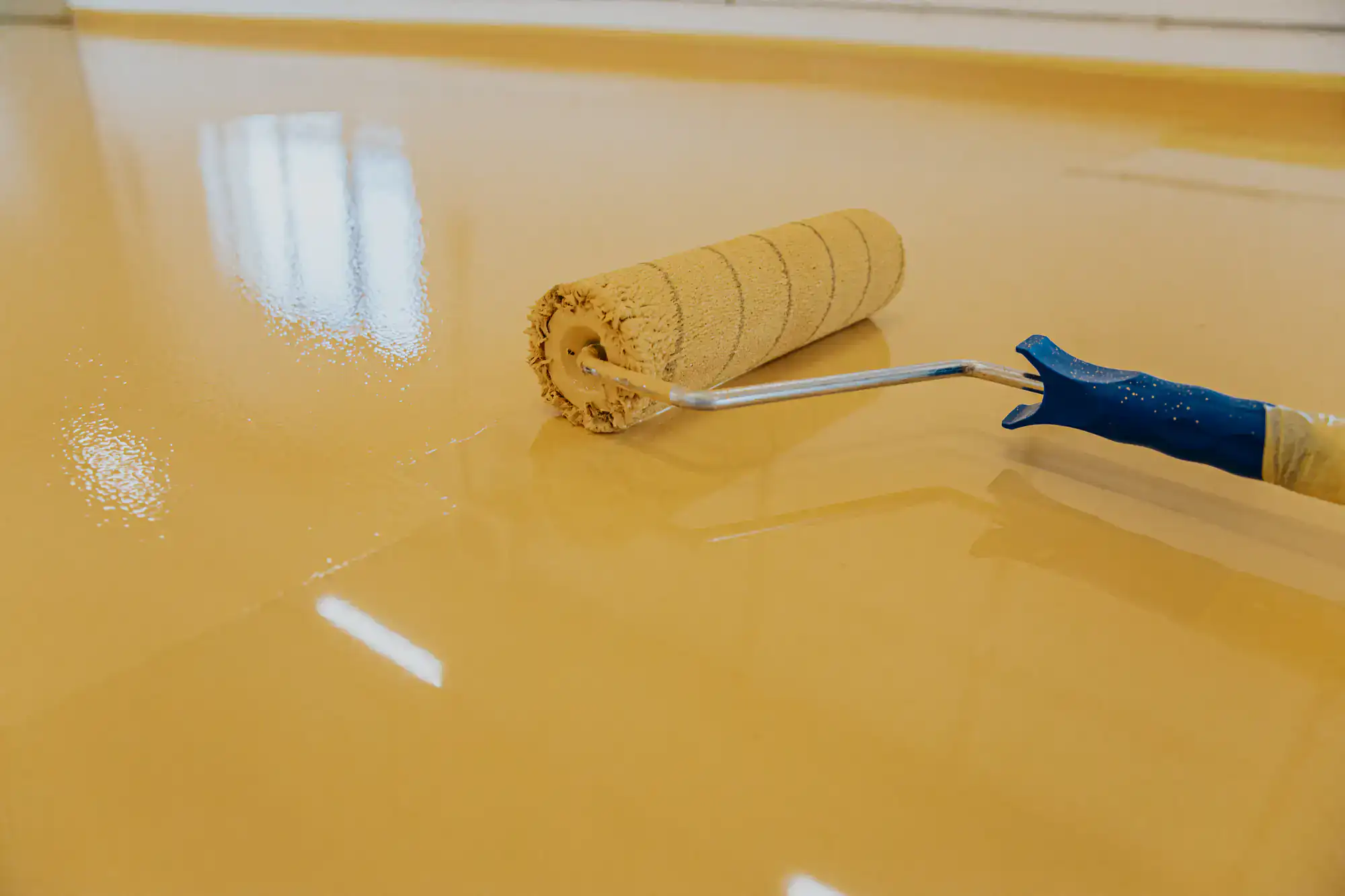
Once the slab passes assessment, we diamond-grind the surface to the correct profile the mechanical equivalent of sanding wood before you stain it. Any cracks or voids are repaired. Then the system goes down in layers: primer coat, base coat, topcoat, with proper cure time between each. That cure window is something a lot of contractors rush, especially during busy season. We don’t. Each layer needs to reach the right cure state before the next one goes on, and cutting that short is how delamination starts.
For commercial projects along North Bellmore’s Newbridge Road or Hempstead Turnpike corridors restaurants, medical offices, auto shops we typically schedule installation overnight or during off-hours to avoid operational downtime. Residential projects in garages or basements are generally back in service within 24 to 72 hours, depending on the system and the ambient conditions at the time of installation.
Ready to get started?
Not every floor gets the same system, and that’s the point. A garage floor in a North Bellmore home built in 1958 has different needs than a commercial kitchen on Newbridge Road or a high-traffic institutional space like a school facility in the North Bellmore School District. We specify the system based on what the slab is, what the space demands, and what the environment is going to throw at it not a one-size-fits-all product pulled off a shelf.
For residential garages and basements, the typical system is a 100% solids or high-solids epoxy with a polyaspartic or urethane topcoat built to handle vehicle traffic, moisture cycling, and the freeze-thaw exposure that Long Island winters produce. For commercial kitchens and food service environments, the system meets USDA compliance standards and includes cove base installation at the wall-floor junction to satisfy health department requirements. For healthcare, institutional, and high-traffic commercial floors, we incorporate antimicrobial additives and slip-resistant aggregate finishes as part of the specification.
Chemical resistant epoxy finishes are available for auto service bays, mechanical rooms, and any space where fuel, oil, or cleaning chemicals are part of the daily routine. Every system is a multi-layer installation not a single-coat application and every project in Nassau County is completed by the same certified, long-tenured crew that has been doing this work on Long Island for over three decades.
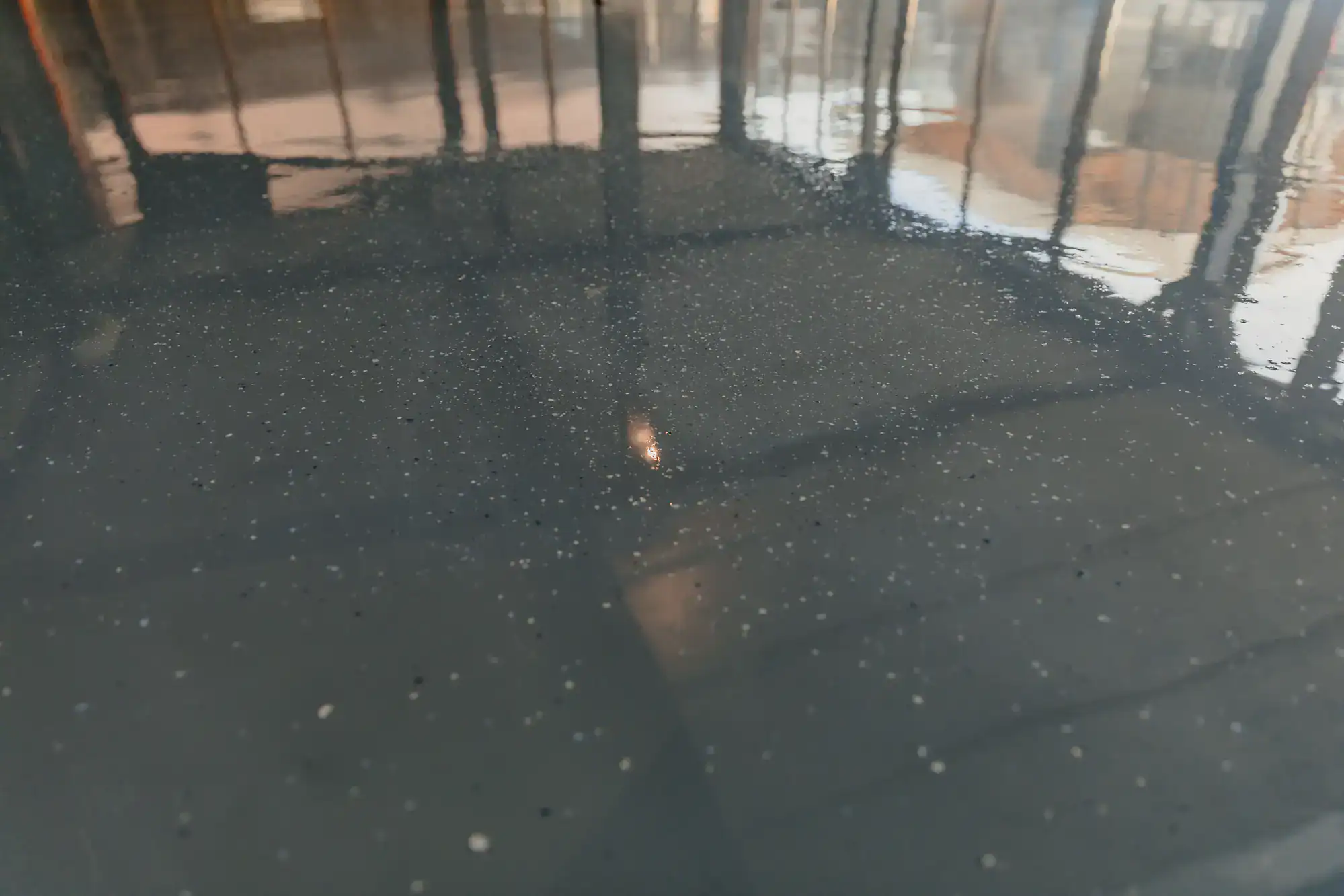
The short answer is moisture and skipped prep. North Bellmore’s housing stock is predominantly post-war construction most residential slabs were poured in the 1950s, and many of them were installed without the vapor barriers that are standard in newer builds. Over decades, moisture wicks up through the concrete from the soil below, a process called moisture vapor transmission. When a coating gets applied over a slab that hasn’t been properly tested and prepared for that moisture, the bond fails. It doesn’t matter how good the product is if the slab isn’t ready, the floor isn’t going to hold.
The fix isn’t complicated, but it requires doing the work. Every slab needs to be moisture-tested before installation, diamond-ground to the correct surface profile, and primed with a system that’s compatible with the moisture levels present. If the contractor you’re talking to doesn’t mention any of this before quoting you a price, that’s a sign. A properly installed system on a North Bellmore slab one that accounts for the South Shore’s elevated humidity and the age of the concrete should hold for 15 to 20 years without delamination.
For a residential garage in North Bellmore, a professionally installed epoxy floor system typically runs between $7 and $12 per square foot, depending on the size of the space, the condition of the existing concrete, and the system specified. A standard two-car garage roughly 400 to 500 square feet lands somewhere between $2,800 and $6,000 for a complete multi-layer installation. That includes surface prep, crack repair, primer, base coat, and topcoat.
It’s worth doing the math on this. A consumer-grade kit from a hardware store might cost $200 to $400, but in a North Bellmore home where the slab is 60-plus years old and the ground moisture is what it is this close to the South Shore, that coating is going to fail. When it does, you’re paying to have it stripped, the slab re-prepped, and the floor re-done often at a higher cost than if you’d gone professional the first time. In a market where homes are valued at $700,000 to $900,000, the floor underneath your cars is worth protecting correctly.
Yes, and it’s one of the more important variables to get right. Epoxy should not be applied when ambient humidity exceeds 85%, and the surface temperature of the concrete needs to stay above the dew point during application otherwise you get moisture trapped under the coating before it cures, which leads to adhesion failure. North Bellmore sits about five miles north of the Great South Bay, and during Long Island summers, relative humidity regularly climbs into the 70 to 80 percent range. Morning dew on concrete surfaces is a real factor, especially in unheated garages.
A contractor who doesn’t check humidity and dew point conditions before starting work is rolling the dice on your floor. We’ve been working in Nassau County for over 30 years South Shore humidity isn’t a surprise variable for us. It’s a known condition that gets accounted for in scheduling, application timing, and system selection. If conditions on a given morning aren’t right, the work doesn’t start until they are.
The main difference is solids content. Professional-grade epoxy systems used in commercial and industrial installations are 100% solids or high-solids formulations meaning nearly all of what gets applied stays on the floor as cured coating. The consumer kits available at hardware stores are typically water-based or low-solids products that shrink significantly as they dry, leaving a much thinner film. A professional system applied at 14 to 30 mils of dry film thickness is a fundamentally different product from a box-store kit that cures down to 3 or 4 mils.
Beyond the product itself, the installation process is entirely different. Professional installation starts with diamond grinding, moisture testing, and crack repair steps that a DIY kit doesn’t include and that most homeowners don’t have the equipment to perform. On a 1950s slab in North Bellmore with decades of oil staining, surface contamination, and moisture history, skipping those steps means the coating won’t bond properly regardless of what product you use. The hardware store kit might look fine for a few months. On an older South Shore slab, it usually doesn’t make it through the first winter.
Yes, and for most food service businesses along the Newbridge Road or Hempstead Turnpike corridors, overnight installation is exactly how we do it. Shutting down a commercial kitchen for two or three days isn’t realistic for most operators, so we schedule the work during off-hours typically starting after close and completing before the next morning’s prep begins. It’s a tight window, but it’s workable with the right crew and the right system.
The system used in commercial kitchen environments has to meet USDA compliance standards, which means it needs to be seamless, non-porous, and chemically resistant to the cleaning agents and food-contact conditions present in that space. Cove base installation at the wall-floor junction is also part of a compliant commercial kitchen floor it eliminates the gap where bacteria and moisture accumulate and makes cleaning significantly easier. Nassau County health inspections look at floor condition, so having a properly installed, compliant system matters beyond just durability. We’ve been doing overnight commercial kitchen installations for decades, including the White House kitchen in 1996.
The honest answer is that you probably can’t tell just by looking at it. A slab can appear dry and solid on the surface while actively transmitting moisture vapor from below which is exactly what causes most epoxy failures in older homes. In North Bellmore, where the majority of residential slabs were poured in the 1950s without modern vapor barriers, and where the water table and seasonal ground moisture stay elevated this close to the South Shore, subsurface moisture is the default assumption until testing proves otherwise.
The assessment process involves a few things: a visual inspection for existing cracks, spalling, or prior coating residue; a moisture vapor emission test using calcium chloride or relative humidity probes embedded in the slab; and a surface hardness check to confirm the concrete can hold the specified system. If moisture levels come back high, we adjust the system there are epoxy and urethane formulations designed specifically for slabs with elevated moisture. The slab doesn’t have to be perfect to get a great floor. It just has to be properly understood before anything gets applied. That’s the part that separates a floor that holds from one that doesn’t.
Other Services we provide in North Bellmore