
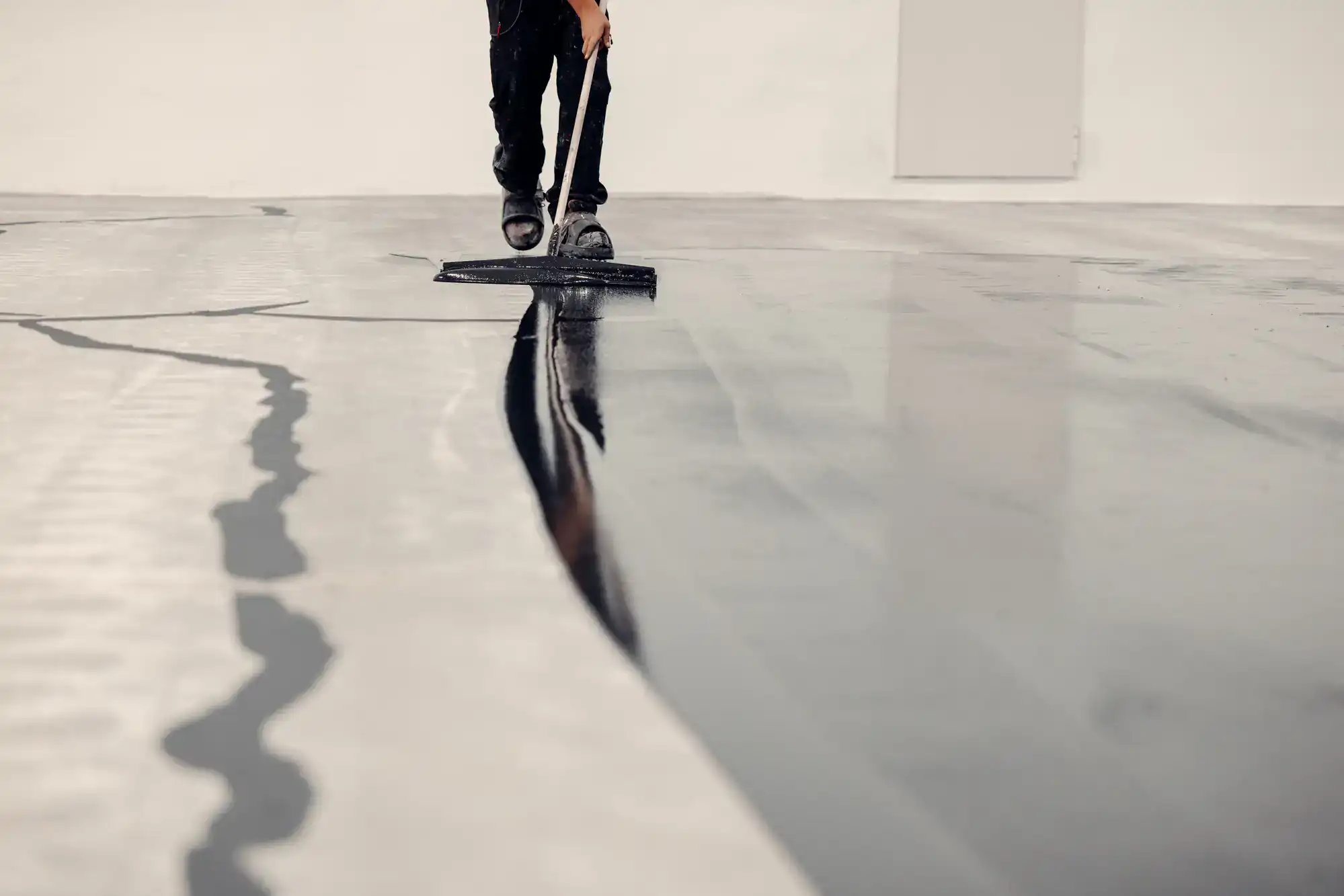
Most epoxy floors that fail don’t fail because of the product. They fail because no one checked the slab first. In Massapequa, that’s not a minor oversight it’s the difference between a floor that lasts two decades and one that starts bubbling before your first winter is out. The southern half of this community sits at roughly 13 feet above sea level, directly adjacent to South Oyster Bay, with a water table that the Town of Oyster Bay spent $12 million trying to manage as recently as January 2024. Moisture vapor pushing up through a slab is the number one cause of epoxy delamination, and on a South Shore property, it’s not a hypothetical.
The other factor that doesn’t get talked about enough is the age of the building stock here. The median construction year for Massapequa homes is 1956, which means most slabs in this community are somewhere between 65 and 75 years old. Those slabs have absorbed decades of oil, salt, and moisture cycling. A proper diamond grind opens the surface at a molecular level and removes that contamination. Without it, even a quality product won’t bond the way it should.
When the prep is done right and the system is specified for your actual environment not just whatever’s on the shelf you get a floor that handles the humidity coming off the bay in July, the freeze-thaw stress of a Massapequa winter, and the day-to-day demands of a working commercial space. That’s the outcome worth paying for.
We’ve been installing commercial and industrial epoxy floors across Nassau and Suffolk Counties for over 35 years. That’s not a franchise operation or a general contractor who added epoxy as a side service we’re a company built around one thing, run by someone who has personally installed floors in the Bahamas, Moscow, and the White House kitchen in 1996. That track record doesn’t happen without knowing exactly what you’re doing.
We hold Sherwin-Williams High Performance Flooring certification and Res Tech certification both manufacturer-backed credentials that go well beyond the standard “licensed and insured” language most contractors lean on. Our installers carry OSHA 40 certification, and most of our crew has been with us for over a decade. When you’re inviting our team into a commercial space on Merrick Road or a facility near the Massapequa Preserve, that kind of crew stability matters.
We maintain an A+ BBB Accreditation with zero complaints across our entire operating history. Not one. For a business that’s been running since before most of our current competitors existed, that record speaks for itself.
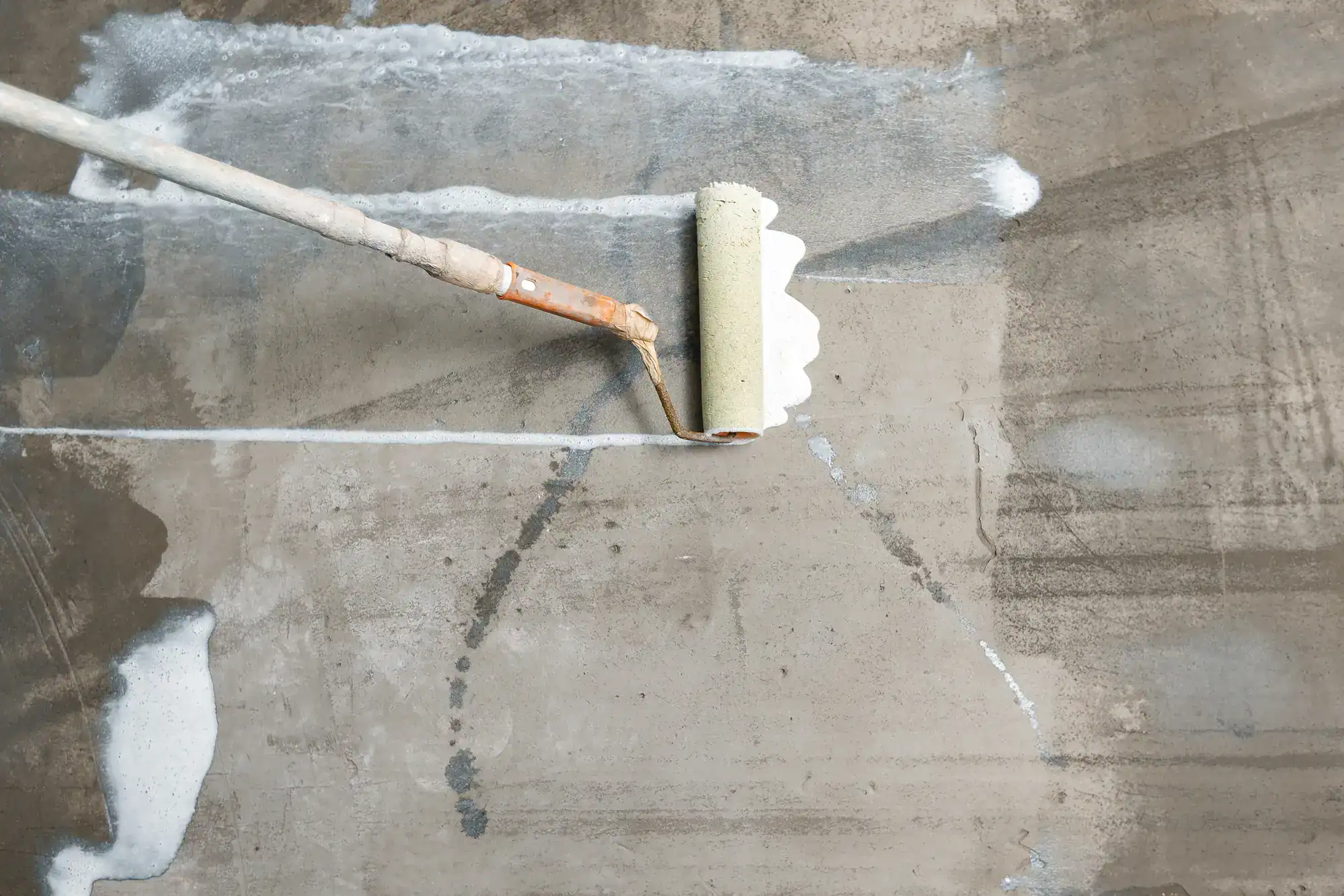
The first thing that happens on any Massapequa job is a slab assessment. Given the ground moisture conditions in this community especially in the southern neighborhoods like Biltmore Shores and Nassau Shores moisture testing isn’t optional. A calcium chloride test or relative humidity probe tells us exactly what vapor transmission rate we’re dealing with before any product goes down. If there’s a moisture issue, we address it at the slab level. That step alone is what separates a floor that lasts from one that doesn’t.
Once the slab is assessed, surface preparation begins. On the 1950s-era concrete that makes up the majority of Massapequa’s commercial and residential building stock, diamond grinding is the standard. It opens the pores of the concrete, removes decades of embedded contamination, and creates the surface profile that allows an industrial-grade epoxy system to bond properly. This is not a quick acid wash it’s the step that determines the long-term performance of everything that goes on top of it.
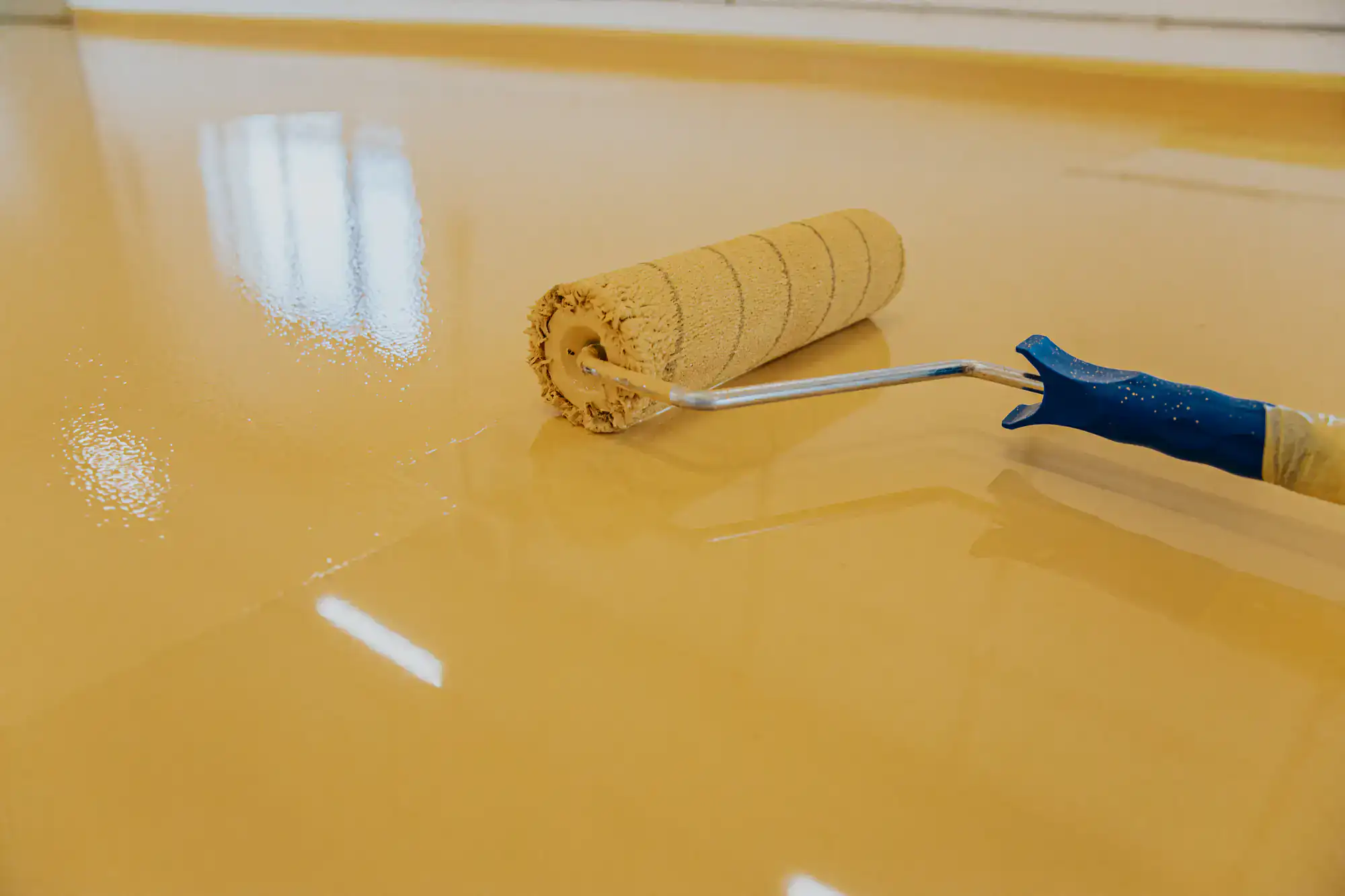
From there, the system is built in layers: primer coat, body coat, and a topcoat specified for your facility’s actual demands. A commercial kitchen on Merrick Road gets a USDA-compliant food-grade system. An auto shop on Broadway gets a chemical-resistant finish rated for oil and hydraulic fluid. A healthcare office gets a seamless resinous surface that meets ADA and CDC guidelines. Application windows are scheduled around Massapequa’s coastal humidity and temperature ranges most commercial installations are completed overnight or over a weekend so your operation doesn’t miss a beat.
Ready to get started?
The commercial and industrial epoxy flooring systems we install in Massapequa are 100% solids or high-solids industrial products not the franchise-grade coatings you’ll find marketed at residential garage floors. These are systems engineered for forklift axle loads, chemical exposure, thermal shock, and regulatory compliance. The difference shows up in dry film thickness alone: industrial systems cure to 14 to 30 mils; standard residential coatings cure to 3 to 8 mils. That gap is not cosmetic.
For the auto service businesses along Broadway and Merrick Road, we specify chemical-resistant epoxy finishes that handle oil, hydraulic fluid, and road salt the real-world contaminants a garage floor faces every single day on Long Island. For restaurants and food service operations in Massapequa, we install food-grade seamless resinous floor coatings that eliminate the grout lines and joints that fail Nassau County health inspections. For medical and dental offices, we use systems that meet ADA, CDC, and FGI standards. For high-traffic retail and warehouse spaces along the Sunrise Highway corridor, we apply heavy duty industrial epoxy floors rated for the actual load and movement patterns of a working facility.
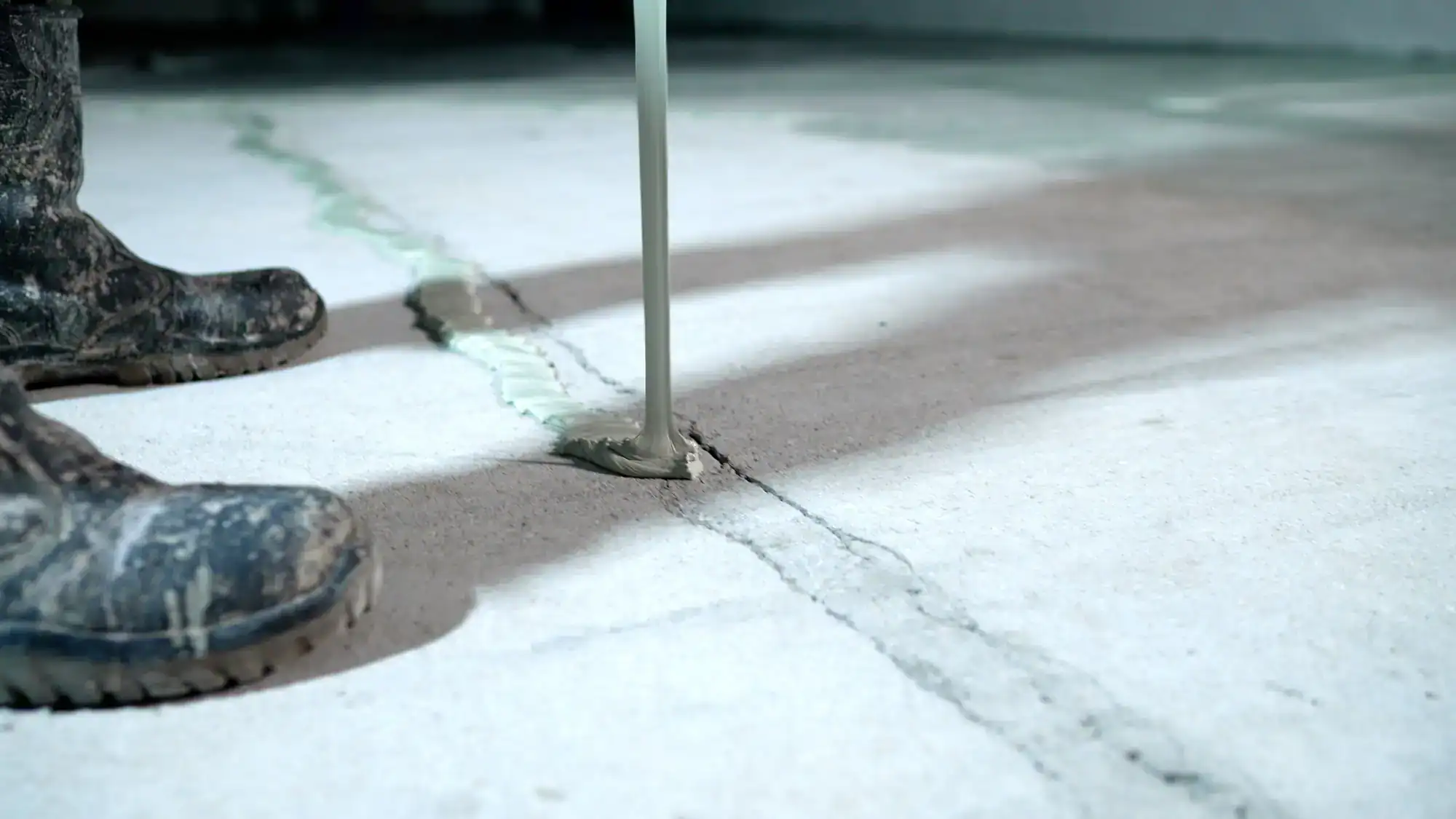
Every installation includes full surface preparation, moisture assessment, crack repair where needed, and a multi-layer cure process. The system we specify for your space is based on what your floor will actually face not on what’s easiest to install or what looks good in a quote.
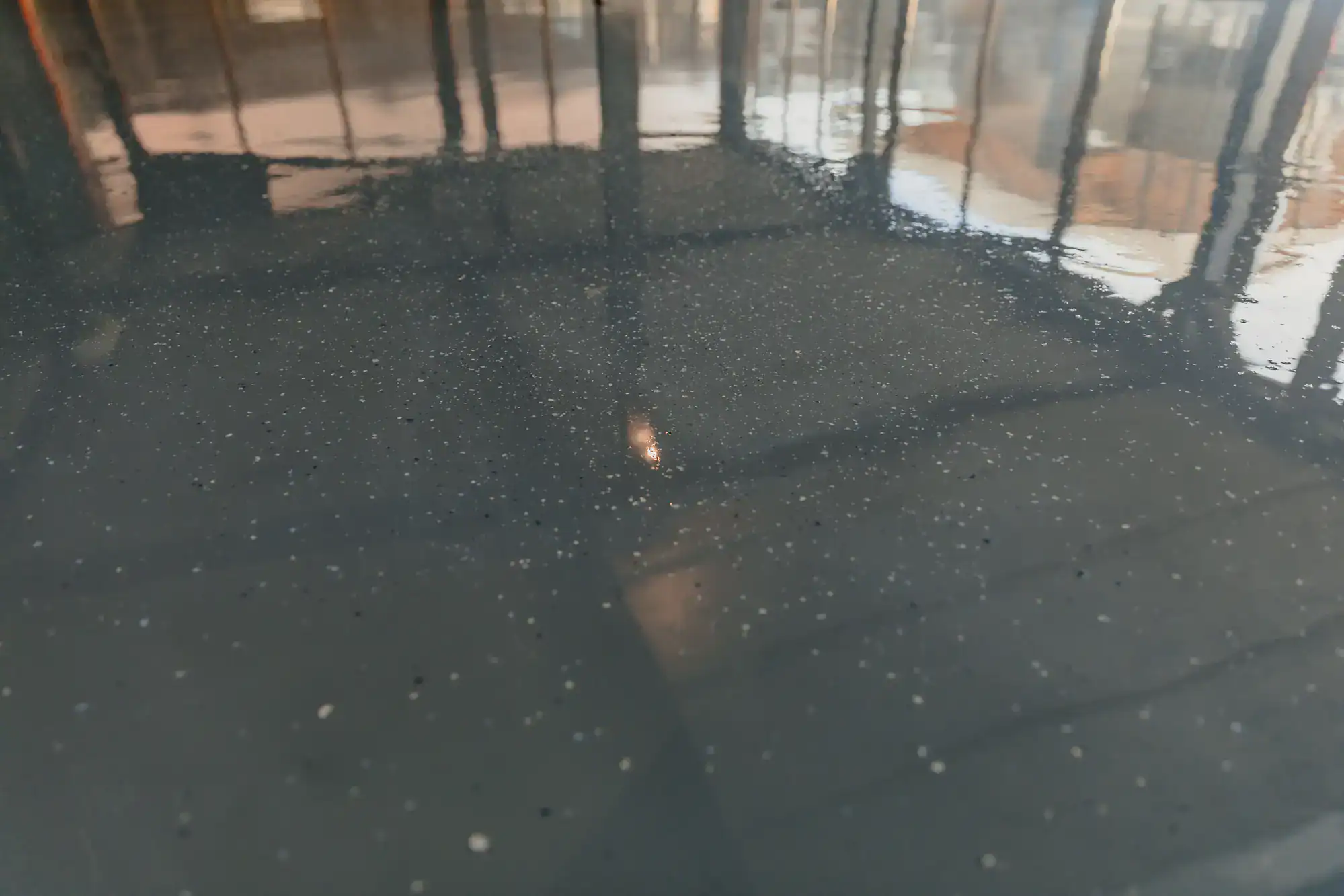
The most common reason is moisture that wasn’t tested for before installation. In Massapequa, this is a more significant risk than in inland Nassau County communities because of the community’s South Shore position. The town sits at roughly 13 feet above sea level in its southern portions, directly adjacent to South Oyster Bay, and the Town of Oyster Bay completed a $12 million flood diversion project in south Massapequa in January 2024 specifically to address drainage and ground moisture on roads prone to flooding. That level of municipal investment reflects a real, documented moisture problem beneath the soil here.
When moisture vapor pushes up through a concrete slab and there’s a coating on top that wasn’t specified for it, the result is bubbling, blistering, and delamination sometimes within months of installation. The fix is straightforward: test the slab before you coat it, address any moisture issues at the slab level, and specify a system with the right vapor barrier characteristics for the environment. Skipping that step to save time or money is the single most expensive shortcut in this industry.
A properly installed industrial epoxy system in a commercial space one with correct surface prep, appropriate product specification, and a quality topcoat should last 15 to 20 years under normal commercial conditions. The operative word is “properly.” The longevity of any epoxy floor is almost entirely determined by what happened before the first coat went down: how the slab was prepared, whether moisture was tested and addressed, and whether the system was matched to the actual demands of the space.
In a high traffic commercial epoxy application in Massapequa say, a busy auto shop on Merrick Road or a food service operation that sees constant foot traffic and cleaning chemical exposure the topcoat chemistry matters as much as the base system. A polyaspartic topcoat adds UV stability and abrasion resistance that standard epoxy alone doesn’t provide. When the full system is built correctly, the lifecycle cost math is straightforward: a professional installation at $8 to $12 per square foot that lasts 20 years costs less per year of service than a consumer-grade system that fails in 18 months and requires removal and reinstallation on top of the original cost.
The gap is significant, and it shows up in ways that aren’t always visible until a floor fails. Consumer-grade epoxy kits including most of the systems marketed by franchise garage floor operations are water-based or low-solids products that cure to 3 to 8 mils of dry film thickness. Industrial commercial epoxy flooring systems cure to 14 to 30 mils, depending on the application. That’s not a minor difference in thickness it translates directly into load capacity, chemical resistance, and how long the floor holds up under real use.
Beyond the product itself, the application process is completely different. Industrial systems require diamond-ground surface preparation, moisture testing, primer coats, body coats, and a specified topcoat each layer applied within a controlled cure window. Consumer kits are designed to be applied by homeowners on a Saturday afternoon. The environments those two products are designed for are not the same, and a commercial kitchen, auto shop, or medical office in Massapequa deserves a system that was actually engineered for it.
Yes, and it’s worth understanding before you schedule. Epoxy should not be applied when relative humidity exceeds approximately 85%, and Massapequa’s coastal position on South Oyster Bay means ambient humidity runs higher here than in inland Nassau County communities for much of the year. June relative humidity in this area peaks above 76%, and summer afternoons can push conditions close to application limits, particularly in spaces without climate control.
That said, this is a manageable constraint for an experienced contractor not a reason to delay a project indefinitely. Interior commercial spaces with HVAC running can typically be scheduled year-round. For unheated garages, warehouses, or mechanical rooms, spring and fall are the most reliable installation windows given both temperature and humidity. Winter installations in unheated spaces require careful monitoring because epoxy should not be applied below 50°F. We’ve been working on Long Island’s South Shore for 35 years and know how to schedule around these variables it’s not a surprise condition, it’s a standard part of planning a job in this climate.
In most cases, yes. The majority of commercial kitchen and food service epoxy installations are completed overnight or over a weekend, depending on the square footage and the system specified. A standard seamless resinous floor coating for a restaurant or food service operation involves surface preparation, a primer coat, a food-grade body coat, and a topcoat each layer requiring a cure window before the next goes down. The full process typically takes one to two nights for a standard kitchen footprint, with the space ready for normal operations by the next morning.
The key variable is planning. Nassau County Health Department inspections require seamless, non-porous, cleanable flooring in food service facilities grout lines and joints are harborage points that fail inspections. Scheduling the installation during a planned closure, a holiday weekend, or a low-volume period minimizes disruption. For restaurants along Merrick Road or in Massapequa’s commercial corridors, that kind of scheduling coordination is a standard part of how we get these jobs done.
The honest answer is that you don’t know until someone assesses it and most slabs in Massapequa are worth assessing carefully before any coating decision is made. The median construction year for the local housing and commercial building stock is 1956, which means the average slab in this community has been in the ground for 65 to 75 years. Over that time, it has absorbed oil, road salt, cleaning chemicals, and moisture. It has gone through hundreds of freeze-thaw cycles. It may have cracks, surface contamination, or moisture vapor transmission rates that would cause a coating to fail without proper remediation first.
A pre-installation slab assessment looks at surface condition, existing contamination, crack patterns, and moisture vapor transmission. Most of what’s found on older Massapequa slabs is addressable cracks can be filled, contamination can be ground out, and moisture issues can be mitigated with the right primer system. What matters is finding these conditions before the coating goes down, not after. A contractor who skips this step is one whose floor you’ll be removing in 18 months.