
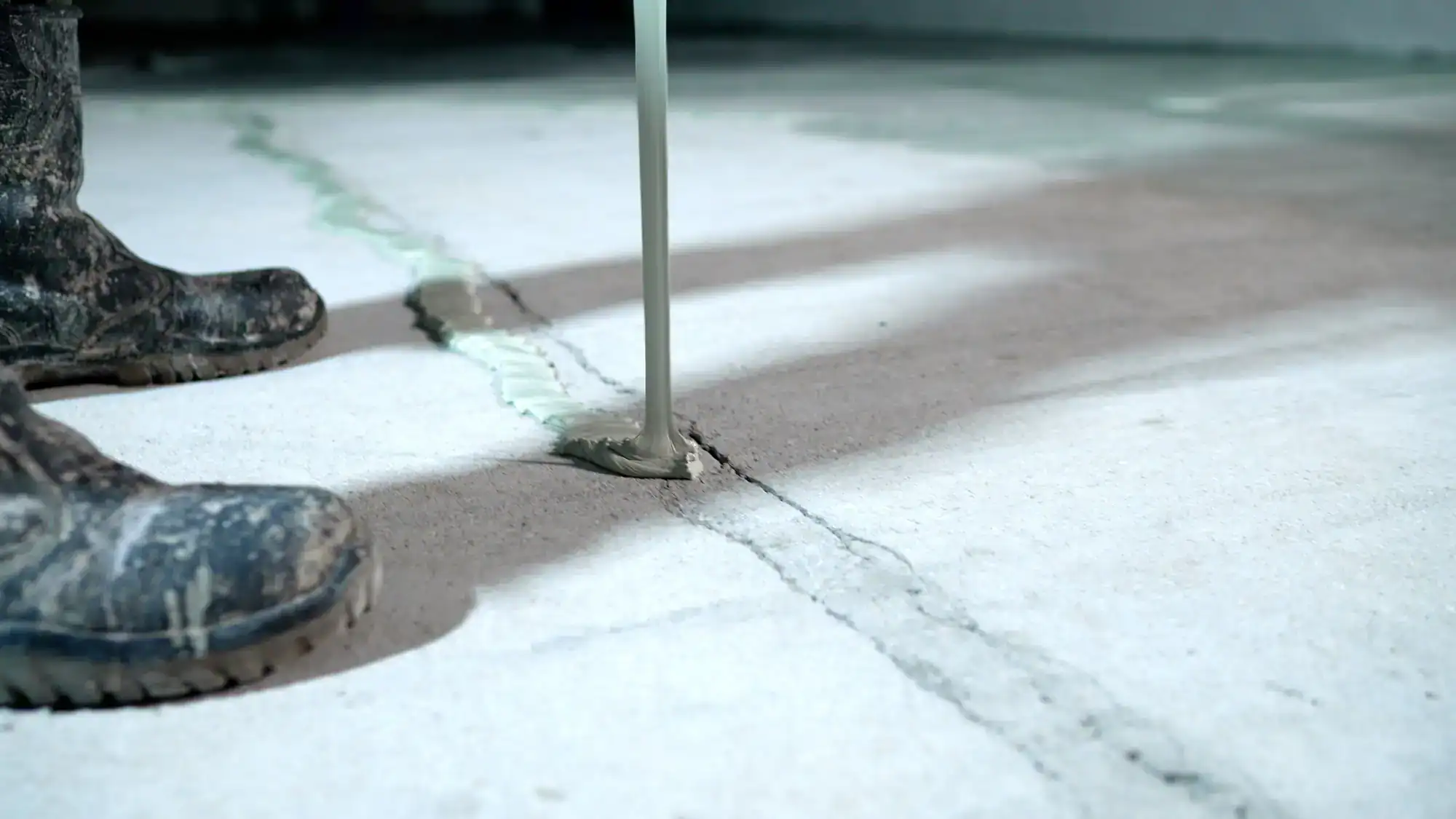
Levittown was built fast over 17,000 homes and countless commercial buildings went up between 1947 and 1951. That means the concrete underneath your business or garage has been in service for more than seven decades. It’s been patched, covered, and worked on more times than anyone can count. When you put a new floor coating over substrate like that without properly assessing it first, you’re not upgrading your floor you’re just delaying the next failure.
The other thing most contractors won’t talk about is the water table. Levittown sits on former farmland with documented shallow groundwater, and a significant portion of its buildings are slab-on-grade construction. Moisture vapor pushing up through a slab from below is the single most common reason epoxy floors bubble, blister, and peel and it happens all the time in this area when the person installing the floor skips the moisture assessment. That’s not a minor step. In Levittown, it’s the step that determines whether your floor lasts two years or twenty.
Get it right, and you have a seamless, chemical-resistant surface that handles the daily grind of a busy Hempstead Turnpike restaurant, a high-traffic medical office, or a commercial service bay without peeling, staining, or creating the kind of compliance headache that shuts operations down. That’s the outcome a properly installed epoxy floor actually delivers.
We’ve been serving commercial and industrial clients across Nassau and Suffolk Counties since the early 1990s. That’s not a timeline we throw out to sound impressive it means we’ve installed floors through every economic cycle Long Island has seen, and we’re still here because the floors hold up. Our founder and CEO, Danny Harmer, has over 40 years of hands-on installation experience. In 1996, he installed the epoxy floor in the White House kitchen. That’s the standard we work to on every job, whether it’s a Levittown restaurant, warehouse, or medical facility.
We’re Sherwin-Williams High Performance Flooring certified and Res Tech certified both manufacturer-issued credentials that require documented training, not just a check in a box. Our installers are OSHA 40 certified, and most of them have been with us for over a decade. When you hire us for a commercial floor in Levittown, you’re getting the same crew, the same process, and the same accountability every time. No subcontractors. No rotating teams. No surprises.
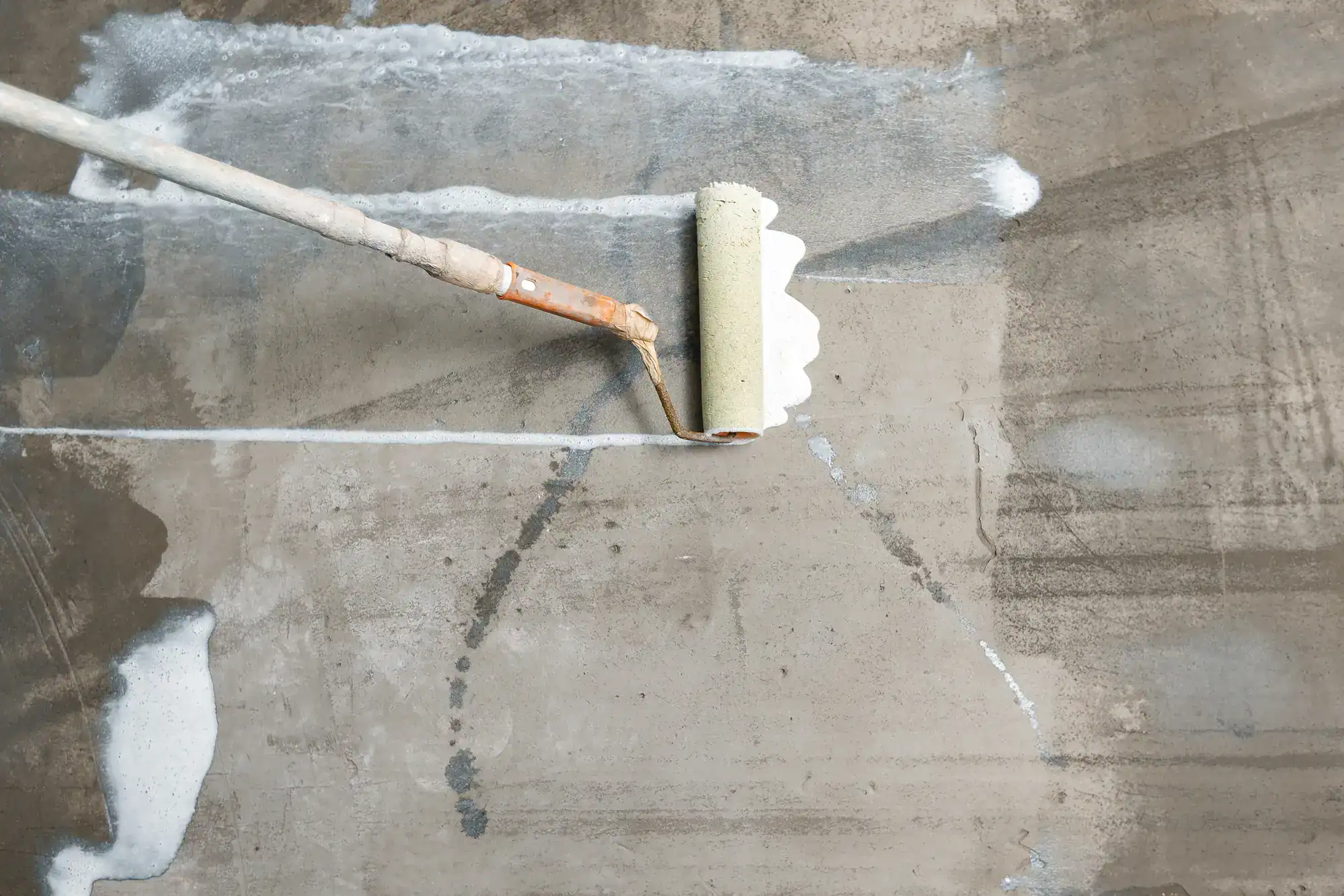
Every installation starts with a real assessment not a sales visit. We look at the age and condition of the slab, check for prior coatings, and test for moisture vapor transmission. In Levittown specifically, that moisture test is non-negotiable. The shallow water table and the prevalence of slab-on-grade construction in this area mean that skipping this step is how floors fail. We don’t skip it.
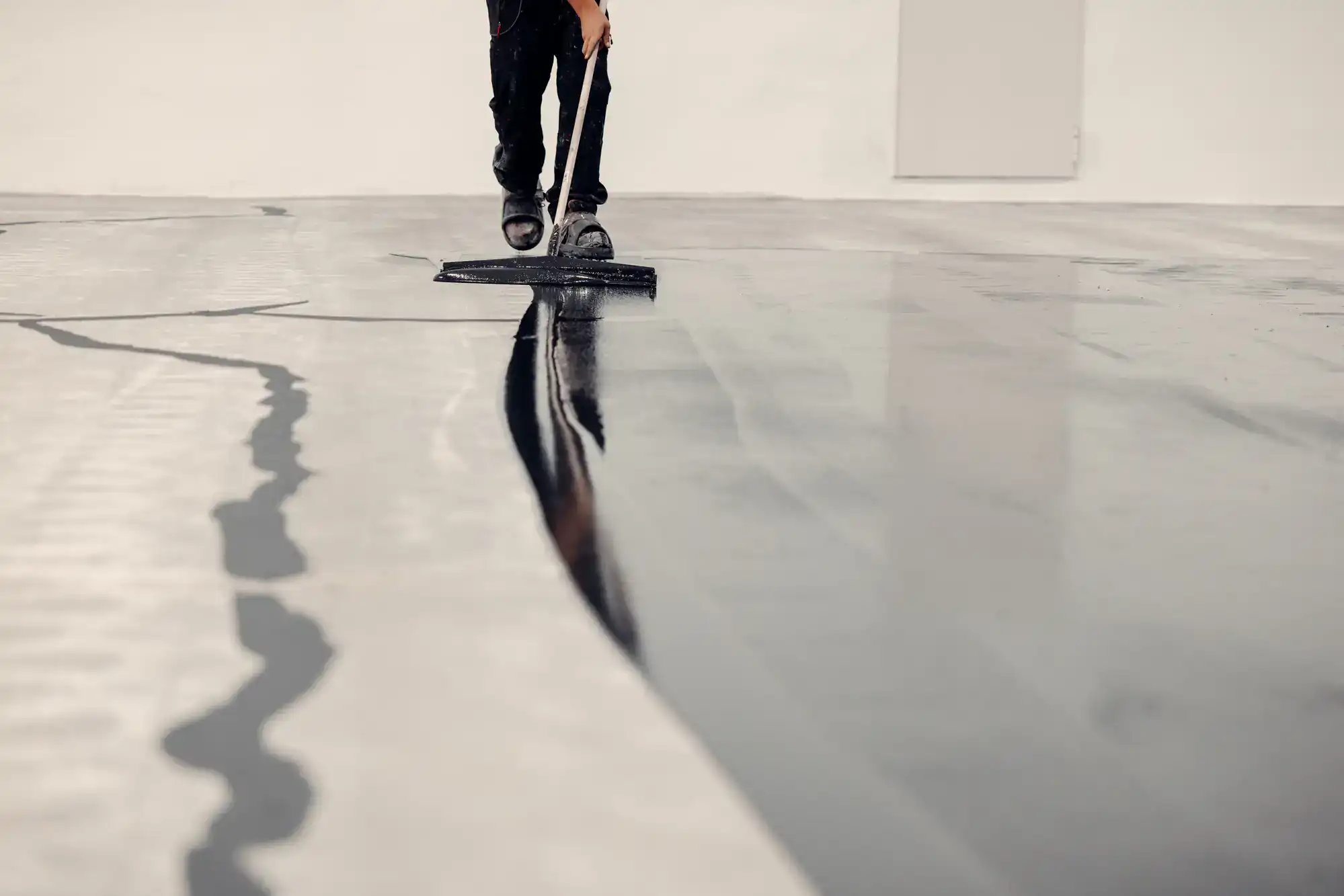
Once the slab is assessed, surface preparation begins with diamond grinding. This is the professional standard for a reason it opens up the concrete profile, removes contamination, and creates the mechanical bond that makes a coating last. Acid etching alone doesn’t cut it on 70-year-old concrete that’s been patched and modified over decades. After prep, the system goes down in stages: primer coat, base coat, and topcoat, with proper cure time between each layer. The system we specify depends on what your floor actually faces a commercial kitchen on Hempstead Turnpike has different demands than a warehouse floor or a medical office corridor, and we don’t treat them the same.
For food service and other high-traffic commercial operations, we work overnight so you open the next morning on a compliant, finished floor. No multi-day closure. No lost revenue days. The floor is back in service and ready to work when you are.
Ready to get started?
Not every floor in Levittown needs the same solution. A restaurant floor along the Hempstead Turnpike corridor faces daily thermal shock, grease exposure, and constant cleaning chemicals. A medical office needs a seamless, antimicrobial surface that satisfies Nassau County health codes and infection control standards. A warehouse or service bay needs a high-build industrial system that handles vehicle loads and chemical spills without breaking down. We specify the right system for each environment and we install it with the process discipline that makes it perform for the long run.
For food service operators, our systems are USDA-compliant and designed to pass health department inspections. For healthcare environments, we install to FGI and CDC guidelines. For commercial and industrial spaces that need to meet ADA requirements, our seamless surfaces eliminate the trip hazards and accumulation points that grout lines and floor joints create. These aren’t add-ons they’re built into how we specify and install every floor.
The systems we use are specified at 14 to 30 mils of dry film thickness. That’s the commercial and industrial standard. Consumer-grade coatings cure to 3 to 8 mils a fraction of the build and they show it within the first couple of years. If you’re investing in a floor for a real commercial environment in Levittown, it should be built to that standard from the start.
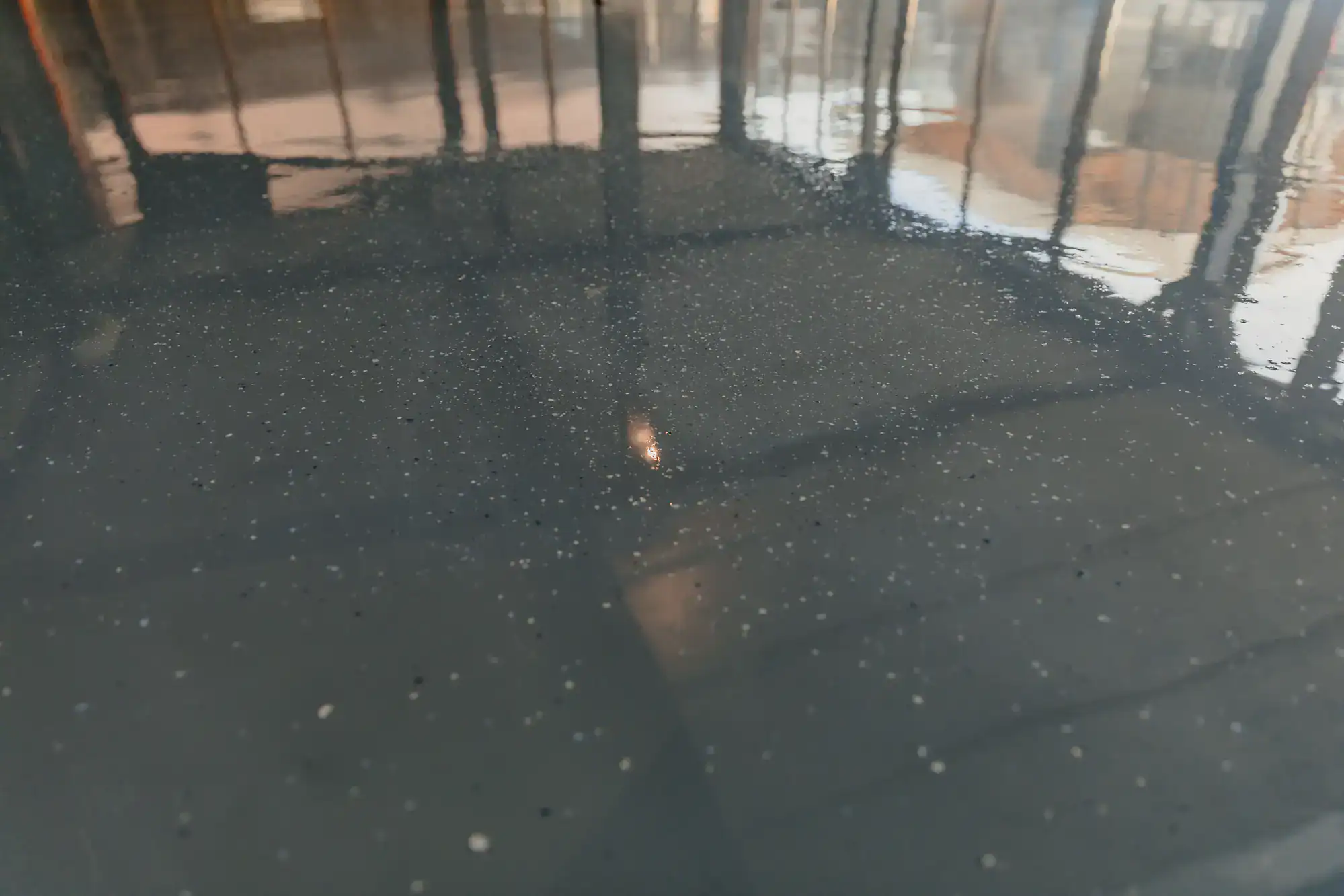
The most common reason epoxy floors fail in Levittown is moisture specifically, moisture vapor pushing up through the slab from below. Levittown was built on former farmland with a documented shallow water table, and a large percentage of its residential and commercial buildings are slab-on-grade construction. That means the concrete sits directly on ground that experiences seasonal groundwater pressure, and without a proper moisture assessment before installation, that vapor has nowhere to go but into the coating.
When moisture gets trapped under an epoxy system, it breaks the bond between the coating and the concrete. The result is bubbling, blistering, and delamination usually within the first one to three years. The fix isn’t a better topcoat. It’s a contractor who tests the slab before they specify a single product, and who selects a system designed to handle the moisture conditions that actually exist in your building. That’s the step that separates a floor that lasts from one that doesn’t.
A properly installed commercial epoxy floor one with correct surface preparation, a moisture-tested slab, and a multi-layer system built to the right film thickness will typically last 10 to 20 years in a commercial environment with routine maintenance. The range depends on traffic load, chemical exposure, and how consistently the floor is maintained. A restaurant floor that sees daily cleaning chemicals and heavy foot traffic will wear differently than a medical office corridor, but both should perform well into the second decade when the installation is done right.
What shortens that lifespan significantly is cutting corners on prep or using consumer-grade products at commercial prices. Systems that cure to 3 to 8 mils of dry film thickness the range for most box-store or brush-on kits simply aren’t built for the demands of a busy commercial environment. Professional systems are specified at 14 to 30 mils. On a floor along Levittown’s Hempstead Turnpike corridor, where daily traffic and chemical exposure are real, that difference in build thickness is the difference between a floor that holds and one that needs replacing in three years.
Yes, and in Levittown it’s one of the most important variables to assess before any installation. The original construction in this community dates to 1947 through 1951, which means most slabs have been in service for over 70 years. Over that time, they’ve been exposed to water events, prior coatings, patching compounds, sealers, and general wear that changes the surface profile and can create adhesion problems if they’re not addressed before a new coating goes down.
The right approach on aged substrate is diamond grinding not acid etching. Grinding opens up the concrete profile mechanically, removes contamination and prior coating residue, and creates a surface the new system can actually bond to. On a 70-year-old slab that’s been modified multiple times, acid etching alone doesn’t provide enough surface preparation to guarantee a lasting bond. This is especially relevant in Levittown, where the building stock is nearly uniform in age and the slabs have had decades of exposure to the area’s coastal humidity and seasonal moisture cycles.
Yes. For restaurant and food service operators in Levittown, we specifically design installations around your operating schedule. The standard approach for commercial kitchen floors is an overnight installation we come in after your last service, complete the full installation, and the floor is ready for foot traffic by the time you open the next morning. You don’t lose a day of revenue, and you don’t have to choose between a compliant floor and an open business.
The systems we use for commercial kitchen environments are USDA-compliant and designed to meet Nassau County Department of Health requirements for food service facilities. They’re seamless, chemical-resistant, and capable of handling the thermal shock that comes from hot water cleaning and temperature swings in a working kitchen. If your current floor is cracking, staining, or failing a health inspection, an overnight installation is a realistic option not a workaround. It’s how we handle most of the restaurant floors we do along the Hempstead Turnpike corridor.
The biggest difference is film thickness and what that means for how long the floor actually holds up. Consumer-grade floor coatings the kind available at big-box retailers cure to roughly 3 to 8 mils of dry film thickness. Professional commercial and industrial epoxy systems are specified at 14 to 30 mils. That’s not a minor gap. It’s the difference between a coating that handles light residential use and one that’s engineered to survive the daily demands of a commercial environment.
Beyond thickness, there’s the question of system design. A professional installation involves a primer coat formulated for the specific substrate condition, a base coat matched to the load and chemical exposure the floor will face, and a topcoat selected for durability, slip resistance, and finish. Each layer is given proper cure time before the next goes down. A brush-on kit from a home improvement store doesn’t replicate that. For a garage floor in a residential Levittown home, a consumer product might last a few seasons. For a commercial floor on Hempstead Turnpike, it won’t and the cost of removing a failed coating and starting over typically exceeds what a professional installation would have cost upfront.
A few things are worth checking before you commit to anyone. First, ask whether they hold manufacturer certifications Sherwin-Williams High Performance Flooring certification and Res Tech certification are the two most relevant for commercial and industrial epoxy work. These are issued by the manufacturers themselves and require documented training in the specific systems used in demanding environments. A contractor who can’t name their certifications is likely using consumer-grade products or self-taught methods that don’t translate to long-term performance.
Second, ask how they handle moisture testing and surface preparation. In Levittown, where shallow groundwater and aging slab-on-grade construction are common, a contractor who doesn’t test for moisture before installation is not equipped for the specific conditions in this area. Ask whether they diamond grind or acid etch grinding is the professional standard for aged substrate. Third, look at their track record. A BBB Accredited contractor with an A+ rating and zero complaints on file, operating continuously for over 35 years in Nassau and Suffolk Counties, is a fundamentally different proposition than someone who launched a few years ago. Longevity in this business, in this market, is earned not claimed.