
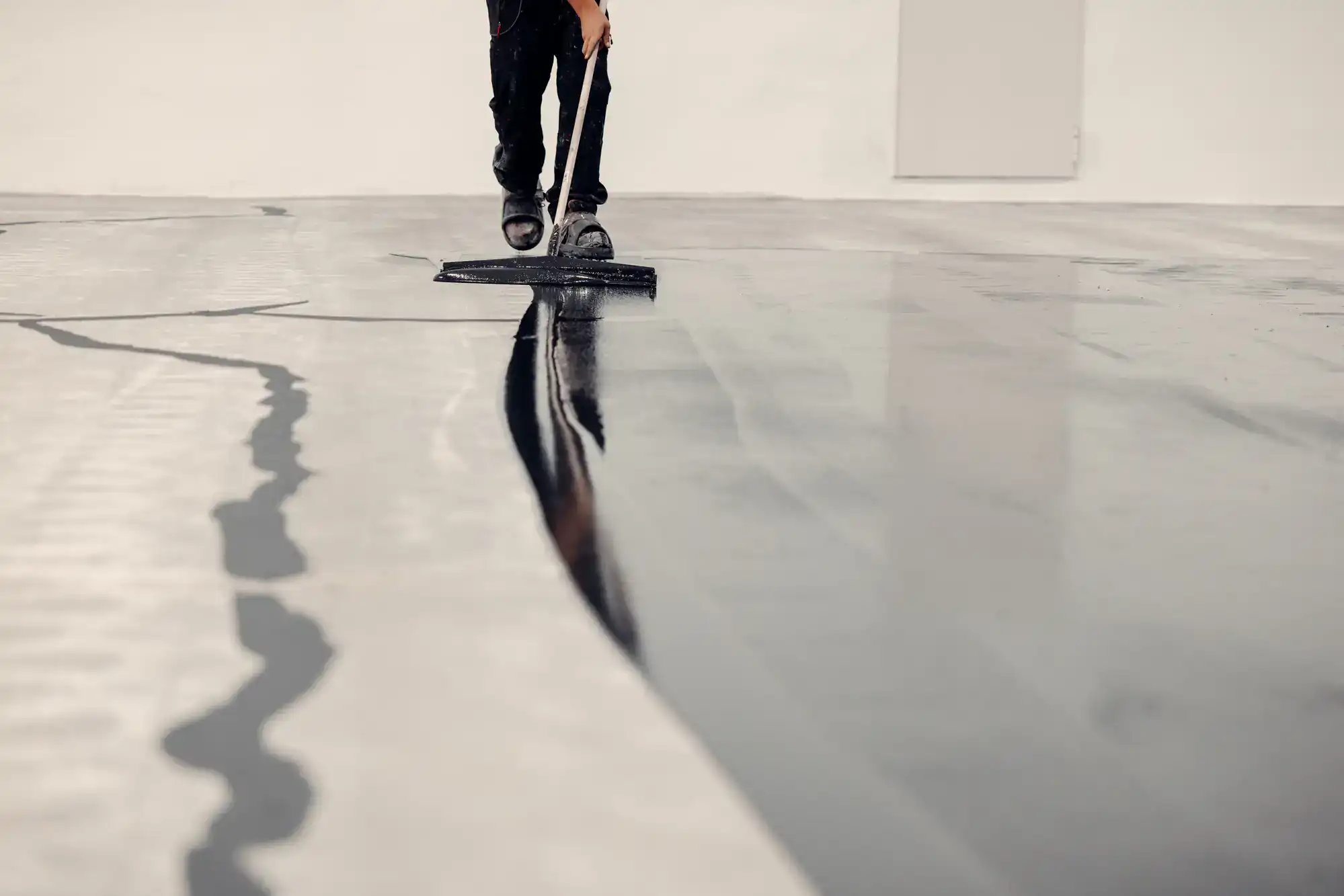
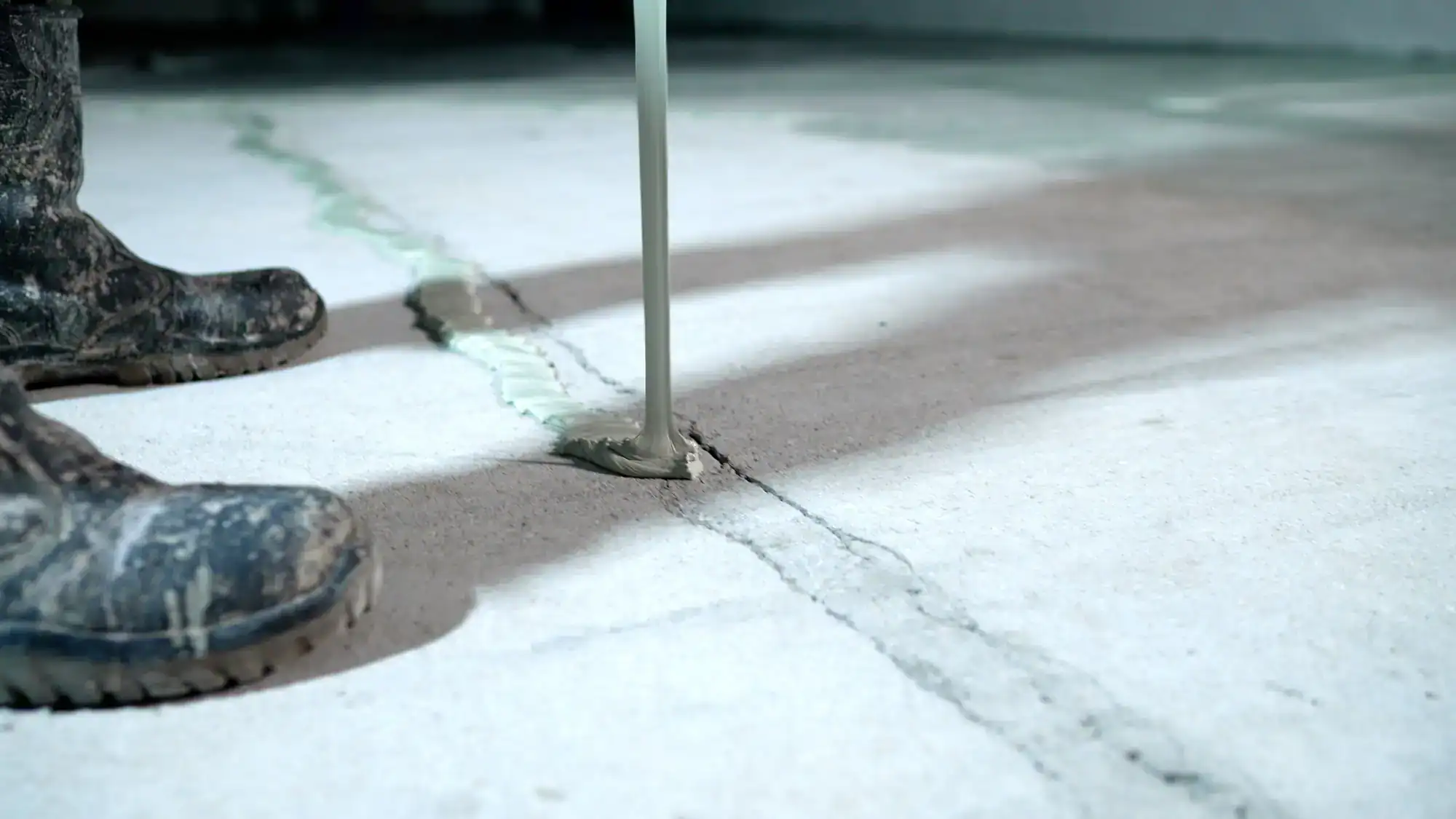
When you’re running a warehouse, a commercial kitchen, or a service facility along the Route 110 corridor in Huntington Station, your floor isn’t decoration it’s infrastructure. It takes forklift loads, chemical spills, constant foot traffic, and still needs to look clean enough to pass an inspection. When the floor starts peeling or staining, it’s not just an eyesore. It’s a liability, a maintenance cost, and a sign that whoever installed it didn’t think past day one.
Huntington Station’s building stock is mostly mid-century construction concrete slabs that have been settling, absorbing moisture, and developing hairline cracks for decades. Add roughly 45 inches of annual rainfall, a documented high water table, and the persistent humidity that comes with being on Long Island’s north shore, and you have conditions that will expose every shortcut a contractor took during installation. A floor that wasn’t properly prepped for moisture won’t last a year here.
What you get with a correctly installed commercial epoxy flooring system is a surface that’s sealed against moisture, resistant to the chemicals and loads your operation actually produces, and built to last 15 to 20 years without constant patching. That’s the difference between a floor that costs you money every few years and one that quietly does its job while you focus on running your business.
We’ve been installing commercial and industrial epoxy floors across Nassau and Suffolk Counties for over 35 years. Our company is led by Danny Harmer, who has more than 40 years of hands-on installation experience not managing crews from an office, but personally doing the work in warehouses, healthcare facilities, commercial kitchens, and industrial facilities across Long Island and beyond. In 1996, Danny installed the epoxy floor in the White House kitchen. That credential isn’t a marketing line it’s a reference point for the level of accountability this work has always carried.
The crews serving Huntington Station and the surrounding western Suffolk County area have been with us for over a decade on average. That kind of stability means consistent work, not a rotating cast of subcontractors who learned the system last month. We hold Sherwin-Williams High Performance Flooring certification and Res Tech certification both factory-trained, manufacturer-backed credentials along with OSHA 40 certification for all installers and an A+ BBB rating with zero complaints on file.
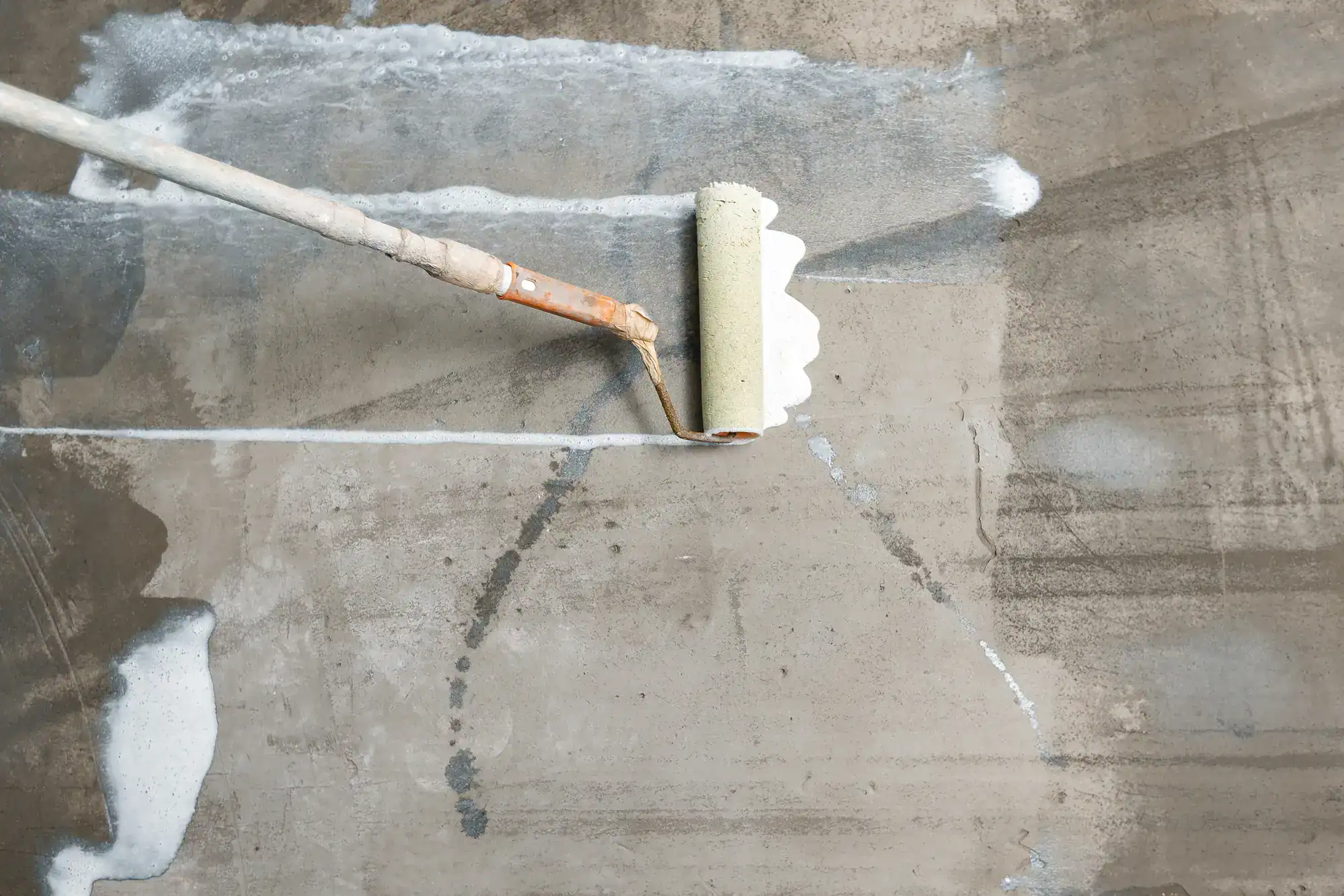
It starts before a single coat of epoxy goes down. Every project begins with a slab assessment and in Huntington Station, that always includes moisture testing. Given the area’s high water table and the age of most commercial buildings here, skipping that step isn’t a time-saver, it’s a guarantee that the floor fails early. If moisture vapor transmission is present, we address it with the appropriate mitigation primer before anything else happens. That’s not optional it’s the foundation of a floor that actually holds.
Once the slab is assessed, we use diamond grinding to bring the concrete surface to the correct profile for adhesion. This is the gold standard for surface preparation, and it’s what separates a professional installation from a consumer-grade one. Cracks and surface defects are repaired before the system goes down. Then the coating system is applied in layers primer, base coat, topcoat with proper cure time between each stage. The specific system is matched to your facility’s actual demands: load ratings, chemical exposure, slip resistance requirements, and whether the space needs to meet USDA, ADA, or healthcare compliance standards.
For businesses along New York Avenue or in the active DRI revitalization zone, scheduling matters too. Restaurant and retail operators can’t afford extended downtime. We offer overnight installation for commercial kitchen and retail floors, so you’re back open the next morning without a gap in service.
Ready to get started?
The commercial and industrial facilities along the Route 110 corridor don’t all need the same floor. A distribution warehouse running loaded forklifts needs a 100% solids system rated for the actual axle loads on that floor typically installed at 14 to 30 mils of dry film thickness, with compressive strength matched to the operation. An auto service bay needs chemical-resistant epoxy finishes that handle oil, hydraulic fluid, and impact without staining or degrading. A commercial kitchen in Huntington Station needs a seamless resinous floor coating that meets USDA standards, handles thermal shock from steam cleaning, and drains correctly installed overnight so the kitchen opens on schedule.
Healthcare facilities connected to the Huntington Hospital network need antimicrobial, seamless systems that meet FGI and CDC guidelines. Firehouse apparatus bays, aircraft hangars, mechanical rooms each environment gets a system specified for it, not a one-size-fits-all product applied uniformly across different facility types.
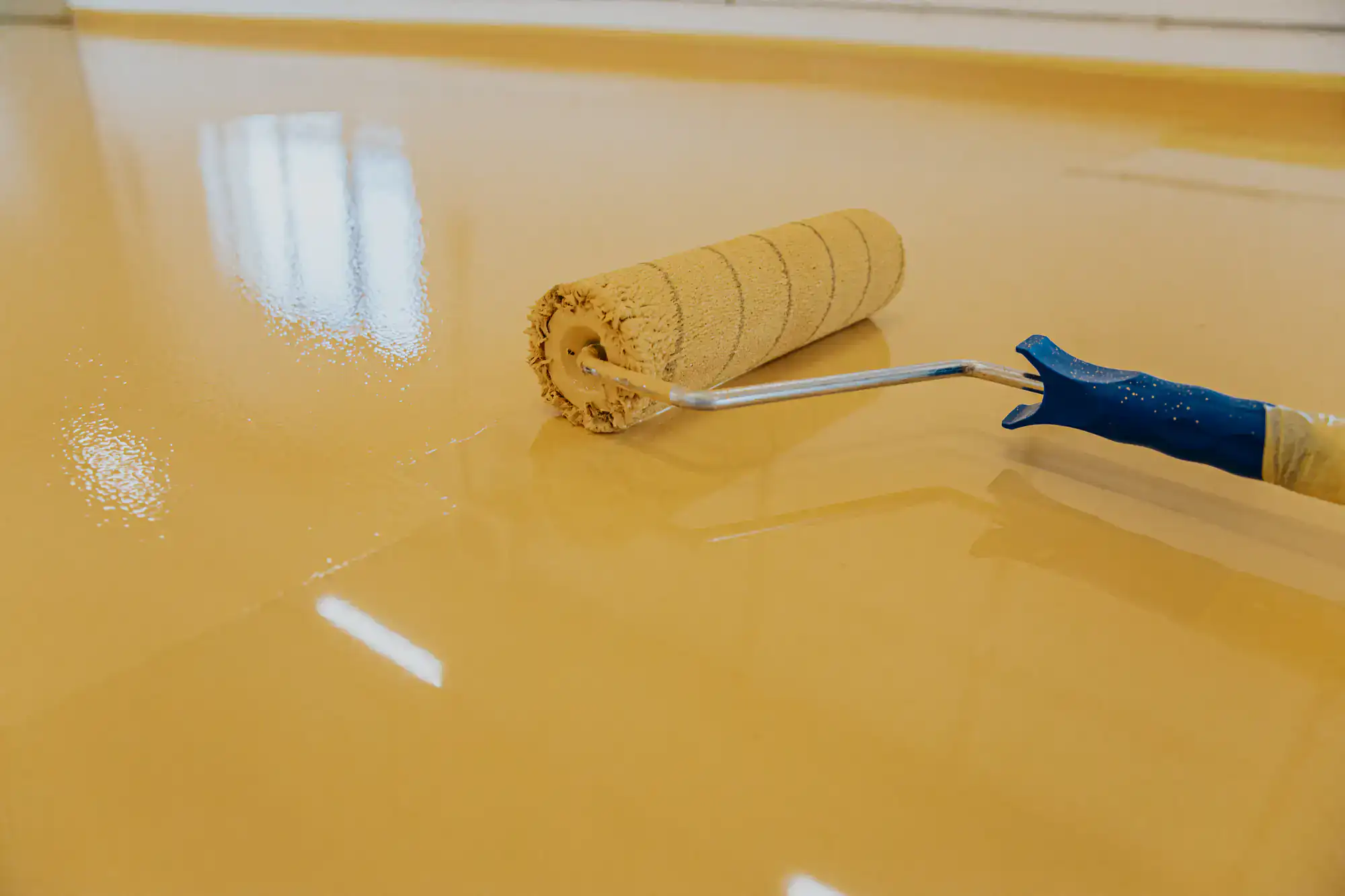
Every installation we perform includes the full preparation process: moisture testing, diamond grinding, crack repair, and a multi-layer coating system with proper cure between coats. The topcoat is typically a polyaspartic or urethane finish that adds UV stability, abrasion resistance, and long-term durability. If your facility is in the middle of a renovation especially with the current build-out activity happening along New York Avenue this is the window to get the floor right before tenants or equipment move in.
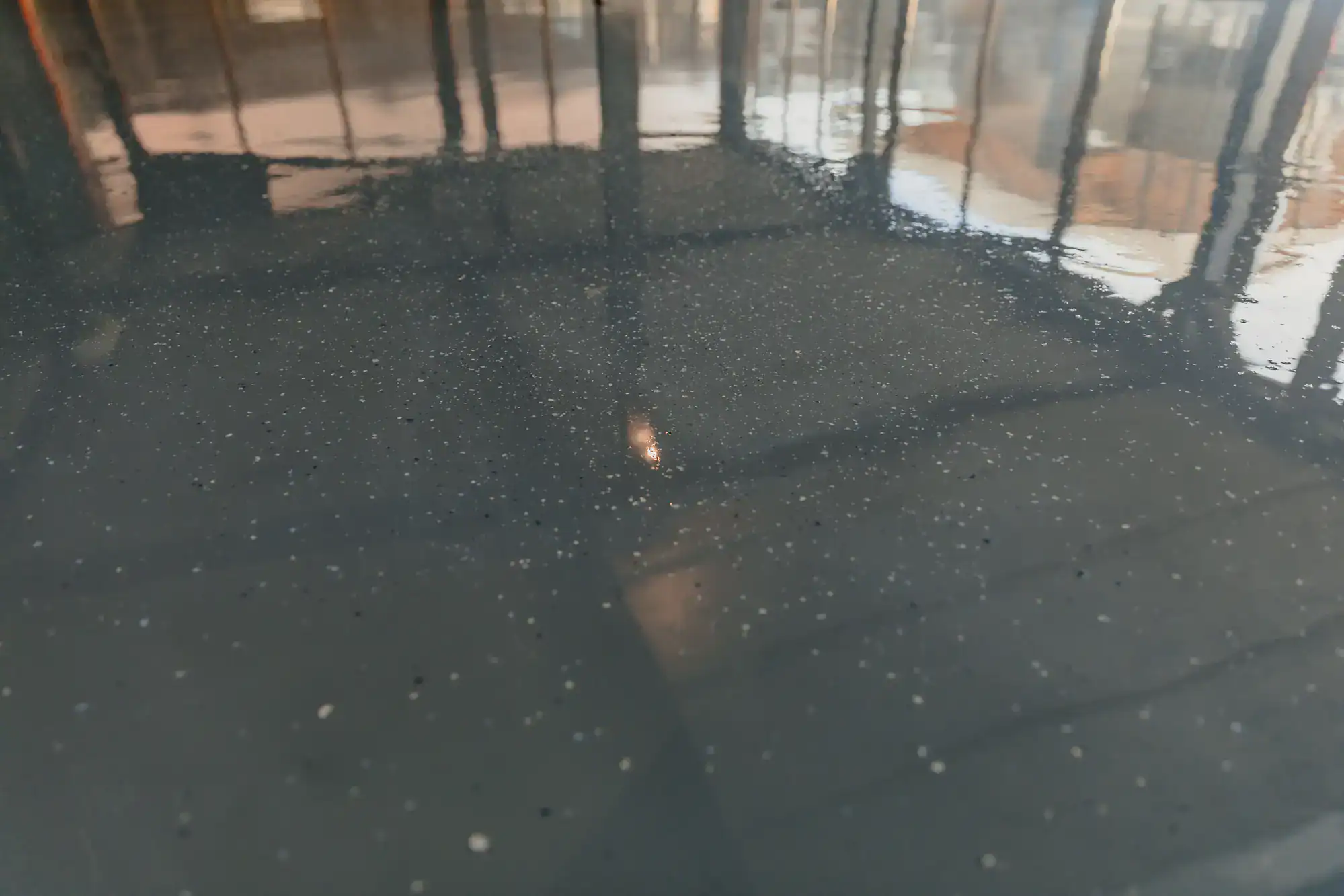
The most common reason is moisture and it’s a problem that’s particularly relevant in Huntington Station. The area gets around 45 inches of rain annually, sits on a documented high water table, and the coastal proximity keeps humidity elevated for much of the year. When moisture vapor pushes up through a concrete slab and there’s no mitigation layer in place, it breaks the bond between the epoxy and the concrete. The result is bubbling, blistering, or full delamination sometimes within months of installation.
The second most common reason is inadequate surface preparation. Most of Huntington Station’s commercial buildings were built between 1930 and 1960. Those slabs need diamond grinding to open the concrete surface and create the profile that allows epoxy to bond correctly. Contractors who skip grinding or who use inadequate methods like acid etching alone are setting the floor up to fail regardless of what product they use. Proper prep and moisture assessment before installation are what separate a floor that lasts 20 years from one that needs replacing in three.
A properly installed commercial epoxy flooring system in a typical Huntington Station facility warehouse, service bay, commercial kitchen should last 15 to 20 years with routine maintenance. That estimate assumes the floor was installed on a correctly prepared slab, with moisture testing done beforehand and a multi-layer system applied at the right thickness for the facility’s load and use profile.
The lifecycle cost math is worth doing. A professional industrial installation at $7 to $12 per square foot, lasting 20 years, runs roughly $0.35 to $0.60 per square foot per year. A cheaper installation at $3 per square foot that fails in three years costs over $1 per square foot per year plus the cost of removal and reinstallation on top of that. For a 5,000-square-foot floor, the difference over a decade is significant. In a market like Huntington Station, where businesses along the Route 110 corridor and the DRI revitalization zone are making real investment decisions, that math matters.
Yes but the preparation requirements are more involved than with newer construction. Most commercial buildings in Huntington Station were built between 1930 and 1960, which means concrete slabs that are 60 to 90 years old. These slabs often have surface degradation, existing cracks, and a history of moisture infiltration that needs to be assessed and addressed before any coating system goes down.
The process starts with a thorough slab evaluation checking for structural cracks, surface porosity, and moisture vapor transmission. We use diamond grinding to remove surface contaminants and create the correct concrete surface profile for adhesion. Cracks are repaired with the appropriate filler material before the coating system is applied. In some cases, a cementitious urethane underlayment is needed to level the surface before the epoxy goes down. None of this is unusual for the building stock in Huntington Station it’s just what the work actually requires, and it’s the part most contractors skip or rush through.
For food service operations in Huntington Station whether you’re on New York Avenue or anywhere in the broader commercial district USDA compliance means your floor needs to be seamless, non-porous, slip-resistant, and easily cleanable. Grout lines, seams, and surface texture that traps debris are not compliant. The system that meets these standards is a seamless resinous floor coating, typically a 100% solids epoxy base with a urethane or polyaspartic topcoat that handles thermal shock from steam cleaning and high-pressure washdowns without cracking or lifting.
The floor also needs to handle the specific demands of a working kitchen: dropped equipment, heavy rolling stock, standing water, and cleaning chemicals used on a daily cycle. We install USDA-compliant commercial kitchen systems and can schedule installation overnight so your kitchen doesn’t miss a service. The floor is applied, cured to traffic-ready condition, and our crew is out before your staff arrives. Health inspectors check these floors making sure yours meets the standard before they do is a straightforward way to avoid a problem.
Humidity affects epoxy installation in two ways: during the application and during the cure. Epoxy should not be applied when relative humidity exceeds 85% at that level, moisture can condense on the concrete surface and interfere with adhesion, causing the coating to cloud, blister, or fail to bond correctly. On Long Island’s north shore, summer humidity regularly approaches or exceeds that threshold, which means scheduling matters more here than it does in drier climates.
Spring and fall are generally the optimal installation windows for spaces that aren’t climate-controlled unheated warehouses, apparatus bays, or facilities with limited HVAC. For climate-controlled spaces, installation can happen year-round as long as the slab temperature and ambient humidity are within spec. We check these conditions before starting work taking a risk with your floor by ignoring environmental specifications isn’t how we operate. Part of the pre-installation assessment is confirming that conditions are right for the specific system being applied, and if they’re not, we adjust the schedule or the product selection accordingly.
Start with surface preparation specifically, ask whether they diamond grind and whether they test for moisture before installation. In Huntington Station, those two questions will tell you most of what you need to know. A contractor who doesn’t test for moisture on Long Island slabs especially in buildings built before 1970 is skipping the step most likely to determine whether your floor lasts or fails. If they’re not grinding the surface, they’re not creating the profile the epoxy needs to bond correctly.
Beyond prep, ask about certifications. Manufacturer-backed credentials like Sherwin-Williams High Performance Flooring certification aren’t just paperwork they mean the installer has been trained on the advanced systems used in commercial and industrial environments, not just the products sold at a home improvement store. Ask who will actually be doing the work, and whether they use their own crews or subcontractors. Ask for references from facilities similar to yours a warehouse reference doesn’t tell you much about a healthcare floor installation, and vice versa. These aren’t difficult questions, and a contractor who’s done this work at a professional level will answer them without hesitation.
Other Services we provide in Huntington Station