
Glen Cove recorded over nine inches of rain in a single day in August 2024. That kind of event doesn’t just flood streets it saturates concrete slabs, raises the water table, and creates the exact conditions that cause epoxy floors to bubble, delaminate, and fail within a year. The difference between a floor that survives that and one that doesn’t comes down to one thing: whether someone tested your slab for moisture before they poured a drop of coating on it.
When we install epoxy flooring correctly, you stop replacing it. A properly specified industrial epoxy system in a commercial kitchen on School Street, a warehouse along the Glen Cove Creek corridor, or a healthcare facility serving the city’s growing senior population should last 10 to 20 years without significant intervention. That’s not a sales pitch it’s basic math. A $7 to $12 per square foot installation that holds for two decades costs less per year than a $3 system you’re ripping out and redoing every 18 months.
The other outcome that matters to most Glen Cove business owners is time. Whether you’re running a restaurant in the downtown BID or managing a facility at the new Garvies Point commercial development, you can’t shut down for three days while a floor cures. We install overnight, hand the space back in the morning, and you open on schedule. That’s what this should look like when it’s done right.
Advanced Epoxy Flooring has been installing commercial and industrial epoxy systems across Nassau and Suffolk Counties for over 35 years. We’re led by Danny Harmer, who has personally installed floors for more than four decades including the White House kitchen in 1996, a floor that is still performing today. That’s not a talking point. It’s a verifiable, 30-year-old installation that speaks for itself.
Our crew has been together for over a decade, which matters more than most people realize. Institutional knowledge doesn’t transfer to a rotating roster of subcontractors. When the same team has worked together on hundreds of commercial jobs across Long Island from healthcare facilities in Nassau County to industrial tenants in Suffolk we know what to look for before the first grinder hits the floor. We’ve installed systems in Glen Cove’s downtown corridor, along the Glen Cove Creek industrial zones, and throughout the Garvies Point commercial development, which means we understand the specific moisture and environmental challenges this city presents.
We hold Sherwin-Williams High Performance Flooring certification and Res Tech certification, both manufacturer-backed credentials that go well beyond a general contractor’s license. Our installers are OSHA 40 certified. We’re BBB Accredited with an A+ rating and no complaints on record across more than three decades of operation. In a fragmented industry full of franchise kits and generalist contractors, that track record is the difference.
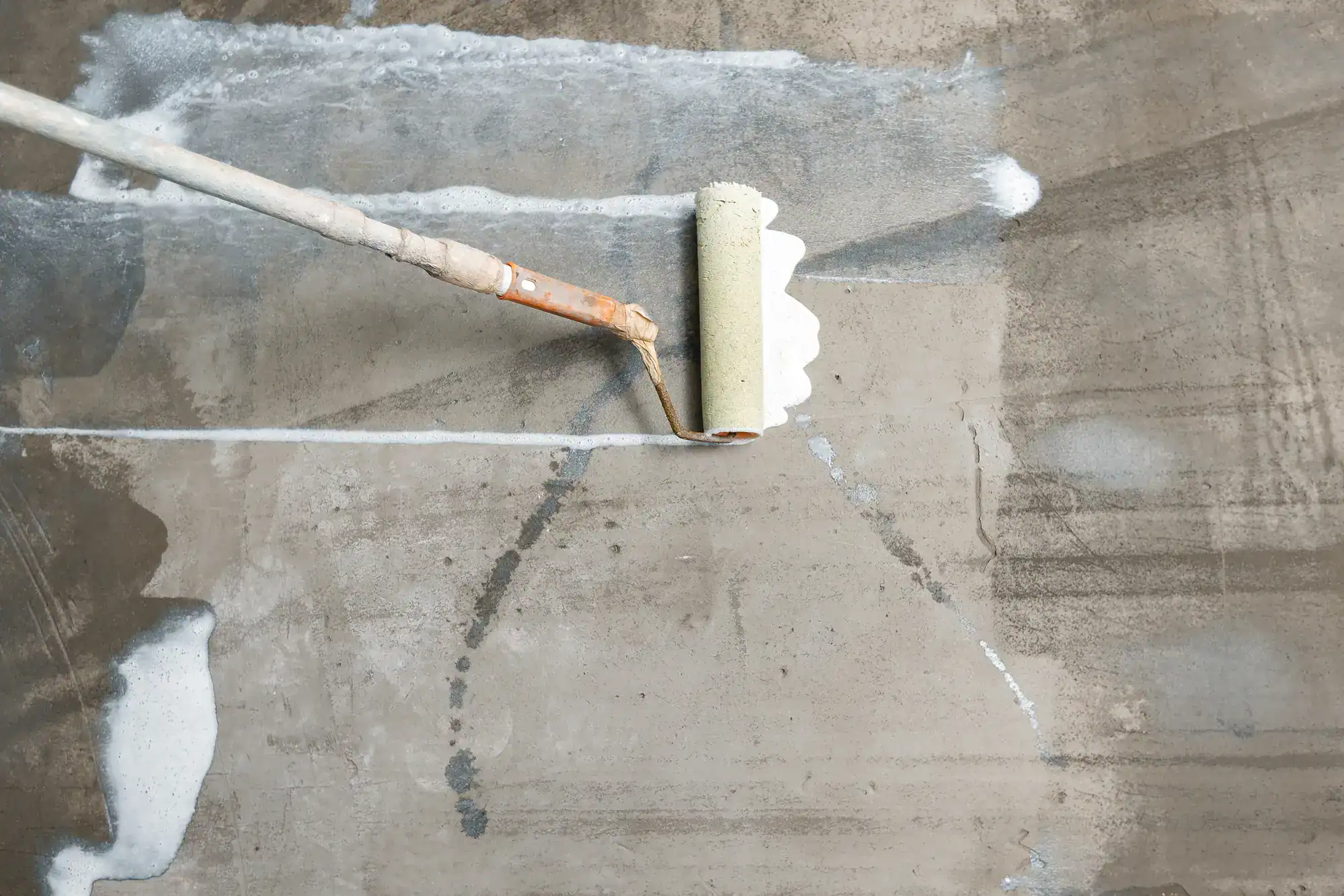
Every project starts with a slab assessment. In Glen Cove specifically, that means testing for moisture vapor transmission before anything else happens. The city’s coastal position, high water table, and documented flooding history make this a non-negotiable first step not a formality. If a contractor skips it, they’re specifying a system blind, and you’re the one who pays when it fails.
Once the slab is assessed, surface preparation begins. This means diamond grinding not acid etching. Acid etching is cheaper and faster, and it produces inconsistent results that compromise adhesion. Diamond grinding creates the mechanical surface profile that allows epoxy to bond at the level it needs to in order to handle real commercial loads, chemical exposure, and thermal cycling. This step accounts for the majority of what determines whether a floor lasts or fails, and it’s where most cheap installations cut corners.
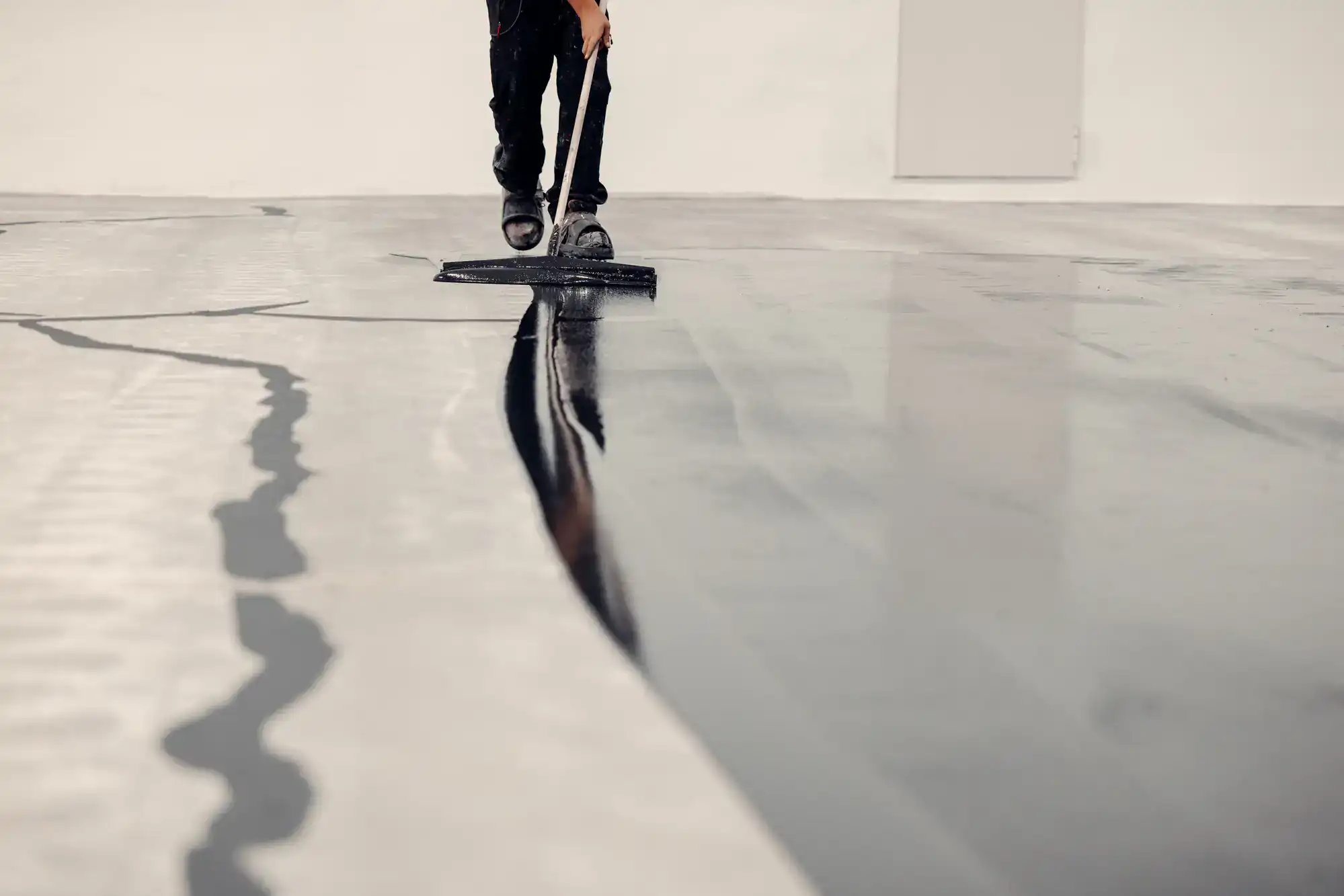
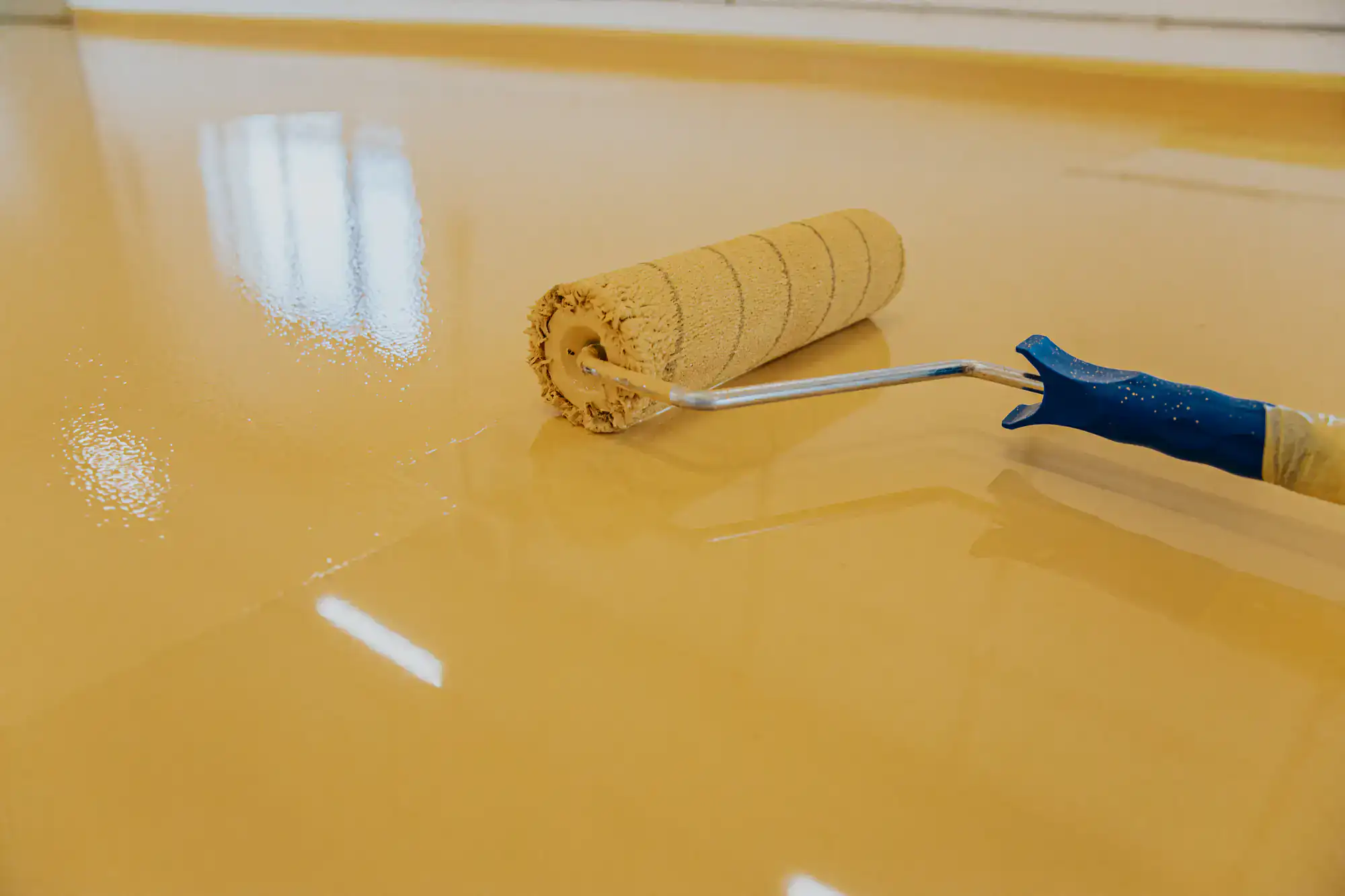
From there, we build the system up in properly cured layers primer, base coat, broadcast aggregate if specified, and a topcoat matched to the specific demands of the environment. A commercial kitchen in the downtown corridor gets a USDA-compliant, thermally shock-resistant system. A warehouse in the Glen Cove Creek industrial zone gets a 1/4-inch trowel-down mortar system rated for forklift loads. A healthcare facility gets seamless antimicrobial epoxy that meets FGI and ADA requirements. The system is always specified to the use not pulled off a shelf. Because Glen Cove operates as an independent city with its own Building Department and permitting process separate from Nassau County towns, we’re familiar with what documentation commercial projects here require and prepared to support that process from the start.
Ready to get started?
Glen Cove’s commercial landscape is more varied than most Long Island towns. You’ve got active restaurants along School Street and Glen Street, new commercial tenants coming into Garvies Point, healthcare offices serving a growing senior population in an AARP-designated Age Friendly Community, auto shops, light industrial operations along the Glen Cove Creek corridor, and a downtown retail district that’s been actively reinvesting in its spaces. Each of those environments has completely different flooring demands.
For commercial kitchens, we specify USDA-compliant, thermally shock-resistant systems, installed with a hygienic cove base that meets health department standards. For warehouses and industrial facilities, we build heavy duty industrial epoxy floor systems designed to handle forklift axle loads exceeding 10,000 lbs and chemical exposure from oils and hydraulic fluids. For healthcare and medical offices, we install seamless antimicrobial epoxy with ADA-compliant slip resistance. For retail and commercial spaces including the new buildout at Garvies Point we specify high traffic commercial epoxy systems for appearance, durability, and ease of maintenance from opening day forward.
We offer chemical resistant epoxy finishes across all verticals where exposure to cleaning agents, fuels, or industrial chemicals is a factor. Every system includes a polyaspartic topcoat option for faster cure times and enhanced UV stability which matters in spaces with significant natural light exposure. If you’re opening a new business, renovating an existing space, or managing a facility that’s been dealing with a floor that wasn’t specified correctly for its environment, the starting point is a conversation about what your space actually demands not a quote based on square footage alone.
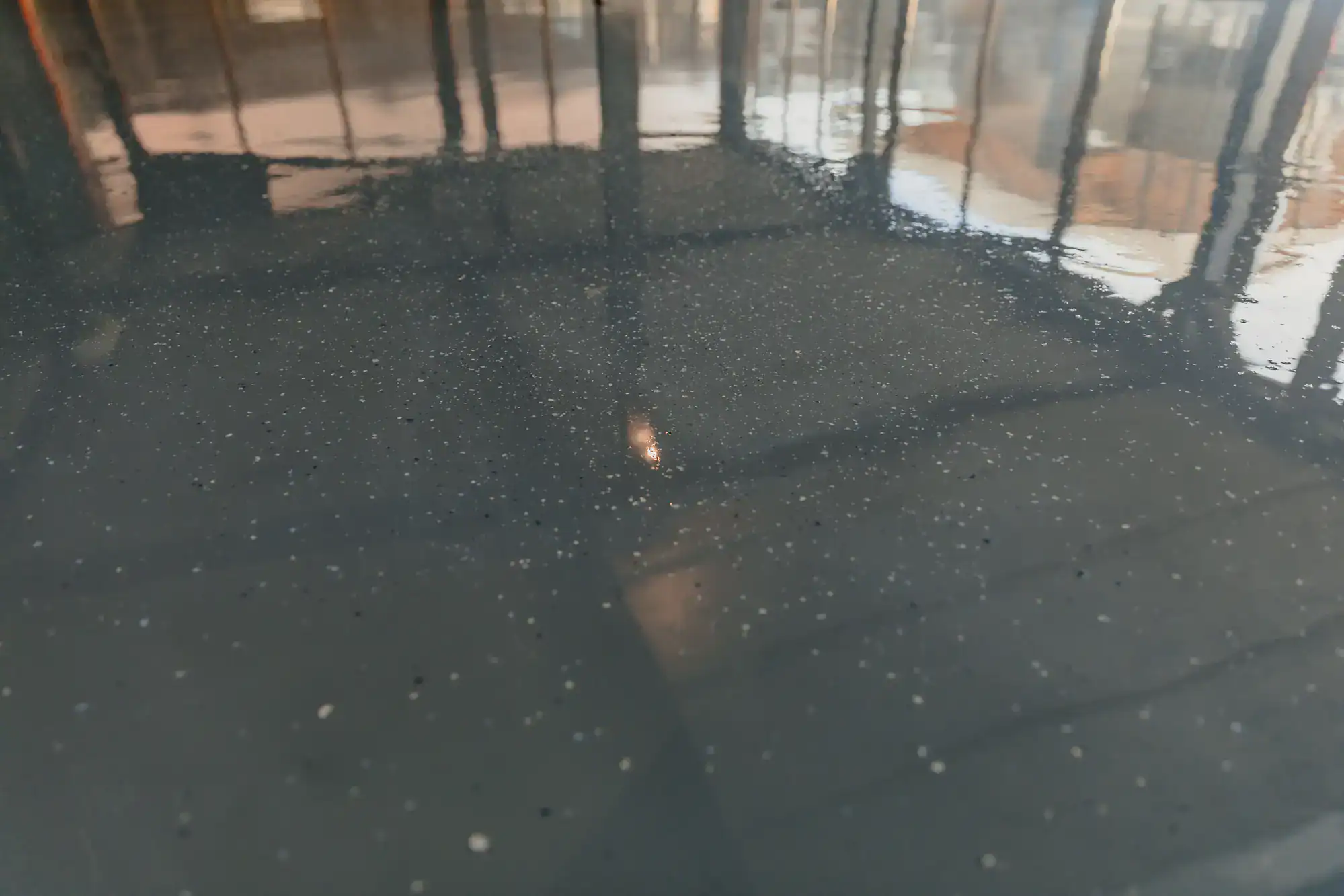
The short answer is moisture. Glen Cove sits surrounded by water on three sides Hempstead Harbor to the west and Glen Cove Creek running through the commercial and industrial zones. The city’s soil conditions, shaped by its coastal geography, tend toward high water tables and poor drainage. That creates elevated hydrostatic pressure against concrete slabs, which drives moisture vapor upward through the slab even when the surface looks and feels dry.
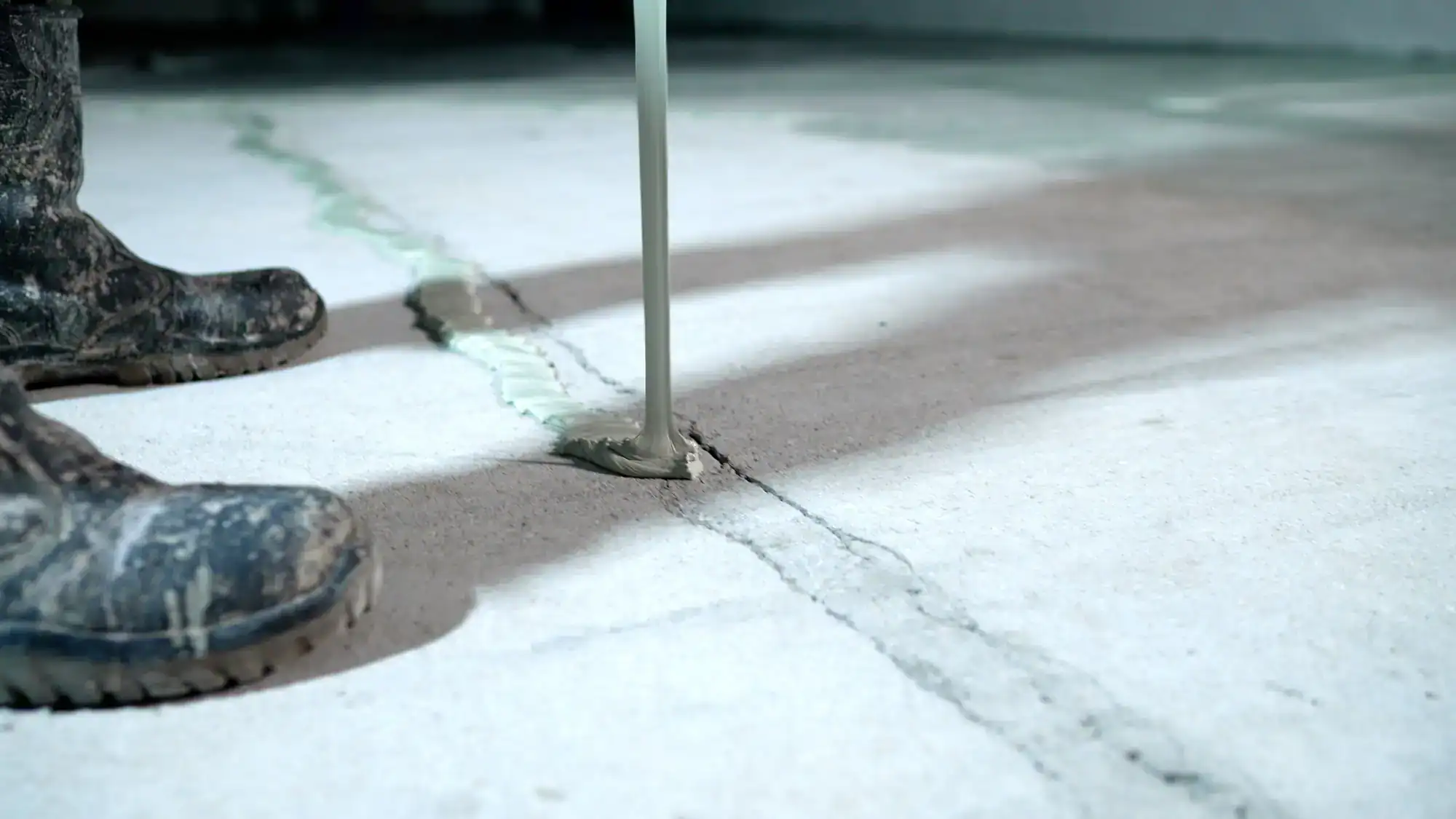
When an epoxy coating is applied over a slab with uncontrolled moisture vapor transmission, the coating loses adhesion from below. It bubbles. It peels. It delaminates. The floor looks fine for a few months and then falls apart. This isn’t a product failure it’s an installation failure that starts before the first coat is ever applied. The fix is straightforward: test every slab for moisture content and vapor emission rate before specifying the system. If the numbers are elevated, we address it with a moisture-tolerant primer or a vapor barrier system before the coating goes down. Skipping that step in a city with Glen Cove’s water table is how you end up replacing a floor two years after you installed it.
For a properly specified commercial or industrial epoxy system, you’re typically looking at $7 to $12 per square foot installed. The range depends on the system type a basic high-traffic commercial epoxy for a retail space sits toward the lower end, while a full cementitious urethane mortar system for a commercial kitchen or a 1/4-inch trowel-down industrial system for a warehouse sits toward the higher end. Surface condition, square footage, and any required prep work for moisture mitigation also affect the final number.
In a market like Glen Cove, where commercial real estate values and renovation costs are well above the national average, the lifecycle math matters more than the upfront number. A system installed at $10 per square foot that holds for 15 years costs roughly $0.67 per square foot per year of service. A system installed at $4 per square foot that fails in 18 months and requires removal and reinstallation costs significantly more per year plus the operational disruption of a second installation. Glen Cove business owners generally understand this calculation. The question isn’t which floor is cheapest. It’s which floor you won’t have to think about again for the next decade.
Yes and for most restaurant owners in Glen Cove’s downtown corridor, overnight installation is our standard approach. The process works like this: your kitchen closes at the end of service, our crew comes in, grinds the floor, applies the system in properly cured layers, and is finished before your morning prep begins. Polyaspartic topcoats, which cure significantly faster than traditional epoxy, make this timeline achievable on most commercial kitchen floors.
There are a few conditions that affect the timeline. If the slab has significant moisture issues which is a real possibility in older buildings along School Street or Glen Street given Glen Cove’s water table a moisture mitigation primer may need additional cure time before the finish coats go down. That’s rare but worth knowing upfront. The other factor is temperature: epoxy and polyaspartic systems shouldn’t be applied below 50°F or above 90°F, and humidity above 85% creates application risks. Glen Cove’s summer humidity can push those limits, which is why fall tends to be the most reliable installation season. But with a properly climate-controlled kitchen environment, year-round installation is generally achievable regardless of outdoor conditions.
Diamond grinding uses industrial equipment fitted with diamond-tipped abrasives to mechanically profile the concrete surface essentially creating microscopic peaks and valleys that give the epoxy something to grip at a structural level. It removes surface contaminants, opens the pores of the concrete, and produces a consistent, measurable surface profile. It’s the industry standard for commercial and industrial epoxy installations, and it’s what we use on every job.
Acid etching uses a chemical solution typically muriatic acid to dissolve the surface layer of concrete and create a profile. It’s faster, cheaper, and significantly less reliable. The profile it creates is inconsistent, it doesn’t remove oil contamination or existing coatings effectively, and it leaves residue in the concrete that can interfere with adhesion. In a coastal environment like Glen Cove, where slab moisture is already a variable that requires careful management, starting with an inconsistent surface profile from acid etching compounds the risk. If a contractor quotes you a commercial or industrial floor and mentions acid etching as their prep method, that’s a meaningful red flag. The prep step accounts for 70 to 80 percent of what determines whether the floor lasts or fails it’s not the place to save money.
For most epoxy flooring installations applying a coating to an existing concrete slab a standalone building permit is not typically required. The work is a surface treatment, not a structural modification. That said, Glen Cove operates as an independent city with its own Building Department, which enforces the New York State Uniform Fire Prevention and Building Codes at the city level. This is different from most other Nassau County communities, which are governed through town-level permitting processes.
Where permits do become relevant is when epoxy flooring is part of a larger renovation or tenant improvement project particularly in commercial spaces at Garvies Point or in buildings along the downtown corridor that involve changes to use, layout, or systems. In those cases, the flooring work may be included in a broader permit application reviewed by Glen Cove’s Building Department directly. If you’re undertaking a larger commercial renovation and want clarity on what requires documentation, the Glen Cove Building Department offers consultative services for exactly that purpose. We’re familiar with the city’s permitting process and can help you understand what applies to your specific project before work begins.
A properly installed commercial epoxy system meaning correct surface prep, moisture testing, appropriate system specification for the use, and quality materials typically lasts 10 to 20 years in a high-use commercial environment. Industrial floors in warehouses and manufacturing facilities with heavy forklift traffic sit toward the lower end of that range when loads are extreme; commercial kitchens, healthcare facilities, and retail spaces that are maintained correctly often reach the higher end.
The variables that shorten that lifespan are almost always installation-related, not product-related. A floor that was prepped with acid etching instead of diamond grinding, installed over an untested slab with active moisture vapor emission, or specified with a system that wasn’t designed for the actual load and chemical exposure of the environment that floor fails early. In Glen Cove’s coastal climate, with the moisture conditions that come with a city surrounded by water on three sides, those installation variables matter more than they would in an inland market. The floor you get from a franchise kit model or a generalist contractor who listed Glen Cove among 50 service areas is not the same floor you get from a crew that has been installing commercial and industrial systems across Nassau County for over 35 years and tests every slab before the work begins.