

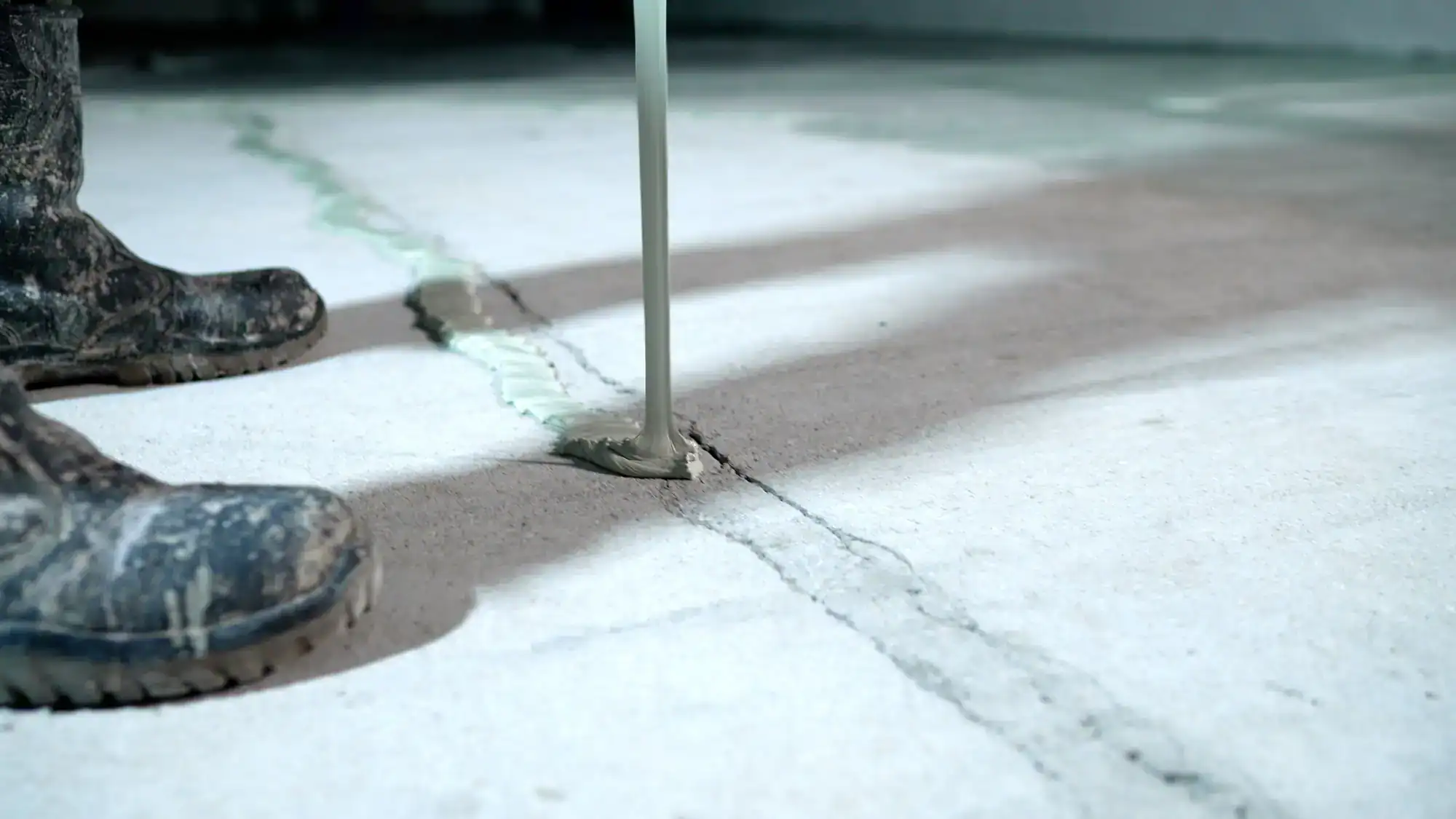
Most floors don’t fail because epoxy is a bad product. They fail because the slab wasn’t properly prepared before anything was applied. Commack’s commercial and industrial buildings many built during the postwar boom that followed the LIE and Northern State Parkway construction are sitting on concrete slabs that are 40 to 70 years old. That aging concrete has accumulated moisture cycling, micro-cracks, and in a lot of cases, no original vapor barrier. Skip the prep work on a slab like that, and you’re looking at a peeling floor within 18 months.
When the installation is done correctly, the difference is real and lasting. A properly installed commercial epoxy flooring system holds up under forklift traffic, resists the cleaning chemicals used in food service and healthcare environments, and stays sealed against the seasonal humidity swings that central Suffolk County sees every summer. You stop thinking about your floor which is exactly the point.
The lifecycle math is straightforward. A professional system installed at the right mil thickness, on a properly diamond-ground surface, with full cure time at each stage, can last 20 years with minimal maintenance. That’s a fraction of the annual cost of a budget system that fails and needs to be torn out and redone. For businesses operating along Jericho Turnpike or Veterans Memorial Highway, where every day of downtime has a real dollar figure attached to it, that math matters.
We’ve been installing commercial and industrial epoxy floors across Suffolk County since 1991. That’s not a marketing number it means our team has worked through every version of Long Island’s building stock, seasonal conditions, and commercial environment that exists. We’re based in Bohemia, which puts Commack within easy reach via the Long Island Expressway, and the crew that shows up to your facility has been with us for over a decade in most cases.
Danny Harmer, who leads our company, has 40-plus years of hands-on installation experience. In 1996, our team installed the epoxy floor in the White House kitchen. That floor has been in continuous use for nearly 30 years. When you’re evaluating epoxy floor coating contractors in Commack, that kind of documented track record is worth paying attention to.
We hold factory-level certifications from Sherwin-Williams High Performance Flooring and Res Tech, and all our installers are OSHA 40 certified. Our BBB Accreditation and A+ rating with zero complaints on record over three-plus decades reflects what consistent, professional work actually looks like over time.
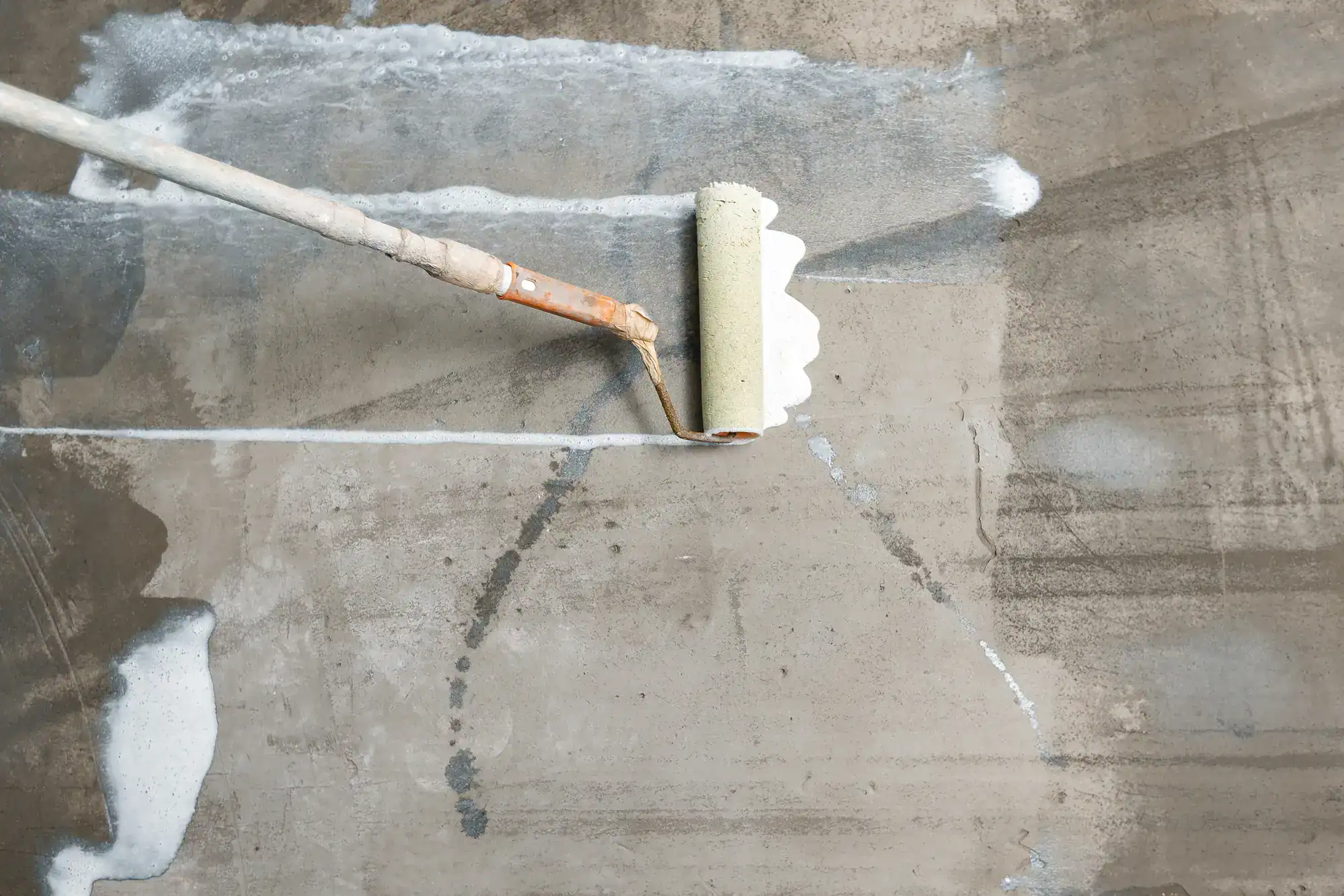
Before any product touches your floor, we assess the slab. That means moisture testing, crack mapping, and a surface profile evaluation. In Commack, where a large portion of the commercial building stock dates from the 1950s through the 1980s, this step is not optional. Summer humidity in central Suffolk County causes warm, moist air to condense on cool slab surfaces especially in large commercial buildings with uninsulated floor areas. If that moisture isn’t measured and accounted for before installation, it will cause problems after. Every project starts with this assessment because the system specification depends on what the slab actually shows, not what it looks like at a glance.
Once the slab assessment is complete and any moisture mitigation is built into the design, surface preparation begins. Diamond grinding opens the concrete to the correct surface profile so the epoxy bonds at a mechanical level, not just chemically. This is the step that separates a floor that holds for 20 years from one that starts delaminating in year two.
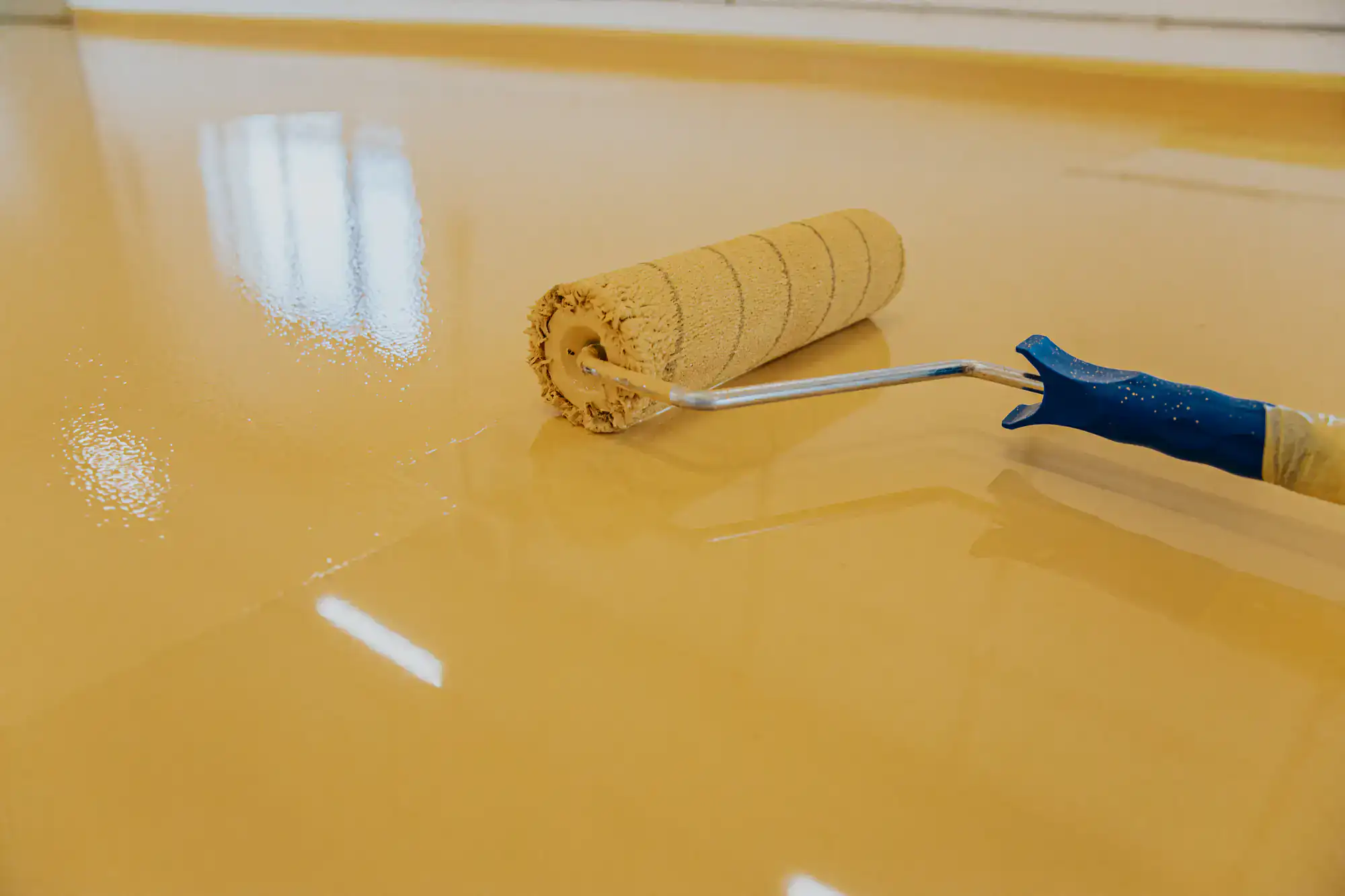
Application follows in multiple layers, with full cure time observed between each stage. The system we use whether that’s a 100% solids epoxy base, a cementitious urethane for heavy thermal shock environments like commercial kitchens, or a polyaspartic topcoat for UV-exposed areas is specified based on your environment, not a one-size-fits-all catalog pick. For facilities that can’t afford extended downtime, like the food service operations along Commack’s Jericho Turnpike corridor, we offer overnight installation scheduling so you’re open on time.
Ready to get started?
Not every floor gets the same treatment, and that’s by design. Commack’s commercial and industrial landscape is genuinely diverse defense manufacturing facilities like the EnerSys campus on Brayton Court, healthcare environments like Gurwin Healthcare System, high-traffic retail floors at Commack Plaza, and restaurant kitchens along Veterans Memorial Highway all have different performance requirements. A system that’s right for a warehouse floor is not the right system for a skilled nursing facility, and a residential garage coating has no business being installed in a food service environment.
For industrial environments warehouses, manufacturing facilities, distribution centers we focus on heavy duty industrial epoxy floors built for forklift traffic, impact resistance, and chemical exposure. These are 100% solids systems applied at the right mil thickness for the load demands of the space. For healthcare settings, we install seamless resinous floor coatings with antimicrobial additives that eliminate the surface irregularities where bacteria accumulate and meet the FGI and ADA compliance requirements that facilities like Gurwin are held to. For commercial kitchens and food service operations, we specify USDA-compliant, thermal-shock-resistant systems that pass Suffolk County Department of Health inspections.
We offer chemical resistant epoxy finishes for manufacturing and laboratory environments where solvent, acid, or caustic exposure is part of the daily operation. High traffic commercial epoxy systems for retail corridors are specified for appearance durability as well as load performance because your customers see that floor every day. Whatever the environment, we match the system to the actual demands of the space, not pulled off a standard menu.
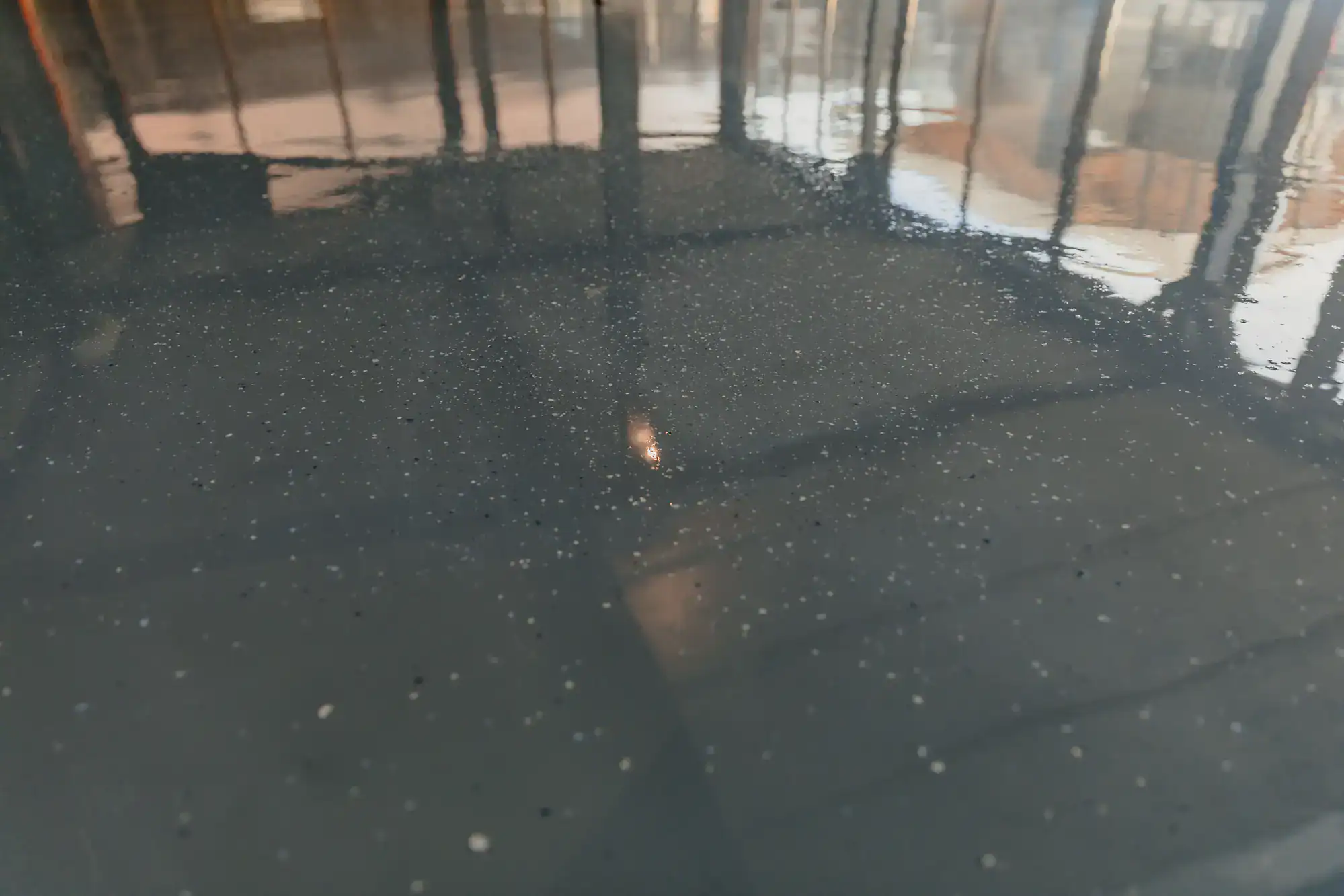
The honest answer is that you don’t know until it’s tested and neither do we without assessing the slab first. Commack’s commercial building stock includes a large number of structures built between the 1950s and 1980s, which means many slabs were poured without adequate vapor barriers and have decades of moisture cycling built into them. A slab that looks solid and dry to the eye can still be transmitting moisture vapor at a rate that will cause an epoxy coating to delaminate within months of installation.
Our assessment process involves calcium chloride or relative humidity probe testing to measure moisture vapor emission, a visual and physical crack inspection, and a surface profile evaluation to determine what preparation is needed. If moisture levels are above the threshold for a standard epoxy system, we build a moisture mitigation layer into the specification before any coating goes down. This is standard practice for a professional installation and should be part of any quote you receive if a contractor skips this step, that’s a significant red flag.
The gap is bigger than most people expect. Consumer-grade garage floor kits use water-based epoxy formulations that are typically 40 to 50 percent solids meaning nearly half of what you’re applying evaporates during cure. The dry film thickness you’re left with is minimal, and the bond to the concrete depends almost entirely on chemical adhesion rather than mechanical profile. On an aging slab, or in any environment with real traffic or chemical exposure, that system will fail.
Our commercial epoxy flooring systems use 100% solids formulations applied to a diamond-ground surface. The mechanical profile created by grinding gives the epoxy something to grip at a structural level. The result is a system that’s measured in real mil thickness, bonds properly to the substrate, and is engineered for the load and chemical demands of a commercial or industrial environment. For businesses in Commack operating in food service, healthcare, retail, or manufacturing, the performance difference between a professional system and a consumer kit shows up quickly usually within the first year of operation.
Timeline depends on the size of the space, the condition of the slab, and the system being installed. A straightforward commercial installation in a Commack retail or restaurant space can often be completed overnight or across a weekend, which means you’re operational again before the next business day. Larger industrial projects warehouse floors, multi-zone manufacturing facilities are typically phased so portions of the facility remain accessible while work progresses in other areas.
The slab assessment and preparation phase is where most of the schedule variability comes from. If moisture mitigation is needed, or if significant crack repair is required before coating, that adds time to the front end of the project. This is why the pre-installation assessment matters: it surfaces those issues before the job starts, not midway through, so the schedule can be planned accurately. For facilities along Commack’s commercial corridors where downtime is a real cost, that upfront clarity is part of the value of working with an experienced contractor.
Yes but slip resistance is a specification decision, not a default. The topcoat we use on a commercial epoxy system can be formulated with aggregate additives that increase the coefficient of friction to meet ADA requirements and the specific standards required by the Suffolk County Department of Health for food service environments. The level of texture is adjustable based on the environment: a commercial kitchen needs more aggressive slip resistance than a retail showroom floor, and both need more than a residential garage.
For healthcare facilities in Commack like Gurwin Healthcare System, slip resistance is also a patient safety and liability issue, and the specification needs to meet FGI guidelines as well as ADA requirements. For restaurant and food service operators, the seamless, non-porous surface of a properly installed epoxy system is what allows the floor to pass health inspections there are no grout lines, no surface irregularities, and no areas where food debris or bacteria can accumulate. The system is specified to meet the regulatory environment of your specific facility type.
For a professionally installed commercial epoxy flooring system in Commack, you’re generally looking at a range of $7 to $12 per square foot, depending on the system type, the condition of the existing slab, and any specialty requirements like antimicrobial additives, ESD properties, or moisture mitigation. Industrial systems with heavier build requirements or specialty chemical resistance can run higher. Residential garage floors typically fall in a lower range.
The more useful number is cost per year of service. A professional system at $10 per square foot that performs for 20 years costs $0.50 per square foot annually. A budget system at $3 per square foot that fails in 18 months and requires removal and reinstallation costs significantly more per year and that’s before you factor in the business disruption of a second installation. In Commack’s commercial market, where average rents run nearly $30 per square foot and downtime has a real dollar value attached to it, the lifecycle cost argument is the one that matters most when you’re comparing quotes.
General flooring contractors are skilled at what they do tile, hardwood, LVP, carpet. Resinous flooring systems are a completely different discipline. The chemistry of epoxy, the surface preparation requirements, the moisture science, the system selection for specific environments these are things that require specific training and hands-on experience to get right. A general contractor who installs epoxy occasionally is working from a much shallower knowledge base than a contractor whose entire operation is built around resinous systems.
Factory certifications from manufacturers like Sherwin-Williams High Performance Flooring and Res Tech exist specifically because the systems are complex enough that the manufacturers want trained installers applying their products. Those certifications require actual factory training in the correct application of commercial and industrial resinous systems not a one-day orientation. For businesses in Commack operating in regulated environments like healthcare, food service, or defense manufacturing, a certified installer isn’t just a preference it’s the standard that the environment demands. It’s also the documentation your compliance file may require when a facility inspection comes around.