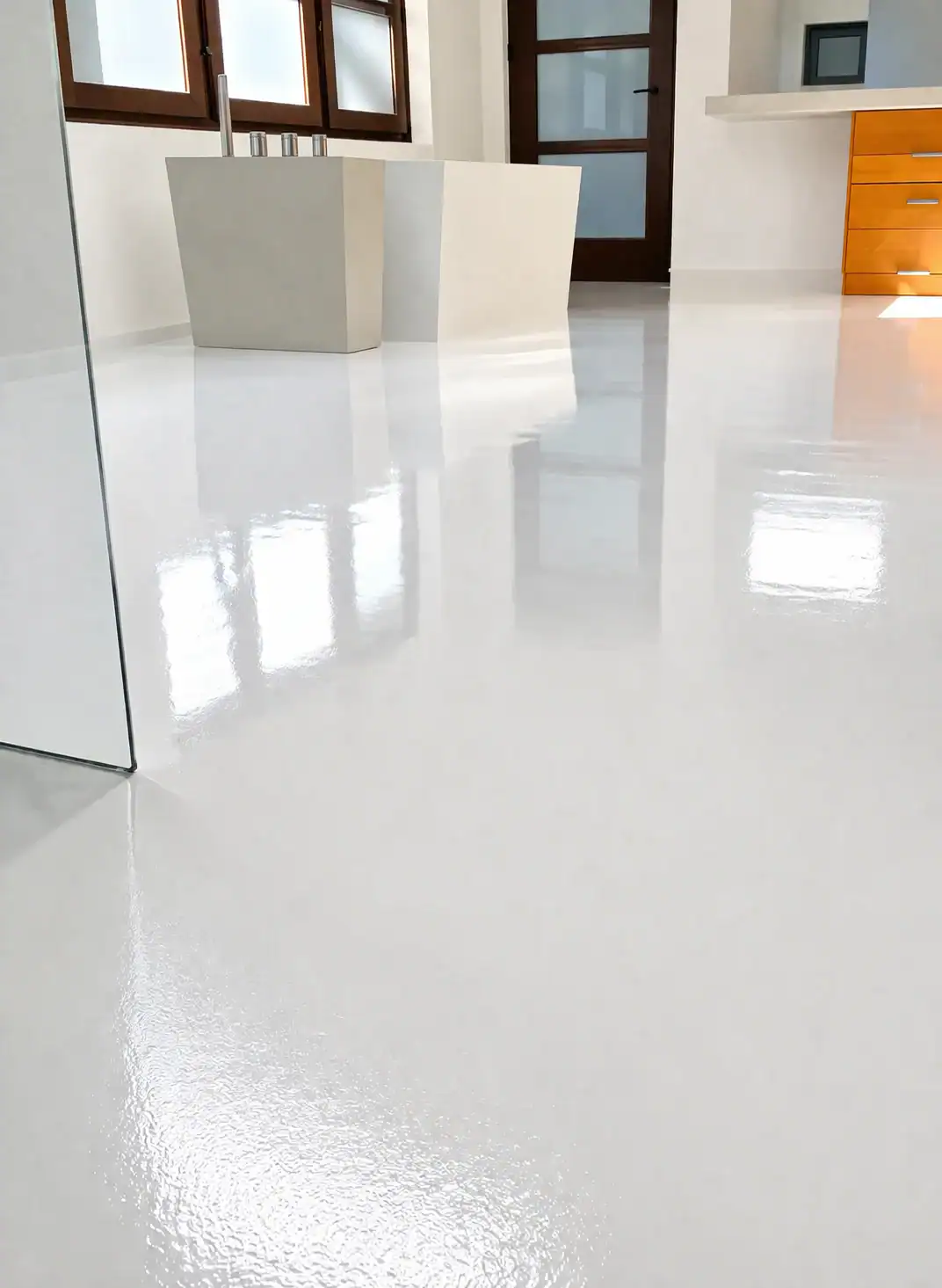
Not all floor coatings hold up the same way on Long Island. Here's what actually separates polyaspartic from traditional epoxy — and why it matters in Nassau County.
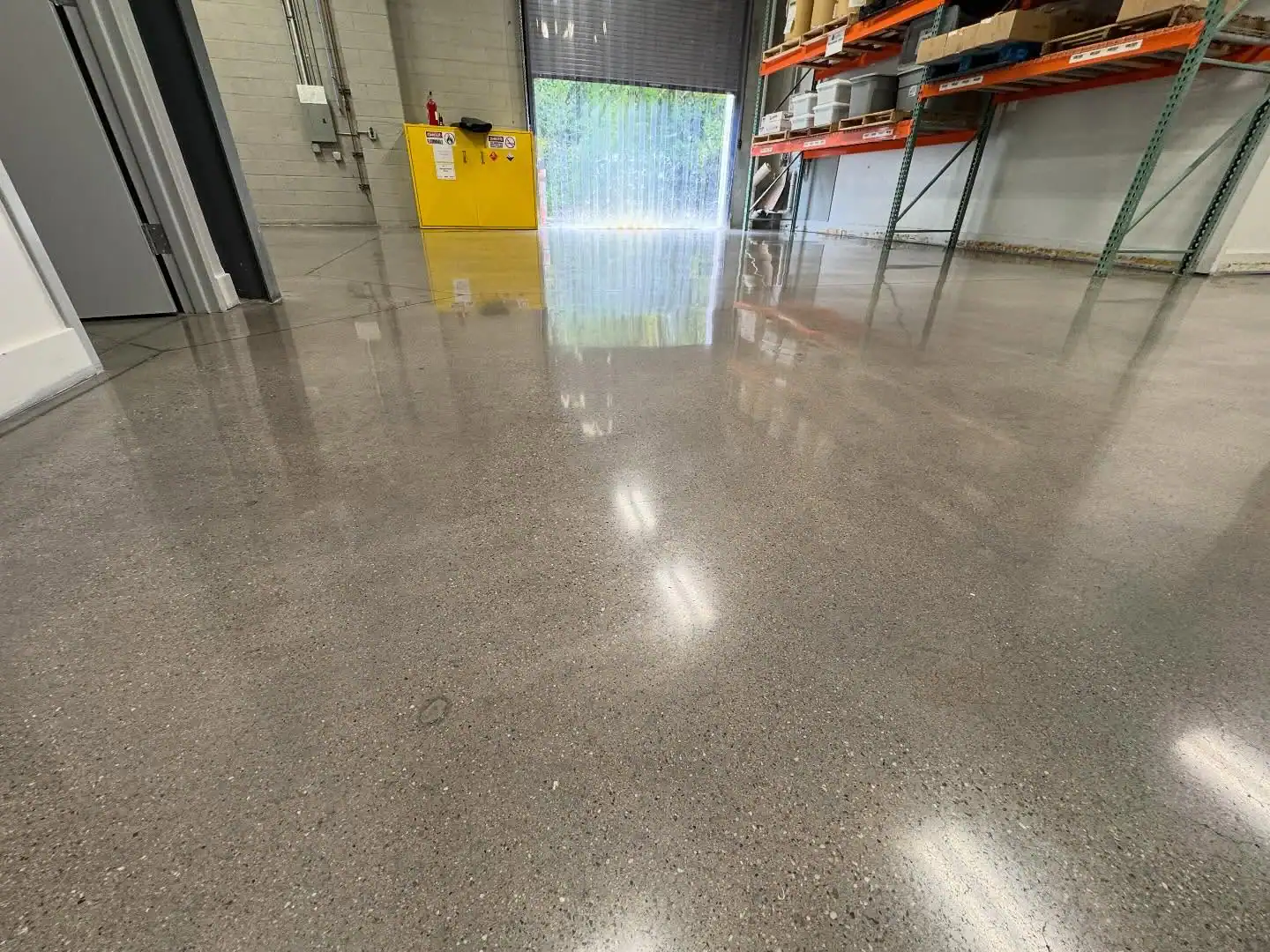
If your floor has peeled, chipped, or started looking rough within a year or two of being coated, you’re not alone — and it’s probably not a fluke. Most floor coating failures come down to one of two things: the wrong product for the environment, or surface prep that was rushed or skipped entirely. Nassau County throws a few extra variables into the mix — coastal humidity, older concrete slabs, road salt, freeze-thaw cycles — that make the coating decision more consequential than it might seem. This guide walks through how polyaspartic flooring and traditional epoxy actually compare, so you can make a call based on facts rather than whoever gave you the lowest quote.
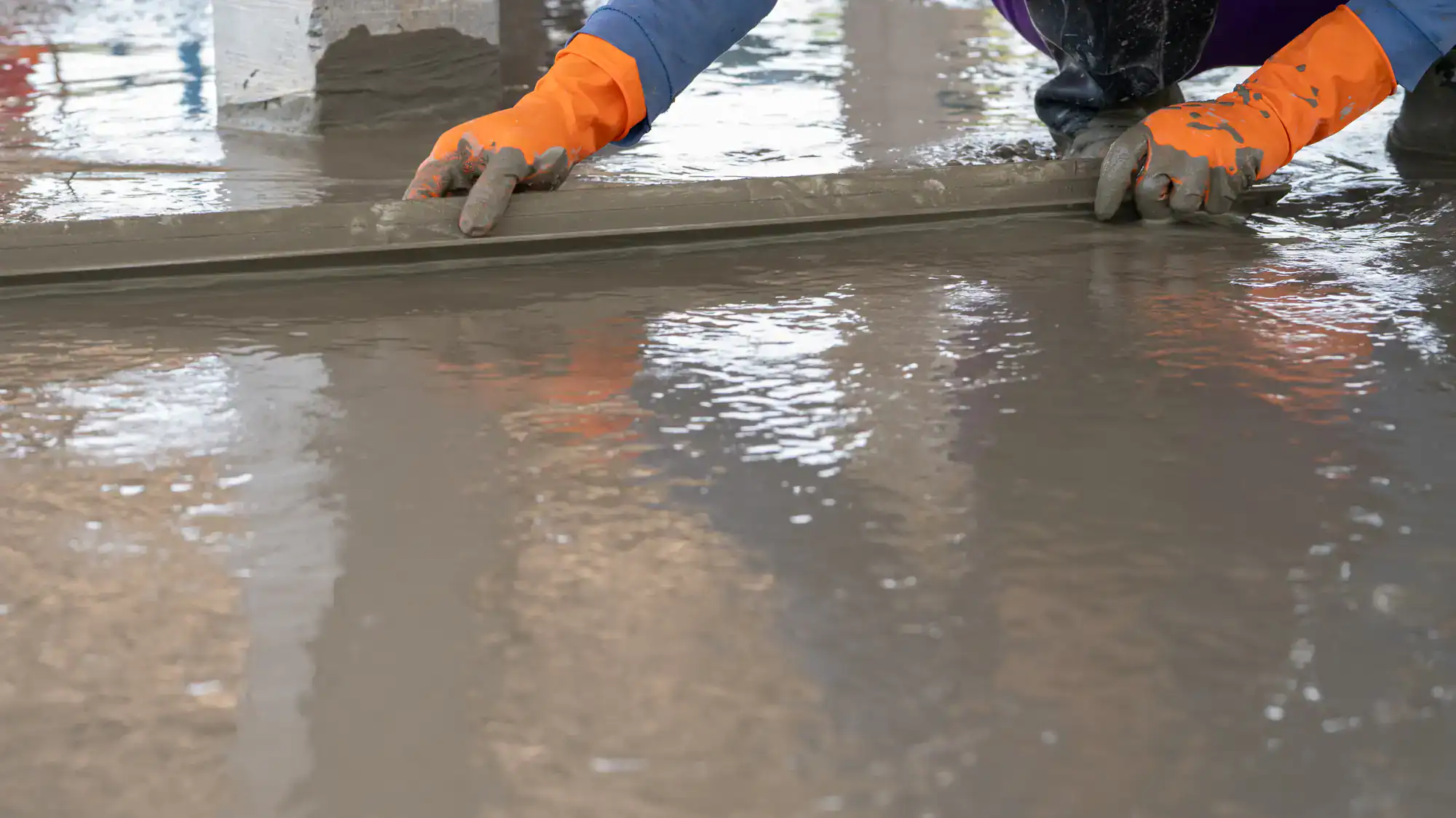
Polyaspartic and epoxy are both resinous flooring systems — meaning they chemically bond to concrete rather than sitting on top of it like paint. But that’s roughly where the similarity ends. Traditional epoxy is a two-part system that cures slowly, typically requiring 24 to 72 hours between coats and up to a week for full hardness. It’s strong, it bonds well, and it’s been the industry standard for decades. The problem is that it yellows under UV exposure, can’t be applied in cold temperatures, and is rigid enough that freeze-thaw cycles can cause cracking or delamination over time.
Polyaspartic is a type of polyurea — a different chemistry entirely. It cures in hours rather than days, holds up under direct sunlight without yellowing, and stays flexible enough to handle temperature swings without cracking. For Nassau County properties, those aren’t minor perks. They’re the difference between a floor that looks good in year one and one that still looks good in year ten.
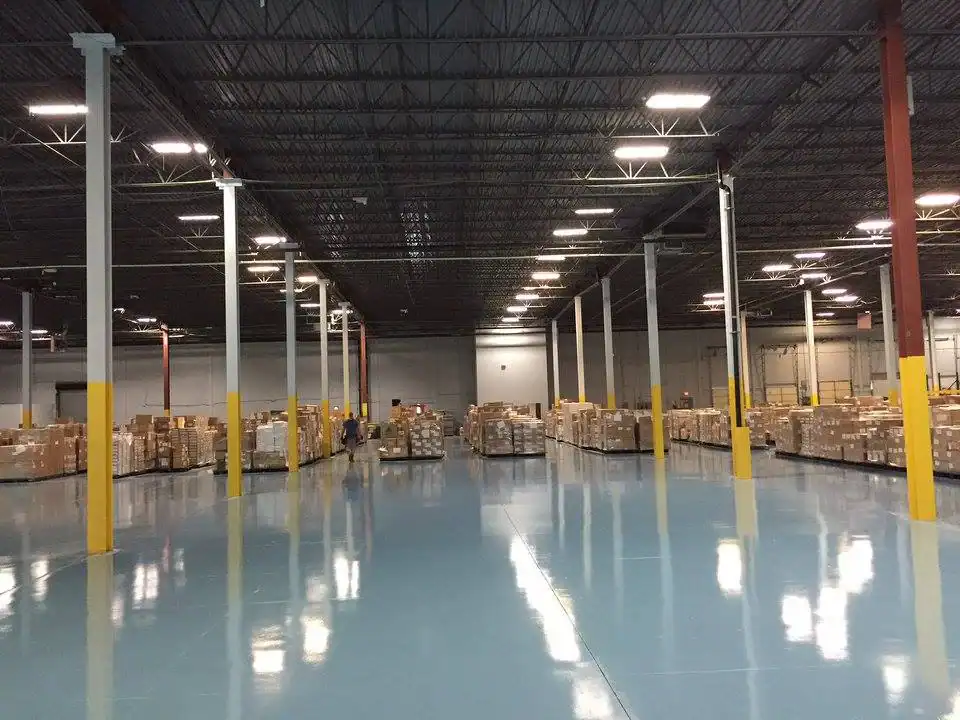
The fast cure time of polyaspartic coating is probably its most talked-about feature, but it’s worth understanding what that actually means beyond the marketing claim. When a traditional epoxy system is installed in a commercial space — a restaurant in Hempstead, an auto shop on Sunrise Highway, a warehouse near the Southern State Parkway — you’re typically looking at several days before the floor can handle foot traffic and a full week before it’s ready for vehicle or equipment loads. That’s real downtime with a real cost attached to it.
Polyaspartic systems can be ready for foot traffic the same day and ready for vehicles within 24 hours in most cases. For commercial operators in Nassau County who can’t afford to shut down for a week, that’s not a luxury — it’s a practical requirement. And for residential homeowners who want their garage back by the weekend, it matters just as much.
Here’s the part that surprises a lot of people: the fast cure isn’t a shortcut. It’s a function of the chemistry. Polyaspartic coatings actually cure to a harder surface than most standard epoxy systems, with Shore D hardness values typically in the 65–80 range. The trade-off is that the short working time — sometimes as little as 15 to 30 minutes depending on temperature and humidity — demands installers who know exactly what they’re doing. This is not a product you hand to someone who learned epoxy installation and assumes it’s the same process. The application window is unforgiving, and mistakes made during that window are permanent.
That’s one reason we’re specific about factory training on polyaspartic applications. Long Island’s summer humidity alone can compress working times in ways that catch underprepared installers off guard. Getting the mix ratio, application speed, and environmental conditions right requires experience with this chemistry specifically — not just general flooring experience.
This is the question most people are actually trying to answer when they start comparing these systems. Polyaspartic flooring typically runs higher per square foot than a basic epoxy installation — in Nassau County, you’re generally looking at a range of roughly $6.40 to $10.70 per square foot for professional epoxy work, with polyaspartic systems sitting toward the higher end of that range or above it depending on the system complexity and substrate condition. So the honest answer is: it depends on what you’re comparing and how long you need the floor to last.
If you’re comparing a properly installed polyaspartic system to a properly installed commercial epoxy system, the polyaspartic wins on UV stability, cure speed, chemical resistance, and long-term flexibility — especially in coastal environments. If you’re comparing it to a one-day franchise garage kit, you’re not really comparing the same category of product at all.
Where polyaspartic makes the clearest financial sense is in environments where UV exposure, chemical contact, or temperature cycling are ongoing realities. Garages on Nassau County’s south shore — Long Beach, Oceanside, Merrick, Freeport — deal with salt air year-round. Traditional epoxy will eventually yellow and become brittle in those conditions. Polyaspartic won’t. A floor that lasts 15 to 20 years without needing to be redone costs less over time than a floor that needs replacing every four or five years, even if the upfront number is higher.
The other factor worth naming is Nassau County’s housing stock. The average home here is about 73 years old, which means most concrete slabs were poured decades before modern moisture control standards existed. Moisture vapor transmission is a real and common problem in this market, and it’s one of the primary reasons floors fail prematurely. The right polyaspartic system — installed over a proper epoxy primer with moisture testing done beforehand — handles that environment far better than a basic epoxy topcoat applied directly to an untested slab.
Want live answers?
Connect with an Advanced Epoxy Flooring expert for fast, friendly support.
Most flooring content is written as if every market is the same. Nassau County is not the same as Phoenix or Denver or even most of the Northeast. You’ve got Atlantic Ocean exposure on the south shore, Long Island Sound on the north, road salt on every major corridor from November through March, and concrete slabs in most homes that are old enough to have developed their own moisture histories. Each of those factors affects how a floor coating performs and how long it lasts.
Polyaspartic’s flexibility — it expands and contracts with temperature changes rather than cracking under them — is particularly relevant here. New York winters are hard on rigid coatings. The freeze-thaw cycles that run through Nassau County every year are a known cause of delamination in improperly installed epoxy systems.
Moisture is the variable that most contractors don’t talk about openly, but it’s the one that causes the most failures. In Nassau County, it shows up in two forms: ambient humidity during installation and moisture vapor transmitting upward through the concrete slab itself. Both matter, and both need to be addressed before any coating goes down.
Ambient humidity affects how epoxy and polyaspartic cure. High humidity during application can cause surface cloudiness, blushing, or adhesion problems that only become visible weeks later. Summer installations in Nassau County — particularly in south shore communities — require contractors who understand how to adjust for these conditions. We test moisture levels and assess ambient conditions before every job, not as a formality, but because skipping that step is how floors fail.
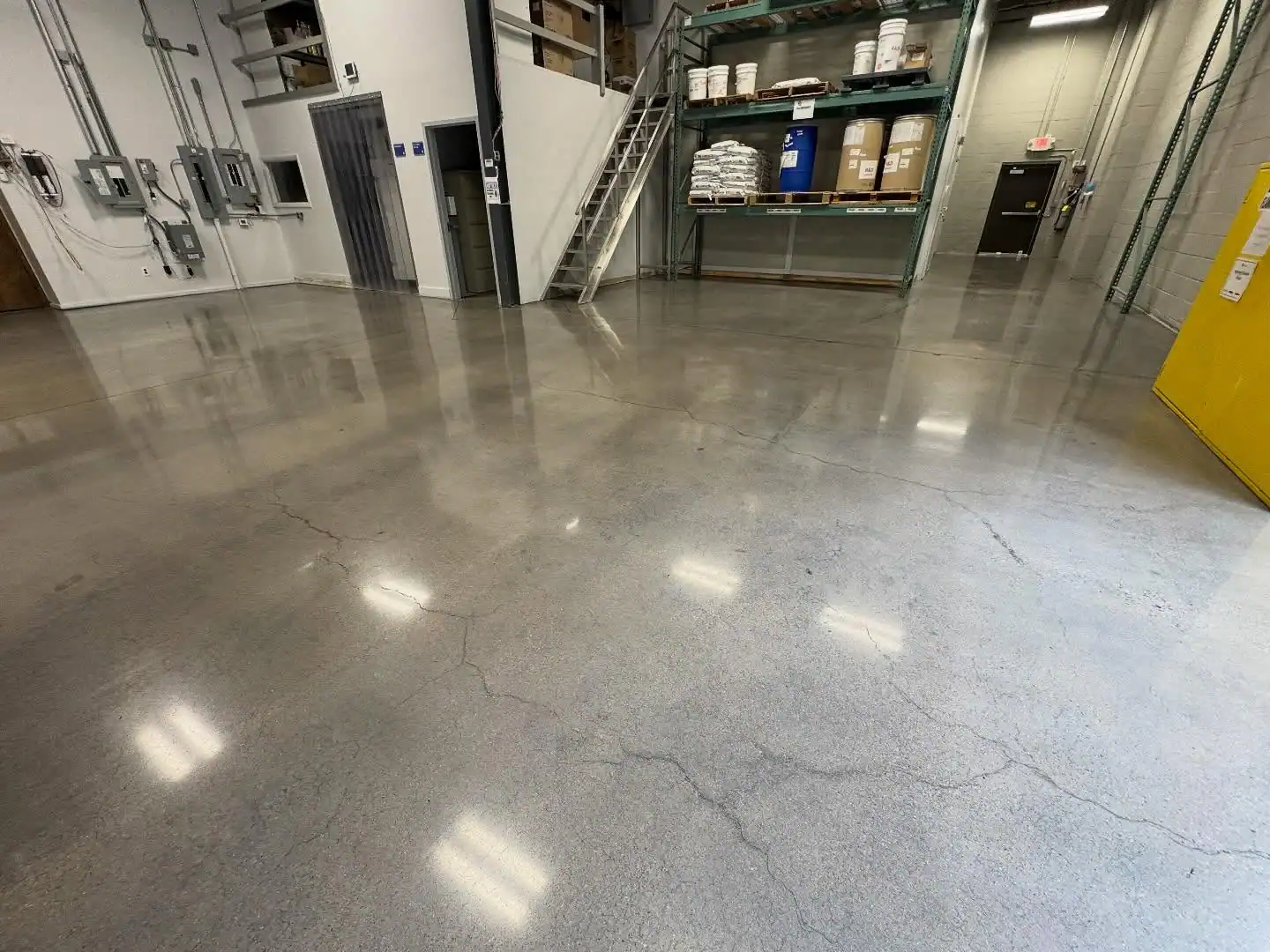
Moisture vapor emission from the slab is the deeper issue. Older concrete — and again, most Nassau County slabs are decades old — often has moisture migrating upward from below, especially in basements, garages, and ground-level commercial spaces near the water table. If you apply a coating over a slab that’s emitting moisture vapor and you haven’t used the right primer system to address it, you’re essentially trapping water under the coating. It will eventually push the coating up from below. The floor bubbles, delaminates, and looks worse than the bare concrete you started with.
The solution isn’t a different topcoat — it’s moisture testing before installation and a primer system matched to the actual vapor emission rate of that specific slab. This is standard practice for us and has been for 35 years of working on Long Island. It’s not standard practice for every contractor you’ll get a quote from, which is worth knowing before you hire based on price alone.
**Can polyaspartic be installed in cold weather?** Yes, and this is one of its genuine advantages over traditional epoxy. Standard epoxy cannot cure properly below about 50°F — which in Nassau County means your installation window is essentially limited to the warmer months. Polyaspartic can be applied down to 0°F, so if you need floor work done in the fall or winter, we can schedule it without waiting until spring. That’s a real advantage for commercial operators on Long Island who can’t afford to wait for May.
**Is polyaspartic flooring slippery when wet?** The base coating can be, yes. But slip-resistant additives — broadcast into the topcoat during installation — give the surface meaningful grip without affecting the appearance or durability. This is standard in any professional installation, particularly for commercial kitchens, auto shops, and garage floors. If a contractor doesn’t bring this up on their own, it’s worth asking about directly.
**How long does polyaspartic flooring actually last in Nassau County conditions?** With proper surface preparation and the right system for the environment, 15 to 20 years is a realistic lifespan. That number assumes diamond grinding rather than acid etching for surface prep, moisture testing before installation, and a multi-layer system — not a single thin coat. The floors that fail in two years are almost always the result of skipped prep steps or mismatched products, not a failure of polyaspartic chemistry itself. In Nassau County’s coastal climate with older housing stock, a properly installed system will outperform a budget installation by years.
**What’s the difference between a one-day garage coating and what you install?** A one-day franchise installation is typically a single thin layer of polyaspartic or polyurea applied over minimally prepped concrete. It looks good immediately. Our commercial-grade installations involve diamond grinding, moisture assessment, crack repair, an epoxy primer coat, a build coat, and a polyaspartic topcoat — a multi-day process that produces a floor rated for heavy commercial use. Nassau County’s older concrete and coastal conditions demand the more thorough approach. A floor that’s installed correctly once costs far less over ten years than one that needs to be redone every few years.
Polyaspartic flooring isn’t the right answer for every situation, but for most Nassau County properties — especially those dealing with UV exposure, coastal humidity, older concrete, or commercial-level use — it outperforms traditional epoxy in the ways that matter most over time. Faster cure, longer lifespan, UV stability, and better flexibility in a climate that tests rigid coatings every winter.
What matters more than the product, though, is how it’s installed. The best polyaspartic system in the world fails if the slab wasn’t properly prepped, moisture wasn’t tested, or the application was rushed by someone who learned the process last season.
If you’re weighing your options for a garage, commercial space, or industrial floor in Nassau County, NY, we’ve been doing this work on Long Island for 35 years. Reach out and we’ll give you a straight answer about what your specific floor actually needs — not just what’s easiest to sell.
Summary:

Article details:
Share: