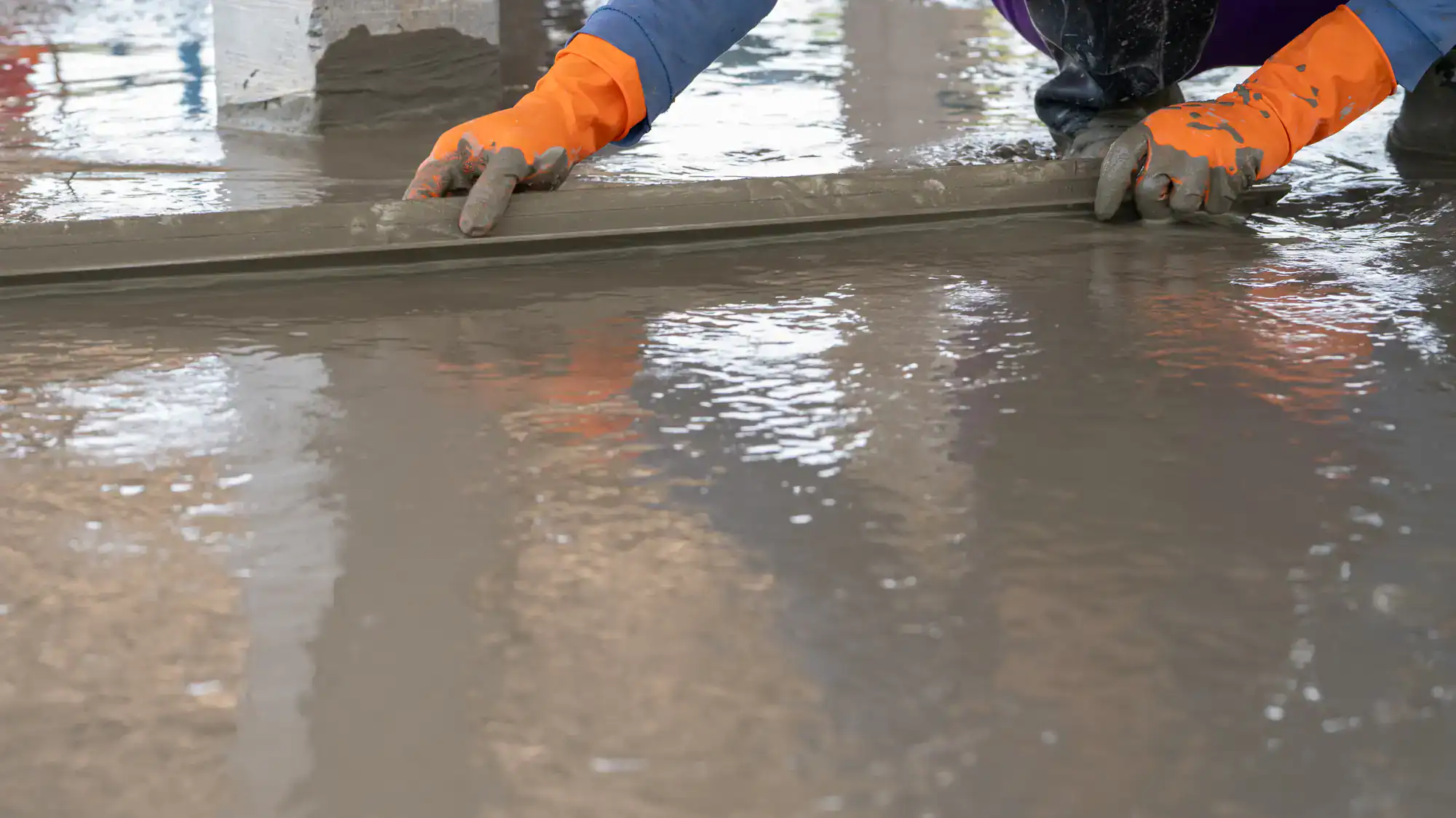
If downtime is your biggest concern, polyaspartic epoxy might be the answer. Here's what it is, how it works, and when it's worth it.
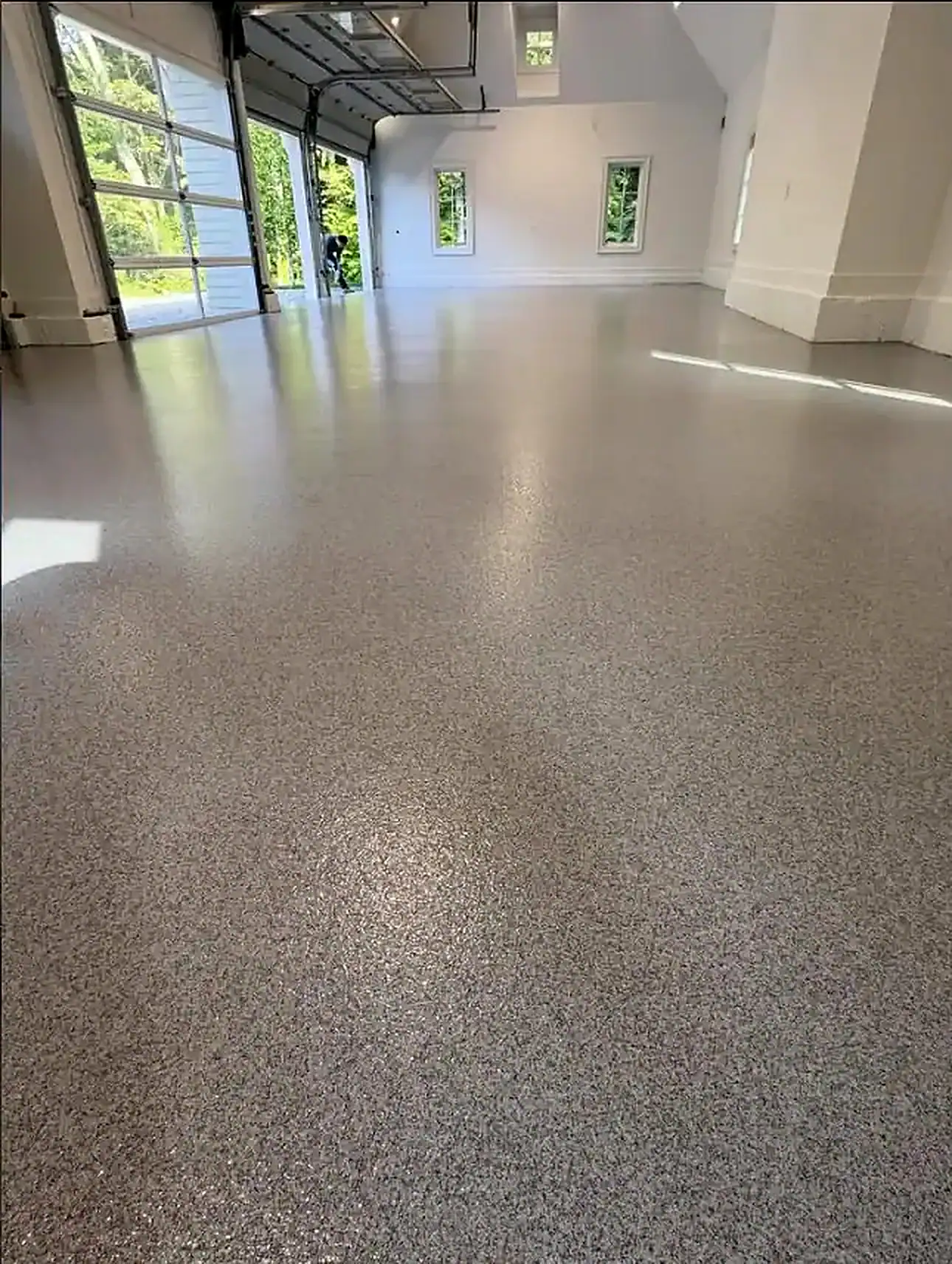
If you’ve ever had an epoxy floor fail within a couple of years — or spent a week with your facility shut down waiting for a coating to cure — you already know the frustration. The floor itself isn’t usually the problem. The problem is the wrong system, applied the wrong way, by someone who didn’t fully understand what they were working with. Polyaspartic epoxy addresses a lot of those issues directly. It cures faster, holds up longer, and handles conditions that traditional epoxy struggles with — including the kind of coastal humidity that’s a real factor across Nassau County. Here’s what you need to know.
Polyaspartic is a type of polyurea — a different chemistry class from epoxy entirely. The two are often grouped together because they’re both used as floor coatings, but they behave very differently once applied. Epoxy is a rigid, high-strength material that bonds well to concrete and resists chemicals effectively. Polyaspartic is more flexible, cures significantly faster, and doesn’t yellow when exposed to sunlight the way aromatic epoxy does.
The most common application isn’t one or the other — it’s both, used together. A high-build epoxy base coat provides the compressive strength and chemical resistance that heavy commercial use demands. The polyaspartic goes on top as the finishing layer, where its fast cure, UV stability, and flexibility do the most good. That combination is what separates a professional resin floor coating from a single-product application.
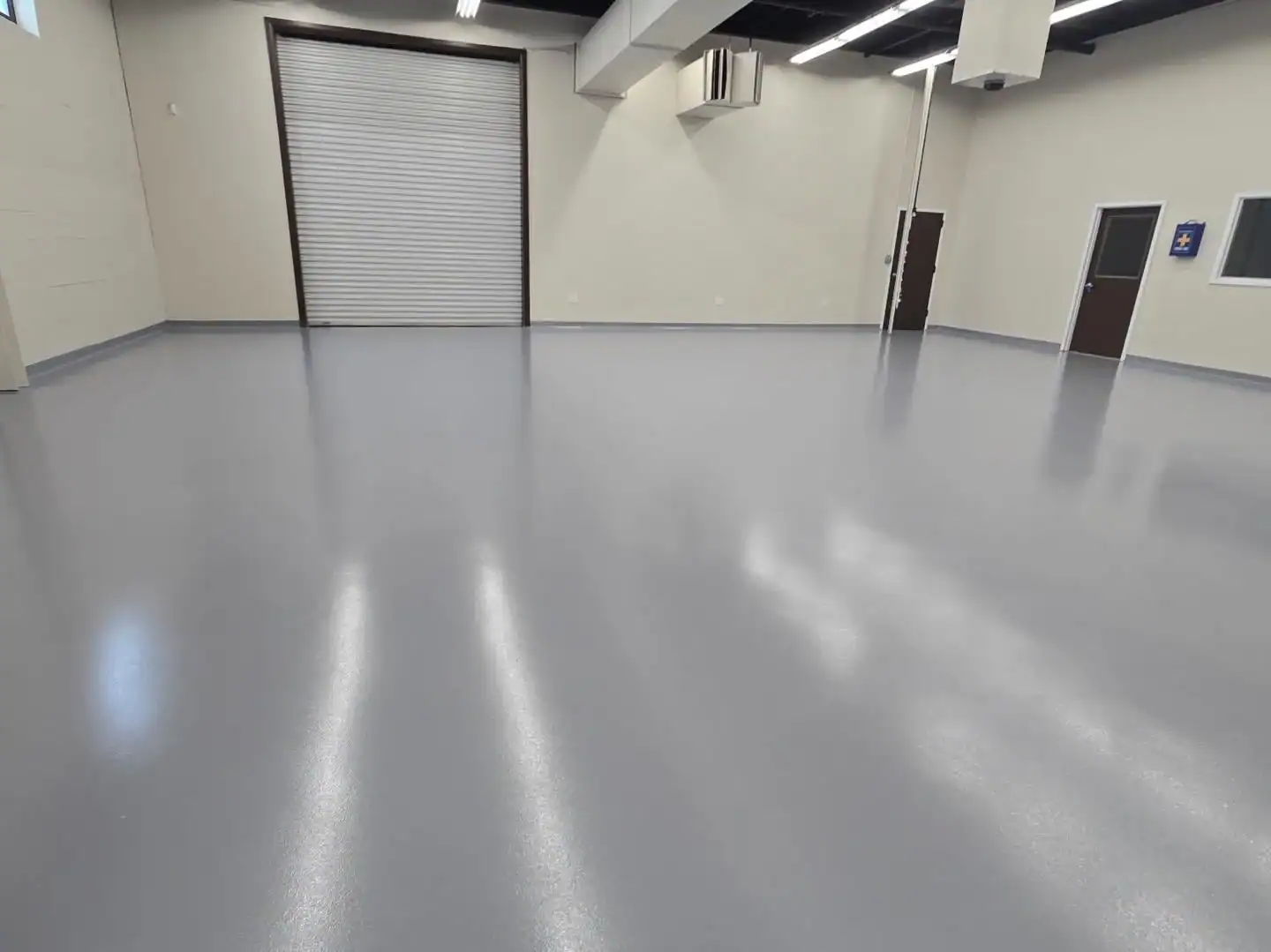
Most contractors install one thing. They either apply epoxy and call it done, or they pitch polyaspartic as a standalone product. The issue with that approach is that each material has real limitations when used on its own.
Standard epoxy takes days to fully cure — sometimes up to a week for multi-coat commercial systems. It’s also sensitive to UV exposure, which causes it to yellow and chalk over time, particularly in spaces with natural light. And while it handles compressive loads well, it’s relatively rigid. Concrete moves. It expands and contracts with temperature changes, and a coating that can’t flex with it will eventually crack.
Polyaspartic on its own cures fast — walkable in as little as an hour, and fully functional within two to four hours under most conditions. But it’s a topcoat material. Applied directly to bare concrete without a proper base system underneath, you’re skipping the structural foundation that makes a floor coating last.
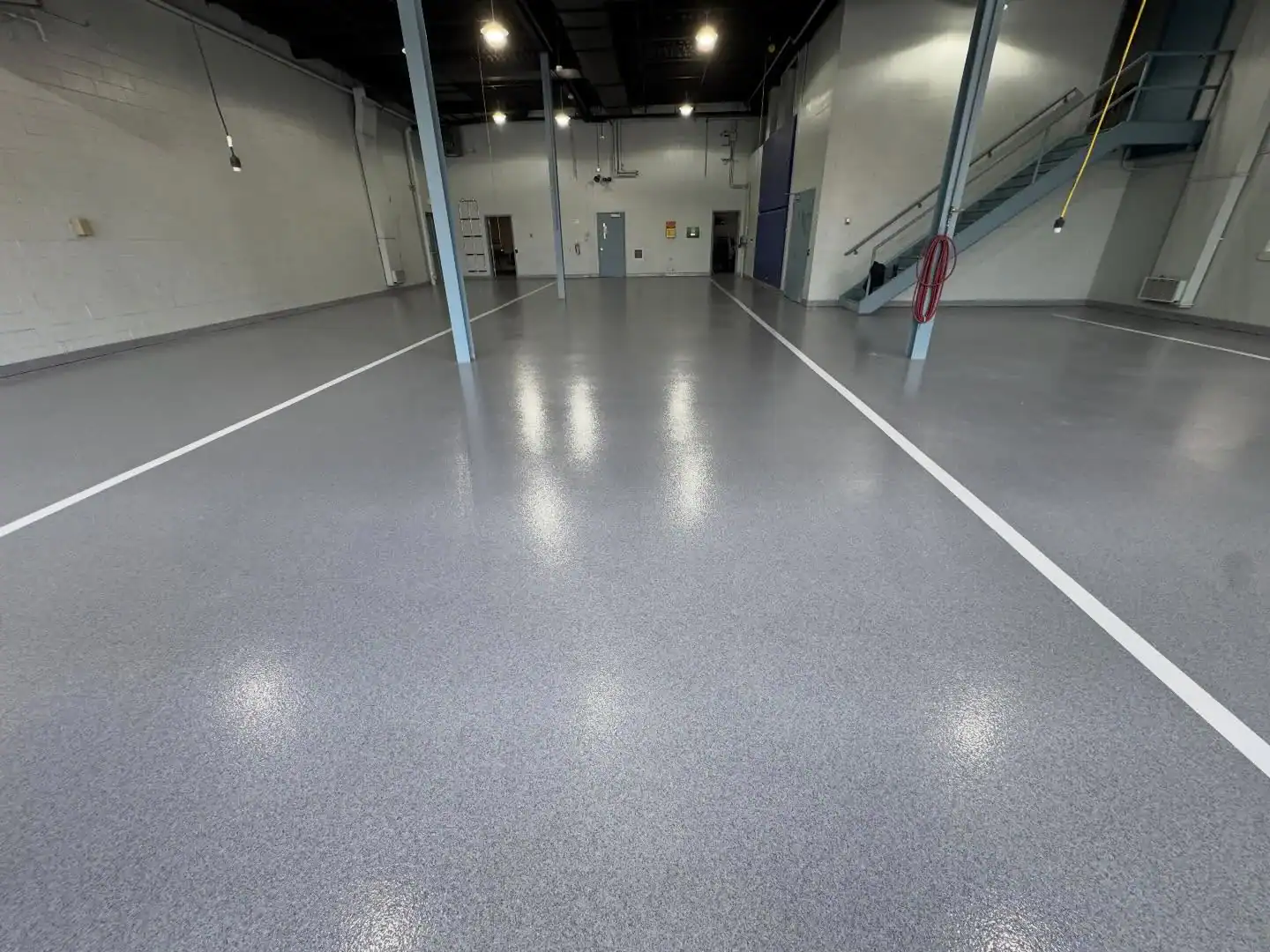
The layered approach solves both problems. The epoxy base coat — applied over a diamond-ground, properly primed surface — gives the system its strength and chemical resistance. The polyaspartic topcoat gives it UV stability, flexibility, and a fast return to service. Together, they produce a floor that can handle forklift traffic, chemical spills, thermal cycling, and daily commercial use for ten to twenty years or more. Neither material achieves that alone.
This is the system we install, and it’s the same approach used in aircraft hangars, food processing facilities, healthcare environments, and firehouse apparatus bays — applications where a floor failure isn’t just inconvenient, it’s a real operational problem.
Not every floor needs a polyaspartic topcoat, but for commercial and industrial environments, it’s usually the right call. The question worth asking is: what does this floor actually need to survive?
If the space gets natural light, a standard epoxy topcoat will yellow within a year or two. Polyaspartic is 100% UV stable — it won’t fade, chalk, or discolor. If the facility runs year-round and can’t afford extended downtime for floor work, polyaspartic’s two-to-four-hour cure window means you can install over a weekend and be back to full operation Monday morning. If the floor is in a coastal environment — which covers most of Nassau County — polyaspartic handles moisture and humidity better than traditional epoxy topcoats, which are sensitive to both.
There are also situations where the standard epoxy finish coat is perfectly adequate — lower-traffic interior spaces, areas with no UV exposure, projects with flexible scheduling. The honest answer is that the right topcoat depends on the environment, the traffic load, and what failure would actually cost you. A floor in a Long Beach warehouse near the water has different demands than a storage room in a Mineola office building.
What matters most is that whoever is applying the topcoat understands the difference and can match the system to the actual conditions — not just install whatever they happen to stock. That’s the part of the process that separates a coating that lasts from one that starts peeling in eighteen months.
Want live answers?
Connect with an Advanced Epoxy Flooring expert for fast, friendly support.
Nassau County isn’t a generic market for floor coatings. The combination of coastal exposure, freeze-thaw cycling, and salt air creates conditions that accelerate concrete deterioration and cause coating failures that wouldn’t happen inland. South shore communities like Long Beach, Oceanside, and Atlantic Beach sit on or near barrier islands with water on multiple sides. North shore areas like Glen Cove and Sea Cliff face Long Island Sound. Even inland facilities in Garden City or Hicksville deal with elevated humidity levels that affect how coatings bond and cure.
The single most common cause of resin floor coating failure in this area isn’t bad product — it’s moisture vapor emission from the concrete slab that wasn’t tested before installation. When that’s skipped, even a well-applied coating will delaminate within months. It’s a step that adds time to the process, but it’s not optional here.
Concrete breathes. Moisture moves up through a slab from the ground beneath it, and in a coastal county like Nassau, that movement is more active than in drier inland environments. When a coating is applied over a slab with elevated moisture vapor emission, the moisture has nowhere to go — it builds up beneath the coating and eventually pushes it off the surface. The floor bubbles, lifts, and peels. It looks like a product failure. It’s actually a preparation failure.
The fix is straightforward: test the slab before you coat it. ASTM-standard moisture testing tells you the vapor emission rate and whether the slab is ready for coating, or whether a moisture-tolerant primer and system are needed. In Nassau County, this step is particularly important for ground-level slabs, basement floors, and any facility within a mile or two of the water.
We’ve seen this issue firsthand across Long Island — floors that failed not because the coating was wrong, but because the contractor who installed it skipped the moisture assessment. It’s one of the reasons we treat that step as standard practice, not an upsell. A floor in Atlantic Beach or Island Park that’s properly tested and prepped will outlast a floor in a drier climate that wasn’t — because the system was built to handle the actual conditions.
Polyaspartic is also more forgiving of ambient humidity during application than traditional epoxy. Standard epoxy becomes difficult to apply correctly when relative humidity exceeds 85%, which is not an unusual summer condition on Long Island’s south shore. That humidity tolerance is another reason polyaspartic makes sense here specifically, not just as a general coating recommendation.
**How fast can we actually get back to using the floor?** For most commercial applications, light foot traffic is possible within a few hours of the final coat. Forklift and vehicle traffic typically resumes within 24 to 72 hours depending on the system and conditions. Compare that to traditional multi-coat epoxy, which can keep a Nassau County warehouse or auto shop offline for five to seven days. For a facility that runs six days a week, that difference has a real dollar figure attached to it.
**Is polyaspartic really worth more than standard epoxy?** That depends on what failure costs you. A professionally installed polyaspartic system over a proper epoxy base is engineered to last ten to twenty years with reasonable maintenance. Budget epoxy installations — the kind that use consumer-grade materials and skip surface prep — often need recoating within three to five years. When you factor in the reinstallation cost, the downtime, and the disruption, the premium for doing it right the first time is usually the more economical choice.
**Does it hold up to the freeze-thaw cycles we get here on Long Island?** Yes, and this is one of the areas where polyaspartic has a real advantage. It’s significantly more flexible than epoxy — roughly 98 to 100 percent more flexible, depending on the formulation. That flexibility allows it to move with the concrete as it expands and contracts through Nassau County’s winters rather than cracking under the stress. Uncoated or poorly coated floors in this climate spall and crack over time from freeze-thaw cycling alone, especially when road salt and de-icing chemicals are tracked in from parking lots and loading docks.
**We have a firehouse — can this be done without putting us out of service for days?** This comes up often, and the answer is yes. Nassau County has over sixty fire districts, and apparatus bay floors take serious punishment — from the weight of trucks, hot tires, dropped equipment, and constant traffic. The fast cure of a polyaspartic system means most stations are back to full operation the next day. We’ve done this work across Long Island, and the scheduling concern is usually the first thing departments ask about. It’s a solvable problem.
Polyaspartic epoxy isn’t magic — it’s a well-engineered material that performs well when it’s specified correctly and installed by someone who actually knows the system. The fast cure time, UV stability, and flexibility are real advantages, but they only translate to a long-lasting floor when the surface preparation is done right and the coating system matches the environment.
For Nassau County facilities, that means accounting for coastal moisture, freeze-thaw cycling, and the operational realities of businesses that can’t afford extended downtime. Those aren’t abstract concerns — they’re the conditions your floor is going to live in every day.
If you’re evaluating options for a commercial or industrial floor, we’ve been doing this work on Long Island for over thirty-five years. Reach out and we’ll give you a straight answer about what your facility actually needs.
Summary:
Article details:
Share: