
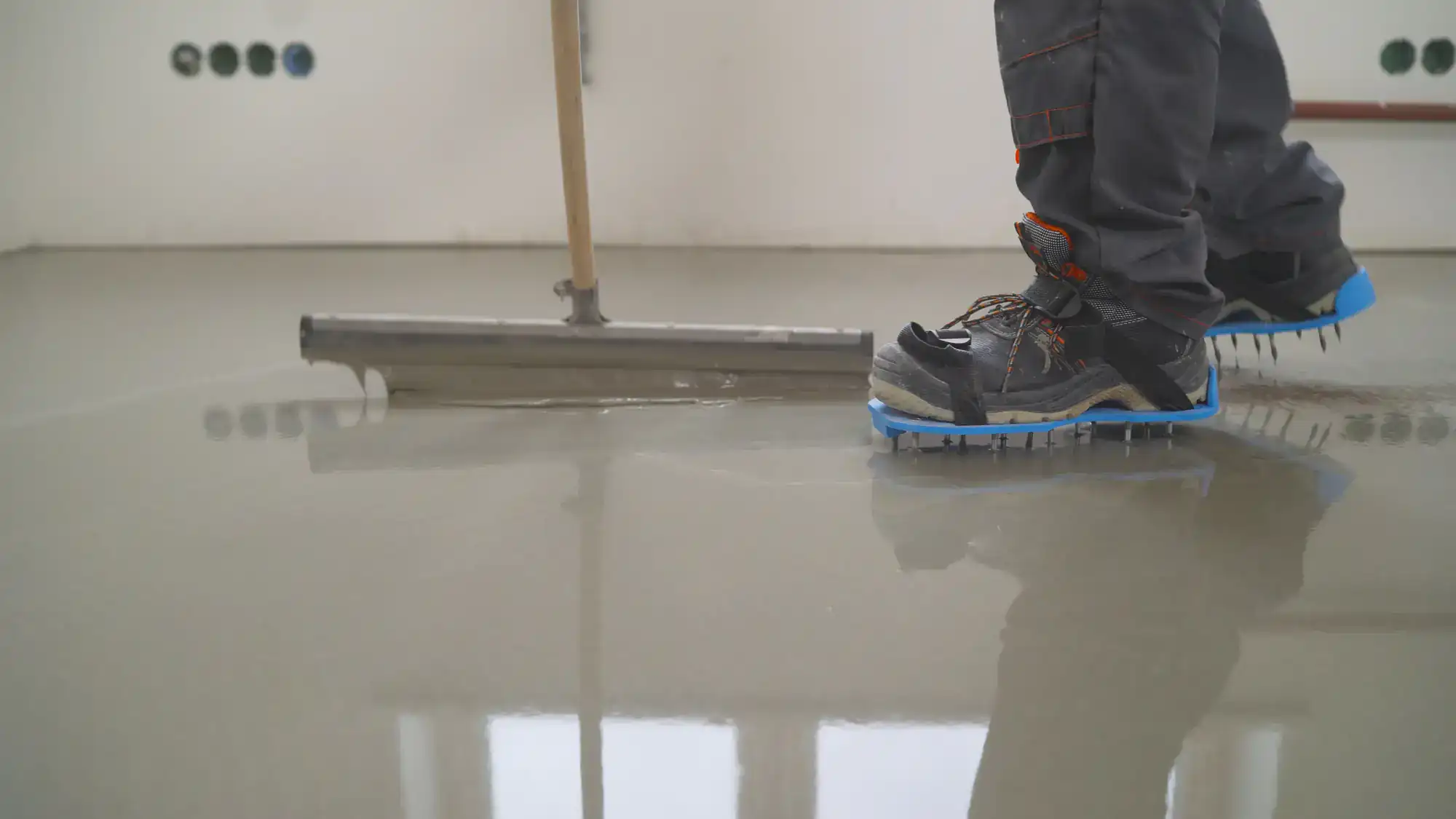
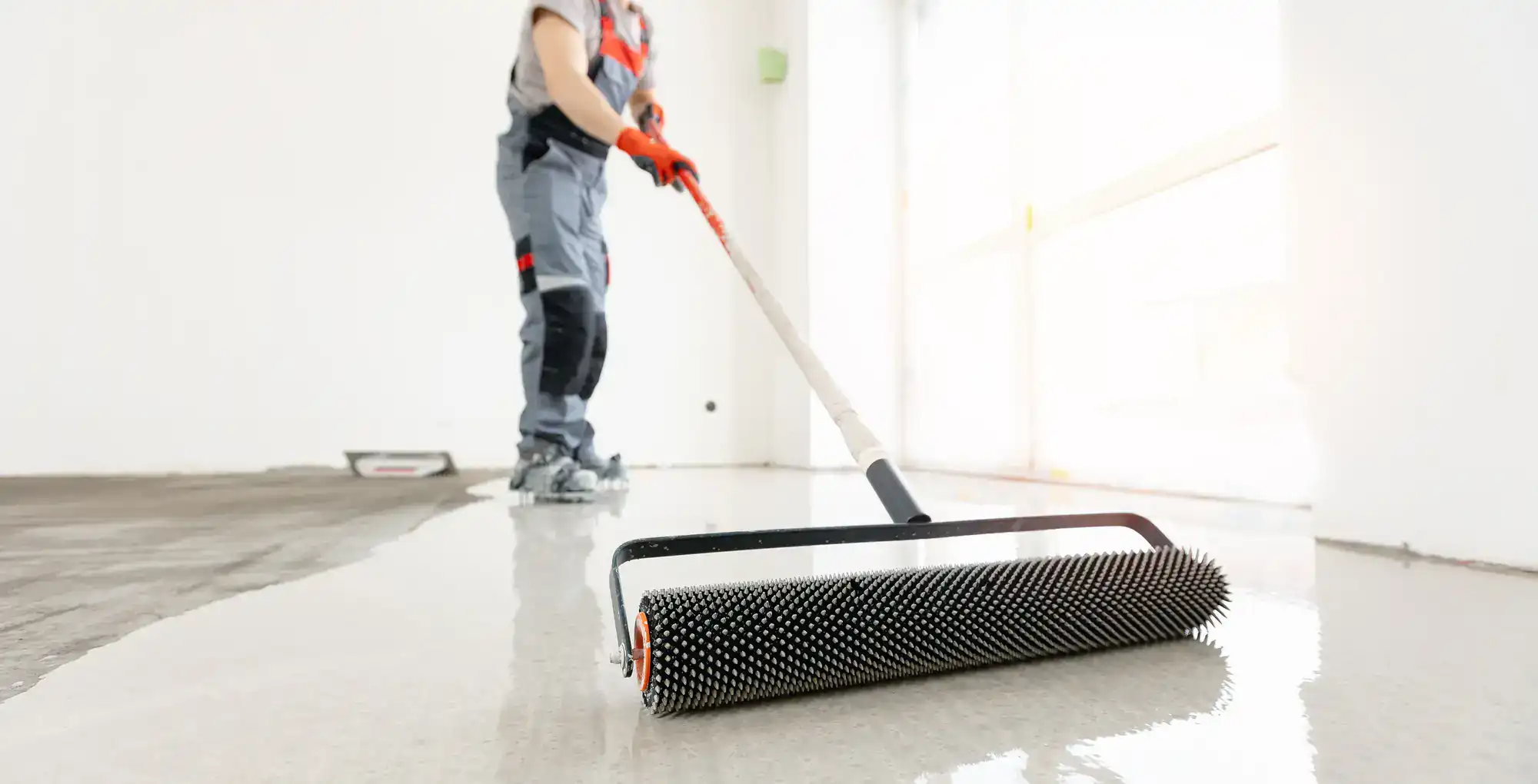
When a floor is uneven, it’s not just an eyesore it’s a liability. Tile cracks. Vinyl lifts. Grout lines fail. And the longer you wait, the more the problem compounds. Getting the floor level before you install anything new is the single most important step in any flooring project, and it’s the one most people skip or rush.
In Smithtown, the conditions that cause this are built into the ground itself. The North Shore sits on clay-heavy soil that holds moisture and shifts with every freeze-thaw cycle. That means concrete slabs especially in homes built in the 1950s through 1970s that make up a large portion of the town’s housing stock have been settling, cracking, and moving for decades. A slab that looked fine under old 12-inch tile is not going to perform under large-format porcelain or luxury vinyl plank without correction first.
For commercial spaces near the Hauppauge Industrial Park or along Route 347, the stakes are just as high. An uneven floor in a warehouse, restaurant, or lab environment doesn’t just fail inspection it creates real operational problems. Getting it right the first time means less downtime, fewer callbacks, and a surface that actually performs under load.
We’re based in Bohemia, NY about 15 miles from Smithtown and have been working across Suffolk County for over 30 years. Our president brings more than 40 years of personal installation experience to every project, and most of our crew has been with us for over a decade. That kind of continuity is rare in this trade, and it shows in the work.
We’ve worked in the Hauppauge Industrial Park, on North Shore residential projects throughout Smithtown, and in commercial kitchens demanding the highest standards including one at the White House in 1996. Our OSHA 40-certified team holds an A+ BBB rating and brings that same standard to every Smithtown job, whether it’s a Kings Park garage, a St. James restaurant, or a Nesconset basement renovation.
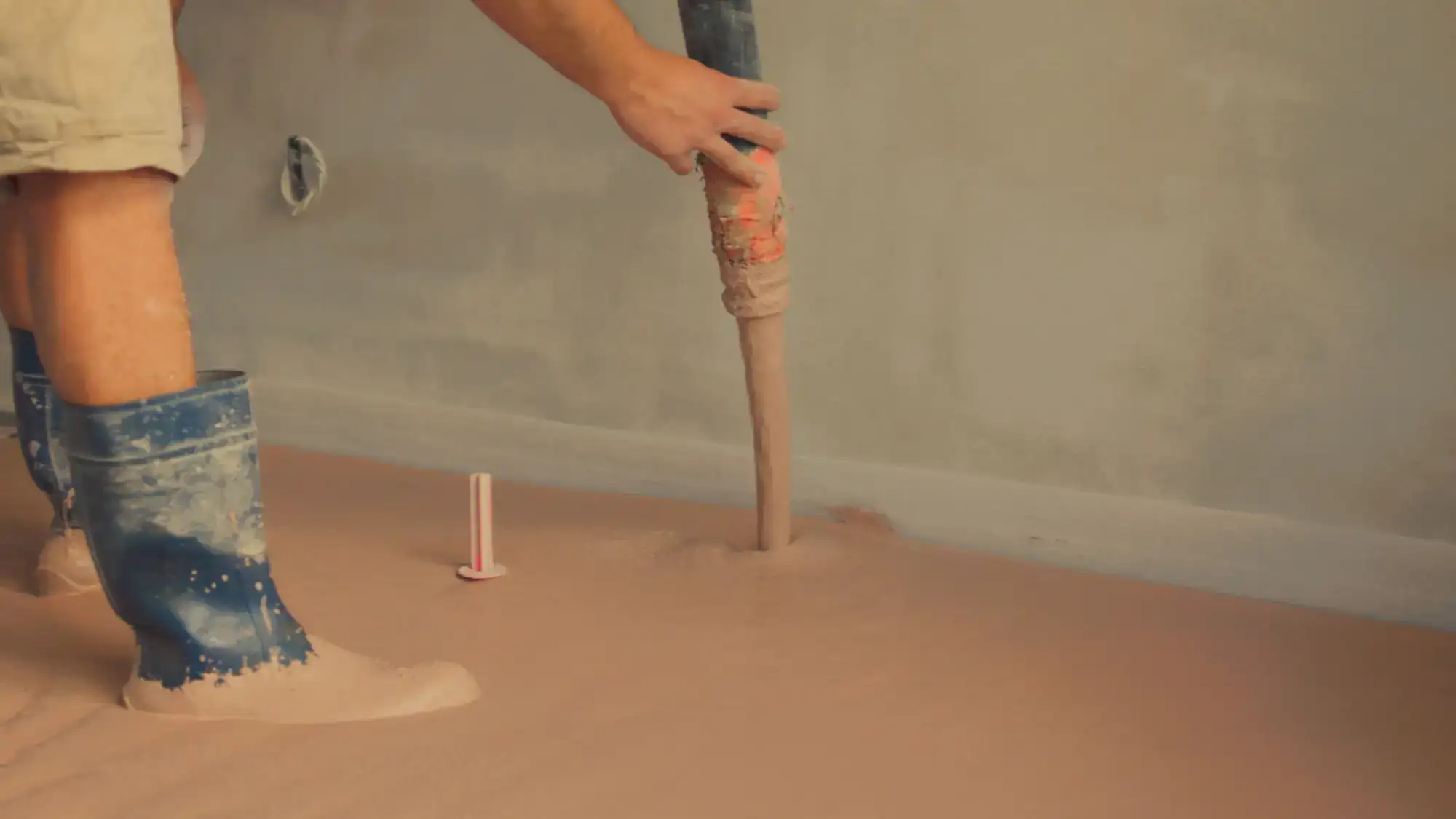
Before any material gets mixed, we evaluate the slab. That means moisture testing per ASTM F2170 a step that matters more in Smithtown than in most places, because clay-heavy North Shore soil transmits moisture vapor through concrete at a higher rate than the sandy soils you’d find on the South Shore. Skipping this step is how floors fail within a year. We don’t skip it.
Once moisture levels are confirmed and within range, we grind and prepare the surface. Cracks are addressed, weak spots are repaired, and the substrate is primed to ensure the self-leveling material bonds properly. The polymer-modified cementitious compound we use flows to a true level and can be installed from a quarter inch to over two inches in a single pour or up to five inches with aggregate added. That range covers everything from a residential slab in Nesconset to a heavy-use commercial floor in Hauppauge.
After the pour, the material self-levels by design. Foot traffic is typically possible within four to six hours, and most commercial applications are ready for heavy use within 24 to 48 hours. For businesses in the Route 347 corridor or the industrial park that can’t afford extended downtime, that turnaround matters. Once the surface is cured and confirmed flat, it’s ready for whatever comes next tile, epoxy coating, polished concrete, or any other finish system.
Ready to get started?
The self leveling underlayment we use on every project is a high-strength, regular-setting, cement-based polymer-modified system with high flow characteristics. It’s not a bag of hardware-store compound. It’s a commercial-grade material engineered for the kind of performance that aging Long Island slabs actually need strong bond strength, resistance to cracking, and compatibility with the epoxy coatings, tile adhesives, and finish systems that go on top.
Every project includes moisture testing, full surface preparation, crack repair, priming, and the pour itself all handled by our crew, start to finish. There’s no handoff between a prep sub and a flooring sub, which is where most floor failures actually originate. One contractor owns the entire process, which means one contractor is accountable for the result.
For commercial clients in Smithtown particularly those operating in the Hauppauge Industrial Park or in the healthcare corridor near St. Catherine of Siena Medical Center the OSHA 40 certification our crew carries is not a minor detail. Many facilities require it before a contractor sets foot on the floor. For residential clients investing in homes that are now approaching or exceeding $940,000 in median sale value, the standard of prep work we apply is proportional to what’s actually at stake.
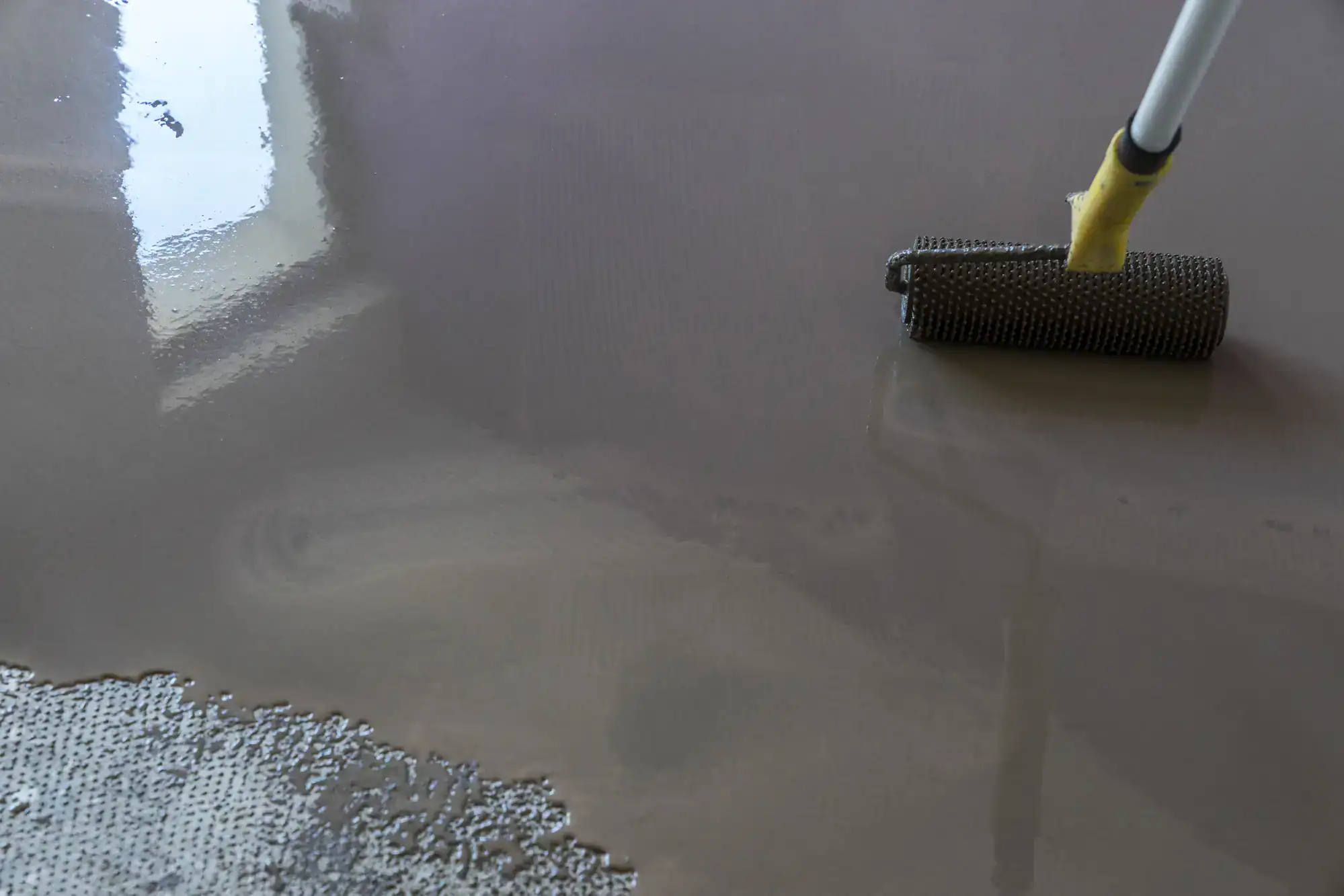
If your slab has any visible unevenness, low spots, or cracks and most slabs in Smithtown’s older residential neighborhoods do then yes, self leveling underlayment is the right call before tile goes down. Modern large-format tile, which has become the standard in kitchen and bathroom renovations, requires a much flatter substrate than the 12-inch tile it’s replacing. The industry standard for large-format tile is no more than an eighth-inch variation over a ten-foot span. Most original slabs in Kings Park, Nesconset, and the Smithtown hamlet don’t meet that threshold without correction.
Beyond flatness, there’s the bond issue. Tile installed over an uneven or structurally compromised slab is under constant stress. It cracks. Grout lines open up. Corners chip. Self leveling underlayment eliminates that stress by giving the tile a stable, flat, uniform surface to bond to. It’s not an optional upgrade it’s the foundation that determines whether your renovation holds up for 20 years or starts showing problems in two.
The most common cause of concrete cracking in Smithtown is the soil underneath it. The North Shore sits on clay-heavy ground that expands when it absorbs moisture and contracts when it dries out. That constant movement combined with Long Island’s freeze-thaw cycles, where water infiltrates cracks, freezes, expands by roughly nine percent, and widens the crack further means concrete slabs in this area are under more stress than slabs in sandier South Shore communities like Massapequa or Bay Shore.
Post-war homes built in the 1950s through 1970s, which make up a significant portion of Smithtown’s residential stock, have slabs that have been through 50 to 70 years of this cycle. By now, many of them have developed a network of low-level cracks that don’t compromise the structure of the home but absolutely compromise the performance of any floor covering installed over them. Self leveling underlayment addresses this by filling and bridging those cracks, then providing a stable, high-strength surface layer that distributes load evenly and gives new flooring a fighting chance.
For most residential applications, light foot traffic is safe within four to six hours of the pour. Full cure meaning the surface is ready for tile adhesive, epoxy primer, or other finish systems typically takes 24 hours under normal conditions. For heavy commercial traffic, most systems reach adequate strength within 24 to 48 hours, though this can vary based on the depth of the pour and the ambient temperature at the time of installation.
Temperature is worth mentioning specifically for Smithtown. During fall and winter, unheated garages, basements, and commercial spaces can drop below the 50-degree threshold that most self leveling compounds require for proper cure. Installing in cold conditions without accounting for this leads to weak, powdery surfaces that fail quickly. A contractor who understands Long Island’s seasonal conditions will either schedule the work during appropriate temperature windows or take steps to maintain the correct environment during the pour and cure period. This is a detail that separates experienced installers from ones who will be back in six months to fix the problem.
Regular concrete repair patching compounds, hydraulic cement, or basic resurfacers is designed to fill specific damaged areas. It works for isolated cracks or spalled spots, but it doesn’t address the overall flatness of the slab. If your floor has a half-inch low spot across a six-foot span, patching the crack in the middle doesn’t fix the dip. You’re still installing tile or vinyl over an uneven surface, and the result will reflect that.
Self leveling underlayment is different because it flows. When mixed to the correct consistency and poured over a properly primed surface, it seeks its own level across the entire area filling low spots, bridging minor cracks, and producing a flat, uniform plane. The polymer-modified cementitious systems we use in professional applications bond strongly to the existing concrete and create a surface with significantly higher compressive strength than basic patch compounds. For Smithtown homeowners preparing for a full kitchen or basement renovation, this is the difference between a floor that performs for decades and one that starts telegraphing problems through the new finish within a few years.
Cost varies based on the square footage involved, the depth of correction needed, and the condition of the existing slab going into the project. For a typical residential project in Smithtown a kitchen, basement, or garage floor you’re generally looking at a range that reflects both the material cost and the labor involved in proper surface preparation, moisture testing, and the pour itself. Smaller areas with minimal correction needed will come in at the lower end; larger commercial spaces or slabs requiring significant prep work will run higher.
What’s worth understanding is what drives cost on the front end. Moisture testing, concrete grinding, crack repair, and priming are not optional line items that get added to inflate a quote they are the steps that determine whether the finished floor actually holds. A quote that skips these steps is a quote for a cheaper job that will cost more to fix later. In a town where median home values are approaching $940,000, the math on doing it right the first time is straightforward. Getting an accurate number for your specific project starts with an on-site evaluation.
Yes and it’s one of the most common applications in the area. The Hauppauge Industrial Park, which sits within the Town of Smithtown, contains roughly 13.9 million square feet of industrial and R&D space, much of it built in the 1960s through 1980s. Tenant turnover, facility upgrades, and the park’s ongoing shift toward biomedical and technology uses all require interior renovation, and floor leveling is almost always part of that process before new coatings or coverings go in.
Commercial self leveling in these environments requires material and process specifications that go well beyond residential-grade compounds. The systems we use need to handle forklift traffic, thermal cycling, and the kind of sustained load that industrial environments produce. Our OSHA 40-certified crew meets the safety requirements that facility managers in the park enforce which is why that certification matters here in a way it simply doesn’t in a residential garage. If you’re managing a facility in Hauppauge or anywhere in the Smithtown commercial corridor and need a floor leveling contractor who understands both the technical and compliance side of the work, that’s a conversation worth having before the project starts.