
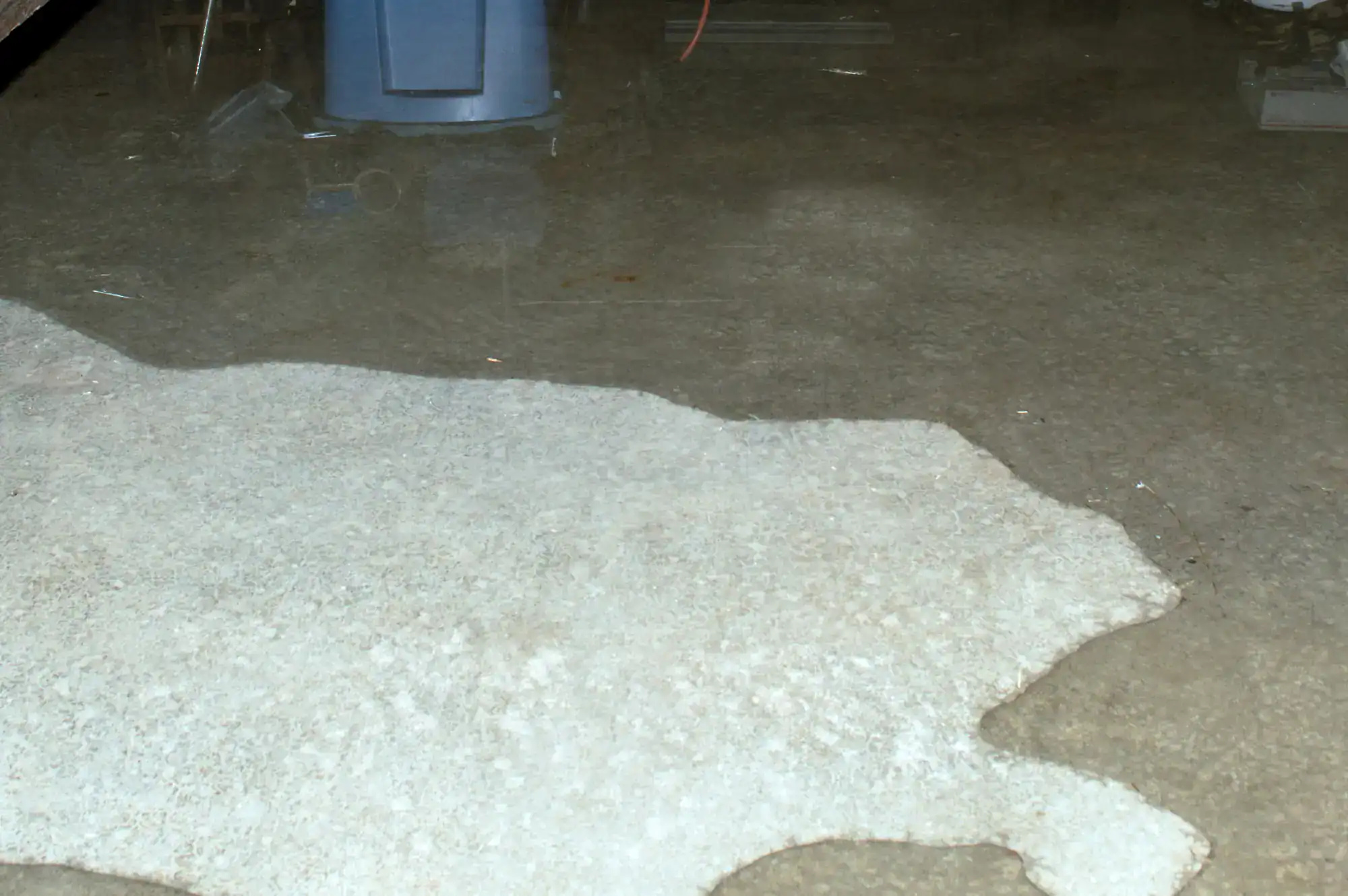
Every time apparatus returns from a call on a salted Long Island road and rolls back into the bay, your floor takes the hit. Road salt, brine, hot tires, hydraulic fluid it adds up fast. And if the coating underneath wasn’t built for it, you’ll see the evidence: peeling edges, delamination bubbles, staining that won’t clean up.
Smithtown sits on the North Shore, which means your bays deal with a harder freeze-thaw cycle than most of Long Island. Moisture gets into unprotected or poorly bonded concrete, freezes, expands, and works its way under thin coatings from the inside out. By spring, what looked fine in October is cracked and lifting. A properly installed polyaspartic system seamless, non-porous, 15 mils thick doesn’t give that moisture anywhere to go.
The difference after installation is straightforward. The floor cleans up with a hose. Road salt doesn’t penetrate. Hot tires don’t bond to the surface. And your board of fire commissioners has a floor that won’t need to be replaced in five years and re-explained to taxpayers all over again.
We’re based in Bohemia about 15 miles from Smithtown’s hamlet center and have been installing commercial and industrial resinous floor systems for over 30 years. This isn’t a franchise operation, and it’s not a residential garage floor company that picked up a commercial contract. Every project we take on is in the same category: demanding environments where the floor actually matters.
Our CEO Danny Harmer has over 40 years of hands-on installation experience. Our field supervisors bring a combined 40-plus years between them, and most of our crew has been with us for more than a decade. That kind of continuity isn’t common in this industry and it shows in how installations hold up over time, especially in the harsh North Shore conditions that Smithtown fire departments face year-round.
We hold the Sherwin-Williams High Performance Flooring certification, Res Tech certification, and all our field installers are OSHA 40 certified. For a Suffolk County fire district board that’s accountable to taxpayers, those credentials aren’t a formality they’re the reason the floor performs the way it should.
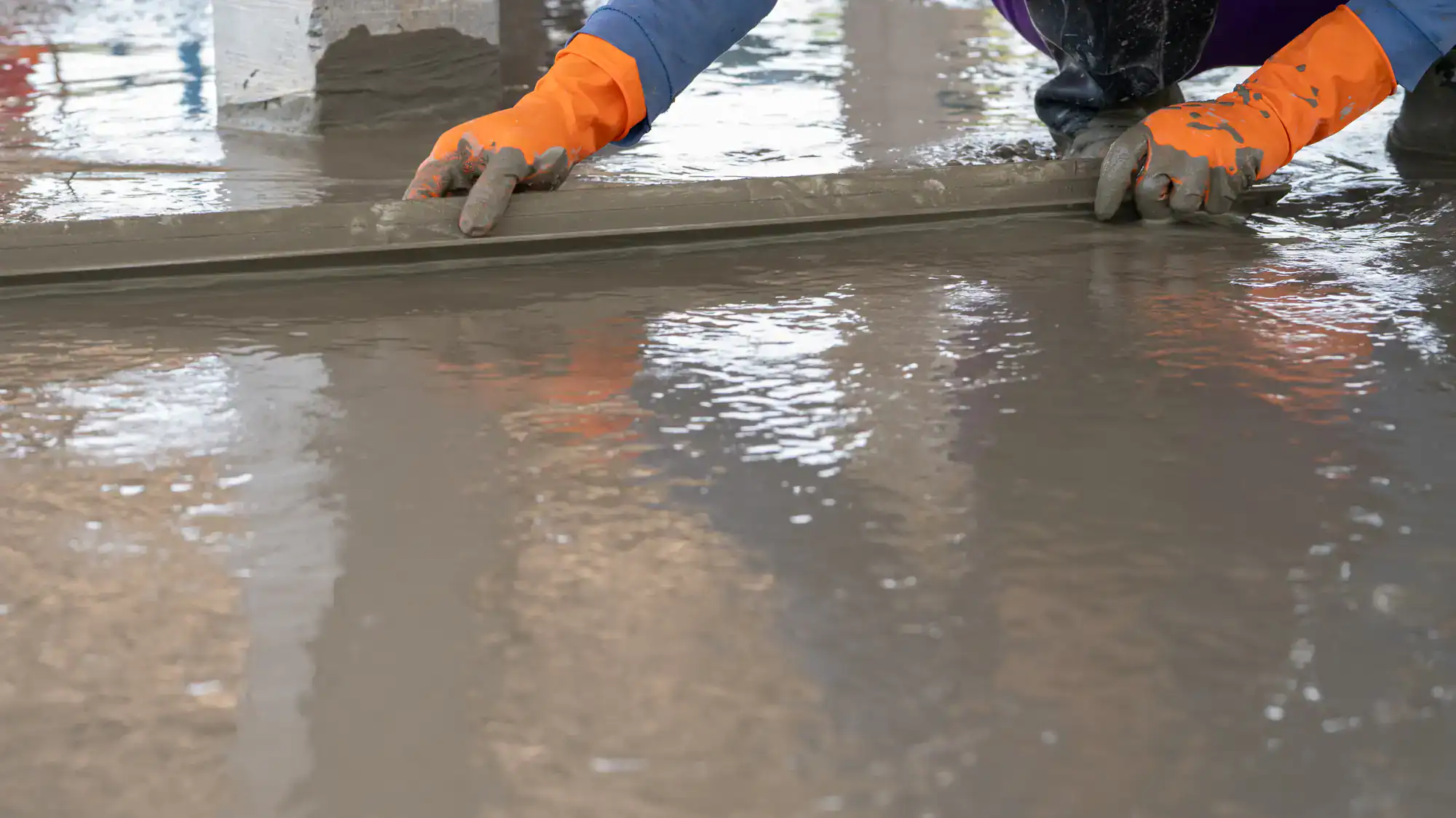
The most common reason apparatus bay floors fail isn’t the coating it’s what the contractor skipped before applying it. Acid etching, which a lot of contractors still use, introduces moisture into the concrete right before sealing it. That moisture has nowhere to go. Eventually it pushes the coating up from below. We start every installation with diamond grinding, which opens the concrete’s surface structure and creates a real mechanical bond not a surface-level adhesion that fails under load.
After grinding, moisture testing is mandatory. This matters especially in Smithtown, where North Shore humidity and the seasonal freeze-thaw cycle mean concrete moisture levels can vary significantly depending on the time of year. Any cracks or surface damage are repaired before the first coat goes down. Then the system is built in layers: a penetrating primer, a high-build epoxy base coat with aggregate broadcast for compressive strength, and a polyaspartic topcoat that cures in 24 hours.
That 24-hour cure window is the reason fire departments specifically choose polyaspartic over standard epoxy. Traditional epoxy needs three to seven days before apparatus can return. For Smithtown’s volunteer departments covering large geographic areas with limited apparatus parking trucks outside for a week isn’t realistic. With polyaspartic, the bay is operational the next morning.
Ready to get started?
The system we install in a Smithtown apparatus bay isn’t the same product sold in a home improvement store or offered by a residential garage floor company. It’s a multi-layer resinous system engineered for 40,000-pound apparatus, chemical exposure, and the specific thermal stress that comes from cold North Shore winters and hot equipment rolling in from active calls. At 15 mils of total thickness compared to 4 to 8 mils for standard epoxy it’s in a different category entirely.
The polyaspartic topcoat is UV-stable, which matters when bay doors are open for extended periods during Smithtown’s warmer months. It’s four times more flexible than standard epoxy, meaning it moves with the concrete through seasonal expansion and contraction rather than cracking under it. Abrasion resistance is twice that of standard epoxy. Hot-tire pickup the failure mode where heated tires bond to the coating and peel it off is eliminated.
Beyond the apparatus bay, we apply the same certified system to your decontamination area, living quarters, kitchen, and locker rooms. NFPA 1500 and NFPA 1585 create contamination control requirements that a seamless, non-porous floor directly supports making this a safety decision as much as a maintenance one. One contractor, one standard, across the entire station.
A properly installed polyaspartic system diamond-ground concrete, moisture-tested, multi-layer application should last 20 or more years under normal apparatus bay conditions. That’s not a number pulled from marketing material. It’s the realistic lifespan of a 15-mil resinous system that was installed correctly from the start.
The contrast matters here. Standard epoxy lasts five to ten years under similar conditions. Consumer-grade DIY coatings the kind sold at hardware stores typically fail in three to five years, often sooner in a North Shore Long Island environment where freeze-thaw cycling and road salt accelerate deterioration. When a Smithtown fire district board is evaluating the cost of a floor upgrade, the 20-year lifespan of a polyaspartic system versus the five-year lifespan of a cheaper alternative changes the math significantly. Replacing a floor twice in 20 years including the cost of grinding out the failed coating, managing apparatus displacement, and reinstalling costs far more than doing it right the first time.
With a polyaspartic system, apparatus can return to the bay in 24 hours. That’s the practical reason fire departments choose polyaspartic over traditional epoxy in the first place. Standard epoxy requires three to seven days of cure time before the floor can handle the load of fire apparatus and for a volunteer department covering Kings Park, Nesconset, or St. James with limited apparatus, that kind of displacement simply isn’t manageable.
The 24-hour cure window applies to the full system primer, base coat, and topcoat not just the final layer. We coordinate the schedule in advance so the installation happens when displacement is least disruptive to your department’s coverage area. Most installations are completed in a single day, with apparatus back in service the following morning. If your station has multiple bays, we can also phase the work so at least one bay remains operational throughout the process.
Yes and it’s one of the most consistent sources of floor deterioration in apparatus bays across Suffolk County. Every time a truck returns from a call on a salted road, chloride compounds come with it. On bare concrete or thin-mil coatings, those chlorides penetrate the surface over time, accelerating rebar corrosion and concrete spalling. On a seamless, non-porous polyaspartic system, road salt sits on top of the floor and wipes clean. There’s no penetration because there’s no pathway in.
Smithtown’s road network Route 347, Route 25, the Sunken Meadow Parkway, and the residential streets that apparatus travels every day gets treated heavily from November through March. That’s five months of chloride exposure per year, compounded by the freeze-thaw cycling that Long Island’s North Shore experiences. An apparatus bay floor that isn’t built to handle that specific combination won’t last. The polyaspartic system is.
The differences are meaningful enough that they affect how long the floor lasts and whether your department can actually use the bay while it cures. Polyaspartic goes down at 15 mils of total system thickness versus 4 to 8 mils for standard epoxy. It’s four times more flexible, which means it handles the thermal expansion and contraction of concrete through Long Island’s seasonal temperature swings without cracking. It delivers twice the abrasion resistance. And it’s UV-stable important when bay doors are open to direct sunlight for extended periods.
The cure time difference is the operational factor most fire departments focus on first. Standard epoxy needs three to seven days before apparatus can return. Polyaspartic cures in 24 hours. Beyond that, polyaspartic’s thermal resistance eliminates hot-tire pickup the failure mode where heated apparatus tires bond to the coating surface and peel it off when the truck backs out. That failure mode is the most common complaint from departments that had standard epoxy installed and are now looking at a floor that’s already lifting.
Yes, and it’s worth considering the whole station at once rather than just the apparatus bay. We apply the same certified resinous system to your decon area, living quarters, kitchen, and locker rooms each zone using the appropriate system specification for its specific conditions. The decon area, for example, needs a seamless, non-porous surface that supports the cleaning protocols required under NFPA 1500 and NFPA 1585. A floor with grout lines, seams, or surface porosity makes contamination control harder and less reliable.
For Smithtown’s fire departments several of which also provide EMS services to their districts the contamination control function of the floor is a genuine operational concern, not just a code compliance item. Carcinogen exposure from combustion byproducts carried back to the station on apparatus and gear is the leading occupational health issue in the fire service right now. A seamless floor that power-washes clean and leaves no crevices for contaminants to accumulate is a direct part of how you manage that risk.
The process starts with a site visit. Apparatus bay square footage, concrete condition, existing coating (if any), and moisture levels all factor into the system specification and the installation timeline. We can’t give you an accurate quote without seeing the concrete and any contractor who does is guessing.
During the visit, we evaluate the concrete for cracks, surface damage, and moisture vapor transmission. If there’s an existing coating that needs to be removed, that’s factored in. The quote covers the full system surface preparation, primer, base coat, aggregate, and polyaspartic topcoat with no separate line items for steps that should be standard. Suffolk County fire districts operate on a capital budget cycle, and most decisions for the following year are made in the fall. If your board is in the planning phase for a station renovation or a standalone floor upgrade, getting the site assessment done early gives you accurate numbers before the budget conversation happens.