
When your floor is uneven, nothing installs right over it. Tile cracks. Luxury vinyl plank develops gaps and buckles. Even hardwood starts to shift. The fix isn’t the floor covering it’s what’s underneath. Once the substrate is properly leveled and prepped, everything above it performs the way it’s supposed to.
In Franklin Square, the soil is a real factor. The clay-heavy ground that runs through much of western Nassau County absorbs water, expands, and puts consistent pressure on foundation slabs. Pair that with concrete that’s been sitting there since 1954, and you’ve got a floor that’s been fighting a slow battle for decades. Self leveling concrete doesn’t just smooth the surface it restores the structural integrity of the substrate so your finished floor has something solid to stand on.
For businesses along Hempstead Turnpike, the stakes are different but just as real. An uneven commercial floor isn’t just an eyesore it’s a liability. Whether you’re running a restaurant, a retail space, or a professional office, you need a floor that’s level, safe, and ready fast. With the right system installed correctly, you’re back to normal within 24 hours. That’s the outcome. That’s what matters.
We’ve been installing floors across Franklin Square and Long Island for over 30 years. Our president and CEO brings more than 40 years of hands-on installation experience, and most of our crew has been with us for over a decade. That kind of consistency doesn’t happen at companies where the work gets handed off to whoever’s available.
We’re not a franchise. There’s no subcontracting. The same experienced crew that shows up to assess your floor in Franklin Square is the one that installs it whether you’re in a 1950s Cape Cod off Franklin Avenue or a commercial kitchen along Hempstead Turnpike. Western Nassau County’s soil conditions, aging housing stock, and moisture challenges aren’t new territory for our team. We’ve been working through them for three decades.
The credentials back it up too. OSHA 40-certified installers, factory training in advanced cementitious systems, A+ BBB accreditation, and a project history that includes the White House kitchen in 1996. That’s not name-dropping it’s context for the standard we hold ourselves to on every job.
Before anything gets poured, the floor gets tested. In Franklin Square, moisture is one of the most common reasons self leveling jobs fail not because the product is bad, but because no one checked the slab first. We perform ASTM F2170 relative humidity testing on every project. If moisture vapor emission rates are elevated, that gets addressed before installation begins. Skipping that step is how you end up with delamination and a floor that fails within a year.
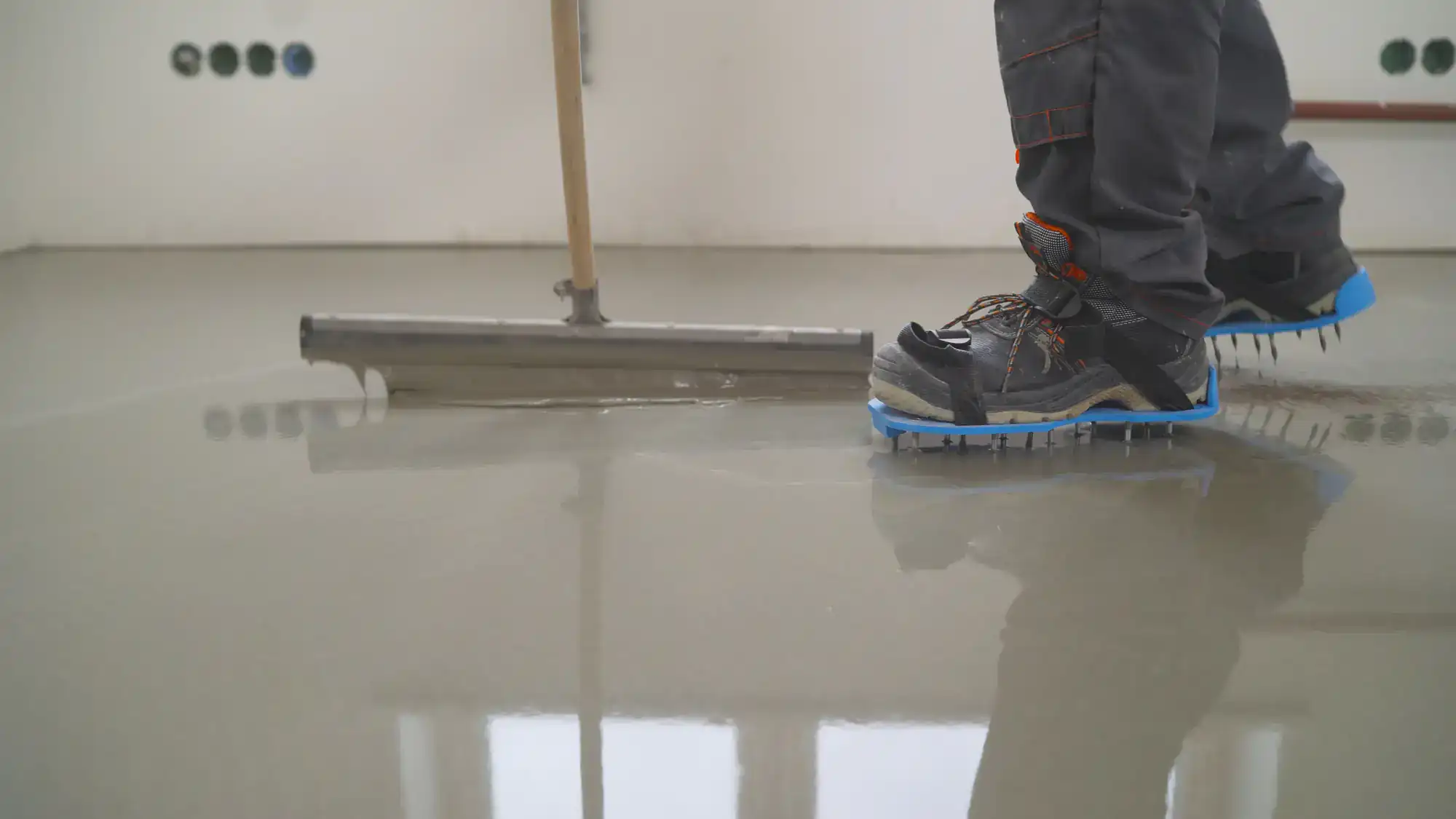
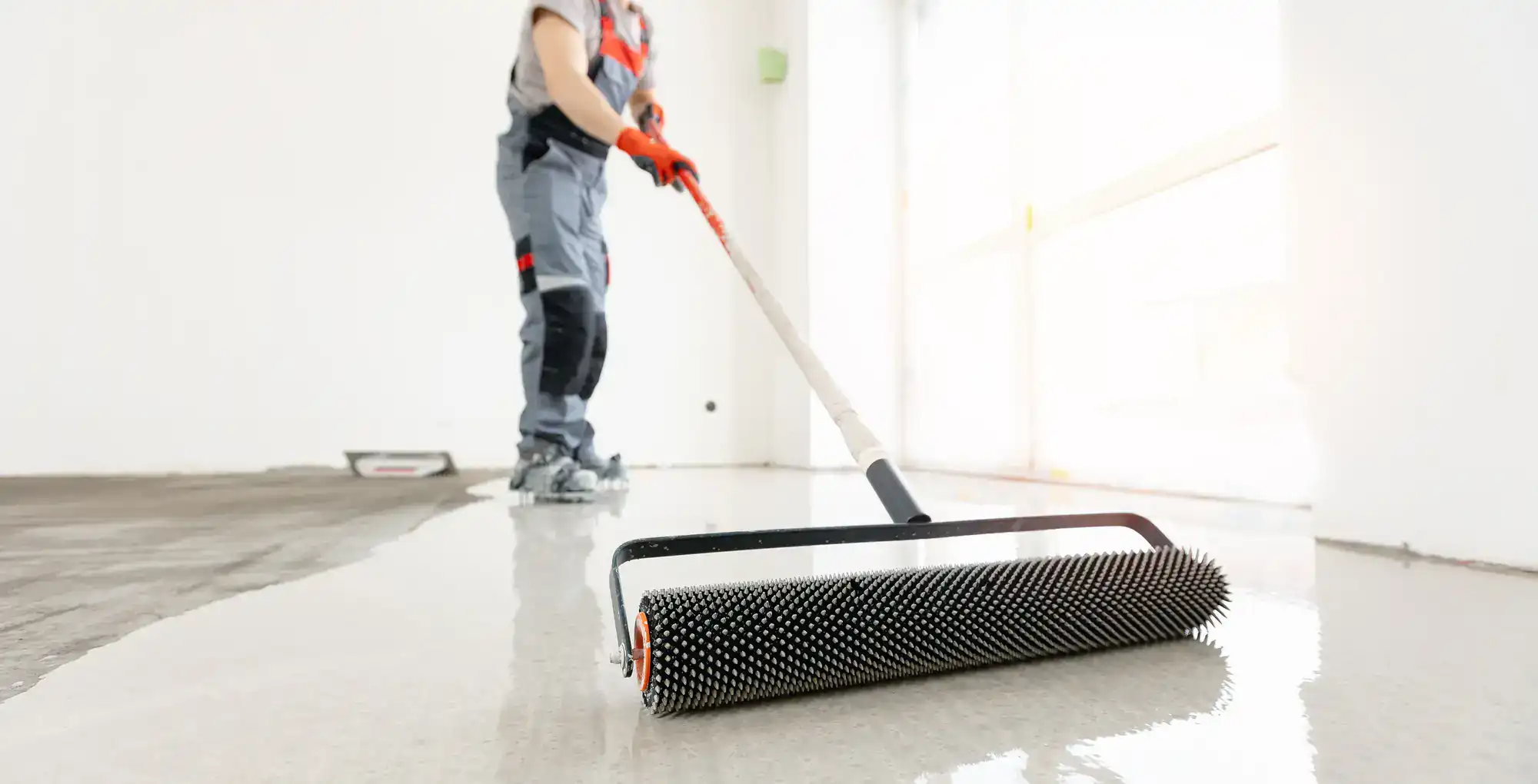
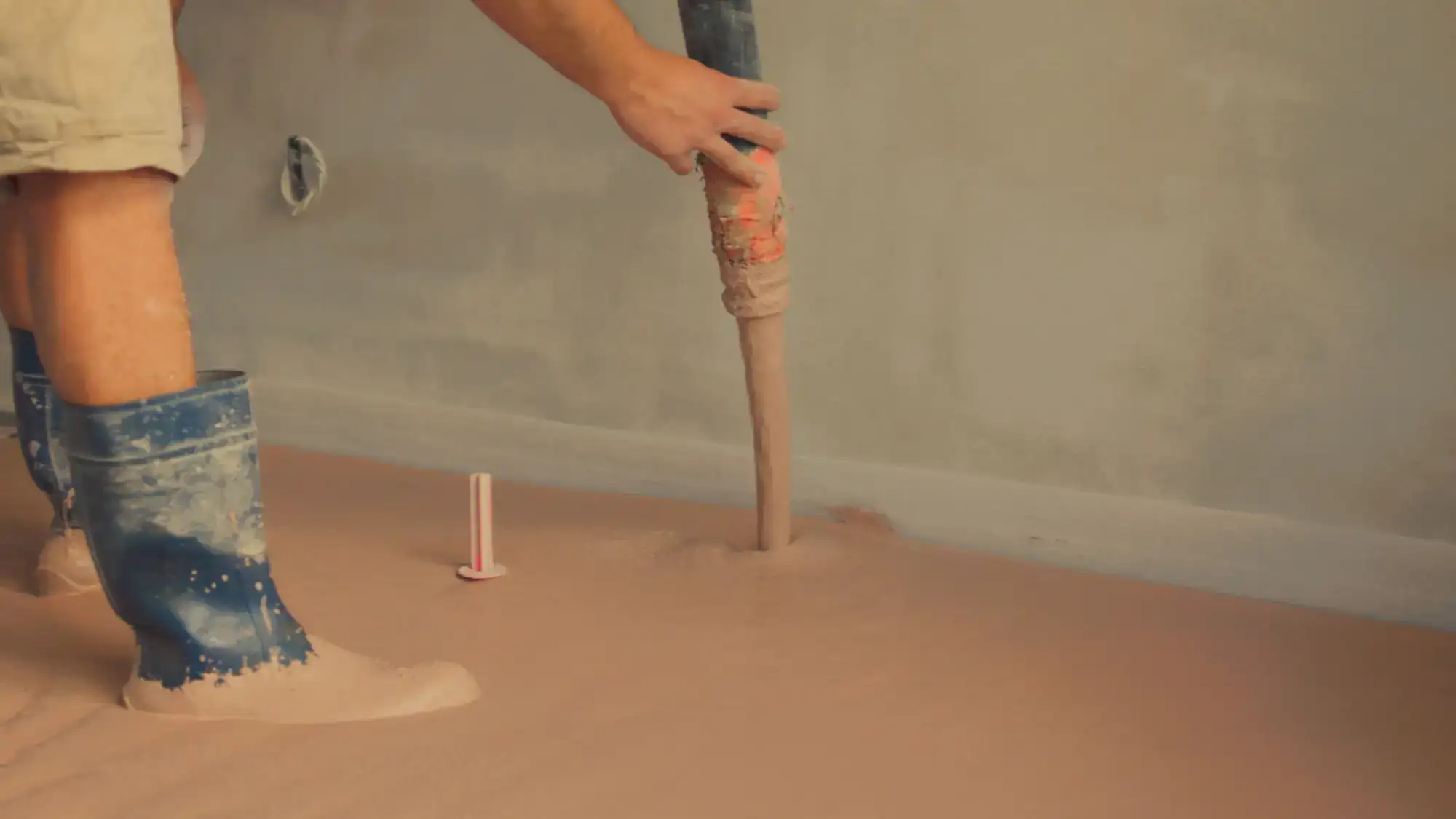
Once the slab passes moisture testing, the surface is ground and prepped to remove any contamination, loose material, or high spots that would interfere with bonding. Then a primer is applied this is what locks the self leveling compound to the substrate and prevents it from lifting over time. The pour follows, and because the system we use has high flow characteristics, it self-distributes across the surface and finds level without aggressive manipulation.
Depth of correction ranges from a quarter inch up to five inches with aggregate, so whether you’re dealing with minor surface variation in a Franklin Square basement or a significant depression in a commercial floor, the system handles it in a single visit. Foot traffic is typically possible within two hours. Most floor coverings can go down within twelve hours. For commercial clients on the Hempstead Turnpike corridor, that turnaround is the difference between a manageable project and a costly closure.
Ready to get started?
This isn’t a pour-and-leave operation. Every self leveling job we do starts with a real assessment of the substrate its age, its moisture content, its surface condition, and the depth of correction needed. For Franklin Square’s aging residential slabs, that often means identifying areas where the concrete has settled unevenly over decades or where prior moisture infiltration has compromised the surface. For commercial floors along Hempstead Turnpike, it means understanding the load requirements and traffic patterns the finished floor will need to handle.
The self leveling underlayment we use is a high strength, polymer-modified cementitious system not a big-box store bag mix. It’s engineered for low shrinkage, long working time, and a compressive strength that holds up under real-world conditions. It installs over interior concrete, plywood, and other approved surfaces, which matters in Franklin Square where expanded Cape Cods and finished basements often have mixed subfloor conditions. The system is approved for use beneath tile, luxury vinyl plank, hardwood, and most other finish flooring products.
What you’re getting is a complete substrate solution moisture testing, surface prep, priming, and the pour itself handled by one crew under one accountability structure. No handoffs, no finger-pointing if something goes wrong. For Nassau County homeowners protecting a home that’s worth close to $700,000, and for commercial operators who can’t afford a floor failure, that single-source accountability is exactly what the job calls for.
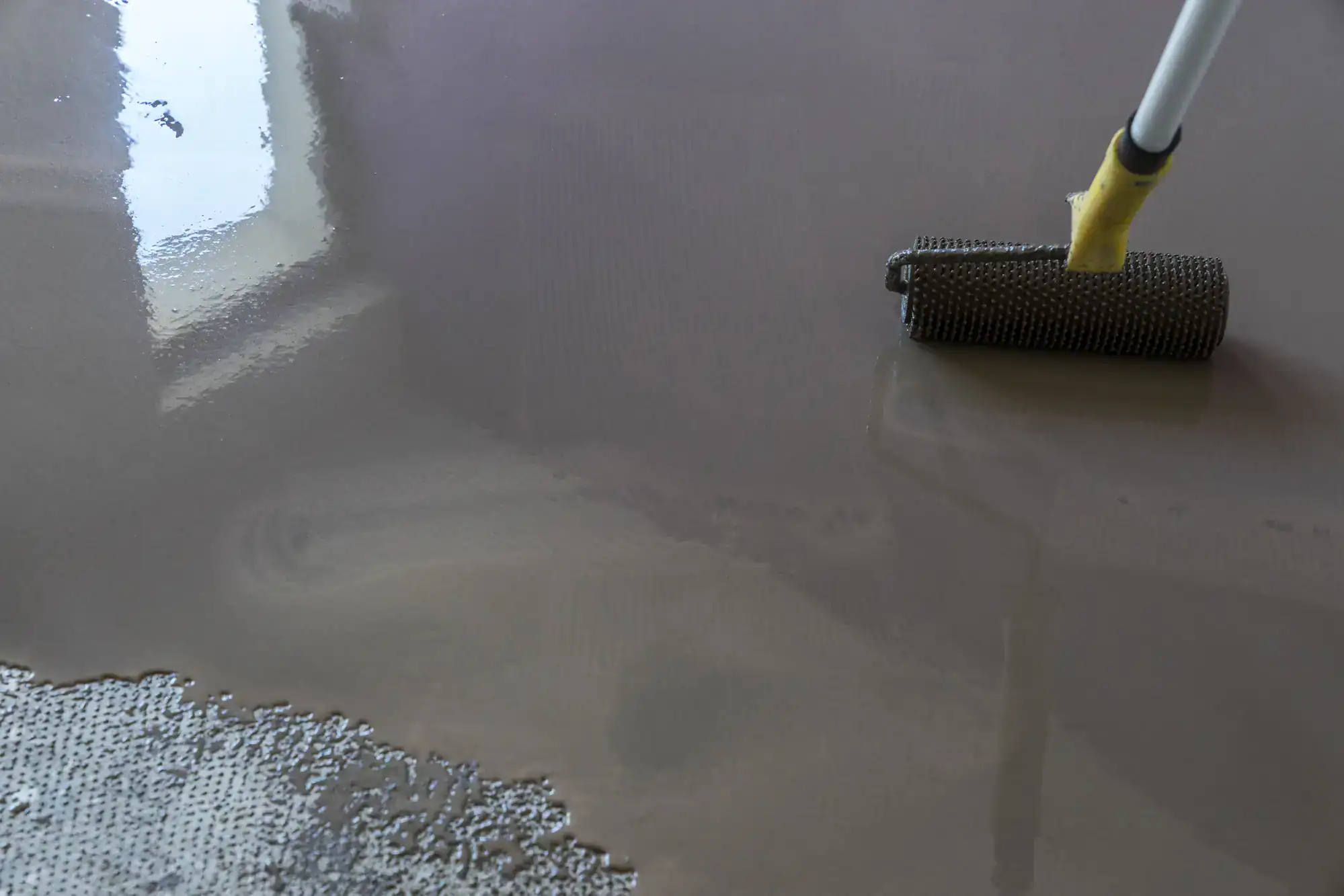
It comes down to two things: the age of the concrete and the soil underneath it. Most homes in Franklin Square were built between the late 1940s and early 1950s, which means the concrete slabs in those basements are now 70 years old or more. They were poured without modern vapor barriers, with lower-grade formulations, and without the surface prep standards used today.
On top of that, the clay-heavy soil common throughout western Nassau County absorbs water, expands, and puts sustained pressure on foundation slabs. Every winter freeze-thaw cycle opens micro-cracks a little wider. Every heavy rain event adds more hydrostatic pressure. Over time, sections of the slab settle at different rates, and what was once a flat floor develops dips, humps, and uneven areas that make it impossible to install a new floor covering without addressing the substrate first.
Self leveling concrete fills those low spots and brings the entire surface back to a consistent plane but only if the moisture issue is diagnosed and managed before the pour. That’s the part most contractors skip, and it’s the reason so many self leveling jobs in older Franklin Square homes fail within the first year.
The honest answer is that it depends on what’s causing the unevenness and what you’re installing over it. If your floor has isolated cracks or small damaged areas but is otherwise flat, targeted concrete repair may be all you need. But if you’re seeing consistent variation across the surface areas that are visibly higher or lower than others, flooring that won’t sit flat, tile that keeps cracking in the same spots that’s a substrate problem, not a surface problem.
The tolerance requirement also matters. Older vinyl and carpet products were more forgiving of minor variation. Today’s larger-format tiles and thinner luxury vinyl plank products require a much flatter substrate typically no more than 3/16 of an inch over a 10-foot span. If your floor doesn’t meet that standard, the new floor covering will fail regardless of how well it’s installed.
The best way to know for certain is to have someone assess the floor in person, measure the variation, and tell you honestly what level of correction is needed. That assessment should include a moisture test, because in Franklin Square’s older housing stock, elevated moisture vapor is common and changes what products and prep steps are appropriate.
Yes, in most cases but the existing slab has to be properly prepared first. Self leveling compound doesn’t bond well to dusty, contaminated, or structurally compromised concrete. Before the pour, the surface needs to be mechanically ground to open the pores of the concrete, remove any residue from previous coatings or adhesives, and create a clean profile for the primer to bond to.
Priming is the step that most DIY attempts and inexperienced contractors skip, and it’s the single biggest reason self leveling jobs fail. The primer is what creates the chemical bond between the old concrete and the new underlayment. Without it, the compound sits on top of the slab rather than bonding to it, and it will eventually lift or delaminate especially in a high-moisture environment like a Franklin Square basement where vapor pressure from below is a constant factor.
If the existing slab has significant structural damage deep cracks, active movement, or areas where the concrete has completely deteriorated those need to be repaired before leveling begins. Pouring over an unstable substrate just buries the problem. A proper assessment before the job starts determines exactly what prep is needed so the self leveling layer performs the way it’s supposed to.
With the polymer-modified cementitious system we use, light foot traffic is typically possible within two hours of the pour. Most floor coverings including tile, luxury vinyl plank, and hardwood can be installed within twelve hours under normal conditions. That’s a significantly faster turnaround than standard concrete repair methods, which is one of the main reasons self leveling underlayment is the preferred approach for renovation projects where other trades are waiting to move in behind it.
That said, cure time can be affected by ambient temperature and humidity. In the summer months, when Franklin Square’s humidity levels are elevated, it’s worth confirming that the slab’s moisture readings are within acceptable range before the finish floor goes down. Installing tile or LVP over a self leveling underlayment that hasn’t fully cured or over one that’s still off-gassing moisture vapor can cause adhesive failure, tile lifting, or LVP buckling. The twelve-hour guideline assumes normal interior conditions, adequate ventilation, and a substrate that was properly tested and prepared before the pour.
The core process is the same moisture testing, surface prep, priming, and the pour but the specifications change based on what the floor will be asked to handle. Commercial floors along Hempstead Turnpike, particularly in restaurants and retail spaces, are subject to heavier foot traffic, rolling loads from equipment, and in kitchen environments, constant exposure to water, cleaning chemicals, and temperature variation. Those conditions require a self leveling system with a higher compressive strength rating and, in many cases, a finish floor system designed specifically for commercial use.
Depth of correction is also more common in commercial settings. A restaurant kitchen floor that’s been in service for twenty or thirty years may have areas with significant depression or damage that require a deeper pour. The system we use installs up to two inches neat and up to five inches with aggregate addition, which covers the full range of correction depth in a single visit without needing to bring in a separate contractor for deeper areas.
For commercial clients, return-to-service time is the other major factor. Closing a Hempstead Turnpike business for three days is a real financial hit. The fast-curing concrete leveler system we use gets most commercial spaces back to operational within 24 hours which is the realistic window most business owners need to make the project workable without a major disruption to revenue.
Self leveling underlayment can absolutely be installed in a high-moisture environment but the moisture has to be properly assessed and managed first, not ignored. In Franklin Square, elevated moisture vapor in basement and ground-floor slabs is common. The clay-heavy soil, the high water table, and the age of the concrete all contribute to moisture vapor emission rates that can exceed what most floor covering adhesives and underlayment systems are designed to handle.
Before any pour, we perform ASTM F2170 relative humidity testing to measure the actual moisture condition of the slab. If readings are within acceptable limits below 80% RH the installation can proceed with standard prep and priming. If readings are elevated, the appropriate moisture mitigation step has to happen first. That might mean a moisture-tolerant primer, a vapor barrier coating, or addressing the source of the moisture before the underlayment is installed.
What you should avoid is hiring a contractor who doesn’t test at all. Pouring self leveling compound over a slab with elevated moisture and no mitigation is the most common reason these jobs fail in older Franklin Square homes. The underlayment delaminates, the finish floor fails, and you’re back to square one except now you’ve paid for two installations instead of one. Doing the moisture test upfront isn’t extra it’s what makes the rest of the job worth doing.
Other Services we provide in Franklin Square