
Skydrol doesn’t care what brand of epoxy you used. Neither does jet fuel, hydraulic fluid, or the industrial degreasers your crew runs through a maintenance bay on a regular basis. A generic floor coating the kind sold at a big-box store or installed by a general contractor who also does basements will start breaking down within months of real aviation use. The chemistry isn’t right for the environment, and no amount of marketing language changes that.
What you actually need is a system formulated for aviation exposure, installed on properly prepared concrete, with a topcoat that’s been tested for slip resistance not just “textured.” In a working hangar, a dropped bolt or a puddle of Skydrol near your crew’s feet are real hazards. The floor is part of the safety equation, not just the aesthetic.
Franklin Square sits in Nassau County’s coastal humidity zone, and large concrete hangar slabs in this region are particularly vulnerable to moisture vapor transmission especially in buildings from the 1950s through 1970s, which make up a significant portion of the commercial and industrial building stock in and around the area. If moisture testing is skipped before installation, delamination is almost inevitable. The right contractor tests first, prepares the slab correctly, and builds a system that the Long Island climate can’t undo in two years.
We’re based in Bohemia, NY a straight shot east from Franklin Square on the Southern State Parkway. Advanced Epoxy Flooring has been installing resinous floor systems for over 30 years, and our founder, Danny Harmer, has been doing this work personally for over 40 years. That’s not a bio line that’s the difference between a company that has seen every type of concrete failure on Long Island and one that’s still figuring it out.
Our crew reflects the same standard. Most of our field team has been with us for more than a decade, and every installer carries OSHA 40 certification. We hold dual factory-trained certifications in Sherwin-Williams High Performance Flooring and Res Tech the most rigorous applicator credentials available in the resinous flooring industry. For Nassau County hangar operators who need to demonstrate code compliance to a building inspector or fire marshal, those credentials matter in a real, documented way.
We’ve installed floors across the United States, internationally, and in 1996 completed an installation at the White House kitchen. The same process discipline we applied there gets applied to every hangar floor near Franklin Square, NY.
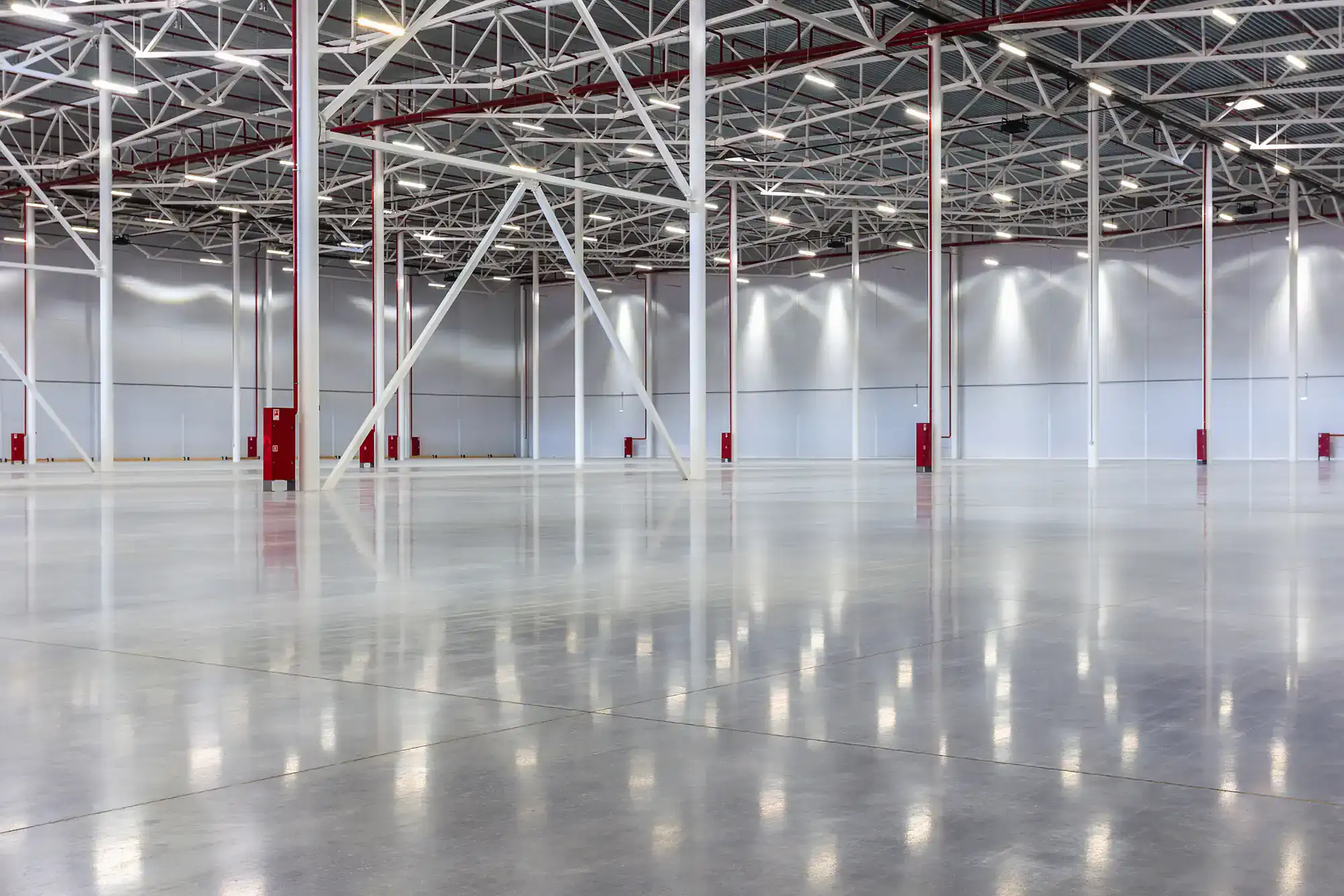
Before anything gets applied to your slab, we evaluate the concrete. That means moisture vapor testing a step that’s critical in Franklin Square’s coastal climate, where summer humidity regularly runs between 70 and 85 percent and large slabs hold moisture that can destroy coating adhesion from underneath. If there’s an existing coating, oil contamination, or surface damage, we address that before the new system goes down. Skipping prep to save time is the reason most hangar floors fail early. We don’t skip it.
Once the slab is ready, we diamond grind it to create the surface profile that allows the coating system to bond correctly. Cracks and spalls get repaired. Then the system is built in layers primer coat, build coat, and a UV-stable topcoat that meets the National Flooring Safety Institute’s requirements for slip resistance. This isn’t a one-day roll-and-go job. It’s a staged process, and the staging is what makes the difference between a floor that lasts 15 to 20 years and one that starts peeling before the next annual inspection.
For active hangars where downtime is a real operational concern, polyaspartic systems cure fast enough to return aircraft to the hangar within 24 hours of final coat application. That matters when your aircraft is sitting on the ramp and the weather on Long Island is doing what it does. The Town of Hempstead’s permitting requirements for commercial flooring work are something we navigate regularly you won’t be left managing that piece on your own.
Ready to get started?
The systems we install for aircraft hangar floor coatings in Franklin Square, NY are specified for aviation environments meaning the chemistry is formulated to resist Skydrol hydraulic fluid, jet fuel, lubricants, and the industrial cleaning solvents used in active maintenance bays. This is not the same product used in a residential garage or a retail showroom. The distinction matters because NFPA 409, the standard governing aircraft hangars in New York State, requires floor surfaces to be noncombustible. Most generic epoxy products don’t meet that standard. Our systems do, and that compliance is verifiable which matters when the Nassau County Fire Marshal or the Town of Hempstead’s building department is involved.
The high-gloss finish options we offer aren’t just an aesthetic choice. In a working maintenance environment, a light-reflective floor surface makes Foreign Object Debris dropped tools, fasteners, safety wire immediately visible against the floor. That’s a real operational safety benefit in any hangar where aircraft engines are running or being serviced.
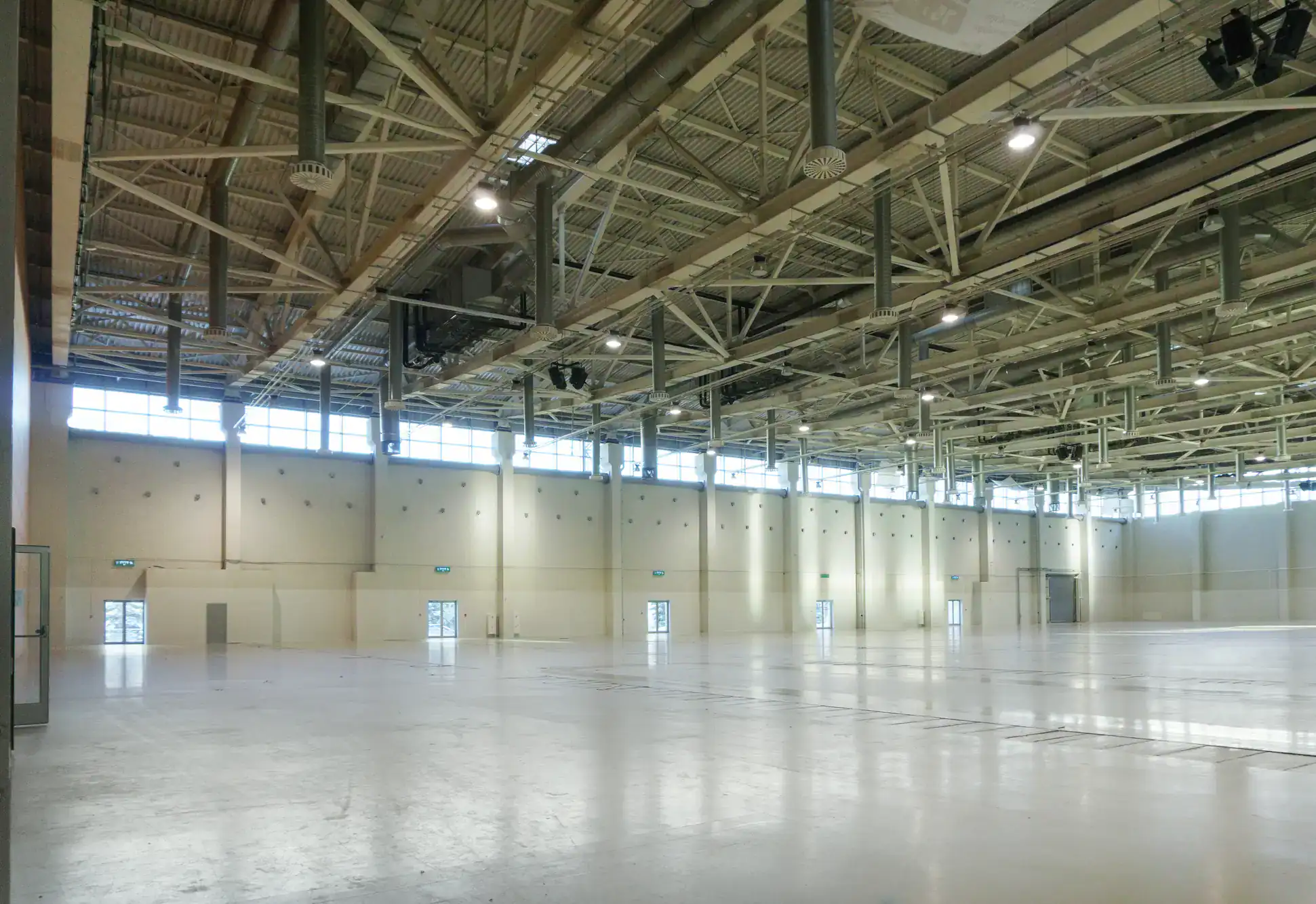
Whether you’re coating a private T-hangar near Republic Airport, a corporate facility in western Nassau County, or a Part 145 maintenance bay, we specify the system to match the actual use of your space. Installation scope, system selection, and prep requirements are assessed based on your specific slab condition, building age, and operational demands not a one-size-fits-all quote pulled from a price sheet.
Yes, and this is one of the most commonly overlooked requirements when hangar owners in Franklin Square and the broader Nassau County area start getting quotes. NFPA 409 is the National Fire Protection Association’s standard for aircraft hangars, and it requires floor surfaces to be noncombustible. That standard is enforced locally by the Town of Hempstead’s building department and the Nassau County Fire Marshal both of which have jurisdiction over commercial hangar facilities in and around Franklin Square.
The practical implication is that many generic epoxy products sold for garage or light commercial use don’t meet this requirement. If a contractor installs a non-compliant system and your facility gets inspected, you’re looking at a code violation, potential insurance complications, and the cost of grinding and recoating. The systems we install for aircraft hangar floor coatings in Franklin Square, NY are specifically formulated to meet NFPA 409’s noncombustibility requirements and that compliance is documented, not just claimed.
Both are resinous coating systems, but they behave differently in aviation environments and in Long Island’s climate. Standard epoxy systems are durable and cost-effective, but they typically require multi-day cure windows and can be sensitive to temperature and humidity during application which is a real consideration in Franklin Square, where summer humidity runs high and winter temperatures in unheated hangars can drop well below the cure threshold for some epoxy formulations.
Polyaspartic systems cure significantly faster aircraft can typically return to the hangar within 24 hours of final coat application and they have a broader temperature tolerance, making them more practical for installations that can’t wait for a perfect weather window. Polyaspartic systems also tend to hold up longer under heavy aviation chemical exposure, with service life estimates of 15 to 20 years in high-use environments compared to 5 to 7 years for standard epoxy under similar conditions. For active hangars near Republic Airport where downtime is a real operational cost, the faster return-to-service alone often justifies the difference in upfront investment.
It’s one of the most significant variables in any hangar floor project in Franklin Square and Nassau County, and it’s the reason moisture vapor testing is mandatory before any coating goes down. Franklin Square sits in Long Island’s coastal humidity zone, where summer relative humidity regularly reaches 70 to 85 percent. Large concrete hangar slabs especially those in buildings from the 1950s through 1970s, which are common in this area hold significant moisture that creates upward vapor pressure against any coating applied to the surface.
When that moisture pressure isn’t accounted for, it pushes up from beneath the coating and breaks the bond between the system and the concrete. The result is delamination bubbling, peeling, and lifting that can start appearing within months of installation. This isn’t a rare failure mode on Long Island; it’s a predictable outcome when prep work is skipped. Mandatory moisture vapor assessment before installation is how that outcome gets avoided. It adds time to the front end of the project, but it’s the difference between a floor that lasts two years and one that lasts twenty.
Surface preparation is where most hangar floor coating failures actually start not in the coating itself, but in what happened, or didn’t happen, to the concrete before the first coat went down. The process begins with diamond grinding the entire slab surface to create the mechanical profile that allows the coating system to bond correctly. Without that profile, even the best coating system will eventually separate from the concrete regardless of how well it’s applied.
After grinding, the slab gets inspected for cracks, spalls, and areas of previous coating or contamination. Oil contamination is common in hangars that have been in active use it penetrates the concrete and has to be addressed specifically, not just ground over. Cracks and spalls get repaired with compatible materials before any coating goes on. In older Nassau County commercial buildings, you may also encounter concrete that has chloride contamination from years of coastal air exposure, which affects adhesion and has to be factored into the system specification. All of this happens before the primer coat is applied and none of it is optional if the goal is a floor that actually holds up.
The honest answer is that it depends on the size of the space, the condition of the existing slab, and the coating system selected. A straightforward polyaspartic installation in a well-prepared T-hangar can move quickly with aircraft typically able to return to the hangar within 24 hours of final coat application. A larger corporate hangar or a slab that needs significant crack repair, contamination remediation, or moisture mitigation will take longer on the front end before coating even begins.
For planning purposes, most hangar floor projects in the Franklin Square and Nassau County area run between two and five days from start to final cure, depending on scope. The best time to schedule in this region is typically early spring or fall, when temperatures are moderate and humidity is manageable conditions that support optimal cure times and application quality. Summer installations are workable but require more careful management of humidity and temperature during application. If your aircraft needs to stay on the ramp during the project, scheduling around the weather forecast is something worth discussing during the assessment phase.
It’s genuinely functional, and in a maintenance environment it’s arguably more important than how it looks. A high-gloss, light-reflective floor surface dramatically improves visibility of Foreign Object Debris the dropped fasteners, safety wire clips, and small hardware that can disappear on a dark or matte floor and end up causing serious damage if ingested by an engine or a landing gear system. In any hangar where maintenance work is being done, that visibility is an operational safety consideration, not a cosmetic preference.
The other practical concern is the slip resistance question, which comes up often with high-gloss finishes. A glossy floor that’s covered in jet fuel or hydraulic fluid is a serious hazard if the topcoat wasn’t specified correctly. The topcoat we use in our aviation facility epoxy flooring installations meets the National Flooring Safety Institute’s requirements for slip resistance meaning it’s been tested under real conditions, not just described as “textured.” For hangar operators in Franklin Square and the broader Nassau County area who are responsible for crew safety in their facility, that tested standard is what gives the finish its actual value.
Other Services we provide in Franklin Square