
When the slab underneath your flooring isn’t flat, nothing installed on top of it will last the way it should. Large-format tile cracks at the grout lines. Luxury vinyl plank develops visible humps and dips. Hardwood starts to creak and shift within a year. Getting the subfloor right before anything goes down is not optional it’s the whole job.
Elmont’s housing stock makes this especially relevant. With a median construction year of 1952, most homes here have concrete subfloors that are 70 to 80 years old. Decades of freeze-thaw cycling through Nassau County winters, groundwater movement near the western Nassau water table, and the cumulative wear of multiple flooring replacements leave slabs with irregularities that no amount of adhesive or underlayment foam can hide. Professional concrete floor leveling services in Elmont, NY address the actual problem not just the surface.
The result on the other side is straightforward: a floor that installs correctly, looks right, and holds up for years without callbacks or failures. Whether you’re renovating a kitchen in Alden Manor or updating a commercial space near Hempstead Turnpike, a properly leveled slab is what makes the finished floor worth what you paid for it.
We’ve been installing floors since 1996 including the White House kitchen that same year. That’s not a throwaway line. It means we’ve been trusted with demanding, high-scrutiny work from day one, and we’ve been doing it on Long Island ever since. We hold an A+ BBB rating, our crew is OSHA 40 certified, and most installers have been with us for over a decade.
For Elmont homeowners and commercial clients near the Belmont Park corridor, that kind of stability matters. You’re not getting a rotating crew of subcontractors you’re getting the same experienced team that has worked through Nassau County’s specific conditions for 30 years. We understand the age of the slabs in Elmont, the moisture challenges that come with western Nassau’s water table, and what it actually takes to prep a subfloor correctly in this market.
Our approach is straightforward: assess the slab honestly, explain what we find, and recommend what’s actually needed. No upsell, no surprises.
The process starts before any material touches your floor. Moisture testing comes first every time, without exception. In Elmont specifically, ground-level and basement slabs are particularly vulnerable to elevated moisture vapor emission rates due to the area’s proximity to the coastal plain and western Nassau’s water table. Skipping this step is the single most common reason self leveling systems fail, and it’s the step most contractors quietly skip. ASTM F2170 relative humidity testing is part of our baseline process here, not an add-on.
Once moisture levels are confirmed and within acceptable range, we clean, profile, and repair the slab. Any cracks, spalls, or weak spots are addressed before the leveling compound goes down. This matters because self leveling concrete follows the surface beneath it if that surface has loose material or open cracks, the pour will reflect those problems rather than correct them.
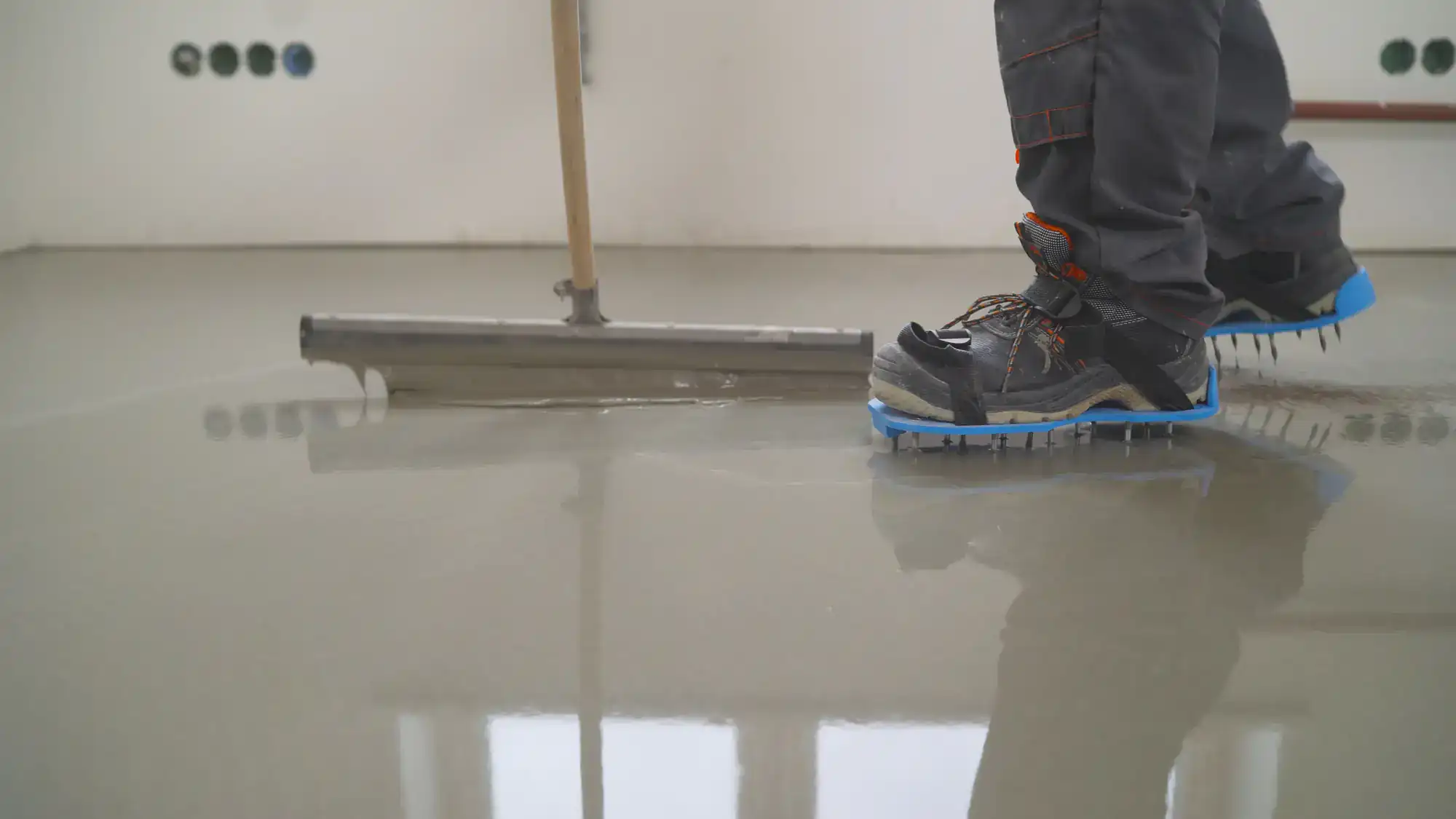
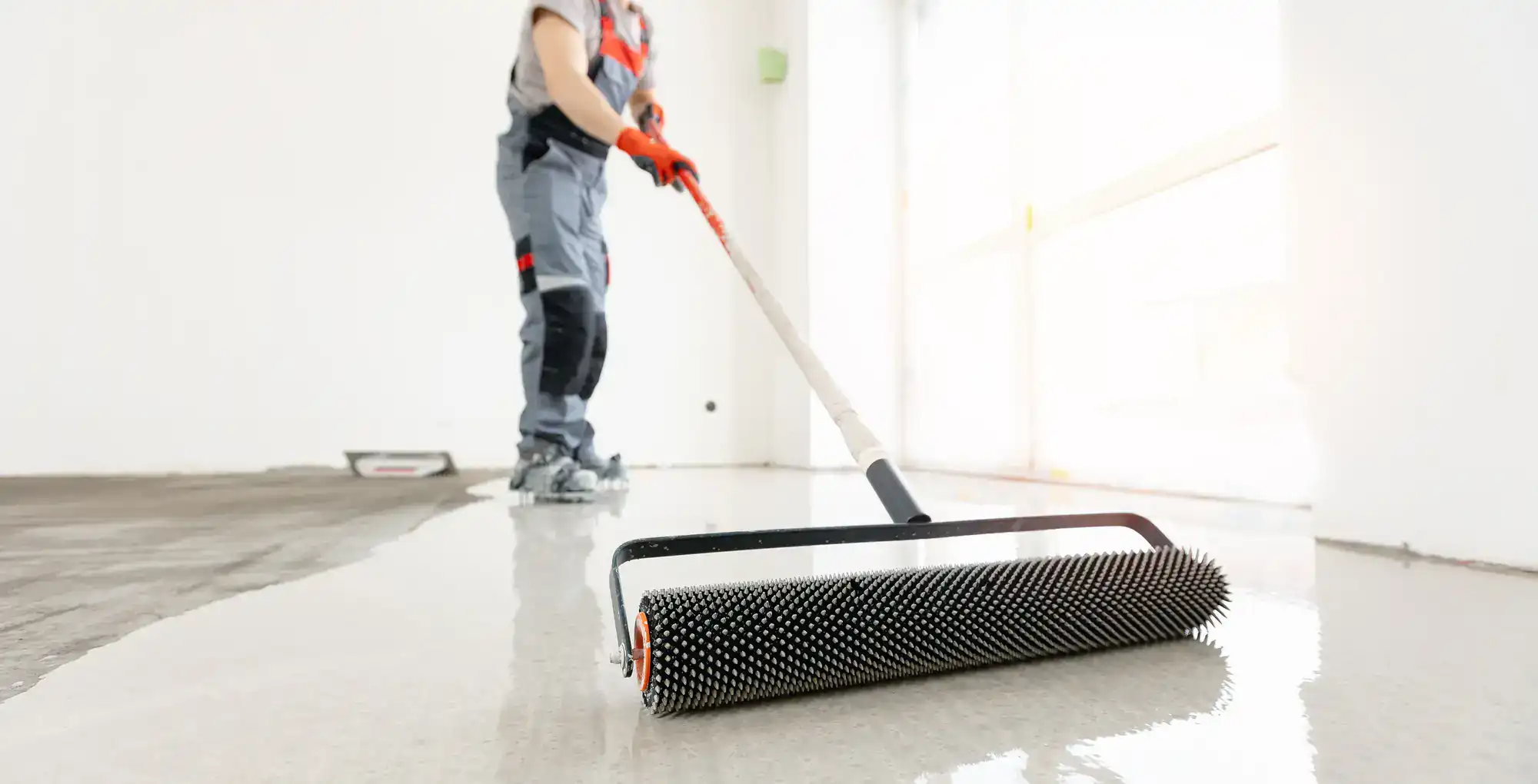
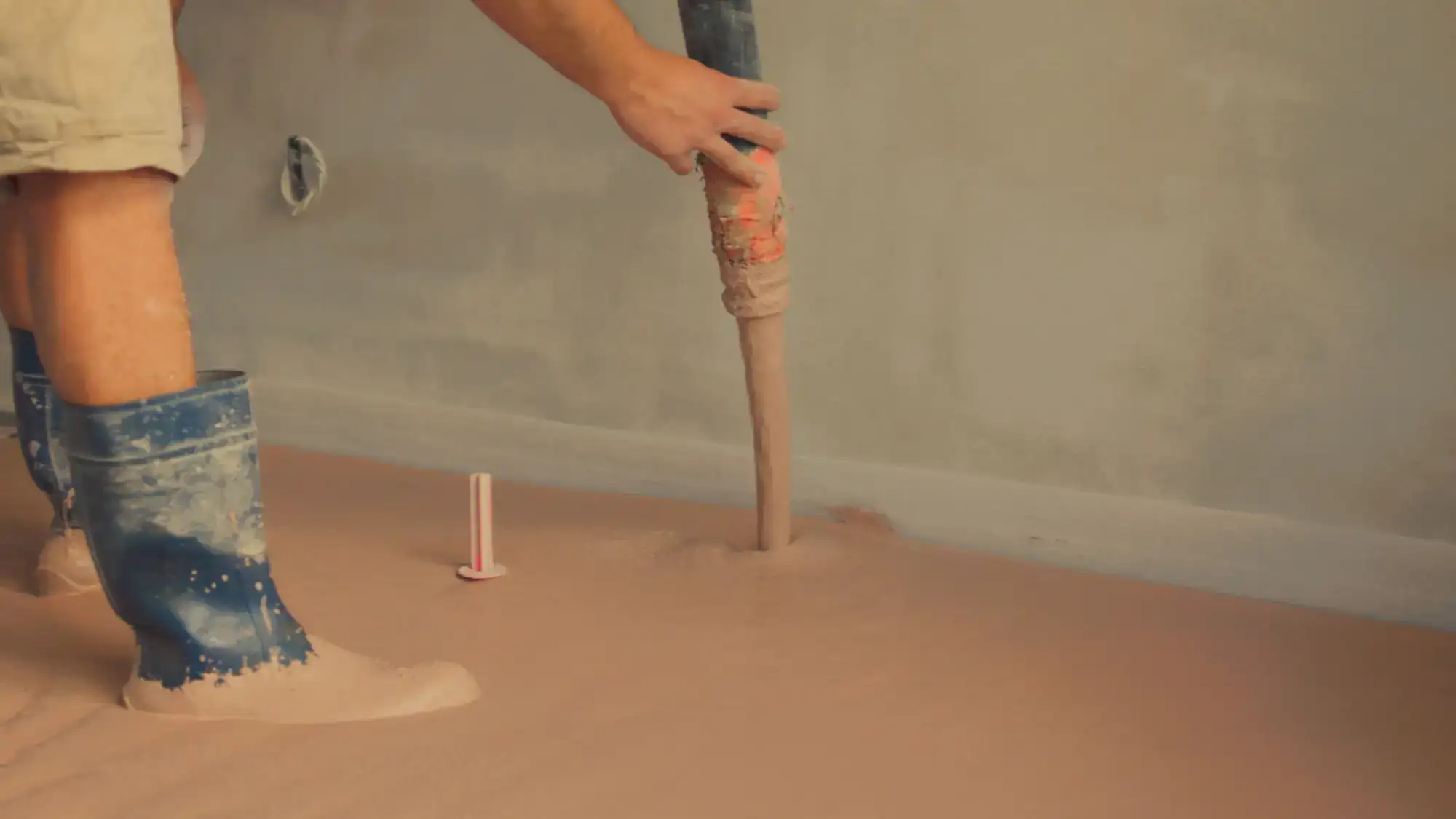
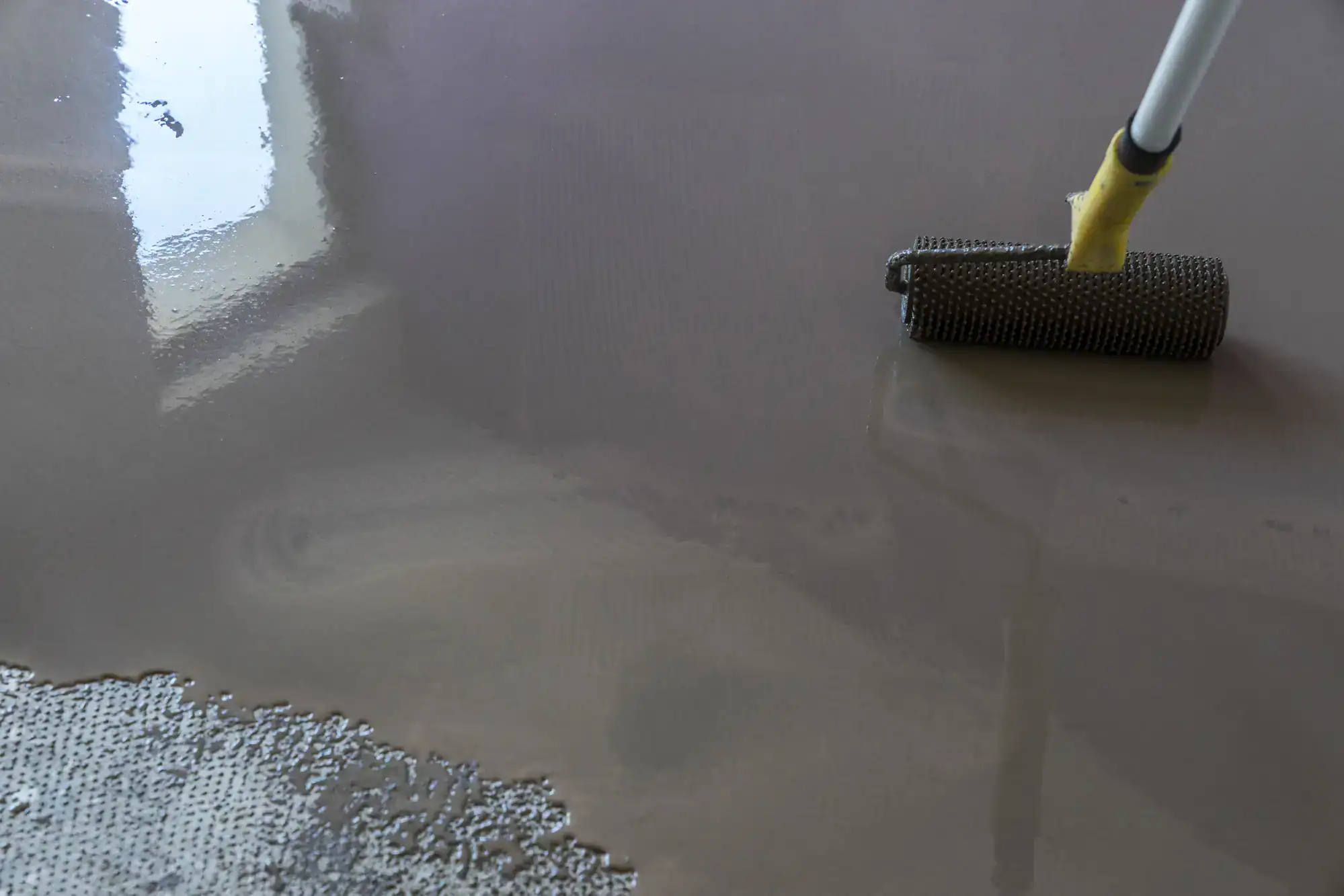
From there, the high strength self leveling concrete in Elmont, NY is mixed and poured to the required depth. The system we use can be installed from a quarter inch up to five inches with aggregate all in a single pour, all by the same crew. Foot traffic is typically possible within four to six hours. Heavy commercial use within 24 to 48 hours. The next flooring layer goes down on a surface that’s genuinely flat and genuinely ready.
Ready to get started?
The self leveling underlayment we deliver in Elmont is not a standalone patch job it’s part of a complete flooring system. Moisture testing, concrete preparation, crack repair, self leveling underlayment, and the final floor coating are all handled by the same crew under one contract. For homeowners managing a renovation in a dense neighborhood where disruption needs to stay minimal, that single point of accountability is not a small thing.
The cementitious self leveling underlayment we use is a high-flow, polymer-modified system not the consumer-grade bags from the hardware store. It’s factory-trained application, which means the right product is matched to the specific depth, substrate condition, and use case of your slab. A quarter-inch skim coat before new tile in a Locustwood kitchen is a different job than a two-inch commercial correction on a Hempstead Turnpike retail space, and the material selection reflects that.
For commercial clients near the Belmont Park Village or along the Hempstead Turnpike corridor, fast curing concrete leveler options mean minimal downtime a critical factor for restaurants, retail tenants, and hospitality operators who can’t afford extended closures. Commercial floor leveling solutions in Elmont, NY from Advanced Epoxy Flooring are built around ASTM compliance, OSHA-certified crews, and the kind of scheduling flexibility that high-traffic commercial spaces actually need.
Yes and Elmont’s housing stock is actually one of the most common scenarios where self leveling concrete delivers the most value. Homes built in the late 1940s and early 1950s were poured quickly, without modern vapor barriers or polymer admixtures, and they’ve spent 70-plus years dealing with Nassau County’s freeze-thaw cycles and groundwater movement. The result is often a slab that’s uneven, has surface scaling, or has low spots near doorways and transitions.
The key is proper preparation before the pour. Old slabs need to be cleaned, profiled, and repaired before any leveling compound goes down. Loose material, open cracks, and contaminated surfaces have to be addressed first otherwise the compound bonds to a compromised substrate and the failure follows quickly. When the prep is done correctly, self leveling concrete adheres well to older slabs and provides a surface that modern flooring materials can be installed on without issue. Age of the slab is rarely the limiting factor. Condition and preparation are.
Concrete floor leveling in the Nassau County market generally runs somewhere between $750 and $6,000 or more depending on the scope of the job. The variables that move the number most are square footage, the depth of correction needed, the condition of the existing slab, and whether moisture remediation is required before the pour.
In Elmont specifically, older homes with ground-level or basement slabs often carry moisture-related considerations that can affect the scope not always, but often enough that it’s worth factoring into your planning. A simple quarter-inch skim coat before new tile in a bathroom is toward the lower end of that range. A significant slab correction in a kitchen or basement conversion, or a commercial space requiring ASTM-compliant tolerances, will be toward the higher end. The best way to get an accurate number is a direct assessment of the slab what looks like a minor irregularity from the surface can sometimes reflect a deeper issue, and what looks severe is sometimes straightforward to correct. An honest evaluation upfront keeps the estimate accurate and the project on track.
For foot traffic, most professional-grade self leveling systems are ready within four to six hours of the pour. For the installation of the next flooring layer tile, luxury vinyl plank, hardwood, or a resinous coating the typical wait is 24 hours under normal conditions. Heavy commercial traffic is generally acceptable within 24 to 48 hours.
That said, conditions in Elmont during certain times of year can affect cure time. High humidity in the summer months common in western Nassau County can slow the drying process slightly, particularly in basement and ground-level spaces with limited airflow. Proper ventilation during and after the pour helps significantly. In cooler months, very low temperatures in unheated spaces can also extend cure time. These are manageable factors, not obstacles, but they’re worth accounting for in your project timeline. Your installer should walk you through what to expect based on the specific conditions of your space and the time of year the work is being done.
For most standalone self leveling underlayment installations where the scope of work is subfloor preparation as part of a flooring replacement a building permit is typically not required. Self leveling is considered interior surface preparation, not structural work, and it generally falls below the threshold that triggers a permit requirement in the Town of Hempstead.
However, if your self leveling project is part of a larger renovation a bathroom addition, a basement conversion to living space, a full kitchen gut renovation the overall project will likely require permits issued by the Town of Hempstead Building Department. Elmont is an unincorporated hamlet, which means there’s no village-level building department here. All permits for Elmont properties go through the Town of Hempstead directly. If you’re unsure whether your project scope triggers a permit requirement, it’s worth a quick call to the Town of Hempstead Building Department before work begins. A contractor who’s been working in Nassau County for 30 years will be able to give you a straightforward read on where your project falls.
Yes, and it’s actually the recommended preparation method for all three of those flooring types when the subfloor has irregularities. Large-format tile is particularly unforgiving even minor high spots or low spots can cause tiles to crack at the grout joint or produce hollow spots that fail under foot traffic. Luxury vinyl plank will telegraph subfloor imperfections through the surface over time, especially in high-traffic areas. Hardwood requires a flat, stable substrate to prevent squeaking, gapping, and movement.
The flatness tolerance required varies by flooring type. Most tile installations call for no more than 3/16 of an inch variation over a 10-foot span. Some manufacturers of large-format tile specify even tighter tolerances. Before any of those materials go down in an Elmont home, the subfloor needs to meet the flooring manufacturer’s flatness spec and self leveling underlayment is the most reliable way to get there. It’s also worth noting that if your floor is going over radiant heat, self leveling concrete is one of the few underlayment options compatible with in-floor heating systems, which is a consideration in some of the renovated homes in this area.
They’re not the same product, and using the wrong one is one of the most common reasons DIY floor prep fails before the finish flooring even goes down. Standard patching compound is designed for spot repairs filling a crack, fixing a spall, addressing a localized defect. It’s not engineered to flow, self-level, or create a flat plane across a large area. If you use it to try to level a low spot that’s two feet wide, it won’t behave the way self leveling compound does, and the result will show.
Professional self leveling concrete is a high-flow, polymer-modified cementitious material specifically formulated to seek its own level when poured. It spreads across the surface, finds the low points, and cures into a flat, hard substrate. The systems we use are factory-trained applications not hardware store bags and they’re matched to the specific depth and substrate condition of each job. In Elmont’s older housing stock, where slab conditions vary significantly from one property to the next, that product-matching step is what separates a floor that holds for 20 years from one that starts showing problems within the first year.