


You stop worrying about cracks turning into potholes. You stop scheduling repairs that shut down sections of your warehouse. You stop dealing with forklift damage that costs you in equipment maintenance and lost loads.
A proper industrial warehouse floor epoxy in Elmont gives you a seamless surface that holds up under the kind of traffic most coatings can’t handle. We’re talking forklifts with blades down, constant turning, heavy pallets dropped daily. The floor doesn’t chip. It doesn’t flake. It doesn’t need to be resealed every year.
Your maintenance costs drop because the floor isn’t breaking down. Your lighting improves because the surface reflects more light back into the space. Your team works safer because the floor stays level and slip-resistant even when wet.
After five years of heavy use, the floors we install still look new. That’s not marketing talk—that’s what happens when you use a forklift traffic resistant coating in Elmont that’s actually built for the job.
We’ve been installing high-traffic concrete sealer in Elmont and across the region for over 30 years. Our installers are OSHA 40 certified. Most of our crew has been with us for more than a decade. We’ve installed floors from the White House kitchen to warehouses in Moscow—but most of our work happens right here, in facilities like yours.
Elmont sits in a logistics corridor that demands serious flooring. Distribution centers, fulfillment operations, and manufacturing facilities here don’t have room for downtime or floors that fail under pressure. We get that because we’ve seen what happens when warehouses try to make cheap coatings work. They don’t.
We use a two-layer epoxy system that’s 30 mils thick with a Shore D hardness rating at the top of the scale. That’s not just thicker—it’s harder and more durable than what most contractors install.

We start with moisture testing. Concrete that looks dry can still have moisture issues that ruin a coating from underneath. If there’s a problem, we address it before anything goes down.
Next is surface prep. We use diamond grinding for warehouses in Elmont to open up the concrete pores and remove any contaminants, old coatings, or weak surface layers. This step determines how well the epoxy bonds. Skip it or do it poorly, and the floor fails early.
Then we apply the base coat—a high-build epoxy designed for adhesion and impact resistance. This layer soaks into the prepared concrete and creates the foundation. After that cures, we apply the topcoat, which is where the hardness and chemical resistance come in. The result is a monolithic surface with no seams where dirt, chemicals, or moisture can get under the coating.
We can customize the system based on what your facility needs. More slip resistance in high-foot-traffic zones. Extra chemical protection near battery charging stations. The install is fast enough that you’re not shut down for weeks, but thorough enough that the floor lasts decades.

Ready to get started?
Most epoxy coatings can’t handle the kind of abuse a working warehouse puts down. Forklifts with blades scraping the surface. Pallets dropped from height. Constant pivoting that grinds the same spots every day. Chemicals from batteries, hydraulic fluid, and whatever you’re storing.
Our system is built specifically for that. The 30-mil thickness gives you a coating that absorbs impact instead of cracking. The Shore D hardness means forklift tires don’t leave marks and blades don’t gouge the surface. We’ve tested this by running forklifts with blades down across the floor—something that would destroy a standard coating.
In Elmont’s industrial landscape, where logistics and distribution drive the local economy, your floor is infrastructure. It’s not cosmetic. A floor failure means downtime, safety risks, and costs that add up fast. The epoxy systems we install are designed to be the last floor you put in for decades.
You also get a surface that’s easy to clean and doesn’t need waxing or stripping. Spills wipe up. Dust doesn’t embed in the concrete. The reflective finish cuts down on lighting costs because you’re bouncing more of your existing light back into the workspace.
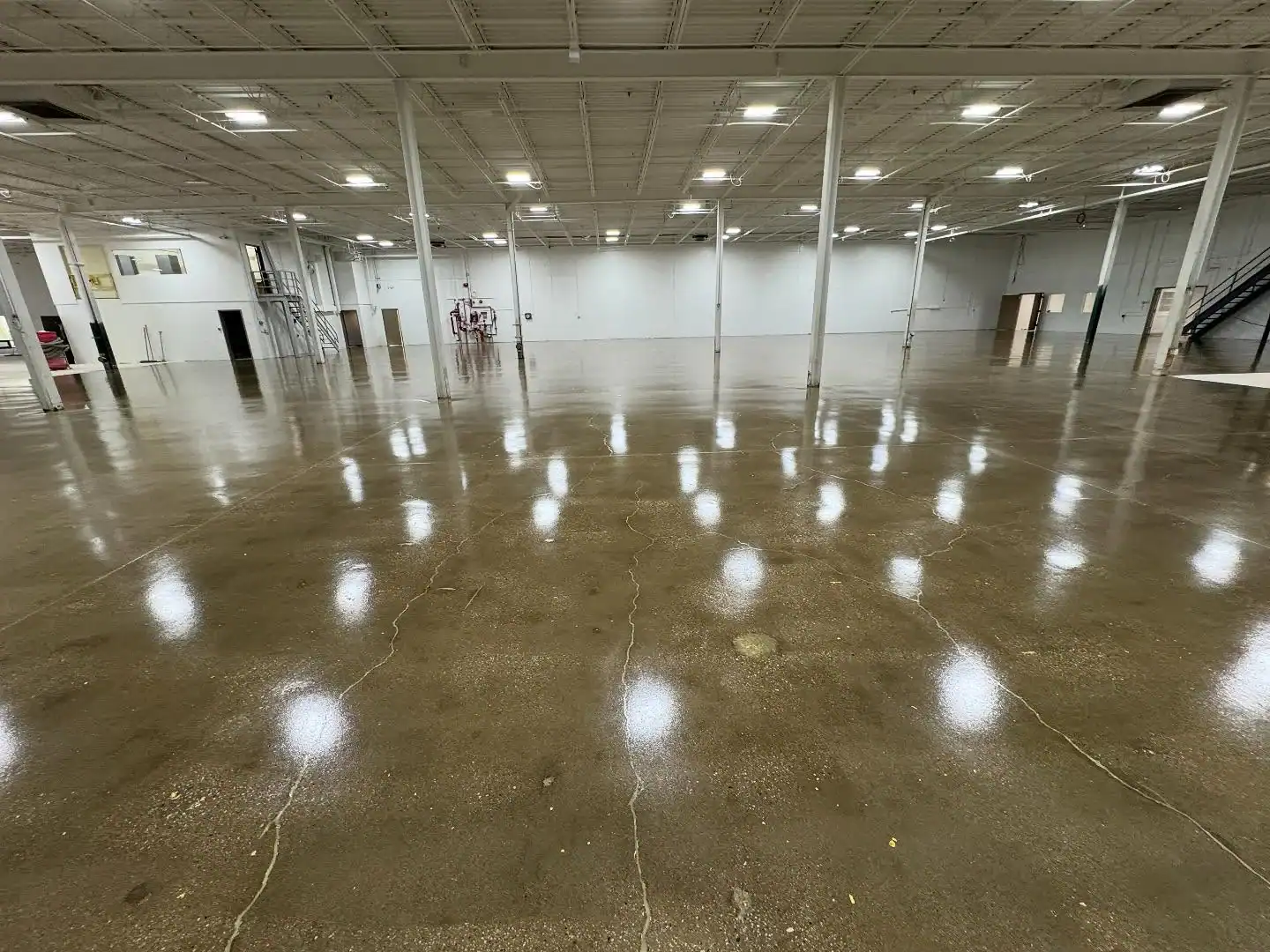
If it’s installed correctly with the right system, you’re looking at 20 to 30 years or more. We have floors we installed over five years ago that still look new despite constant forklift traffic, pallet drops, and the usual wear you’d expect in an active warehouse.
The key is thickness and hardness. A thin coating—anything under 20 mils—won’t hold up. It’ll start chipping within a year or two under real industrial use. Our system is 30 mils thick with a Shore D hardness rating that exceeds standard epoxy coatings. That means it can take the abuse without breaking down.
Surface prep also matters. If the concrete isn’t properly ground and cleaned, even the best coating will delaminate. We use diamond grinding to ensure the epoxy bonds at a molecular level. That’s what gives you a floor that lasts decades instead of needing a redo every few years.
Yes, but only if you’re using a commercial-grade system designed for it. The epoxy we install is chemically resistant to the most common warehouse contaminants—hydraulic fluid, battery acid, oils, solvents, and cleaning agents.
The coating creates a non-porous barrier over the concrete. Spills sit on the surface instead of soaking in. That means you can clean them up without staining or damaging the floor. It also means the concrete underneath stays protected, which matters for long-term structural integrity.
If you have specific chemical exposure—like a battery charging area or a section where you store corrosive materials—we can adjust the system to add extra protection in those zones. The topcoat formulation can be customized based on what you’re dealing with. Standard concrete can’t do that. It absorbs everything and deteriorates fast.
For most warehouse floors, you’re looking at three to five days depending on the size of the space and the condition of the existing concrete. That includes prep, application, and full cure time before you can put equipment back on it.
We can work in phases if you can’t shut down the entire facility. We’ll coat one section, let it cure, and move to the next while you continue operating in the finished areas. That extends the overall timeline but keeps your operation running.
The cure time is non-negotiable. Epoxy needs time to harden fully before it can handle heavy loads. Rush it, and you’ll have tire marks, imprints, or coating failure. We follow the manufacturer’s specs and our own experience to make sure the floor is ready before you roll forklifts back onto it. Doing it right the first time saves you from having to do it again.
Preparation is the most important part of the job. We start with diamond grinding, which removes the top layer of concrete, opens up the pores, and creates a profile that the epoxy can grip. If the concrete is smooth or has old coatings, sealers, or contaminants, the epoxy won’t bond properly no matter how good the product is.
We also do moisture testing. Concrete can look dry but still have vapor transmission issues that cause the coating to bubble or delaminate. If we find moisture problems, we address them before any epoxy goes down. That might mean a moisture barrier or additional drying time.
Any cracks, spalling, or damaged areas get repaired. We’re not just covering up problems—we’re fixing them so the floor performs long-term. After grinding and repairs, we clean everything thoroughly. Dust, oils, or debris left on the surface will compromise the bond. This prep work is why our floors last decades while cheaper installs fail in a few years.
It can be if you use a high-gloss finish with no texture, but that’s not how we install warehouse floors. We add slip-resistant aggregate to the topcoat in areas where foot traffic is heavy or where spills are likely. That gives you traction even when the surface is wet.
The texture doesn’t interfere with cleaning or forklift operation. It’s not rough enough to catch dirt, but it’s enough to keep people on their feet. You can adjust the level of slip resistance based on the specific needs of different zones in your facility.
Safety is a big reason warehouses switch to epoxy in the first place. Cracked, uneven concrete is a tripping hazard. Porous concrete that stays wet after spills is a slip hazard. A properly installed epoxy floor eliminates both. The surface stays level, drains or wipes clean quickly, and provides consistent traction across the entire floor.
Upfront, epoxy costs more than patching concrete. But patching is temporary. You’re fixing the same cracks and potholes every year, paying for materials, labor, and downtime each time. Those costs add up fast, and you’re still left with a floor that’s going to fail again.
Epoxy is a one-time investment that eliminates the repair cycle. You’re not patching anymore because the floor isn’t breaking down. You’re also saving on forklift maintenance—uneven concrete damages equipment and causes loads to tip, which means more repairs and more lost product.
The lowest cost of ownership comes from installing a floor that lasts. Our systems are still performing after decades in facilities with heavy traffic. When you factor in the elimination of ongoing repairs, reduced equipment damage, and the fact that you won’t need to replace the floor for 20 to 30 years, the math is clear. You spend more once, or you spend less over and over. One of those actually costs you more.