
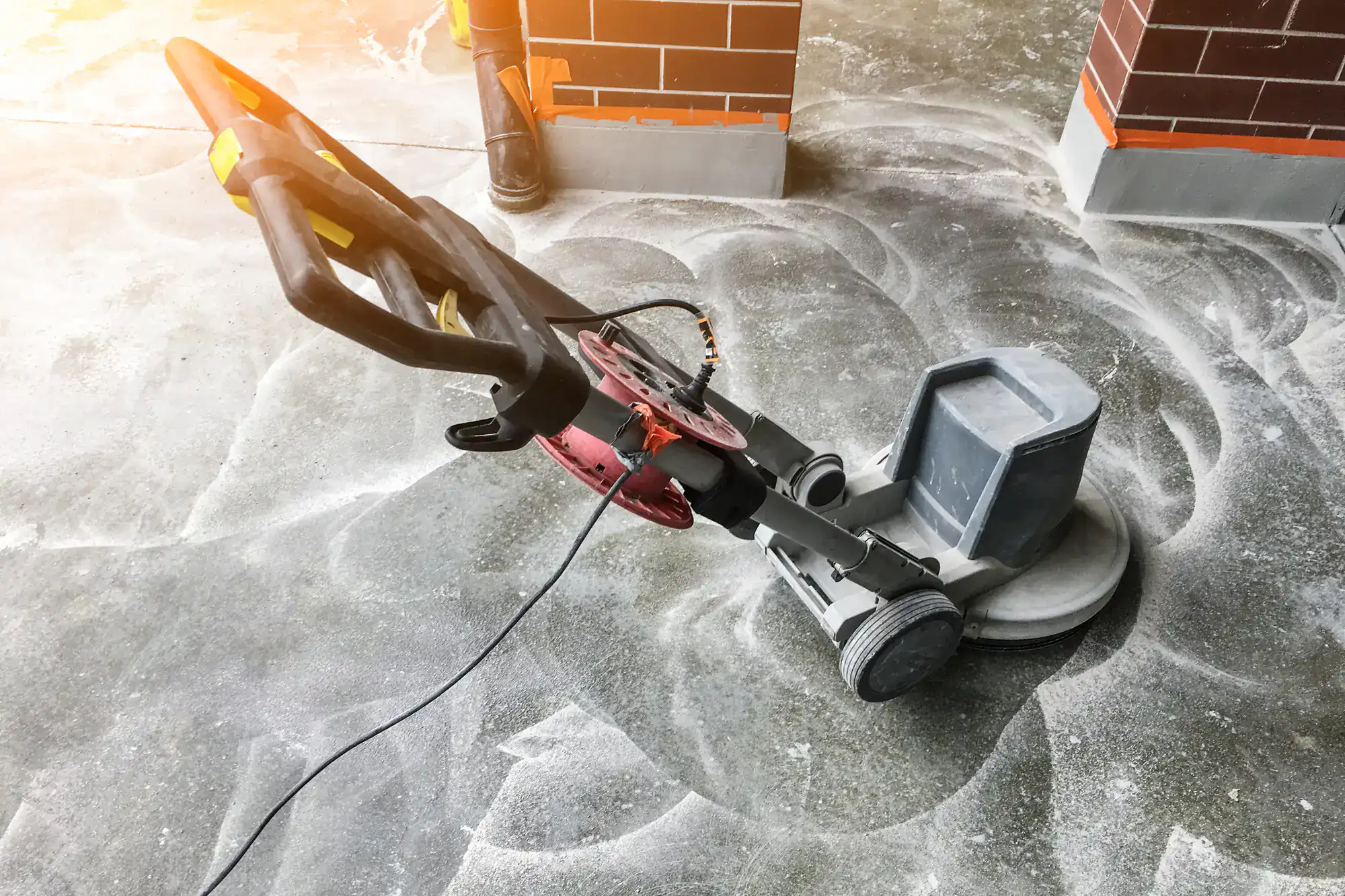
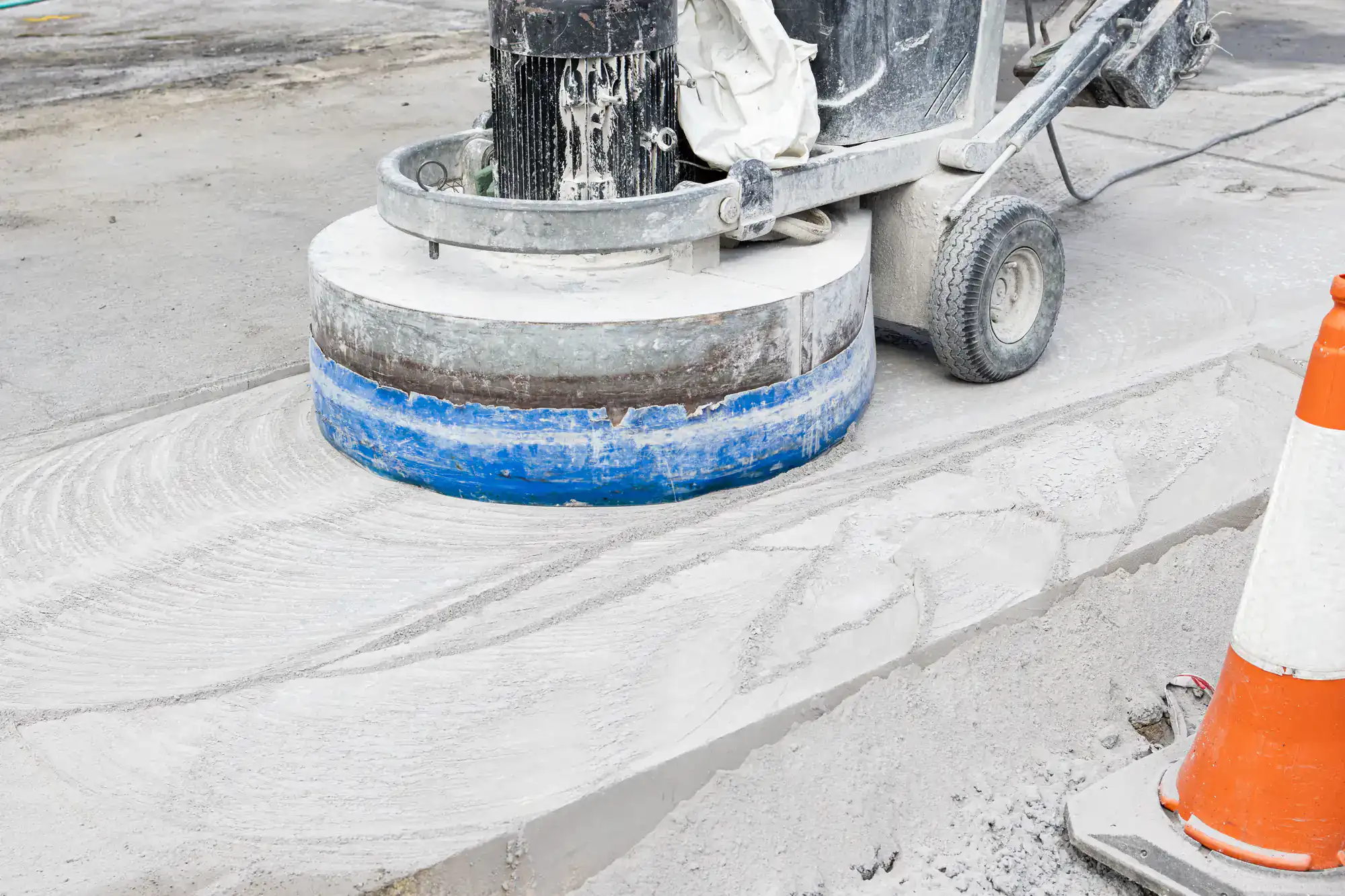
If your facility is inside the Long Island Innovation Park or anywhere along the commercial corridors off the LIE and Motor Parkway your floor takes a beating. Forklifts, foot traffic, chemical exposure, loading dock temperature swings. A floor that can’t handle that isn’t just an eyesore, it’s a liability.
Polished and densified concrete changes that equation entirely. Once the surface is properly ground, densified, and refined, you’re looking at a floor that resists surface wear, stops dusting, and holds up under the kind of daily punishment that eats through cheaper coatings inside a few years. No waxing cycles. No stripping. No recoating. Just a surface that performs.
For the biotech companies, pharmaceutical manufacturers, and advanced manufacturers operating in Hauppauge’s industrial park, that matters even more. A dusty or deteriorating floor isn’t just a maintenance issue it’s a contamination risk. Densified polished concrete seals the surface at the molecular level, making it the right call for environments where what’s on the floor affects what’s in the product.
Danny Harmer has been doing this work hands-on for over 40 years. Not managing crews from a distance actually on the job, reading the slab, making the calls, and being accountable for what gets left behind. That’s not a sales point. It’s just how we’ve always operated.
We hold Sherwin-Williams High Performance Flooring (HPF) certification and Res Tech certification credentials that require demonstrated technical knowledge, not just a check and a handshake. In 1996, we completed flooring work at the White House kitchen. If that standard was acceptable for the most scrutinized commercial kitchen in the country, it’s more than sufficient for your facility off Veterans Memorial Highway or inside the Innovation Park.
Hauppauge sits across both the Town of Islip and the Town of Smithtown two jurisdictions, two sets of requirements. Knowing that before the first site visit is the kind of local familiarity that saves everyone time.
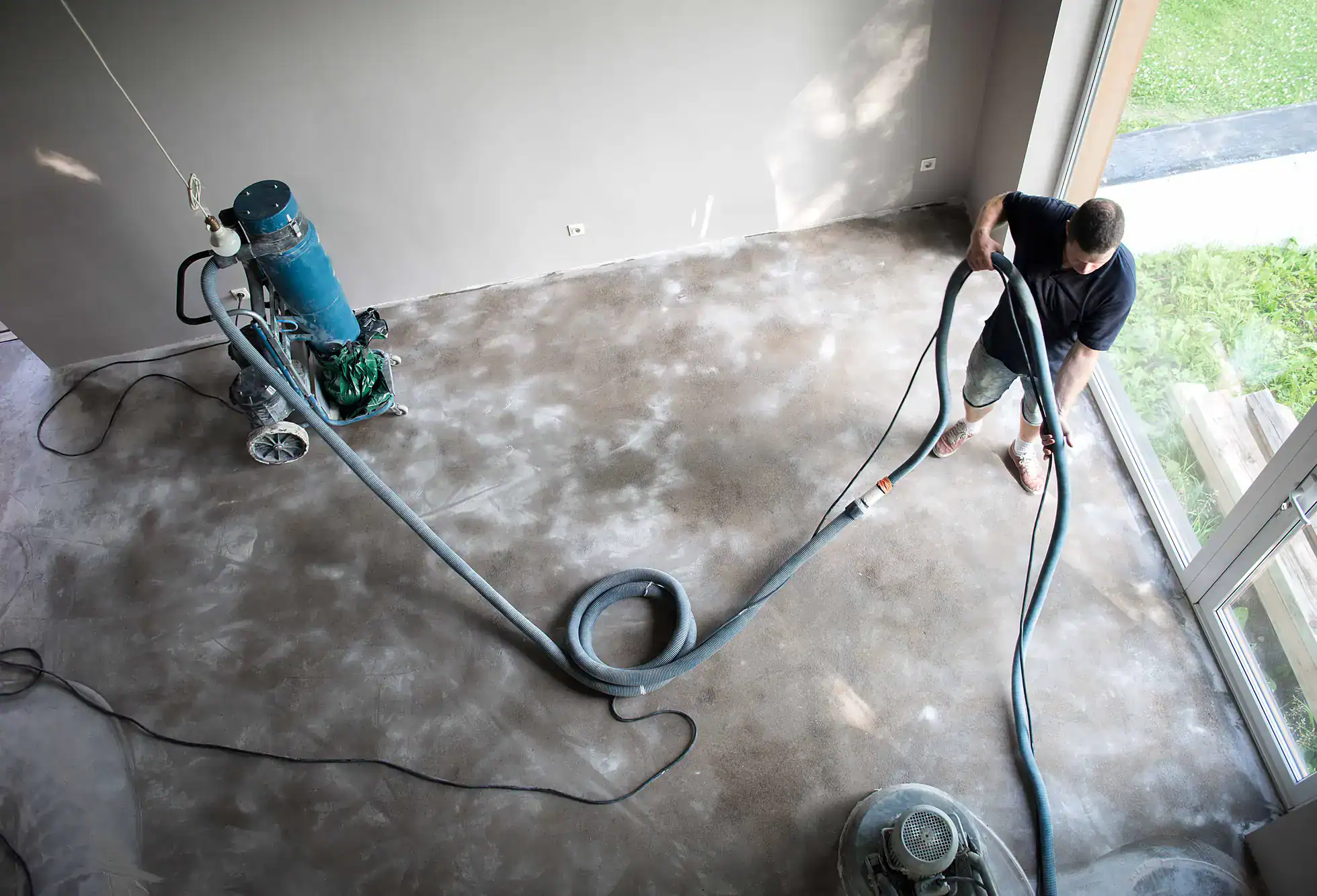
It starts with reading the slab. Before any grinding happens, the existing surface gets assessed what coatings are on it, what contamination is present, how hard the concrete is, and what condition it’s actually in. A lot of the industrial buildings in Hauppauge’s park have been in use since the 1960s. Some have had three or four different tenants, each leaving behind their own layer of history. That slab assessment determines everything that follows.
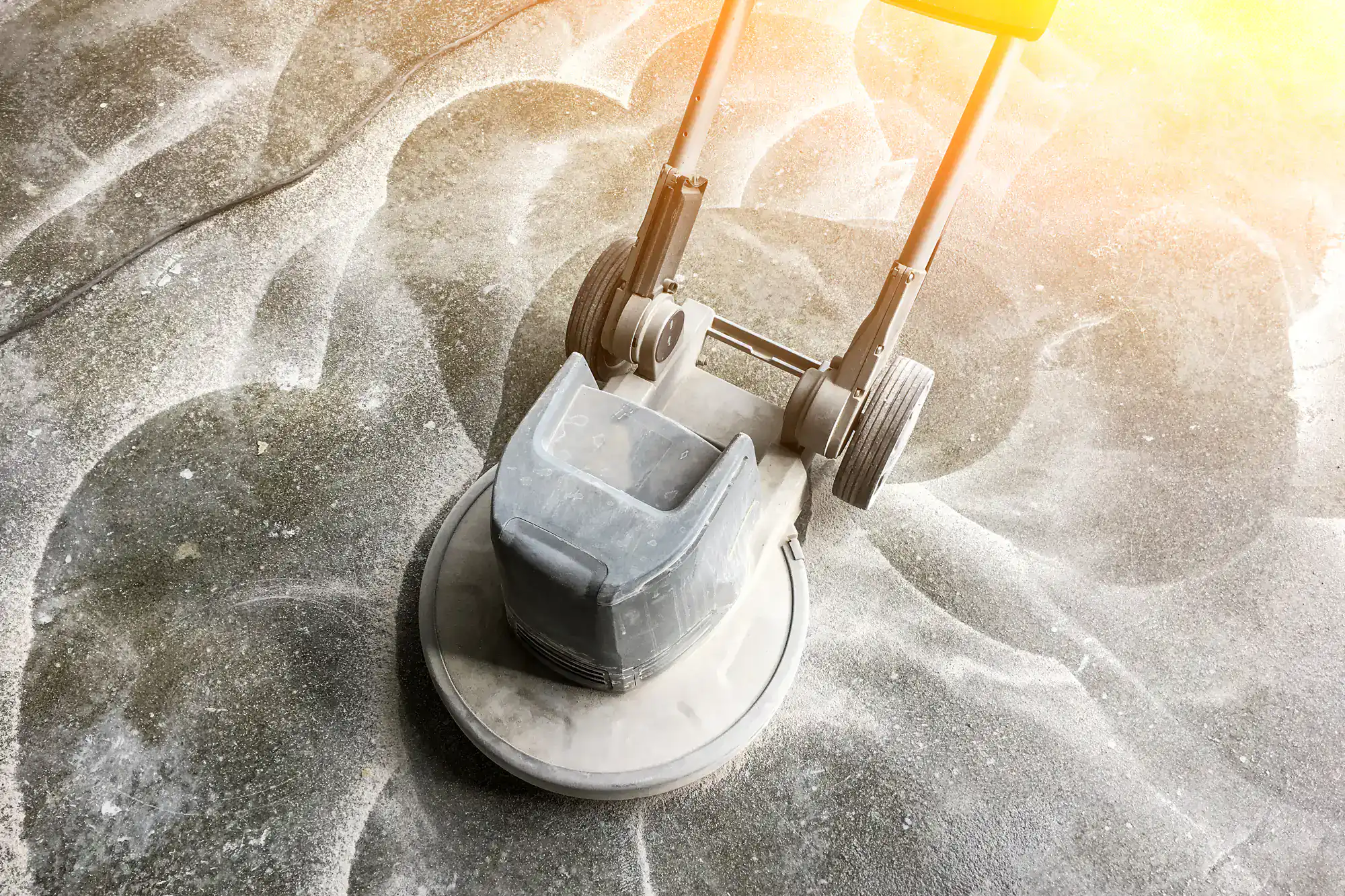
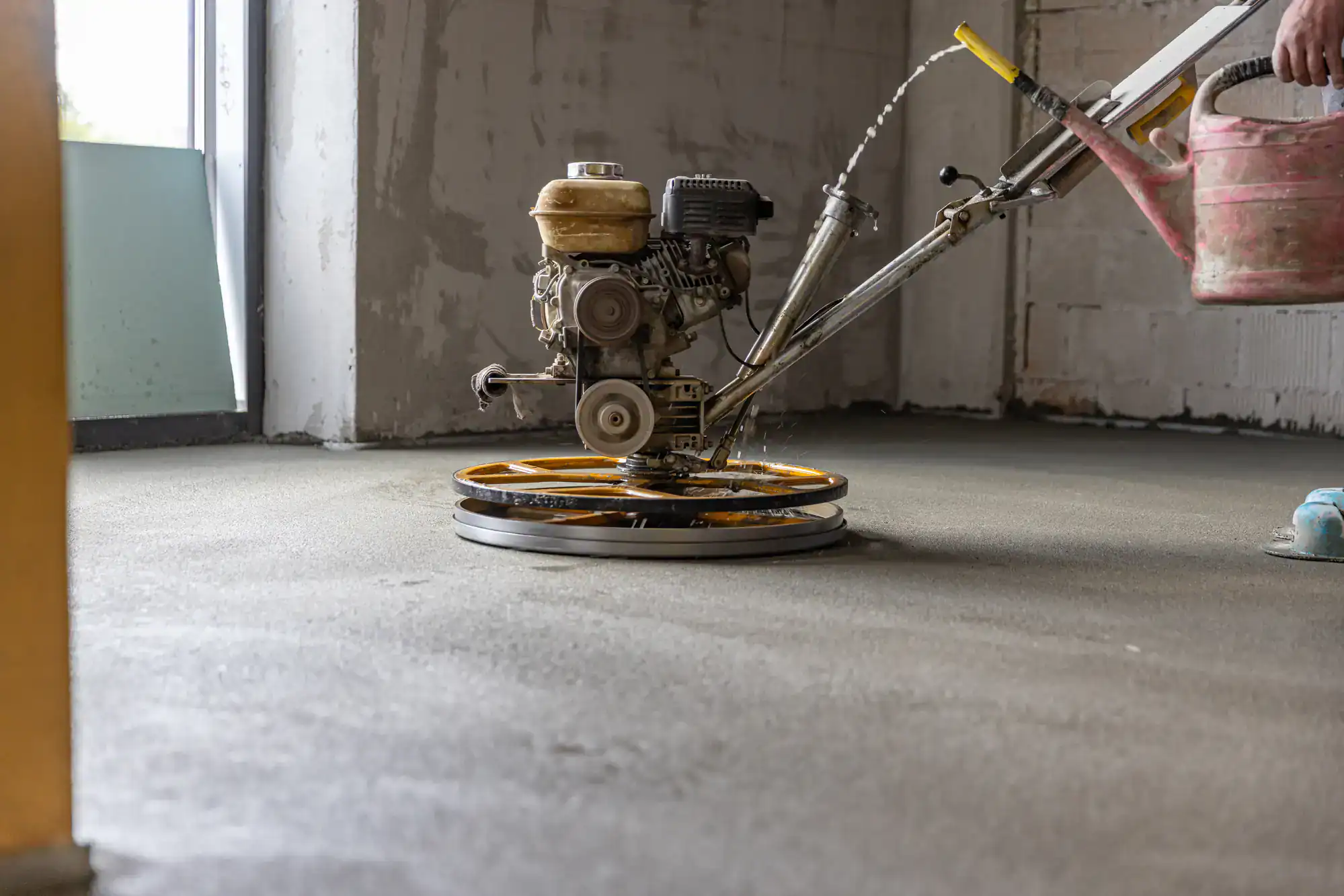
Once the surface is prepared, the grinding sequence begins working through progressively finer diamond tooling to open and refine the concrete surface. After grinding, we apply a densifier. This isn’t a coating that sits on top. It’s a chemical that reacts with the concrete itself, filling the pore structure and hardening the surface from within. That’s what gives polished concrete its durability not a film that can delaminate, but a surface that’s been chemically transformed.
From there, the finish is refined to the specified gloss level and sealed. If you’re running a warehouse or distribution facility, you’re probably looking at a functional, low-sheen finish. If you’re fitting out a showroom or office space along one of Hauppauge’s commercial corridors, you might want something closer to a high-gloss result. Either way, the outcome is specified before the project starts and verified at the end not eyeballed and hoped for.
Ready to get started?
Commercial concrete polishing in Hauppauge isn’t one-size-fits-all. A warehouse floor in the Innovation Park has different requirements than a retail showroom on Veterans Memorial Highway or a pharmaceutical production space that needs a seamless, chemical-resistant surface. The process adapts to the environment and to what the floor is actually going to face once the job is done.
Surface preparation is always included. That means old coatings are removed, contamination is addressed, and any cracks or surface damage are repaired before polishing begins. Skipping that step is how floors fail early. Densification is also standard it’s not an upsell, it’s the part that makes the floor actually last. The finish class is selected based on your specific use case, from a flat matte suitable for heavy industrial environments to a high-gloss finish for customer-facing spaces.
For facilities in Hauppauge that run continuous operations, we can sequence the work in sections to keep portions of the floor active while other areas are being processed. After-hours and weekend scheduling is available for businesses that can’t absorb daytime downtime. The goal is a floor that performs for 15 to 25 years and a process that doesn’t shut your operation down to get there.
Yes and this comes up constantly with buildings inside the Long Island Innovation Park, where a lot of the industrial stock dates back to the 1960s and has seen decades of use. The honest answer is that most concrete floors can be polished, even ones that look rough, stained, or worn. The process starts with surface grinding, which removes old coatings, adhesive residue, oil contamination, and surface damage. What’s underneath is usually workable.
The main variables are slab hardness and the extent of any structural damage. Surface-level issues staining, old epoxy, worn coatings are almost always addressable. Deep cracks or significant slab movement are a different conversation, but even then, repairs can often be made before polishing begins. The right answer comes from actually looking at the floor, not guessing from a photo. That’s why a site visit is the first step.
A properly installed and densified polished concrete floor in a commercial or industrial environment typically lasts 15 to 25 years with basic maintenance. That means dust mopping regularly and occasional damp mopping with a pH-neutral cleaner. No waxing. No stripping. No recoating cycles. Compare that to VCT, which needs to be waxed and stripped on a recurring schedule indefinitely, and the math on total cost of ownership shifts significantly.
The durability comes from the densification step not the polish itself. When lithium silicate densifier is applied correctly, it reacts chemically with the concrete and hardens the surface from within. That’s what makes it resistant to wear under forklift traffic, heavy foot traffic, and the kind of daily use common in Hauppauge’s warehouse and manufacturing facilities. A floor that was done right in year one will still be performing in year twenty.
They solve different problems and have different performance profiles. Epoxy is a coating it sits on top of the concrete and bonds to the surface. Done correctly, it’s durable and chemically resistant. But it can delaminate if the surface preparation wasn’t thorough, and it will eventually need to be recoated. Polished concrete is not a coating. The process works with the concrete itself, grinding and refining the surface and then chemically densifying it. There’s nothing to peel, nothing to delaminate.
For a warehouse or distribution facility in Hauppauge, polished and densified concrete often wins on longevity and maintenance cost. For environments that need very specific chemical resistance or a specific color system some pharmaceutical or food processing applications epoxy or a hybrid system might be the better call. The right answer depends on what the floor is going to face. That’s a conversation worth having before anything gets specified.
It depends on the size of the space and how the project is sequenced. For businesses operating inside the Long Island Innovation Park where shutting down operations isn’t an option we can break the work into sections. One area gets processed while the rest of the facility stays operational. It takes longer than doing the whole floor at once, but it keeps your business running.
For facilities that have planned shutdowns a lot of manufacturers and distributors in Hauppauge schedule maintenance windows around the holidays or between production runs doing the full floor at once is faster and more cost-effective. Dust is a real consideration during the grinding phase, and industrial vacuums are used throughout to keep it contained. The process isn’t silent or invisible, but it’s manageable. The conversation about scheduling happens before the project starts, not after.
This is one of the most common concerns, and it’s worth addressing directly. A high-gloss floor looks like it should be slippery but gloss and slip resistance are independent properties. Polished concrete at any finish level can meet OSHA’s minimum coefficient of friction requirement of 0.5 for level commercial surfaces. The surface texture, even on a high-gloss finish, provides traction under normal dry conditions.
For environments where wet conditions are a regular factor near loading docks, wash-down areas, or entrances where Long Island winters bring in tracked moisture an anti-slip additive can be incorporated into the final sealer application. It doesn’t affect the appearance of the finish, and it brings the slip resistance up to the level the environment requires. This is specified based on the actual conditions of the facility, not applied as a blanket default.
For commercial and industrial spaces in Hauppauge, polished concrete typically runs between $3 and $8 per square foot, depending on the current condition of the slab, the finish class being specified, and the total square footage of the project. Larger footprints common in the warehouse and distribution facilities inside the Long Island Innovation Park tend to bring the per-square-foot cost down. Smaller spaces or floors requiring significant prep work before polishing can run toward the higher end of that range.
The more useful number to look at is the 10-year cost comparison. A facility currently maintaining VCT is spending money every year on waxing, stripping, and recoating a cycle that never ends. Polished concrete eliminates that entirely. The upfront investment is higher than a basic coating, but the ongoing maintenance cost drops to near zero. For a business managing tens of thousands of square feet in Hauppauge’s industrial park, that difference adds up fast.