Your kitchen floor takes a beating that most surfaces can’t handle. Hot oil splatter near the fryer, 375°F grease hitting cold concrete, then a 185°F pressure wash an hour later. Most floors crack, warp, or delaminate under that kind of stress.
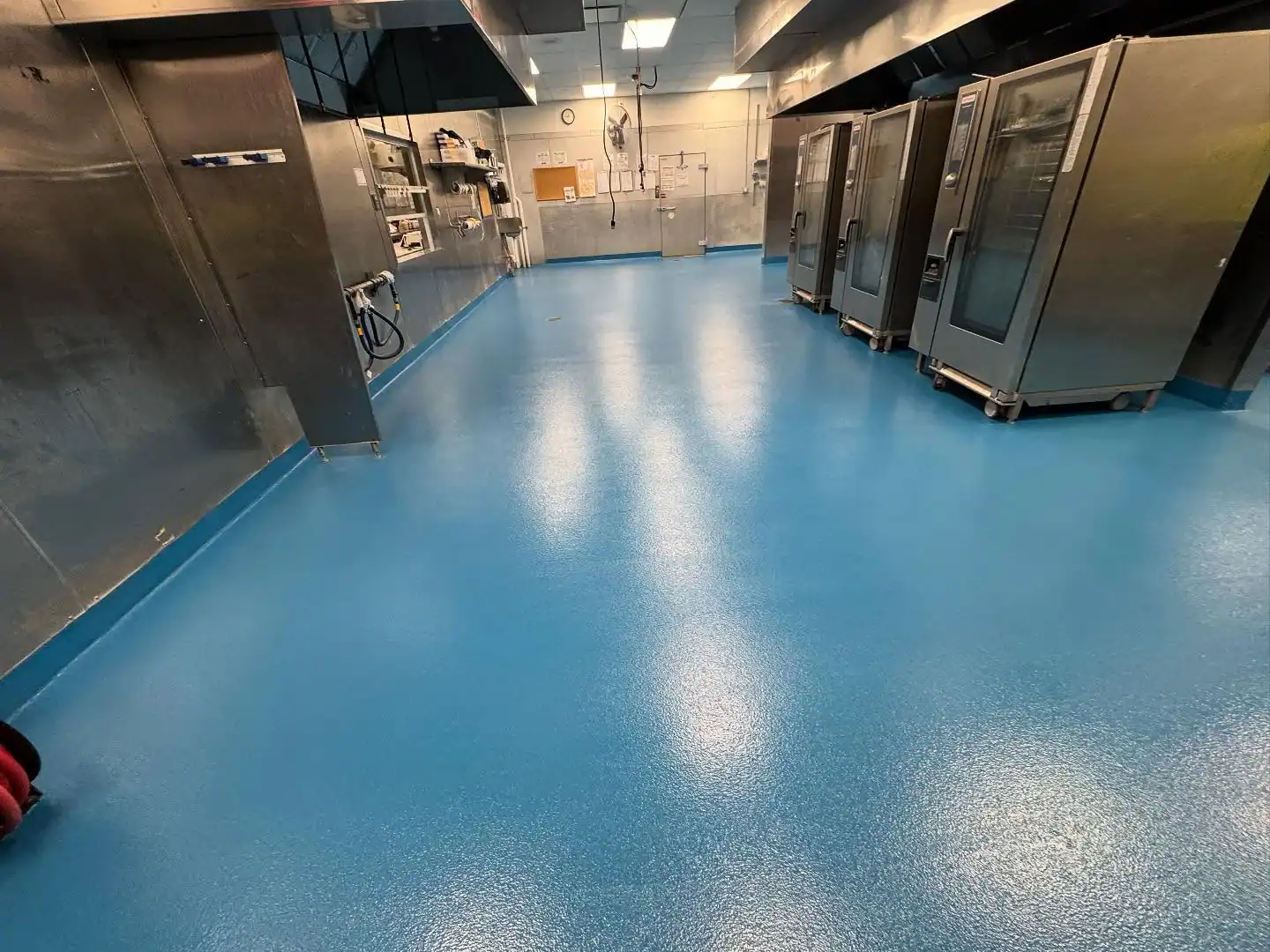
A commercial kitchen epoxy floor in Hauppauge built with thermal shock resistant coatings handles temperature swings over 200°F without breaking down. That means no cracks for bacteria to hide in, no loose sections that fail health inspections, and no emergency repairs during your busiest season.
You also get a seamless surface with no grout lines or joints. Nothing for food particles to get trapped in. Nothing that requires constant scrubbing or creates slip hazards when grease settles into the crevices. Just a smooth, non-porous surface that wipes clean and stays sanitary between health department visits.
We’ve been installing waterproof restaurant flooring in Hauppauge and across Long Island for over 30 years. We’ve worked in commercial kitchens from local restaurants to the White House kitchen in 1996, so we understand what your floor needs to survive.
Every installer on our team is OSHA 40 certified. Most have been with us for over a decade. That experience matters when you’re dealing with moisture issues, substrate prep, and the precise application required for thermal shock resistance.
Hauppauge’s restaurant scene serves 20,401 residents across 89 local establishments. Those kitchens need floors that meet strict health codes and handle the daily grind without constant maintenance. That’s what we build.

We start with moisture testing your concrete substrate. If there’s a moisture issue, your floor will fail no matter what system goes on top. We address it before we install anything.
Next, we prep the surface. That means grinding, shot blasting, or diamond grinding to create the profile your new floor needs to bond properly. Shortcuts here cause delamination later, so we don’t take them.
Then we apply your slip-resistant kitchen floor system in Hauppauge. For heavy-duty commercial kitchens, that’s typically a ¼” mortar trowel system that can handle extreme conditions. For residential or lighter commercial use, we install 1/8″ color quartz or vinyl chip systems that are durable and cost-effective. We finish with a non-slip high traction topcoat that meets National Flooring Safety Institute requirements.
If you need hygienic cove base installation in Hauppauge, we integrate that into the system. It creates smooth, curved transitions between your floor and walls, eliminating corners where grime builds up and making the whole space easier to sanitize.

Ready to get started?
You get a floor system engineered specifically for kitchen conditions. That means chemical resistance to the oils, grease, detergents, and cleaning agents your staff uses every day. It means a surface that won’t absorb liquids, harbor bacteria, or require waxing and stripping.
The thermal shock resistant coatings in Hauppauge kitchens we install are formulated to handle the temperature extremes near fryers, ovens, and dishwashers. They expand and contract with temperature changes without cracking or pulling away from the substrate.
For commercial operations, this matters for health code compliance. Hauppauge restaurants face regular inspections, and your floor needs to be smooth, nonabsorbent, and easily cleanable according to local regulations. A seamless epoxy system with integrated cove base checks those boxes.
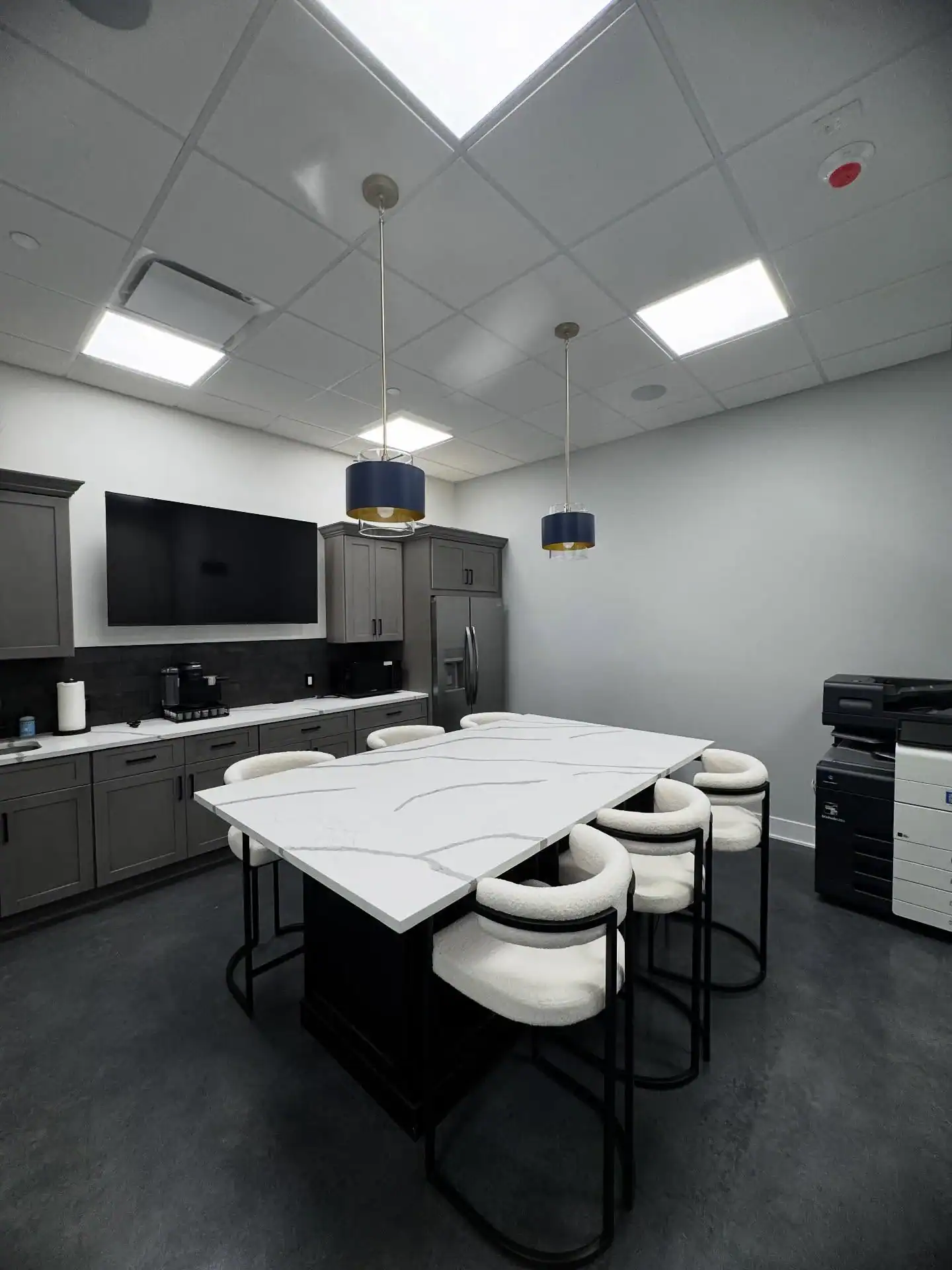
For residential kitchens, it means a floor that looks professional, cleans up in minutes, and doesn’t need replacement every few years. You’re not mopping grout lines or replacing cracked tiles. You’re wiping down a surface that stays intact through spills, dropped pans, and whatever your family throws at it.

When installed correctly and maintained properly, you’re looking at 10 to 20 years or more. The longevity depends on the traffic level, how well you maintain it, and whether the substrate was prepped correctly before installation.
Heavy commercial kitchens with constant traffic and daily high-temperature washdowns will see wear faster than a residential kitchen. But even in demanding environments, a properly installed system resists the temperature stress and mechanical wear that destroys standard flooring in a few years.
The key is proper installation. If moisture issues aren’t addressed, if the substrate isn’t prepped to the right profile, or if the wrong system is chosen for your specific conditions, the floor won’t last. That’s why we test, prep, and match the system to your actual kitchen conditions rather than using a one-size-fits-all approach.
Yes, if it’s formulated for that purpose. The systems we install are specifically designed to resist oil, grease, and the harsh detergents used in commercial kitchen cleaning. Standard epoxy won’t cut it, but commercial-grade systems are built for this exact environment.
Grease resistance matters because oil penetration leads to slip hazards and surface degradation. A proper commercial kitchen floor in Hauppauge repels these substances so they sit on the surface until you clean them rather than soaking in and breaking down the coating.
The non-slip topcoat we apply is also engineered to maintain traction even when wet or greasy. That’s critical for safety in fast-paced kitchen environments where spills happen constantly and staff are moving quickly. You need a surface that stays safe under real working conditions, not just when it’s clean and dry.
The main difference is thickness and thermal shock resistance. Commercial systems are typically ¼” thick mortar trowel applications that can handle extreme temperature fluctuations, constant traffic, and aggressive cleaning protocols. Residential systems are often 1/8″ color quartz or vinyl chip applications that are durable enough for home use but don’t need the same level of thermal shock protection.
Commercial kitchens deal with temperatures that residential kitchens never see. A pot of boiling water spilling is different from 375°F fryer oil hitting the floor followed by a high-temperature pressure wash. Commercial systems are engineered for those extremes.
Cost is another factor. Commercial systems require more material and labor, so they’re more expensive. But if you’re running a restaurant or food service operation, that investment protects you from health code violations, slip-and-fall liability, and the cost of replacing a failed floor during business hours. For a home kitchen, a lighter system gives you excellent durability and easy maintenance without the commercial price tag.
We test the concrete before we install anything. Moisture vapor transmission is one of the most common reasons epoxy floors fail, so we use calcium chloride tests or relative humidity probes to measure what’s happening in your slab.
If moisture levels are too high, we address it before installation. That might mean applying a moisture vapor barrier, allowing more cure time for new concrete, or using a moisture-tolerant primer system. Skipping this step causes delamination, bubbling, and coating failure within months.
Concrete is porous and can wick moisture from the ground, especially in areas without proper vapor barriers under the slab. Even if the surface feels dry, moisture can be moving through it. We measure actual vapor transmission rates rather than guessing, so your floor bonds properly and stays bonded for the long term.
Yes, when installed as a seamless system with proper cove base. Health codes require kitchen floors to be smooth, nonabsorbent, and easily cleanable. A seamless epoxy system with no joints or grout lines meets those requirements.
The integrated cove base is important for commercial kitchens because it eliminates the 90-degree corner where the floor meets the wall. That corner is impossible to clean properly and becomes a collection point for food particles, grease, and bacteria. A curved cove base creates a smooth transition that you can wipe down completely.
Inspectors look for floors that won’t harbor contaminants and can be sanitized effectively. A properly installed epoxy system gives you a non-porous surface that doesn’t absorb spills, doesn’t have cracks or joints for debris to hide in, and wipes clean with standard cleaning protocols. That’s what passes inspections and keeps your operation running without violations.
Foot traffic is usually safe after 24 hours, but full cure takes longer. For light use, you can walk on the floor the next day. For full operational use with heavy equipment, hot water washdowns, and normal kitchen activity, wait 3 to 7 days depending on the system and conditions.
Temperature and humidity affect cure times. Cooler temperatures slow the cure, while warmer conditions speed it up. We’ll give you specific guidance based on the system we install and the conditions in your space.
For commercial kitchens, downtime is expensive. We work with you to schedule installation during slower periods or in phases if possible. The goal is to minimize disruption while ensuring the floor cures properly. Rushing the process by putting heavy loads or hot water on an uncured floor can damage the coating and compromise its long-term performance, so following the cure schedule matters.