
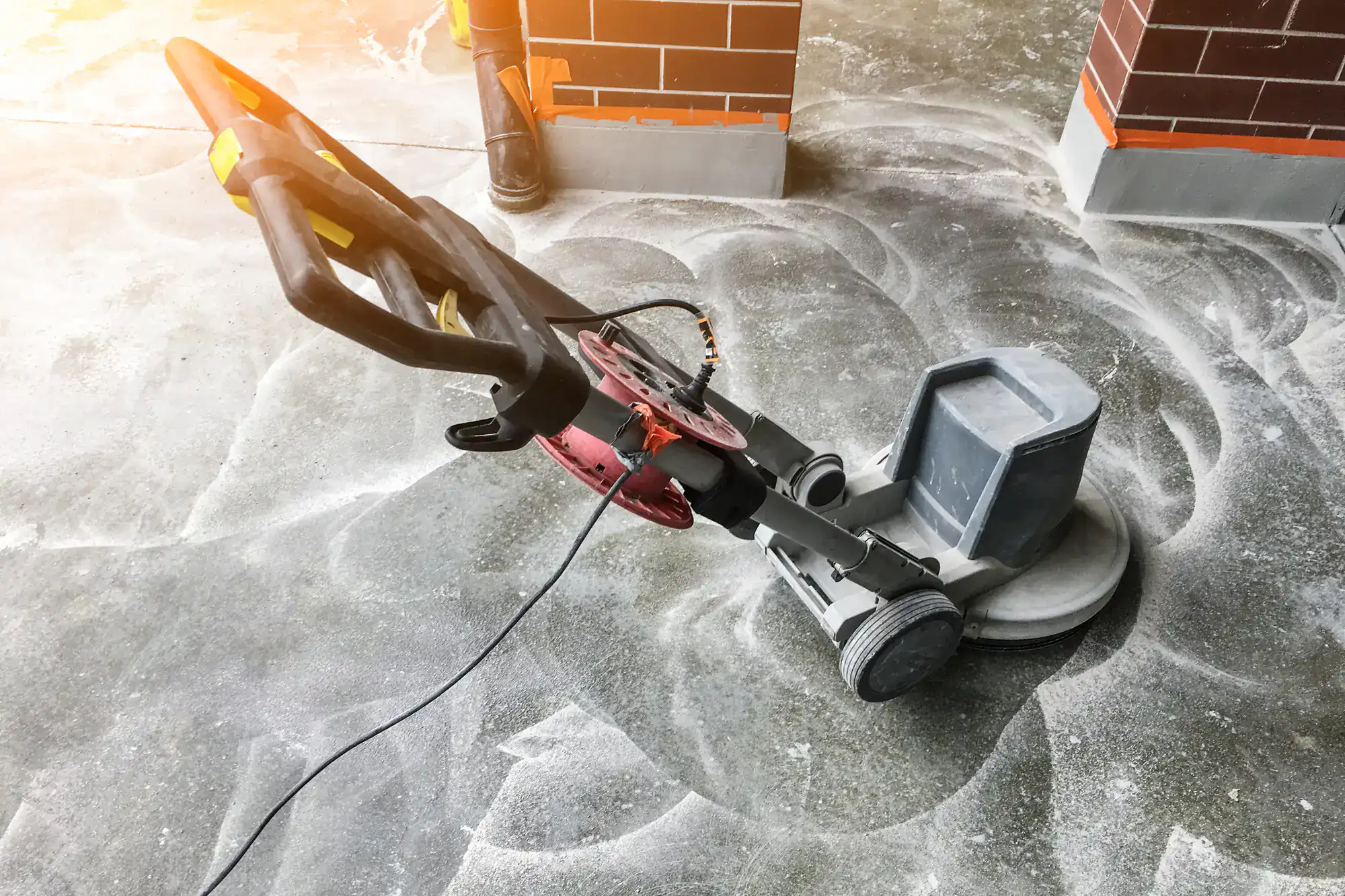
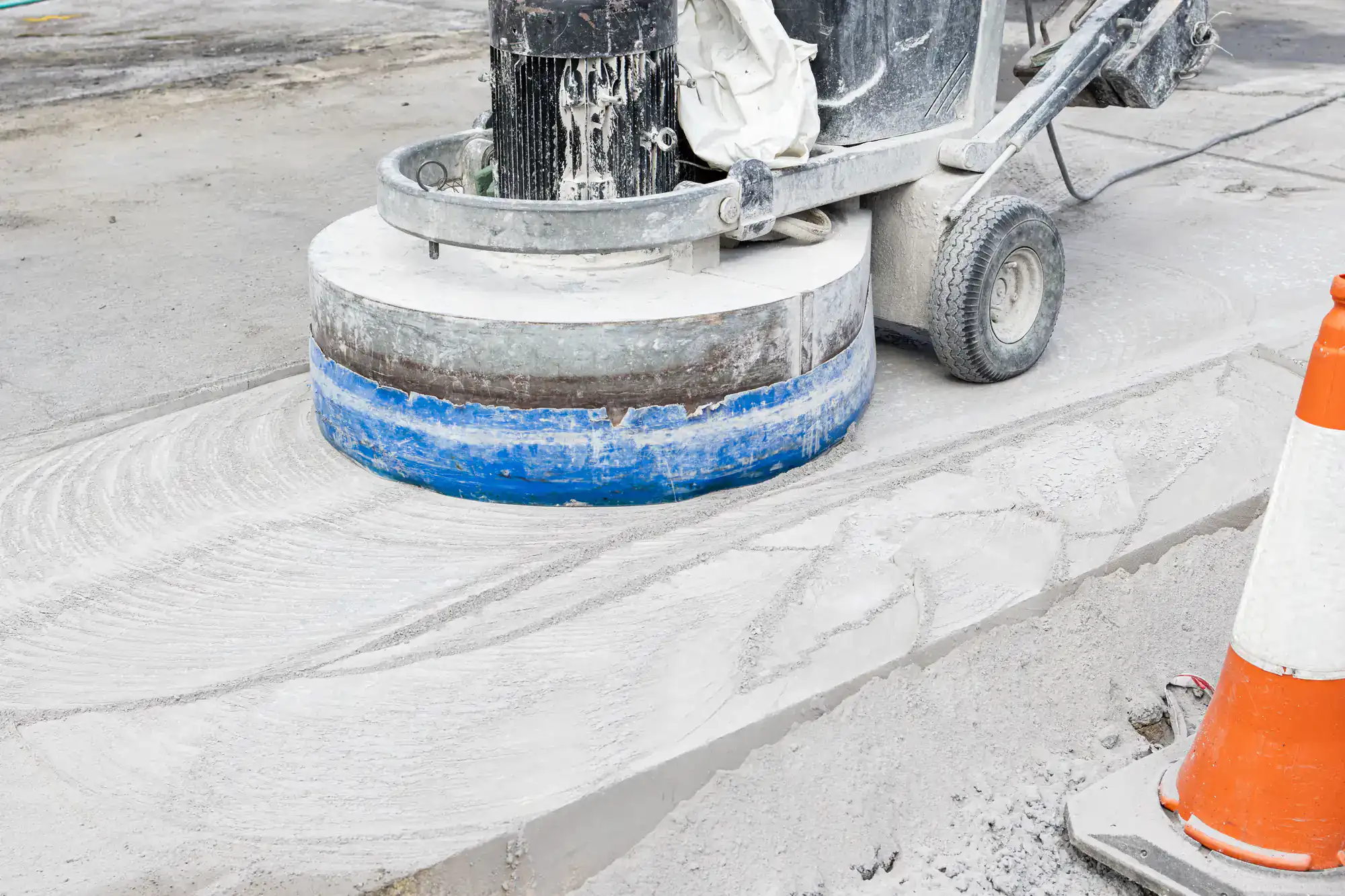
Most commercial floors along Hempstead Turnpike weren’t designed to last forever they were installed fast, on a budget, and with whatever was available at the time. VCT that needs waxing every year. Coatings that bubbled and peeled after one Long Island winter. Concrete that dusts every time someone walks through the door. If that sounds familiar, you’re not alone.
Concrete polishing in Franklin Square, NY changes that equation entirely. A properly ground, densified, and polished concrete floor doesn’t need annual maintenance cycles. It doesn’t trap bacteria in grout lines. It doesn’t delaminate when your cleaning crew uses a disinfectant that’s slightly too strong. For the medical offices, retail storefronts, and service businesses that line Hempstead Turnpike, that kind of reliability isn’t a luxury it’s a real operational advantage.
Franklin Square’s commercial building stock is predominantly post-war, meaning most of the slabs on that corridor are 70-plus years old. They’ve absorbed decades of Long Island freeze-thaw cycles, de-icing salt, and heavy foot traffic. The good news is that older slabs are often excellent candidates for polishing they’re dense, they’ve settled, and with the right preparation, they can be transformed into a high-gloss commercial concrete floor that outperforms anything installed over them. The key word there is preparation, and that’s exactly where most contractors cut corners.
Danny Harmer has been working on commercial and industrial concrete floors on Long Island for over 40 years. That means he was grinding and polishing Nassau County slabs before most of the competition entered the trade. He’s worked on the same types of post-war commercial buildings that line Hempstead Turnpike and New Hyde Park Road the exact corridor where Franklin Square’s business economy operates. He’s not encountering these conditions for the first time when he walks into your space.
We hold Sherwin-Williams High Performance Flooring (HPF) certification and Res Tech certification both named, manufacturer-verified credentials that most local contractors simply don’t carry. And in 1996, the work reached the White House kitchen. That’s not a detail we drop casually it’s the clearest way to say that the standard applied to every project, including yours in Franklin Square, has been tested at the highest level.
Danny is personally involved in every job. The person who assesses your floor is the person who does the work. That matters more than it sounds in a market where bait-and-switch crew substitution is a documented frustration among Nassau County business owners.
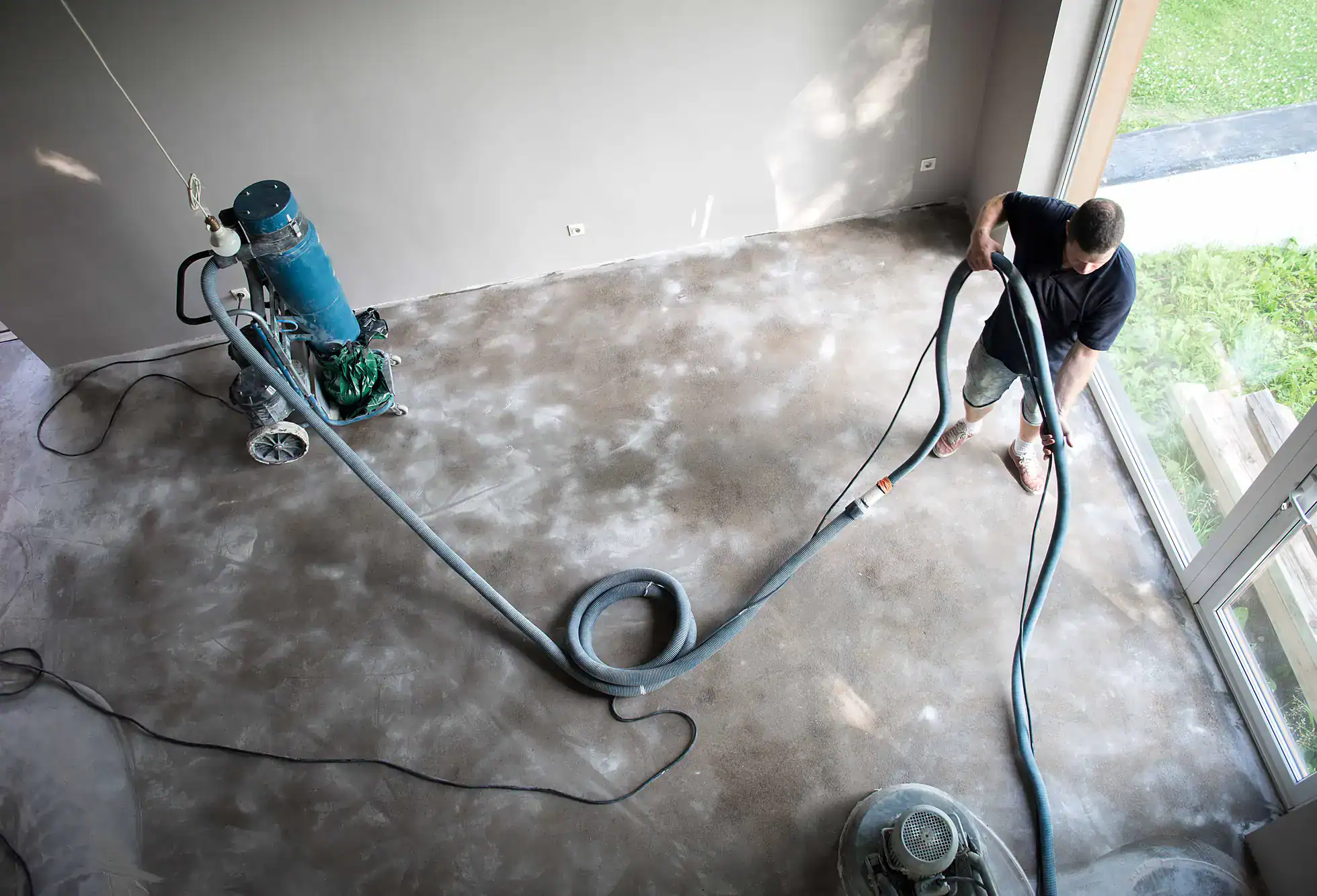
It starts with a real assessment. Before any equipment comes out, the slab gets evaluated hardness, surface condition, existing coatings, repairs, contamination history. For the older commercial slabs common to Franklin Square’s Hempstead Turnpike corridor, this step is critical. A 70-year-old slab that’s had three coating systems applied over the decades needs a different approach than new construction. Skipping this step is how floors fail.
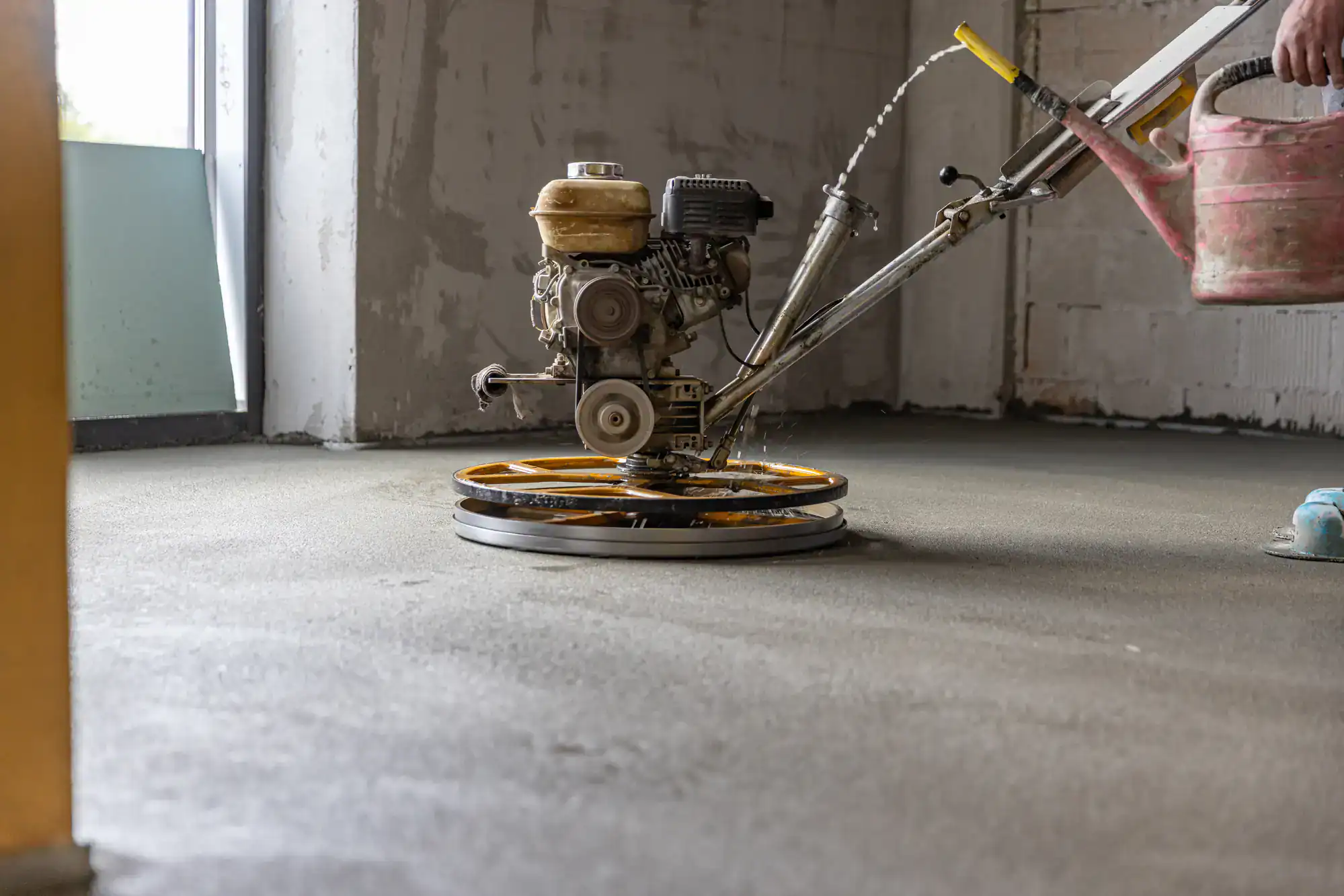
From there, the surface is ground down using diamond tooling matched to the slab’s specific hardness. Any old coatings, adhesive residue, or surface damage gets removed. If there are cracks or uneven areas common in Nassau County’s aging commercial stock after years of freeze-thaw stress those get addressed before polishing begins. Then comes densification: a lithium silicate compound is applied and worked into the concrete, chemically hardening the surface from within. This is the step that separates a floor that lasts 20 years from one that hazes and dusts within 18 months.
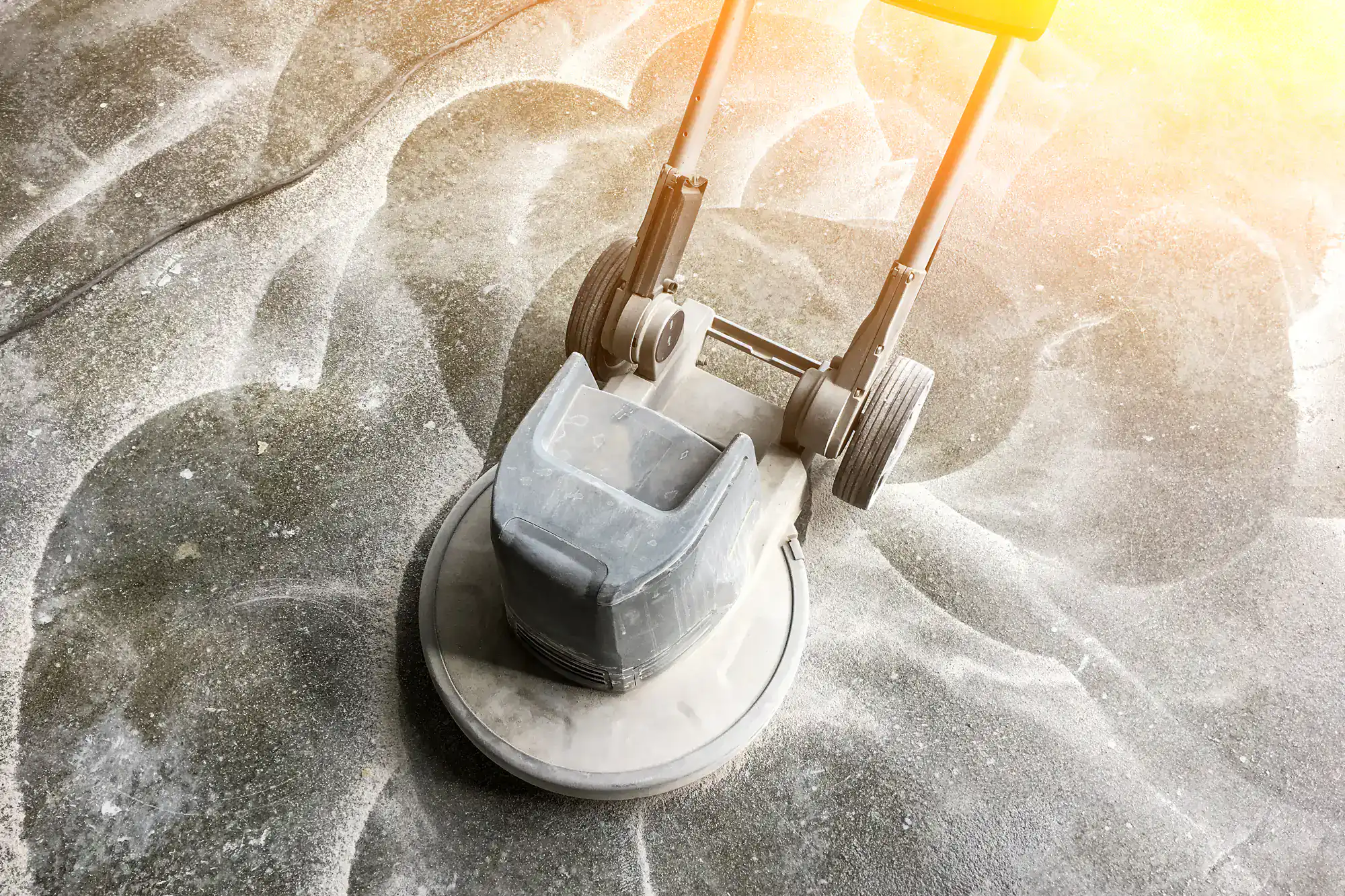
After densification, the floor goes through a progressive series of finer diamond pads until the specified finish class is achieved from a low-sheen matte to a high-gloss reflective surface. A stain guard is applied last. The result is a densified commercial concrete floor that’s sealed, hardened, and ready for the kind of daily traffic that Hempstead Turnpike businesses deal with every single day. Because work happens in occupied commercial spaces, sequencing is planned around your schedule sections can be phased, and after-hours or weekend work is available when downtime isn’t an option.
Ready to get started?
Commercial polished concrete floors in Franklin Square, NY aren’t a one-size-fits-all product. The finish class that makes sense for a medical office waiting room on Hempstead Turnpike is different from what works in a high-gloss retail showroom or a restaurant kitchen. We work to the American Concrete Institute’s ACI 310.1-20 standard, which defines four finish classes measured in Gloss Units from a flat matte finish all the way up to a highly polished surface above 61 GU. You’ll know exactly which class you’re getting before the first pass of a diamond pad.
For Franklin Square’s medical offices and healthcare-adjacent businesses a significant part of the local economy given Northwell Health’s presence in the area the focus is on seamless, non-porous surfaces that hold up to chemical disinfectants and meet hygiene standards without requiring specialty maintenance. For retail showroom concrete finishes in Franklin Square, NY, the priority shifts toward high-gloss polished concrete that makes a visual impression and holds it without waxing cycles. For industrial and warehouse applications, durability and dust elimination are the primary goals.
Every project includes concrete grinding and leveling as needed, full densification, finish polishing to the specified class, and a stain guard application. If your slab has existing coating failures, spalling from Nassau County’s winter cycles, or contamination from prior use, that prep work is built into the scope not added as a surprise after the job starts. What you’re quoted is what you get.
This is the most common concern we hear from retail and medical business owners along Hempstead Turnpike, and it’s worth addressing directly. Gloss and friction are independent properties a floor can be highly reflective and still meet OSHA’s minimum coefficient of friction standard of 0.5 for level commercial surfaces. Properly polished concrete achieves that standard. The idea that shiny equals slippery is a misconception, not a fact.
For Franklin Square storefronts and medical offices that see wet foot traffic during Long Island’s rainy seasons or snowy winters, anti-slip additives can be incorporated into the stain guard without affecting the appearance of the finish. This is a standard option, not an upgrade. If slip safety is a concern for your specific space and it’s a reasonable one for a patient-facing waiting room or a retail entrance it gets addressed in the scope, not ignored.
A properly installed, properly densified polished concrete floor in a commercial environment will typically perform for 15 to 25 years or more with basic maintenance a damp mop and a pH-neutral cleaner. That’s it. No annual waxing. No stripping cycles. No recoating every few years. Compare that to VCT, which requires a waxing and stripping program every 12 months in a high-traffic setting, or carpet, which realistically needs full replacement every 7 to 10 years in a busy commercial environment.
For the commercial spaces along Hempstead Turnpike in Franklin Square which handle significant daily customer traffic that lifecycle difference adds up to a substantial cost advantage over time. The upfront investment in polished concrete is higher than a basic coating. The 10-year total cost is consistently lower. For Franklin Square business owners and property managers who evaluate capital expenditures on a real return basis, that math is straightforward.
Yes, and older slabs are often better candidates for polishing than people expect. Post-war concrete that has been in place for 70-plus years has typically settled completely, which means fewer movement issues than a newer slab that’s still curing and shifting. The aggregate in older concrete is also often well-distributed, which can produce an attractive exposed aggregate finish when ground properly.
The main challenge with older slabs in Franklin Square’s commercial buildings is surface history decades of coatings, adhesives, patches, and repairs that need to be removed before polishing begins. That prep work is essential and it’s not something to rush. A slab that’s been through multiple coating systems needs thorough grinding to get back to clean, sound concrete. The condition of the slab also determines how aggressive the densification needs to be older concrete with lower surface hardness benefits significantly from a full lithium silicate treatment. None of this is unusual for Nassau County’s building stock, and it’s all accounted for in the assessment before any work starts.
Commercial polished concrete in the Northeast typically runs between $3 and $12 per square foot, depending on the size of the space, the condition of the existing slab, and the finish class specified. A standard Hempstead Turnpike storefront or medical office commonly in the 1,000 to 3,200 square foot range based on the commercial inventory in that corridor would generally fall somewhere between $3,000 and $38,000 depending on scope.
The variables that move the number are prep work and finish class. A slab that needs significant grinding to remove old coatings or level uneven areas costs more than a clean slab. A Class 4 high-gloss finish costs more than a Class 2 satin finish. Both of those factors are identified during the site assessment, so there are no surprises after the job starts. What affects the quote is the actual condition of your floor and what you need it to look like and both of those things are specific to your space, not a generic price list.
Yes, and for most Franklin Square commercial operations, this is a non-negotiable requirement. A medical practice that closes for a week loses patient appointments that don’t come back. A retail business on Hempstead Turnpike that goes dark during a busy period loses revenue it can’t recover. Scheduling is built around your operational reality, not around what’s most convenient for the installation crew.
For larger spaces, the floor can be worked in sections one portion of the facility stays open while another is being processed. For businesses that genuinely can’t tolerate daytime disruption, after-hours and weekend scheduling is available. The timeline and sequencing for your specific project is discussed during the initial assessment, and it’s documented clearly before any work begins. The goal is a finished floor that didn’t cost you your business while it was being installed.
They’re fundamentally different systems that perform differently over time. An epoxy coating sits on top of the concrete as a separate layer it can chip, peel, and delaminate, especially in environments with temperature fluctuation or chemical exposure. Long Island’s freeze-thaw cycles create exactly the kind of thermal stress that accelerates coating failure in commercial spaces that aren’t fully climate-controlled year-round.
Concrete polishing, combined with densification, works from within the slab. The lithium silicate densifier reacts chemically with the concrete matrix and hardens the surface at a molecular level there’s no separate layer to delaminate because the hardened surface is the concrete itself. For Franklin Square commercial spaces that deal with heavy daily foot traffic, chemical cleaning, and Nassau County winters, that’s a meaningful structural difference. Epoxy coatings have their place particularly for spaces that need color, chemical resistance beyond what polished concrete provides, or specific anti-slip textures. But if the goal is a long-lasting, low-maintenance commercial floor that doesn’t fail in year three, polished and densified concrete is the more durable answer.
Other Services we provide in Franklin Square