
Most commercial floors along Hempstead Turnpike weren’t built to last forever. They were built fast, covered with VCT or paint, and left to absorb decades of foot traffic, spills, and Nassau County winters. By the time you’re looking at replacement options, you’ve usually already spent years on waxing cycles, recoating, and patching and the floor still looks tired.
Polished concrete changes that equation. Once the surface is properly ground, densified, and sealed, you’re not maintaining a coating anymore. You’re maintaining the concrete itself which, if done right, requires nothing more than a dust mop and a pH-neutral cleaner. No stripping. No waxing. No calling a crew back every 18 months.
Elmont’s building stock skews older. A lot of the commercial slabs in this area were poured in the 1940s and 50s, and that actually works in your favor. Aged, hardened concrete takes a polish exceptionally well often better than newer, softer slabs. The freeze-thaw cycles and coastal humidity that Long Island throws at these buildings year after year also make proper densification critical. A densified slab resists moisture infiltration and surface degradation in ways that a bare or coated slab simply can’t.
We’re a Long Island-based commercial flooring contractor with more than 40 years of hands-on experience serving Elmont and the surrounding Nassau County area. Danny Harmer, our owner, isn’t managing from an office while a subcontracted crew handles your floor. He’s on the job reading the slab, adjusting the process, and making the calls that determine whether your floor performs for the next 20 years or starts showing problems within the first two.
That level of accountability matters in a market like Elmont, where plenty of contractors will take a job and send whoever’s available. Our credential set backs it up we hold a Sherwin-Williams High Performance Flooring certification, a Res Tech certification, and completed flooring work at the White House kitchen in 1996. If that level of scrutiny trusted our team, your Hempstead Turnpike retail space or light industrial facility is in capable hands.
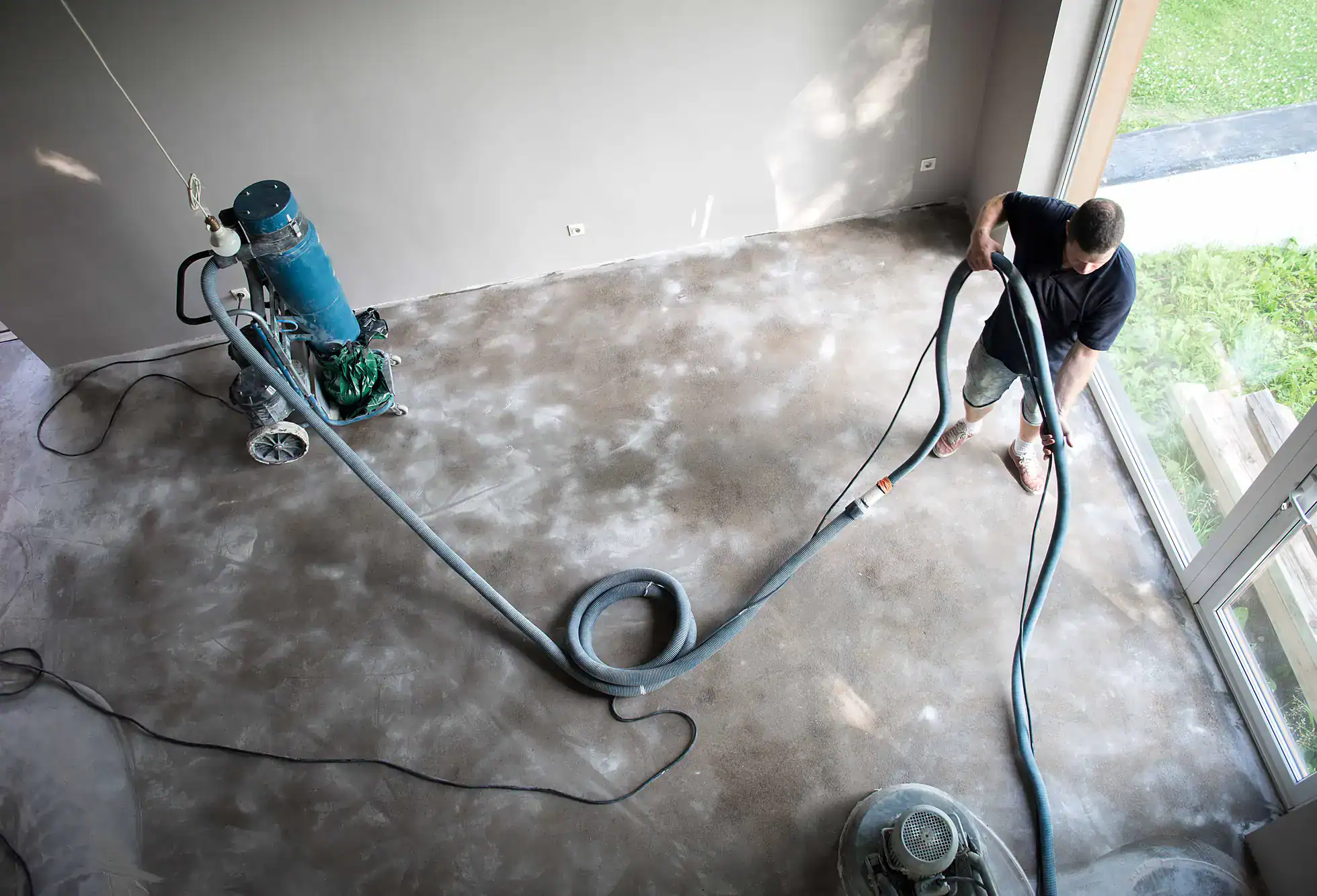
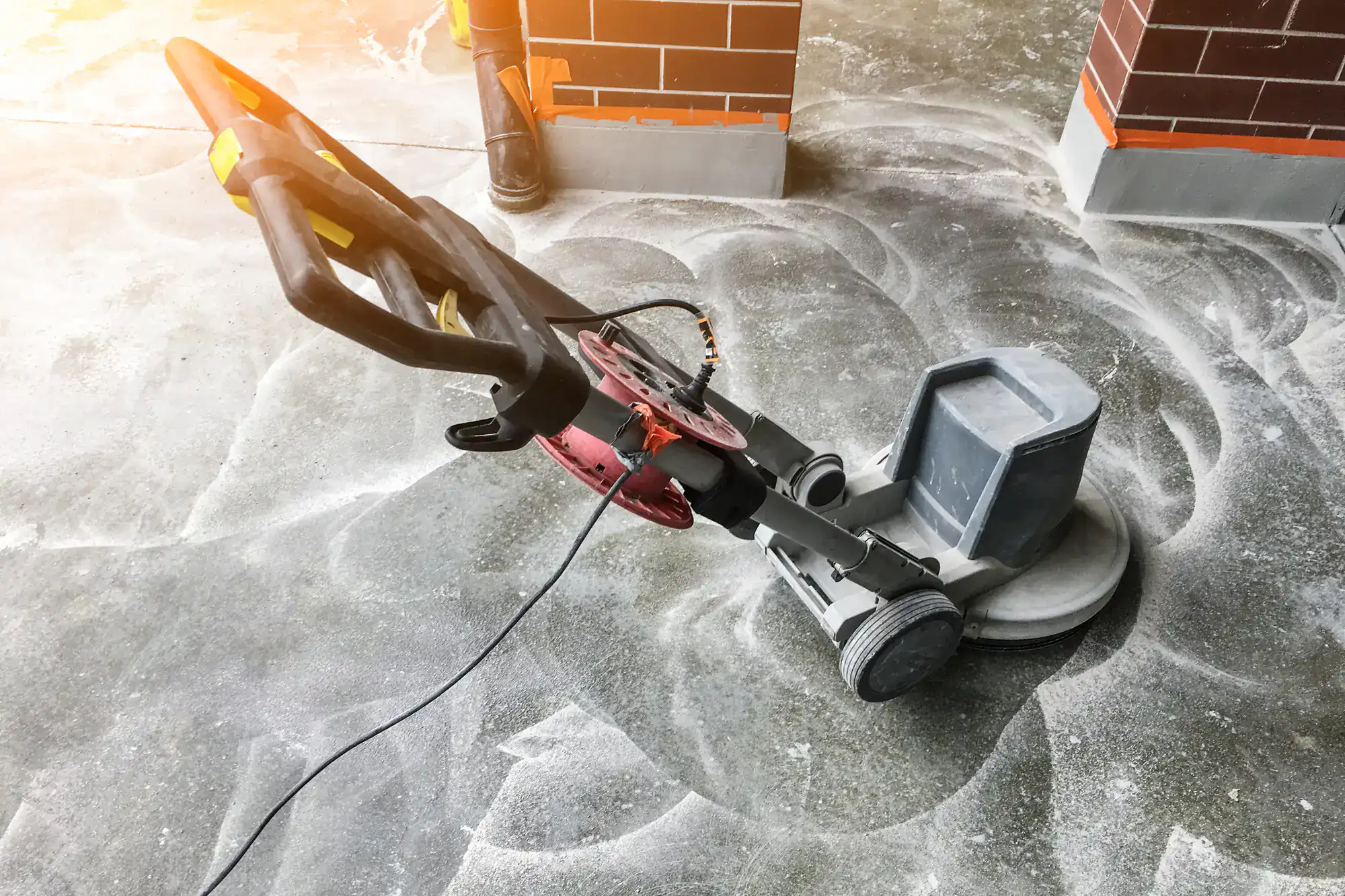
Every job starts with a slab assessment. Before any equipment comes out, we evaluate the condition of your existing concrete what’s on the surface, what’s underneath, and what preparation it needs. For a lot of Elmont commercial buildings, that means removing old VCT adhesive residue, paint layers, or previous sealers that have been sitting on the slab for decades. That’s not a complication. It’s just the starting point.
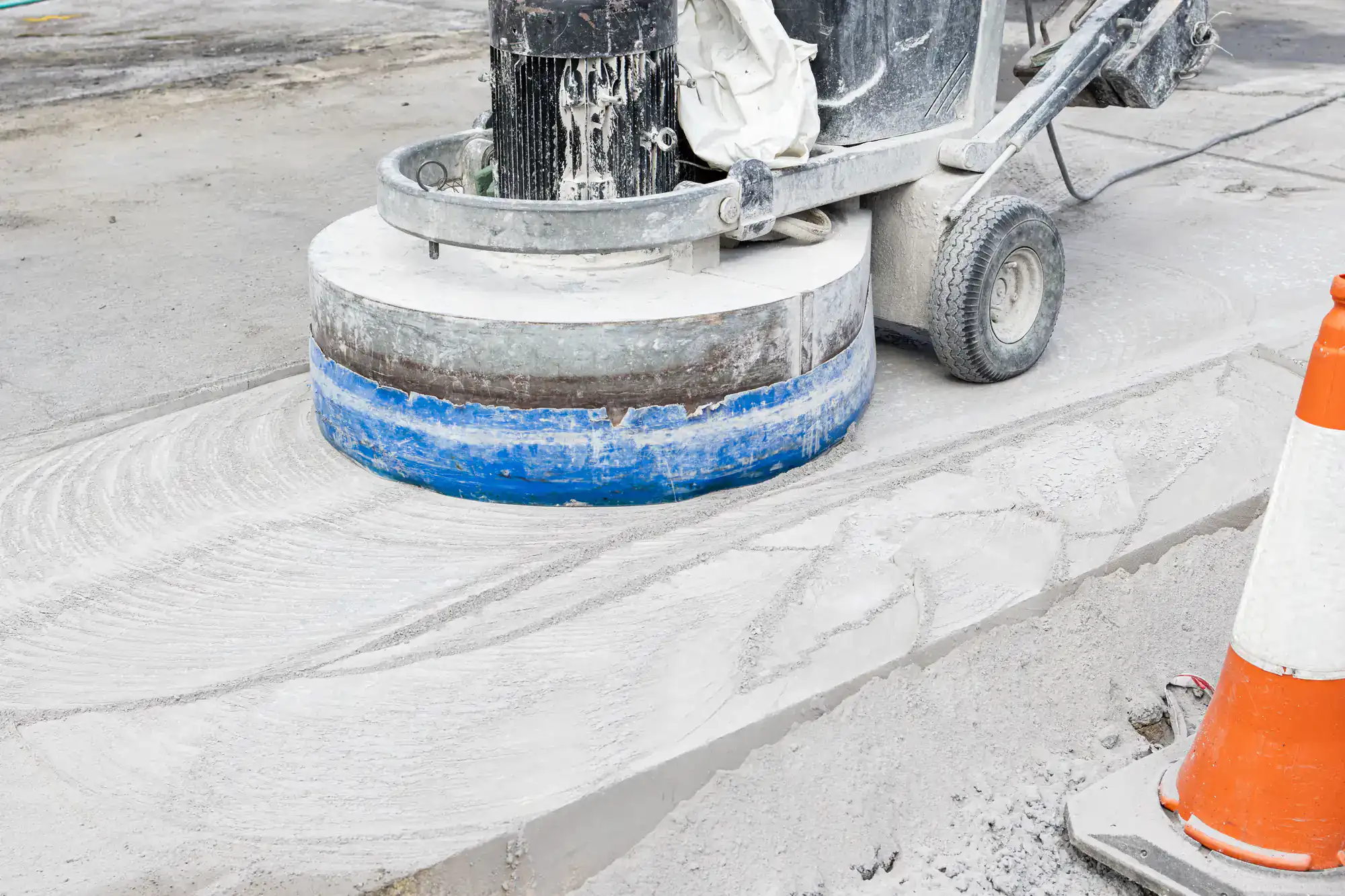
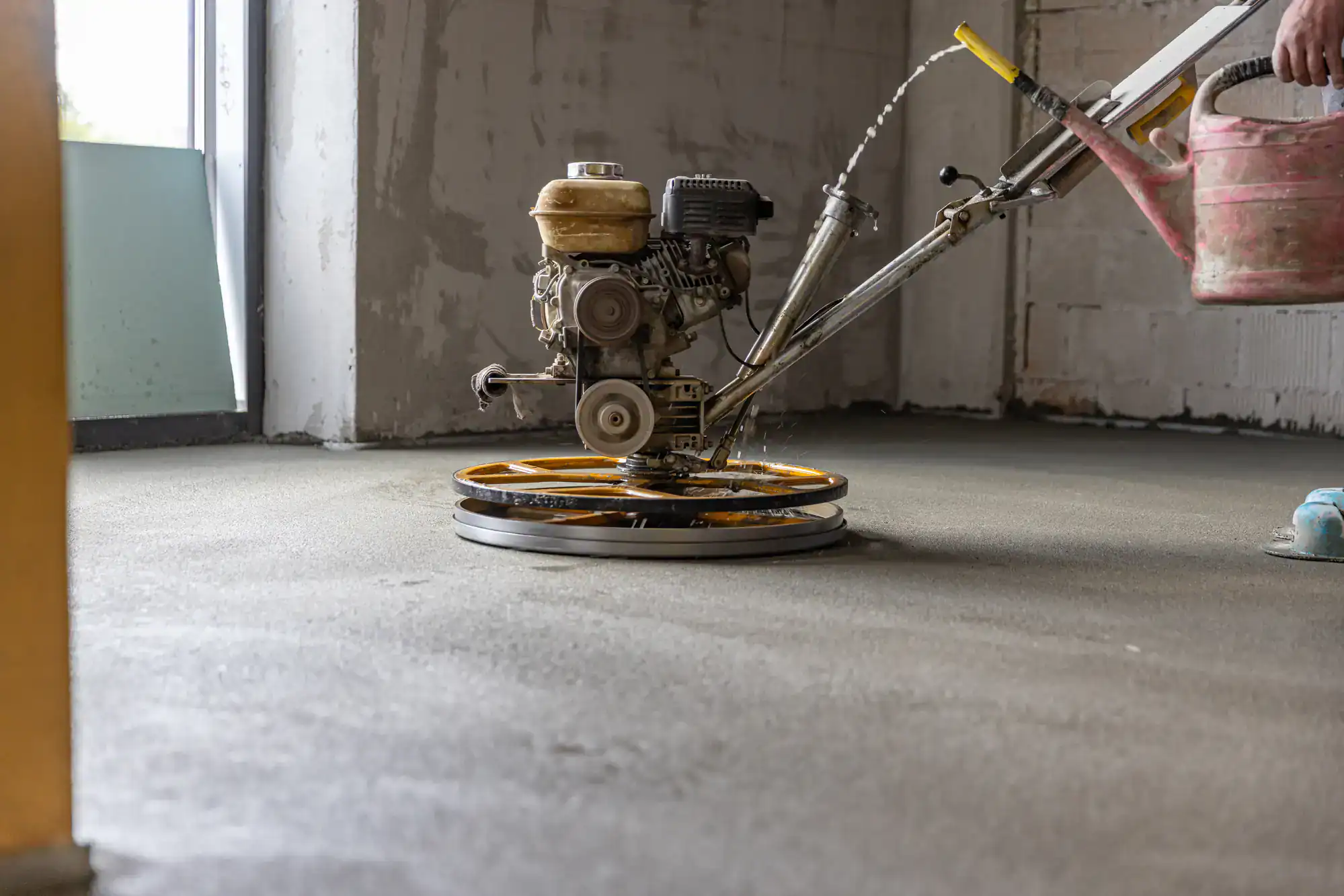
From there, the grinding and leveling phase addresses surface irregularities, low spots, and any repairs that need to happen before polishing begins. We select diamond tooling based on the specific hardness and condition of your slab not a one-size-fits-all approach. The grit progression moves from coarse to fine in deliberate stages, each one refining the surface further until the target finish class is reached.
Once the surface is where it needs to be, we apply lithium silicate densifier. This step is what most unqualified contractors skip or rush and it’s the step that determines whether your floor holds up under real commercial traffic or starts dusting and degrading within months. Timing matters here, especially in Elmont’s climate. Applying densifier to a slab that’s too cold or carrying moisture from the ground will produce an application that doesn’t penetrate correctly. After densification, we apply a stain guard sealer to complete the system. We sequence the whole process around your schedule to minimize downtime which matters whether you’re running a retail space off Hempstead Turnpike or managing a facility near the Belmont Park campus.
Ready to get started?
Polished concrete isn’t one thing. The finish class you specify from a low-sheen matte to a high-gloss reflective surface determines how the floor looks and what environments it’s appropriate for. The American Concrete Institute’s ACI 310.1-20 standard defines four finish classes measured in Gloss Units, from Class 1 matte for utilitarian industrial spaces to Class 4 highly polished for retail showrooms and high-visibility commercial interiors. We tell you which class you’re getting before the job starts and verify it at completion. If that conversation never happens, that’s a problem.
For retail and food service businesses on Hempstead Turnpike, a Class 3 or Class 4 finish delivers the reflective, professional look that draws customers in while holding up to daily foot traffic. For warehouse and light industrial facilities in the Nassau-Queens border area where forklift traffic and chemical exposure are real factors a Class 2 densified surface provides the durability and dust elimination those environments demand. Industrial concrete polishing services in Elmont, NY need to be spec’d for the actual use case, not just what looks good in a photo.
On the safety side: polished concrete meets OSHA’s minimum coefficient of friction standard for commercial surfaces. A shiny floor isn’t automatically a slippery floor. For businesses with wet-entry traffic concerns especially relevant given Elmont’s wet winters and the foot traffic volumes near UBS Arena and the Belmont Park Village retail complex we can incorporate anti-slip additives into the sealer without affecting the finished appearance.
In most cases, yes. The assumption that an old or damaged slab can’t be polished is one of the most common reasons business owners in Elmont don’t pursue this option and it’s usually wrong. Surface preparation handles most of the obstacles. Old coatings, adhesive residue, cracks, and patched areas can all be addressed during the grinding and leveling phase before polishing begins.
Elmont’s commercial building stock skews heavily toward mid-century construction, with a lot of slabs poured in the 1940s and 50s. Those slabs have had decades to harden, which actually makes them excellent candidates for polishing aged concrete often takes a finer finish than newer, softer material. The real question isn’t whether your floor can be polished. It’s what preparation it needs and what finish is achievable. That’s what the initial slab assessment determines before we quote or schedule any work.
For typical retail and light commercial applications in Nassau County, polished concrete generally runs between $4 and $8 per square foot, depending on the finish class, the current condition of the slab, and the square footage of the project. Larger projects tend to bring the per-square-foot cost down. Slabs that require significant surface preparation heavy coating removal, crack repair, or leveling work will sit toward the higher end of that range.
The number that matters more than the upfront cost is what you’re spending on floor maintenance over the next decade. If your Elmont space currently has VCT, you’re paying for annual waxing and stripping cycles, periodic recoating, and eventual replacement. A properly installed polished concrete floor eliminates all of that. Over a 10-year period, the total cost of ownership for polished concrete is consistently lower than maintained VCT even after accounting for the higher installation cost. For Elmont business owners managing overhead carefully, that math is worth running before making a decision based on the quote alone.
A properly installed and densified polished concrete floor in a commercial environment should last 20 years or more with routine maintenance. The key word is properly. The longevity of the floor depends almost entirely on whether the densification step was done correctly and that step is where a lot of contractors cut corners.
In Nassau County’s climate, with freeze-thaw cycles in winter and elevated coastal humidity in summer, a floor that wasn’t properly densified will start showing surface degradation faster than you’d expect. Moisture infiltrating an undensified slab leads to dusting, surface erosion, and eventual breakdown of whatever topical sealer was applied over it. A floor that was densified correctly with the right product, at the right slab temperature, with proper timing becomes significantly more resistant to those conditions. That’s the difference between a floor that looks good for two years and one that still looks good after twenty.
Gloss and slip resistance are not the same thing. A floor can be highly reflective and still meet OSHA’s minimum coefficient of friction standard of 0.5 for level commercial surfaces and properly polished concrete does exactly that.
For Elmont retail and food service businesses that deal with wet-entry traffic rain and snow tracked in off Hempstead Turnpike during fall and winter we can incorporate anti-slip additives into the stain guard sealer during the final application phase. This increases the surface’s wet coefficient of friction without affecting the appearance of the finished floor. Your customers see a clean, professional surface. Your floor still performs safely under the conditions a busy Elmont commercial space actually deals with. It’s a straightforward addition that removes the liability concern entirely.
Project timelines vary based on square footage, slab condition, and the finish class being installed. For a typical retail or light commercial space say, 2,000 to 5,000 square feet most polished concrete projects run between two and four days from surface preparation through final sealer application. Larger spaces or slabs requiring significant prep work will take longer.
Downtime is a real concern for businesses on Hempstead Turnpike, and it’s something we address during the planning phase, not after the crew shows up. In many cases, we can sequence projects in phases to keep part of the space operational, or schedule during off-hours and weekends to minimize the impact on your business. For facilities near UBS Arena or the Belmont Park Village retail complex, scheduling also needs to account for the event calendar and foot traffic patterns in that area. We get the job done right without shutting you down longer than necessary.
They’re fundamentally different systems, and the right choice depends on what your floor actually needs to do. Polished concrete is a mechanical and chemical process we grind and refine the concrete itself, then densify it from within. The result is a permanent surface that’s part of the slab. There’s no coating to peel, chip, or delaminate. Epoxy is a topical coating applied over the concrete surface. It bonds to the slab, but it’s a separate layer and like any coating, it’s subject to adhesion failure if the surface prep wasn’t done correctly or if moisture vapor is present in the slab.
For Elmont commercial spaces with older slabs, moisture vapor transmission is a real consideration. Nassau County’s water table and coastal humidity create conditions where moisture moves through concrete slabs year-round. If an epoxy coating is applied to a slab with active moisture vapor without the right primer system, you’ll see bubbling, delamination, and failure within a year or two. Polished concrete sidesteps that issue because there’s no coating to fail. Both systems have appropriate applications polished concrete tends to be the better long-term choice for high-traffic retail and commercial environments, while epoxy is often preferred for industrial and chemical-exposure environments where a specific performance characteristic is required. The right answer for your space starts with understanding what your slab is doing and what your floor needs to withstand.