
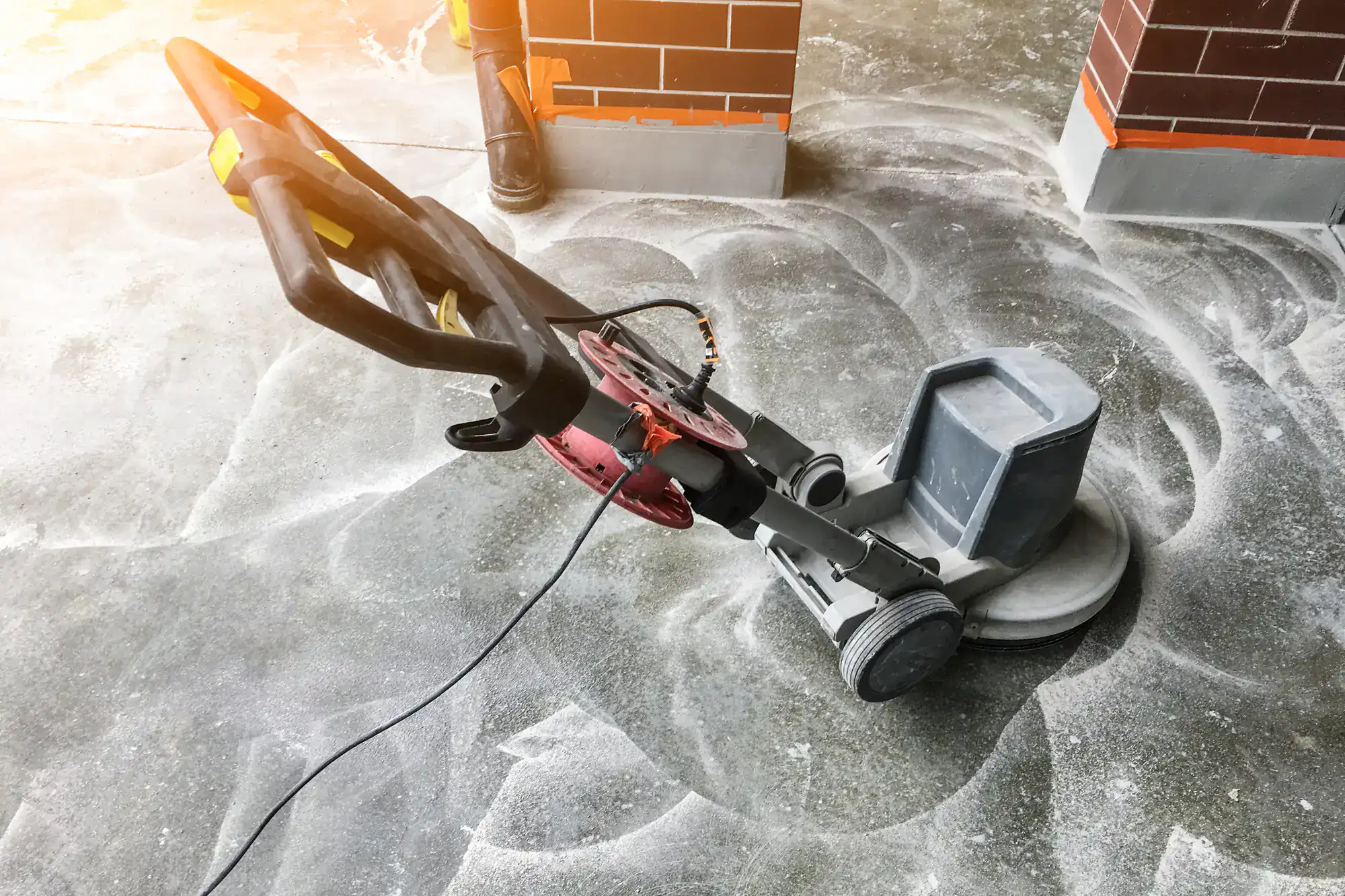
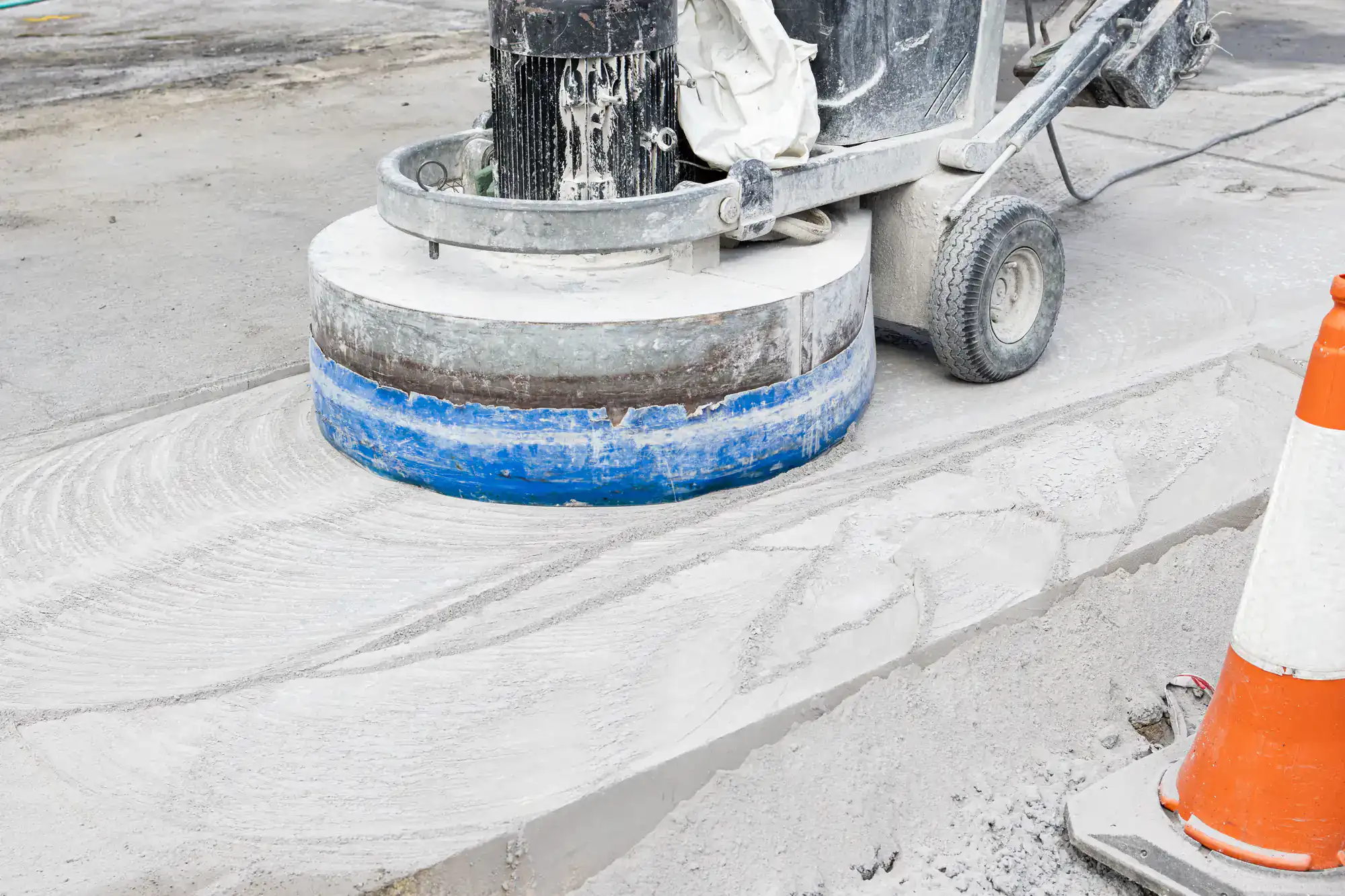
Brentwood’s industrial corridor near LIE Exit 53 is one of the most active warehouse and distribution zones on Long Island. The floors in those buildings take a beating forklift traffic, heavy loads, chemical spills, and shift after shift of operational stress. A properly polished and densified concrete floor handles all of it without cracking, dusting, or degrading under pressure.
Long Island’s winters make things harder. When temperatures swing from the teens to the mid-40s within a few days, water works its way into untreated concrete surfaces, freezes, expands, and starts breaking the slab down from the inside. Densified concrete closes off that porosity at the surface level, which means your floor isn’t absorbing that freeze-thaw stress the same way an untreated slab does. For Brentwood’s older industrial buildings many with loading dock doors that let cold air in that matters more than most people realize.
Beyond durability, the day-to-day maintenance picture changes completely. No waxing cycles. No stripping. No recoating every couple of years. A dust mop and a pH-neutral cleaner is genuinely all it takes. For retail and service businesses along Suffolk Avenue, that means less time managing the floor and more time running the business.
Advanced Epoxy Flooring is owned and operated by Danny Harmer, who has been working on commercial and industrial concrete floors for over 40 years. He’s not managing from an office he’s on the job. When you hire us, the person who assessed your floor is the same person doing the work.
The credential stack is real. In 1996, we completed flooring work at the White House kitchen the most scrutinized commercial kitchen in the country. We also hold a Sherwin-Williams High Performance Flooring certification and a Res Tech certification, both of which require demonstrated technical knowledge well beyond basic installation. These aren’t marketing claims they’re verifiable credentials that no general contractor or residential flooring installer in the Brentwood area can match.
We’ve been serving the Town of Islip corridor including Brentwood, Central Islip, Bay Shore, and the Hauppauge industrial area for decades. That means we’ve worked on the exact types of slabs that show up in this part of Suffolk County: aging mid-island construction, post-war industrial buildings, and brand-new facilities going up near the expressway. That familiarity with local building stock isn’t something you can fake. We know Brentwood’s concrete challenges because we’ve solved them hundreds of times.
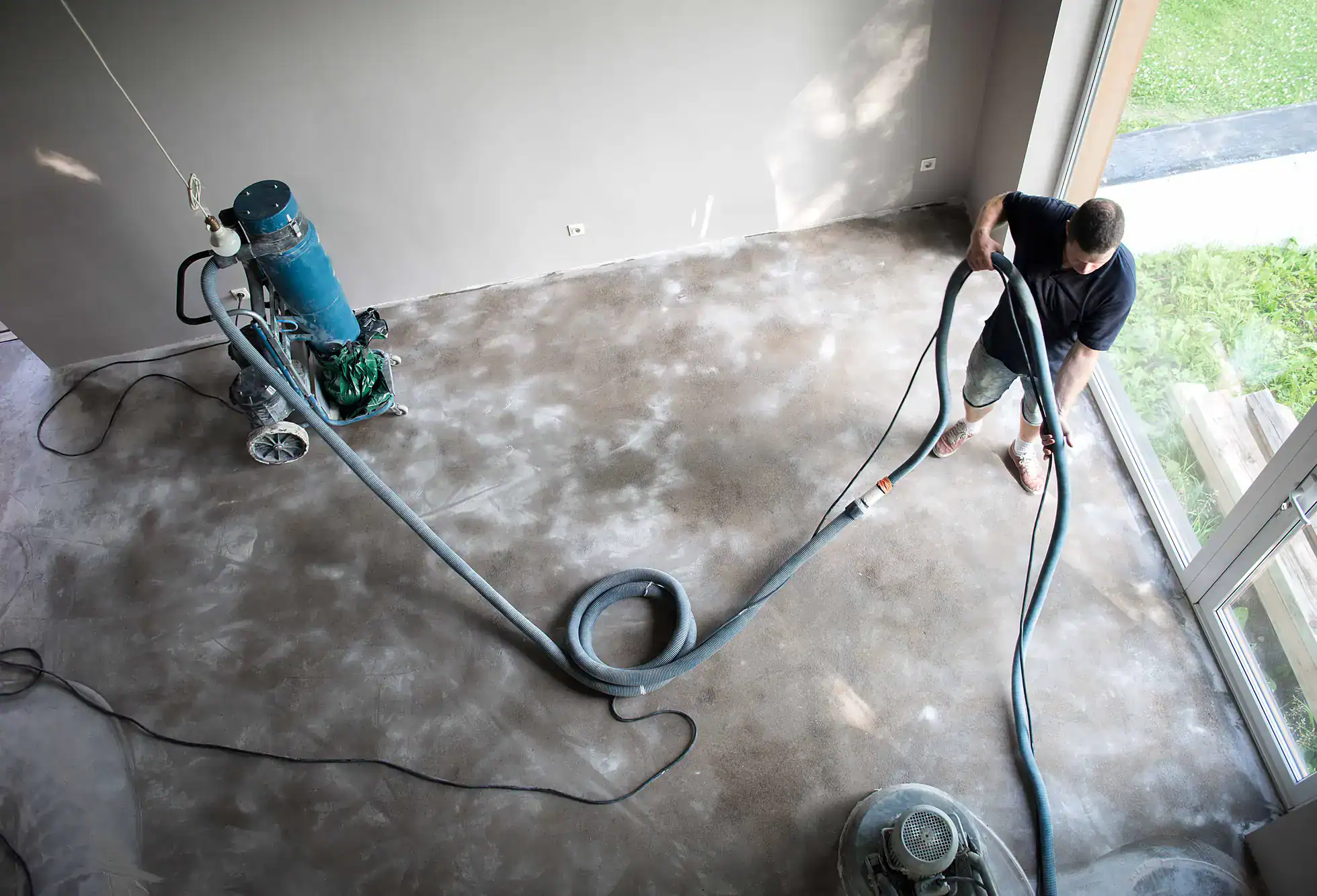
It starts with a real assessment of your slab. Not a quick glance an actual evaluation of the concrete’s condition, any existing coatings or contamination, surface hardness, and what finish level is realistic given what you’re starting with. For a lot of Brentwood’s older industrial buildings, that means identifying surface damage, previous sealers, or unevenness before a single machine touches the floor. That assessment shapes the entire plan.
From there, surface preparation comes first. If the slab needs grinding to remove old coatings or level uneven sections, that happens before anything else. Cracks get filled. Contamination gets removed. The floor gets brought to a clean, consistent baseline. Then the progressive diamond grinding sequence begins each pass using a finer grit than the last, cutting the surface down and opening the concrete up for densification. The densifier goes in at the right stage, not whenever it’s convenient, because the chemistry only works when the concrete is ready to absorb it.
The finishing passes bring the floor to the specified gloss level whether that’s a matte industrial finish for a warehouse or a higher-gloss retail finish for a commercial space on Suffolk Avenue. We build project scheduling around your operation. Sectional installation, after-hours work, and weekend scheduling are all available so your facility doesn’t have to shut down for the job to get done. Before work begins, you’ll know exactly what to expect and when.
Ready to get started?
The commercial polished concrete work we do for Brentwood facilities covers the full range of what this market actually needs. For warehouses and distribution centers near the LIE, that typically means densified industrial concrete floors a matte to satin finish built for forklift compatibility, dust elimination, and long-term durability under heavy traffic. For retail and service businesses along Suffolk Avenue, a higher-gloss finish delivers the clean, professional appearance that foot-traffic environments demand without the ongoing maintenance cost of waxed tile or vinyl.
Healthcare facilities, food service operations, and institutional spaces including the kinds of buildings operated by the Brentwood Union Free School District, one of the largest school districts in New York State have specific surface requirements around cleanability and chemical resistance. Polished and densified concrete meets those requirements, and the technical knowledge behind the application is what ensures the surface actually performs to spec rather than just looking right on installation day.
Every project includes surface preparation, progressive diamond grinding, densification, and finishing to the agreed spec. If your slab has existing coatings, surface damage, or unevenness common in Brentwood’s older building stock that gets addressed as part of the process, not billed as a surprise add-on. The goal is a floor that performs the way it’s supposed to for the next 15 to 25 years, not one that looks good for the first 18 months.
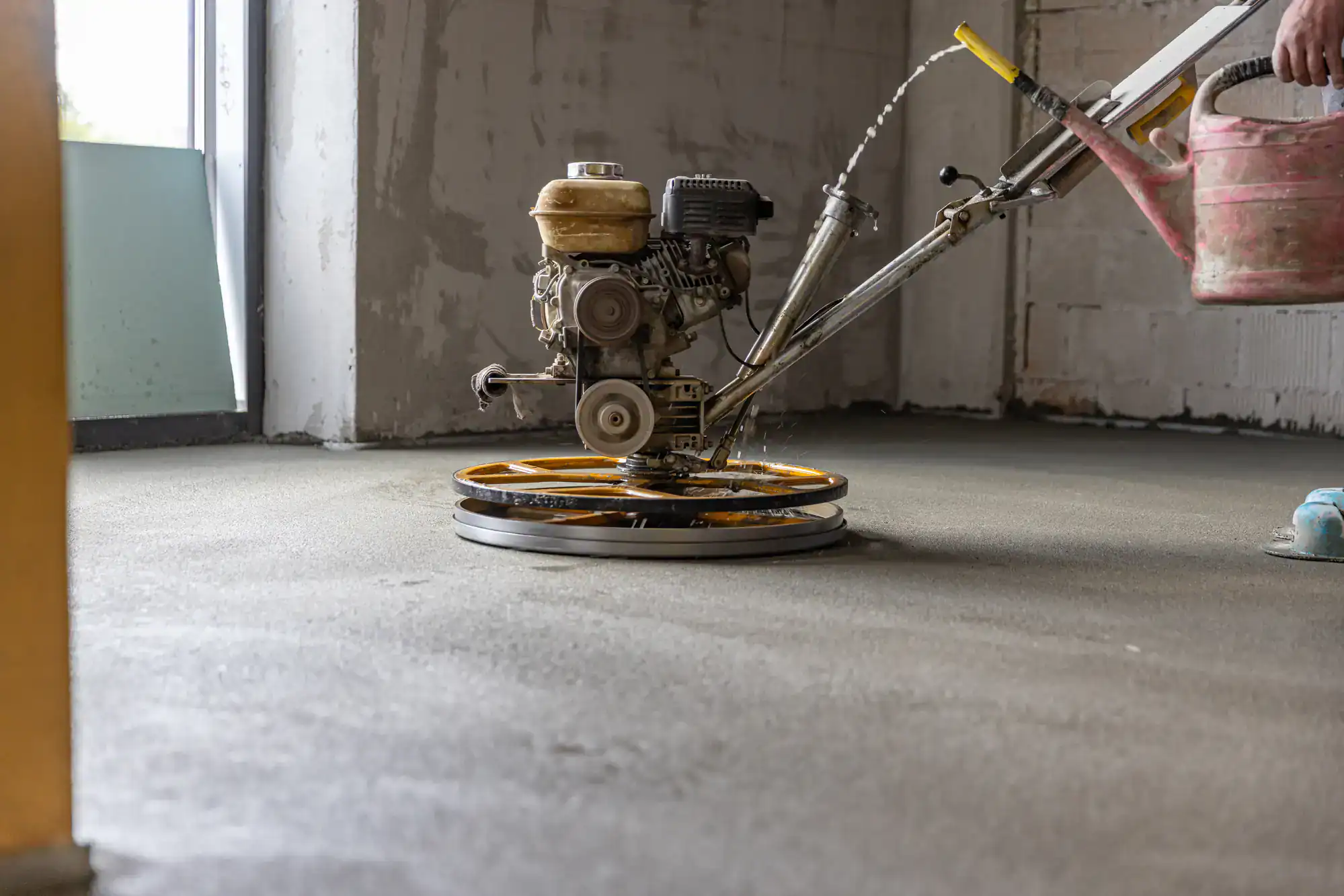
Yes and this is one of the most common assumptions that ends up costing business owners money. A lot of Brentwood’s industrial building stock was built during the post-war expansion of Long Island’s mid-island corridor, which means aging slabs, previous coatings, and surface wear are the norm, not the exception. Most people assume that kind of floor can’t be polished. In most cases, they’re wrong.
Surface grinding removes existing coatings, paint, and contamination. Crack filling addresses surface damage. Progressive diamond grinding corrects unevenness and brings the slab to a consistent baseline. What’s achievable depends on the slab’s condition which is exactly why the assessment matters. The answer to “can this floor be polished” comes from actually looking at the floor, not from a general assumption about its age.
Timeline depends on square footage, slab condition, and the finish level you’re going for. A large industrial floor in Brentwood’s warehouse corridor can take anywhere from a few days to a couple of weeks depending on how much surface preparation is needed before the polishing sequence begins. That’s not a vague answer it’s an honest one, because slab condition is the variable that changes the timeline most.
As for shutdowns, sectional installation is the standard approach for occupied facilities. The floor gets done in sections, which allows part of your operation to keep running while we work in another area. After-hours and weekend scheduling is available for operations that genuinely can’t tolerate any daytime disruption. The project plan including sequencing and timeline gets laid out before work starts so there are no surprises on your end.
This comes up constantly, and it’s worth addressing directly. A polished concrete floor at a matte or satin finish level which is the standard for industrial and warehouse environments has a slip resistance that meets or exceeds most commercial flooring alternatives. The concern about slipperiness is more relevant at very high gloss levels, which are typically specified for showroom or retail environments, not warehouse floors.
For Brentwood’s warehouse and distribution facilities, the finish spec is chosen with operational safety in mind, not just appearance. If slip resistance is a specific concern for your facility especially in areas near loading docks where moisture can track in during Long Island’s wet seasons that gets factored into the finish recommendation during the assessment. The goal is a floor that’s safe to work on, not just one that looks good in photos.
For commercial and industrial concrete polishing in the Northeast, pricing typically runs between $3 and $12 per square foot depending on the finish level, the condition of the slab, and the total square footage of the project. Large industrial floors in Brentwood’s warehouse corridor where the finish spec is matte to satin and the square footage is substantial tend to land toward the lower end of that range. Retail and showroom finishes requiring higher gloss levels and more polishing passes run higher.
What changes the number most is slab condition. A floor that needs significant surface preparation coating removal, crack filling, grinding to correct unevenness adds to the cost because that work has to happen before polishing can begin. That’s not an upsell; it’s the reality of working with older concrete in a community where much of the building stock predates modern construction standards. The assessment is what produces an accurate number, not a ballpark estimate based on square footage alone.
Long Island’s freeze-thaw cycle is genuinely hard on untreated concrete. When temperatures drop into the teens and then climb back into the 40s within a couple of days which happens regularly from January through March on Long Island water that’s sitting in the pores or hairline cracks of an untreated slab freezes, expands, and puts pressure on the surface from the inside. Over time, that produces dusting, spalling, and cracking that gets worse every winter.
Densification is the direct solution to this. Lithium silicate densifier reacts with the calcium compounds in the concrete and hardens the surface matrix chemically, reducing porosity and making the slab far less vulnerable to moisture infiltration. For Brentwood’s older industrial buildings especially those with loading dock doors and overhead penetrations that let cold air circulate near the floor densification isn’t optional if you want the floor to hold up over time. It’s part of every polishing project for exactly this reason.
Both are legitimate options, and the right choice depends on what your facility actually needs. Polished concrete works with the existing slab it’s a mechanical and chemical process that transforms the surface of the concrete itself. There’s no coating layer that can delaminate, peel, or chip under forklift traffic. The floor that results is the concrete, just denser, harder, and finished to a specific gloss level. Maintenance is minimal: dust mop regularly, clean spills promptly, and the floor holds up for decades.
Epoxy coatings are a surface layer applied on top of the concrete. They offer strong chemical resistance and can be a better fit in environments with heavy chemical exposure or where a specific color or non-slip texture is needed. The tradeoff is that coatings have a finite lifespan and will eventually need recoating typically every 5 to 10 years depending on traffic and conditions. For Brentwood’s high-traffic warehouse and distribution floors, polished concrete tends to win the long-term cost comparison. For facilities with specific chemical resistance requirements, epoxy may be the better call. The assessment is what determines which system actually fits your operation.