
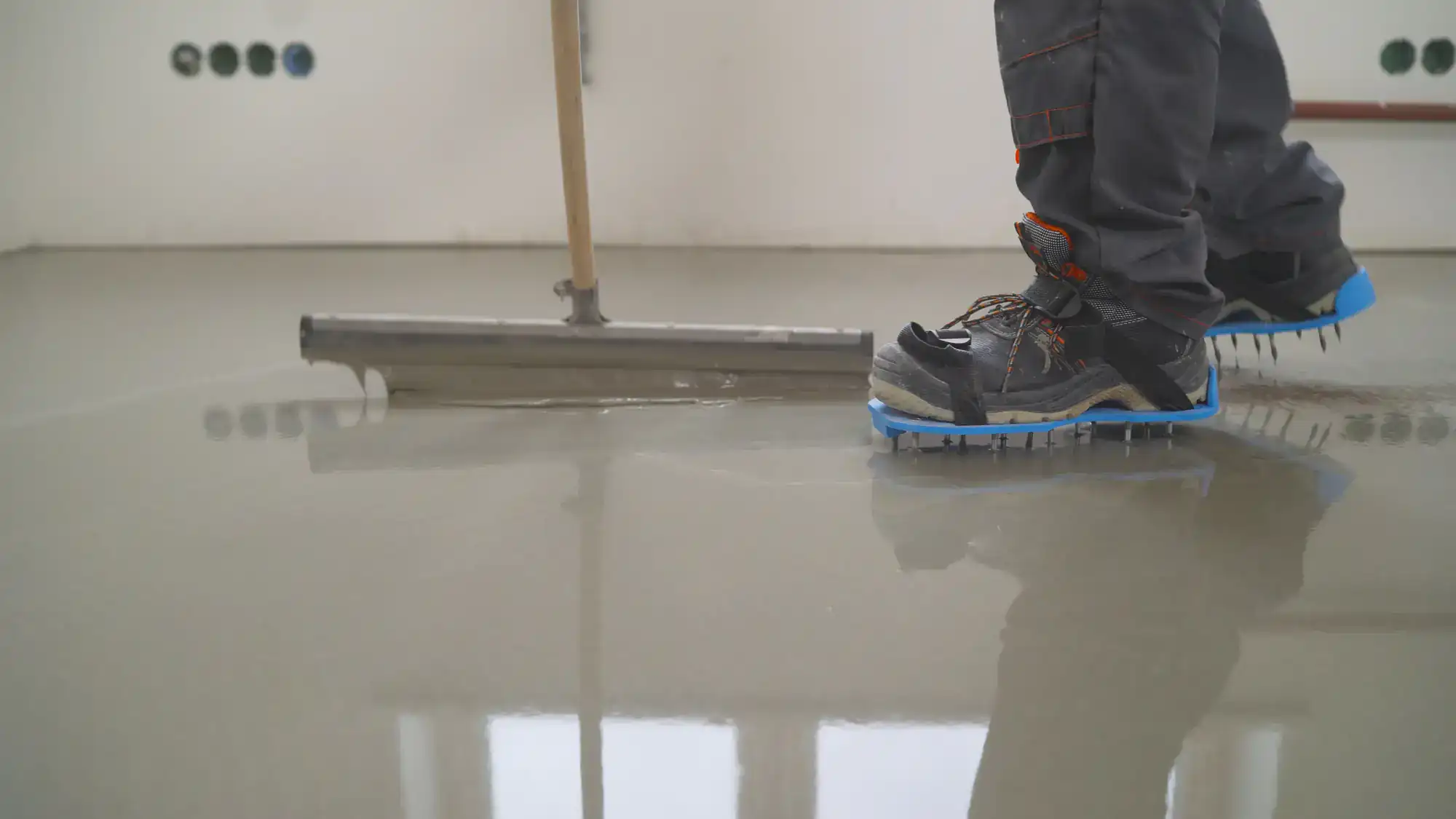
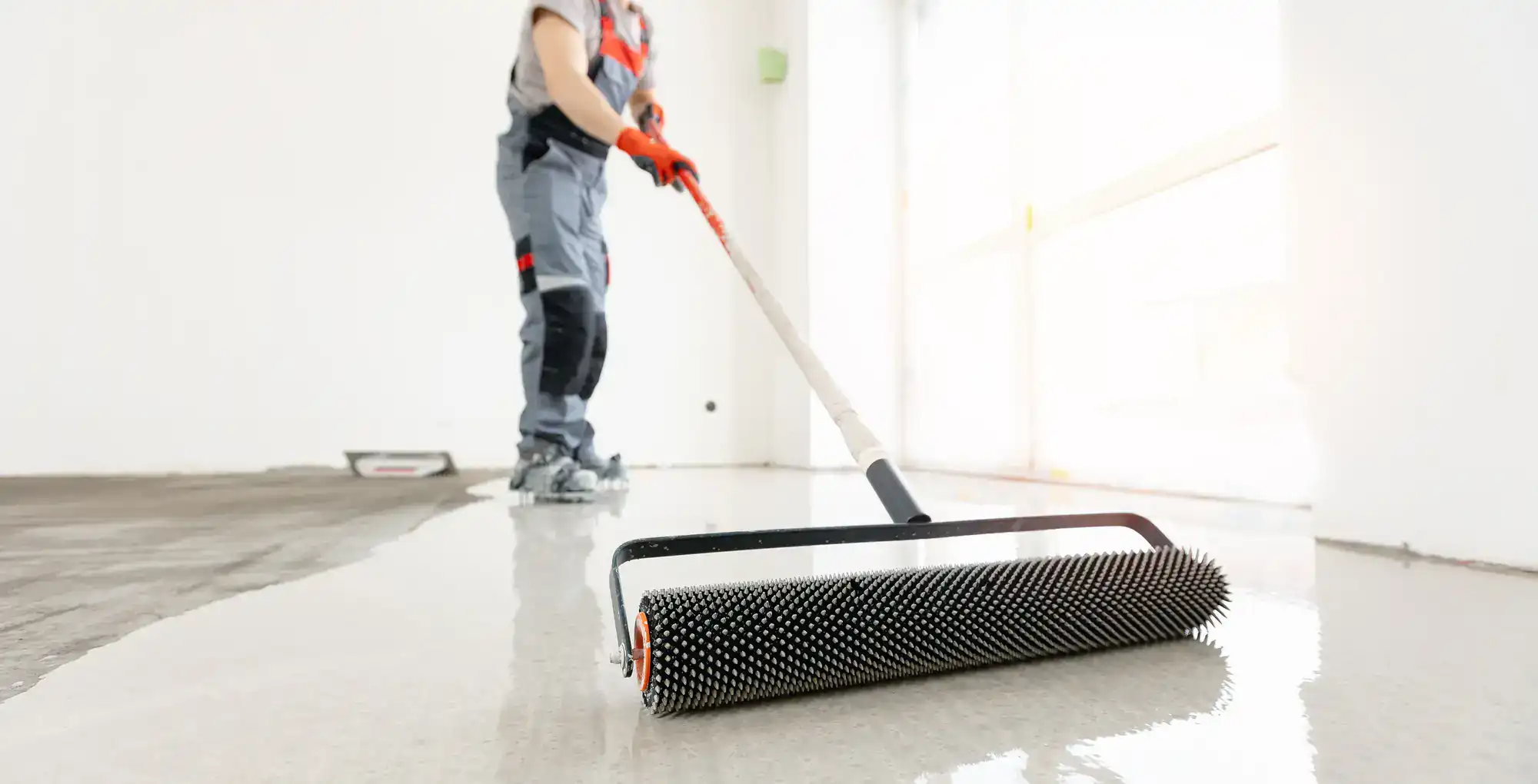
A floor that isn’t level causes more problems than most people realize. Tile cracks at the grout lines. Vinyl planks lift at the edges. Doors start scraping. And every new floor covering you install over an uneven substrate is already on borrowed time before the first person walks across it. Fixing the substrate first is what makes everything else last.
In Brentwood, that substrate problem is almost always tied to age. Many homes in the Brentwood Northeast and Brentwood North neighborhoods were built before 1939 and those slabs have had 60 to 85 years to settle, absorb moisture, and develop the kind of uneven surface that no amount of adhesive or underlayment foam is going to correct. Self leveling concrete in Brentwood, NY isn’t a luxury upgrade. For a home that old, it’s the foundation of any renovation that’s actually going to hold.
For commercial operators in the Edgewood industrial zone near the Heartland Business Center, the stakes are different but the problem is the same. A floor with low spots and surface irregularities isn’t just a cosmetic issue it’s a forklift hazard, a pallet damage issue, and eventually a liability. Getting it leveled with a high strength self leveling concrete system means your operation runs on a surface that’s actually built for what you’re putting it through.
We’ve been doing this work since 1996. Our president and CEO has over 40 years of personal installation experience, and most of our crew has been with us for a decade or more. That kind of tenure matters when the job requires reading a substrate correctly before a single bag gets mixed.
We’re based in Bohemia, NY within the Town of Islip, the same municipality that governs Brentwood. That’s not a coincidence. We know what Long Island’s freeze-thaw winters do to concrete slabs. We know what moisture vapor transmission looks like in a pre-war home. We’ve worked in demanding institutional environments, including a notable 1996 installation at the White House kitchen, and we bring that same level of process discipline to every project in Suffolk County, including the homes and businesses throughout Brentwood.
An A+ BBB accreditation and OSHA 40-certified installers round out our credentials which matters if you’re managing a commercial property in the Heartland Business Center or a healthcare facility that won’t allow uncertified contractors on the floor.
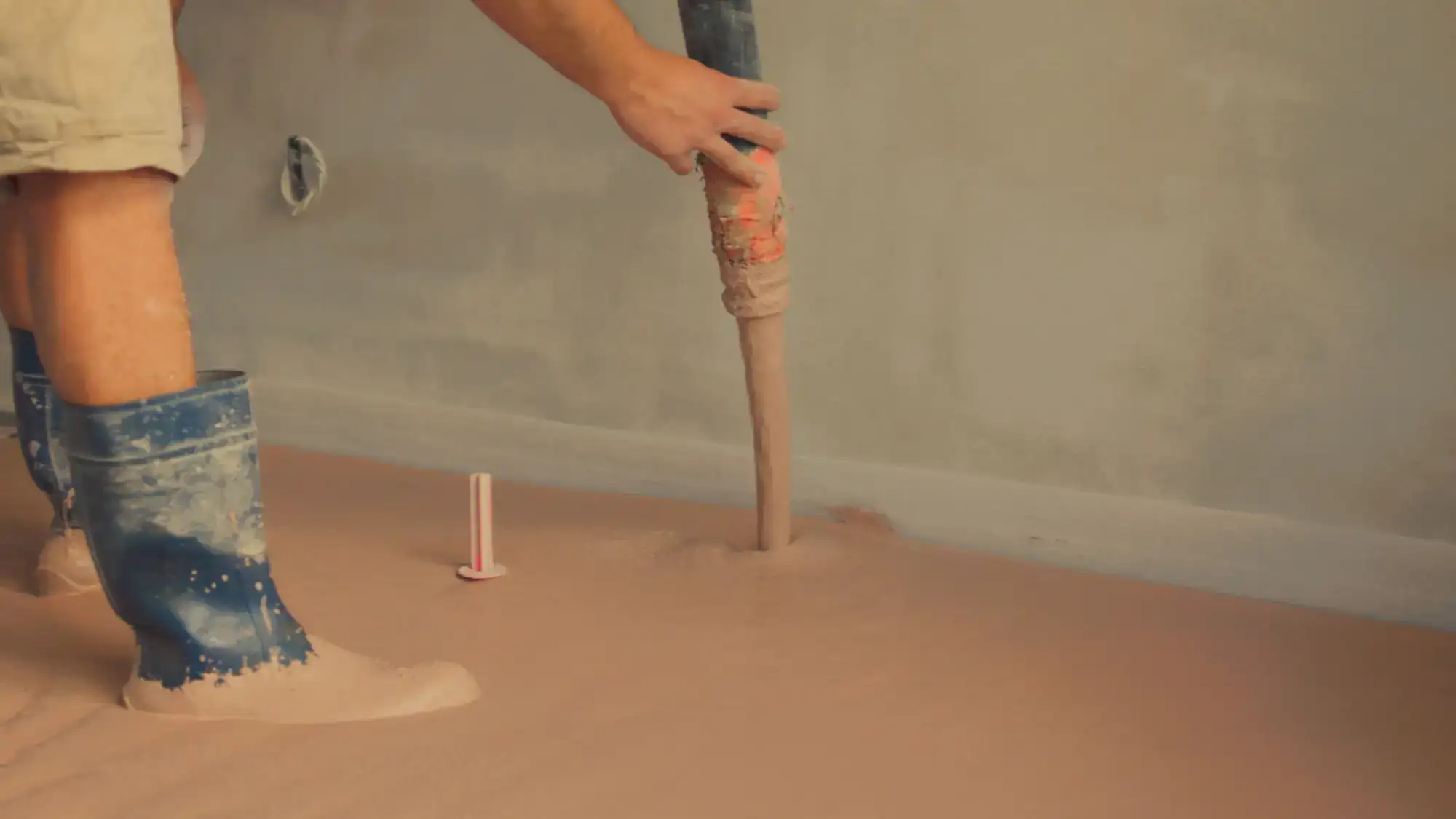
Before anything gets poured, the floor gets assessed. That means moisture testing first specifically ASTM F2170 relative humidity testing and moisture vapor emission rate (MVER) testing. In Brentwood’s older housing stock, where vapor barriers are often absent or degraded, this step is not optional. It determines which product we use and whether the substrate needs to be sealed before the pour. Skipping it is exactly how a self leveling job fails six months later.
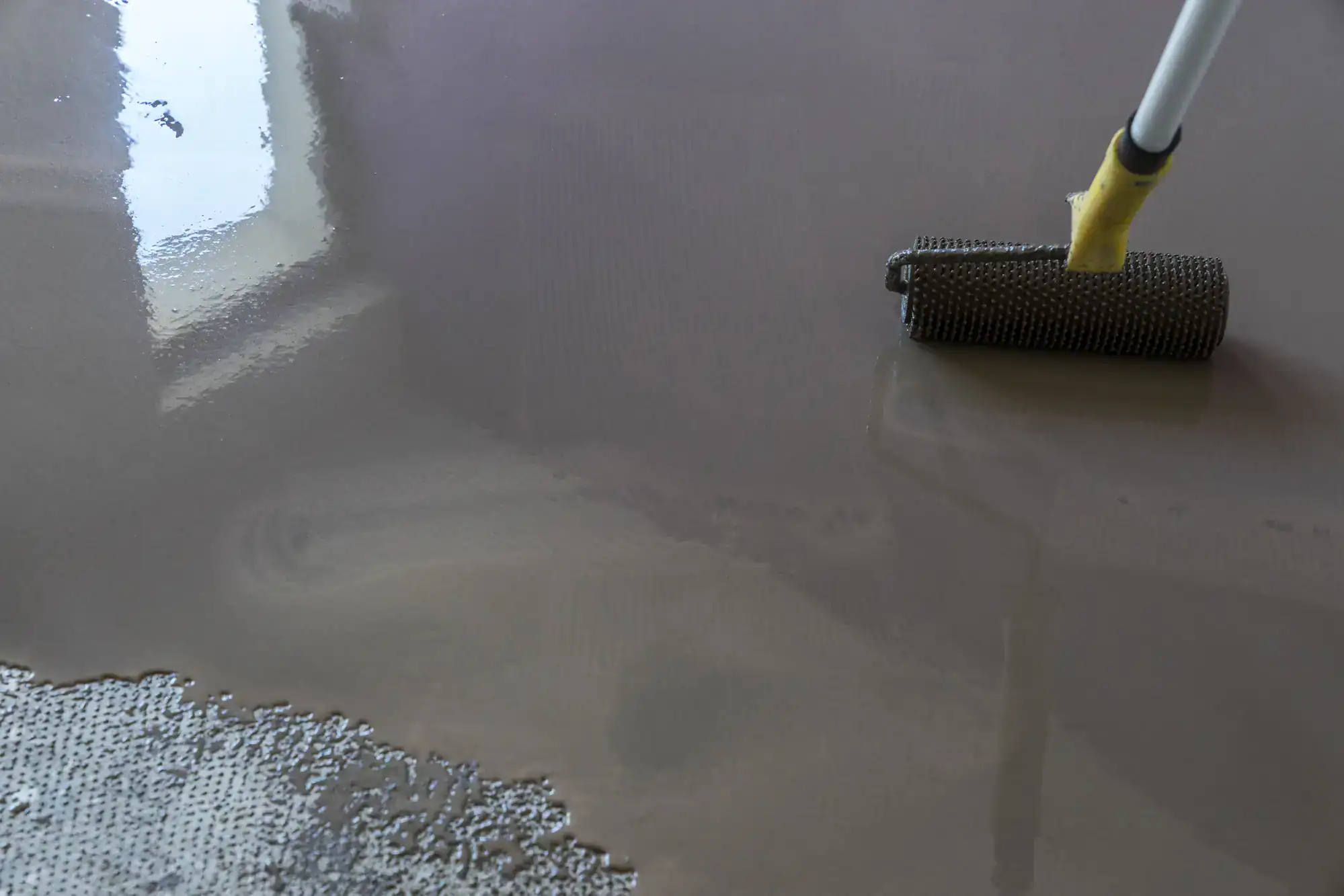
Once moisture is confirmed and the substrate is prepped cleaned, repaired, and primed the self leveling compound goes down. We use high strength, polymer-modified cementitious systems that install from a quarter inch up to two inches neat, and up to five inches with aggregate added. That range covers everything from a light tile-prep correction in a Brentwood ranch home to a significant slab remediation in a commercial warehouse. One crew, one pour, one process not three contractors pointing fingers at each other after the fact.
After the pour, foot traffic is typically possible within four to six hours. Heavy commercial and industrial traffic can usually resume within 24 to 48 hours. For businesses in the Edgewood zone that can’t afford extended downtime, that timeline matters. For homeowners who’ve been living around a renovation for weeks, it’s a relief. Either way, you’ll know exactly what to expect before our crew shows up not after.
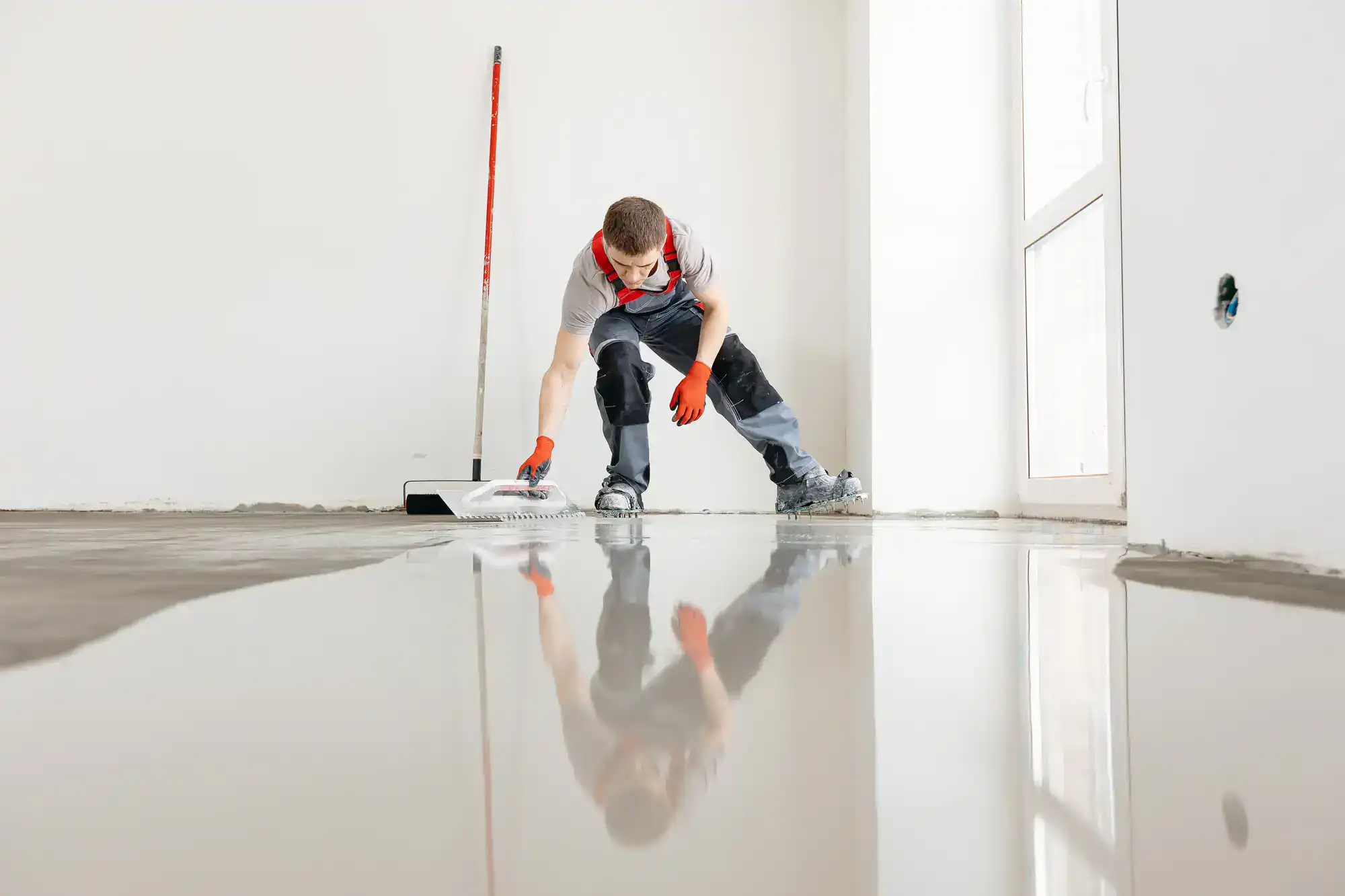
Ready to get started?
What’s included in a self leveling job with us isn’t a trimmed-down version of the full process. Moisture testing, surface preparation, concrete repair, priming, and the self leveling pour itself are all handled by the same crew under the same roof. There’s no subcontracting the prep to one company and the pour to another. That matters because the prep is where most jobs fail and when it’s done by a separate crew, accountability disappears fast.
For residential projects in Brentwood, the typical scenario involves a home that’s been through multiple floor covering cycles old vinyl tile, ceramic, maybe hardwood on top and a concrete slab underneath that’s been absorbing moisture and settling for decades. We select the cementitious self leveling underlayment specifically for compatibility with the final floor covering being installed, whether that’s new tile, LVP, or a resinous coating system. Nothing gets poured until the substrate is confirmed ready.
On the commercial side whether that’s a warehouse in the Heartland Business Center, a facility near Pilgrim Psychiatric Center, or a light manufacturing operation in the Edgewood industrial zone the system spec changes based on load requirements, chemical exposure, and thermal cycling. High strength self leveling concrete for an industrial floor in Brentwood, NY isn’t the same product going into a residential kitchen. Our crew knows the difference, and we’ll tell you which one applies to your situation before any work begins.
Yes but the prep work is what determines whether it holds. Many homes in Brentwood, particularly in the Brentwood Northeast and Brentwood North neighborhoods, were built before 1939. The concrete slabs in those homes have had decades to settle, crack, and develop moisture issues that aren’t visible on the surface. A self leveling compound poured over an unprepared or moisture-compromised slab will delaminate sometimes within months.
The correct process starts with moisture testing. If the slab is reading high for moisture vapor emissions, it needs to be sealed with an appropriate primer before anything gets poured. Any cracks or voids in the existing concrete need to be repaired first as well. When those steps are done correctly, a polymer-modified cementitious self leveling system will bond well and perform long-term even on a slab that’s 80 years old. The age of the slab isn’t the problem. The prep is what makes or breaks it.
It depends on the depth of correction needed and the square footage involved. Minor corrections a quarter inch or less across a small area are on the lower end of the range. Larger residential projects involving significant settlement or multiple rooms will cost more. Commercial projects in the Edgewood industrial zone or the Heartland Business Center, where square footage is higher and product specs are more demanding, are priced based on the specific system required and the site conditions.
What drives cost up more than anything is skipped prep work and that’s usually what separates a cheap quote from a realistic one. If someone is quoting you self leveling concrete in Brentwood without mentioning moisture testing or surface preparation, that’s where the hidden cost shows up later: in a failed pour, a delaminated floor, and another contractor to fix what the first one didn’t do right. A thorough assessment upfront is what keeps the final number from being a surprise.
For most polymer-modified cementitious self leveling systems, foot traffic is safe within four to six hours of the pour. That’s under normal interior conditions meaning the space is climate-controlled and the ambient temperature is above 50°F, which matters during Brentwood’s winters when unheated commercial spaces can drop well below that threshold. If the space isn’t heated, the curing timeline extends and the product selection may need to change.
For heavy commercial and industrial use forklifts, pallet jacks, heavy equipment the standard recommendation is 24 to 48 hours before putting that kind of load on the floor. For most residential projects, that’s not a concern, but for businesses in the Edgewood industrial zone, that timeline is worth planning around. If you’re scheduling a floor leveling project around a production schedule or a shift change, that window is realistic and workable. Your crew can typically be back on the floor the next morning without issue.
For most residential self leveling projects where you’re leveling a concrete slab or subfloor as part of a flooring renovation a standalone permit is generally not required in the Town of Islip. Interior flooring prep work that doesn’t affect structural elements typically falls outside the permit threshold under New York State building code. That said, the specifics can vary depending on the scope of the project, and it’s always worth confirming with the Town of Islip Building Division if you have any question about where your project falls.
For commercial projects, the answer is more nuanced. If you’re working in a commercial building in the Heartland Business Center or another facility in the Edgewood zone, your project may be subject to additional requirements depending on the building’s occupancy classification and the scope of the work. Large-scale conversion projects like the kind of subfloor remediation involved in a historic building being converted to residential use typically involve multi-agency coordination and should be reviewed with a licensed contractor who knows Town of Islip commercial construction requirements before any work begins.
Concrete repair and self leveling underlayment solve different problems. Concrete repair filling cracks, patching spalled areas, addressing voids is about restoring the structural integrity of an existing slab. Self leveling underlayment is about creating a flat, smooth surface across a larger area so that a floor covering can be installed correctly. You often need both, in that order: repair the damage first, then level the surface.
The distinction matters because some contractors treat them as interchangeable they’ll fill a few cracks and call the floor “ready,” when in reality the overall plane of the slab is still uneven by half an inch or more across the room. That kind of variation is enough to cause tile to crack at grout lines, vinyl planks to hollow out, and hardwood to cup over time. In Brentwood’s older homes and commercial buildings, where decades of settlement have created gradual but significant unevenness, concrete repair alone isn’t enough. The self leveling pour is what brings the floor into the tolerance range that modern floor coverings actually require.
Moisture is the most common reason self leveling jobs fail and it’s almost always invisible until the floor starts to delaminate. In Brentwood specifically, the combination of Long Island’s humid summers, freeze-thaw winters, and a large inventory of older homes without modern vapor barriers creates conditions where moisture vapor transmission through concrete slabs is a real and consistent issue. A slab that looks dry on the surface can still be pushing moisture vapor upward at a rate that will break the bond between the self leveling compound and the concrete underneath.
ASTM F2170 relative humidity testing and moisture vapor emission rate testing give you actual numbers not guesses. If the readings are above the threshold for the product being used, the slab needs to be treated with a moisture-mitigating primer before the pour. That step adds time and cost, but it’s the difference between a floor that lasts years and one that starts showing problems before the season changes. Skipping moisture testing is how contractors keep their bids low and how homeowners end up paying twice. In a community like Brentwood, where the housing stock is old and the climate is unforgiving, it’s not a step worth skipping.