
Most hangar floors in the Smithtown area fail for one of two reasons the coating wasn’t built for aviation chemistry, or the prep work was skipped. Either way, you end up with a floor that bubbles, peels, or stains within a few years, and you’re back to square one.
The right system changes that completely. Jet fuel, Skydrol hydraulic fluid, Avgas, and the cleaning solvents used in aircraft maintenance are all chemically aggressive. A coating that isn’t specifically formulated to resist them won’t last and in Smithtown, where coastal humidity and a high water table add moisture vapor pressure to large concrete slabs, the margin for error is even smaller. The North Shore climate means moisture testing before installation isn’t optional it’s what separates a floor that bonds from one that delaminates in two winters.
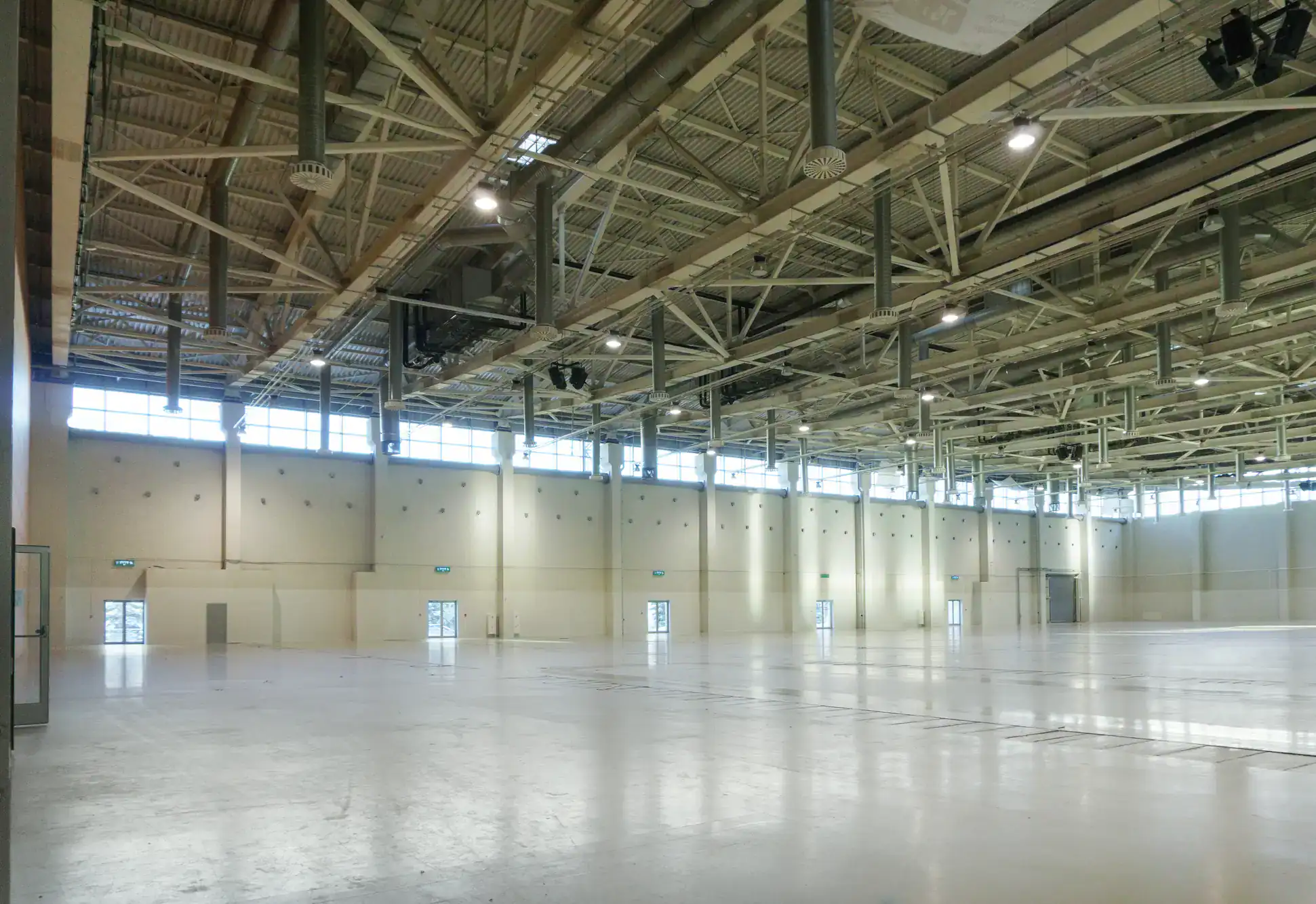
Once it’s done right, the difference is immediate. Dropped hardware and fluid spills show up clearly on a high-gloss surface, which matters in any working hangar where FOD is a real concern. The floor stops absorbing fuel and oil into the concrete. It reflects overhead lighting, looks sharp for clients or aircraft owners walking through, and holds up through the freeze-thaw cycles that Long Island winters reliably deliver. That’s not a cosmetic upgrade that’s a functional one.
We’ve been installing resinous flooring systems for over 30 years, operating out of Bohemia, NY right here in Suffolk County and serving Smithtown and the surrounding North Shore. That means we understand Smithtown’s coastal conditions, the moisture dynamics specific to this area, and the demands of aviation facilities near MacArthur Airport. This isn’t a national franchise sending out a crew that’s never worked in this climate.
Danny Harmer, our president, has over 40 years of hands-on installation experience and our field supervisors and crew have been with us for over a decade on average. The same team that has installed floors across the U.S., internationally, and in high-accountability environments is the team that shows up to your hangar in Smithtown. We hold dual elite certifications through Sherwin-Williams High Performance Flooring and Res Tech, every installer carries OSHA 40 certification, and our non-slip topcoat is independently certified by the National Flooring Safety Institute.
The first thing that happens on any hangar floor project in Smithtown is a moisture vapor assessment of the concrete slab. On Long Island, this step is non-negotiable. The North Shore’s elevated humidity and high water table mean moisture migrates through large concrete slabs and if a coating is applied over a slab that hasn’t been properly tested, it will fail. That’s not a risk worth taking on a floor this size.
After moisture testing, we diamond-grind the slab to create a proper adhesion profile. Any cracks, spalls, or surface damage are repaired before a single drop of coating goes down. Then it’s primer, base coat, and topcoat each layer applied and allowed to cure fully before the next goes on. That curing process is what gives the system its strength and longevity. Rushing it is exactly how you end up with a floor that looks fine for a year and starts delaminating in year two.
The topcoat is where the aviation-specific chemistry matters most. Our system is formulated to resist Skydrol, jet fuel, hydraulic fluids, and maintenance solvents the things that will actually be on your hangar floor. It also meets NFPA 409’s noncombustibility requirement, which applies to commercial hangars and FBO facilities in this area. Depending on your timeline and operational needs, polyaspartic systems are available that allow aircraft back in the hangar within 24 hours of final coat application.
Ready to get started?
Whether you’re operating a private T-hangar near MacArthur Airport, a corporate flight department facility, or an aircraft maintenance bay in the Long Island Innovation Park at Hauppauge, the system needs to match the application. A residential garage floor coating has no business being installed in an active aviation environment and that’s a distinction most general epoxy contractors in the Smithtown area won’t make on their own.
For private hangar owners in Smithtown, the focus is usually on durability, appearance, and chemical resistance to fuel and oil. For FBO operators and corporate flight departments, NFPA 409 compliance, Skydrol resistance, and professional appearance for high-value clients are the priorities. For MRO facilities and maintenance bays, the system needs to handle heavier chemical exposure and more demanding daily use. We install systems matched to each of these environments not a one-size-fits-all coating applied the same way regardless of what the space is used for.
Every installation includes concrete surface profiling, moisture vapor testing, crack and spall repair, and a multi-coat system with a certified non-slip topcoat. The Long Island Innovation Park at Hauppauge the second-largest industrial park in the U.S., located within the Town of Smithtown represents a significant secondary market for aviation-adjacent facility flooring, and our systems are built for that level of industrial demand as well.
It does, and it’s one of the most common reasons coatings fail in Smithtown and the surrounding North Shore area. The town sits on the North Shore, where coastal air moisture is a year-round variable and the water table runs higher than most inland areas. Large concrete slabs the kind found in aircraft hangars are particularly susceptible to moisture vapor transmission, where water moves through the slab from below and creates pressure against the coating from underneath. When a coating is applied without testing for this first, it bonds to the surface but not to the slab. Over time, that moisture pressure causes blistering, bubbling, and delamination.
The fix is straightforward but has to happen before installation begins. Moisture vapor testing tells you what you’re working with, and the coating system is selected and applied accordingly. Skipping that step is how you end up calling us back in two years to grind up a failed floor and start over which costs significantly more than doing it right the first time.
NFPA 409 is the national standard for aircraft hangars, and it requires that hangar floor surfaces be noncombustible. If you operate a commercial hangar, an FBO, or any facility used for aircraft storage or servicing including facilities near MacArthur Airport in Ronkonkoma serving the Smithtown area this standard applies to you. It’s not a Smithtown-specific ordinance; it’s a state and national code requirement that governs how hangar floors must be finished.
Where this matters practically is in your coating selection. Not every epoxy or polyaspartic system on the market meets NFPA 409’s noncombustibility requirement, and a general contractor who hasn’t worked in aviation environments may not know the difference. If your facility is ever inspected or if an incident occurs and your floor coating doesn’t meet code, the liability exposure is real. We install systems that meet this requirement and we’ll tell you upfront whether the system being proposed is compliant before the job starts.
A properly installed aviation-grade system in the Smithtown area should last 15 to 20 years under normal use. The range depends on traffic volume, chemical exposure, and how well the concrete was prepared before installation. A private T-hangar with one aircraft and light foot traffic will see different wear than an active maintenance bay with daily chemical exposure and heavy equipment movement.
What shortens that lifespan most consistently is poor prep. If the concrete wasn’t diamond-ground to the right profile, if moisture testing was skipped, or if cracks weren’t repaired before coating, the system is already compromised before it cures. Long Island’s freeze-thaw winters accelerate that deterioration water trapped under or within a poorly bonded coating expands when it freezes, and the damage compounds year over year. A floor installed with the full prep process, appropriate system selection, and proper cure time holds up through Long Island winters reliably. One that wasn’t prepared correctly often doesn’t make it past the second or third winter before showing visible failure.
Both are viable for hangar floors, and the right choice depends on your timeline and the specific demands of your facility. Polyaspartic systems cure significantly faster aircraft can typically return to the hangar within 24 hours of the final coat, which matters a lot if you’re running an active operation near MacArthur Airport and can’t afford extended downtime. Traditional epoxy systems require longer cure windows, sometimes several days before the space is ready for full use.
From a performance standpoint, high-build epoxy systems tend to offer excellent chemical resistance and are a strong choice for maintenance bays with heavy daily exposure to Skydrol and aviation lubricants. Polyaspartic topcoats are highly durable, UV-stable, and well-suited for hangars with large door openings where sunlight exposure is a factor. In practice, many installations use a combination an epoxy base for build and chemical resistance, topped with a polyaspartic finish coat for durability and fast return to service. The right system for your specific hangar in Smithtown depends on how it’s used, and that’s a conversation worth having before anything gets ordered.
Winter installations are possible, but they require more careful management than spring or fall projects. Epoxy and polyaspartic systems have minimum temperature requirements for proper bonding and curing typically above 50°F for the slab surface and ambient air. In a climate-controlled hangar, that’s manageable year-round. In an unheated facility during a Smithtown January, it’s a real constraint.
Spring and fall are the most reliable installation windows on Long Island. Temperatures are moderate, humidity is more predictable, and the concrete has had time to stabilize after winter freeze-thaw cycling. If your hangar experienced any concrete damage over the winter surface scaling, new cracks, or spalling from water expansion spring is also the right time to assess that damage and address it before coating goes down. If you’re planning a project and timing is flexible, late spring through early fall gives you the best conditions for a clean installation and proper cure. That said, if your operation needs the floor done in winter, it can be done it just requires the right preparation and attention to temperature management throughout the process.
Hangar floor coating costs in the Smithtown area generally range from $6 to $12 per square foot, depending on the size of the slab, the condition of the concrete, the system being installed, and the level of prep work required. A private T-hangar in the 1,000 to 2,000 square foot range will land at a different number than a corporate or FBO facility running 20,000 square feet or more.
The condition of the concrete is often the biggest variable. If there’s significant cracking, spalling, or previous coating that needs to be ground off, that adds time and labor before the new system even starts. Moisture issues which are common on Long Island given the coastal climate and high water table can also affect the system selection and add to the overall cost. The most useful way to think about the investment is on a per-year basis. A $10 per square foot system that lasts 18 years costs less over time than a $5 per square foot system that fails in four and requires full removal and reapplication. For facility owners in Smithtown, where property values and operational standards run high, that long-term math tends to make the decision straightforward.