
Most hangar floor failures on Long Island’s South Shore don’t start at the surface they start underneath it. Oceanside was built over marshes and swamps, and many of the commercial and industrial slabs throughout the hamlet sit on ground that holds moisture. When that moisture migrates upward through the concrete and meets a coating that wasn’t prepared for it, the floor bubbles, peels, and delaminates. It’s not a product problem. It’s a preparation problem and it’s one of the most common calls we get from facility operators who already paid someone else to do this once.
Once your floor is installed correctly, the difference is immediate and operational. A high-gloss, sealed aviation-grade surface reflects overhead lighting, making fuel spills, dropped tools, and foreign object debris visible before they become incidents. Skydrol hydraulic fluid, jet fuel, and industrial solvents wipe off rather than penetrating the slab. And if Oceanside’s documented storm surge exposure ever puts water in your facility the way Sandy did to properties along Lawson Boulevard a properly sealed floor means a one-day cleanup instead of a full replacement.
The salt air coming off Middle Bay and the canal network surrounding Oceanside accelerates surface degradation on any coating that wasn’t bonded correctly to begin with. A system installed with the right surface preparation, the right primer, and the right aviation-grade chemistry holds for 15 to 20 years in this environment. One that wasn’t? You’ll know within four.
We’ve been serving Nassau and Suffolk Counties for over 30 years. We’re based in Bohemia, NY close enough to Oceanside that the same coastal humidity, freeze-thaw cycles, and salt air exposure that affects your facility is the same environment our crews work in year-round. This isn’t a national brand dispatching a stranger. It’s a Long Island company that knows what a South Shore slab looks like and what it takes to coat one correctly.
Our president and CEO Danny Harmer has over 40 years of hands-on installation experience and most of our team has been with us for more than a decade. That kind of continuity matters when you’re trusting someone with a facility that has real operational stakes. We hold dual elite certifications in Sherwin-Williams High Performance Flooring and Res Tech systems, carry OSHA 40 certified installers on every job, and install topcoats that meet the National Flooring Safety Institute’s tested non-slip standards. These aren’t self-reported claims they’re verifiable credentials that most flooring contractors in the Nassau County market simply don’t hold.
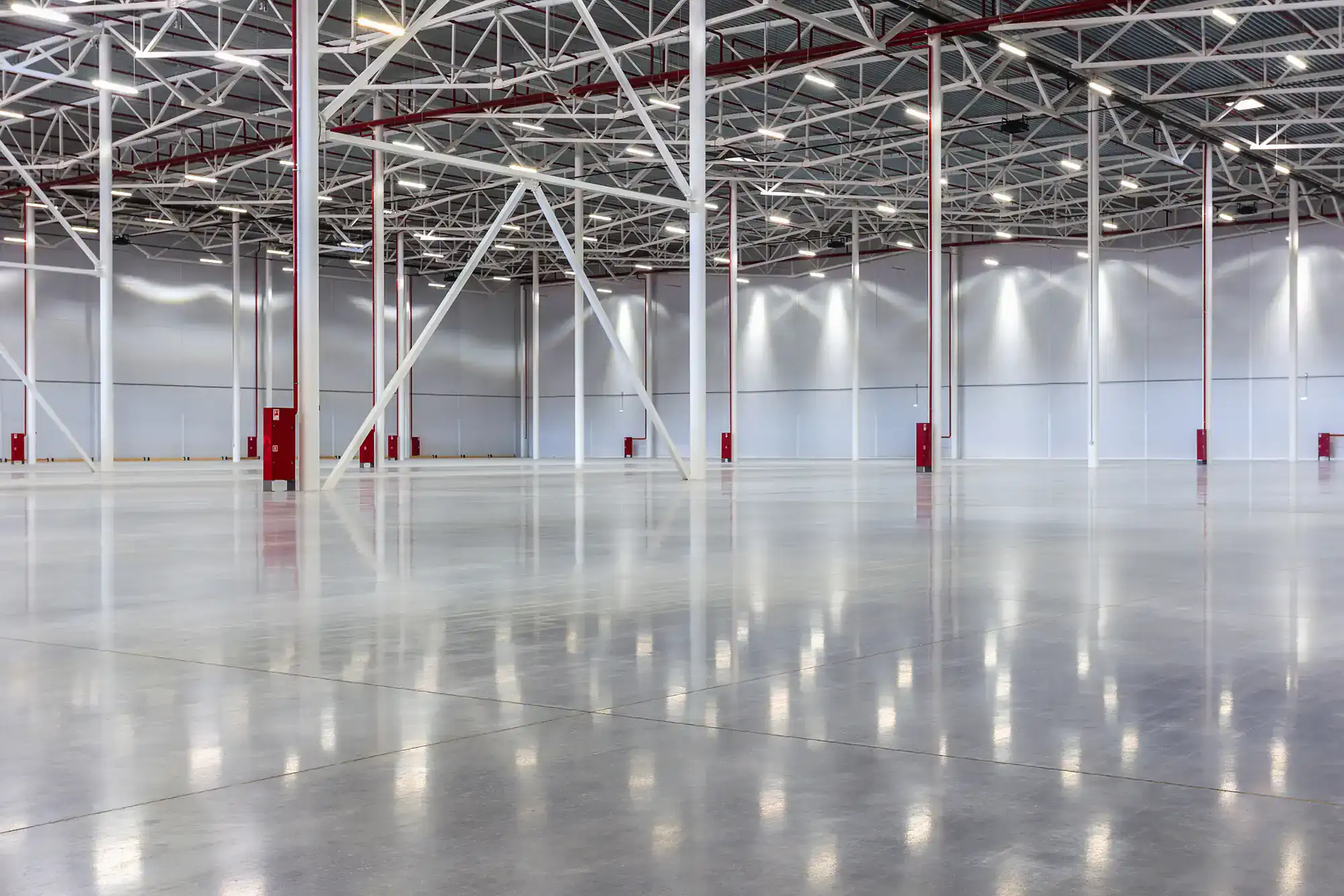
Every project starts with an honest assessment of what you’re actually working with. In Oceanside specifically, that means moisture testing before anything else. Given the hamlet’s construction history over swampland and its position in a documented flood zone, moisture vapor transmission is a near-certainty on older slabs and it’s the single most common reason floors fail here. If the slab shows elevated moisture readings, we address it with a moisture mitigation primer system before the coating goes down. Skipping that step is how you end up paying for the same floor twice.
Once the slab is assessed, we diamond-grind the surface to the correct adhesion profile. In a coastal salt air environment like Oceanside’s South Shore, the bond between the concrete and the coating is everything and diamond grinding is the only way to achieve the surface profile that makes a 15-to-20-year lifespan realistic. Any existing damage, cracks, or surface irregularities are repaired at this stage, not after.
From there, the system goes down in sequence: primer, base coat, broadcast layer if applicable, and topcoat. For active aviation facilities that can’t afford extended downtime, polyaspartic systems cure fast enough to return aircraft to the hangar within 24 hours of installation. For facilities under Nassau County oversight where NFPA 409 compliance is required, the systems we install meet that standard non-combustible, chemically resistant, and built for the aviation environment, not repurposed from a commercial warehouse spec.
Ready to get started?
The systems we install for aircraft hangar floor coatings in Oceanside, NY are specifically engineered for aviation environments not adapted from residential or light commercial products. That distinction matters more than most buyers realize until they’ve seen a standard coating fail under Skydrol exposure or peel from a slab that was never properly tested for moisture.
For commercial hangar operators, FBO facilities, and aviation maintenance businesses in the Nassau County corridor including operations serving the regional aviation ecosystem around JFK International Airport approximately 10 miles from Oceanside the coating must be NFPA 409 compliant. That means non-combustible floor surfaces in aircraft storage and servicing areas, full stop. The Sherwin-Williams High Performance Flooring systems we install meet this requirement. The Res Tech systems we install meet this requirement. A general industrial floor coating contractor offering the same product they use for warehouses and retail spaces does not automatically meet this requirement and Nassau County’s fire marshal program is active enough that the distinction will eventually matter.
Beyond compliance, the practical performance requirements of an aviation maintenance bay flooring system include resistance to Skydrol hydraulic fluid, jet fuel, aviation lubricants, and the industrial cleaning solvents used in routine aircraft maintenance. The topcoat meets NFSI non-slip standards a tested, certified traction rating, not a marketing description. And for Oceanside facilities in Nassau County’s South Shore flood zone, the chemical resistance and moisture impermeability of these systems means that a weather event doesn’t have to mean a floor replacement.
Yes, and it’s one of the first things worth discussing before any system is selected. Oceanside sits in a documented storm surge zone properties along Lawson Boulevard and the southern canal corridors experienced significant flooding during Hurricane Sandy, and the hamlet’s construction history over marshes and swamps means many commercial slabs already carry elevated baseline moisture levels. Moisture vapor transmission through concrete is the leading cause of epoxy coating failure, and in Oceanside it’s not a theoretical risk it’s a condition that needs to be tested for and addressed on virtually every project.
What that means practically is that any hangar floor coating installation in Oceanside should begin with moisture assessment before a product is selected or a quote is finalized. If the slab shows elevated readings which is common here a moisture mitigation primer system needs to go down first. That adds a step and some cost upfront, but it’s the difference between a floor that lasts 15 to 20 years and one that starts delaminating within a few years of installation. The flood zone exposure also makes a strong case for a fully sealed, chemically resistant system: when water does get in, a properly coated floor cleans up in a day. Bare or deteriorated concrete does not.
The chemistry is different, the compliance requirements are different, and the performance demands are different. Standard commercial epoxy the kind used in warehouses, retail spaces, and light industrial facilities is not formulated to resist Skydrol hydraulic fluid, jet fuel, or aviation lubricants. It also doesn’t meet NFPA 409, the federal standard that requires non-combustible floor surfaces in aircraft storage and servicing areas. For commercial hangar operators and aviation maintenance businesses in Nassau County, that compliance requirement is enforceable, not optional.
Aviation-grade systems like the Sherwin-Williams High Performance Flooring and Res Tech products we install are specifically engineered for the chemical environment of an aircraft maintenance bay. They resist the fluids that are routinely present on hangar floors, they meet the non-combustibility standard, and they’re built to handle the point loads from aircraft landing gear, maintenance jacks, and ground support equipment that would damage a lighter-duty system. The topcoat also meets NFSI non-slip certification a tested traction standard that matters in any environment where fuel and fluid spills are routine. If a contractor is quoting you a hangar floor and can’t speak to NFPA 409 compliance or Skydrol resistance specifically, that’s worth asking about before the job starts.
A properly installed aviation-grade system with correct surface preparation, moisture testing, and the right primer and topcoat chemistry should realistically last 15 to 20 years in a coastal Long Island environment like Oceanside’s. The key phrase there is “properly installed.” The salt air, ambient humidity, and moisture vapor conditions on Nassau County’s South Shore are more aggressive than what contractors encounter 20 or 30 miles inland, and they expose shortcuts quickly.
The most common reason floors fail before that lifespan in this area is inadequate surface preparation. If the slab wasn’t diamond-ground to the correct adhesion profile, the bond between the concrete and the coating is compromised from day one and salt air accelerates that degradation. The second most common reason is skipped or inadequate moisture testing. In a hamlet built over swampland with documented flood exposure, moisture vapor transmission is an active condition on most older slabs. A floor installed without addressing it may look fine for a year or two before the delamination becomes visible. Getting the preparation right the first time is what separates a 20-year floor from a 4-year one.
If your facility is used for aircraft storage, servicing, or maintenance, yes. NFPA 409 is the national standard on aircraft hangars, and it requires that the floor surface in aircraft storage and servicing areas be noncombustible. This isn’t a preference or a best practice it’s a code requirement, and Nassau County has an active fire marshal program that reviews commercial hangar facilities for compliance. The practical implication is that many standard commercial epoxy products are eliminated from consideration entirely, because they don’t meet the noncombustibility requirement even if they look the part.
The Sherwin-Williams High Performance Flooring and Res Tech systems that we install meet NFPA 409. When you’re evaluating contractors for an aircraft hangar floor coating project in Oceanside or anywhere in Nassau County, asking specifically whether the proposed system is NFPA 409 compliant is a reasonable and important question. A contractor who can’t answer that directly or who isn’t familiar with the standard is a signal worth paying attention to. For FBO operators and commercial aviation maintenance businesses, the compliance question isn’t just about inspections. It’s about liability.
Hangar floor coating costs vary based on square footage, slab condition, and the system selected, but for aviation-grade installations in the Nassau County market you’re generally looking at a meaningful investment relative to standard commercial epoxy and the difference is real, not just a markup. A standard commercial epoxy system that isn’t formulated for aviation chemistry, doesn’t meet NFPA 409, and wasn’t installed with proper moisture testing on an Oceanside slab may cost less upfront. It will also likely need to be ground up and replaced within four to seven years, which means paying again for the floor, the grinding, and the downtime.
Polyaspartic systems carry a higher upfront cost than standard epoxy, and for active aviation facilities in Oceanside the return on that investment is largely in operational continuity. Polyaspartic cures fast enough to return aircraft to the hangar within 24 hours of installation. For a maintenance bay or FBO facility that can’t absorb a multi-day shutdown, that cure time is a real business consideration, not just a feature. Over a 15-to-20-year lifespan, an aviation-grade polyaspartic system installed correctly the first time consistently costs less than a cheaper floor that requires early replacement and that math holds whether you’re running a private hangar or a commercial operation.
Because Oceanside’s physical conditions make the consequences of skipping it faster and more visible than almost anywhere else on Long Island. The hamlet was built over marshes and swamps a construction history that means the ground beneath many commercial slabs in Oceanside holds more moisture than inland locations. Salt air off Middle Bay and the surrounding canal network adds chemical aggression to any coating that isn’t properly bonded. And the freeze-thaw cycles that hit Nassau County’s South Shore every winter stress both the concrete and any coating system that doesn’t have a solid mechanical bond to the slab.
Diamond grinding to the correct surface profile is what creates that bond. It removes surface contaminants, opens the concrete pores for primer penetration, and establishes the adhesion profile that makes a multi-coat aviation system perform as designed. In a coastal environment like Oceanside’s, a coating applied over a surface that was only lightly abraded or chemically etched rather than mechanically ground will eventually fail at the interface between the concrete and the primer. It may take two years or it may take four, but the failure mode is predictable. The preparation process isn’t where contractors should be cutting time or cost, and on a South Shore Long Island slab, it’s the single most important factor in how long your floor actually lasts.