
Most hangar floors fail for the same reason: the wrong product, installed by someone who didn’t know the difference between a garage and an aircraft maintenance bay. Jet fuel, Skydrol hydraulic fluid, and heavy ground support equipment don’t forgive shortcuts. When the coating lifts, peels, or gets eaten through by fluid exposure, you’re not just dealing with an eyesore you’re dealing with a safety issue, a compliance issue, and eventually a full reinstallation.
Long Island’s coastal climate adds another layer. Hauppauge sits between the Sound and the Atlantic, and year-round humidity drives moisture vapor through large concrete slabs in ways that most contractors never account for. In the high-bay industrial buildings throughout the Long Island Innovation Park, that moisture pressure is constant. A floor installed without proper moisture testing in this environment isn’t a question of if it fails it’s when.
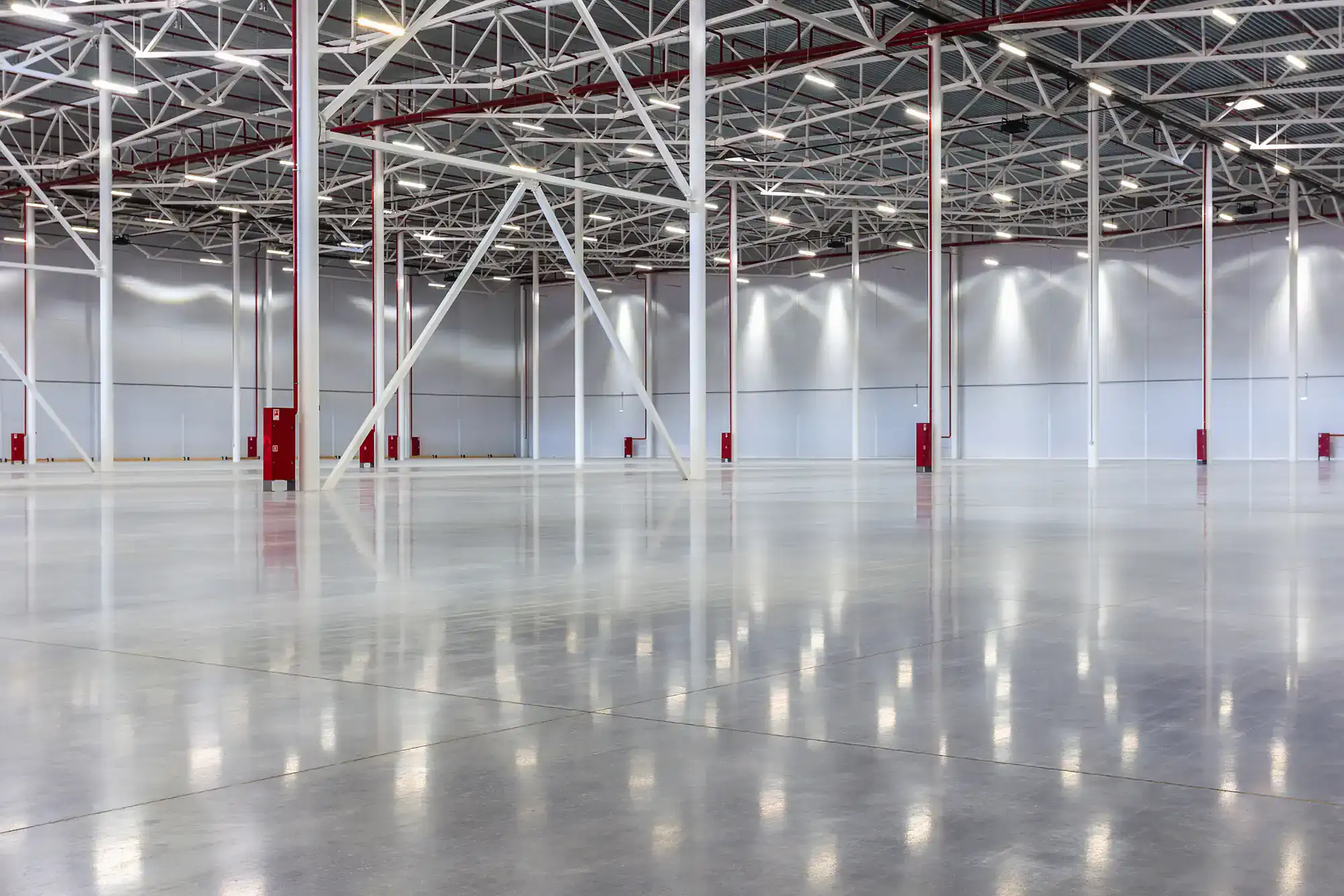
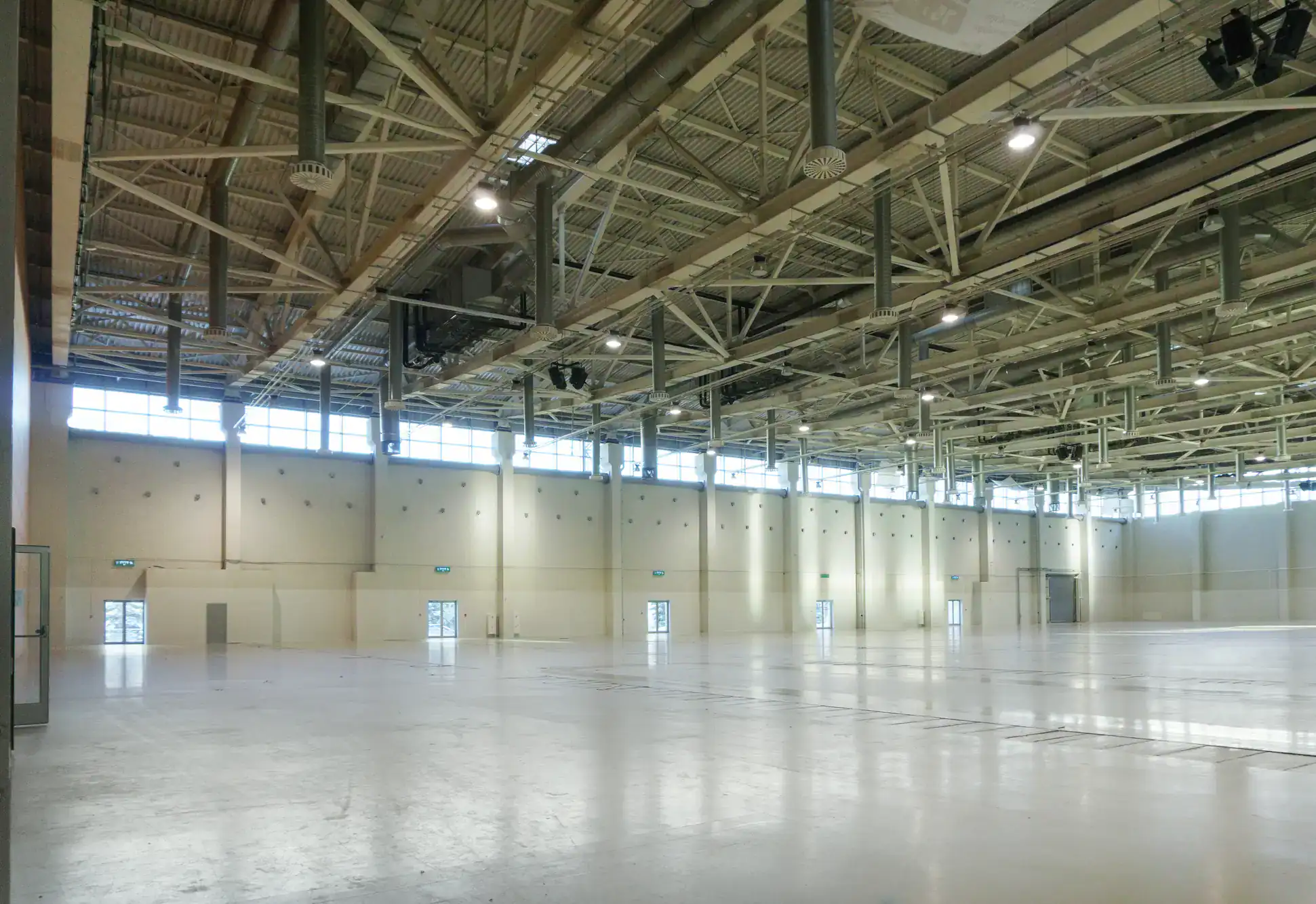
What you get with a correctly installed aviation-grade system is a floor that reflects light, makes spills and dropped hardware immediately visible, handles chemical exposure without degrading, and stays bonded through Long Island winters. The large hangar door threshold where freeze-thaw cycling hits hardest holds. The surface stays non-slip even when wet. And you don’t have to think about the floor again for a long time.
We’ve been based in Bohemia about ten miles from Hauppauge’s industrial core for over 30 years. That’s not a service area claim. That’s three decades of working in Suffolk County buildings, understanding how Long Island concrete behaves, and knowing what the coastal climate does to a floor that wasn’t installed correctly. We’ve installed systems in Hauppauge’s Long Island Innovation Park, at facilities serving Long Island MacArthur Airport, and throughout the aerospace manufacturing corridor that defines this region.
We hold Sherwin-Williams High Performance Flooring certification and Res Tech certification two of the most rigorous credentials in the industrial resinous flooring space. Every installer on our crew carries OSHA 40 certification. The non-slip topcoat we use meets National Flooring Safety Institute standards. These aren’t things that got added to a website they’re the reason the work holds up.
Danny Harmer, our President and CEO, has been installing floors personally for over 40 years. When you ask a technical question about Skydrol resistance or NFPA 409 compliance, the answer comes from someone who’s worked through those problems on actual hangar floors not someone reading from a product sheet.
It starts with the concrete. Before anything goes on the floor, we assess the slab its condition, its history, and critically, its moisture vapor transmission rate. In Hauppauge’s humidity-heavy coastal environment, skipping this step is one of the most common reasons coatings fail. If moisture is present above acceptable levels, we address it before installation begins. There’s no workaround for this.
Once the slab is ready, we mechanically diamond grind it to create a real adhesion profile not just cleaned, but physically prepared so the coating bonds to the concrete rather than sitting on top of it. This is the step that determines whether your floor lasts five years or twenty. After grinding, we apply a penetrating primer, followed by the build coat, and then the UV-stable, NFSI-certified non-slip topcoat. Each layer gets full cure time before the next is applied. The total system builds to a minimum of 45 mils the thickness that aviation environments actually require.
Because Hauppauge properties may fall under either the Town of Islip or the Town of Smithtown depending on location, we’re familiar with both jurisdictions and how NFPA 409 compliance applies to commercial hangar renovations in each. If you’re working with a facility manager or building department, that’s a conversation we’ve had before. For operations that can’t afford extended downtime, polyaspartic systems cure fast enough to return aircraft and equipment to the hangar within 24 hours of completion.
Ready to get started?
The floor systems we install for aircraft hangars and aviation maintenance bays in Hauppauge are not the same products used in warehouses or commercial garages. They’re engineered specifically for the chemical exposure profile of aviation environments Skydrol phosphate ester hydraulic fluid, jet fuel, lubricants, and industrial solvents that would destroy a standard epoxy coating in months. The system chemistry is selected based on what the floor will actually face, not what’s easiest to apply.
NFPA 409 compliance is built into every aviation installation we complete. The standard requires noncombustible floor surfaces in aircraft storage and servicing areas, and it applies to commercial hangar operations throughout New York State including facilities in and around Hauppauge and those serving Long Island MacArthur Airport in Ronkonkoma, just three miles south. For FBO operators, corporate flight departments, and aerospace manufacturers in the Long Island Innovation Park, this isn’t optional it affects occupancy permits and insurance coverage.
The finished floor comes with a high-gloss, light-reflective surface that makes foreign object debris, spills, and dropped hardware immediately visible a real operational benefit in any working hangar or maintenance bay. The NFSI-certified non-slip topcoat keeps that high-gloss surface safe underfoot even when fluids are present. And because we install the system in multiple coats with proper cure time between each, the bond to the concrete is structural not cosmetic. That’s what separates a floor that holds from one that peels at the first thermal cycle.
Yes, and it applies more broadly than most facility managers realize. NFPA 409 is the Standard on Aircraft Hangars, and it requires that floor surfaces in aircraft storage and servicing areas be noncombustible. New York State Building Code incorporates NFPA standards by reference for commercial and industrial occupancies, which means this isn’t a suggestion it’s a code requirement that affects your occupancy permit and your insurance coverage.
For facilities in Hauppauge, the permitting jurisdiction depends on where your property sits. The hamlet straddles the boundary between the Town of Islip and the Town of Smithtown, so your building department contact may differ from a neighboring facility’s. Either way, the NFPA 409 requirement applies. If you’re renovating an existing hangar floor or installing coatings in a new aviation maintenance bay, the system needs to meet this standard. We install systems that do and can walk you through what that means for your specific facility before any work begins.
Skydrol is a phosphate ester hydraulic fluid, and it’s one of the most aggressive chemicals a hangar floor will encounter. Standard epoxy coatings the kind used in garages and light commercial spaces are not formulated to handle it. Skydrol will attack the coating chemistry, cause it to soften and delaminate, and eventually reach the concrete beneath. Once it’s in the concrete, you have a much bigger problem than a bad-looking floor.
The systems that hold up against Skydrol are specifically engineered for aviation chemical resistance and they’re applied as multi-coat builds, not single-coat applications. The chemistry matters, but so does the thickness. Aviation-grade systems are built to a minimum of 45 mils, which gives the coating enough body to resist prolonged fluid exposure without breaking down. If a contractor quotes you a single-coat system for a hangar or aerospace maintenance bay, that’s a red flag. The facilities in Hauppauge’s Long Island Innovation Park including aerospace manufacturers handling similar hydraulic fluids need the same level of chemical resistance as a full aircraft maintenance operation.
It’s one of the most important factors to account for, and it’s the one most contractors ignore. Long Island sits between the Long Island Sound to the north and the Atlantic Ocean to the south, which means year-round humidity that drives moisture vapor through concrete slabs particularly large, expansive slabs like those found in Hauppauge’s industrial park buildings. When that moisture vapor has nowhere to go, it builds pressure beneath a coating and eventually forces it off the concrete from below. That’s what causes the bubbling and delamination you see on floors that looked fine for the first year or two.
Proper installation in this environment requires moisture vapor transmission testing before any coating goes down. If the reading is above the acceptable threshold for the system being used, moisture mitigation primer gets applied first not skipped, not worked around. This adds a step and sometimes adds cost, but it’s the difference between a floor that holds and one that fails on schedule. Any contractor working in Hauppauge who doesn’t mention moisture testing before quoting you a hangar floor installation is telling you something important about their process.
The timeline depends on the system being installed and the size of the space, but for most hangar and aviation facility floors, you’re looking at one to two days of active installation work. The more important number for most operations is return-to-service time how long before aircraft and equipment can move back in.
With polyaspartic systems, that window is roughly 24 hours from the completion of the final coat. That’s a meaningful difference from traditional epoxy systems, which can require 48 to 72 hours or more before they’re ready for vehicle and equipment traffic. For FBO operators at Long Island MacArthur Airport or corporate flight departments managing active schedules, that turnaround matters. The concrete preparation work diamond grinding, moisture testing, primer application happens before the coating goes down, so the clock on return-to-service starts when the topcoat is finished, not when the crew shows up. Scheduling the project during a planned maintenance window or a weekend is usually the cleanest way to minimize disruption.
A standard light-commercial or garage-grade epoxy system typically runs in the $5 to $7 per square foot range. An aviation-grade multi-coat system properly prepared, properly built, with aviation-specific chemical resistance runs closer to $8 to $12 per square foot depending on slab condition, square footage, and system selected. That gap looks significant on a line item. It looks different over a ten-year period.
A floor that fails in three to four years because it wasn’t built for Skydrol exposure, wasn’t moisture-tested before installation, or wasn’t bonded properly to the concrete doesn’t just need a new coat it needs to be ground up and started over. That’s another full installation cost, plus the operational disruption of taking the hangar out of service again. For aerospace manufacturers and aviation operators in Hauppauge who are making a business decision not a household budget decision the total cost of ownership argument is straightforward. The right floor installed once is less expensive than the wrong floor installed twice. It’s also the floor that stays compliant, stays safe, and doesn’t create liability exposure in the meantime.
This is one of the most common points of failure for hangar floors that weren’t installed correctly, and it’s especially relevant in Hauppauge. Aircraft hangars have large overhead doors that open directly to the exterior, which means the concrete at and near the threshold experiences genuine freeze-thaw cycling every winter expanding and contracting in ways that stress whatever’s bonded to the surface. Long Island winters aren’t extreme by upstate standards, but the cycling is real and consistent, and it finds weak points in coatings that weren’t properly bonded.
The fix is mechanical surface preparation diamond grinding the concrete to create a real adhesion profile before any coating is applied. When the coating is bonded to the concrete at a structural level rather than just sitting on top of it, thermal expansion and contraction don’t create the same delamination risk. Coatings that are applied over concrete that was simply cleaned or acid-etched don’t have that bond, which is why you see peeling and lifting concentrated at hangar door thresholds. It’s not a product failure it’s a preparation failure. Every installation we do starts with diamond grinding, because skipping it in a Long Island winter environment isn’t a corner worth cutting.