
When a hangar floor fails, it rarely fails quietly. You get delamination bubbling up in patches, staining that won’t come out, and a surface that’s become a slip hazard every time something spills. The floor you thought was fine six months ago is now a liability. That pattern almost always traces back to one skipped step during installation.
Elmont sits in a humid subtropical climate with year-round moisture in the air and coastal exposure from the Hook Creek Watershed. Large concrete slabs in this environment are prime candidates for moisture vapor transmission water vapor pushing up through the slab and destroying the bond between concrete and coating from underneath. It’s invisible until it isn’t. That’s why every job we do starts with moisture testing before a single product goes down.
The concrete under most commercial and industrial facilities in Elmont was poured decades ago the building stock here has a median construction year of 1952. Old slabs crack, spall, and absorb years of contamination. A coating applied over that without proper surface prep won’t last. What we deliver instead is a floor that’s been ground to the right adhesion profile, had its cracks repaired, and was built to handle the specific chemical and mechanical demands of active aviation use Skydrol, jet fuel, industrial solvents, and the daily movement of aircraft.
We’ve been installing high-performance floors on Long Island for over 30 years. Danny Harmer, our president, has personally installed floors for more than four decades including the White House kitchen in 1996 and projects across the New York metro area. This isn’t a company where the owner runs estimates while subcontractors do the work. The experience behind every job we take is real and traceable.
Our crew reflects the same stability. Most of our employees have been with us for over 10 years, and every installer carries OSHA 40 certification a credential that matters in aviation environments where workplace safety standards govern every inch of a maintenance bay. Our field supervisors Javier, Eduardo, and Fredith collectively bring over 40 years of combined installation experience to every project.
We’re based in Bohemia and serve Nassau County and the broader Long Island region, including Elmont and its surrounding communities. We understand the coastal humidity that affects slabs from Elmont to the East End, and we’ve worked on the same types of aging commercial concrete that makes up the building stock throughout western Nassau County. Our Sherwin-Williams High Performance Flooring certification and Res Tech certification are credentials that most competitors in this area simply don’t hold.
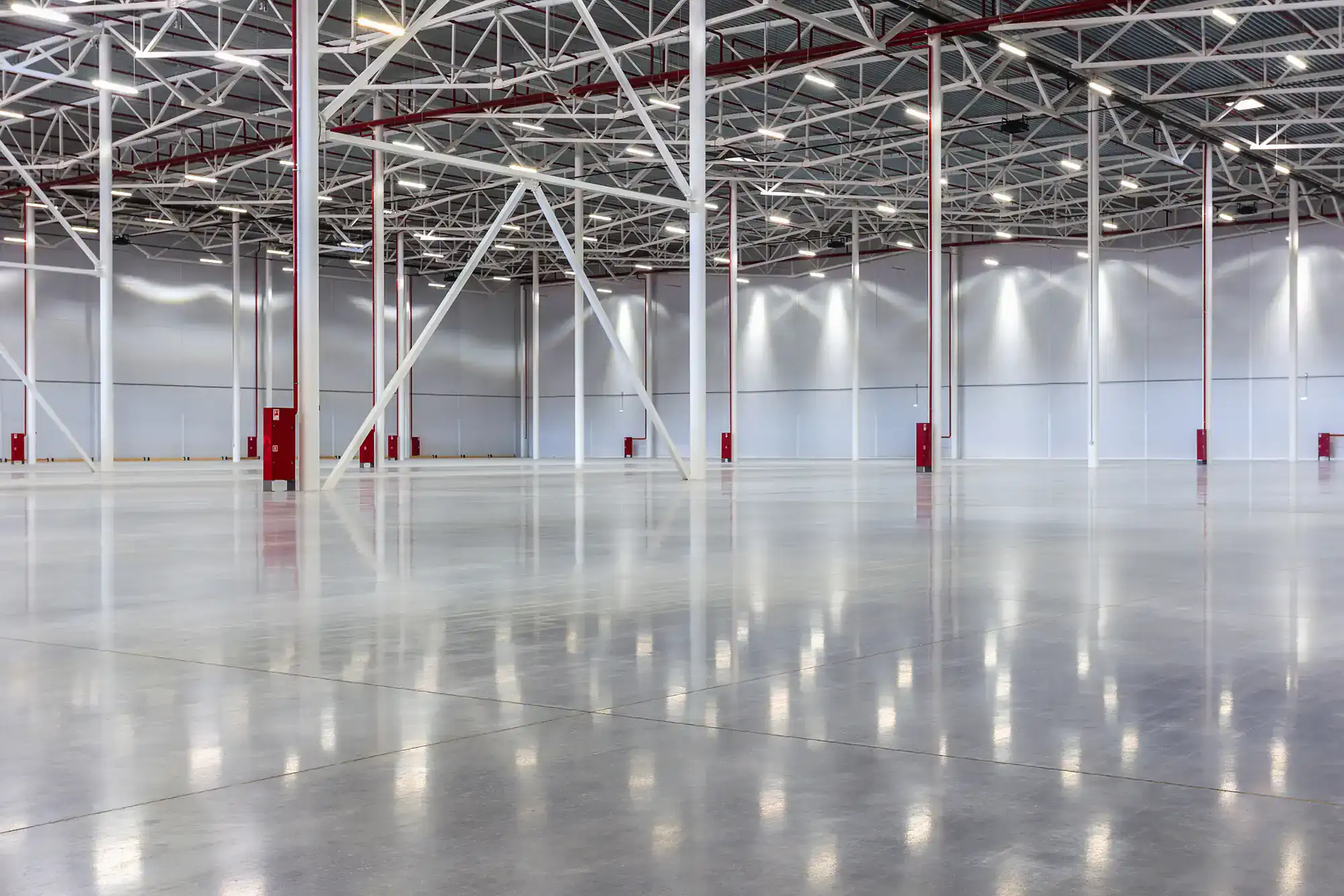
It starts before any product is mixed. We assess the slab moisture testing first, because skipping that step in Elmont’s humid subtropical climate is the most common reason floors fail within a few years. If moisture vapor transmission is present, we address it before anything else happens. Surface grinding comes next, bringing the concrete to the right adhesion profile. Cracks and spalls are repaired. Contamination from years of use gets removed. The surface that goes under the coating is treated as the foundation of the entire system because it is.
From there, the installation follows a multi-layer process: primer, base coat, topcoat. Each layer gets the cure time it needs. We don’t rush to meet an arbitrary schedule. For facilities near Elmont that need to minimize operational downtime especially those running active aviation operations in the JFK corridor we offer polyaspartic systems that allow aircraft back into the hangar within 24 hours of the final coat.
The topcoat is non-slip and meets National Flooring Safety Institute requirements not because it’s a selling point, but because a hangar floor with fuel and hydraulic fluid on it needs to be certifiably safe, not just textured. The finished system is NFPA 409-compliant, meaning it meets the federal standard requiring noncombustible floor surfaces in aircraft storage and servicing areas. That’s a code requirement, and we build it into every aviation installation.
Ready to get started?
Standard epoxy products the kind sold at home improvement stores or applied by general contractors who’ve recently added coatings to their service list are not formulated for aviation environments. Skydrol hydraulic fluid is one of the most chemically aggressive substances in any maintenance bay. It attacks standard epoxy formulations, causes deep staining, and degrades concrete surfaces over time. Jet fuel, lubricants, and the industrial cleaning solvents used in aircraft maintenance add to that chemical load. The system installed in your hangar needs to be specified for those exposures, not adapted from a garage floor product.
Every aircraft hangar floor coating installation we perform in Elmont includes chemical-resistant formulations matched to aviation use, NFSI-certified non-slip topcoat performance, NFPA 409 compliance for noncombustible floor surfaces, and full concrete preparation grinding, crack repair, and moisture mitigation before the first coat is applied. We offer high-gloss, light-reflective finishes in white and light gray, which improve visibility for spill detection, dropped tools, and FOD (foreign object debris) identification in working hangars. That’s not an aesthetic preference it’s an operational safety practice.
For FBO operators, corporate flight departments, and MRO facilities serving the JFK-adjacent aviation market in Nassau County, the conversation isn’t just about what the floor looks like. It’s about whether it will hold up to the work being done on it, whether it meets the codes governing your facility, and whether the contractor who installed it will still be reachable when you need them.
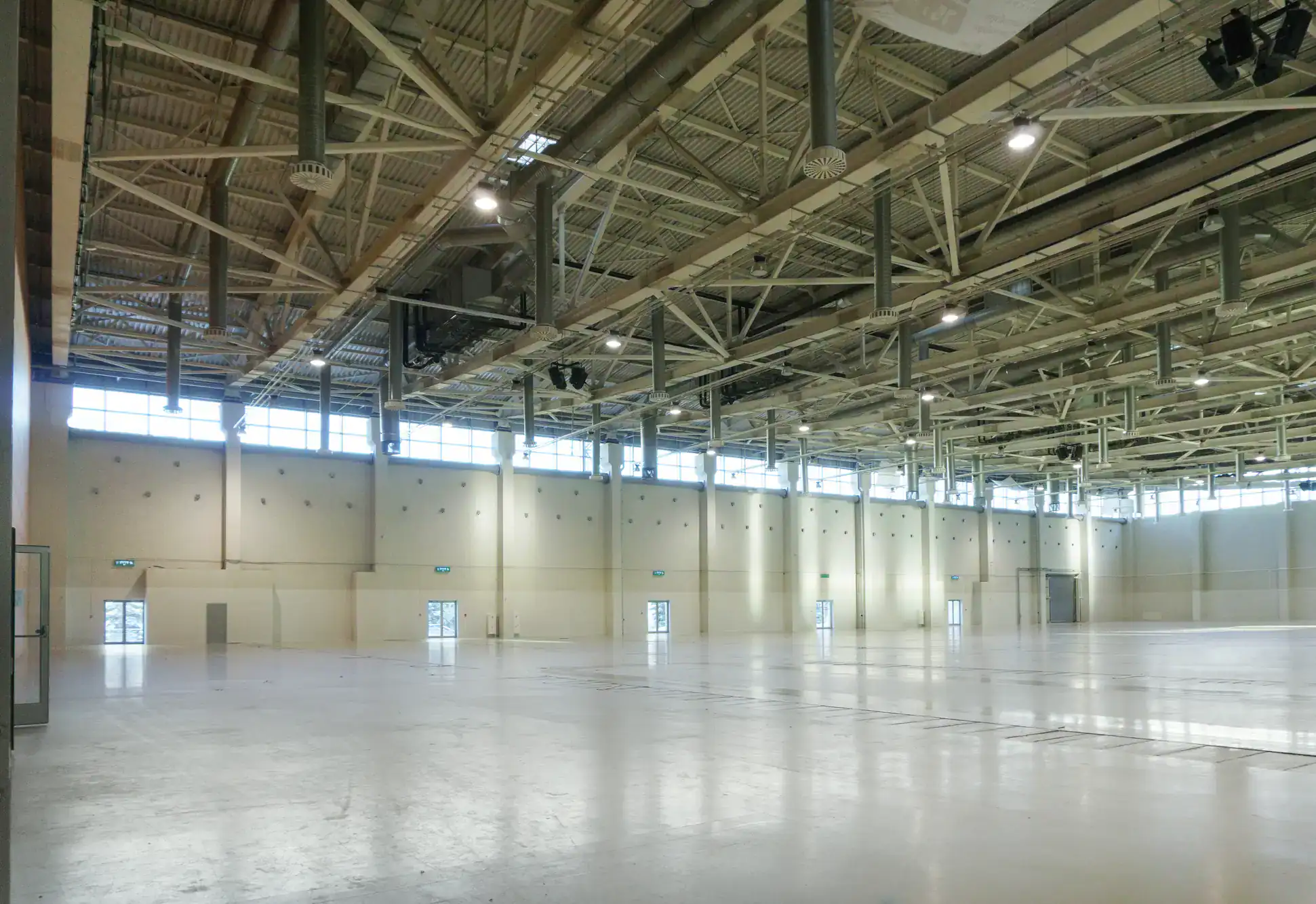
Yes NFPA 409, the Standard on Aircraft Hangars, applies to aircraft storage and servicing areas regardless of whether the hangar is privately owned or commercially operated. It requires that floor surfaces in those areas be noncombustible, which directly governs the type of coating system that can be legally installed. This isn’t a guideline that only applies to large commercial airports it applies to any structure that meets the definition of an aircraft hangar under the standard.
For facility operators in Elmont and throughout Nassau County, this matters practically because a non-compliant floor coating can create code violations, complicate insurance coverage, and generate liability exposure if an incident occurs. Many contractors bidding on hangar floor jobs in this area are not familiar with NFPA 409 and will apply a system without verifying compliance. Every aviation installation we perform is built to meet this standard it’s not an optional add-on, it’s the baseline.
The most common cause is moisture vapor transmission water vapor moving upward through the concrete slab and breaking the bond between the slab and the coating from below. Long Island’s humid subtropical climate creates consistent moisture conditions year-round, and large concrete slabs in coastal environments like Elmont are particularly susceptible. The failure is invisible during installation and often doesn’t show up until the coating starts bubbling or delaminating months later.
The second most common cause is inadequate surface preparation. Concrete that hasn’t been ground to the proper adhesion profile, or that has cracks and spalls that weren’t repaired before coating, will not hold a system long-term regardless of product quality. Elmont’s building stock skews old much of the commercial concrete in this area was poured in the mid-20th century and has decades of wear, contamination, and freeze-thaw damage built into it. Treating surface prep as a cost-cutting opportunity is how you end up grinding the floor out and starting over in three years.
Timeline depends on the size of the hangar, the condition of the existing concrete, and the coating system selected. For a standard hangar floor in good condition using a polyaspartic system, the installation itself typically takes one to two days, with the floor ready for aircraft re-entry within 24 hours of the final coat. That’s the fast end of the range, and it’s specifically why polyaspartic systems are recommended for active aviation facilities near Elmont that can’t afford extended downtime.
Traditional multi-coat epoxy systems require longer cure windows between coats typically 24 hours per layer which extends the total project timeline to three to five days before the floor is ready for full use. If the slab requires significant crack repair, spall patching, or moisture mitigation work before coating can begin, that adds time as well. The honest answer is that the prep work determines the timeline as much as the coating system does, and skipping prep to shorten the schedule is the trade-off that causes premature failures.
Both are legitimate options for aircraft hangar floor coatings in Elmont, but they perform differently in ways that matter for aviation use. Epoxy systems are slower to cure, which means more time between coats and a longer window before the floor is ready for use but they build a thick, dense film that handles heavy mechanical loads well. Polyaspartic systems cure significantly faster, which is the primary operational advantage for active hangars near the JFK corridor where minimizing downtime is a real priority.
The other difference is temperature sensitivity. Epoxy systems require substrate temperatures above 50°F to cure correctly relevant in Elmont’s winters, where unheated or partially heated hangars can drop below that threshold. Polyaspartic systems have a wider temperature tolerance and are more forgiving in cold-weather installations. For most active aviation facilities in Nassau County, polyaspartic is the preferred system because of the combination of fast return-to-service and broader installation window. The right answer for your specific hangar depends on the size of the space, how it’s heated, and how quickly you need it back in operation.
You need to ask about it specifically not every coating marketed as “industrial” or “heavy-duty” is formulated to resist Skydrol hydraulic fluid. Skydrol is one of the most chemically aggressive substances in aviation maintenance environments. It attacks standard epoxy formulations, causes staining that penetrates into the concrete, and degrades the coating bond over time. Garage-grade epoxy products including many that get applied to hangar floors by general contractors who don’t specialize in aviation are not designed for this exposure.
When evaluating a contractor for aircraft maintenance bay flooring in Elmont or anywhere in Nassau County, ask directly: is this system chemically rated for Skydrol? Can you show me the technical data sheet? A contractor who can’t answer that question clearly is not the right contractor for an aviation environment. The systems we install for hangar use are specified for the chemical exposures of active aviation operations Skydrol, jet fuel, lubricants, and industrial cleaning solvents not repurposed from residential or light commercial applications.
For aviation-grade hangar floor coatings in Elmont, you’re generally looking at a range of $6 to $12 per square foot depending on the system selected, the size of the hangar, and the condition of the existing concrete. Polyaspartic systems with faster cure times tend to sit at the higher end of that range. Hangars with significant concrete damage cracking, spalling, or moisture issues that require mitigation before coating will add to the total cost because that prep work is not optional if you want the system to last.
The more useful framing for Nassau County aviation facility operators is total cost of ownership. A $5 per square foot system that delaminates in three years and requires full removal and reinstallation costs more over a ten-year period than an $8 to $10 per square foot system installed correctly the first time. Elmont’s older building stock means many slabs need real prep work before any coating goes down and the cost of that prep is what separates a floor that lasts from one that doesn’t. The goal is to do this once and not think about it again for fifteen to twenty years.