
If your hangar floor is stained, peeling, or just holding on, you already know the problem isn’t cosmetic. A floor that’s breaking down in an active aviation environment is a liability for safety, for code compliance, and for the aircraft sitting on top of it. The right coating doesn’t just look better. It performs better, every single day.
Brentwood sits in central Suffolk County, and Long Island’s coastal humidity is not forgiving to concrete. Moisture vapor works its way up through large slabs year-round, and when a coating gets installed without proper moisture assessment first, it fails. Not eventually fast. The industrial buildings throughout the area and the hangars near MacArthur Airport deal with this constantly, and it’s one of the first things we evaluate before any work begins.
Aviation fluids make the chemistry conversation even more specific. Skydrol hydraulic fluid, jet fuel, and lubricants don’t just stain standard coatings they break them down at the molecular level. The systems we install here are formulated to resist that exposure, not just tolerate it temporarily. That’s the difference between a floor that lasts three years and one that’s still performing at fifteen.
We’re based in Bohemia, NY inside the Town of Islip, the same municipality that owns and operates MacArthur Airport. That’s not a coincidence worth ignoring. When something needs attention after installation, our team is already nearby. That kind of accountability doesn’t come from a national brand dispatching crews from three states over.
Danny Harmer, our founder and CEO, has over 40 years of personal installation experience. He’s not running a sales operation he’s been on the floor, doing the work, since before most competitors in this market existed. Our crew averages more than 10 years of tenure, which means the people installing your floor have done this hundreds of times, not dozens. For hangar operators in Brentwood and throughout central Suffolk County, that experience translates directly into work that holds up through Long Island winters and the coastal humidity that breaks down lesser systems.
We hold Sherwin-Williams High Performance Flooring certification and Res Tech certification two of the most respected credentials in resinous flooring. Every installer carries OSHA 40 certification, which matters in aviation maintenance environments where chemical handling and workplace safety aren’t optional considerations.
The process starts with the concrete, not the coating. Before anything gets applied, we assess the slab for moisture vapor transmission a step that’s non-negotiable on Long Island, where coastal humidity and freeze-thaw cycling leave their mark on concrete over time. The industrial buildings throughout the area and the hangar structures near Brentwood have large slabs that are especially vulnerable to this, and skipping the moisture step is the single most common reason coatings fail early.
Once the slab is assessed, we grind the surface to the correct adhesion profile. This isn’t light prep work it’s the foundation of the entire install. We repair cracks, remove contamination, and bring the concrete to a condition where the coating can actually bond the way it’s engineered to. What’s underneath matters as much as what goes on top.
From there, we apply the system in the correct sequence primer, base coat, and a topcoat that meets NFSI non-slip requirements. For most hangar projects, a polyaspartic finish means the facility is back in service within 24 hours. That matters when you’re managing an active hangar near one of the busiest general aviation airports in the New York metro area and downtime has a real dollar figure attached to it.
Ready to get started?
Aircraft hangar floor coatings in Brentwood, NY have to meet a different standard than anything used in a residential garage or a light commercial space. NFPA 409 the Standard on Aircraft Hangars requires that the floor surface in aircraft storage and servicing areas be noncombustible. That requirement alone eliminates most standard epoxy products and most contractors who haven’t worked in aviation environments before. It’s a code issue, not a preference.
The systems we use are Sherwin-Williams High Performance Flooring products the same product line installed in aircraft hangars worldwide, from large commercial facilities down to single-bay general aviation hangars. They’re formulated to resist Skydrol hydraulic fluid, jet fuel, phosphate esters, and the cleaning solvents used in active maintenance environments. The topcoat carries NFSI certification for non-slip performance, which is a tested standard, not a texture description. In a hangar where fluid spills are routine, that distinction is a real safety consideration.
For the larger industrial facilities throughout the area, the same system applies heavy point loads, chemical exposure, and the need for a floor that doesn’t require constant maintenance or early replacement. Whether it’s a single-bay hangar off Veterans Memorial Highway or a 50,000-square-foot maintenance facility near the I-495 corridor, our approach is the same: assess the slab, prepare it correctly, and install a system that’s actually built for what the space demands.
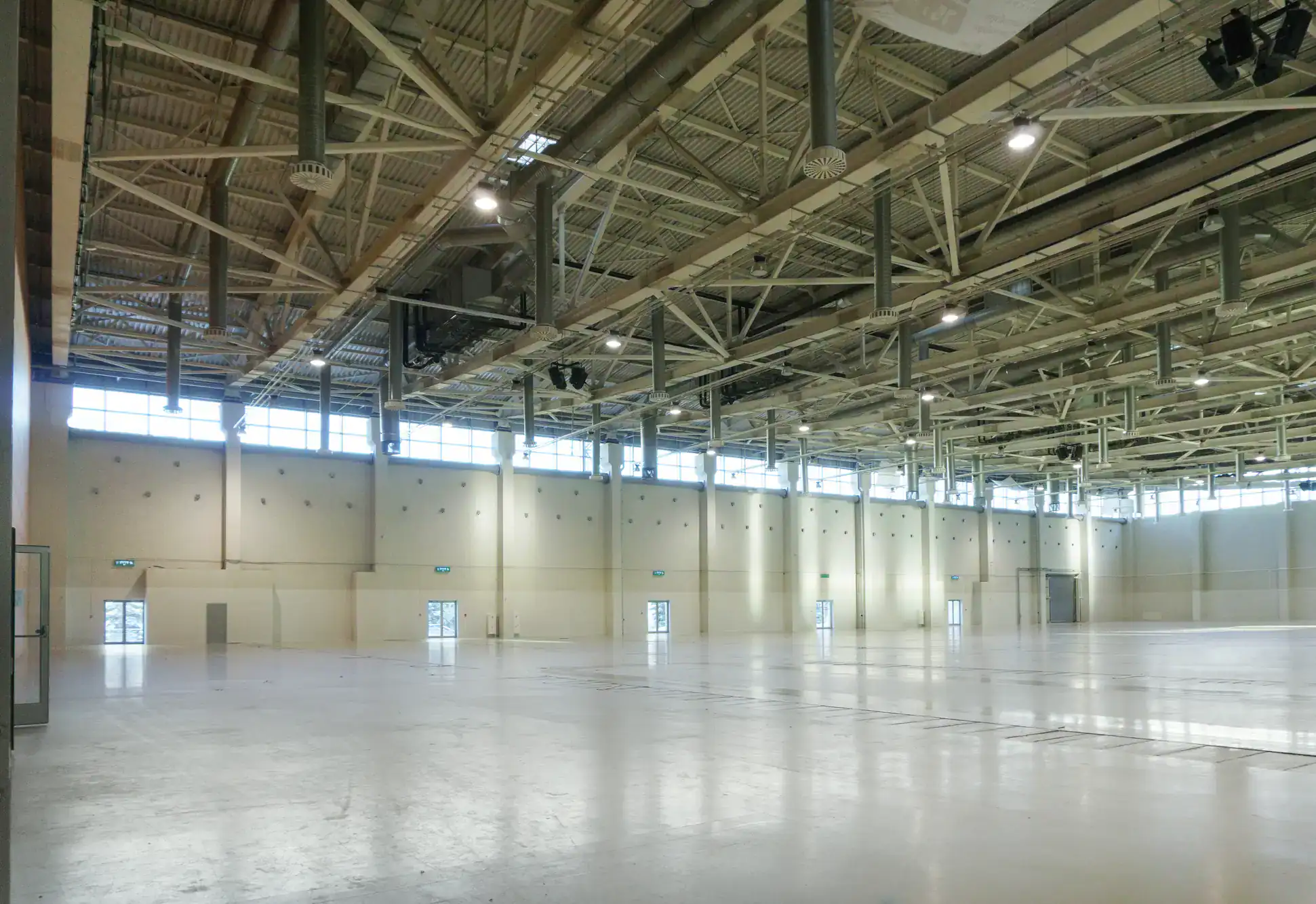
If you’re operating a hangar at or near Long Island MacArthur Airport whether that’s an FBO facility, a corporate flight department, or a private hangar NFPA 409 applies. The standard requires that the floor surface in aircraft storage and servicing areas be noncombustible, which rules out many standard coating products that work fine in other commercial settings but don’t meet aviation-specific fire code requirements.
This isn’t a technicality that gets overlooked. Commercial hangar operators at MacArthur are subject to FAA oversight, local fire code enforcement from the Town of Islip, and insurance requirements that often reference NFPA 409 directly. If your floor coating doesn’t meet the standard, you’re carrying liability exposure that a proper installation would eliminate. Every system we install for aircraft hangar floor coatings in Brentwood, NY is selected with that compliance requirement in mind from the start.
The chemistry is different, and so is the surface preparation. Standard commercial epoxy products are formulated for foot traffic, light vehicle loads, and general chemical exposure. Aviation environments introduce Skydrol hydraulic fluid, jet fuel, phosphate esters, and industrial cleaning solvents substances that actively degrade coatings not specifically formulated to resist them. A floor that holds up fine in a warehouse will break down in a maintenance bay.
The preparation process is also more demanding. Hangar slabs are large, they carry significant point loads from aircraft and ground support equipment, and they’re often in buildings where moisture vapor transmission is an ongoing issue particularly in the industrial building stock throughout central Suffolk County, where many structures date back to the 1960s and 1970s. Getting the slab properly ground, assessed for moisture, and primed correctly before any coating goes down is what separates a floor that lasts from one that fails before the warranty period ends.
For most hangar projects, a polyaspartic system returns the space to service in approximately 24 hours after the final coat is applied. That’s a meaningful difference from traditional epoxy systems, which typically require 48 to 72 hours of cure time before aircraft or heavy equipment can re-enter the space. In an active general aviation environment near MacArthur Airport, where hangar downtime translates directly to operational disruption, that gap matters.
The total installation timeline depends on the size of the space, the condition of the existing slab, and how much surface preparation is required. A hangar with significant cracking, old coating removal, or moisture issues will take longer to prep than a clean slab in good condition. We assess all of that upfront so you have a realistic timeline before work begins not a surprise on day two. Spring and early fall tend to be the most favorable installation windows on Long Island, when humidity levels and temperatures support optimal cure conditions.
Yes, and it’s one of the most common causes of premature coating failure on large commercial slabs in this area. Long Island’s coastal climate means elevated ambient humidity for a significant portion of the year, and that moisture doesn’t just sit on the surface it moves through concrete slabs as vapor. When a coating gets applied over a slab with high moisture vapor emission and no proper primer or moisture barrier, the coating loses adhesion from below. It bubbles, it peels, and eventually it fails entirely.
Winter adds a separate problem. Freeze-thaw cycling stresses concrete at the micro level, creating hairline cracks and surface spalling over time. The older industrial buildings throughout Brentwood and the larger hangar structures near the airport are particularly susceptible to this because of their slab age and size. Addressing those cracks before coating and selecting a system with enough flexibility to handle minor slab movement is part of what makes the installation hold up through multiple Long Island winters without delaminating.
It’s a legitimate performance difference, not a label swap. Polyaspartic coatings cure significantly faster than standard epoxy returning a hangar to service in roughly 24 hours versus two to three days for traditional systems. They also have better UV stability, which matters in hangars with skylights or large door openings that let in direct sunlight. Standard epoxy yellows and chalks under UV exposure over time; polyaspartic holds its color and gloss much longer.
The tradeoff is that polyaspartic systems apply faster and leave less room for error during installation which is exactly why contractor experience matters. A properly installed polyaspartic floor in an airplane hangar in Brentwood, NY will outperform a standard epoxy system in cure time, UV resistance, and long-term gloss retention. Whether polyaspartic is the right choice for your specific hangar depends on the slab condition, the use pattern, and your operational timeline all things worth discussing before committing to a system.
A few questions will tell you quickly whether a contractor actually understands aviation environments or is adapting their standard commercial pitch. Ask whether they’ve installed floors in aircraft hangars specifically not just warehouses or garages. Ask what system they use and whether it meets NFPA 409 requirements. Ask how they handle moisture assessment before installation, because on Long Island’s coastal concrete, skipping that step is how floors fail within the first few years.
Also ask about their surface preparation process. Any contractor who doesn’t lead with concrete grinding and crack repair before talking about the coating itself is skipping the most important part of the job. Finally, ask for documentation on their certifications Sherwin-Williams HPF certification, OSHA compliance, and any third-party safety ratings on their topcoat. These aren’t hard questions for a contractor who’s done this work seriously. If the answers are vague, that’s useful information before you sign anything.