
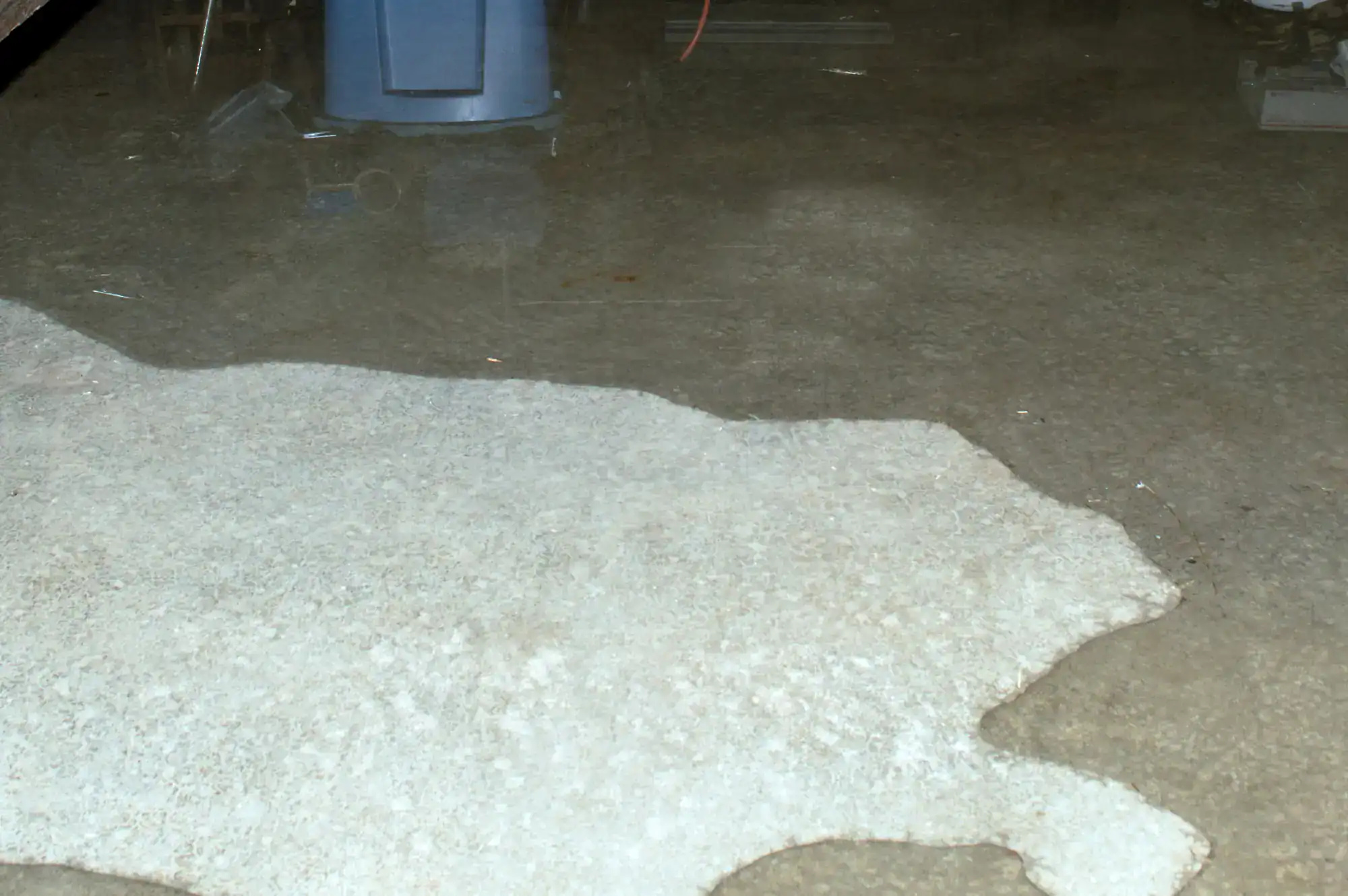
Hempstead Turnpike gets heavily salted every winter. Your apparatus comes back from calls with that salt ground into the tires, mixed with diesel and ice melt, and it all ends up on your bay floor. Standard epoxy wasn’t built for that cycle and if you’ve already watched a floor bubble, peel, or crack within a few years of installation, you already know it.
What makes Elmont’s conditions particularly hard on apparatus bay floors is the combination of factors hitting at once. You’ve got freeze-thaw cycling, coastal ground moisture pushing up through the concrete, and the thermal shock of bay doors opening in sub-zero wind chills while heated tires are sitting on the floor. Each of those alone is manageable. All three together, repeatedly, across a 20-plus apparatus fleet? That’s what separates a floor that lasts from one that doesn’t.
We build systems that handle all of it not by being thicker for the sake of it, but by being engineered for the actual load profile and environment of a working firehouse. That means compressive strength rated for 40,000-plus pound apparatus, a topcoat that won’t bond to hot tires when a truck backs out, and a seamless surface that can be properly decontaminated after every call. For a department that never stops running, the floor has to keep up.
Advanced Epoxy Flooring has been installing commercial and industrial epoxy floors for over 30 years, with CEO Danny Harmer bringing more than 40 years of hands-on installation experience to every project. This isn’t a painting company that added epoxy to its service list we’re a purpose-built commercial flooring operation that has worked in some of the most demanding institutional environments in the country, including the White House kitchen in 1996.
We hold the Sherwin-Williams High Performance Flooring certification, one of the most rigorous manufacturer-approved applicator credentials in the industry, along with OSHA 40 certification for every field installer. For a Nassau County fire district navigating New York State procurement requirements, that documentation matters it’s not just a credential on a website, it’s what you hand to a board that needs to sign off on a capital expenditure.
Serving Nassau and Suffolk County, we know the specific concrete and moisture conditions that show up in western Nassau facilities the kind of ground moisture that coastal proximity creates, and what happens when you skip the moisture testing step. Elmont’s position at the Nassau-Queens border means your stations face some of the most demanding conditions on Long Island. That’s exactly the environment we’re built for.
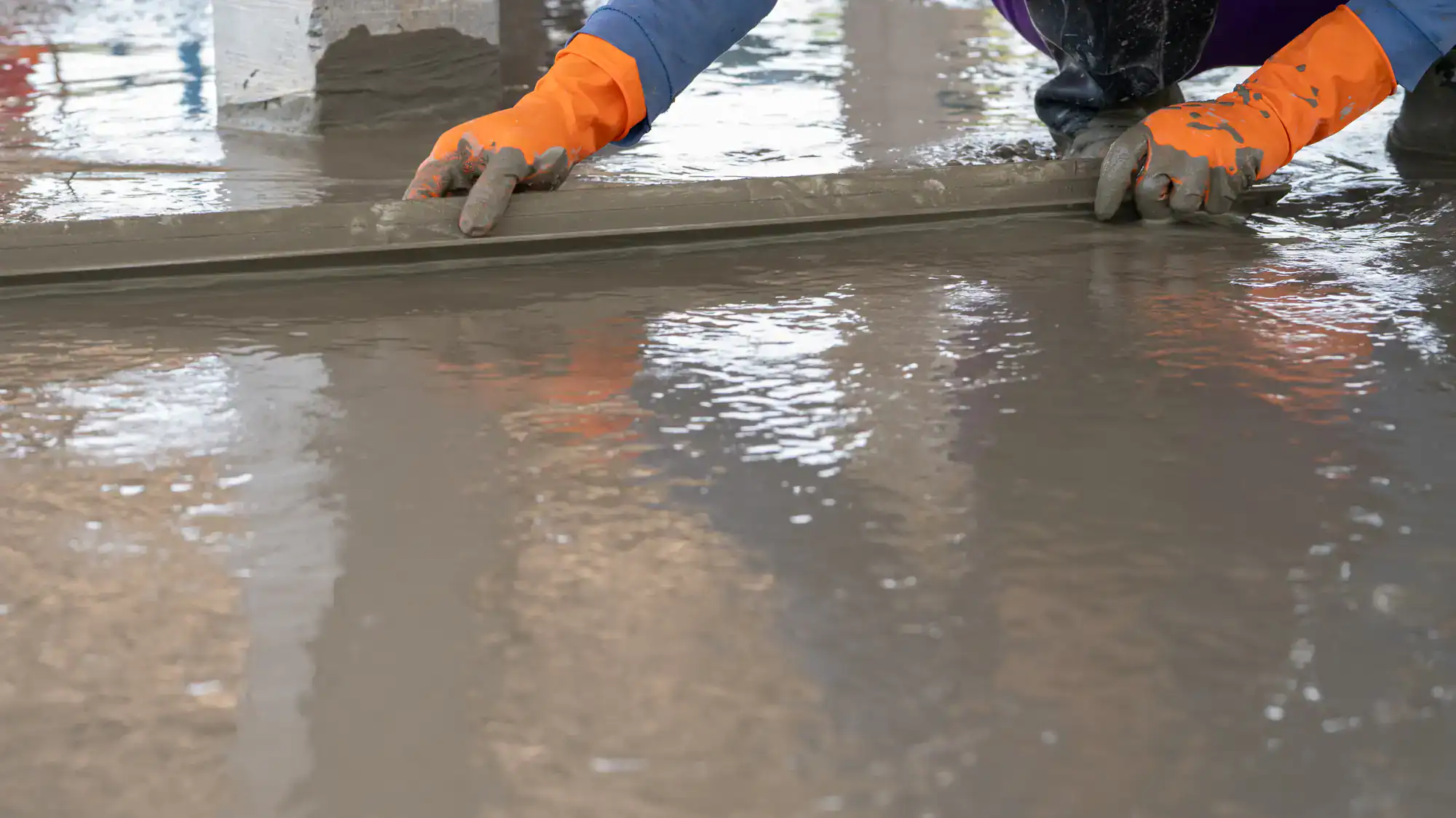
The most important part of a firehouse floor installation happens before any coating touches the concrete. We start every project with diamond grinding not acid etching. Acid etching introduces moisture into the slab and creates a weak bond that fails under vehicle loads. Diamond grinding opens the concrete’s capillaries and creates a true mechanical bond between the substrate and the coating system. In Elmont’s coastal moisture environment, that distinction is the difference between a floor that performs for 20-plus years and one that starts delaminating within months.
After grinding, we conduct moisture testing on the slab. This step gets skipped more often than it should be, and it’s one of the primary reasons floors fail in Nassau County facilities where ground moisture levels run higher than inland communities. If moisture vapor is transmitting through the concrete at a rate the coating system can’t handle, we address that before anything goes down not discovered after the fact when bubbles start forming under the surface.
From there, the installation follows a defined sequence: penetrating primer, high-build epoxy base coat with aggregate broadcast for compressive strength, and a UV-stable polyaspartic topcoat. The full system goes down at approximately 15 mils thick two to four times what standard commercial coatings deliver. The polyaspartic topcoat cures fast enough that apparatus can return to the bay within 24 hours. For a department running 1,200-plus calls a year across 8 stations, that turnaround isn’t a selling point it’s a requirement.
Ready to get started?
The apparatus bay gets the most attention, and for good reason it takes the hardest abuse. But the Elmont Fire Department’s 8-station footprint includes more than just apparatus bays. Decontamination zones, EMS bays, kitchens, and living quarters each have their own surface requirements, and using the wrong system in any one of them creates either a safety issue or a maintenance problem that compounds over time.
In the decon zone, NFPA 1581 contamination control requirements call for a seamless, non-porous surface that can be power-washed and chemically decontaminated without degrading the floor. A porous or cracked surface in that zone isn’t just a maintenance headache it’s a compliance and occupational health liability. The EMS bay needs slip resistance that holds up under wet conditions. The kitchen needs thermal-shock resistance and a surface that meets sanitation standards. We apply the right system for each zone’s specific function, not a one-size-fits-all coating everywhere.
For a district the size of Elmont’s 7 fire companies, an EMS squad, and multiple station locations across the community working with us across all locations means consistent quality, compatible systems, and a single point of accountability. That matters when you’re authorizing a capital expenditure that has to hold up to scrutiny from a board accountable to Nassau County taxpayers.
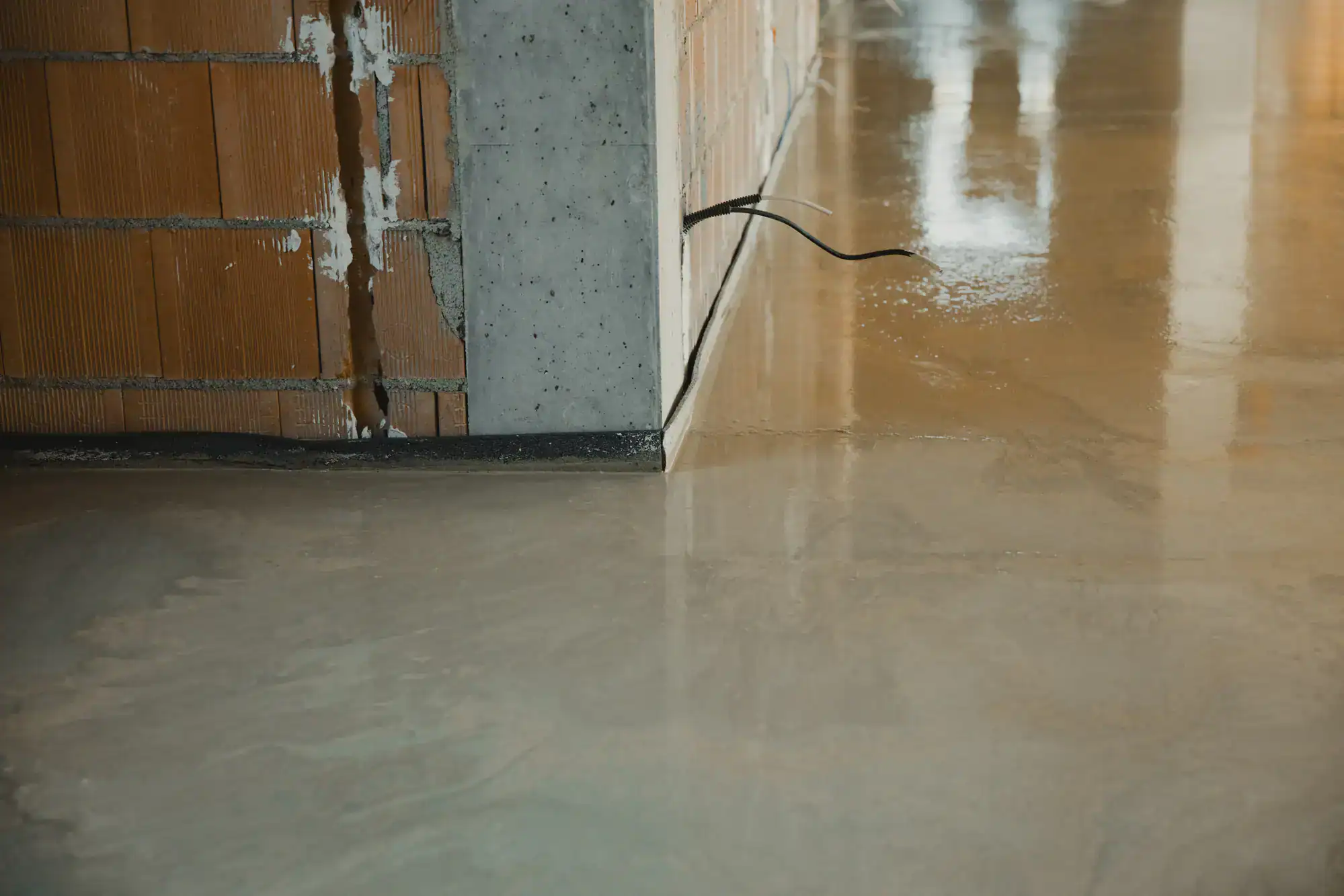
The installation itself typically takes one to two days per bay, depending on the size of the space and the condition of the concrete. The more relevant number for an active department is the cure time with a polyaspartic topcoat, apparatus can return to the bay within 24 hours of the final coat. That’s a hard contrast to traditional epoxy systems, which require three to seven days before vehicles can safely re-enter without damaging the surface.
For the Elmont Fire Department, which operates 20-plus apparatus units across 8 stations and responds to over 1,200 calls annually, a multi-day apparatus lockout isn’t operationally realistic. The 24-hour return window is what makes a professional installation workable for a department at this scale. If a contractor is quoting you a system that requires a week of downtime, that’s worth asking about because it likely means they’re not using a polyaspartic topcoat, and that difference matters both for cure time and for long-term performance.
Fire apparatus in Elmont’s fleet including Tower Ladder 707, a 2019 Ferrara Inferno HD-100 weighs upward of 40,000 pounds. Standard residential epoxy, consumer-grade floor paint, and thin single-coat commercial systems are not engineered for that load. What handles it is a multi-layer system: diamond-ground concrete for mechanical bonding, a penetrating primer, a high-build epoxy base coat with aggregate broadcast, and a polyaspartic topcoat. The aggregate broadcast in the base coat is what drives the compressive strength it’s not decorative, it’s structural.
The full system goes down at approximately 15 mils thick. For context, most standard commercial coatings are in the 4 to 6 mil range. That thickness difference is what allows the system to absorb the point-load pressure of outriggers, stabilizers, and the static weight of heavy apparatus sitting in the bay between calls. If a floor is delaminating or cracking under your trucks, the issue almost always traces back to either insufficient thickness or inadequate surface preparation not the coating product itself.
The most common cause is moisture specifically, moisture vapor transmitting upward through the concrete slab and getting trapped under a coating that was applied without proper testing. Nassau County’s coastal position means ground moisture levels run higher than inland areas, and Elmont’s urban density and proximity to the Queens border don’t reduce that. When a contractor skips the moisture testing step and applies coating directly to a slab that’s transmitting vapor above the system’s tolerance, bubbles form from underneath. It’s not a product failure it’s a preparation failure.
The second most common cause is hot-tire pickup. When a heated tire sits on a thin epoxy coating and then pulls away, it can literally bond to the surface and peel it off. This happens most frequently in the winter months when Hempstead Turnpike and Linden Boulevard are heavily salted and apparatus are braking hard on cold roads. The polyaspartic topcoat in a properly engineered system is four times more flexible than standard epoxy and resists this bonding but only if the base layers were prepared and applied correctly first.
Floor coating installations in fire station apparatus bays are generally considered maintenance work rather than structural renovation, which typically means they don’t require a building permit in New York. That said, the Elmont Fire District operates as a special taxing district under New York State law, and capital expenditures above certain thresholds are subject to General Municipal Law procurement requirements which means competitive bidding or documented contractor qualification processes may apply depending on the project cost.
What this means practically is that your contractor needs to be able to provide documented qualifications, certifications, proof of insurance, and references as part of the procurement process not just a quote on a piece of paper. A Sherwin-Williams High Performance Flooring certification, OSHA 40 certification, and a 30-plus year commercial installation history are the kinds of credentials that hold up in a formal procurement review. If you’re going through a board authorization process, it’s worth asking your contractor upfront what documentation they can provide, because that paperwork is part of what protects the district.
Road salt is one of the most corrosive substances that regularly enters an apparatus bay, and Hempstead Turnpike one of the most heavily traveled and heavily salted roads in western Nassau County runs directly through Elmont. Every time apparatus returns from a winter call, it’s tracking salt, ice melt chemicals, and brine solution onto the bay floor. Over time, that chemical exposure attacks the bond between a coating and the concrete, accelerates surface degradation, and works its way into any crack or unsealed joint in the slab.
A properly installed polyaspartic topcoat is chemically resistant to road salt, deicing agents, diesel fuel, hydraulic fluid, and the other substances that accumulate in an active apparatus bay. The key word is properly installed the topcoat is only as resistant as the layers beneath it. If the base coat wasn’t applied at the right thickness, or if the concrete wasn’t properly prepared before coating, the salt will find the weak point. That’s why the prep sequence matters as much as the product selection.
Professional apparatus bay flooring for a fire station in the Elmont area typically runs in the range of $5 to $15 per square foot installed, depending on the condition of the existing concrete, the number of bays being coated, and the specific system being applied. A single apparatus bay at a typical station might run 2,000 to 3,500 square feet. For a multi-station project across the Elmont Fire District’s 8 locations, the scope and total investment will vary based on what each station’s concrete actually looks like when it’s assessed which is why a site visit is the only honest way to give you a real number.
The more useful framing for a fire district board is total cost of ownership over time. A properly installed polyaspartic system lasts 20-plus years. Standard commercial epoxy lasts 5 to 10 years. A consumer-grade system fails in 3 to 5 years. When you factor in the cost of grinding off a failed coating, material disposal, and reinstallation plus the operational disruption of going through that process again the professional system is the fiscally defensible choice for a Nassau County fire district accountable to its taxpayers. Spending once and getting it right is a harder argument to make upfront, but it’s the easier one to defend five years later.