


You stop worrying about cracks opening up under loaded pallets. Your maintenance budget drops from a dollar per square foot annually to about five cents. Your forklifts move smoother, tires last longer, and you’re not scheduling emergency repairs every few months.
That’s what happens when you install a high-traffic concrete sealer in Islip, NY that’s actually designed for the punishment your warehouse dishes out. No more dust contaminating your inventory. No more OSHA concerns about spalling concrete creating trip hazards. No more explaining to your operations manager why another section needs to be cordoned off for repairs.
The floor becomes invisible in the best way possible. It does its job without demanding attention, letting you focus on moving product instead of managing flooring failures. When hydraulic fluid spills or battery acid leaks, you wipe it up and move on. The surface doesn’t pit, doesn’t stain, doesn’t break down.
We’ve been handling large scale warehouse flooring in Islip since before the industrial corridor became what it is today. We’ve watched this area grow into the biggest industrial hub on Long Island, and we’ve installed floors in facilities that handle everything from pharmaceutical distribution to aerospace components.
Our CEO Danny Harmer brings over 40 years of experience to every project. Our field supervisors—Javier, Eduardo, and Fredith—have a combined 40+ years on the job. When you call, you’ll talk to Sharon, who’s been with us for 12 years, or Debbie, who’s been managing contractor relations for two decades.
That kind of retention happens when people know what they’re doing and take pride in doing it right. We’re OSHA 40 certified, we’ve installed floors across the country, and yes, we even did the White House kitchen back in 1996. But what matters more is that we understand Islip’s industrial landscape and what your facility needs to keep running.

First, we test your concrete for moisture. Skipping this step is how other contractors end up with delamination issues six months later. If there’s a moisture problem, we address it before any coating goes down.
Next comes surface preparation, usually diamond grinding for warehouses in Islip. This isn’t optional—it’s what creates the profile that lets epoxy bond properly to your concrete. We’re removing any existing coatings, opening up the pores, and creating a clean surface that’ll hold.
Then we handle any concrete repairs. Cracks, spalling, joint damage—whatever’s compromised gets fixed correctly. You can’t put a forklift traffic resistant coating in Islip over damaged substrate and expect it to perform.
The epoxy system goes down in layers. For heavy-duty warehouse applications, we’re typically installing systems between 2mm and 6mm thick, depending on your traffic patterns and load requirements. The base coat penetrates and bonds. The build coats add thickness and impact resistance. The topcoat provides chemical resistance and the smooth surface that makes your forklifts more efficient.
Cure times vary by system, but we can often work in phases so you’re not shutting down your entire operation. Sections can be back in service within 24 to 48 hours.

Ready to get started?
You get a complete system designed for your specific operation. That means moisture testing, surface preparation, concrete repairs, and a multi-layer epoxy system rated for your traffic levels. If you’re running forklifts constantly, we’re specifying materials that can handle it—typically 4,000 PSI minimum compressive strength.
The installation includes slip resistance built into the topcoat, because OSHA statistics on warehouse falls aren’t something you want to contribute to. We can integrate floor markings, safety lines, and hazard identification directly into the system. These aren’t tape or paint that’ll wear off in six months—they’re part of the floor.
Islip’s industrial facilities range from cold storage operations to pharmaceutical warehouses to manufacturing plants with heavy machinery. Each has different requirements. A facility storing temperature-sensitive goods needs a floor that won’t dust and contaminate packaging. A plant with chemical processes needs resistance to specific compounds. A distribution center running three shifts needs a floor that can be installed without shutting down operations for a week.
We account for all of it. The system we install in a 60,000-square-foot aerospace facility isn’t identical to what goes into a food processing warehouse, even though both are heavy-duty applications. Your operation dictates the specification.
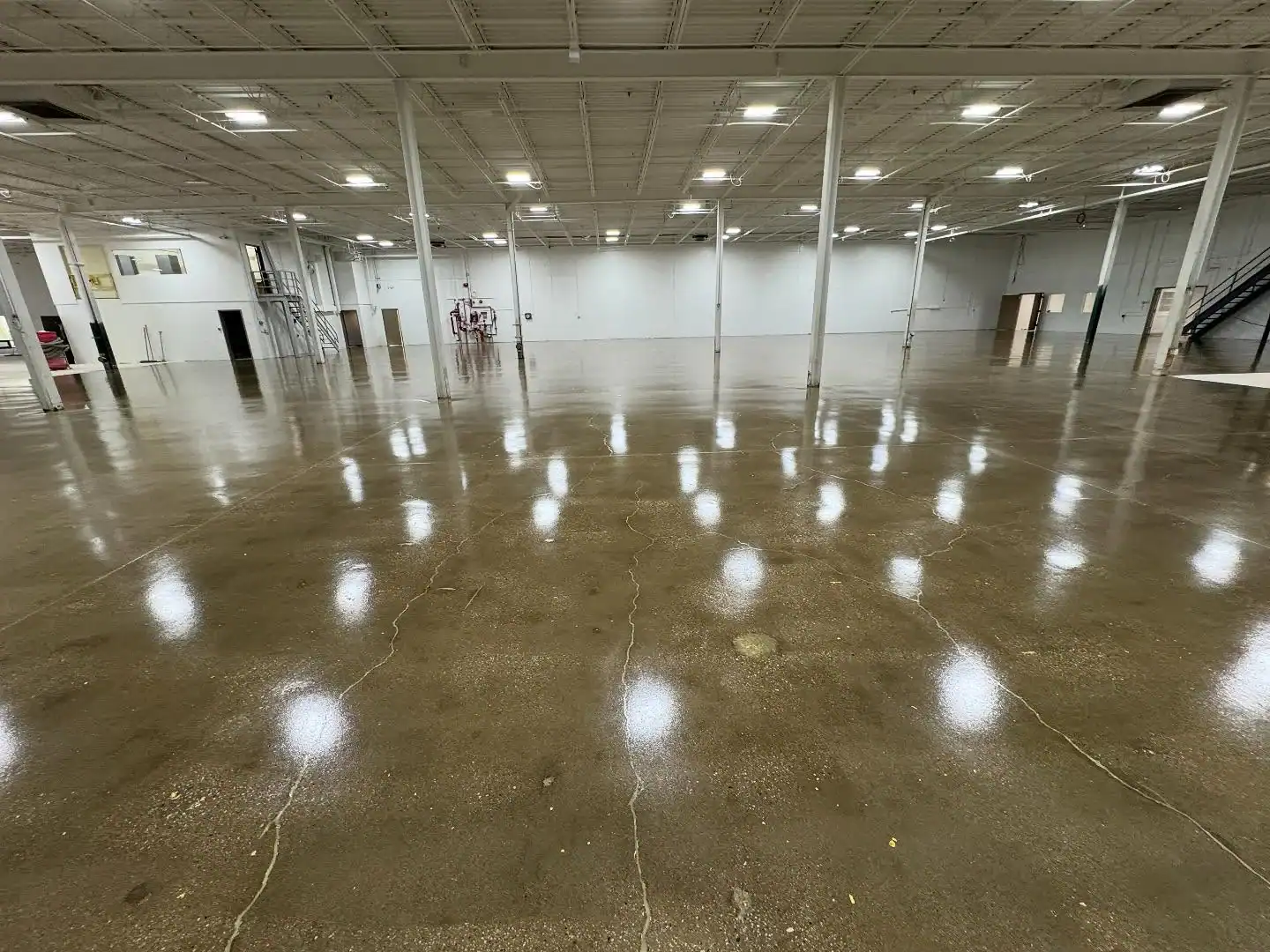
You’re looking at 10 to 20 years with proper installation and reasonable maintenance. That’s not a marketing number—that’s what properly specified epoxy systems deliver in real warehouse environments.
The lifespan depends on your traffic intensity and what you’re exposing the floor to. A facility running loaded forklifts 24/7 will see more wear than one with moderate traffic. But even in high-traffic scenarios, you’re getting a decade-plus of service before you need to think about replacement.
Compare that to traditional coatings that need attention every couple of years, and the math becomes pretty clear. The upfront investment is higher, but you’re not cycling through repairs and recoats constantly. Most facilities find the total cost of ownership significantly lower over the floor’s lifetime.
Yes, if it’s the right system installed correctly. Not all epoxy is created equal, and this is where a lot of facilities get burned by cheap installations.
High-performance epoxy mortar systems are specifically engineered for forklift traffic. The flexibility in the material lets it absorb the concentrated pressure from steel wheels and solid tires without gouging or cracking. The smooth surface actually reduces rolling resistance, which means less wear on your forklift tires and better energy efficiency.
What fails under forklift traffic is thin coating systems that don’t have the build thickness to handle impact, or installations over improperly prepared concrete. When you see epoxy that’s delaminating or wearing through in traffic lanes, it’s usually a preparation or specification problem, not a material problem. We install systems between 2mm and 6mm thick for warehouse applications specifically because that’s what the traffic demands.
Diamond grinding is the standard for warehouse floor preparation in Islip. We’re using industrial grinders to remove any existing coatings, open up the concrete pores, and create the surface profile that epoxy needs to bond properly.
This process also reveals any damage that needs repair before coating. Cracks, spalling, joint deterioration—you can’t hide these problems under epoxy and expect good results. We handle concrete repairs as part of the prep work, which might include routing and sealing cracks, patching spalled areas, or addressing joint issues.
Moisture testing happens before any of this. Concrete that looks dry can have moisture vapor transmission issues that’ll cause delamination later. We test, and if there’s a problem, we address it with moisture mitigation systems before the epoxy goes down. Skipping these steps is how you end up with a floor that fails prematurely, and it’s why proper preparation takes time.
Industrial epoxy systems typically run higher upfront than basic concrete sealers or paint, but the cost comparison only makes sense when you factor in lifespan and maintenance.
A properly installed epoxy system might cost more initially, but you’re looking at annual maintenance costs around five cents per square foot versus close to a dollar per square foot for traditional options. Over a 10 to 15-year period, the total cost is usually significantly lower.
The other factor is downtime. Cheap coatings that fail every few years mean you’re scheduling repairs, cordoning off sections, and disrupting operations repeatedly. Each of those disruptions has a cost beyond just the flooring work. An epoxy system that lasts 15 years without major intervention eliminates most of those hidden costs. When you’re evaluating bids, look at the total cost of ownership, not just the installation price.
Chemical resistance is one of the main reasons facilities choose epoxy for warehouse floors. The non-porous surface prevents chemicals from penetrating into the concrete, which protects both the structural slab and keeps spills from becoming permanent stains.
Different epoxy formulations offer different levels of chemical resistance. For warehouses dealing with hydraulic fluids, battery acid, cleaning chemicals, and fuel, we specify systems with the appropriate resistance. The topcoat is particularly important here—that’s your primary chemical barrier.
When spills happen, you wipe them up and move on. The floor doesn’t pit, doesn’t stain, doesn’t degrade. This is especially critical in facilities handling hazardous materials or operating under strict regulatory requirements. The seamless surface also means there aren’t grout lines or seams where chemicals can seep through, which is a problem with tile or other segmented flooring options.
Cure times depend on the specific system and environmental conditions, but most warehouse epoxy installations allow light foot traffic within 24 hours and full operational use within 48 to 72 hours.
For facilities that can’t afford extended downtime, we can phase the installation. We’ll section off areas, complete the work, let it cure, and move to the next section while you continue operating in the finished areas. This approach takes longer overall but minimizes operational disruption.
Temperature and humidity affect cure times, so winter installations might take slightly longer than summer ones. We account for this in scheduling and can use fast-cure systems when necessary, though these sometimes come with tradeoffs in final performance. The key is planning the installation around your operational needs rather than forcing you to work around an inflexible timeline.