
Your facility can’t afford flooring with cracks, grout lines, or seams where pathogens multiply between cleanings. That’s not just a maintenance headache—it’s a compliance risk and a patient safety issue.
Seamless medical-grade epoxy in Elmont eliminates those hiding spots entirely. The surface is completely non-porous, which means disinfectants actually work the way they’re supposed to. You’re not scrubbing around grout or worrying about what’s growing underneath worn vinyl tile.
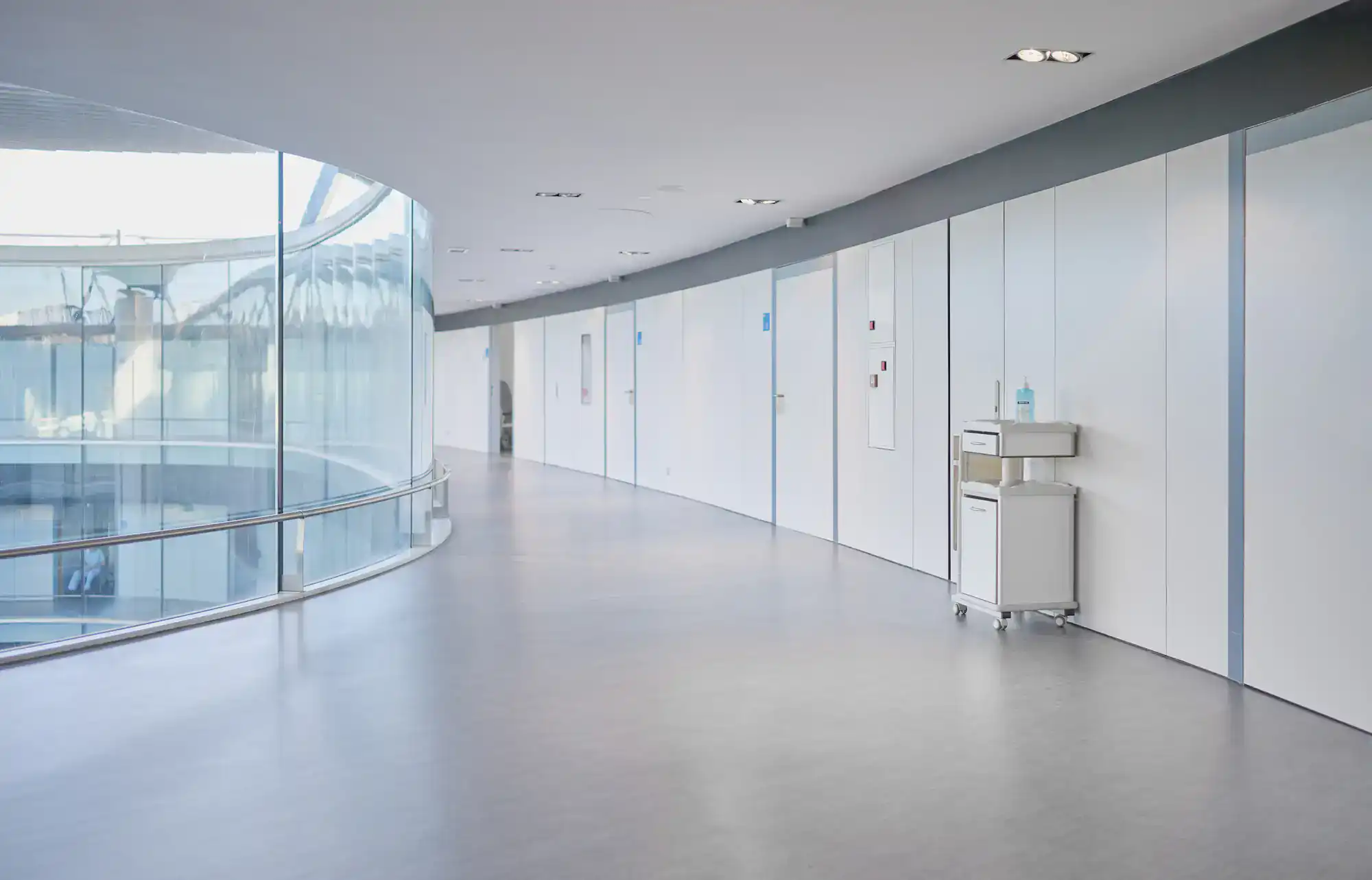
When inspectors show up or when your staff runs ATP tests, the floors pass. When you’re mopping at shift change, the job takes half the time because there’s nothing for contaminants to cling to. That’s what a truly hygienic floor does—it makes your infection control protocols easier to execute, not harder.
We’ve been installing healthcare flooring systems for over three decades. Our president has more than 40 years of hands-on experience, and we’ve worked in hospitals, outpatient clinics, long-term care facilities, and even the White House kitchen back in 1996.
In Elmont and across Nassau County, medical facilities face the same challenges: aging infrastructure, strict regulatory standards, and operations that can’t shut down for a week while you replace flooring. We’ve handled all of it. Our install teams are OSHA 40 certified, and most have been with us for over a decade. They know how to work around your schedule, your equipment, and your patients.
We’re not the cheapest option, and we don’t try to be. You’re paying for floors that last 15+ years, installers who’ve done this hundreds of times, and systems that meet USDA and FDA compliance standards without cutting corners.
We start with moisture testing and a full substrate evaluation. Concrete in older Elmont buildings often has moisture issues or surface damage that’ll ruin an epoxy install if you skip this step. We don’t skip it.
Next is surface prep—grinding, shot blasting, or scarifying depending on what the slab needs. This is where most contractors try to save time and cost themselves callbacks. Proper prep is the only reason epoxy bonds correctly and lasts. We also handle crack repair and joint filling during this phase so the finished floor is truly seamless.
Then we apply the system: primer, base coat, and topcoat. For sterile room floor coatings in Elmont, we use low-VOC healthcare coatings that cure with minimal odor, so you’re not evacuating entire wings. The topcoat includes slip resistance that meets ADA and NFSI standards, even when wet.
Cure time depends on the product, but most systems are ready for light traffic in 24 hours and full use in 48 to 72. We coordinate timing with your facility operations so you’re not losing access to critical areas any longer than necessary.

Ready to get started?
Every healthcare flooring project in Elmont includes full moisture testing, concrete surface preparation, crack and joint repair, and a multi-layer epoxy system formulated to resist the specific chemicals your staff uses daily—quaternary ammonium disinfectants, bleach, phenolics, hydrogen peroxide, and alcohol-based cleaners.
The systems we install are USDA and FDA compliant, which matters if you’re in food service, pharmaceuticals, or any space where regulators show up with checklists. They’re also low-VOC, so installation doesn’t trigger air quality complaints or force you to shut down adjacent areas. Color and texture options let you match your facility’s design standards or add wayfinding elements without compromising cleanability.
Elmont’s healthcare facilities range from small private practices to larger outpatient centers, and the flooring demands vary. A sterile compounding room needs different slip resistance than a physical therapy gym. We customize the system to your space—not the other way around. You also get a floor that doesn’t need waxing, buffing, or refinishing. Maintenance is damp mopping with your existing disinfectant. That’s it.
A properly installed healthcare epoxy system lasts 15 to 20 years in high-traffic medical environments, sometimes longer if maintenance is consistent. That lifespan assumes daily disinfection with harsh chemicals, rolling equipment, constant foot traffic, and the occasional dropped instrument or cart collision.
The key word is “properly installed.” If the concrete wasn’t prepped correctly or moisture issues weren’t addressed, you’ll see delamination or bubbling within the first year. That’s not a product failure—it’s an installation failure. We handle full substrate prep, moisture mitigation, and crack repair before any epoxy goes down, which is why our floors hold up.
Compare that to VCT, which needs stripping and waxing every few months and replacement every 7 to 10 years, or sheet vinyl with heat-welded seams that crack and let moisture underneath. Epoxy costs more upfront, but you’re not paying for ongoing maintenance or early replacement. The math works in your favor if you’re planning to stay in the building.
Medical-grade epoxy systems are chemically formulated to resist the specific disinfectants and cleaning agents used in healthcare settings. Regular garage or warehouse epoxy will break down quickly when exposed to quaternary ammonium compounds, bleach, or phenolic disinfectants. Healthcare epoxy is engineered to handle that exposure daily without yellowing, etching, or losing its bond.
Seamless installation is the other difference. There are no joints, no grout lines, no seams where bacteria, mold, or fluids can hide. The floor is monolithic from wall to wall, which is a requirement in sterile environments and a massive advantage in any space where infection control matters. Regular epoxy might be applied in sections with visible seams or over existing tile, which defeats the purpose.
The topcoat also matters. Medical-grade systems include antimicrobial additives and slip-resistant textures that meet NFSI and ADA standards even when wet. You’re not choosing between safety and cleanability—you get both. That’s not standard in commercial epoxy products.
Yes, but it requires planning. We phase the work so you’re only losing access to one area at a time, and we schedule around your patient load or operational hours. Most healthcare flooring installations in Elmont happen overnight, on weekends, or in sections so the rest of your facility stays functional.
Low-VOC healthcare coatings in Elmont cure with minimal odor, which means you don’t need to evacuate adjacent rooms or worry about fumes reaching patient areas. Depending on the product, you’ll have light foot traffic access in 24 hours and full use in 48 to 72 hours. If you need faster turnaround, we can use rapid-cure systems that are ready in 12 hours, though those cost more.
The bigger issue is prep work—grinding and shot blasting create dust and noise. We use dust containment systems and work during off-hours to minimize disruption, but there’s no way to make concrete prep silent. If you’re in an active surgical center or ICU, we’ll need to coordinate more carefully than if you’re in an admin wing or outpatient clinic.
Healthcare epoxy systems are formulated to resist chemical exposure that would destroy standard flooring. If you spill glutaraldehyde, formaldehyde, hydrogen peroxide, or any of the high-level disinfectants used in sterile processing, the floor won’t stain, etch, or degrade. You wipe it up and move on.
That chemical resistance extends to pharmaceuticals, laboratory reagents, and bodily fluids. The non-porous surface doesn’t absorb anything, which is critical in compounding pharmacies, labs, or anywhere spills are a regular occurrence. Cleanup is faster, and there’s no lingering contamination risk because nothing soaks into the substrate.
This is one area where cutting costs on flooring creates expensive problems later. If your floor can’t handle the chemicals you use daily, you’ll be patching, resealing, or replacing sections constantly. Sterile room floor coatings in Elmont are an upfront investment that eliminates those recurring costs and keeps your space compliant with safety and hygiene standards.
Daily maintenance is damp mopping with your standard disinfectant. That’s it. No waxing, no buffing, no stripping, no special cleaners. The seamless surface doesn’t trap dirt or require scrubbing around grout lines, so your custodial staff spends less time on floors and more time on other tasks.
For deeper cleaning, you can use an auto scrubber with a soft brush or pad. The floor won’t scratch or dull under normal cleaning equipment. If you’re in a high-traffic area, occasional scrubbing with a neutral pH cleaner keeps the surface looking new, but it’s not required weekly or even monthly.
The slip-resistant topcoat is part of the floor, not a coating that wears off. You don’t lose traction over time the way you do with waxed VCT. If the floor ever does get damaged—say, from a heavy equipment drop or a renovation project—we can repair and recoat specific sections without redoing the entire space. But most healthcare facilities go years without needing any touch-ups if the install was done right from the start.
You’re paying for material performance, regulatory compliance, and installation expertise that standard flooring doesn’t require. USDA/FDA compliant flooring in Elmont uses specialized resins that resist medical-grade disinfectants, meet strict VOC limits, and include antimicrobial properties. Those materials cost more than basic epoxy or vinyl tile.
The installation process is also more involved. Moisture testing, substrate repair, and seamless application take longer and require more skill than dropping tile or rolling out sheet vinyl. Our installers are OSHA 40 certified and trained specifically for healthcare environments where cleanliness and precision aren’t optional. You’re not paying for speed—you’re paying for a floor that passes inspections and lasts 15+ years without major maintenance.
The real cost comparison isn’t upfront price—it’s total cost of ownership. VCT needs waxing every few months and replacement every decade. Vinyl plank seams crack and let moisture underneath. Epoxy installed correctly requires almost no maintenance and won’t need replacement during the lifespan of your lease or mortgage. If you calculate labor, materials, and downtime over 15 years, healthcare epoxy is cheaper. You’re just paying for it once instead of in pieces.