
If your kitchen floor has cracks, pitting, or grout lines that never really come clean no matter how hard your crew scrubs that’s not a cleaning problem. That’s a floor problem. And in Elmont, where Nassau County’s Department of Health inspects every food service establishment against the New York State Sanitary Code, a floor in poor condition isn’t just an eyesore. It’s a citation waiting to happen.
The buildings along Hempstead Turnpike in Elmont have been here a long time. Older concrete slabs absorb moisture, develop micro-cracks, and create exactly the kind of surface that traps bacteria and fails health inspections. Elmont also sits in one of Nassau County’s more flood-prone areas the August 2024 storm dropped over nine inches of rain in 24 hours across the county, and South Floral Park, right next door, is specifically flagged as a high-risk zone. Moisture vapor pushing up through an aging slab is one of the most common reasons epoxy floors fail within months of installation.
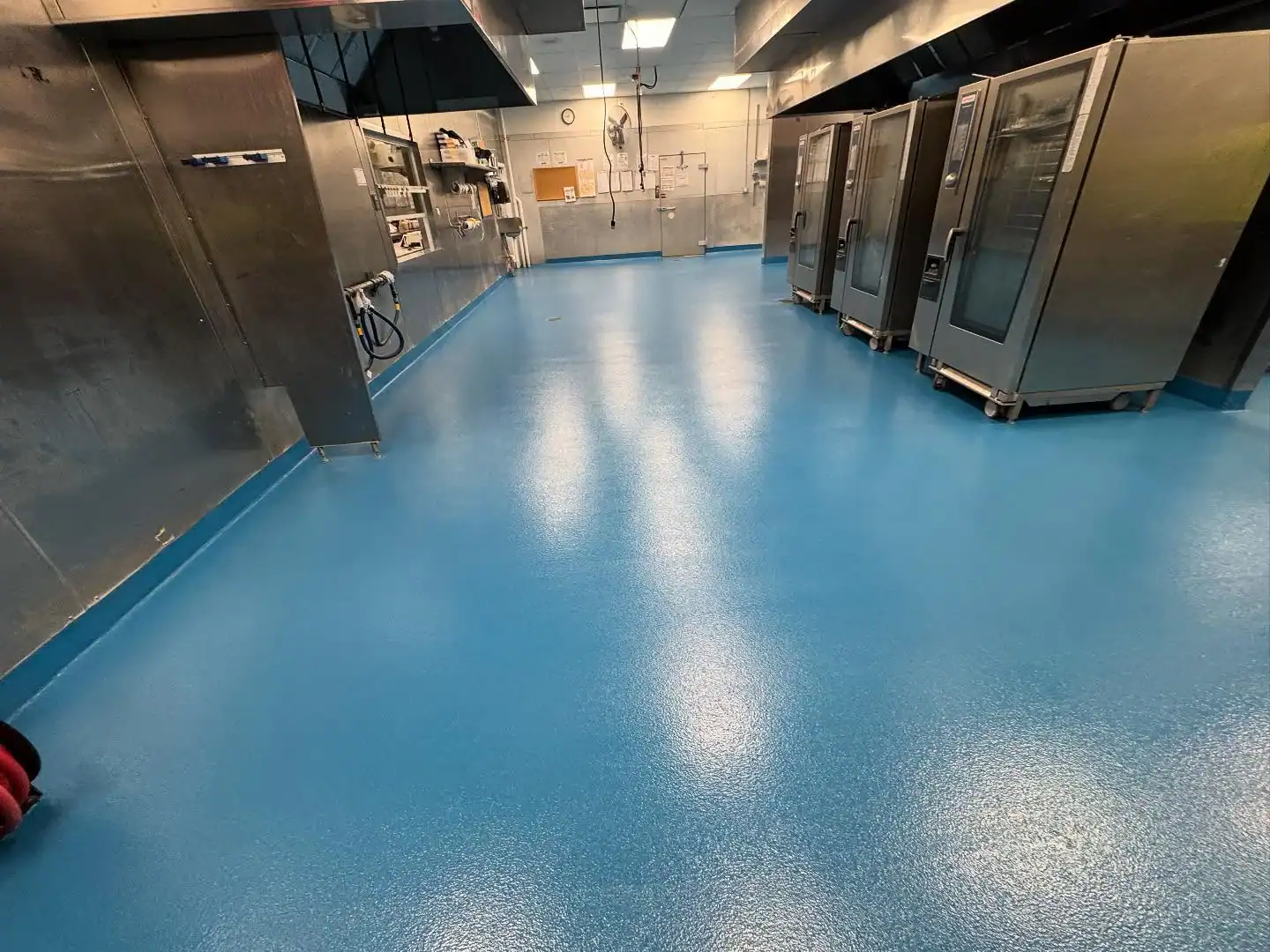
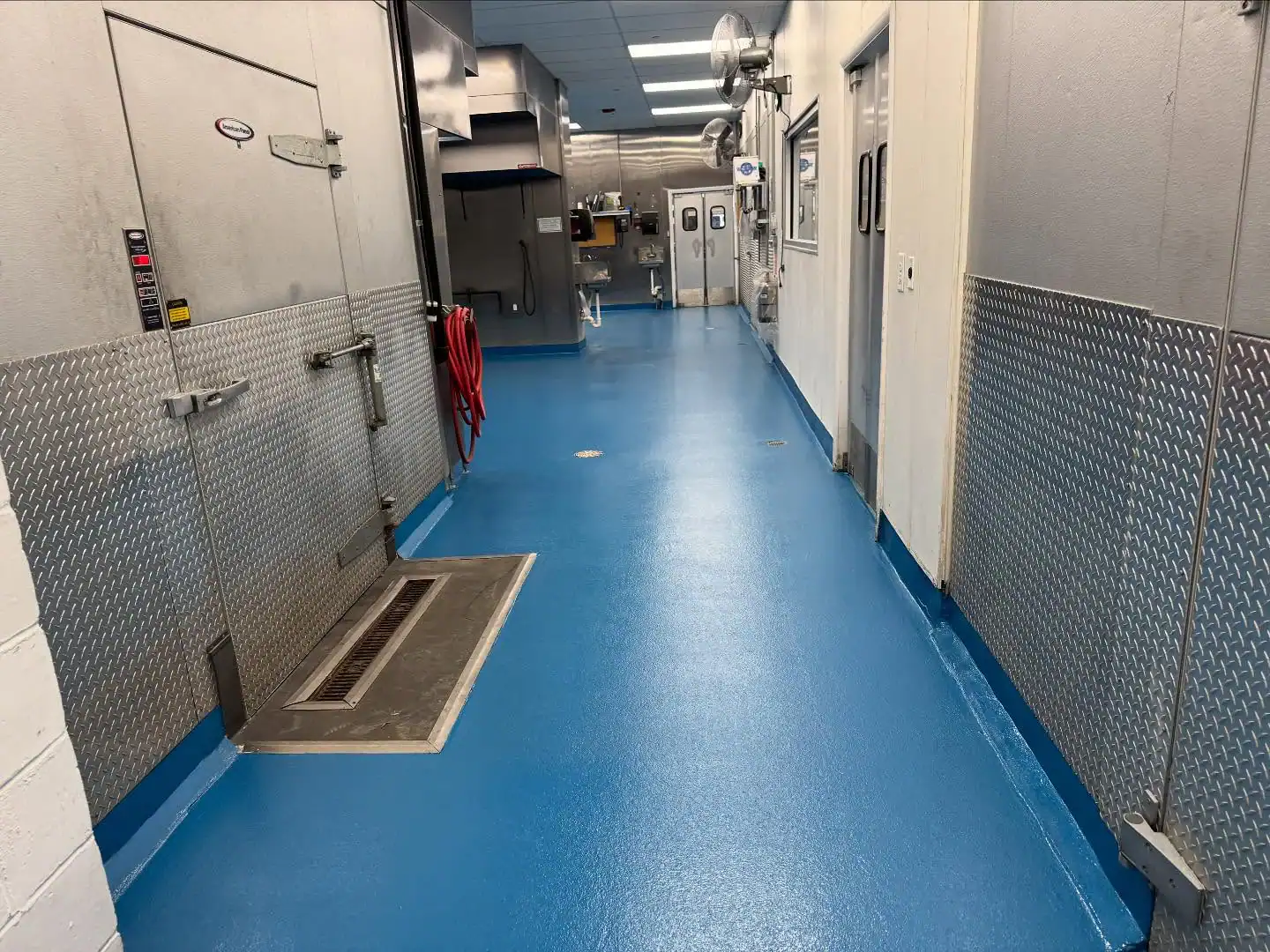
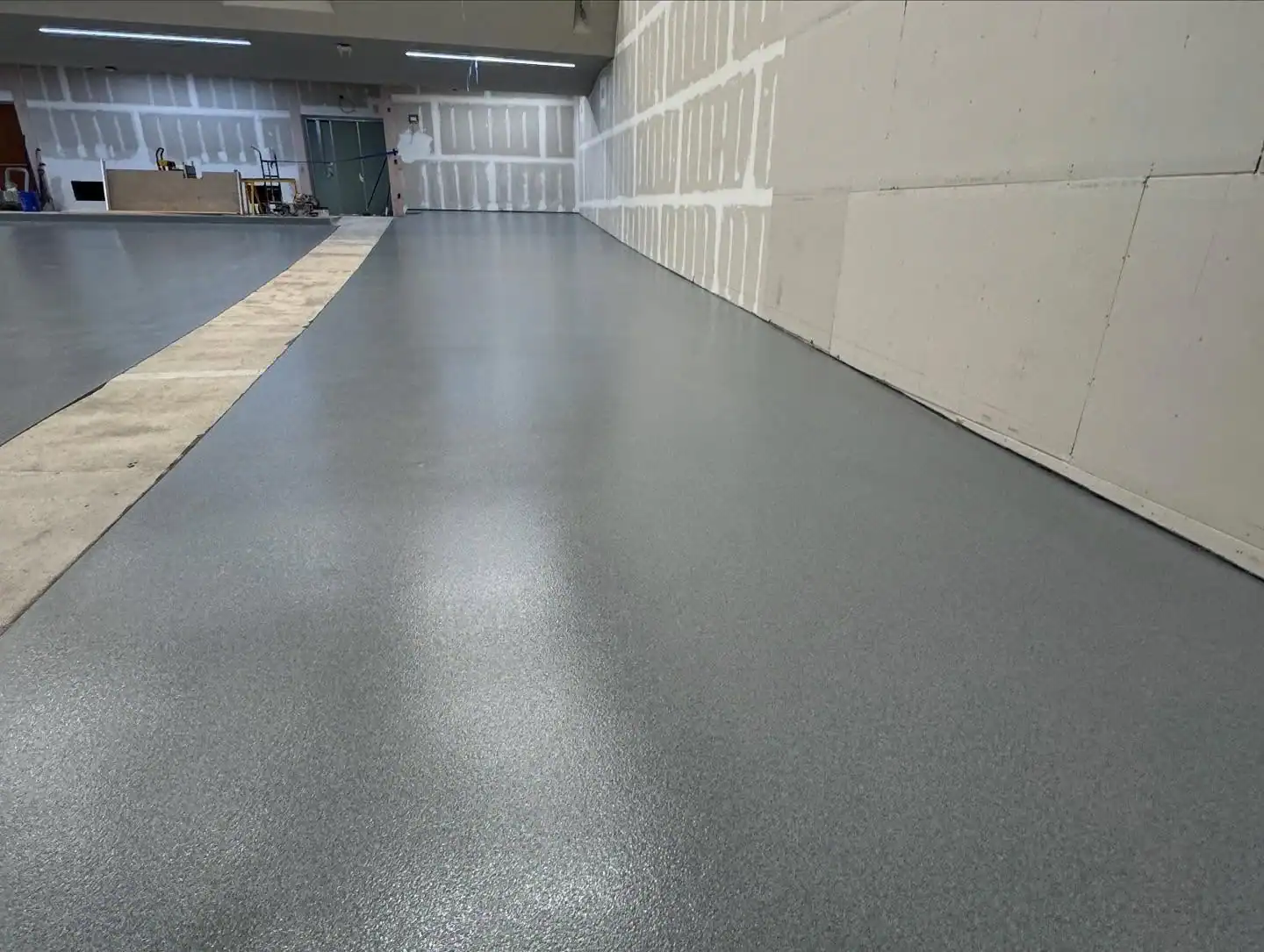
What you get with a properly installed seamless epoxy system is a floor with no grout lines, no seams, no gaps nothing for grease, food particles, or bacteria to hide in. It cleans completely. It holds up under commercial cleaning chemicals. It meets the smooth, non-porous, non-absorbent standard that Nassau County inspectors are looking for. And when it’s installed correctly with moisture testing done first it stays that way for years, not months.
We’ve been installing commercial kitchen floors across Long Island for 35 years, with deep roots in Elmont and the surrounding Nassau County area. That’s not a number we throw out to sound impressive it’s the reason we’ve seen what happens when a floor is installed without moisture testing, without proper surface prep, or with the wrong system for the environment. We’ve fixed a lot of those floors. We’d rather install yours correctly the first time.
We hold Sherwin-Williams High Performance Flooring ATP certification and Res Tech certification two manufacturer-backed credentials that require demonstrated competency in the specific systems used in commercial kitchens. That’s not a general contractor license. It means we know the materials, the process, and what it takes to make a floor last in a demanding environment.
Elmont’s food service community runs the full range long-standing diners on Hempstead Turnpike, ethnic restaurants serving the area’s diverse population, fast-casual chains, and newer establishments opening around UBS Arena and the Belmont Park Village retail complex. We understand Nassau County’s permitting environment, the Town of Hempstead’s building requirements, and the specific conditions that make older commercial slabs in Elmont a challenge. That local knowledge matters when we’re assessing your kitchen before a single coat goes down.
The first thing we do before anything else is test for moisture. This is non-negotiable. In Elmont, where older concrete slabs along Hempstead Turnpike have been absorbing decades of Long Island humidity, seasonal rain, and in some cases direct flood exposure, moisture vapor transmission is a real and documented risk. If we skip that test and apply a coating over a slab with elevated moisture levels, the floor will delaminate. Most contractors skip it anyway. We don’t.
Once moisture levels are confirmed acceptable, we grind the concrete to the correct surface profile for adhesion. This is where most failed floors actually start not enough surface prep, not the right profile, and the coating never bonds the way it should. We fill existing cracks, level uneven areas, and make sure the substrate is ready before anything is applied. For kitchens near active cooking equipment fryers, steam lines, commercial ovens we assess whether a thermal-shock-resistant urethane cement system is needed instead of standard epoxy, because those temperature differentials from steam cleaning and cooking cycles will destroy the wrong product over time.
From there, we apply primer, build coats, and a slip-resistant topcoat that meets OSHA and ANSI standards for commercial kitchen environments. The coved base at floor-to-wall junctions is included it’s a Nassau County health inspection requirement, and it’s part of every installation we do. We can schedule overnight or weekend work to minimize your kitchen’s downtime, and fast-cure topcoat systems allow return to light service in hours.
Ready to get started?
Not every commercial kitchen in Elmont needs the same floor. A high-volume diner running a full grill line has different demands than a Latin American bakery with constant oven cycles, or a food service operation handling event crowds from UBS Arena. The system we install depends on what your kitchen actually does the heat exposure, the chemical load, the foot traffic, the drainage layout, and the condition of your existing slab.
For most commercial kitchens, we install a multi-layer epoxy system. That includes surface grinding, crack repair, a moisture-blocking primer, build coats for thickness and chemical resistance, and a slip-resistant topcoat with the aggregate profile needed to meet ANSI A326.3 wet dynamic COF standards. For kitchens with heavy thermal cycling steam cleaning, high-heat cooking equipment, rapid temperature swings we move to a urethane cement system that handles those conditions without cracking or disbonding. Walk-in coolers get moisture-tolerant formulations suited for cold, condensation-heavy environments.
Every installation includes an integral coved base at all floor-to-wall transitions. This is required under New York State Sanitary Code Part 14 and is a standard inspection point for Nassau County’s Department of Health. It’s not an add-on it’s part of the job. The finished surface is seamless, non-porous, non-absorbent, and designed to meet the exact compliance standards your food service establishment permit requires. If you’re opening a new location near the Belmont Park Village development or renovating an existing kitchen on Hempstead Turnpike, we’ll assess the slab first and give you a clear picture of what it needs before we quote anything.
Nassau County’s Department of Health enforces the New York State Sanitary Code, Part 14, for all food service establishments. Under those requirements, kitchen floors must be smooth, non-porous, non-absorbent, and free of cracks, chips, and gaps and they have to be easily cleanable. Grout lines in quarry tile don’t meet that standard in practice, even if the tile itself is technically compliant, because the grout absorbs grease and bacteria over time.
A seamless epoxy or urethane cement system is the standard of care for meeting these requirements. It eliminates every seam and joint across the entire floor surface, and the integral coved base at floor-to-wall junctions also required under Part 14 removes the gap where floors and walls meet. If your current floor in Elmont has visible cracks, deteriorating grout, or pitting, those are specific conditions that Nassau County inspectors will flag. Getting ahead of that with a compliant system is a lot less expensive than a forced closure or a failed re-inspection.
For most commercial kitchen installations, the actual closure window ranges from one to three days depending on the size of the space and the system being installed. Fast-cure polyaspartic topcoat systems allow return to light foot traffic in as little as a few hours, with full commercial use typically within 24 to 36 hours. The prep work grinding, crack repair, priming takes the most time, and that’s where you can’t rush without compromising the result.
We schedule around your operation. Overnight installations, weekend work, and phased completions are all options we’ve used for Elmont-area kitchens that can’t afford to go dark during the week. For operators along Hempstead Turnpike serving both the residential community and event traffic from UBS Arena and Belmont Park, every day of downtime has a real dollar cost. We’ll give you a realistic timeline upfront so you can plan around it no surprises.
The most common reason is skipped moisture testing. When moisture vapor is pushing up through a concrete slab which is a documented issue in Elmont’s older commercial buildings, especially after events like the August 2024 flooding that dropped over nine inches of rain across Nassau County and a coating is applied anyway, the bond fails from the bottom up. The floor looks fine for a few months, then starts bubbling, peeling, or delaminating in sections.
The second most common reason is inadequate surface preparation. If the concrete isn’t ground to the correct profile, the coating doesn’t have enough mechanical adhesion to hold under commercial kitchen conditions. And the third is using the wrong product for the environment standard epoxy applied in a zone with heavy thermal cycling from steam cleaning or cooking equipment will crack and disbond over time. These aren’t rare edge cases. They’re the most common reasons we get called to fix floors that were installed by someone else.
In some cases, yes but it depends entirely on the condition of what’s underneath. If the existing tile is firmly bonded, level, and structurally sound, certain systems can be applied over it. But if there’s any looseness, hollow spots, or moisture issues beneath the tile, installing over it will trap those problems and the new floor will fail. The honest answer is that we don’t know until we assess it.
For most commercial kitchens in Elmont’s older buildings particularly those in structures built during the mid-20th century suburban expansion along Hempstead Turnpike we typically recommend removing the existing tile and starting from the concrete slab. It costs more upfront, but it gives us a clean substrate to work with and eliminates the risk of the existing floor’s problems becoming your new floor’s problems. We’ll tell you exactly what we find during the assessment and what we recommend before any work begins.
Epoxy is the right choice for most commercial kitchen environments it’s durable, chemical-resistant, seamless, and cost-effective for standard prep areas, service kitchens, and dining-side food handling zones. Urethane cement is a different product designed specifically for environments with significant thermal cycling areas near fryers, steam lines, commercial dishwashers, or any zone that gets hit with boiling water or steam during cleaning. The thermal expansion and contraction in those areas will eventually crack a standard epoxy system.
For Elmont kitchens running high-volume cooking operations the kind of output you’d see in a restaurant serving event crowds from UBS Arena or a diner running a full grill line on Hempstead Turnpike we often specify urethane cement in the cooking zone and epoxy in the prep and service areas. It’s a zone-based approach that puts the right material where the conditions actually demand it, rather than applying one product everywhere and hoping it holds.
The short answer is: if the damage is isolated a few cracks, a small section of pitting repair is often a viable option. If the damage is widespread, if grout lines are deteriorating across the whole floor, or if you’ve already had a coating fail once, replacement is usually the better investment. Patching a floor that’s fundamentally compromised doesn’t fix the underlying problem, and in Nassau County’s inspection environment, a partially repaired floor can still generate citations if the overall surface condition doesn’t meet the smooth, non-absorbent standard.
The other factor specific to Elmont is the age and moisture history of the slab. Buildings along Hempstead Turnpike with older concrete that has experienced repeated moisture exposure from Long Island’s humidity, from seasonal flooding, from years of kitchen water use may have slab-level issues that make repair a short-term fix at best. We assess the full picture before recommending anything. If repair is the right call, we’ll tell you. If the slab needs more than that, we’ll explain exactly why so you can make a clear decision.